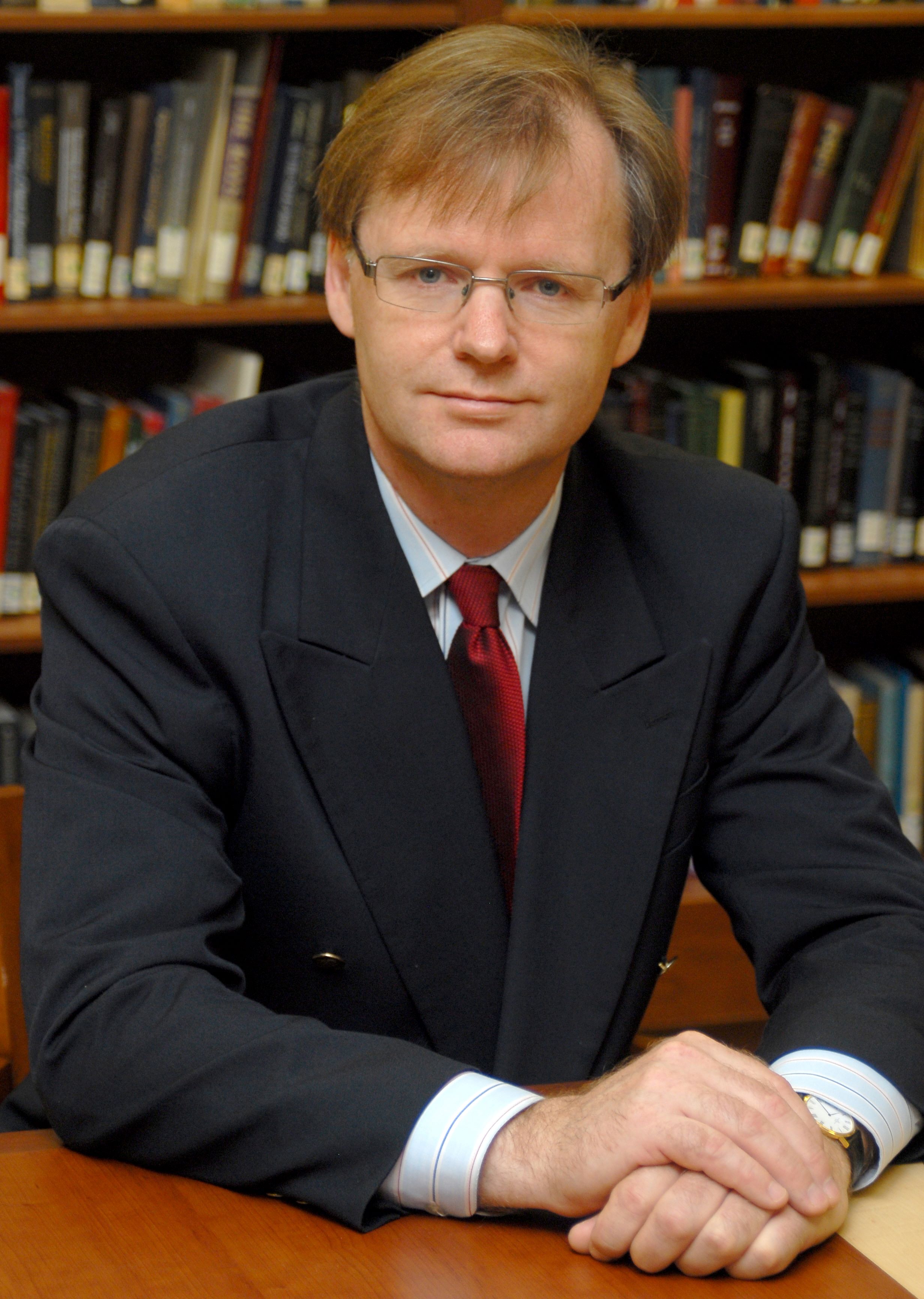
Prof. Dr. rer. nat. Lothar Elling is a University Professor and director at the Helmholtz Institute for Biomedical Engineering, RWTH Aachen University, Germany. His research focuses on biomaterials, glycoengineering, and enzymatic synthesis of carbohydrates and glycoconjugates. Institution: RWTH Aachen University Research Unit: Helmholtz Institute for Biomedical Engineering Academic Rank: Full Professor Prof. Elling's research interests include: Glycoengineering of biomaterials Enzymatic synthesis of glycans Glycosyltransferase immobilization Glycan-protein interactions Biocatalytic cascade reactions Biomedical applications of glycomaterials His recent publications demonstrate strong expertise in: - Automated enzymatic glycan synthesis - Multi-enzyme cascade systems for nucleotide sugar production - Glycosyltransferase engineering - Galectin-targeted glycomaterials - Microgel-based biosensors
Michael Organ is a Full Professor at the University of Ottawa's Department of Chemistry and Biomolecular Sciences, affiliated with the Faculty of Science. He also serves as Director of the Centre for Research and Innovation in Catalysis. His research focuses on catalysis, flow chemistry, and medicinal chemistry, emphasizing sustainable and efficient synthesis methods. Organ has held adjunct roles at the University of Toronto and has extensive industry collaborations, including with GlaxoSmithKline and Abbvie. Education: PhD (University of Guelph, 1992), MSc (University of Guelph, 1988), Hons. BSc (University of Guelph, 1986). Research Interests: Catalysis, microwave-assisted continuous synthesis, reactive intermediates in flow systems, and drug discovery methodologies. His work bridges organic chemistry with engineering, developing scalable and green processes. Publications & Impact: Over 200 publications, including seminal works in Journal of the American Chemical Society and Chemistry – A European Journal . Key contributions include the Pd-PEPPSI-IPent catalyst and the MACOS flow chemistry platform. Awards: NSERC John C. Polanyi Award (2018), Encyclopedia of Reagents Best Reagent Award (2017), Raymond Lemieux Award (2016). Recognized internationally for catalytic innovations. Grants & Funding: Over $45M in research funding, including NSERC Discovery Grants and industry partnerships. Notable projects include CFI JELF grants for sustainable manufacturing and pandemic-related flow chemistry for SARS-CoV-2 diagnostics. Labs & Teams: Leads the Organ Group, collaborating with chemical engineers and industry partners. Specializes in reactor design, catalyst development, and continuous processing systems.
Lusophone University of Humanities and TechnologiesPortugal
Pedro Carlos De Barros Fernandes is an Associate Professor at Universidade Lusófona , Deputy Director of the 1st cycle in Biotechnology, and an integrated researcher at the Institute of Bioengineering and Biosciences (iBB-IST). He holds a PhD in Biotechnology (1999) and a Master in Biotechnology/Biochemical Engineering (1994) from Universidade Técnica de Lisboa (IST), along with a Chemical Engineering degree from IST (1989). A member of the Order of Engineers (ID 24667), he co-founded Biotrend, a Portuguese bioprocess development company. Education PhD in Biotechnology (1999), Universidade Técnica de Lisboa MSc in Biotechnology (1994), Instituto Superior Técnico BSc in Chemical Engineering (1989), Instituto Superior Técnico Research Interests span biocatalysis, enzyme immobilization for food and pharmaceutical applications, marine biotechnology, microfluidic device development for biosensing, and steroid bioconversions using mycobacterial systems. His work integrates process engineering principles with sustainable bioprocessing techniques. Publication Trends show a focus on microreactor technology, enzyme stabilization in non-conventional media, marine-derived biocatalysts, and food waste valorization. Key themes include biocatalytic process intensification, aqueous two-phase systems for biomolecule purification, and sustainable carbon sources for biopolymer production. Scientific Awards UTL/Santander Totta Scientific Award in Biological Engineering (2011) Advising has included supervision of 5 doctoral theses and over 32 master’s theses. His expertise extends to peer-reviewing scientific articles and evaluating R&D projects. Labs & Teams are associated with iBB-IST (Institute of Bioengineering and Biosciences) and BioRG (Universidade Lusófona), with contributions to the Ciência Viva program for science dissemination.
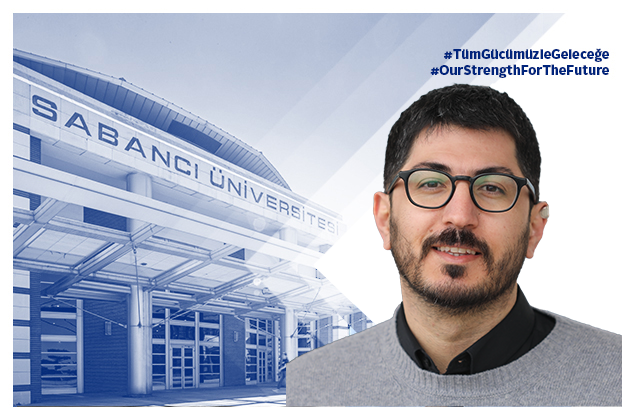
Dr. Morteza Ghorbani is a researcher and faculty member at Sabancı University's Faculty of Engineering and Natural Sciences (FENS), specializing in fluid mechanics and environmental engineering. He leads the AquaCav project, a collaborative effort with Oxford Brookes University, focused on developing sustainable water treatment solutions using hydrodynamic and acoustic cavitation. His research addresses global challenges such as PFAS pollution and wastewater management, with applications in biomedical devices and energy-efficient technologies. Key collaborations include projects funded by the International Science Partnership Fund (ISPF), leveraging his expertise in microfluidic systems and cavitation dynamics. Dr. Ghorbani's work combines experimental and numerical methods to optimize cavitation-based processes for environmental and biomedical applications. His contributions span from fundamental fluid dynamics studies to applied technologies like flexible cystoscopes and clot-on-a-chip platforms. Scientific achievements include the ISPF Research Collaboration Grant (2024) and advancements in PFAS removal, graphene exfoliation, and microalgae cultivation. His research group at Sabancı University explores interdisciplinary solutions at the intersection of engineering, nanotechnology, and sustainability.
Riikka Puurunen is an Associate Professor at Aalto University's Department of Chemical and Metallurgical Engineering, leading the Catalysis group since 2017. Her work focuses on developing solid heterogeneous catalysts using atomic layer deposition (ALD), microreactors, and in situ testing methods to advance sustainable biomass-based solutions.
Alex Cresswell is a Reader in the Department of Chemistry at the University of Bath, where he leads research in synthetic organic chemistry. His work focuses on catalysis (metal and metal-free), C–H bond functionalization, and the use of reactive intermediates for sustainable synthesis. He is affiliated with the Institute of Sustainability and Climate Change and collaborates on projects like the Sustainable Chemicals and Materials Manufacturing Hub. M.Chem, University of Oxford (2008) D.Phil., University of Oxford (2012) Postdoctoral Research Associate, University of Illinois at Urbana-Champaign (2012–2014) Postdoctoral Research Associate, University of Edinburgh (2014–2016) His research interests center on developing new synthetic methods for organic chemistry, with an emphasis on photocatalysis, radical chemistry, and sustainable approaches. Key themes include photoredox-hydrogen atom transfer (HAT), gold-catalyzed C–H arylation, and iron-mediated cross-coupling reactions. His work contributes to UN Sustainable Development Goals like responsible consumption and climate action. Recent publications highlight advancements in photoredox-HAT catalysis, automated synthesis of spirocycles, and mechanistic studies using transient absorption spectroscopy. Collaborative projects involve optimizing radical C–C bond formation and exploring paired electrosynthesis for green chemistry. Scientific Awards Royal Society University Research Fellowship (2016) As an advisor, Alex has mentored doctoral students including Hannah Askey, Jacob Turner-Dore, Alison Ryder, and Anna Kinsella, with a focus on training the next generation of chemists in sustainable methodologies. His group also collaborates with institutions like the University of Illinois, University of Edinburgh, and the Royal Society.
Prof. Tom Van Gerven is a chemical engineering specialist at KU Leuven's Process Engineering for Sustainable Systems (ProcESS) group. His research focuses on process intensification using alternative energy forms (ultrasound, microwaves, light) for sustainable metallurgy, mineral carbonation, and solvent extraction applications. He leads innovations in low-grade ore processing and carbon capture technologies. Key Research Areas: Process intensification, green metallurgy, CO₂ utilization, and advanced crystallization techniques Recent Work: 2025 publications highlight reactor optimization, mineral carbonation of industrial residues, and acoustic/microwave-assisted separations Technical Expertise: CFD modeling, sonochemical reactors, ionic liquid extraction, and environmental impact analysis
Prof. Timothy Noël serves as Professor of Flow Chemistry at the Van 't Hoff Institute for Molecular Sciences, Faculty of Science, University of Amsterdam (UvA), appointed in September 2020 after seven years as an associate professor at Eindhoven University of Technology. He earned his PhD from Ghent University in 2009 and completed a Fulbright-funded postdoc at MIT. His research pioneers flow chemistry to solve critical challenges in chemical synthesis, including scalability, hazardous substance production, and energy efficiency through microreactor technologies. Notable innovations include an artificial leaf harnessing sunlight for organic molecule synthesis—enabling off-grid pharmaceutical manufacturing—and breakthroughs in photochemistry and electrochemistry within microfluidic systems. His scientific impact is recognized by: KNCV Gold Medal (2021) IUPAC-ThalesNano Prize for Flow Chemistry (2020) Hoogewerff Youth Prize (2019) DECHEMA Prize (2017) NWO Vidi grant (2015) NWO Veni grant Fulbright fellowship Marie Curie Career Integration Grant Prof. Noël secures major funding from NWO and EU programs while collaborating with industry leaders like Eli Lilly, AbbVie, ThalesNano, and Vapourtec. As editor-in-chief of the Journal of Flow Chemistry, he shapes the field globally and develops curriculum for UvA's Science for Energy and Sustainability Master's program. His research group integrates chemistry and engineering expertise to advance sustainable chemical manufacturing, with future work focused on expanding flow chemistry applications in pharmaceutical production and renewable energy-driven synthesis.
Professor Martin Foster is a faculty member at the University of Sheffield's School of Electrical and Electronic Engineering, specializing in energy storage and power electronics. He holds a PhD from the University of Sheffield (2003) and has been a Professor since 2016. His research focuses on power electronic energy conversion, battery management systems, thermal modeling, and grid-connected energy storage. Notable projects include the FEVER initiative for off-grid EV charging and the Willenhall Energy Storage Systems facility. He has collaborated with industry partners like Nissan and Siemens, contributing to innovations in EV power electronics and wind energy technologies. He leads the Power Devices & Systems research group and teaches courses in power electronics and analog/digital electronics. His work spans EPSRC-funded projects such as FPET (piezoelectric resonant power supplies) and TransEnergy (railway energy storage). He is a founder of the Centre for Research in Electrical Energy Storage and Applications. His research interests include multilevel converters, piezoelectric transformers, and high-voltage power supplies for plasma chemistry applications. Recent publications highlight advancements in resonant converter design, battery energy storage systems, and condition monitoring for power devices. Awards and recognitions are not explicitly listed, but his extensive industry collaborations and leadership roles reflect his expertise. He advises on energy storage integration, grid technologies, and sustainable transportation systems. His contributions to both academic and applied research bridge theoretical advancements and practical industrial solutions in electrical engineering.
Max Planck Institute for Chemical Energy ConversionGermany
Naoki Shida is an Associate Professor in the Department of Functional Creation at the Graduate School of Engineering, Yokohama National University. He also holds a concurrent position as a JST PRESTO Researcher. His academic journey began with a BS from Yokohama National University, followed by MS and PhD degrees from Tokyo Institute of Technology, where he specialized in bipolar electrochemistry. He has held postdoctoral positions at Tokyo University of Agriculture and Technology, California Institute of Technology, and worked as a specially appointed assistant professor before joining Yokohama National University. Dr. Shida's educational background includes: BS, Yokohama National University, School of Engineering (2011) MS, Tokyo Institute of Technology, Graduate School of Science and Engineering (2013) PhD, Tokyo Institute of Technology, Graduate School of Science and Engineering (2016) Dr. Shida's research focuses on organic electrosynthesis and electrocatalysis, with particular expertise in flow electrochemistry, bipolar electrochemistry, and polymer electrochemistry. His work bridges fundamental electrochemical principles with practical applications in sustainable chemistry. His research group develops innovative electrochemical methodologies for organic synthesis, with emphasis on green and sustainable approaches that minimize waste and energy consumption. The team specializes in designing novel electrochemical reactors, particularly flow microreactors and membrane-based systems, to enable efficient and selective transformations. Analysis of Dr. Shida's recent publications reveals a strong focus on electrocatalytic hydrogenation processes, particularly for nitrogen-containing heterocycles like pyridines and quinolines. His work also explores the development of novel electrochemical methodologies for C-C and C-N bond formation, as well as the creation of advanced electrochemical reactors using solid polymer electrolytes. A significant portion of his research addresses the fundamental understanding of electrolyte effects on electrochemical reactions, aiming to develop rational design principles for electrolyte systems. Dr. Shida has received numerous prestigious awards recognizing his contributions to electrochemistry, including: Young Scientists Award from the Minister of Education, Culture, Sports, Science and Technology Electrochemical Society Business Creation Pitch Contest Grand Prize Progress Award from the Chemical Society of Japan Electrochemical Society Progress Award Sano Prize Electrochemical Society Best Paper Award As a mentor and researcher, Dr. Shida leads multiple significant research projects funded by the Japan Society for the Promotion of Science, including grants for developing innovative molecular transformation processes based on solid polymer electrolyte electrolysis technology and green catalytic reactions using electrochemically generated main group element radical cations. His collaborative work spans multiple institutions and disciplines, reflecting the interdisciplinary nature of modern electrochemistry research. Dr. Shida's laboratory at Yokohama National University focuses on developing next-generation electrified organic synthesis methods, with particular attention to reactor design, catalyst development, and fundamental mechanistic understanding of electrochemical transformations. The group actively collaborates with researchers across Japan and internationally to advance the field of electrochemical synthesis.
Nick AuYeung is an Associate Professor in the College of Engineering at Oregon State University, affiliated with the Chemical, Biological, and Environmental Engineering Department. He holds a Ph.D. from Oregon State University (2011), a postdoctoral fellowship from the University of Florida, and a B.S. from the University of Connecticut. His research integrates sustainable energy into chemical processes, focusing on thermochemical energy storage, reactor design for thermal/electrical energy conversion, and waste-to-resource technologies. AuYeung's publications demonstrate innovations in high-temperature thermochemical reactors, plasma microreactors for methane conversion, and environmental applications like hydraulic fracturing wastewater treatment. His work bridges fundamental material science with scalable energy solutions.
Lusophone University of Humanities and TechnologiesPortugal
Filipe Daniel Ramos Carvalho is an Assistant Professor at the University of Lusófona's Faculty of Engineering. He holds a PhD in Biotechnology and Biosciences from the University of Lisbon's Instituto Superior Técnico (2015), a Master's in Biotechnology from the same institution (2010), and a Bachelor's in Biotechnological Engineering from the University of Lusófona (2008). His research focuses on industrial applications of biotechnology with specialized expertise in enzyme engineering and biocatalytic processes. Research Focus Carvalho's research centers on developing biotechnological solutions for industrial applications, particularly in food science and biochemical engineering. His key research domains include: Enzyme immobilization techniques for industrial biocatalysis Microbial enzyme applications in food production systems Continuous-flow bioreactor design for bioprocess intensification Development of enzymatic pathways for sweetener production Biotransformation of compounds using engineered enzyme systems Publication Analysis Carvalho has published 17 research outputs including peer-reviewed articles, book chapters, and reviews. His recent works demonstrate a strong focus on enzymatic processes in food technology, particularly sweetener production and enzyme immobilization techniques. A significant portion of his research explores scalable bioreactor systems and industrial bioprocess optimization. Research Networks Carvalho collaborates internationally on bioprocessing research, with documented collaborations in enzymatic biotransformation studies. He leads research within the Bioengineering & Sustainability Research Group (BioRG), focusing on sustainable biotechnological solutions for industrial applications.
Xiaolong Luo is an Associate Professor in the Department of Mechanical Engineering at The Catholic University of America's School of Engineering. He specializes in microfluidics, biofabrication, and mechatronics, directing the Integrated BioMicroFluidics (iBMF) Laboratory. His work bridges engineering and biology, focusing on microscale device development for applications in drug discovery, tissue engineering, and biosensing. Ph.D., Bioengineering, University of Maryland (2008) M.S., Mechanical Engineering, Temple University (2003) B.E., Mechatronics, Zhejiang University (2001) Research Interests: Dr. Luo's research centers on microfluidics and biofabrication , utilizing biopolymers like chitosan and alginate to create 3D hydrogels, membranes, and Lab-on-a-Chip devices. His projects address challenges in protein/metabolic engineering , cell-cell communication , and synthetic ecosystems , with implications for human health and drug discovery . Article Trends: Recent publications highlight advancements in biopolymer membrane engineering (chitosan/alginate), microfluidic disease modeling (oral mucositis), and antibiotic susceptibility testing . His work also explores multi-species microbial interactions , chemotaxis quantification , and optical biosensing using holography and birefringence. Scientific Awards: Burns Junior Faculty Fellowship (2013) NSF CAREER Award (2016) Kaman Excellence in Research Award (2016) Young Faculty Scholar's Award (2017) GSA Dissertation Grant (2020) Sigma Xi Research Grant (2021) Cosmos Club Scholar (2022) Advising & Grants: He has mentored over 20 graduate and undergraduate students, including recipients of the Edward Hennessy Scholarship and Best Oral Presentation Awards. His grants include an NSF CAREER award ($500K, 2016-2021) and NIH internship supplements . Collaborations span institutions like NIH, FDA, and University of Maryland. Labs & Teams: The iBMF Lab develops Lab-on-a-Chip platforms for applications in protein engineering , microbial interactions , and tissue modeling . Recent projects include a reusable chemotaxis device and electrofabricated membranes for water purification and 3D cell assembly .
Nivedita Gupta serves as Professor and Chair of Chemical Engineering & Bioengineering at the University of New Hampshire (UNH), where she teaches core courses including CHBE 400 (ChE and BioE Lectures), CHBE 502 (Energy Balances), CHBE 601 (Fluid Mechanics and Unit Ops), CHBE 940 (Advanced Transport Phenomena), and CHBE 999 (Doctoral Research). Her office is located in Kingsbury Hall, Room W313, Durham, NH 03824, and she can be contacted at Nivedita.Gupta@unh.edu. Her academic credentials include: Ph.D. in Chemical Engineering from Pennsylvania State University B.S.E.T. from the Indian Institutes of Technology Dr. Gupta's research centers on fundamental fluid dynamics with emphasis on interfacial phenomena in multiphase systems. She investigates surfactant-laden bubble and drop dynamics, capsule hydrodynamics in confined flows, nanoparticle synthesis in microreactors, and thermocapillary convection in layered fluids. Her work bridges theoretical modeling with experimental validation, addressing challenges in transport phenomena relevant to chemical, biological, and materials engineering applications. Analysis of her 15 most recent publications (2007-2019) reveals consistent focus on multiphase flow mechanics, particularly surfactant effects on deformable interfaces in microscale and macroscale systems. Key trends include computational modeling of drop/bubble motion in confined geometries, synthesis of functional nanomaterials in continuous-flow reactors, and rheological characterization of nanowire suspensions for printable electronics. Her work appears predominantly in high-impact journals like Industrial & Engineering Chemistry Research , Physics of Fluids , and Chemical Engineering Science . No scientific awards were documented in the available sources. As Doctoral Research course instructor (CHBE 999), Dr. Gupta supervises Ph.D. candidates, though specific student names and grant funding details remain unreported in the provided materials. Her leadership as department chair indicates significant administrative responsibilities alongside research and teaching duties.
Dr. Ali Kosar is a Professor at Sabanci University's Mechatronics Engineering Program , with affiliations in Materials Science & Nanoengineering and Molecular Biology, Genetics & Bioengineering. As Co-Director of the Center of Excellence for Functional Surfaces and Interfaces for Nano Diagnostics (EFSUN) and Senior Researcher at SUNUM Nanotechnology Center, he leads a multidisciplinary research group spanning 30+ members. His work bridges microfluidics, heat transfer , and biomedical device design , focusing on cavitation-on-a-chip systems and microscale thermal management. Key research themes: Micro/Nanoscale Heat Transfer, Cavitation Dynamics, Biomedical Microdevices, Energy Applications Labs: Microfluidics and Microthermal Systems Laboratory, EFSUN, SUNUM His 175+ journal articles (h-index: 33) appear in journals like Physics of Fluids and Lab on a Chip , with recent work featured in Advanced NanoBioMed Research and Biosensors . He serves as Associate Editor of Applied Thermal Engineering and Subject Editor for Advanced Materials Interfaces . Scientific awards include ASME Fellow , TÜBA Membership , and multiple conference honors. His team has secured substantial national/international grants and developed technologies like the SUTAB (Sabanci University Tissue Ablating Bubbles) system.