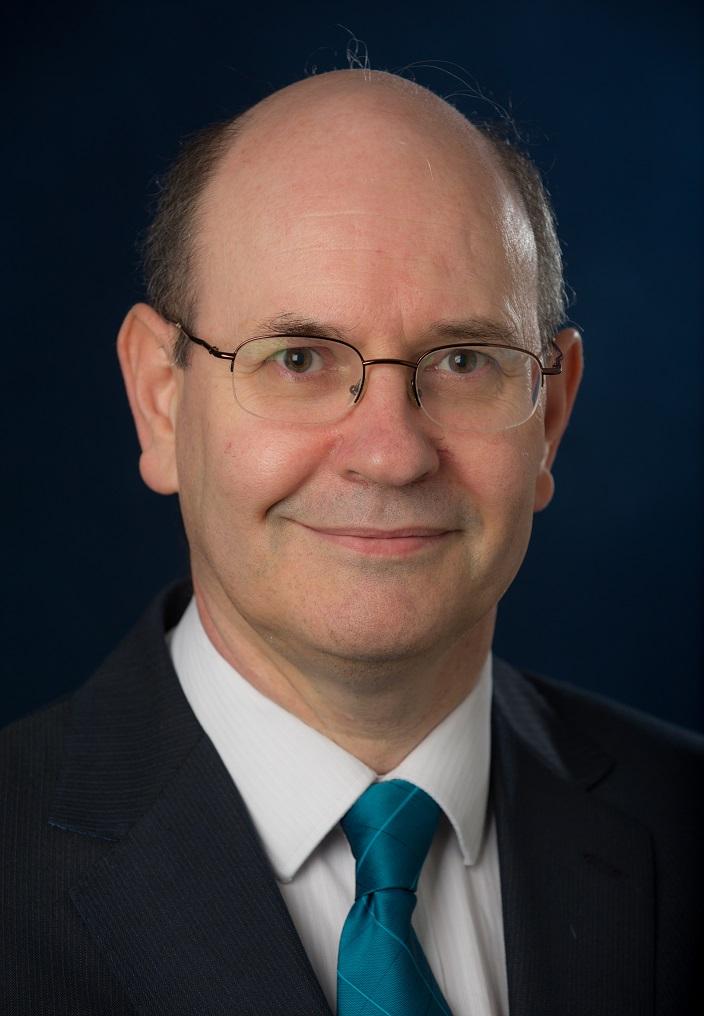
Glen McHale is Professor of Interfacial Science & Engineering and former Director of Chemical Engineering (2020-2024) at the University of Edinburgh. His research integrates wetting dynamics, bio-inspired surfaces, and acoustic wave technologies. Key innovations include slippery liquid-infused surfaces, dielectrowetting for liquid control, and Leidenfrost-based heat engines. Research explores nature-inspired surface engineering, droplet manipulation, and functional materials. Applications range from anti-biofilm coatings to energy harvesting systems. Recent publications advance understanding of friction in droplet motion and liquid-infused surface fluidics. Recipient of EPSRC Platform Grant for world-leading research Global Engineering Impact Award winner (National Instruments) Fellow of Royal Society of Arts, Institute of Physics, and Senior IEEE Member Teaching includes Chemical Engineering Laboratories, Study Projects, and research supervision. Actively leads the UK Fluids Network Special Interest Group on Bio-Inspired Surfaces and develops public engagement initiatives like 'Natures Raincoats'.
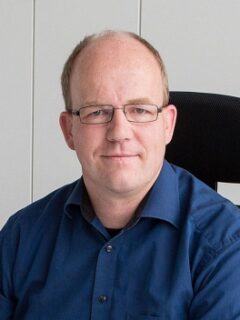
R. Michael van Dam is a Professor in the Department of Molecular and Medical Pharmacology at the University of California Los Angeles (UCLA) School of Medicine. His laboratory focuses on advancing molecular imaging technologies, particularly positron-emission tomography (PET), through innovative microfluidic and automation approaches. He develops cost-effective methods for producing diverse PET tracers and optimizes radiopharmaceutical synthesis for clinical and research applications. Education: B.Sc.E. in Engineering Physics, Queen's University (1996) M.A.Sc. in Computer Engineering, University of Toronto (1998) Ph.D. in Applied Physics, California Institute of Technology (2005) Postdoctoral training in Microfluidics and Radiochemistry, California Institute of Technology (2006) Van Dam's research integrates molecular imaging, microfluidics, and automation to develop novel technologies for radiopharmaceutical production. His work enables high-throughput optimization of tracer synthesis, automated radiosynthesis platforms, and miniaturized analytical systems. Key innovations include droplet-based microreactors for economical tracer production and advanced quality control methods for clinical applications. His lab collaborates extensively on tracer development for imaging biological processes including metabolism, gene expression, and disease mechanisms. His recent publications demonstrate a strong focus on microfluidic reactor design, automated radiosynthesis optimization, and clinical translation of novel PET tracers. Research consistently addresses scalability challenges in radiopharmaceutical production while maintaining rigorous quality standards. Laboratory and Team: Van Dam directs an interdisciplinary research group developing automated technologies for radiochemistry. The lab maintains active collaborations with UCLA colleagues on novel tracer development and validation, and provides PET tracer production services for various research groups. Their work bridges engineering principles with clinical nuclear medicine applications.
Dr. Matthew O'Brien is a Senior Lecturer in Organic Chemistry at Keele University's Lennard-Jones School of Chemical and Physical Sciences. Previously held positions include a Kinerton Lecturer role at Trinity College Dublin (2009-2012), Post-Doctoral research at Cambridge University, and a PhD at the University of Manchester under Professor Jim Thomas. Research Interests Development of novel stereoselective synthetic methodologies Total synthesis of biologically active natural products Enabling technologies for automated chemical synthesis Continuous-flow chemistry systems Innovations in Teflon AF-2400 membrane reactors The 15 most recent publications demonstrate expertise in: Flow reactor design for gas-liquid transformations Computer vision-controlled synthesis systems Cost-effective automation solutions (Raspberry Pi, DIY hardware) Pharmaceutical intermediate preparation Green chemistry methodologies Environmental sensor development Teaching Responsibilities CHE20001: Organic Synthesis and Catalysis CHE20012: Drugs of Abuse CHE20029: Radicals, Phases and Supramolecular Chemistry (Module Leader) CHE30039: Advanced Organic Chemistry (Module Leader) Forensic Toxicology and Dissertation modules
Runa Berg Østby is an Associate Professor at the Department of Nursing, Health and laboratory science at Høgskolen i Østfold (HiOFS). Her academic background includes a PhD in organic chemistry from The Norwegian University of Life Sciences (NMBU). She collaborates with Professor Yngve Stenström's research group at NMBU and participates in the Methods of Teaching for Student Active Learning (UMSAL) research group. Her research interests focus on organic chemistry synthesis of biologically active compounds (e.g., pheromones and pharmacological agents), analytical quality management in healthcare laboratories, and innovative methods like microreactor technology and microwave-assisted synthesis. She teaches courses in statistical analysis, medical biochemistry, and laboratory quality systems. Her publications span organic synthesis methodologies, natural product chemistry, and flow chemistry applications. Notable works include studies on lignan/terpenoid accumulation in Norway spruce and dibromocyclopropanation reactions using flow systems.
Christophe Allemann is a Full Professor at the Fribourg School of Engineering and Architecture (HEIA-FR), part of the University of Applied Sciences and Arts Western Switzerland (HES-SO). He serves as Head of Institute and specializes in synthesis and catalysis, process chemistry, flow chemistry, and chemical production. His research focuses on topics such as sol-gel processes, sensor development, and catalyst optimization. Education: PhD in Chemistry, University of Fribourg, Switzerland (2002) BSc and BA programs in Chemistry and Architecture at HEIA-FR Research Interests: His work spans synthesis methodologies, flow chemistry applications, process scale-up, and risk analysis. He emphasizes interdisciplinary education and the development of robust industrial processes. Publications: His recent work includes advancements in phosgene sensors, lanthanide complexation studies, and mixing efficiency in micromixers. Key themes include catalytic mechanisms, solvent effects, and microreactor technologies. Labs/Teams: As Head of Institute, he leads research teams focusing on chemical production, catalysis, and continuous processing innovations.
Prof. Jens Harting leads the 'Modelling of Thin Films' research group at the Helmholtz-Institut Erlangen-Nürnberg für Erneuerbare Energien (HI ERN). His work focuses on fluid dynamics, thin film behavior, and computational modeling. Key research areas include reactive thin films, microfluidic systems, and nanoscale particle interactions. He has published extensively in top journals like Advanced Materials , Physical Review Letters , and Journal of Fluid Mechanics . Notable contributions include studies on inertial particle migration, bioinspired microswarm robotics, and lattice Boltzmann method optimizations. Current projects explore phase-field simulations for thin film evaporation and energy materials. No awards are explicitly listed, but his work is widely cited in nanotechnology and materials science.
Dr. Nader Karimi is a Reader in Mechanical Engineering at the School of Engineering and Materials Science, Queen Mary University of London, where he conducts cutting-edge research in sustainable energy systems. He is affiliated with the Centre for Sustainable Engineering and contributes significantly to advancements in combustion, heat transfer, and energy conversion technologies. His research interests span a broad range of topics in thermal and energy engineering, including sustainable hydrogen energy, nanofluids, phase change materials, lithium-ion battery thermal management, solar energy systems, entropy and exergy analysis, and computational fluid dynamics. He integrates machine learning techniques with physical modeling to optimize energy systems and improve sustainability. The recent publications highlight a strong focus on hydrogen combustion, sustainable fuel design, solar thermal conversion, battery cooling, and waste heat recovery. His work often combines experimental, numerical, and data-driven approaches to address critical challenges in low-carbon energy technologies, with applications in transportation, power generation, and renewable energy integration. Dr. Karimi actively collaborates with researchers globally and supervises numerous research projects in the field of sustainable engineering. His work is supported by extensive computational modeling and contributes to the development of cleaner and more efficient energy systems.
FILIPE DANIEL RAMOS DE CARVALHO is an active researcher affiliated with the Faculty of Engineering, specializing in bioengineering and sustainability. He contributes to the BioRG (Bioengineering & Sustainability Research Group) and has an h-index of 11, with over 315 citations. Primary research areas: Biotransformation, Bioconversion, Microreactor Technology, Bioprocess Development, and Food Industry applications Key collaborations: International partnerships in biocatalysis and sustainable manufacturing His work focuses on enzyme applications for food valorization, immobilization techniques, and microreactor systems for efficient bioprocessing. Recent developments include cascading continuous-flow technologies and sustainable sweetener production. Research trends indicate a strong emphasis on: Biocatalysis (100% relevance in 2018-2024) Food Industry innovation (100% relevance in 2023-2024) Sustainable production systems (85% relevance in bioconversion) Microscale engineering (57-85% relevance) Scale-up production (57% relevance) With 17 total research outputs since 2009, his work demonstrates consistent application of biocatalytic approaches across multiple domains including pharmaceutical synthesis and food processing.
Paul Kenis is a Professor in the Department of Chemical and Biomolecular Engineering at the University of Illinois at Urbana-Champaign (UIUC). He leads the Kenis Research Group, which focuses on microchemical systems for energy and biological applications. His work spans electrochemical systems for CO2 conversion, microfluidic platforms for crystallization and cell studies, and chemical synthesis in microreactors. Research Interests Electrochemical reduction of CO2 to valuable chemicals and fuels Microfluidic technologies for protein and pharmaceutical crystallization Development of microreactors for quantum dot synthesis and radiopharmaceuticals Autonomous materials discovery and high-throughput experimentation Recent Articles highlight advancements in CO2 capture/conversion, hydrogen production via ammonia electrolysis, and AI-driven nanomaterial synthesis. His team collaborates with institutions like the University of Illinois at Chicago and AbbVie. Awards include the ECS Carl Wagner Memorial Award and the Walter van Schalkwijk Award for contributions to sustainable energy technology. Current research involves optimizing CO2 electrolyzers and developing scalable membranes for carbon capture. Labs/Teams include the Electrosynthesis, Autonomous Synthesis, and Membranes groups, with projects funded by NSF, DOE, and industry partners.
Bernard Treves Brown is a Lecturer in the College of Engineering at the University of Manchester. His research focuses on developing new instrumentation for liquids, particularly in microfluidics, with an emphasis on novel fabrication methods such as precision milling, soft lithography, and laser cutting. His work spans applications in biomedical engineering, environmental science, and materials science, including projects on microfluidic filters for stem cells, ultrasonic filters for biofuel applications, and fiber-optic sensors. Education: Doctor of Philosophy (1995): Instrumentation for Miniaturized Flow Systems, UMIST/University of Manchester Bachelor of Arts (1990): Oxford University Research Interests: Dr. Brown’s current projects include arrays of fiber optic sensors for temperature and chemical sensing, microfluidic methods in burn treatment, and improving Time-of-Flight Secondary-Ion Mass Spectrometry. He collaborates on initiatives like the Manchester Bioelectronics Network, advancing interdisciplinary research in bioelectronics and medical devices. Grants & Projects: Co-PI for Chemical Engineering Education Innovation (ongoing) Co-Investigator in Manchester Bioelectronics Network (2018) Labs/Teams: Active in microfluidics and bioelectronics research groups, contributing to the development of novel devices for biomedical and environmental applications.
Nikolaos Dimitratos is a leading researcher in heterogeneous catalysis and nanomaterials, with a prolific publication record spanning over 225 articles. His work focuses on the design and application of metal nanoparticles for catalytic processes, including oxidation, hydrogenation, and biomass valorization. He collaborates extensively with prominent researchers like Graham J. Hutchings and Laura Prati, contributing to high-impact studies in journals such as ACS Catalysis , Journal of the American Chemical Society , and Accounts of Chemical Research . Research Interests: Nikolaos Dimitratos's research spans several key areas: Heterogeneous Catalysis: Development of efficient catalysts for oxidation and hydrogenation reactions. Nanomaterials: Synthesis and characterization of metal nanoparticles (Au, Pd, Pt) for catalytic applications. Green Chemistry: Sustainable catalytic processes for biomass conversion and environmental remediation. Energy Applications: Hydrogen production, methane oxidation, and photocatalytic systems. Scientific Contributions: His work has significantly advanced the understanding of gold-based catalysts, bimetallic nanoparticles, and their role in selective transformations. Notable contributions include the oxidation of glycerol, methane activation, and the development of cluster-based catalysts. His studies often combine experimental and computational approaches to elucidate reaction mechanisms and optimize catalyst performance. Collaborations and Impact: Nikolaos Dimitratos has co-authored papers with over 50 collaborators, including Graham J. Hutchings, Laura Prati, Alberto Villa, and Christopher J. Kiely. His collaborative work has been instrumental in shaping the field of catalysis, particularly in the areas of gold catalysis and sustainable chemistry.
Professor Marc Pera Titus is the Chair in Sustainable Catalytic Chemistry and Director of the School of Chemistry at Cardiff University. His research program focuses on developing sustainable catalytic processes with particular emphasis on interfacial phenomena, biomass conversion, and green chemistry applications. Professor Pera Titus's research interests span heterogeneous catalysis, sustainable chemistry, biomass conversion, interfacial catalysis, Pickering emulsions, gas-liquid-solid reactions, alcohol amination, and furfural conversion. His work bridges fundamental chemical engineering principles with practical applications in sustainable chemistry, developing innovative catalytic systems for green chemical synthesis. He has pioneered approaches in interfacial catalysis using Pickering emulsions and foams, creating novel platforms for sustainable chemical transformations. His recent publications demonstrate a strong focus on microstructured interfaces for sustainable synthesis, metal-free catalysis using nanoceria, and innovative approaches to biomass conversion. His work on amphiphilic Janus particles for aerobic oxidation and ethanol foams stabilized by dual-particle assemblies represents cutting-edge developments in interfacial catalysis. The research trends show increasing emphasis on sustainable catalytic platforms that minimize energy consumption and waste generation. Professor Pera Titus has made significant contributions to the field through his extensive publication record in high-impact journals including Science Advances, Nature Communications, ACS Catalysis, and Journal of the American Chemical Society. His research group actively collaborates with industry partners to translate fundamental discoveries into practical applications, with particular focus on sustainable chemical processes and green synthesis methodologies.
Paul J.A. Kenis is a Professor in the Department of Chemical and Biomolecular Engineering at the University of Illinois at Urbana-Champaign, where he leads the Kenis Research Group in the College of Engineering. His work spans multiple interdisciplinary areas at the intersection of chemical engineering, electrochemistry, and microfluidics. Dr. Kenis received his M.Sc. from the University of Nijmegen in the Netherlands (1993), his Ph.D. from the University of Twente (1997), and completed postdoctoral work at Harvard University (1997-2000). His research focuses on microchemical systems including microreactors, microfuel cells, and microfluidic tools for applications in energy conversion, chemical synthesis, and biological studies. His research interests encompass electrochemical systems for CO 2 conversion and fuel cells, microfluidic platforms for protein and pharmaceutical crystallization, microfluidic systems for studying cellular processes, and microreactors for chemical synthesis. His group has developed innovative approaches including membraneless microfluidic fuel cells, electrochemical regeneration of cofactors, ceramic microreactors for hydrogen production, and evaporation-based platforms for protein crystallization. His recent publications demonstrate a continued focus on electrochemical manufacturing, autonomous materials synthesis, and CO 2 conversion technologies, with significant contributions to understanding reaction engineering at microscales and developing practical applications for sustainable chemical production. Fellow, Electrochemical Society (2019) University Scholar, University of Illinois (2011) Beckman Fellow, Center for Advanced Study (2007-2008) Helen Corley Petit Scholar (2007-2008) CAREER Award, National Science Foundation (2006) Xerox Award for Faculty Research (2006) Excellence in Teaching Award (2006) Dr. Kenis has received consistent recognition for his advising and teaching excellence, including multiple Excellence in Advising Awards from the College of Engineering. His research group continues to grow, with numerous graduate students, postdocs, and undergraduates working on cutting-edge projects in electrochemical manufacturing and nanomaterial discovery. The group maintains strong connections with industry partners and collaborates with other research groups across disciplines to advance microchemical systems technology.
Dr. Barbara Dittrich is a Project Leader specializing in polymer synthesis and biomaterials. She is actively involved in interdisciplinary research at the intersection of biotechnology, materials science, and biomedical engineering. Her work focuses on developing advanced polymer-based systems for applications in tissue engineering, drug delivery, and sustainable bioprocesses. Her research interests include polymer synthesis , biomaterials design , tissue engineering scaffolds , controlled release systems , and microalgal biotechnology . She has contributed to innovative projects such as smart polymers for virus detection (NARRATE), early overload indicators in protective gear (FrÜling), and sustainable flow chemistry (InFlow). The recent publications highlight a strong trend in functional biomaterials and bioprocess optimization . Her work spans from fundamental polymer chemistry to applied medical devices, demonstrating a translational research approach. Keywords across her articles reflect expertise in stem cells, antifouling surfaces, microreactors, and sustainable formulations. Dr. Dittrich leads multiple research projects, indicating active grant funding and team leadership. Although no scientific awards are listed, her consistent publication record in high-impact journals suggests recognition in her field. She collaborates with multidisciplinary teams across institutions, contributing to advancements in both academic and applied research settings. Her laboratory or research group appears to focus on polymer-based technologies for biomedical and environmental applications. Projects like SiO2 microcapsules for textiles and phosphate functionalization from renewable sources (ProPhos) suggest a strong emphasis on sustainability and real-world implementation.
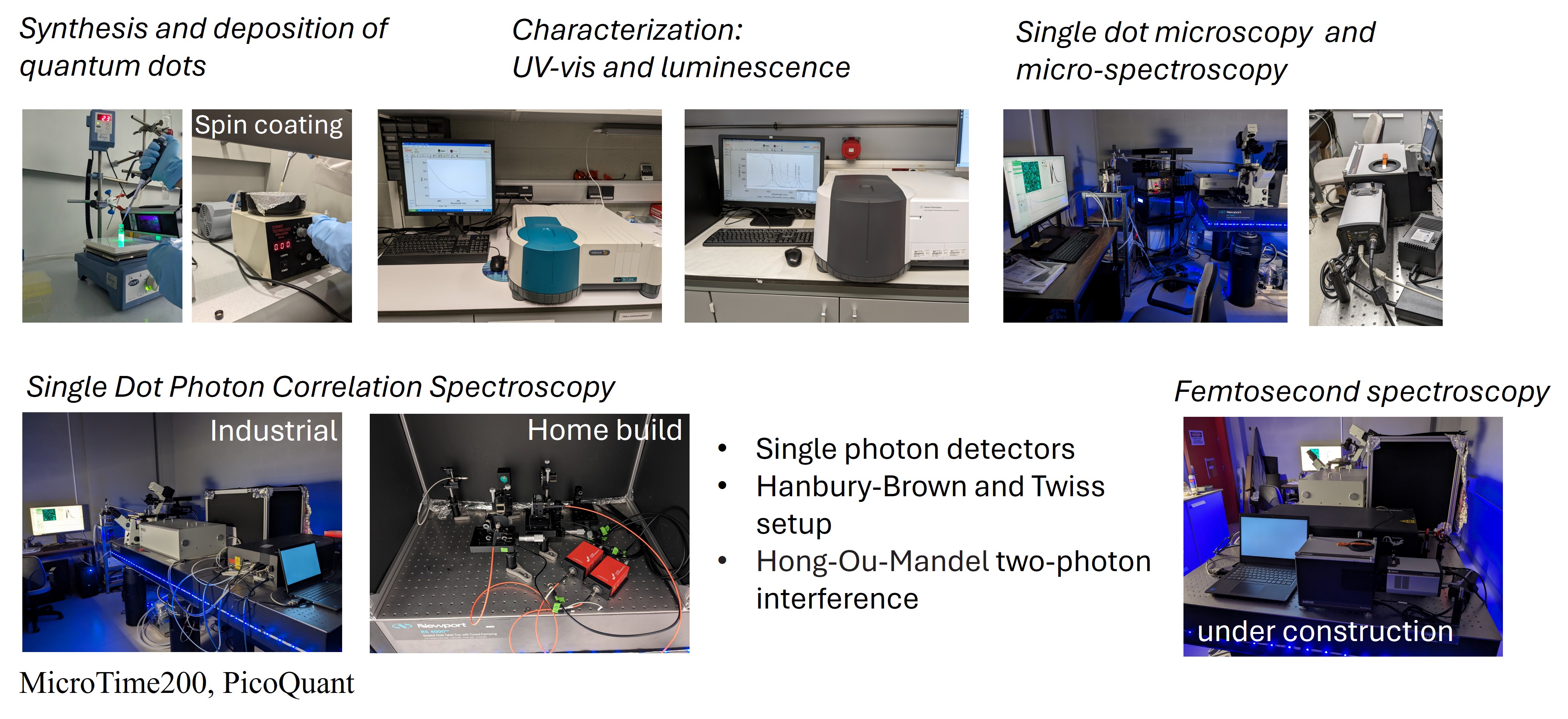
Yury Rakovich is an Ikerbasque Research Professor at the Materials Physics Center (MPC) in Donostia/San Sebastián, Spain. He leads the Nanomaterials and Spectroscopy Group , focusing on light-matter interactions in hybrid nanostructures such as quantum dots, metal nanoparticles, and J-aggregates. His work spans photonic applications, plasmon-exciton coupling, and field-enhanced spectroscopy. Research Topics : Exciton-plasmon interactions, microcavity optics, nonclassical light emission, and nanoscale energy transfer. Education : Implied through academic leadership and collaborations, though specific degrees aren't detailed. Students and Collaborators : Mentored PhD students including Alba Jumbo Nogales , Joscha Kruse , and Maria Sanromán , with visiting researchers like Prof. Mikhail Vasilevskiy and Prof. John Donegan. Infrastructure : Utilizes facilities in Photonics and Chemistry at MPC. Recent Publications : Explore DNA-assembled nanocrystals, thermoplasmonic oscillations, and plasmon-enhanced photochemistry, reflecting interdisciplinary expertise in nanomaterials and spectroscopy.