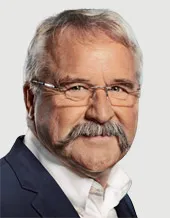
Matthias Hettel is a Higher Academic Councillor and Senior Scientist at the Institute for Chemical Technology and Polymer Chemistry, Karlsruhe Institute of Technology (KIT). His research focuses on computational fluid dynamics (CFD), combustion phenomena, and reactor engineering. He holds a Diploma in Mechanical Engineering (1990, specializing in Energy Technology and Fluid Dynamics) and a PhD in Chemical Engineering (2006, thesis on flame dynamics and numerical analysis). His work spans reactive/non-reactive flow modeling, catalytic systems (e.g., monolith reactors), fixed-bed reactor design, and numerical methods like CFD-DEM coupling. Notable contributions include the DUO simulation framework for multiphysics modeling and optimization of industrial reactors. He has received the Posterpreis der Fachgruppe Reaktionstechnik (2014) for his work on coupled 2D/3D CFD modeling of catalytic reactors. Key research areas include: combustion dynamics, fluidized bed reactors, emission control systems, and microfluidic tissue engineering. His interdisciplinary projects bridge chemical engineering, environmental science, and biomedical applications.
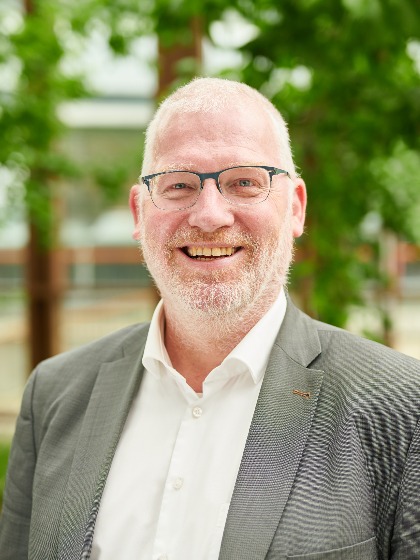
Koen P.L. Kuijpers is a University Researcher in the Department of Chemical Engineering and Chemistry at Eindhoven University of Technology. He holds an MSc in Chemical Engineering & Chemistry from the same institution, completing his thesis on gas-liquid photoredox catalysis scale-up under Timothy Noël. His research focuses on microreactor engineering, particularly in flow chemistry systems and solar-powered chemical processes. Education: Master's in Chemical Engineering & Chemistry (Eindhoven University of Technology). Research interests include photocatalysis, renewable energy integration in chemical processes, and sustainable process design. He contributes to UN Sustainable Development Goals related to clean energy and industrial innovation. Notable research outputs include advancements in flow reactor design, solar-powered autonomous chemical plants, and educational flow chemistry experiments. His work emphasizes process intensification, reactor optimization, and energy-efficient chemical synthesis.
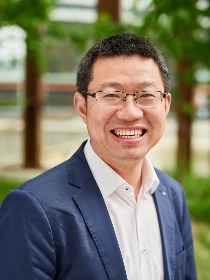
Maria Fernanda Neira D'Angelo is an Associate Professor in Chemical Engineering and Chemistry at Eindhoven University of Technology (TU/e), specializing in Sustainable Process Engineering and Chemical Reactor Engineering. She is affiliated with EIRES Research and the Chemelot InSCiTe NIOK initiative, collaborating with industrial partners like SABIC. Her work focuses on developing sustainable chemical processes with a strong emphasis on biomass conversion technologies. Dr. Neira D'Angelo's academic journey includes: Chemical Engineering studies at Universidad Complutense de Madrid, Spain Master's research on biomass gasification and Fischer-Tropsch Synthesis at TU/e (2010, cum laude ) PhD in catalytic conversion of biomass via Aqueous Phase Reforming at TU/e (2014, cum laude ) Her research profile centers on reaction and catalysis engineering to develop novel sustainable process technologies, particularly for converting lignocellulosic biomass to chemicals and fuels. She integrates reactor engineering with catalysis development, focusing on multiphase reactors and novel reactor concepts like foam-based, spinning disc, and microreactors. Her work targets the efficient utilization of entire lignocellulose fractions (sugars and lignin) to realize a future bio-based economy. This research directly contributes to UN Sustainable Development Goals related to sustainability and clean energy. Analysis of her recent publications reveals strong trends in biomass valorization, particularly lignin-first approaches, hydrogen production, and CO 2 conversion technologies. Her work increasingly focuses on integrating novel reactor designs with advanced catalytic systems, with growing emphasis on electrochemical conversion processes and membrane technologies for separation. The research spans fundamental catalyst development to process-scale engineering considerations. Dr. Neira D'Angelo has received academic recognition through cum laude distinctions for both her Master's and PhD work. While specific named awards aren't detailed in the provided information, her research has generated significant scholarly impact with over 1000 citations according to Scopus metrics. Her work has been featured in multiple press and media outlets, highlighting its relevance to sustainable aviation, climate change mitigation, and the broader transition to a circular economy. With an impressive research output of 97 publications and supervision of 65 student works, Dr. Neira D'Angelo maintains an active research program. Her current projects include the GICO project (Gasification Integrated with CO 2 capture and conversion, 2020-2024), where she serves as a project member. She teaches courses in Chemical Reactor Engineering (since 2020) and Chemical Reactors (since 2013, through 2025), demonstrating her commitment to education alongside research. Dr. Neira D'Angelo's research group operates at the intersection of reactor engineering and catalysis, with particular expertise in microreactor technology, membrane reactors, and novel catalyst development. Her team's work often involves interdisciplinary collaboration, bridging chemical engineering, materials science, and sustainable chemistry to address complex challenges in biomass conversion and renewable energy technologies.
Dr. David Sawtell is a Senior Lecturer at Manchester Metropolitan University , specializing in non-thermal plasmas for materials production and environmental applications. His work bridges chemical engineering, plasma diagnostics, and sustainable technologies. PhD in Chemical Engineering, University of Manchester Masters in Chemical Engineering with Industrial Experience, UMIST Research Interests: Non-thermal plasmas for water treatment and waste remediation Infrared spectroscopic probing of plasma-material interactions Development of microfluidic plasma reactors Surface engineering with titanium dioxide and graphene composites Sustainable nanomaterial synthesis and environmental impact assessment Plasma-enhanced chemical vapor deposition (PECVD) optimization Publication Trends: Recent work focuses on water treatment via plasma, 2D nanomaterials, and environmental impact of waste technologies. Earlier studies emphasize plasma diagnostics, thin film characterization, and industrial fabrication methods. Scientific Contributions: Associate Member of the Institution of Chemical Engineers Key research in plasma-based microbial inactivation and VOC decomposition Innovations in auxetic foam fabrication for sports and industrial uses
Ib Chorkendorff is a Professor of Heterogeneous Catalysis at the Technical University of Denmark (DTU), Physics Department. He holds a Hans Fischer Senior Fellowship at the Technical University of Munich (TUM) since 2020. With a PhD from Odense University (1985) and postdoctoral work at the University of Pittsburgh, he has been at DTU since 1987. His research focuses on catalysis for energy conversion, environmental protection, and sustainable fuels, emphasizing ammonia synthesis, photocatalysis, and electrochemical processes. Key affiliations include leadership roles at the Villum Center for Science of Sustainable Fuels and Chemicals (since 2016) and the Danish National Research Foundation’s Center for Individual Nanoparticle Functionality (2005-2016). He co-founded three startups: RENCAT APS, HPNOW APS, and Spectroinlets APS. His research interests span catalysis fundamentals, surface science, energy harvesting/conversion, and reaction kinetics. Notable achievements include the Eni Award (2022), Villum Kann Rassmussen Award (2021), and Royal Danish Academy membership (2018). His work addresses global challenges like sustainable energy production and reducing environmental impact through advanced catalyst development. Publications emphasize electrochemical ammonia synthesis, photocatalytic systems, and catalyst optimization. Collaborative projects include work with TUM’s Ulrich Heiz and Ian Sharp, focusing on cluster-assembled materials for light-induced molecular transformations.
Elias Klemm is Professor and Head of the Institute of Technical Chemistry at the University of Stuttgart. His research spans catalysis, electrochemical engineering, and reaction technology with significant focus on CO2 conversion processes. Key research domains include: Electrochemical CO2 reduction to value-added chemicals Catalyst design for selective oxidation reactions Development of advanced reactor systems (microreactors, flow cells) Recent publications demonstrate innovations in metal-organic catalysts, gas diffusion electrodes, and catalyst deactivation mechanisms. Collaborative work includes integration of electrochemical processes with microbial systems.
Professor Farid Christo is an Adjunct Professor at RMIT University's School of Engineering. His research focuses on combustion engineering, thermal plasma technology, sustainable energy systems, and biomedical applications. He is actively involved in supervising Masters and PhD students. His work spans topics such as hydrogen combustion optimization, environmental-friendly fuel production, and plasmonic nanomaterials for energy conversion. He has contributed to advancements in chemical looping processes, thermal plasma-driven metal recycling, and CO2 utilization.
Viorica Railean is an Assistant Professor at Nicolaus Copernicus University's Faculty of Biological and Veterinary Sciences, specializing in veterinary medicine and antimicrobial nanotechnology applications. Her research focuses on silver/zinc nanocomposites' antibacterial properties, MALDI-TOF mass spectrometry, and analytical techniques for microbial diagnostics. Education: Doctorate in Veterinary Science (2018) Her work spans nanoparticle synthesis for wound healing, bacterial identification methods, and food microbiology applications. Recent publications emphasize environmental remediation using diatom-based nanomaterials and metal ion interactions with proteins. Research trends indicate cross-disciplinary exploration of nanotechnology in veterinary medicine, food safety, and environmental applications, utilizing techniques like flow cytometry and capillary electrophoresis. As a member of the "One Health – antimicrobial stewardship" team, Railean contributes to combating antibiotic resistance through biological synthesis approaches and microbial analysis innovations.
Michael Oelgemöller is a Professor of Chemistry at James Cook University (JCU), specializing in photochemistry, green chemistry, and sustainable technologies. His research focuses on developing photochemical synthesis methods, flow chemistry systems, and applications of solar energy in chemical production. He leads the Applied and Green Photochemistry research group, advancing technologies like continuous-flow reactors and photocatalytic processes for fine chemical manufacturing. Education details are not explicitly provided in the text, but his career includes international collaborations across institutions such as CNRS (France), DCU (Ireland), and universities in Germany and Japan. His work spans organic synthesis, materials science, and environmental applications like wastewater treatment using photocatalysts. Research interests include: (1) Photocatalytic reactions for drug and material synthesis, (2) Development of solar-driven chemical processes, (3) Flow chemistry for scalable production, (4) Antibiotic and bioactive compound discovery via photochemical pathways, (5) Graphene-based materials for energy applications. Recent trends in his publications emphasize sustainable methodologies and interdisciplinary applications of light-driven chemistry. Notable contributions include pioneering solar chemical production techniques, advancing microreactor technologies, and investigating natural products from Australian flora for medicinal uses. His lab collaborates globally on topics like coral reef toxicity studies and tropical medicinal plant analysis. Grants and funding details are not explicitly listed, but his research is supported by initiatives like the TropEco Research Award (2014) and international conferences like the IUPAC SYNPHO project. He has authored over 200 publications and holds patents related to chemical synthesis and environmental applications. Labs/teams: Leads the Applied & Green Photochemistry Group at JCU, collaborating with institutions worldwide. Key projects include the 'Eradicate Insect-borne Diseases with Sunlight' initiative and solar trough reactor systems for chemical synthesis.
Caleb Brooks is an Associate Professor at the University of Illinois Urbana-Champaign's Department of Nuclear, Plasma, and Radiological Engineering, and a Donald Biggar Willett Faculty Scholar. He holds a parallel appointment as WPI Associate Professor at Kyushu University's International Institute for Carbon-Neutral Energy Research. Brooks earned his B.S. and Ph.D. in Nuclear Engineering from Purdue University (2008, 2014). His research focuses on advanced reactor designs, reactor thermal-hydraulics, interfacial area transport, and transient accident analysis. Key areas include molten salt reactors, microreactor integration, and thermal-hydraulic modeling. He leads the Multiphase Thermo-fluid Dynamics Laboratory and the Illinois Microreactor RD&D Center, advancing innovations in nuclear energy systems and decarbonization strategies. Brooks teaches courses on nuclear system engineering, heat transfer, and computational multiphase flow. His work spans 150+ publications, emphasizing reactor safety, xenon dynamics, and energy system integration. He has secured grants, including a $2M DOE award for fuel storage solutions, and collaborates globally on projects like the KRONOS microreactor and nuclear-hybrid microgrids. Brooks is a sought-after reviewer for journals like Nuclear Science and Engineering and serves on the editorial board of Experimental and Computational Multiphase Flow . His professional memberships include the American Nuclear Society and American Society of Thermal and Fluids Engineers.
Prof. Gert-Jan Euverink is a Professor in Biotechnology at the University of Groningen’s Faculty of Science and Engineering, affiliated with the Engineering and Technology Institute Groningen (ENTEG). He specializes in bioprocess engineering, focusing on sustainable resource recovery from agricultural and industrial waste streams. His work emphasizes anaerobic digestion, bioplastic production, and microbial community analysis using advanced genomic techniques. Education: PhD in Microbiology/Biochemistry (University of Groningen, 1995). Postdoctoral research at NIKO-TNO (1994-1998) led to discoveries in starch enzymology. Founded a high-throughput screening lab at Groningen (1998). Research Interests: Clean bioprocessing, low-energy fermentation systems, and microbial metabolism modeling. Key areas include Biorefinery design PHA production from xylan Microbial community dynamics in wastewater Biogas enhancement via bioaugmentation Key Activities: Deputy Scientific Director of Wetsus (2004–present), Technological Top Institute for Water Technology. Board member of Koninklijk Natuurkundig Genootschap and Groningse Chemische Kring. Lab Facilities: Uses 3D-printed microreactors, Zernike Advanced Processing (ZAP) facility, and REMO-lab for scale-up studies. Collaborates with industries and universities in pilot projects.
Nina Kann is a Professor of Organic Chemistry at Chalmers University of Technology and leads a research group focused on method development in organic chemistry, synthesis of functional organic molecules, and catalytic processes. She serves as Vice Head of the Department of Chemistry and Chemical Engineering, overseeing graduate education. Her research interests include domino reactions, biocatalysis, transition metal catalysis, green hydrogenation methods, and molecular sensors using click chemistry. Research Interests: Development of catalytic methods for sustainable synthesis Cross-coupling reactions and transition metal chemistry Molecular sensors and photoswitchable materials Biomass valorization and green chemistry approaches Recent Articles: Recent work includes studies on ruthenium-catalyzed dimerization of vanillin, carbon-carbon bond formation from biomass aromatics, and E-selective alkyne hydrogenation using alcohols as hydrogen sources. These contributions highlight advancements in catalytic efficiency and sustainable chemical processes. Grants & Projects: Lead PI on projects such as 'Iron- and enzyme-based tools for enhancing biomass value' (2022–2023) and 'Katalytiska metoder för förädling utav molekyler ifrån biomassa' (2016–2019), funded by Vetenskapsrådet (VR) and Formas. Labs & Teams: Her research group actively explores synthetic strategies for functional molecules, leveraging both biocatalytic and transition metal-based approaches. The group collaborates on projects involving molecular solar thermal energy storage and chiral foldamer synthesis.
Jun Yue is an Associate Professor at the University of Groningen's Faculty of Science and Engineering, within the Green Chemical Reaction Engineering group. He holds roles such as Coordinator for the Chemical Engineering Traineeship and Member of the ENTEG board. His research focuses on process intensification, microreactors, and catalytic conversion of bio-based chemicals. He completed his PhD in Process Engineering at Université Savoie Mont Blanc (France) in 2008, followed by postdoctoral work at Eindhoven University of Technology (2009–2014). His research group develops novel reactor concepts (e.g., microreactors, centrifugal devices) and nanostructured catalysts for sustainable chemical synthesis. Key topics include bio-based chemical production, multiphase reactors, and energy conversion. He has supervised numerous PhD and master's students, with active collaborations on projects like bio-based chemical synthesis and methane combustion in microreactors. His work aligns with UN Sustainable Development Goals related to affordable and clean energy (#7) and responsible consumption and production (#12). Recent publications highlight advancements in microreactor hydrodynamics, catalytic processes for furan derivatives, and biomass valorization. He teaches courses on transport phenomena, advanced process technologies, and microfluidics, contributing to both academic and applied research in chemical engineering.
Professor Russell Harris is a leading academic in advanced manufacturing and biomedical engineering at the University of Leeds, School of Mechanical Engineering. His work bridges academia and industry, focusing on high-value manufacturing processes, soft robotics, and medical device development. Prior to Leeds, he held a Chair at Loughborough University. Research Interests: Advanced manufacturing technologies including additive manufacturing, microfabrication, and material synthesis Interdisciplinary applications in biomedical engineering (e.g., tissue engineering, medical devices) Terahertz optics and liquid crystal materials Healthcare policy and screening practices Key Contributions: Over 100 publications in top journals like Proceedings of the Royal Society and The Lancet Recipient of prestigious awards including the Queen’s Anniversary Prize (2013) and multiple Institution of Mechanical Engineers prizes Principal investigator for EPSRC, EC, and industry-funded grants Scientific Impact: His research encompasses both technical innovation (e.g., embedded electronics in metal components) and healthcare policy (e.g., diabetes screening guidelines). Recent work explores soft magnetic robots, THz-frequency optics, and decision-making frameworks for medical screening. Advising & Grants: Guides postgraduate researchers like Zaneta Koszowska and Midori Sanchez-Sifuentes Leads projects funded by EPSRC, European Commission, and the US Preventive Services Task Force Labs/Teams: Associated with the Future Manufacturing Processes Group and the Institute of Design, Robotics and Manufacturing at Leeds.
проф. др Никола Никачевић is a Full Professor at the Department of Chemical Engineering, Technical Faculty in Bor (TMF), University of Belgrade. He specializes in chemical engineering with a focus on process intensification, reaction engineering, and mathematical modeling of chemical processes. His research emphasizes optimizing fixed-bed reactors for Fischer-Tropsch synthesis, catalyst performance analysis, and multiphase flow dynamics. His work combines computational modeling (CFD, reaction kinetics) with experimental validation to enhance reactor efficiency and reduce environmental impacts. Key areas include: Fischer-Tropsch synthesis optimization, catalyst deactivation mechanisms, and process intensification via microreactor technologies. Prof. Nikčević has advised numerous PhD, master's, and undergraduate students on advanced topics like enzymatic reactor design, hydrodynamic studies of oscillating flow systems, and environmental impact assessments. His publications span high-impact journals like Chemical Engineering Science, Industrial & Engineering Chemistry Research, and Catalysis Today, focusing on reactor design, process modeling, and catalyst characterization.