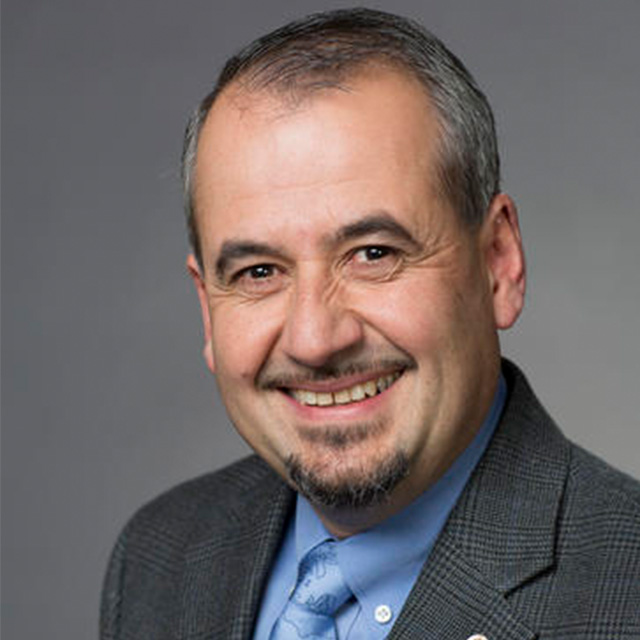
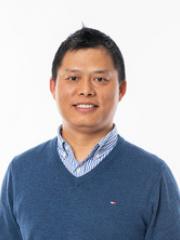
Victor Vasquez is a Professor and Chair of the Chemical and Materials Engineering Department at the University of Nevada, Reno (UNR). He holds a PhD in Chemical Engineering from UNR (1999) and focuses on thermodynamics, atomistic modeling, and process systems engineering for extreme materials. Key projects include Metal hexaboride research for neutron detection Reverse micellar systems for nanoparticle synthesis Lithium and cobalt supply chain analysis via complex networks Geothermal energy life cycle analysis Thermal pretreatment of lignocellulosic biomass Research keywords include: Materials Science Thermodynamic Modeling Molecular Dynamics Machine Learning Environmental Engineering Supply Chain Optimization Scientific awards: DELTA New Department Leaders Institute (2023) Faculty Academic Leadership Program (2019) He mentors graduate and undergraduate students, particularly from diverse backgrounds, and serves as adviser for UNR's AIChE and SHPE student chapters. Collaborations span UC San Diego, Alfred University, and Latin American institutions. Leadership roles include AIChE NORCAL section director (2010-2017) and ABET symposium participation (2021).
Ernesto Herrera Pedroviejo serves as an Associate lecturer at the Blanquerna School of Health Sciences, Ramon Llull University (URL) in Barcelona, Spain, with an active research profile in emergency medical systems. Contactable via ernestohp1@blanquerna.url.edu and ORCID 0000-0002-4163-4558, his scholarly impact includes 62 citations and an h-index of 4 per Scopus metrics, reflecting contributions to life-saving healthcare innovations. His research centers on Emergency Medicine with specialized expertise in Basic Life Support (BLS) , Cardiopulmonary Resuscitation (CPR) , and technology-integrated medical training. Key investigations include comparative analyses of resuscitation devices (pocket masks vs. bag-valve masks), augmented reality applications for BLS instruction via smart glasses, and novel approaches to aquatic emergency response. His work bridges clinical practice with digital innovation, particularly through video communication systems for dispatcher-assisted bystander interventions and biomechanical assessments of postural stability. Publication trends from 2020-2025 reveal a strategic focus on pilot studies evaluating real-world feasibility of emergency response tools. Dominant themes include technology-enhanced medical education (evident in 2023 AR training studies), device optimization for field use (2020 flotation device research), and advanced resuscitation techniques (2025 mask comparison study). This trajectory demonstrates consistent methodological emphasis on simulation-based validation and human-factor analysis in high-stakes emergency scenarios.
Dr. Jianbing Li is a Professor and Professional Engineer (P.Eng.) in the Environmental Engineering Program at the University of Northern British Columbia (UNBC), holding prestigious fellowships from CSCE, CSSE, EIC, and Engineers Canada. His research program addresses critical environmental challenges with significant real-world impact, particularly in northern and remote communities of British Columbia. Education: PhD in Environmental Systems Engineering, University of Regina Research Focus: Dr. Li's work centers on environmental pollution control , petroleum waste management , soil and groundwater remediation , environmental modeling , risk assessment , and oil spill response . His innovative approaches integrate machine learning, advanced materials, and sustainable engineering principles to develop practical solutions for complex environmental problems, with particular emphasis on resource recovery from waste streams. Publication Trends: Analysis of his 15 most recent publications (2023-2025) reveals a strategic focus on oil spill response technologies, wastewater treatment innovations, and waste valorization. Key advancements include nano/micro bubble flotation systems, chitosan-based adsorbents, and machine learning models for pyrolysis optimization, demonstrating his leadership in translating laboratory research to field applications. Scientific Recognition: 2024 Fellow of Engineers Canada and Engineering Institute of Canada 2023 CSCE Dr. Albert E. Berry Medal (Canada's top environmental engineering award) Multiple UNBC Research Excellence Awards (2010, 2014, 2019, 2023) 2013 Northern BC Business and Technology Award with Husky Energy Best paper awards from International Academy of Science and Environmental Geotechnology Society Research Leadership: Dr. Li has secured over $800,000 in 2023 and $1.9 million in 2020 for oil spill response research through NSERC, DFO, and NRCan. His current portfolio includes groundwater protection for Indigenous communities, next-generation decanting technologies, and water security for remote regions. He actively mentors PhD, MSc, and MASc students while serving on NSERC evaluation committees and co-directing the UNBC/UBC environmental engineering program (2013-2017). Collaborative Networks: Dr. Li leads multi-institutional partnerships with UBC, government agencies, industry (including Husky Energy), and Indigenous communities like Lheidli T'enneh First Nation. His work through the Multi-Partner Research Initiative addresses practical challenges in rural British Columbia while advancing fundamental knowledge in environmental systems engineering.
Prof. Feridun Boylu is a Professor in the Department of Mineral Processing Engineering at Istanbul Technical University (ITU), affiliated with the Faculty of Mines. His research focuses on mineral processing techniques, coal technology, and industrial raw materials. He holds a PhD in Ore Coal Preparation and Evaluation from ITU and has extensive experience in academic leadership roles, including Head of Department and Advisor to the Rector at ITU. His work spans over 30 years, with contributions to coal flotation, dense medium cyclones, and bentonite characterization. Prof. Boylu has supervised numerous theses and leads projects funded by national and international grants, including EU initiatives like FineFuture. His research emphasizes sustainable mining practices and advanced separation technologies. Education: PhD (Ore Coal Preparation and Evaluation, ITU, 2004), MSc (Ore Coal Preparation, ITU, 1998), BSc (Mining Engineering, ITU, 1993) Key Roles: Professor at ITU, Former Head of Department (2021–2021), Erasmus Coordinator (2020–present), and International Student Coordinator (2021–present) Research Interests: Chemical-biological recovery techniques, coal water slurries, flotation optimization, and mineral beneficiation. His work addresses challenges in fine particle flotation, coal preparation, and sustainable utilization of industrial raw materials. Recent Projects: Includes the EU-funded FineFuture project (2019–2023) and studies on three-product dense medium cyclones and machine learning for mill liner wear prediction. His research bridges theoretical modeling and industrial applications in mineral processing.
Ahmet Deniz Baş is an Associate Professor at the Faculty of Engineering, Department of Mining Engineering (Mineral Processing Division) at Muğla Sıtkı Koçman University. With a Ph.D. in Metallurgy from Université Laval and prior degrees from Karadeniz Technical University, he specializes in hydrometallurgy, gold and copper extraction, and sustainable resource recovery from primary and secondary sources. Education: BSc and MSc in Mining Engineering (Karadeniz Technical University); Ph.D. in Metallurgy (Université Laval) His research focuses on electrochemical dissolution/passivation of gold during cyanidation, bioleaching of metals from electronic waste, and optimization of hydrometallurgical processes. He has authored key studies on gold recovery from refractory ores, silver extraction from X-ray films, and environmental mitigation in mineral processing. Dr. Baş’s 15 most recent publications span topics like Hydrometallurgy , Minerals Engineering , and Environmental Metal Recovery , with keywords covering electrochemical interactions, gold processing, bioleaching, and sustainable mining practices. Scientific Awards: Emerging Professional Award 2017 (Hydrometallurgy Technical Section) Gordon M. Ritcey Ph.D. Award 2016 He has led international projects on zero-waste valorization of ores, improved leaching kinetics, and mercury sequestration in gold processing. His editorial roles include associate editorships for Minerals Engineering and CIM Journal .
Professor Nicholas Warren is a Chair in Sustainable Materials at the School of Chemical, Materials and Biological Engineering at the University of Sheffield. With a PhD from Sheffield and academic experience at Leeds University (2016-2024), his research integrates polymer chemistry with automation technologies. Education: University of Bristol (2005), University of Sheffield (PhD) Academic Positions: Postdoc at Sheffield (2005-2016), University Academic Fellow at Leeds (2016-2024), Associate Professor (2021-2024) Current Role: Chair in Sustainable Materials (2024-present) Research focuses on polymer science with flow chemistry , online monitoring , and artificial intelligence to advance sustainable materials. Key article trends include self-driving laboratories , multi-objective optimization , and nanostructured polymer systems . Scientific recognitions include: 2022 Macro Group UK Young Researchers Medal 2023 RSC Reaction Chemistry & Engineering Outstanding Early Career Paper Award Advisees span current and alumni PhD students like Dr Stephen Knox , Anna Morrell , and Dr Charlotte Pugsley . His team employs self-driving lab platforms that combine robotics, AI, and online analytics for accelerated materials discovery.
Lasse Heikkinen is a Senior Lecturer at the Department of Technical Physics, Faculty of Science, Forestry and Technology, University of Eastern Finland. His work spans applied physics, process tomography, and educational technology, with a focus on innovative teaching methods like flipped classrooms during the pandemic. Current Role: Deputy Head of Department, Senior University Lecturer Research Themes: Electrical impedance tomography for industrial processes, flipped teaching frameworks, and physics education adaptation to remote learning. Recent publications highlight his dual expertise in process tomography (gas-solid flows, pharmaceutical monitoring) and pedagogical innovation (learning analytics, flipped classrooms). He has contributed to educational manuals and toolkits for teacher training. Key Projects: Technology education infrastructure development (2015–2024), pandemic-era teaching adjustments (2022). Collaborations: Active in international process tomography conferences and multidisciplinary teams like the Ameba project.
Jens Gutzmer is Professor and founding Director of the Helmholtz Institute Freiberg for Resource Technology (HIF) at Helmholtz-Zentrum Dresden-Rossendorf. His research focuses on developing sustainable technologies for mineral resource extraction and recycling, with expertise in geometallurgy, mineral characterization, and hydrothermal systems. He holds a visiting professorship at the University of Johannesburg and leads international collaborations in resource technology. Education includes a Diplom in Mineralogy (Technical University of Clausthal-Zellerfeld, 1993) and PhD in Geology (Rand Afrikaans University, 1996). His research investigates mineral deposit formation, resource recovery from secondary sources, and sustainable materials processing. Recent work emphasizes circular economy approaches for critical raw materials. Research encompasses geometallurgical process optimization, 3D mineral quantification, and novel extraction methods. Publications demonstrate consistent focus on resource efficiency, with recent articles exploring electrolyzer recycling, tailings reprocessing, and sustainable electronics design. Awards include: President Award of NRF South Africa (1999) Waldemar E. Lindgren Award (2002) TWAS Award (2007) Mercator Professorship (2003-2004) Directs HIF's research infrastructure including FlexiPlant for recycling 4.0 technologies and metallurgy pilot plants. Leads European Rare Earths Competency Network initiatives and advises Rock Tech Lithium Inc.
Douglas Adamson is a Professor in the Department of Chemistry at the University of Connecticut. His research focuses on materials synthesis, particularly on well-defined polymers and graphene-based composites. He utilizes high vacuum anionic polymerization and self-assembly techniques to create advanced materials with applications in energy storage, sensing, and environmental remediation. Ph.D., University of Southern California B.S., University of Evansville Research interests include: Graphene and 2D nanosheet composites Anionic polymerization for precision polymer architectures Conductive hydrogels and foams Bio-mimetic material design Flame-resistant polymer systems Recent publications highlight work on graphene-stabilized polyHIPE foams, conductive hydrogels, and bio-inspired polymer synthesis. His group explores the interplay between material microstructure and macroscopic properties through experimental and computational approaches. Lab and team activities center on creating novel polymer templates and scalable methods for graphene exfoliation. Projects include mineral separation technologies, wearable sensors, and self-assembled 3D graphene architectures.
Kristian Soltesz is a Senior Lecturer and Project Manager in the Department of Automatic Control at Lund University's Faculty of Engineering (LTH). He is actively engaged in research focusing on data-driven modeling and control of cyberphysiological systems, with applications in anesthesia, intensive care, and organ transplantation, as well as industrial process control in mining and bioreactors. His research interests span Control Engineering , Data-Driven Modeling , Automated Drug Delivery , Hemodynamic Stabilization , Process Control , and Closed-Loop Anesthesia Systems . His work emphasizes interdisciplinary collaboration with clinical and industrial partners, aiming to develop practical, robust control solutions for complex real-world systems. He contributes to the UN Sustainable Development Goals through sustainable engineering applications, particularly in mining and healthcare. The recent trend in his research outputs shows a strong focus on integrating advanced control strategies—such as Model Predictive Control (MPC), Kalman filtering, and PID autotuning—into medical and industrial applications. His publications highlight innovations in seamless anesthesia delivery, signal quality handling in closed-loop systems, and optimization of industrial flotation processes. The interdisciplinary nature of his work is evident in the blend of biomedical, industrial, and data-centric control themes. Kristian Soltesz has supervised multiple research projects and academic works, with five supervised works documented. He leads or contributes to numerous research initiatives, including projects on ex vivo heart evaluation, sustainable mining, pharmacometric modeling, and historical studies in automatic control. He is involved in key academic activities such as organizing conferences and delivering invited talks, including participation in the Engineering Health PI Retreat 2023 and presentations on microalgae cultivation and ex vivo perfusion systems. His research is supported by grants from foundations such as Familjen Hjelms stiftelse för medicinsk forskning and Mats Paulssons stiftelse. Labs and research teams he is affiliated with include interdisciplinary groups working on cyberphysiological control systems , industrial automation , and biomedical engineering applications , often in collaboration with clinical departments and industrial stakeholders.
Mustafa Özer is an Associate Professor in Mineral Processing Engineering at Istanbul Technical University. His research focuses on coal technologies, mineral processing, and recovery of critical materials from ores and industrial residues. Education includes: Ph.D. in Mining Engineering (Istanbul Technical University, 2012) M.A. in Ore Coal Preparation and Evaluation (Istanbul Technical University, 2002) B.S. in Mining Engineering (Istanbul Technical University, 1998) Research interests encompass coal conversion technologies, hydrometallurgical processes, and sustainable resource recovery methods. He has contributed to over 100 publications and received the Best Master's Degree Award in 2002. Awards: Best Master's Degree Award (2002)
Jonas Kloeckner is a PhD Candidate at the Federal University of Rio Grande do Sul (UFRGS) in the Mineral & Environmental Technology and Extractive Metallurgy Program, focusing on Geostatistics, and concurrently serves as a Visiting Research Scholar at Stanford University under Professor Jef Caers. His academic journey includes a MSc in Engineering and Mining Engineering from UFRGS, a Bac +5 degree from Ecole des Mines d'Alès (France), and a Visiting Student stint at Columbia University (USA). His research interests span geostatistical modeling of carbonate facies, Bayesian approaches for uncertainty quantification, and applications of machine learning in geological and medical domains. Key technical areas include Markov Chain Random Fields, seismic data integration, and spatial continuity analysis, with a focus on improving sustainability in mining operations and reservoir characterization. Notable contributions include advancements in covariance table methodologies for automated spatial analysis and risk assessment frameworks for bauxite mining. His work bridges geological data interpretation, stochastic simulation techniques, and computational tools for resource optimization. Currently affiliated with Stanford's energy geoscience initiatives, his research emphasizes interdisciplinary applications of geostatistical models.
Dr. Michael Kappl is a Researcher and Group Leader at the Max Planck Institute for Polymer Research (MPI-P) since 2002, specializing in surface forces and mechanics at micro- and nanoscales where surface interactions dominate over gravity. His work bridges fundamental surface science with applications in microfluidics, desalination, and energy efficiency. Academic background: PhD in Biophysics, Max Planck Institute of Biophysics, Frankfurt (1991-1996) Postdoctoral research, University of Mainz (1997-1998) Physics studies, University of Regensburg & TU Munich (1983-1990) His research employs atomic force microscopy and nanoindentation to investigate wetting phenomena on superomniphobic surfaces, enabling supraparticle fabrication and innovations in heat exchanger condensation and seawater desalination membranes. He designs surfaces to manipulate liquid-solid interactions for industrial applications. Recent publications reveal trends in electrostatic droplet dynamics, contact angle mechanisms, and surface-force-driven mineral processing, advancing microfluidic systems and separation technologies through interdisciplinary surface science. He directs the Focused Ion Beam Service Lab, providing nanostructuring, TEM lamella preparation, and 3D tomography services to support advanced materials characterization and nanofabrication.
Dr. Honglei Xu is an Associate Professor of Industrial Optimization and Engineering at Curtin University, specializing in industrial system optimization for net-zero transition. He serves as Node Leader of ATN Industry Doctoral Training Centre and Mathematics Honours Coordinator. His research spans automation in mining, hybrid systems control, and optimization in construction and energy sectors. Recent publications demonstrate interdisciplinary approaches combining operations research, AI, and control theory for sustainable industrial solutions. Honors include IEEE Senior Membership and JSPS Fellowship. Current projects focus on public transport optimization, renewable energy forecasting, and intelligent control systems for mineral processing. Dr. Xu teaches courses in mathematical modeling and production planning while serving as associate editor for multiple international journals including Complexity and Energies.
Hong Peng is a Senior Lecturer at the School of Chemical Engineering, University of Queensland (UQ), specializing in fundamental chemical engineering processes. He earned a PhD in Chemical Engineering from UQ in 2014, winning the OZ Minerals Award for Excellent Thesis. With industry experience at BHP Billiton (2006-2009), he now leads research in nucleation/crystallization phenomena and waste valorization. Research: Focuses on metal recovery from bauxite residue, CO2 utilization via zeolite catalysts, and crystallization processes Grants: ARC Training Centre for Global Hydrogen Economy, Advance Queensland Fellowships, ANSTO Synchrotron access Publications (100+) reveal trends in zeolite synthesis , CO2 hydrogenation , mineral phase transformation , and bioleaching mechanisms . His recent articles emphasize anion effects on crystallization and green metallurgy innovations. Awards: TMS Young Leaders (2020), Best Alumina Paper (2017), dual UQ Amplify Fellowships Service: Vice Chair of TMS Recycling Committee, academic representative for Queensland chemical engineering As a supervisor , he guides PhD candidates in catalyst design, membrane separation, and zeolite nucleation projects, while teaching Chemical Thermodynamics (CHEE3003) and Process Modeling (CHEE3007).