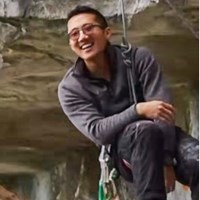
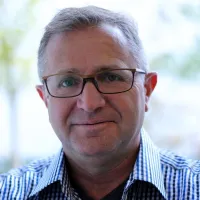
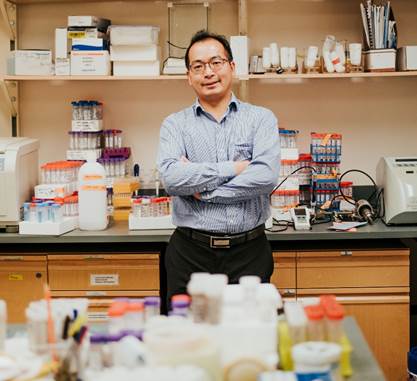
Olli Dahl is a Professor at Aalto University's Department of Forest Products Technology, specializing in Clean Technologies and Environmental Management. His work focuses on waste valorization, biorefinery processes, and sustainable resource utilization. Key areas include microplastic dynamics in composting systems, biochar applications for heavy metal decontamination, and optimization of mineral processing with recycled water. Research highlights include an international award for biorefinery innovation and groundbreaking studies on nickel recovery in flotation processes. He leads interdisciplinary projects addressing water quality impacts on ore processing and thermochemical conversion of agricultural residues into bioenergy. Dahl's recent work emphasizes closing material loops through circular bioeconomy strategies and advancing sustainable industrial practices. Awards: 2015 International Biorefinery Competition 2nd Place (Ministry of Employment & Economy, Finland) Key Themes: Waste-to-resource systems, industrial water management, bio-based materials, and metallurgical sustainability
Koenraad Muylaert is a Full Professor at the Faculty of Science, KU Leuven, and head of the Biology department at KU Leuven Kulak. His research focuses on microalgae ecology and phytoplankton physiology , with applications in eutrophication studies , wastewater treatment , and biofuel production . Based in Kortrijk, Belgium, he works with international teams in Ecuador, Qatar, and Belgium. Current projects on mountain lake eutrophication and urban aquatic systems Specializes in nano-material flocculation and omega-3 fatty acid production from microalgae Research Trends from his recent articles show emphasis on: Microalgae harvesting innovations (cellulose nanocrystals, PDMAEMA polymers) Comparative processing techniques (DAF vs sedimentation, drying methods) Biotechnological applications in flavor chemistry and microbiome interactions Laboratory operates at KU Leuven's Kortrijk campus, with strong collaborations in environmental engineering and food science . His work bridges fundamental ecological research with industrial biotechnology for sustainable solutions.
Jake M. Yang is a Lecturer in Physical Chemistry at the School of Chemistry, University of Leicester, where he leads an interdisciplinary research group focused on electrochemistry and sustainable material processing. He holds a DPhil and MChem from the University of Oxford and was awarded an EPSRC Doctoral Prize in 2020 for developing electrochemical sensors to monitor oceanic 'blue carbon'. His research integrates operando electrochemistry with spectroscopic and fluorescent imaging to investigate chemical reactions at electrode interfaces and their environmental applications. He is particularly known for pioneering green recycling methods for lithium-ion batteries and fuel cell membranes. Electroanalysis and Sensor Instrumentation Operando opto/spectro-electrochemical instrumentation Recycling of Technological Critical Materials Monitoring Microplastics and Ocean Ecosystems Fundamental electrochemistry Finite difference simulations The recent publications highlight a strong trend toward sustainability-driven electrochemistry, with a focus on recycling technologies using ultrasound and vegetable oil nanoemulsions. These works bridge fundamental science with industrial applications, particularly in the circular economy of electronics and energy systems. Award Highlights: EPSRC Doctoral Prize Award RSC Horizon Prize 2024 (Faraday Institute ReLIB project) University of Leicester Chemistry Image of Research Competition, 1st Prize Jake actively mentors students and offers funded PhD opportunities. His work is supported by institutional and industry-aligned grants, particularly in sustainable battery and fuel cell recycling. He collaborates across disciplines, including Earth Sciences and engineering, and promotes knowledge transfer through public engagement and media outreach. He is a key member of the Centre for Sustainable Material Processing and leads research on techno-economic analysis of recycling processes, ensuring scientific innovation meets real-world industrial and environmental needs.
Professor Craig Priest is a faculty member at the University of South Australia within UniSA STEM , focusing on microfluidics , optofluidics , and interfacial science applications. He serves as a Research Degree Supervisor and has contributed to advancements in sensor technology, biomedical engineering, and materials science. Key Research Themes : Development of micropillar array-integrated sensors for rapid vapor detection 3D-printed microstructures to mitigate matrix effects in electrochemical sensing Wettability engineering for passive fluid control in lab-on-a-chip devices PDMS-PS bonding protocols enabling robust cell culture platforms like Heart-Dyno Collaborations & Grants : Collaborated with Queensland University of Technology and QIMR Berghofer on biomedical devices Involved in ARC grants: ARC IH150100028 and ARC DP1094337 Industry partnerships with BHP Billiton and ULVAC Inc. Academic Contributions : Published in IEEE Sensors , APL Materials , and ACS Applied Materials & Interfaces Active in microfluidic device design for biomedical and environmental applications Developed evaporation-driven fluid transport systems for portable biosensing platforms
Bojan Tamburic is a Senior Lecturer in Environmental Engineering at the University of New South Wales (UNSW) Sydney, where he is affiliated with the School of Engineering and the Department of Civil and Environmental Engineering. He holds the prestigious position of Australian Research Council Mid-Career Industry Fellow (IM230100222) and serves as the lead Chief Investigator of the Nuisance and Harmful Algae Science-Practice Partnership (NHASP). Dr. Tamburic earned his academic credentials from Imperial College London, including a PhD in Chemical Engineering (2009-2012), an MSc in Sustainable Energy Futures (2008), and an MSci in Physics (2003-2007). Prior to joining UNSW, he was a Chancellor's Postdoctoral Research Fellow at the University of Technology Sydney. His research focuses primarily on dual aspects of algal science: the management of harmful algal blooms ('bad algae') in waterbodies to preserve water quality and aquatic habitats, and the cultivation of beneficial algae ('good algae') for producing valuable bioproducts such as biofuels, animal feed, and sustainable chemicals. His work spans environmental engineering, water treatment processes, and algal biotechnology applications. Analysis of Tamburic's recent publications reveals a strong trend toward practical applications of algal science in water management. His research spans environmental monitoring using remote sensing, microplastic analysis in urban water systems, odour and taste management in drinking water, and innovative approaches to algal biomass harvesting and utilization. His work consistently bridges fundamental algal physiology with practical engineering solutions for water quality challenges. Australian Research Council Mid-Career Industry Fellow (IM230100222) for the project 'Large scale urban stormwater reuse: safe, clear and odourless water supply' (2023-2026) Dr. Tamburic leads significant research initiatives including the Nuisance and Harmful Algae Science-Practice Partnership (NHASP), focusing on translating scientific understanding of algal phenomena into practical management solutions. His grant portfolio demonstrates strong industry and government engagement, particularly in the area of sustainable water management. He teaches courses including DESN1000 Engineering Design and Innovation and CVEN9886 Environmental Microbial Processes at UNSW.
Bern Klein is a Professor at the University of British Columbia's Faculty of Applied Science, specifically within the Norman B. Keevil Institute of Mining Engineering. His career spans over three decades, beginning with extensive industry experience from 1990 to 1998, followed by his academic role at UBC since 1997. He has held leadership positions including Graduate Advisor (1999-2008) and Department Head (2008-2014), and has been instrumental in establishing research centers like the Centre for Industrial Minerals Innovations and the Canadian International Resources and Development Institute. Education: PhD in Mineral Process Engineering, University of British Columbia (1992) BASc in Mining and Mineral Process Engineering, University of British Columbia (1985) Research Interests: Professor Klein's research is centered on mineral processing technologies , with a strong emphasis on energy efficiency and environmental sustainability in mining operations. His work encompasses: Comminution processes and energy optimization Rheology of mineral suspensions Sensor-based ore sorting technologies Water and energy conservation in mining Development of innovative mineral processing flowsheets His research has led to the creation of Mine Sense Technologies Ltd , a startup company that has developed novel sensor-based sorting systems for the mining industry. Scientific Awards: Institute of Mining and Metallurgy Transactions Best Paper Award (2008) Canadian Institute of Mining Distinguished Lecturer Award (2011) CEEC Medal for Best Paper (2013, 2016) CEEC Honorable Mention for Best Paper (2022) Mitacs Award for Exceptional Leadership for a Professor (2023) Teaching and Supervision: Professor Klein teaches courses including MINE 201 Mineral Resources Engineering II , MINE 434/524 Processing of Precious Metal Ores , MINE 508 Integrated Mining and Processing Systems , and MINE 579 Rheology of Mineral Suspensions . He has supervised numerous graduate students, with Uuganbadrakh Oyunkhishig being one of his Master's students. Research Teams and Labs: His research involves interdisciplinary collaboration, particularly through the Quantum Matter Institute and the Centre for Industrial Minerals Innovations. He is open to collaborations with undergraduate students and other researchers, fostering a collaborative research environment.
Professor Rita Henderson is a Professor in the School of Chemical Engineering at UNSW and Deputy Dean (Societal Impact & Translation) at UNSW Engineering. Her research focuses on water quality and treatment, algal biotechnology, and sustainable engineering solutions. She leads the Algal and Organic Matter (AOM) Lab, collaborating closely with the Australian water industry to address challenges in algal blooms, membrane fouling, and cyanobacteria management. She serves as Editor for Water Research and AWWA Water Science , and chairs UNSW’s Sustainable Development Goal (SDG) Steering Committee. Education: PhD in Water Sciences (Cranfield University, 2008), MSc in Water Pollution Control Technology (2004), and MChem in Environmental Chemistry (University of Edinburgh, 2002). Her work integrates advanced analytical techniques, machine learning, and innovative separation methods to improve water treatment efficiency. Research interests include organic matter characterization, membrane technology optimization, and real-time monitoring of cyanobacterial blooms. Her contributions span algal harvesting via PosiDAF flotation systems, disinfection by-product formation, and sustainable wastewater pond technologies. She actively promotes equity, diversity, and inclusion in engineering education. Grants and collaborations highlight her industry partnerships, particularly in developing scalable solutions for water security. Her lab’s innovations aim to bridge gaps between research and practical applications, ensuring robust water treatment strategies for global challenges.
Dr. Seher Ata is an Associate Professor in the School of Minerals and Energy Resources Engineering at the University of New South Wales (UNSW). Prior to joining UNSW, she was a Research Academic at the Centre for Multiphase Processes, Newcastle University. Her research focuses on fundamental and applied aspects of froth flotation, bubble-particle interactions, and water chemistry effects in mineral processing. PhD in Chemical Engineering, University of Newcastle, Australia MSc and BSc in Mining Engineering, Hacettepe University, Turkey Her work spans froth flotation dynamics, bubble coalescence, and recovery of fine/coarse particles, with recent projects addressing lithium recovery from brines and tailings reprocessing. She has led ARC Centre of Excellence, ARC Linkage, and ACARP-funded research initiatives. Dr. Ata has published over 100 articles in high-impact journals and holds editorial roles at Mineral Processing and Extractive Metallurgy Journal and International Journal of Mining Science and Technology . She was elected to the University of Newcastle’s Emerging Research Leadership Program (2011) and recognized in the world’s top 2% of scientists in Mining and Metallurgy (2021). Supervised PhD/Masters students: Yesenia Saavedra Moreno, Yueyi Pan, Feng Zheng, Manivannan Selvaraju Grants: BHP Tailings Challenge, ARC Centre of Excellence, ACARP projects on flotation standards and water chemistry
Rodrigo González is an Assistant Professor at the Department of Mechanical Engineering, Eindhoven University of Technology, since 2022. His research focuses on data-driven modeling, estimation, and control methods for high-tech precision systems, with applications in motion control and continuous-time system identification. Education: Ph.D. in Electrical Engineering (KTH Royal Institute of Technology, 2022) M.Sc. in Electronic Engineering (Universidad Técnica Federico Santa María, 2016) His work emphasizes continuous-time system identification, state-space modeling, and Bayesian estimation techniques. Key research themes include motion control tuning, multivariable systems, and noise/disturbance modeling in precision engineering applications. Rodrigo has received the Best Electronic Engineering Student Award (2016) and Best Thesis Award from Universidad Técnica Federico Santa María. He has active collaborations with institutions like Universidad Técnica Federico Santa María through visiting researcher appointments. Scientific awards include: Best Electronic Engineering Student Award (2016) Best Thesis Award (Universidad Técnica Federico Santa María)
Norwegian University of Science And TechnologyNorway
Hakan Basarir is a Professor in the Department of Mining Engineering at the Norwegian University of Science and Technology (NTNU), Trondheim, Norway. His research and teaching focus on mining rock mechanics, rock mass characterization, underground support systems, and the application of soft computing methods in mining engineering. PhD in Mining Engineering (2002) 20+ years of research and teaching experience 60+ publications in journals and conferences Research Interests include rock mass property prediction using measurement while drilling (MWD) techniques, numerical modeling of mining structures, optimization of mine support systems, and sustainable material development. His work integrates machine learning and computational methods to address challenges in mining geomechanics and backfill design. Recent Publications highlight advancements in AI-driven lithology prediction, eco-concrete formulation, and backfill mixture optimization. He has also contributed to tunnel stability analysis and seismic rock slope modeling. Teaching includes advanced courses in mining engineering, mineral production modeling, and specialization projects in geotechnology.
Dr. Amir Beheshti is a Research Fellow at the School of Chemistry and Molecular Bioscience, University of Wollongong (UoW). He holds a PhD in Chemical Engineering from the University of Queensland (2017–2021), focusing on polymer brush-grafted colloids as lubricant additives. Previously, he served as a Postdoctoral Research Associate at the University of South Australia (2021–2023) within the ARC Centre of Excellence for Enabling Eco-efficient Beneficiation of Minerals, where he applied surface-sensitive techniques like AFM and QCM-D to study polymer-surface interactions. His research integrates colloid and interface science with physical chemistry, emphasizing tribology, adsorption, and wetting phenomena. Key projects include collaboration with BlueScope Steel in the Steel Research Hub to develop advanced coatings and nanomaterials for industrial applications. He also teaches as a tutor in Modern Inorganic and Bio-inorganic Chemistry at UoW. Beheshti’s work spans experimental and applied research in lubricant additives, flame-retardant coatings, and nanofluids. His studies utilize cutting-edge techniques such as atomic force microscopy and quartz crystal microbalance with dissipation monitoring to analyze surface interactions and material properties.
Ernesto Herrera Pedroviejo serves as an Associate lecturer at the Blanquerna School of Health Sciences, Ramon Llull University (URL) in Barcelona, Spain, with an active research profile in emergency medical systems. Contactable via ernestohp1@blanquerna.url.edu and ORCID 0000-0002-4163-4558, his scholarly impact includes 62 citations and an h-index of 4 per Scopus metrics, reflecting contributions to life-saving healthcare innovations. His research centers on Emergency Medicine with specialized expertise in Basic Life Support (BLS) , Cardiopulmonary Resuscitation (CPR) , and technology-integrated medical training. Key investigations include comparative analyses of resuscitation devices (pocket masks vs. bag-valve masks), augmented reality applications for BLS instruction via smart glasses, and novel approaches to aquatic emergency response. His work bridges clinical practice with digital innovation, particularly through video communication systems for dispatcher-assisted bystander interventions and biomechanical assessments of postural stability. Publication trends from 2020-2025 reveal a strategic focus on pilot studies evaluating real-world feasibility of emergency response tools. Dominant themes include technology-enhanced medical education (evident in 2023 AR training studies), device optimization for field use (2020 flotation device research), and advanced resuscitation techniques (2025 mask comparison study). This trajectory demonstrates consistent methodological emphasis on simulation-based validation and human-factor analysis in high-stakes emergency scenarios.
Dr. Jianbing Li is a Professor and Professional Engineer (P.Eng.) in the Environmental Engineering Program at the University of Northern British Columbia (UNBC), holding prestigious fellowships from CSCE, CSSE, EIC, and Engineers Canada. His research program addresses critical environmental challenges with significant real-world impact, particularly in northern and remote communities of British Columbia. Education: PhD in Environmental Systems Engineering, University of Regina Research Focus: Dr. Li's work centers on environmental pollution control , petroleum waste management , soil and groundwater remediation , environmental modeling , risk assessment , and oil spill response . His innovative approaches integrate machine learning, advanced materials, and sustainable engineering principles to develop practical solutions for complex environmental problems, with particular emphasis on resource recovery from waste streams. Publication Trends: Analysis of his 15 most recent publications (2023-2025) reveals a strategic focus on oil spill response technologies, wastewater treatment innovations, and waste valorization. Key advancements include nano/micro bubble flotation systems, chitosan-based adsorbents, and machine learning models for pyrolysis optimization, demonstrating his leadership in translating laboratory research to field applications. Scientific Recognition: 2024 Fellow of Engineers Canada and Engineering Institute of Canada 2023 CSCE Dr. Albert E. Berry Medal (Canada's top environmental engineering award) Multiple UNBC Research Excellence Awards (2010, 2014, 2019, 2023) 2013 Northern BC Business and Technology Award with Husky Energy Best paper awards from International Academy of Science and Environmental Geotechnology Society Research Leadership: Dr. Li has secured over $800,000 in 2023 and $1.9 million in 2020 for oil spill response research through NSERC, DFO, and NRCan. His current portfolio includes groundwater protection for Indigenous communities, next-generation decanting technologies, and water security for remote regions. He actively mentors PhD, MSc, and MASc students while serving on NSERC evaluation committees and co-directing the UNBC/UBC environmental engineering program (2013-2017). Collaborative Networks: Dr. Li leads multi-institutional partnerships with UBC, government agencies, industry (including Husky Energy), and Indigenous communities like Lheidli T'enneh First Nation. His work through the Multi-Partner Research Initiative addresses practical challenges in rural British Columbia while advancing fundamental knowledge in environmental systems engineering.
Ahmet Deniz Baş is an Associate Professor at the Faculty of Engineering, Department of Mining Engineering (Mineral Processing Division) at Muğla Sıtkı Koçman University. With a Ph.D. in Metallurgy from Université Laval and prior degrees from Karadeniz Technical University, he specializes in hydrometallurgy, gold and copper extraction, and sustainable resource recovery from primary and secondary sources. Education: BSc and MSc in Mining Engineering (Karadeniz Technical University); Ph.D. in Metallurgy (Université Laval) His research focuses on electrochemical dissolution/passivation of gold during cyanidation, bioleaching of metals from electronic waste, and optimization of hydrometallurgical processes. He has authored key studies on gold recovery from refractory ores, silver extraction from X-ray films, and environmental mitigation in mineral processing. Dr. Baş’s 15 most recent publications span topics like Hydrometallurgy , Minerals Engineering , and Environmental Metal Recovery , with keywords covering electrochemical interactions, gold processing, bioleaching, and sustainable mining practices. Scientific Awards: Emerging Professional Award 2017 (Hydrometallurgy Technical Section) Gordon M. Ritcey Ph.D. Award 2016 He has led international projects on zero-waste valorization of ores, improved leaching kinetics, and mercury sequestration in gold processing. His editorial roles include associate editorships for Minerals Engineering and CIM Journal .
Professor Nicholas Warren is a Chair in Sustainable Materials at the School of Chemical, Materials and Biological Engineering at the University of Sheffield. With a PhD from Sheffield and academic experience at Leeds University (2016-2024), his research integrates polymer chemistry with automation technologies. Education: University of Bristol (2005), University of Sheffield (PhD) Academic Positions: Postdoc at Sheffield (2005-2016), University Academic Fellow at Leeds (2016-2024), Associate Professor (2021-2024) Current Role: Chair in Sustainable Materials (2024-present) Research focuses on polymer science with flow chemistry , online monitoring , and artificial intelligence to advance sustainable materials. Key article trends include self-driving laboratories , multi-objective optimization , and nanostructured polymer systems . Scientific recognitions include: 2022 Macro Group UK Young Researchers Medal 2023 RSC Reaction Chemistry & Engineering Outstanding Early Career Paper Award Advisees span current and alumni PhD students like Dr Stephen Knox , Anna Morrell , and Dr Charlotte Pugsley . His team employs self-driving lab platforms that combine robotics, AI, and online analytics for accelerated materials discovery.