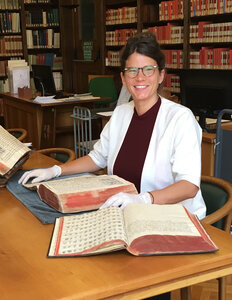
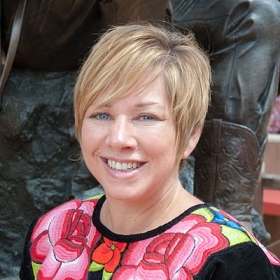
Kelly McDonough is a Tomás Rivera Regents Professor and Graduate Adviser at the University of Texas at Austin, affiliated with the College of Liberal Arts. She holds a Ph.D. from the University of Minnesota and specializes in interdisciplinary research bridging Colonial Literary and Cultural Studies, Critical Indigenous Studies, Ethnohistory (Nahuatl Studies), Science and Technology Studies, and Digital Humanities. Ph.D., University of Minnesota Her research focuses on Nahua intellectual production in Mexico over the past 500 years, challenging racialized discourses that exclude Nahuas from intellectual history. Her books The Learned Ones: Nahua Intellectuals in Postconquest Mexico and Indigenous Science and Technology: Nahuas and the World Around Them (2024) explore Nahua theoretical and practical inquiries into their environments across pre-invasion, colonial, and contemporary periods. McDonough leads collaborative digital humanities projects, including the digitization of the Fondo Real de Cholula judicial archive and the Co-PI role in the Unlocking the Colonial Archive initiative, which harnesses AI for Indigenous and Spanish American historical collections. She teaches courses covering global Indigenous media, critical Indigenous studies, and Nahuatl language. Key Research Themes: Indigenous knowledge systems, colonial archives, environmental inquiry, digital humanities methodologies, ethnohistory.
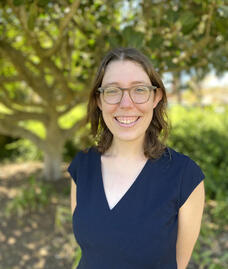
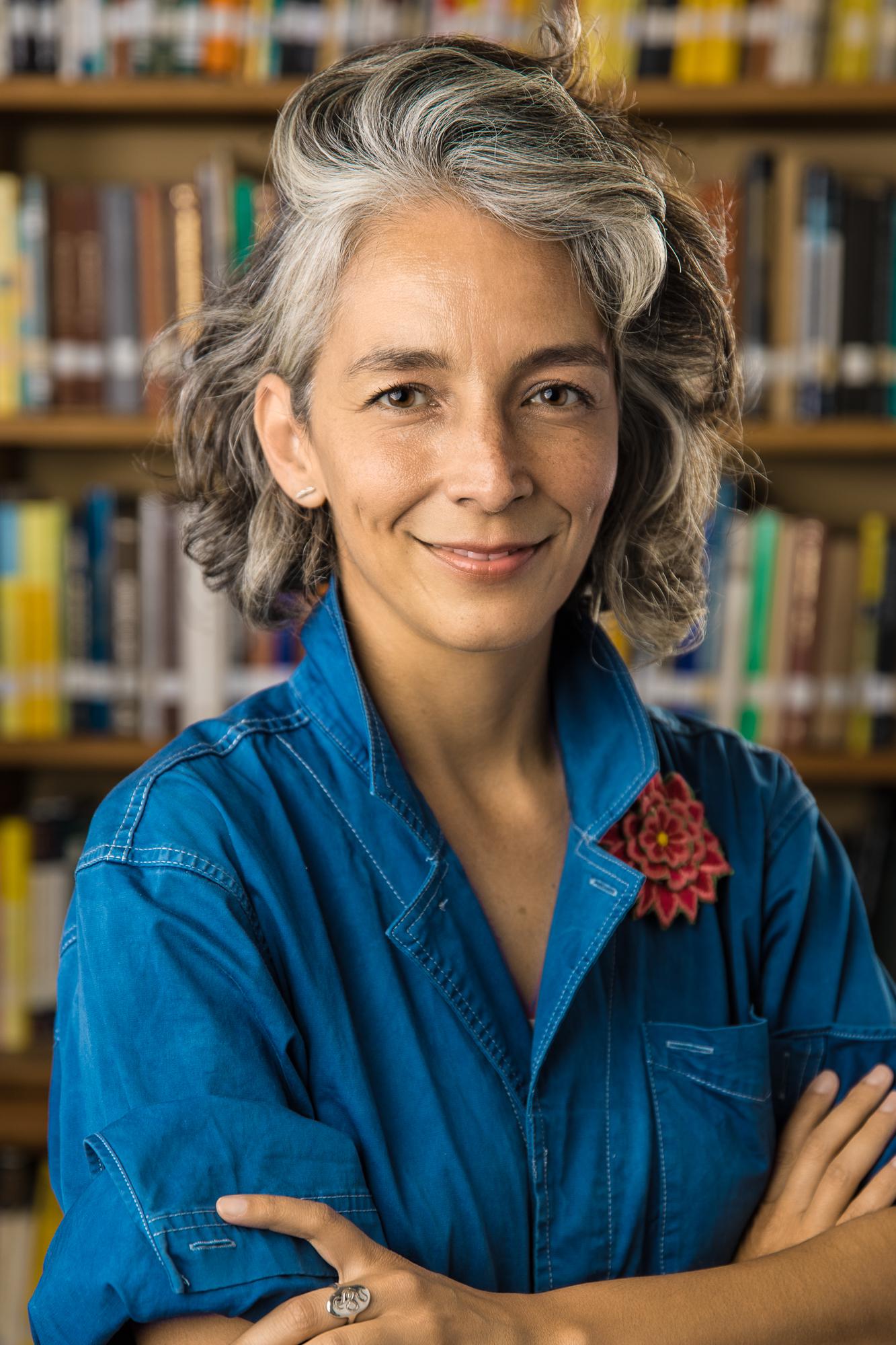
Rebecca Dufendach is an Assistant Teaching Professor at Loyola University Maryland's Department of History. She holds a PhD in History from the University of California, Los Angeles (UCLA). Her research focuses on Nahua and Spanish concepts of illness and health in sixteenth-century New Spain, emphasizing Indigenous perspectives through analysis of pictorial writing systems and Indigenous-language texts. Previously, she served as a Research Specialist for the Getty Florentine Codex Project, which digitized the encyclopedic Florentine Codex to enhance access to early modern Mexican and Nahua knowledge. Her academic specialties include Latin American History, Mesoamerican Ethnohistory, and Indigenous Languages of Latin America. Dr. Dufendach's work bridges ethnohistorical methodologies with interdisciplinary approaches to recover marginalized voices in historical narratives. No recent publications or awards are listed in the provided materials. Contact: radufendach@loyola.edu | Office: Humanities 323 | Phone: 410-617-5681.
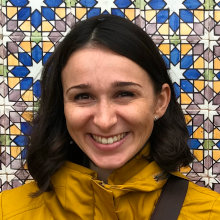
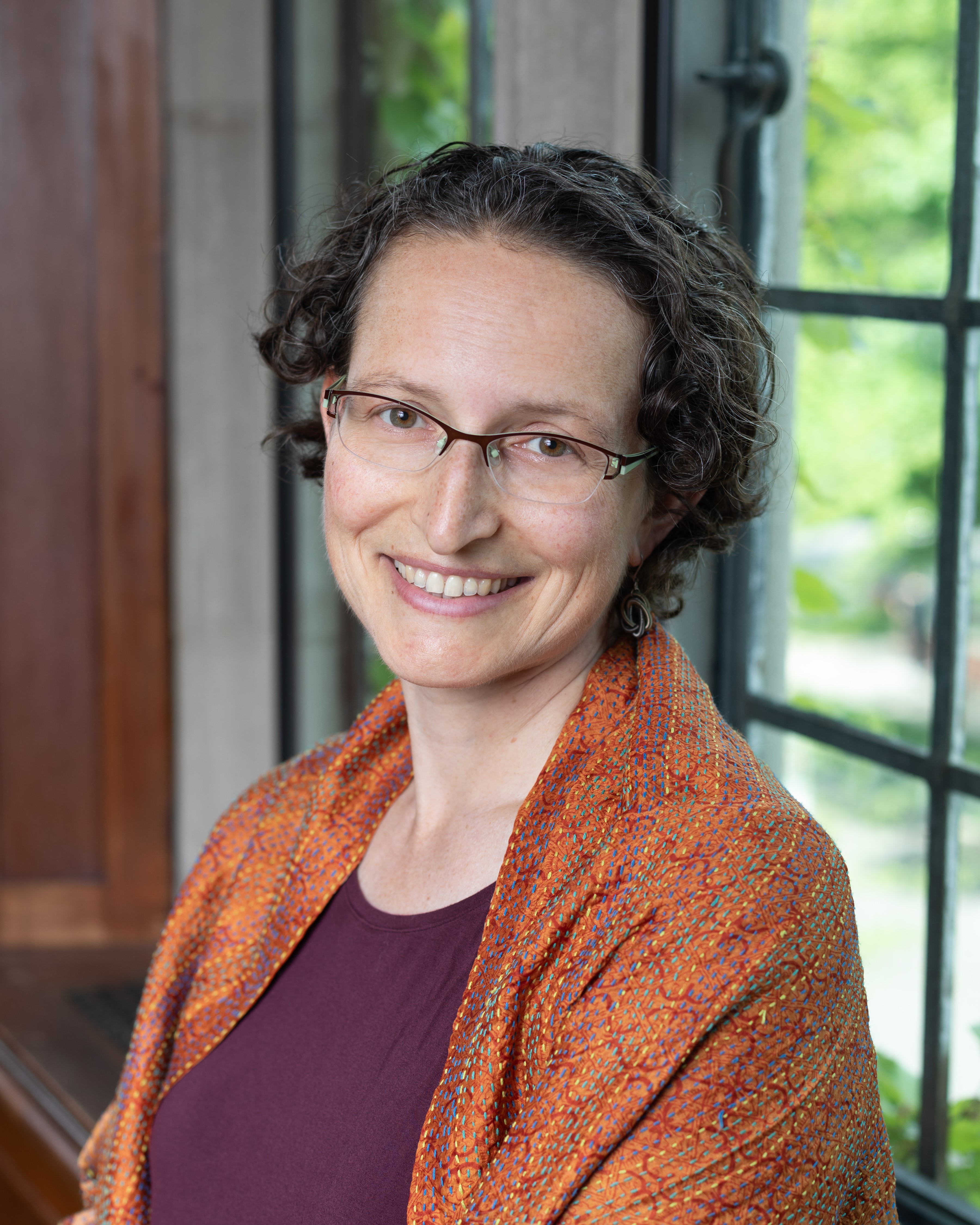
Allison Caplan is an Assistant Professor of History of Art at Yale University. Previously, she held positions as Assistant Professor at the University of California, Santa Barbara, and the inaugural Austen-Stokes Ancient Americas Postdoctoral Fellow at Johns Hopkins University. Her research focuses on Late Postclassic and early colonial Mesoamerican art, particularly Nahua art theory, materiality, and the intersection of visual expression with Nahuatl language. She has conducted extensive fieldwork in Mexico, including Nahuatl language studies through FLAS fellowships, and has contributed to museum exhibitions like Golden Kingdoms: Luxury Arts in the Ancient Americas . Education: B.A., Columbia University; Ph.D., Tulane University Her current book project, Flickering Creations: Concepts of Nahua Precious Art , explores Nahua theorizations of color, light, and assemblage in precious materials. Her scholarship bridges art history with linguistic and interdisciplinary collaboration, addressing topics like animal symbolism, colonial material practices, and Indigenous knowledge systems. She has received grants from institutions such as the American Council of Learned Societies and Dumbarton Oaks. Caplan teaches courses on ancient/colonial Mesoamerica, Indigenous art theory, and museum studies. She is on leave during the 2025–2026 academic year.
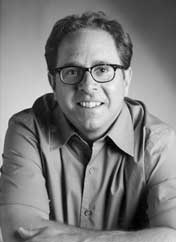
Dr. Anthony Nussmeier is an Associate Professor of Italian and Chair of the Department of Modern Languages at the University of Dallas. He holds a PhD in Italian Studies from Indiana University. His academic roles include Director of Italian Studies, Faculty Senator, and Co-Editor of Annali d’Italianistica . Dr. Nussmeier’s research focuses on medieval and Renaissance Italian literature, particularly Dante, Petrarch, and manuscript culture. He has published in journals like Bibliotheca Dantesca and Textual Cultures , and co-founded the DFW Italian Festival. His service includes Fulbright Screening Committee membership and advisory roles for 100 Days of Dante . Education: PhD, Italian Language and Literature, Indiana University M.A., Italian Language and Literature, Indiana University B.A., History and Italian, University of Minnesota Exchange Student, Università di Bologna Research Interests: Medieval/Renaissance Italian literature Dante Studies and manuscript culture Italian history/politics Italians in Texas Key Contributions: Created University of Dallas’ Italian B.A. program Oversees Italian senior thesis program Advisory roles in academic journals and cultural organizations Co-founded DFW Italians nonprofit
Sofia Orsino is a Research Fellow at the Department of Philosophy and Cultural Heritage of Ca' Foscari University of Venice . Her work focuses on medieval manuscript studies, history of philosophy, and monastic biography, with a particular emphasis on cross-cultural connections between Italy and Portugal.
Christian Roith is a Professor in the Department of Education at the University of Alcalá. His research focuses on the history and theory of education, with a particular emphasis on transnational educational dynamics, radicalization in schools, and the impact of emotional intelligence on academic achievement. He is actively involved in teaching courses such as 'History of the School and the Educational System' and coordinates comparative international research projects (HUM1028). His work spans topics including the history of educational missions during the Spanish Second Republic, the influence of German pedagogical theories in Spain, and the role of digital technologies in modern education. Roith has published extensively on hate speech analysis, youth violence prevention, and the adaptation of education systems during the pandemic. He also contributes to academic debates on the intersection of cultural, social, and political factors in education. Roith’s research has explored historical pedagogical movements like Pestalozzi’s theories, Rousseau’s educational philosophy, and the legacy of experimental schools in Hamburg (1919–1933). His recent projects include database-driven studies on extremist attitudes in Spanish schools and iconographic analysis of historical educational texts like Bernardino de Sahagún’s Florentine Codex. He maintains an active presence in academic communities, organizing conferences like the International Standing Conference for the History of Education (ISCHE), and advising on teacher training programs aligned with the European Higher Education Area (EHEA). His teaching schedule includes weekly office hours at the Central Building (Office 0.870) and virtual tutoring sessions via Google Meet.
Kevin Terraciano is Professor of History and Robert N. Burr Endowed Department Chair at UCLA, specializing in colonial Latin America with focus on indigenous cultures of central/southern Mexico. He founded UCLA's Nahuatl language program and directs the Latin American Indigenous Studies Alliance (LAISA). Education includes: Ph.D. from UCLA (1994) M.A. from UCLA (1989) B.A. from UCLA (1985) Research focuses on Mixtec, Zapotec, and Nahuatl language documents from colonial Mexico. Current collaborative projects include the Digital Florentine Codex initiative and translation of Zapotec-language texts. Publications include award-winning 'The Mixtecs of Colonial Oaxaca' (2001) and 'Codex Sierra: A Nahuatl-Mixtec Book of Accounts from Colonial Mexico' (2021). Recent edited volumes address the Florentine Codex and Mesoamerican canons. Honors include UCLA Faculty Gold Shield Prize (2012) and multiple teaching awards including Distinguished Teaching Award (2001). Current doctoral students include six candidates working on Latin American indigenous histories.
Sanja Savkic Sebek is a Research Fellow at the Sainsbury Research Unit for the Arts of Africa, Oceania and the Americas, University of East Anglia. She specializes in Mesoamerican art history with a focus on Maya visual culture and codicology. Education: PhD in Maya Art History (National Autonomous University of Mexico, 2012), MA in Dresden Codex Studies (2007), BA in Archaeology (University of Belgrade, 2001) Research Interests Formal analysis of Late Preclassic Maya art Mesoamerican codices and epigraphy Aesthetic values in indigenous visual culture Interdisciplinary approaches to art history Scientific Achievements Recipient of the Alfonso Caso Medal for outstanding contributions to Mesoamerican studies (2014)
Lisa Sousa is a Professor of History and Chair of the Latino/a & Latin American Studies department at Occidental College. She specializes in colonial Latin America, indigenous peoples and languages of Mexico, and women/gender studies, with a focus on ethnohistorical research and indigenous perspectives of conquest. Her groundbreaking work includes analyzing the Florentine Codex and colonial-era indigenous accounts of cultural destruction. She has published extensively on topics such as native marriage practices, indigenous views of conquest, and gender dynamics in colonial Mexico. Co-translator and co-editor of The Story of Guadalupe (1998) Co-translator and co-editor of Mesoamerican Voices (2005) Author of award-winning book The Woman Who Turned Into a Jaguar (2017) Lisa Sousa's research has been supported by prestigious institutions including the National Endowment for the Humanities and the Getty Research Institute, where she served as Scholar in Residence (2018). She teaches courses on colonial Latin America, Nahuatl language and culture, religion in Mexico, and gender studies. Recipient of multiple academic awards Active mentor in undergraduate research Current projects focus on indigenous social memories of 16th-century cultural destruction
Iris Montero is an Assistant Professor of Hispanic Studies at Brown University, specializing in early modern science and medicine with a focus on Indigenous and Latin American knowledge systems. Her work bridges history of science, ethnohistory, and colonial studies. She holds a PhD from the University of Cambridge (2016) and has been affiliated with institutions like the Institute for Advanced Study (Princeton) and the Centre Alexandre Koyré (Paris). Her research explores transfers of knowledge between the Americas and Europe through natural history genres, emphasizing Indigenous agency. Current projects include a book manuscript on hummingbird symbolism and two new studies examining colonial extractivism and Iberian encounters with Indigenous Pacific Northwest cultures. She teaches courses in Hispanic Studies and Science & Technology Studies, coordinating Nahuatl language programs at Brown. Montero's work has received awards from the American Society for Ethnohistory and Latin American Studies Association. Her publications appear in Ethnohistory , Cambridge University Press , and University of Pittsburgh Press .
Claudia Brittenham is Professor of Art History, Race, Diaspora, and Indigeneity, and the College at the University of Chicago, where she also serves as Director of the Center for Latin American Studies. Her office is located in CWAC 261, and she holds office hours on Tuesdays from 5-6pm or by appointment. She is actively involved in the Global Ancient Art initiative, the Katz Center for Mexican Studies, the Institute for the Formation of Knowledge, and the Proyecto La Pintura Mural Prehispánica en México of the Universidad Nacional Autónoma de México. Her educational background includes a PhD and BA from Yale University. Previously, she served as Assistant Curator for Eastern Hemisphere Collections at the Textile Museum in Washington, D.C. Brittenham's research centers on the art of ancient Mesoamerica, with a focus on the materiality of art, the politics of style, and the ontology of images. She critically examines how colonial frameworks shape the discipline of art history, from the concept of "art" itself to the definition of Mesoamerica as a culture area. Her work addresses Indigenous histories, colonization, and the interconnectedness of Indigenous communities across national borders. She investigates the distance between ancient experiences of artworks (such as Aztec sculptures, Maya lintels, and buried Olmec offerings) and their modern encounters in museums. Her recent publications (2023-2019) demonstrate a sustained engagement with Mesoamerican visual culture, particularly Maya and Aztec art, while expanding into themes of landscape, vision, and the politics of display. She has also addressed contemporary challenges in academia, such as the teaching of long-form scholarship in the digital age. A consistent thread is her critique of colonial legacies in art historical frameworks and her exploration of pre-Hispanic interconnectedness beyond modern national borders. Although no specific scientific awards are mentioned in the provided text, Brittenham's contributions to the field are evident through her influential publications and leadership roles. As Director of Graduate Studies in the Department of Art History, Brittenham oversees the graduate program and likely advises students, though specific advisees are not listed. Her involvement in multi-institutional projects, such as the Proyecto La Pintura Mural Prehispánica en México, suggests collaborative research efforts that may be grant-funded, though specific grants are not detailed. Her current book project, The Interconnected Mesoamerican World , examines art in a borderless ancient world where people, objects, and ideas moved fluidly. Brittenham is an active member of several research communities, including the Global Ancient Art initiative, which fosters interdisciplinary dialogue on ancient art globally. Her work with the Katz Center for Mexican Studies and the Center for Latin American Studies underscores her commitment to regional studies, while her participation in the Proyecto La Pintura Mural Prehispánica en México reflects her dedication to collaborative scholarship with Mexican institutions.
Victoria Rios Castano is a research-active academic currently serving as a Research Assistant at the Centre for Global Learning. She is actively contributing to the fields of Latin American colonial literature, Spanish translation, and 20th-century Hispanic literary studies. Her work involves deep engagement with primary colonial texts such as the Relaciones Geográficas and the Florentine Codex , as well as modern authors like Julio Cortázar and Cristina Rivera Garza. Her research interests center on colonial Latin American literature , indigenous knowledge systems , Spanish translation practices , and Latin American noir . She explores how colonial documents reflect environmental, cultural, and intellectual histories, particularly regarding the Inca and Nahuatl civilizations. Her recent work also investigates the editorial lives of writers and intertextual narratives in feminist crime fiction. The trend in her recent publications (2023–2025) shows a strong interdisciplinary focus, combining literary analysis with historical climatology, ethnography, and feminist theory. Her articles appear in peer-reviewed journals and edited volumes, often addressing underrepresented voices and alternative narratives in Latin American literature. Dr. Rios Castano is actively involved in the academic community, having organized and participated in multiple international conferences and workshops, especially those centered on Latin American women writers and Spanish-language cultural studies. She is currently accepting PhD students, indicating her role in academic mentorship and research supervision. Organizing Committee, III International Conference “El camino por recorrer es amplio” (2024) Organizing Committee, IV International Conference “Desmantelar las narrativas” (2025) Invited Speaker, Workshops at Università Ca' Foscari and Università degli Studi di Padova (2025) Invited Talk, Cortázar Symposium (2024) She has contributed to editorial activities and is preparing a peer-reviewed book on Julio Cortázar’s professional relationships. Her research is supported through academic networks and international collaborations, though specific grants are not detailed in the provided text. Dr. Rios Castano is affiliated with research networks in Europe and Latin America, facilitating cross-institutional scholarly exchange. Her work is disseminated through journals such as Romance Notes , Ámbitos Feministas , and Early Modern Studies Journal , reflecting a strong publication record and academic visibility.