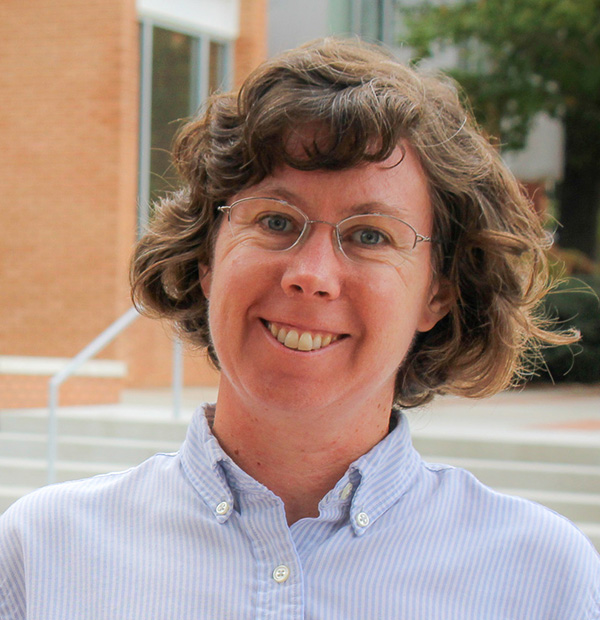
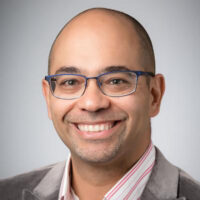
Hyemi Kim is an Adjunct Professor at the School of Marine and Atmospheric Sciences (SoMAS), Stony Brook University. Her research focuses on climate variability across subseasonal to decadal timescales, including topics like the Madden-Julian Oscillation (MJO), tropical-extratropical interactions, and extreme weather events such as atmospheric rivers and tropical cyclones. Education: Ph.D., 2008, School of Earth and Environmental Sciences, Seoul National University, South Korea Research Interests: Hyemi Kim's work spans four primary areas: (1) Climate prediction from subseasonal to decadal scales, (2) Tropical-extratropical interactions, (3) Extreme events (atmospheric rivers, storm tracks, tropical cyclones), and (4) Machine learning applications for subseasonal-to-seasonal (S2S) prediction. Publication Trends: Her research output emphasizes the MJO, its interactions with other climate modes (QBO, ENSO), and implications for extreme weather. Recent works analyze atmospheric rivers, storm tracks, and tropical cyclone activity, often linking these to large-scale climate variability. Publications frequently employ climate models (e.g., CESM1, SubX, NMME) to assess predictability and improve forecasting frameworks. Labs & Teams: She collaborates with institutions like the National Center for Atmospheric Research (NCAR) and contributes to multi-model experiments such as the Subseasonal Experiment (SubX) and North American Multi-Model Ensemble (NMME).
Dr. Ken Conca is a Professor of International Relations at American University’s School of International Service , specializing in global environmental governance , environmental peacebuilding , and water policy . His work bridges climate change adaptation , transboundary water management , and post-conflict recovery . Education : PhD (University of California, Berkeley), MS (University of Wisconsin-Madison), ScB (Brown University) Key Research Areas : Global environmental governance frameworks Water politics and conflict-cooperation dynamics Environmental peacebuilding in war-torn societies UN system’s role in climate and environmental security Scientific Recognition : Grawemeyer Prize, Sprout Award, Chadwick Alger Prize, Al-Moumin Environmental Peacebuilding Award Recent Publications : Focus on climate-water-conflict linkages , flexible governance models , and geoengineering ethics Teaching : Courses on global environmental politics, water governance, and doctoral dissertation advising
Evan Davies is a Professor in the Civil and Environmental Engineering Department at the University of Alberta's Faculty of Engineering. He has been a Full Professor since July 2021, following his promotion from Associate Professor (2015-2021) and Assistant Professor (2009-2015) positions at the same institution. Education: Ph.D. (Civil and Environmental Engineering), The University of Western Ontario, London, Ontario (2003-2007) M.E.S. (Environment and Resource Studies), The University of Waterloo, Waterloo, Ontario with field research in China and India (2001-2003) B.A.Sc. (Systems Design Engineering), The University of Waterloo, Waterloo, Ontario, including a year-long exchange at Technical University of Hamburg-Harburg, Germany (1995-2001) Evan Davies' primary research focuses on water resources planning and management, systems thinking and modeling, and sustainable development. His work develops and applies hydrological, water use, and water quality models to understand complex feedbacks among water availability, use, and quality within their social, economic, and environmental contexts. His research spans municipal to global spatial scales and daily to decadal time scales, aiming to provide decision-makers with tools to compare structural, management, and policy alternatives for sustainable water planning. His recent projects include global and regional-scale modeling of water security and the water-energy-food nexus, irrigation reservoir management, municipal water demand projections, flood risk management, and chloramine dissipation in stormwater pipes. Recent research trends show a strong focus on: Integrated assessment modeling of water-energy-food systems Climate change impacts on water resources Machine learning applications in hydrology Water security under decarbonization scenarios Flood risk assessment and management Sustainable urban water systems Scientific Awards: Faculty of Engineering Graduate Teaching Award, University of Alberta (2020-2021) Faculty of Engineering Undergraduate Teaching Award, University of Alberta (2018-2019) Doctoral Fellowship (CGS), Natural Sciences and Engineering Research Council (2005-2007) University of Western Ontario Graduate Tuition Scholarship (2005-2007) Ontario Graduate Scholarship in Science and Technology (2004-2005) Masters/Doctoral Fellowship (PGS A/B), Natural Sciences and Engineering Research Council (2002-2004) Davies has supervised numerous graduate students working on projects related to water resources planning and management. His research has been supported by various grants, including funding from the Natural Sciences and Engineering Research Council. He collaborates extensively with researchers at the Joint Global Change Research Institute (JGCRI) in College Park, MD, and with government agencies and industry partners on water management projects across Canada, particularly in Alberta's Bow River basin. Davies leads a research group focused on water resources systems modeling, which employs system dynamics, optimization techniques, and machine learning approaches to address complex water management challenges. His team collaborates with decision-makers and stakeholders to ensure research outcomes are directly applicable to real-world water management problems.
Eun Jeong Cha is an Associate Professor in the Department of Civil and Environmental Engineering at the University of Illinois at Urbana-Champaign. She holds a Ph.D. (2012) and M.S. (2009) from Georgia Institute of Technology, and a B.S. (2006) from Seoul National University. Her research focuses on risk-informed decision-making for infrastructure resilience under natural hazards, including hurricane risk assessment under climate change, interdependent infrastructure systems analysis, and seismic risk mitigation. Education: Ph.D. in Civil Engineering, Georgia Tech (2012) M.S. in Civil Engineering, Georgia Tech (2009) B.S. in Architectural Engineering, Seoul National University (2006) Her research interests span structural reliability, disaster risk management, and the integration of climate change impacts into infrastructure design. Key areas include hurricane risk modeling, interdependent infrastructure recovery, and socially-aware retrofit prioritization. She has received awards such as the ASCE/EMI Probabilistic Methods Committee Student Paper Award (2012) and is a Fellow of the Next Generation of Hazards and Disasters Researchers (2015). Dr. Cha leads the R4 Group, advancing methodologies for resilient infrastructure systems. She actively contributes to professional societies like ASCE, serving on committees for load combinations and climate adaptation. Her work bridges engineering, risk analysis, and policy to enhance community resilience against extreme events.
Tom Beucler is a Conditional Pre-Tenure Assistant Professor in Geo-Environmental Data Science at the University of Lausanne’s Institute for Earth Surface Dynamics (IDYST). He holds a Master’s degree in Science and Mechanics from École Polytechnique (2014) and a PhD in Atmospheric Science from MIT (2019). Postdoctoral research at Columbia University and UC Irvine focused on machine learning applications in climate science under Professors Pierre Gentine and Michael Pritchard. Research Interests: Climate informatics, atmospheric physics, fluid dynamics, tropical meteorology, and integrating machine learning into climate models for extreme weather prediction and hydrological cycle modeling. Collaborations: Works with environmental scientists and computer engineers to improve climate models using neural networks and causal discovery methods. Initiatives: Organizes weekly brainstorming sessions to promote machine learning adoption in environmental sciences. Publications span climate-invariant machine learning, data-driven parameterizations, and hybrid AI-climate modeling frameworks like ClimSim. His work emphasizes causal consistency and generalizability across climate conditions.
Caitlyn Hall is a Joint Assistant Professor of Practice in Hydrology and Atmospheric Sciences, Assistant Professor of Practice in Biosystems Engineering, and Director of the Future Earth Resilience minor program at the W.A. Franke Honors College. She founded the Arizona Science Policy Network and advises decision-makers on equitable legislation. Her roles span multiple departments at the University of Arizona, integrating environmental science with policy and community engagement. Educations: PhD in Environmental Engineering, Arizona State University BS and MS in unspecified fields from the University of Arizona Research Interests: Hall focuses on environmental justice, natural hazard resilience, and science policy, particularly in water governance, sustainability, and soil/water remediation. Her work emphasizes community-driven solutions and equitable policy development, leveraging transdisciplinary approaches to address climate adaptation and disaster recovery. She has pioneered efforts in open science and inclusive geoscience education. Articles Trends: Her recent publications emphasize integrating earth observation technologies with policy, advancing microbial-based ground stabilization techniques, and promoting equity in post-disaster recovery. Key themes include climate action frameworks, cross-cultural sustainability solutions, and open hydrology practices. Awards: No specific awards listed. Advising & Grants: Leads the Future Earth Resilience minor program and advises policymakers on legislative frameworks. Active in curriculum development for interdisciplinary environmental studies and community-driven research initiatives. Labs/Teams: Founder of the Arizona Science Policy Network, collaborates with global hydrology platforms like eWaterCycle, and engages in initiatives addressing US-Mexico border sustainability challenges.
Jack Baker is the William Alden Campbell and Martha Campbell Professor of Engineering and Associate Dean for Faculty Affairs in the Stanford Doerr School of Sustainability at Stanford University. He is a Professor of Civil & Environmental Engineering with expertise in probabilistic and statistical tools for quantifying and managing disaster risk and resilience. His work has significantly influenced building codes, performance-based engineering guidelines, and catastrophe risk models. Dr. Baker's educational background includes: Ph.D. in Civil & Environmental Engineering from Stanford University (2005) M.A. in Statistics from Stanford University (2004) M.S. in Civil & Environmental Engineering from Stanford University (2002) B.A. in Mathematics/Physics from Whitman College (2000) His research focuses on disaster risk and resilience, particularly in earthquake engineering and seismic hazard analysis. Baker uses probabilistic and statistical approaches to analyze risk in spatially distributed systems, characterize earthquake ground motions, and simulate post-disaster recovery processes. His work bridges theoretical frameworks with practical applications in building codes and risk management strategies. He has made significant contributions to understanding the relationship between ground motion characteristics and structural response, while also expanding into climate-related hazards like atmospheric rivers and their compound effects. His recent publications demonstrate a growing focus on interdisciplinary research that connects engineering with socioeconomic factors in disaster contexts. There's a clear trend toward integrating machine learning techniques with traditional engineering approaches, particularly in modeling household displacement, economic recovery, and flood damage prediction. His work increasingly addresses the human dimension of disasters, examining how physical damage translates to social impacts and recovery timelines. Dr. Baker has received numerous prestigious awards recognizing his contributions to the field: William B. Joyner Lecture Award from the Seismological Society of America and Earthquake Engineering Research Institute (2023) PROSE Awards finalist for Seismic Hazard and Risk Analysis textbook (2022) Thorpe Medal from the European Council on Computing in Construction (2022) Walter L. Huber Civil Engineering Research Prize from the American Society of Civil Engineers (2018) CAREER Award from the National Science Foundation (2010) As an educator and mentor, Baker advises numerous doctoral and master's students while serving as Associate Dean for Faculty Affairs. His research group has secured significant funding for projects related to seismic risk, disaster recovery modeling, and infrastructure resilience. He has directed major initiatives like the Stanford Urban Resilience Initiative and co-founded the Haselton Baker Risk Group, demonstrating strong leadership in translating research into practical applications. Dr. Baker leads the Baker Research Group, which focuses on probabilistic approaches to disaster risk assessment and management. The group maintains active collaborations with government agencies, industry partners, and international research institutions to advance the state of knowledge in earthquake engineering and broader disaster resilience fields. Their work often involves developing innovative computational tools and frameworks that are made publicly available through GitHub repositories.
Chaopeng Shen is a Professor in the Department of Civil and Environmental Engineering at Pennsylvania State University. His research bridges hydrology with state-of-the-art deep learning and differentiable modeling techniques, focusing on advancing our understanding of hydrologic cycles and their interactions with ecosystems, energy, and carbon cycles. He leads the Multi-scale Hydrology, Processes and Intelligence group (MHPI) and has developed the Process-based Adaptive Watershed Simulator (PAWS) for large-scale hydrologic modeling. Shen's work emphasizes physics-informed machine learning , where deep learning components are integrated with process-based equations through differentiable modeling. This approach enables training neural networks using big data while respecting physical laws, leading to improved generalizability and robustness. His group has demonstrated advantages of differentiable models in rainfall-runoff prediction, routing, ecosystem modeling, and water quality studies. Notably, his team's deepLDB project addresses landslide prediction using AI and big datasets. Recent publications highlight his contributions to global water modeling (grid-LSTM, differentiable Muskingum-Cunge routing), extreme flood forecasting (probabilistic diffusion models), and hydrologic uncertainty quantification . Shen actively engages in interdisciplinary collaborations through the PRISM Cooperative Institute, which aims to integrate multi-domain data for systemic risk assessment. His group has advised students including Dapeng Feng, Wen-Ping Tsai, Kuai Fang, Xinye Ji, and Tasnuva Mahjabin. Shen's research is supported by the National Science Foundation (NSF), Department of Energy (DoE), USGS, Google.org, and the Gates Foundation. He serves as Editor for the Journal of Geophysical Research - Machine Learning & Computation and Chief Editor for Frontiers in Water: Water & AI. His open-source software tools like PAWS and deepLDB are available through dedicated project websites.
David Mohrig is a Professor in the Department of Earth and Planetary Sciences at the Jackson School of Geosciences, University of Texas at Austin, holding the Peter T. Flawn Centennial Chair in Geology. His research focuses on sedimentary deposits, transport processes, and the evolution of terrestrial and submarine landscapes. He employs laboratory experiments, field studies, and remote sensing to investigate channel formation, sediment dynamics, and subsurface deposits. Research Interests: Sedimentary Geology and Stratigraphy Geomorphology of Rivers, Deltas, and Coastlines Submarine Channels and Sediment-Gravity Currents Basin Analysis and Seismic Interpretation Key Contributions: Mohrig’s work integrates experimental methods with field observations to understand sediment transport mechanisms and their preservation in geological records. His research group has advanced understanding of fluvial and submarine processes, including deltaic deposits on Mars and coastal dynamics on Earth. Advising & Grants: Mohrig has advised numerous doctoral, master’s, and undergraduate students. He acknowledges support from grants like the IHS Markit Educational Grant for geoscience software. His lab facilities include state-of-the-art flumes and wind tunnels for sediment dynamics studies. Labs/Teams: The Mohrig Research Group uses specialized facilities such as the Deep Tank and 2D Wind Tunnel to simulate sediment transport and depositional processes. Collaborations span geology, engineering, and planetary science.
Maria Garlock is the Daniel Tsui Professor in Engineering at Princeton University, serving as Co-Director of the Program in Architecture and Engineering and Head of Forbes College. Her roles also include membership in the Executive Committee of the Council on Science and Technology, Associated Faculty in the School of Architecture, and Associated Faculty in the Program in Latin American Studies. Garlock holds a PhD in Structural Engineering (Lehigh University, 2002), an MS in Civil Engineering (Cornell University, 1993), and a BS in Civil and Environmental Engineering (Lehigh University, 1991). Her research focuses on resilient structural design for extreme hazards like fires, earthquakes, and storm surges. She explores both isolated and cascading multi-hazard scenarios while also analyzing historical structural designs (e.g., Félix Candela’s thin-shell concrete umbrellas) and improving STEM education for non-technical majors through innovative teaching methods, including MOOCs and scale model exhibitions. Recent work emphasizes coastal defense systems using hyperbolic-paraboloid forms and steel-concrete girder performance under shear stress. Garlock has received notable honors including the ASCE SEI Fellowship (2016 T.R. Higgins Lectureship), President’s Award for Distinguished Teaching (2012), and the Emerson Electric Co. Faculty Advancement Award (2006). In education and grants, she teaches courses like Structures and the Urban Environment and Advanced Design of Steel/Concrete Structures , and has secured government funding for STEM literacy initiatives. Her research collaborations include the BRITE Pivot project and studies on Cuba’s historic National School of Ballet domes. She also leads efforts in deploying kinetic umbrellas as flood barriers and advancing probabilistic models for fire fragility in multi-hazard contexts. Garlock’s work bridges engineering and art, exemplified by her preservation studies of Candela’s architectural masterpieces and pedagogical innovations that emphasize creativity in structural design.
Dr. Pamela Murray-Tuite is a Professor of Civil Engineering at Clemson University's College of Engineering, Computing and Applied Sciences. Her work bridges transportation systems, disaster resilience, and emergency response modeling. Education: B.S. (1998), M.S. (1999), and Ph.D. (2003) in Civil Engineering from the University of Texas at Austin and Duke University Teaching: Courses include CE 3110 Transportation Engineering and CE 8930 Mathematical Modeling for Civil Infrastructure Systems Analysis Her research focuses on transportation resilience , with emphasis on evacuation modeling, emergency response, and infrastructure interdependence. She explores the impact of disasters on mobility patterns, utilizing mathematical modeling and simulation tools to enhance urban systems' robustness. The 15 most recent articles span hurricane evacuation behavior, agent-based modeling, and infrastructure resilience under climate change. Keywords include transportation systems, disaster management, and behavioral modeling, while subfields cover evacuation routing, network analysis, and risk perception dynamics. Dr. Murray-Tuite's work integrates statistical methods with transportation policy, addressing challenges in both natural disasters and public sector disruptions. Her contact details include office location (210 Lowry Hall) and phone (864-656-3802).
Maria Papathoma-Köhle is an Associate Professor at the Institute of Alpine Natural Hazards , University of Natural Resources and Life Sciences, Vienna. She holds a PhD in Tsunami Vulnerability Assessment from Coventry University (UK) and has held roles as Academic Coordinator of the MSc 'Risk Prevention and Disaster Management' at University of Vienna. Her research focuses on natural hazard vulnerability , particularly wildfire and flood risks in alpine regions, with methodological expertise in indicator-based vulnerability assessment and physical vulnerability indices . Education: PhD in Natural Hazards (Coventry University, UK) MSc in Environmental Management (University of Durham, UK) Geology Degree (University of Athens, Greece) Research: Specializes in wildfire vulnerability indices, flood risk modeling, and climate change adaptation frameworks. Developed the Physical Vulnerability Index (PVI) for buildings and contributed to EU-funded projects like FLOODLABEL and EXTEND. Awards: Elise Richter Scholarship (2016) Back to Research Grant (2012) Young European Scientist Award (2002) Projects: Led FWF-funded research on physical vulnerability indicators and collaborated on EU programs for wildfire preparedness. Current work includes climate change adaptation tools for Austrian infrastructure. Advising: Supervised 6 Master's/PhD students on wildfire and flood vulnerability topics. Publications: Over 106 peer-reviewed works; recent articles focus on wildfire indices, IPCC risk diagrams, and dynamic flooding assessment.
Alberto Macii is a Full Professor in the Department of Control and Computer Science (DAUIN) at Polytechnic University of Turin. He is also a member of the Interdepartmental Center IAM@PoliTo - Integrated Additive Manufacturing and serves on two colleges: College of Computer, Film and Mechatronics Engineering and College of Mechanical, Aerospace and Automotive Engineering. His research interests include: Digital circuits and systems Electronic systems, modeling, and simulation Energy-efficient circuits and systems Energy management and battery systems Embedded systems and cyber-physical systems Low energy building technologies His work aligns with several Sustainable Development Goals including affordable and clean energy (Goal 7), industry innovation and infrastructure (Goal 9), and sustainable cities and communities (Goal 11). His publication record shows a consistent focus on energy efficiency in electronic systems spanning over two decades, with particular emphasis on battery modeling and power management. Recent work has expanded into environmental applications with transformer neural networks for flood forecasting, demonstrating the evolution of his research into new application domains while maintaining core expertise in energy optimization. His scientific awards include: Best paper award ACM/IEEE Great Lakes Symposium on VLSI (2008) IEEE Fellow (2007-) Senior Member IEEE He has served as Editor-in-Chief for the Journal of Embedded Computing (2005) and as Program Chair for EUC2005: Embedded & Ubiquitous Computing. Professor Macii has advised PhD students including Alberto Bocca (2019-2023) whose thesis focused on compact modeling techniques for energy analysis and optimization of complex systems. He has led numerous research projects including CANP (2018-2020), R3-PowerUP (2017-2021), SERENA (2017-2020), AMable (2017-2021), and STAMP (2016-2019), demonstrating sustained research leadership across multiple funding mechanisms. He is active in the EDA - Electronic Design Automation research group and LAB 4 research laboratory at DAUIN, with research spanning VLSI-CAD, Smart City technologies, and Industry 4.0 applications. His work bridges theoretical computer engineering with practical applications in energy conservation across multiple domains.
Margaret Garcia is an Associate Professor at the School of Sustainable Engineering and the Built Environment , Arizona State University (ASU). She is affiliated with multiple research centers, including the Center for Behavior, Institutions and the Environment (CBIE) , Central Arizona-Phoenix Long Term Ecological Research , Earth Systems Science for the Anthropocene , Water Institute , and Global Futures Scientists and Scholars . Education: Ph.D., Civil and Environmental Engineering, Tufts University (2017) M.S., Civil and Environmental Engineering, University of California-Los Angeles B.S., Civil and Environmental Engineering and B.A., International Studies, Lafayette College (2004) Her research focuses on the sustainability and resilience of urban water systems , using systems analysis to study feedbacks in coupled human-hydrological systems . Key themes include reservoir operations , adaptive infrastructure , water policy , and real-time flood monitoring . Recent work explores equity in water management , institutional dynamics , and green infrastructure optimization . Her 15 most recent publications span topics in socio-hydrology , water policy analysis , climate change adaptation , and urban flood modeling , with applications to the Western Water Network , Colorado River Basin , and transboundary regions like Ambos Nogales. Collaborative projects include NSF-funded initiatives on adaptive reservoir operations , cross-scale interactions , and community-based flood awareness . Scientific Awards: NSF CAREER Grant 1942370 (2020) She mentors students in Ph.D. programs (e.g., Ashish Shrestha , Behshad Mohajer ) and Master’s programs (e.g., Dillon Nys , Krista Lawless ). Her teaching includes graduate courses on research, reading, and thesis advising, alongside undergraduate hydrology classes.
Dr. Wael El-Dakhakhni is a Professor of Civil Engineering at McMaster University, holding the Martini, Mascarin and George Endowed Chair in Masonry Design. He serves as Director of the INTERFACE Institute and NSERC CaNRisk-CREATE program, focusing on systemic risk and resilience in complex systems. His research spans interdependent networks, data-driven modeling, and infrastructure resilience under climate and disaster scenarios. He leads the INViSiONLab, advancing AI-driven solutions for urban resilience through digital twins. El-Dakhakhni is a Fellow of the American Society of Civil Engineers and a Member of the Royal Society of Canada, with notable awards including the NSERC Discovery Accelerator Supplement (twice), Ontario Early Researcher Award, and John B. Scalzi Research Award. His work bridges academia and industry, contributing to codes, standards, and real-world applications in structural engineering and disaster response. Education: BSc (Ain Shams University, Egypt), MSc and PhD (Drexel University, USA). Research Interests: Complex systems simulation, systemic risk quantification, resilient infrastructure design, AI applications in urban planning, and climate resilience frameworks. His work integrates advanced machine learning, network theory, and physics-informed models to address multi-hazard challenges in energy, transportation, and urban systems. Key Projects: CITYDNA, McMasterDNA, and infrastructure digital twins for pandemic and climate crisis decision-support systems. He collaborates with governments and organizations to enhance infrastructure resilience through predictive analytics and adaptive strategies. Labs/Teams: INViSiONLab, McMaster INTERFACE Institute, NSERC-CaNRisk-CREATE program, and the Centre for Effective Design of Structures. His research has informed policy and standards in North America, emphasizing interdisciplinary solutions for systemic risk mitigation.