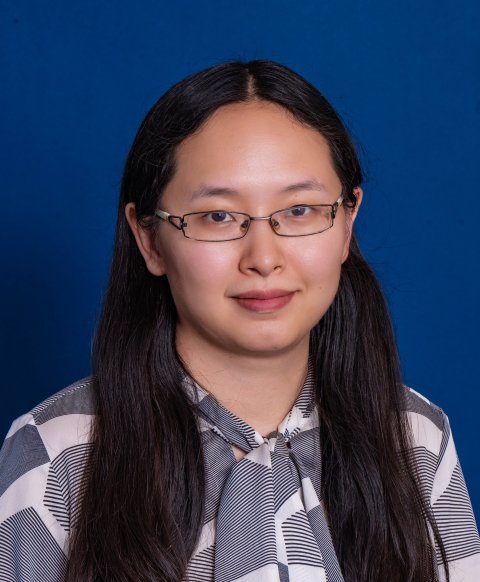
Venkatesh Merwade is a Professor in the Lyles School of Civil Engineering at Purdue University , where he has been since 2007. His research focuses on GIS applications in water resources engineering , surface water hydrology , river hydraulics , and cyberinfrastructure for hydrology , with regional interests in water management in developing countries . PhD in Civil Engineering (University of Texas at Austin, 2004) MSc in Engineering Hydrology (National University of Ireland, Galway, 2000) B.Engg. in Environmental Engineering (Shivaji University, India, 1997) His work includes floodplain mapping , hydrological modeling , and cyber-enabled hydrology education via tools like RWater and SWATShare . He has received awards such as the 2022 Purdue Individual Graduate Student Mentorship Award and 2018 Seed for Success for securing major research grants. Merwade collaborates with students and colleagues on flood prediction , soil moisture assimilation , and hydro-climatic impact analysis . His projects emphasize data-driven modeling , uncertainty quantification , and GIS integration for watershed management. He is affiliated with the Burke Hydraulics and Hydrology Lab and Purdue's Center for the Environment .
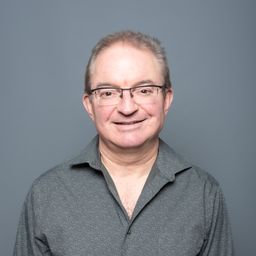
Seth Blumsack is a Professor at the Pennsylvania State University in the Department of Energy and Mineral Engineering and serves as Director of the Center for Energy Law and Policy . He holds an Adjunct Research Professor position at the Carnegie Mellon Electricity Industry Center and is affiliated with the Santa Fe Institute as an External Faculty member. His research spans energy economics , power grid reliability , and complex infrastructure networks . Key projects include: Interdependent natural gas and electricity systems analysis Governance of regional transmission organizations Smart grid consumer behavior studies Power grid reliability tools development He has secured funding from the U.S. National Science Foundation , Department of Energy , Environmental Protection Agency , and private industry. His Best paper award at Hawai’i International Conference on System Sciences (2011) and John T. Ryan, Jr. Fellowship (2011-17) highlight his scientific recognition. Publications emphasize electricity market deregulation , energy infrastructure resilience , and consumer response to smart grid technologies . His work has been cited in major media outlets like The New York Times and The Los Angeles Times , and he has consulted for National Renewable Energy Laboratory , U.S. Department of Energy , and other industry stakeholders.
Professor Eric Morgan at Queen's University Belfast leads parasitology research in the School of Biological Sciences , focusing on climate-driven epidemiology of parasitic infections in animals. His work integrates predictive modeling, parasite transmission dynamics at the wild-domestic interface, and sustainable livestock health solutions. Veterinary parasitology and climate change impact Anthelmintic resistance mitigation strategies AI-enhanced diagnostic systems for animal health Current research students include Anthony George, who investigates Combining alternative approaches for helminth control in grazing livestock . Public engagement initiatives like the BUG Consortium and Poo Patrol translate findings into practical parasite management. His recent publications in 2025 address topics like flood reactors, zoonotic toxocariasis, and precision agriculture tools for parasite risk assessment.
Professor Stuart James Khan is an Adjunct Professor in the School of Civil & Environmental Engineering at the University of New South Wales (UNSW). He previously served as Director of the Australian Graduate School of Engineering (AGSE). His research focuses on sustainable urban water management, water treatment processes, and chemical contaminant analysis. Khan holds a PhD in Environmental Engineering from UNSW (2003) and a BSc (Hons 1 in Organic Chemistry) from the University of Sydney (1995). His research interests include water recycling, desalination, disinfection byproduct formation, and the safe management of chemical contaminants. He has advised over 15 PhD students on topics ranging from advanced treatment technologies to risk assessment frameworks. Khan has published extensively, with over 200 journal articles and 18 book chapters, emphasizing interdisciplinary approaches to water quality challenges. Key contributions include advancing membrane bioreactor performance, optimizing water recycling systems, and assessing risks associated with emerging contaminants. His work bridges fundamental science and practical engineering solutions, addressing global water security challenges. Current projects explore wastewater-based epidemiology, PFAS remediation, and climate-resilient water infrastructure. Khan collaborates internationally on water reuse strategies and has contributed to policy frameworks for safe water management. His teaching spans courses like Water & Wastewater Treatment and Environmental Risk Analysis, reflecting his commitment to educating future engineers in sustainable practices.
Craig A. Bond is a Professor at the RAND School of Public Policy, a Senior Economist at RAND Corporation, and Editor-in-Chief of the RAND Journal of Economics. His work bridges military resource allocation and environmental economics through advanced econometric modeling. Current Roles: Research QA Manager (RAND Arroyo Center), Senior Economist Methodological Expertise: Stochastic dynamic programming, discrete choice modeling, non-market valuation Key Research Themes: Military readiness, coastal resilience, green infrastructure, post-disaster recovery Research Interests: Craig Bond specializes in natural resource economics , environmental economics , and applied welfare economics , with recent work focusing on: Risk modeling for defense acquisitions and personnel strategy Resilience dividend valuation frameworks Green infrastructure cost-benefit analysis Climate adaptation in coastal communities Publication Trends: His 15 most recent works (2017-2025) show interdisciplinary focus across: Military Economics: Recruiting optimization, training requirements, economic multipliers Environmental Policy: Coastal land loss, invasive species impact, water management Resilience Modeling: Disaster recovery frameworks, adaptive systems
Prof. Fatih Terzi is a faculty member in the Department of Urban and Regional Planning at Istanbul Technical University's Faculty of Architecture. His research focuses on sustainable urban development, resilience, ecology, GIS applications, and smart cities. He has held visiting researcher positions at Clemson University (USA), University College London, and Technical University Berlin. He has led projects supported by EU, TÜBİTAK, and others, addressing ecological planning, risk reduction, and urban regeneration. His work bridges academic research with practical urban planning, including projects with municipalities and the Ministry of Environment. He has received multiple awards for research and design, including the Best Paper Award (2025) and TÜBİTAK recognitions. Education: PhD in Urban and Regional Planning from Istanbul Technical University (2010), MSc in Urban Planning (2004), BSc in Urban and Regional Planning from Yıldız Technical University (2000). Research interests include spatial strategic planning, ecological cities, and climate-sensitive urban design. He uses urban modeling and GIS to address sustainability challenges. His recent projects include Istanbul's flood risk analysis, green space strategies, and sustainable city planning in Kayseri and Malatya. Notable awards include the 2024 TÜBİTAK award for urban resilience projects and the 2023 Istanbul Technical University Academic Performance Award. He has also been recognized for design competitions, including the İzmir Ecological Living Area Project (2021) and the 2017 Balkan Architectural Biennale Urbanism Grand Prix. Prof. Terzi holds administrative roles at Istanbul Technical University, including Merkez Danışma Kurulu Üyeliği (2023–present). He oversees academic projects on urban resilience, smart cities, and ecological planning, contributing to both national and international initiatives.
Prof. Dr. Koert van Bekkum serves as Professor and Department Chair of Old Testament at the Evangelische Theologische Faculteit Leuven (ETF Leuven), where he also holds the position of Academic Vice Dean for Research since 2022. Previously, he was an Associate Professor of Old Testament at ETF Leuven (2018-2020) and continues to hold an Associate Professor position at Theological University Kampen since 2018. His academic career spans biblical scholarship, theological education, and research leadership in the field of Old Testament studies within the Reformed tradition. His educational background includes: PhD from Theological University Kampen (2010) with highest honors, dissertation: 'From Conquest to Coexistence: Ideology and Antiquarian Intent in the Historiography of Israel's Settlement in Canaan' Basiskwalificatie Onderwijs, Vrije Universiteit Amsterdam (2014) Visiting PhD Candidate, Archaeological Institute, Hebrew University Jerusalem (2000) Member Megiddo Expedition (1998, 2000) Drs. theol., Theological University Kampen (1997) VWO-diploma (gymnasium), Gomarus College, Groningen (1989) Van Bekkum's research interests span multiple dimensions of Old Testament scholarship, with particular emphasis on biblical historiography, archaeology of the Southern Levant, and the intersection of biblical studies with Reformed theology. His work demonstrates deep engagement with ancient Near Eastern contexts, biblical chronology, and the theological interpretation of scripture. He has made significant contributions to understanding biblical covenants, ancient Israelite history, and the relationship between biblical texts and archaeological evidence. His scholarship often bridges traditional Reformed theological perspectives with contemporary academic approaches to biblical studies, creating a distinctive voice in the field that values both confessional commitments and scholarly rigor. His recent publications reveal a consistent focus on the intersection of biblical texts with historical and archaeological contexts, particularly regarding the chronology of ancient Israel and the Southern Levant. Van Bekkum frequently examines how biblical narratives interact with ancient Near Eastern contexts, as seen in his work on Joshua, Deuteronomy, and biblical covenants. His scholarship shows a growing interest in reception history and how biblical texts have been interpreted across different eras, including contemporary contexts of religious pluralism. Notably, he has engaged with controversial topics like the Shapira forgeries and biblical chronology, demonstrating willingness to tackle complex scholarly debates while maintaining theological integrity. Van Bekkum is actively involved in academic service, serving on the Executive Board of the Netherlands School for Advanced Studies in Theology and Religion (2017-), as a member of the American Schools of Oriental Research (2019-), and previously as Secretary of the Oudtestamentisch Werkgezelschap in Nederland en België (2017-2022). His leadership extends to editorial roles, including previous service on the Editorial Board of Verantwoordingsreeks (2014-2017) and the Board of the Society for Christian Philosophy (2013-2017). His academic work is characterized by a commitment to integrating biblical scholarship with Reformed theological tradition while engaging constructively with contemporary scholarly debates. Van Bekkum's research demonstrates how historical-critical methods can coexist with confessional theological commitments, offering a model for evangelical scholarship that is both academically rigorous and theologically faithful.
Jonathan B. Martin is a Professor at the University of Florida's College of Liberal Arts and Sciences. His research focuses on hydrogeochemical processes in diverse environments including carbonate karst aquifers, coastal systems affected by sea-level change, and deglaciated watersheds in Greenland. He leads the Research Coordination Network on Carbonate Critical Zones and holds an NSF grant for Greenland watershed studies. Education: BA in Environmental Science, Wesleyan University (1980) MS in Geology, Duke University (1987) PhD in Earth Sciences, University of California, San Diego (Scripps Institution of Oceanography) (1993) Research Interests: Martin's work examines geochemical fluxes driven by biogeochemical reactions coupled with hydrological flow. This includes: (1) Water-solute-isotope dynamics in carbonate karst aquifers like Florida's Floridan Aquifer and Bahamian/Yucatan systems; (2) Coastal aquifer-estuary exchanges impacting metal mobilization and greenhouse gas fluxes; and (3) Weathering processes in deglaciated landscapes affecting global carbon cycles. His lab develops field methods to quantify submarine groundwater discharge and contaminant transport. Publications: Recent articles demonstrate strong emphasis on climate-aquifer interactions, with recurring themes including Greenland glacial meltwater biogeochemistry, coastal karst aquifer responses to sea-level rise, and carbonate mineral reactions in global carbon cycling. Work frequently integrates field measurements with geochemical modeling. Laboratory: Directs the Hydrogeochemistry Laboratory with capabilities including ion chromatography, cavity ring-down spectroscopy, nutrient autoanalysis, and fluorescence spectrometry for studies of water-rock interactions.
Dr. Alfred Chong is an Associate Professor in the Department of Actuarial Mathematics and Statistics at Heriot-Watt University (HWU). Previously, he served as an Assistant Professor at the University of Illinois at Urbana-Champaign (UIUC) and co-founded the Illinois Risk Lab. His research focuses on Actuarial Science, Financial Mathematics, and Quantitative Risk Management, addressing emerging risks like cyber, pandemic, and climate risks, leveraging machine learning, optimization, and stochastic control. He holds a PhD from The University of Hong Kong and King's College London, and is an Associate of the Society of Actuaries. Chong actively contributes to academic governance, including roles in the EPSRC Mathematical Sciences Early Career Forum and the Maxwell Institute's Data and Decisions research theme. Education: PhD in Actuarial Science, University of Hong Kong & King's College London Research Interests: Chong explores risk sharing mechanisms, forward preferences in insurance, and mitigation strategies for large-scale risks. His work integrates data analytics and machine learning to solve decision-making challenges, such as cybersecurity risk assessment, pandemic resource allocation, and climate risk modeling. Recent projects include incident-specific cyber insurance design and delegated investment strategies for retirement savings. Awards: Michael V. Colla Prize for Mathematics Related to Medicine (2022) Best of 2020 in the Annual Meeting of the Casualty Actuarial Society (2021) Advising & Grants: Chong supervises PhD students in holistic risk management, forward preferences, and reinforcement learning applications. He has secured grants supporting interdisciplinary research in risk modeling and insurance innovation. Labs & Teams: Co-founder of the Illinois Risk Lab (UIUC), now leading research at HWU's Actuarial Mathematics & Statistics department. Engaged with the International Centre for Mathematical Sciences for knowledge exchange initiatives.
Mingfang Ting is a Professor of Climate at the Columbia Climate School , affiliated with the Lamont-Doherty Earth Observatory . She co-directs the M.S. in Climate program and serves as Co-Senior Director for Education at the Columbia Climate School. Her research focuses on climate variability, extremes, Asian monsoons, Arctic sea ice, and climate change impacts on agriculture and health. Education: Ph.D. in Climate Dynamics (Princeton University, 1990), M.S. and B.S. from Peking University (1985, 1983). She has taught climate science at Columbia since 2004. Research Interests: Investigates weather/climate extremes in a warming world, Asian monsoon dynamics, Arctic sea ice variability, decadal climate modes, and hydroclimate impacts. Recent work emphasizes heatwaves, drought-flood linkages, and climate model projections. Key Projects (2020–2023): Advancing predictive understanding of North American drought Asian monsoon response to climate change Causal mechanisms of dry/humid heat extremes Arctic transport pathways and sea ice loss Scientific Contributions: Authored/co-authored over 200+ peer-reviewed articles. Her 2022 analysis of the 2021 North American heatwave and 2022 Pakistan floods exemplifies climate attribution science. Awards: AMS Distinguished Scientific Award (2021) AGU Fellow (2022) NSF CAREER Award (1995) Reuters' World’s Top Climate Scientists (2021) Leadership: Former Co-Editor-in-Chief of Journal of Climate (2020–2023). Active in climate education and global resilience initiatives through the Decarbonization Network. Labs/Teams: Leads interdisciplinary teams at LDEO focusing on climate dynamics and extreme event analysis. Collaborates internationally on monsoon systems and Arctic research.
Dr. Lisa Wang is a tenure-track Assistant Professor in the Department of Civil & Environmental Engineering at Old Dominion University (ODU). She holds a Ph.D. and Postdoctoral Fellowship in Structural Engineering from Colorado State University (CSU), with additional research at NIST’s Center for Risk-Based Community Resilience Planning. She is a licensed California Professional Engineer (PE) and has expertise in multidisciplinary community resilience assessment, mitigation strategies, and policy analysis. Her research focuses on integrating physical, socio-economic, and infrastructural systems to enhance disaster resilience in coastal and hazard-prone communities. Education: Ph.D. and Postdoc (CSU, 2022-2024), M.S. in Structural Engineering (University of Colorado Denver & Jilin University, 2015), B.S. in Civil Engineering (Jilin University, 2012). Professional licenses include CA PE #94251 and CO EIT #007558. Research Interests: Community resilience under multi-hazards (tornadoes, floods, climate change), resilience-based design of structural systems, data fusion across disciplines, and equitable decision-making for disaster resilience. Recent grants include $31k for AI-driven coastal resilience strategies and $10k for minimum building portfolio development. Grants & Awards: Principal Investigator (PI): Trustworthy AI in Coastal Resilience (ICAR, $31k), AI-Driven Building Portfolios (ODU PURS, $10k) Awards: O. H. Ammann Fellowship (ASCE), ICAR Travel Grant, AGU NSF Travel Grant, Jack E. Cermak Fellowship Labs & Teams: Wang Research Group and Structural Engineering Research Laboratory at ODU.
Brent Doberstein is an Associate Professor in the Department of Geography and Environmental Management at the University of Waterloo, Faculty of Environment. His research and teaching focus on disaster risk reduction, climate change adaptation, and sustainable resource management, particularly in developing countries across Asia and in Canada. His research interests include: Hazards and disaster risk reduction Climate change adaptation and managed retreat Post-disaster reconstruction and institutional capacity building Sustainable resource and environmental management Parks and protected areas Over the next five years, he is particularly interested in supervising graduate students in themes related to disaster risk reduction, climate adaptation, and managed retreat. His recent publications reflect a strong emphasis on community resilience, policy evaluation, and cross-national comparisons, especially in Southeast Asia and Canada. Key trends in his work include the integration of local knowledge, social equity in disaster recovery, and innovative frameworks like the PARA model for flood risk management. His scientific contributions are recognized through publications in leading journals such as International Journal of Disaster Risk Reduction , Climate and Development , and Disasters . Dr. Doberstein actively supervises graduate students, many of whom are co-authors on his recent publications. He has taught courses including GEOG101, GEOG306, GEOG356, and led field research in Indonesia. He has also been involved in research projects related to flood recovery in Canada and post-disaster adaptations in countries like the Philippines, Bangladesh, and Thailand. He leads research initiatives centered on post-disaster adaptations at individual, community, and national levels, often working with interdisciplinary teams and international collaborators. His work contributes significantly to policy development and community resilience planning in vulnerable regions.
Aniello Murano is a Professor of Computer Science at the Department of Electrical Engineering and Information Technologies , University of Naples Federico II. He serves as Scientific Director of the ASTREA (Automated Strategic Reasoning) Laboratory and leads cutting-edge research in Artificial Intelligence, Strategic Reasoning, Multi-Agent Systems , and Formal Verification . Research Interests : Strategic reasoning under perfect/imperfect information, specification/verification/synthesis of reactive systems, temporal/modal logics, automata theory, parity games, game theory, mechanism design, and formal languages. Notable Projects : PNRR Research Unit Coordinator (2023-2025) on Resilient AI, PRIN 2020 Unit Coordinator (RIPER: Resilient AI-Based Self-Programming and Strategic Reasoning), H2020-MSCA SEAL (Principal Coordinator). Awards & Honors : JPMorgan Faculty Research Award (2022), Royal Society Award (2016), Best Paper PRIMA (2015), INDAM Project Leader (2023), Italian Scientific Habilitation (2017-2018). Students & Postdocs : Supervised 6 PhD students (e.g., Silvia Stranieri, Vadim Malvone) and mentored postdocs such as Munyque Mittelmann and Bastien Maubert. Laboratory : Leads ASTREA Lab, focusing on automated strategic reasoning and resilient AI systems.
Alessia Ferrari is a fixed-term researcher in the Department of Engineering and Architecture at the University of Parma, Italy. She lectures on Hydrology within the Bachelor’s degree programme in Civil and Environmental Engineering and serves as the reference teacher for the same programme across multiple academic years (2020/2021 – 2025/2026). Research Focus Ferrari’s research integrates advanced numerical modelling with real-world flood-risk management. Key themes include: High-resolution 2-D shallow-water simulations using GPU-parallel codes. Porosity-based approaches for large-scale urban flood modelling. Levee-breach hydraulics and emergency-action planning. Calibration of hydraulic models using tools such as PEST. Integration of machine-learning techniques with physics-based flood forecasting. Publication Trends Across more than 25 peer-reviewed works (2015-2025), Ferrari has concentrated on computational hydraulics applied to extreme flood events in Northern Italy (e.g., Parma 2014, Lamone 2024). Her papers consistently advance numerical schemes (ADER, HLLEM Riemann solvers) and GPU acceleration while validating models against field data, thereby bridging theoretical development and practical flood-mitigation strategies. Contact & Office E-mail: alessia.ferrari@unipr.it Office: Science and Technology Campus – Pavilion 10, Engineering Scientific Headquarters, Parco Area delle Scienze 181/A, 43124 Parma, Italy.
Dr. Saman Razavi is an Associate Professor at the University of Saskatchewan, holding dual appointments in the School of Environment and Sustainability (SENS) and the Department of Civil, Geological and Environmental Engineering in the College of Engineering. He is a member of the Global Institute for Water Security and leads the Razavi EnviroFutures Lab. His research focuses on hydrological modeling, water resources management, climate change impacts, and the integration of machine learning with environmental science. Dr. Razavi has earned a PhD in Civil and Environmental Engineering from the University of Waterloo. Education: PhD in Civil and Environmental Engineering, University of Waterloo MS in Civil and Environmental Engineering, Amirkabir University, Iran BS in Civil Engineering, Iran University of Science and Technology Research interests include hydrologic model development, optimization, uncertainty quantification, climate change analysis, and socio-hydrological modeling. He emphasizes interdisciplinary approaches to address water challenges through integrated frameworks that bridge natural science, engineering, and socio-economic factors. Award: Walter L. Huber Civil Engineering Research Prize from ASCE (2024) Advising & Grants: Dr. Razavi leads the Integrated Modelling Program for Canada under Global Water Futures, focusing on transboundary water systems. His work involves developing decision-support tools for flood/drought management and climate adaptation. Labs/Teams: The Razavi EnviroFutures Lab advances research on water-human systems, leveraging AI and big data to enhance resilience against water-related hazards. Current projects include flood-prone area mapping, drought prediction, and socio-hydrological modeling in transboundary basins.