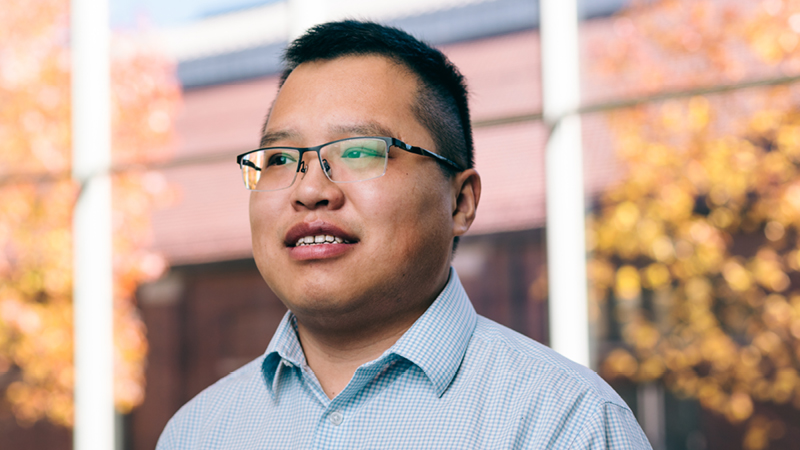
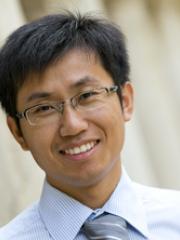
Jianguo Wang is an Assistant Professor in the Department of Computer Science at Purdue University, joining in Spring 2021. His research focuses on database systems for the cloud and large language models, including disaggregated databases and vector databases. He holds a PhD from the University of California, San Diego, and has worked at Zilliz (Milvus) and Amazon Web Services (AWS). Education: PhD in Computer Science (UC San Diego, 2019), MPhil (Hong Kong Polytechnic University), BSc (Zhengzhou University) Research interests include Disaggregated Databases, Vector Databases for Large Language Models, and cloud-native systems. Notable work includes OpenAurora (an open-source Amazon Aurora prototype) and contributions to Milvus. He has received grants like the NSF CAREER Award and honors such as the IEEE TCDE Rising Star Award. Advising a team of students in database systems and teaching courses like CS592 (Disaggregated Database Systems) and CS440 (Large-scale Data Analytics). Serves on program committees for SIGMOD, VLDB, and ICDE.
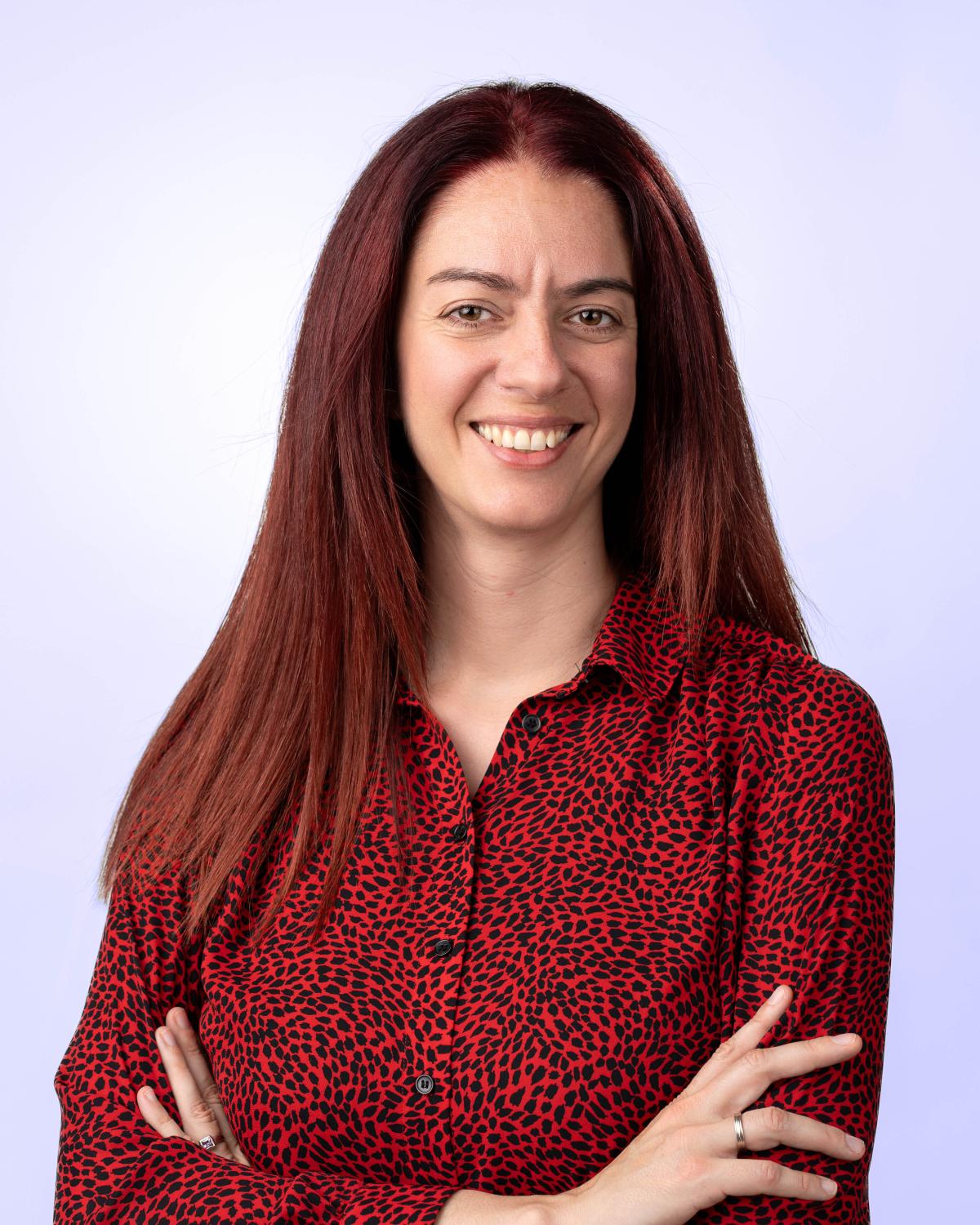
Olindo Isabella serves as a Full Professor within the Faculty of Electrical Engineering, Mathematics and Computer Science at Delft University of Technology. She heads the Photovoltaic Materials and Devices (PVMD) research group, driving innovation in solar energy conversion technologies. Her academic role encompasses teaching, research leadership, and extensive collaboration with industry and international institutions to advance photovoltaic science and engineering. Professor Isabella's research spans multiple domains of photovoltaics, including silicon and perovskite solar cells, thin-film technologies, offshore floating systems, and agrivoltaics. She investigates material properties, device physics, and system performance to enhance efficiency, reliability, and environmental sustainability of solar energy solutions. Her work integrates experimental and computational approaches for comprehensive analysis. Analysis of her recent publications indicates a strategic focus on machine learning for PV-climate classification, impedance spectroscopy of silicon solar cells, offshore floating platform engineering, and perovskite crystallization processes. These studies collectively address key barriers to large-scale solar deployment, such as performance prediction, structural integrity in marine environments, and novel material synthesis. Scientific Awards: The available information does not mention any specific awards or honors for Professor Isabella. She has guided the research of 20 students and secured competitive funding for impactful projects. Currently, she leads SYMBIOSYST (2023-2026), which explores symbiotic relationships between solar PV and agriculture, and recently completed TRUST-PV (2020-2024), aimed at improving PV plant integration across market segments through machine learning and monitoring technologies. The PVMD group under her direction operates state-of-the-art laboratories for solar cell fabrication and characterization. The team collaborates with global partners on field trials, data analysis, and technology development, contributing to both fundamental knowledge and practical applications in renewable energy.
Prof. Eleni Chatzi is a Full Professor and Chair of Structural Mechanics at ETH Zurich's Department of Civil, Environmental and Geomatic Engineering. She holds a PhD from Columbia University (2010) and has held roles from Assistant to Full Professor at ETH since 2010. Her research focuses on intelligent structural monitoring and data-driven asset management, emphasizing nonlinear dynamics and sensor integration. Affiliations : Institute of Structural Engineering, European Academy of Wind Energy (EAWE President), Swiss Community for Computational Methods (SWICCOMAS Chair) Research interests include Structural Health Monitoring (SHM), system identification, and advanced simulation tools. She pioneered work on data-driven diagnostics and self-aware infrastructure, supported by grants like the ERC Starting Grant (2015). Awards include the 2020 Walter L. Huber Prize and 2024 SHM Person of the Year Award. Her work spans wind energy infrastructure, metamaterials for vibration control, and AI-driven structural analytics. Over 600 publications and 200k+ citations highlight her impact. She teaches computational science and structural dynamics in ETH's programs and collaborates globally on sustainable infrastructure projects.
Bruce Hearn is a Full Professor of Governance at the University of Southampton's Southampton Business School. He holds senior academic roles including former Director of PhD Programs and has taught at multiple institutions globally. His research focuses on international corporate governance in emerging economies, with over 60 journal articles in top-tier journals like Journal of Corporate Finance and International Business Review . He leads projects on governance in Africa, the Caribbean, and offshore financial centers. Bruce has editorial roles in journals such as Research in International Business & Finance and International Journal of Emerging Markets . He has been a visiting professor at Aalto University and Armenian State University of Economics. Education: PhD in Governance, King's College London (ESRC-funded) MSc International Business, Birkbeck, University of London BSc, University of Edinburgh Research Interests: Bruce explores governance frameworks in emerging markets, asset pricing dynamics, and institutional impacts on multinational enterprises. His work bridges corporate governance theory with practical applications in frontier markets, emphasizing cross-border comparisons and development finance challenges. Grants & Awards: Finance Track Best Paper Prize, European International Business Academy (2017) AIB UK & Ireland “Michael Z. Brooke” Doctoral Prize (2007) External Roles: Editorial board member of Research in International Business & Finance , Chair of South Africa's National Research Foundation, and frequent speaker at global academic conferences. Labs/Teams: Active in the Centre for Research in Accounting, Accountability and Governance and the Centre for Accounting Education (CAE).
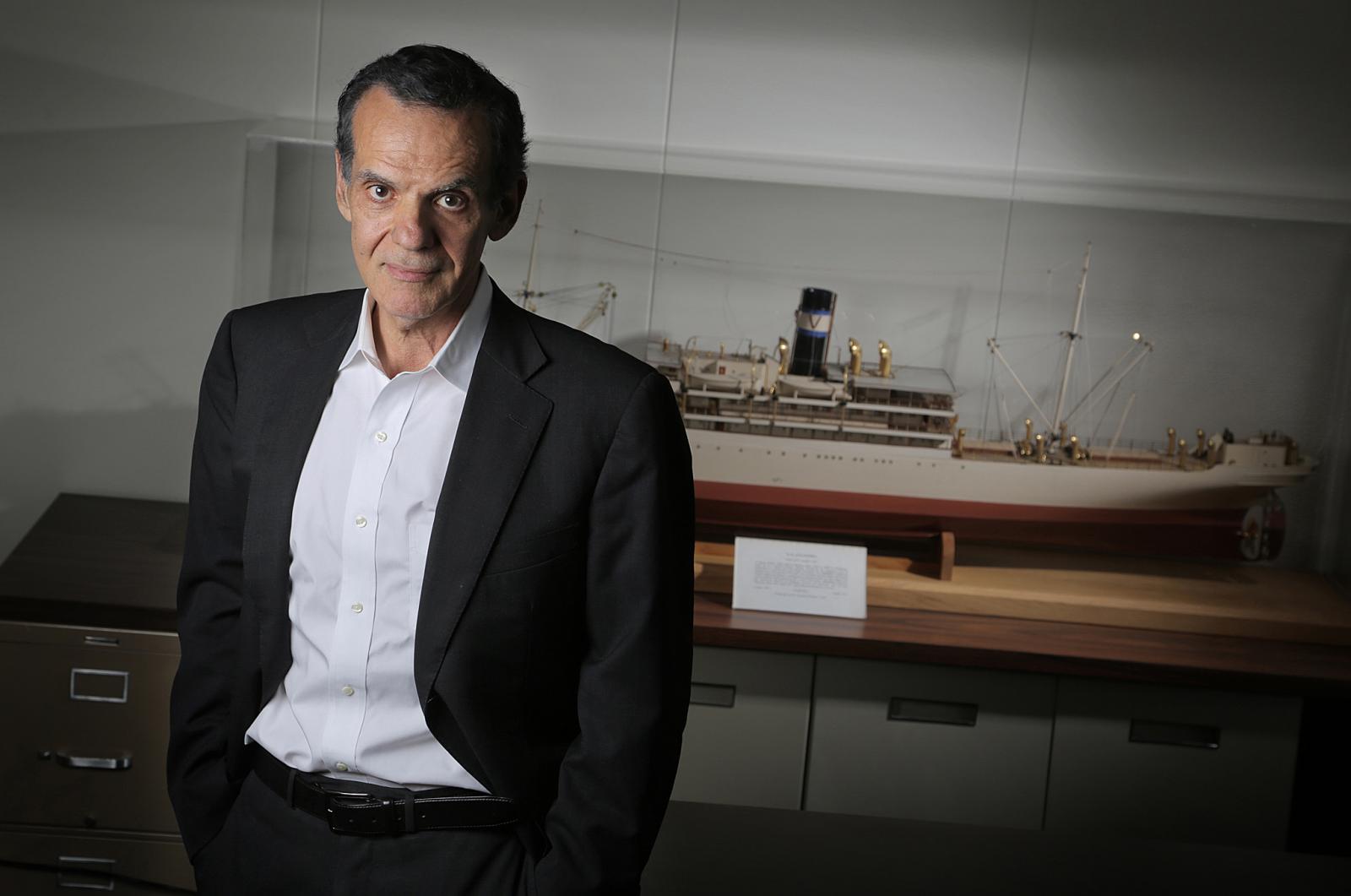
Professor Paul D. Sclavounos is a faculty member in the Department of Mechanical Engineering at the Massachusetts Institute of Technology (MIT). He earned his B.Sc. from the National Technical University of Athens in 1977 and Ph.D. from MIT in 1981. Research Interests : Marine hydrodynamics, stochastic control, offshore wind/wave/tidal/solar energy, machine learning applications, magnetohydrodynamic propulsion systems. Notable Contributions : Development of computational tools like SWAN and SML software suites; analysis of nonlinear wave dynamics; integration of AI/ML in marine hydrodynamics. Scientific Recognition : First Prize in National Mathematics Competition (1972), Georg Weinblum Memorial Lecturer (2010-2011), Best Paper Award at OMAE 2019, AEOLOS Scientific Award (2024). Leadership : Director of the Laboratory for Ship and Platform Flows since 1985; advisory roles for US Navy, US Department of Energy, and Det Norske Veritas (DNV). Teaching : Courses in Hydrodynamics (2.016), Advanced Fluid Mechanics (2.25), and Naval Architecture (2.701).
Professor Tongming Zhou is a faculty member in the Department of Civil, Environmental and Mining Engineering at the School of Engineering, The University of Western Australia (UWA) . He serves as Director of the UWA Boundary Layer Wind Tunnel Laboratory and Program Chair for Civil Engineering , contributing to both academic leadership and industrial applications. His work bridges fundamental fluid mechanics with practical engineering challenges. Education : PhD in Fluid Mechanics from The University of Newcastle (1999) Teaching : Coordinates core units like CIVL2551, CIVL5551, and CIVL4402/CIVL3402 Hydraulics, emphasizing real-world application and industry collaboration Research Interests focus on: Suppression of vortex shedding and vortex-induced vibrations (VIV) in cylindrical structures Enhancement of VIV and galloping for renewable energy harvesting Wave resonance in floating LNG facilities Sloshing dynamics in tanks with Newtonian/non-Newtonian fluids Wind tunnel testing for industrial wind load analysis Recent Research Trends show interdisciplinary work combining experimental and numerical fluid dynamics, with applications to offshore engineering, maritime safety, and energy systems. His projects explore VIV in flexible risers, gas leakage effects on pipelines, and triboelectric nanogenerators for wind energy. Grants : ARC Grant (2019-2021): Development of novel inerter-based dampers ARC Grant (2013-2015): Local Scour below Offshore Pipelines ARC Grant (2011-2015): Vortex & Force Characteristics of Inclined Cylinders UWA Grant (2008): Control of Vortex Shedding with Helical Strakes Facilities Leadership : Upgraded UWA’s Boundary Layer Wind Tunnel , Hydraulic Laboratory Water Flume , and 6DOF Hexapod motion platform , acquiring advanced equipment like PIV systems and high-precision load cells.
Associate Professor Wenhua Zhao is a globally recognized expert in offshore hydrodynamics and renewable energy technologies at The University of Queensland , School of Civil Engineering. With over 110 publications and 30 million AUD in secured research funding, his work bridges theoretical and practical advancements in marine engineering. Research focuses on Clean Energy , Artificial Intelligence , and Climate Change , specifically floating wind energy, floating solar, offshore aquaculture, and green hydrogen production. His 15 most recent articles (2024-2025) emphasize wave-structure interactions, gap resonance dynamics, and AI-driven wave prediction, published in top journals like Journal of Fluid Mechanics and Ocean Engineering . Scientific awards include the prestigious ARC Future Fellowship (2024-2028) and DECRA Fellowship (2019-2022) , recognizing his contributions to academia and industry. He teaches the 'Design of Offshore Energy Systems' course , training hundreds of students in coastal and ocean engineering, and serves as Deputy Editor for Ocean Engineering and Associate Editor for ASME's Journal of OMAE . Available for research supervision, Zhao actively collaborates with editorial boards of Applied Ocean Research and other Q1 journals.
Scientia Professor Gary Froyland is a Professor at the University of New South Wales (UNSW), affiliated with the School of Mathematics & Statistics. He leads the ARC Laureate Centre for Dynamical Systems and Data and holds an Einstein Visiting Fellowship from the Einstein Foundation Berlin. His academic credentials include a BSc (Hons 1, Medal) in Pure and Applied Mathematics from the University of Queensland and a PhD in Mathematics from the University of Western Australia. Professor Froyland's research spans two primary domains: dynamical systems and optimization. In dynamical systems, he investigates the interplay of probability and geometry in nonlinear and chaotic systems, employing tools from ergodic theory, functional analysis, and differential geometry. His work extends to applications in oceanography, atmospheric science, and granular flows. In optimization, he focuses on decision-making in complex systems with uncertain information, developing novel approaches in mathematical programming that have been applied to mining, logistics, and medical treatment planning. His recent publications demonstrate a strong focus on coherent structures in dynamical systems, linear response theory, and applications to geophysical phenomena. The research shows increasing interdisciplinary collaboration, particularly with climate scientists and data analysts, reflecting a trend toward applying advanced mathematical techniques to real-world problems in environmental science and engineering. J.D. Crawford Prize (2025) Elected Member of the Academy of Europe / Academia Europaea (2024) ARC Laureate Fellow (2024-2029) Fellow of the Society for Industrial and Applied Mathematics (SIAM) (2021) Fellow of the Australian Academy of Science (2020) Vice-Chancellor's Award for Teaching Excellence - Postgraduate Research Supervision (2015) Professor Froyland actively supervises PhD and honors students, with current advisees including Kevin Felipe Kühl Oliveira, Nicholas Peters, and Kathrin Völkner. His research is supported by multiple grants, including an ARC Laureate Fellowship (2024-2029) for "Breakthrough mathematics for dynamical systems and data," an Einstein Visiting Fellowship (2022-2026), and several ARC Discovery Projects. His work has practical applications in climate science, mining optimization, and medical treatment planning, particularly in radiotherapy. He leads the ARC Laureate Centre for Dynamical Systems and Data, which brings together researchers to develop new mathematical approaches for analyzing complex dynamical systems. The center focuses on creating methods to identify coherent structures in spatiotemporal data, with applications spanning environmental science, social science, health science, and engineering.
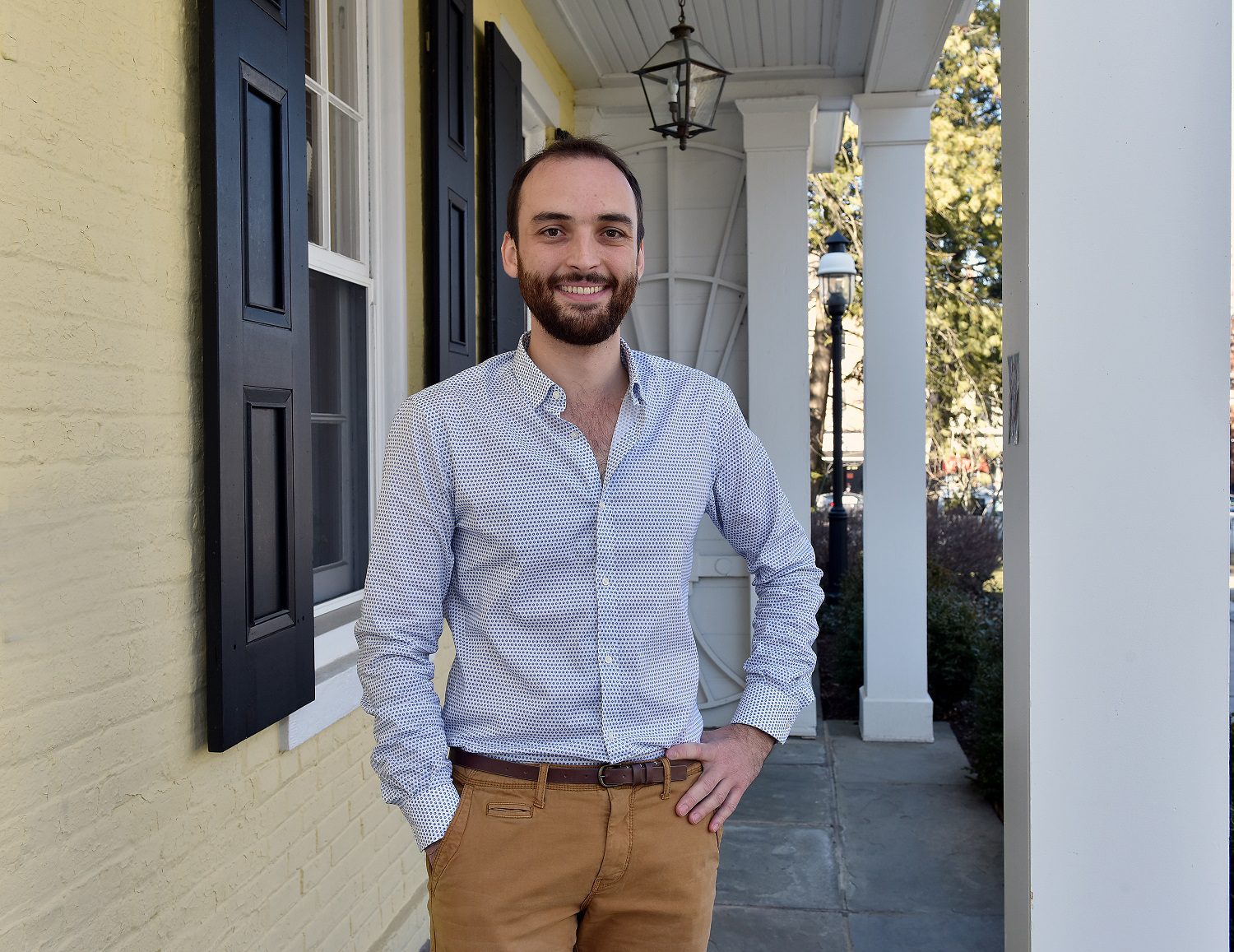
Florian Lionnet is an Associate Professor of Linguistics in Princeton University's Council of the Humanities and Director of Undergraduate Studies. He holds a Ph.D. from UC Berkeley (2016) and joined Princeton in 2017. His research focuses on phonetics/phonology, typology, areal and historical linguistics, and language documentation, with a focus on African and Oceanic languages. Current projects include endangered languages in Chad and New Caledonia, involving annual fieldwork collaborations with anthropologists, ethnomusicologists, and archaeologists. Research interests emphasize tonal systems, phonological representation, and language contact, particularly in Laal (an isolate language), Fanya (Bua), and Khoisan languages. His work bridges theory and practice, contributing to both linguistic theory and endangered language preservation. Articles explore tone phonology, areal patterns, and subphonemic effects, with recent emphasis on Kalahari Basin and Oceanic languages. Teaching responsibilities include directing undergraduate studies in Linguistics. No awards or grants are explicitly listed, though his fieldwork suggests active research funding. His office is located at 1-S-18 Green Hall, Princeton University.
Chuck Fang is an Assistant Professor of Finance at Drexel University's LeBow College of Business. He holds a PhD in Finance from UPenn Wharton (2023) and BAs in Economics, Mathematics, and Statistics from UC Berkeley (2015). His research is centered on credit markets, monetary policy, financial innovations, and financial data infrastructure. PhD in Finance, UPenn Wharton, 2023 BAs in Economics, Mathematics, and Statistics, UC Berkeley, 2015 His research interests span credit markets , monetary policy transmission , financial innovations (including DeFi and automated market makers), and financial data linkage (e.g., Bond-Compustat-CRSP and DealScan-Compustat links). His work explores how monetary policy affects bond fund flows, debt structure changes, and sovereign restructuring. He emphasizes data quality and transparency, contributing open-source tools for empirical finance. The most recent articles reveal a strong focus on monetary policy amplification , debt market structure , and data infrastructure for empirical research. Keywords across publications include finance, monetary policy, asset pricing, fintech, and data linkage. Subfields consistently involve bond fund flows, syndicated loans, sovereign debt restructuring, DeFi mechanisms, and financial data validation. His research bridges macroeconomic policy with micro-level financial data, often using large-scale institutional holdings and transaction data. Scientific awards include: WFA Brattle Group PhD Candidate Award for Outstanding Research Chuck Fang has advised no students listed in the materials. He has secured research recognition through conference presentations and working paper awards. His work is supported by access to major financial databases and collaboration with leading scholars such as Kairong Xiao and Greg Nini. He actively disseminates findings through SSRN, Google Scholar, and academic conferences. He leads or contributes to several data infrastructure projects, including the Bond-Compustat-CRSP Link and DealScan-Compustat Link. These tools enhance empirical research in corporate finance and asset pricing by improving issuer identification and data accuracy. He also maintains a personal website and is active on professional platforms like LinkedIn and Twitter, promoting open science and financial research transparency.
Shantanu Dutt is a full Professor in the Department of Electrical and Computer Engineering at the University of Illinois at Chicago , located in Chicago, IL. His office is in 930 SEO at 851 S. Morgan St, and he can be reached at dutt@uic.edu . Education Ph.D. in Computer Science and Engineering, University of Michigan, Ann Arbor (1990) M.Tech. in Computer Engineering, Indian Institute of Technology Kharagpur (1984) B.E. in Electronics and Communication Engineering, Maharaja Sayajirao University of Baroda (1983) Research Interests Professor Dutt’s research agenda centers on VLSI Computer-Aided Design (CAD) , with particular emphasis on physical design and incremental synthesis targeting both ASICs and FPGAs. He explores discrete optimization techniques to solve placement, routing, and partitioning problems. Another major thrust is FPGA built-in self-test (BIST) and trusted design , ensuring provable diagnosability and security against hardware Trojans. He also investigates fault-tolerant computing at both chip and system levels, and develops parallel and distributed computing algorithms for scalable performance. Scientific Awards 1996 Best Paper Award , ACM/IEEE Design Automation Conference, for “A probability-based approach to VLSI circuit partitioning” 1995 Most Influential Paper Award , Fault-Tolerant Computing Symposium, for “Design and reconfiguration strategies for near-optimal k-fault-tolerant tree architectures” Research Impact and Funding Professor Dutt has published extensively in top-tier journals (IEEE TVLSI, ACM TRETS, IEEE TCAD) and premier conferences (ICCAD, DAC, DATE, FTCS). His work has shaped incremental placement, timing-driven routing, FPGA security, and fault-tolerant multiprocessor architectures. While specific grant numbers are not listed, the breadth and longevity of his publication record indicate sustained funding from NSF, industry, and other agencies. Laboratory and Collaborations Although no formal laboratory name is provided, Professor Dutt’s research is conducted within the ECE department’s VLSI CAD and Fault-Tolerance groups, collaborating with graduate students and colleagues across the US and internationally.
Helen Xu is an Assistant Professor at Georgia Tech's School of Computational Science and Engineering (College of Computing). She holds a Ph.D. from MIT (2022) under Charles E. Leiserson and was a Grace Hopper Postdoctoral Fellow at Lawrence Berkeley National Lab (2022). Her research focuses on parallel algorithms, cache-efficient data structures, and high-performance computing. Xu has interned at Microsoft Research, NVIDIA Research, and Sandia National Laboratories, and her work has been supported by prestigious fellowships including the National Physical Sciences Consortium and Chateaubriand awards. **Education**: Ph.D., Computer Science, MIT, 2022 Postdoctoral Research, Lawrence Berkeley National Lab (2022) **Research Interests**: Parallel and cache-friendly algorithms Dynamic graph and data structure optimization Algorithm performance engineering Sparse matrix/tensor operations **Awards**: Grace Hopper Postdoctoral Scholar (2022), Best Artifact Award (PPoPP 2024), National Physical Sciences Consortium Fellowship, Chateaubriand Fellowship. **Advising & Teaching**: Advises PhD/M.S. students in parallel computing and high-performance systems. Teaches courses like CSE 6220 (Introduction to HPC) and CSE 6230 (HPC Tools). Supervised MIT M.Eng. projects on BP-Trees and parallel prefix sums. **Labs/Teams**: Active in Georgia Tech's High-Performance Computing community, collaborating with researchers like Aydın Buluç and Prashant Pandey on graph containers and dynamic data structures.
James Carroll is a Professor in the Department of Electronic & Electrical Engineering (EEE) at the University of Strathclyde, where he also serves as Director and Principal Investigator of the Wind and Marine Energy Systems and Structures CDT (2019–2027) and the Strathclyde lead for the EnerHy Wind and Hydrogen CDT (2024–2032). He is Co-Lead of the Wind Energy and Control (WEC) Group, one of the largest university-based wind energy research groups in the UK, comprising 8 academics and over 35 researchers. His research interests are centered on wind energy systems, with a focus on: Novel wind turbine concept development Wind turbine reliability and maintenance modeling Cost of energy and O&M cost modeling Drive train selection impact on reliability Condition monitoring and failure prediction of wind turbine components Data-driven machine learning and physical modeling for remaining useful life prediction SCADA and vibration data analytics The recent articles highlight a consistent trend in offshore and onshore wind energy innovation, with strong emphasis on predictive maintenance, cost reduction, digital twins, and novel turbine design. His work bridges engineering, data science, and sustainability, contributing significantly to renewable energy advancement. Scientific recognition includes: 2nd Place, Future Energy Competition (2019) James Carroll has been actively involved in major research projects, including EPSRC-funded CDTs and industry collaborations, focusing on hydrogen integration, digital twins for powertrains, and offshore wind maintenance optimization. He has also contributed to professional activities such as keynote speaking at the Wind Energy Science Conference 2019 and participation in EPSRC scoping workshops. He supervises research students and leads a dynamic team within the WEC Group, driving innovation in wind and marine energy systems. His research group, the Wind Energy and Control (WEC) Group, is a leading UK academic team in wind energy, fostering interdisciplinary collaboration and training the next generation of energy engineers through doctoral training programs.
Adam Marcus is an Associate Professor of Architecture at Tulane University School of Architecture and serves as Research Director of the Center on Climate Change and Urbanism. He directs Variable Projects, an award-winning design and research studio operating at the intersection of architecture, computation, and fabrication, and is a partner in Futures North, a public art collaborative dedicated to exploring data aesthetics. His educational background includes: Master of Architecture from Columbia University Bachelor of Arts from Brown University Adam's research focuses on critical approaches to design computation, digital fabrication, and robotics, exploring how these technologies enable new modes of ecological, material, and public engagement. His work particularly emphasizes climate adaptation, buoyant ecologies for sea level rise, computational representation, and multispecies architecture. He integrates these interests through practical design-build projects that address ecological challenges while advancing architectural representation and fabrication techniques. His recent publications demonstrate a strong emphasis on computational approaches to architectural representation and ecological design. The works consistently explore the intersection of digital technologies with ecological imperatives, particularly focusing on climate adaptation strategies, multispecies collaborations, and innovative drawing protocols that bridge analog and computational paradigms. His book 'Drawing Codes' represents a significant contribution to rethinking architectural drawing in the computational age. Notable awards include: Selected as one of the '30 Most Admired Educators' by Design Intelligence (2013) Recipient of the New Faculty Teaching Award from the Association of Collegiate Schools of Architecture (2016) Adam has served on ACADIA's Board of Directors from 2015 to 2021 and currently serves on the editorial board of the International Journal of Architectural Computing. His teaching at Tulane includes design studios and courses in computational design and digital fabrication with ecological applications, building on his decade of experience at California College of the Arts where he co-founded the Architectural Ecologies Lab. He leads research initiatives through Tulane's Center on Climate Change and Urbanism, developing practical design solutions for ecological challenges, particularly those related to climate change and sea level rise. His Buoyant Ecologies Float Lab project exemplifies this approach, creating 'optimized upside-down benthos for sea level rise adaptation' that has received attention from major media outlets including Smithsonian Magazine and Architectural Record.
John S. McCartney is a Professor and Hal Sorenson Endowed Chair in the Department of Structural Engineering at the University of California San Diego (UCSD). He directs the Englekirk Structural Engineering Center and holds editorial roles at journals such as ASCE Journal of Geotechnical and Geoenvironmental Engineering and Computers and Geotechnics. His research focuses on unsaturated soil mechanics, energy geotechnics, and geosynthetics engineering, with applications in thermal energy systems, landfill covers, and seismic response analysis. Education: B.S. and M.S. in Civil Engineering from University of Colorado Boulder (2002), Ph.D. in Civil Engineering from University of Texas at Austin (2007). Research interests include thermo-hydro-mechanical behavior of soils, geothermal energy piles, tire-derived aggregates, and seismic performance of geotechnical systems. His work combines laboratory testing, centrifuge modeling, and numerical simulations to address challenges in sustainable infrastructure and energy systems. Key awards include the Walter L. Huber Research Prize (2016), NSF CAREER Award (2011), and multiple teaching and service recognitions. He actively contributes to ASTM standards and serves as President of the IGS-NA chapter. Lab facilities are located in the Structural and Materials Engineering Building (SME 409). Courses taught include advanced soil mechanics, energy geotechnics, and geotechnical earthquake engineering.