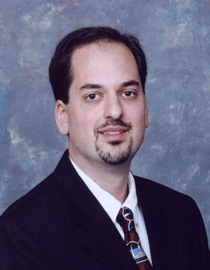
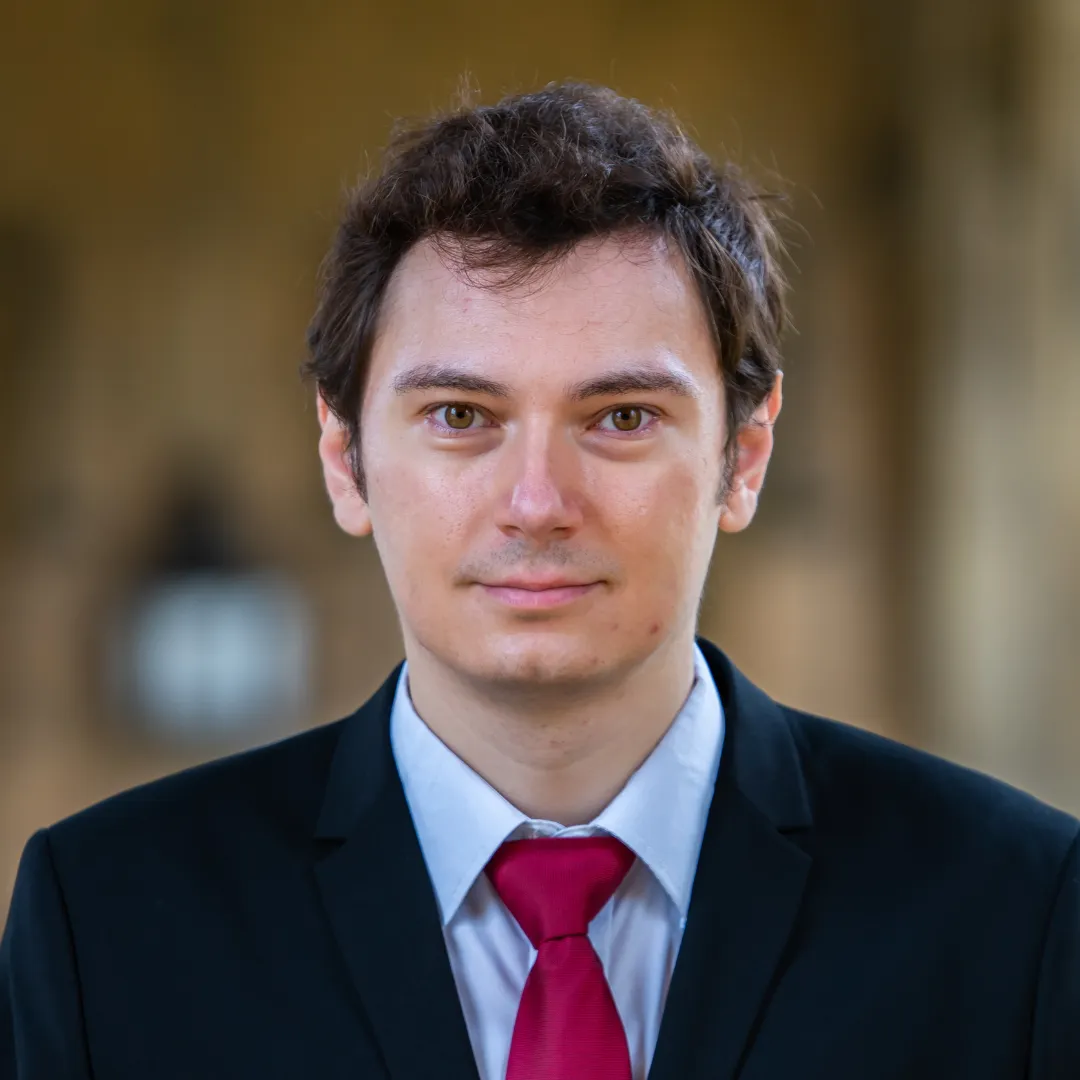
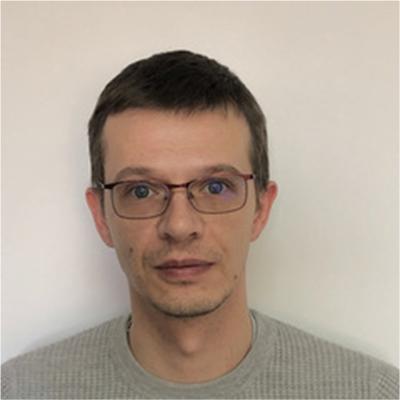
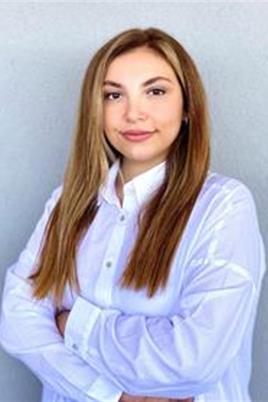
Robert Balog is a Professor in the Department of Electrical & Computer Engineering at Texas A&M University. He serves as Director of the Renewable Energy and Advanced Power Electronics Laboratory (REAPER), Co-Director of the NSF I/UCRC on Next Generation Photovoltaics (NGPV), and Assistant Director for Grid-Edge Modernization at the Smart Grid Center. He holds affiliations with the National Academy of Inventors as a Fellow (2024). Education: Ph.D. (2006), M.S.E.E. (2002) from University of Illinois at Urbana-Champaign; B.S.E.E. (1996) from Rutgers University. He is a licensed Professional Engineer in Texas and Illinois, and an IEEE Senior Member since 2007. Research focuses on advanced power electronics systems, solar photovoltaics, energy storage, microgrids, and power quality. Key innovations include photovoltaic balance-of-systems optimization, non-planar PV integration, and arc fault detection technologies. Over 30 patents highlight his work in power conversion, smart grid security, and energy harvesting. Recent articles emphasize capacitor-less D-STATCOM systems, PV arc fault mitigation, and smart farming energy solutions. His work bridges academic research with industry applications through NSF collaborations and technology commercialization efforts. Awards include NAI Fellowship (2024), IEEE Distinguished Lecturer designation (2020-2021), and TAMEST Patent Innovation Award (2017). Active in standards development (UL 1741/1699B) and conference organization, including ECCE 2016 Technical Program Chair. Labs/Teams: REAPER Lab pioneers PV system optimization and grid-edge technologies. NGPV I/UCRC collaborates with industry partners on next-gen photovoltaic materials and configurations.
Armin Shamaeizadeh is an Associate Tutor at the University of East Anglia, affiliated with the School of Engineering, Mathematics and Physics within the Faculty of Science. His work bridges renewable energy systems and advanced nanomaterials, with a focus on practical and sustainable engineering solutions. Research Interests: His primary research areas include Renewable Energies, Solar cells (particularly floating photovoltaics), Nanotechnology applications in energy and medicine, Mechanical Engineering, and Simulation techniques. His interdisciplinary work connects energy engineering with biomedical applications of nanomaterials. The recent publications reflect a strong trend in both sustainable energy systems and smart nanomaterials for medical applications. On one hand, his work explores solar-driven polygeneration, Rankine-ejector cycles, and nanoparticle-enhanced solar cells. On the other, he investigates advanced drug delivery systems using magnetic MOFs and nanobiomaterials for cancer therapy, indicating a unique dual focus on energy and biomedical engineering. Scientific Service: Peer reviewer for Materials Science and Engineering B (2024–present) Advising and Grants: There is no public information indicating student supervision or grant leadership. However, his collaborative research suggests involvement in team-based projects, particularly with researchers like A. Kasaeian and S. M. Naghib. Labs and Research Groups: He is a member of the Sustainable Energy research group at UEA, contributing to advancements in renewable technologies and energy system integration.
Dr. Virgil Andrei is a research fellow at St John's College, University of Cambridge , affiliated with the Yusuf Hamied Department of Chemistry and Cavendish Laboratory . His work bridges fundamental studies and real-world applications in solar energy conversion. Education: BSc/MSc in Chemistry from Humboldt-Universität zu Berlin, PhD in Chemistry from University of Cambridge Awards: Winton Fellow at UC Berkeley Dr. Andrei specializes in artificial photosynthesis , developing perovskite-based devices for solar fuel production. His innovations include floating systems for water splitting and CO2 conversion using selective catalysts. Recent publications focus on perovskite-oxide interfaces , thermoelectric integration , and scalable reactor designs . Collaborations span chemistry, optoelectronics, and materials science teams. Scientific Awards: Winton Fellow
Esko Kauppinen is a Professor in the Department of Applied Physics at Aalto University (T304 division). He leads the NanoMaterials research group and maintains a full researcher profile at Aalto University Research Portal . His work spans nanotechnology, materials science, and applied physics, with recent publications focusing on carbon nanotube applications and advanced energy materials. Key research areas include: Nanomaterials Engineering Carbon Nanotubes and Hybrids Perovskite Solar Cells 2D Materials and Heterostructures Environmental and Gas Sensing Technologies Recent publications (2024-2025) demonstrate expertise in nanomaterials for energy conversion, optoelectronics, and industrial sensing. Notable journals include Advanced Materials , ACS Catalysis , and Nanoscale . Scientific honors include: UNESCO Nanoscience Award (2018) Lee Hsun Research Award (2010) Nanotech Finland Award (2010) Walter A. Mueller Memorial Award (2001) Membership in Finnish Academy of Science and Letters His research group develops innovative nanomaterial solutions for photovoltaics, energy storage, and environmental monitoring systems.
Dr. Mihai Alexandru Ciolan is a researcher at the Alexandru Ioan Cuza University of Iași , affiliated with the Department of Exact and Natural Sciences and the Research Center for Advanced Materials and Technologies (RAMTECH). His work focuses on plasma processing, nanomaterials synthesis, and thin film technology. Education: BSc (2008) & MSc (2010) in Physics, PhD (2014) in Japan, PhD (2016) in Romania Dr. Ciolan's research spans plasma-based material modification, with emphasis on: Zinc oxide (ZnO) nanomaterials for bioimaging and solar cells Non-thermal plasma (NTP) applications in agriculture Surface engineering of polymers and nanoparticles His recent publications (2024-2019) highlight advancements in: Atmospheric pressure plasma for 3D printing filament modification Plasma-enhanced seed germination techniques ZnO-based photocatalytic water purification High-power impulse magnetron sputtering (HiPIMS) optimization
Dr. Richard Parker serves as Senior Lecturer in Astrophysics and Student Voice Lead for Physics and Astronomy within the Department of Physics and Astronomy at the University of Sheffield's School of Mathematical and Physical Sciences. He maintains an active research profile through the Astrophysics Research Cluster with office space in the Hicks Building (F22). His research program centers on dynamical evolution of star-forming regions and planetary system formation, investigating how stellar birth environments influence planetary development through mechanisms like supernovae enrichment and external photoevaporation. Methodologically, he specializes in N-body simulations to model cluster dynamics and protoplanetary disk evolution, with recent work focusing on isotopic enrichment pathways and binary system dynamics. Analysis of his 2023-2025 publications reveals dominant themes in star cluster dynamics, planetary system capture mechanisms in dense environments, and Gaia/JWST data applications for constraining formation models. Key methodological approaches include the INDICATE algorithm for phase space analysis and computational modeling of radioisotope injection. Dr. Parker actively supervises PhD students through the Astrophysics Research Cluster, with research groups focusing on computational astrophysics and observational data analysis. His projects likely involve collaborations with major observatories and space missions given the JWST/Gaia data usage in recent work. He contributes to the Astrophysics Research Cluster's core activities, particularly in star formation dynamics and planetary system evolution research streams, maintaining Sheffield's presence in international astrophysics consortia through publications in leading journals like MNRAS and The Astrophysical Journal.
Kostis Velonis is an Associate Professor at Athens School of Fine Arts, where he has established himself as a significant figure in contemporary sculpture and installation art. His academic background includes an MRes in Humanities and Cultural Studies from London Consortium (Birkbeck College, ICA, AA, Tate), studies in Arts Plastiques/Esthétiques at Université Paris 8 (D.E.A), and a PhD from the Department of Architecture at NTUA University of Athens. His practice bridges academic theory with artistic creation, maintaining an active exhibition schedule while contributing to the educational mission of ASFA. MRes in Humanities and Cultural Studies, London Consortium (Birkbeck College, ICA, AA, Tate) Arts Plastiques/Esthétiques, Université Paris 8 (D.E.A) PhD in Architecture, NTUA University of Athens Velonis's research centers on the comic and awkward condition of objects as subjects, exploring moral implications of failure and clumsiness through daydreaming and frustrated reality. His systematic vocabulary references modernity via architectural typologies including ancient Greek theatre structures, podium politics, avant-garde propaganda booths, and domestic subpolitics. His work investigates slapstick aesthetics as a framework for understanding contemporary political and social structures, with particular emphasis on how failure and clumsiness function within modern architectural and social systems. Analysis of Velonis's recent fifteen works reveals consistent engagement with slapstick as conceptual framework, environmental concerns, and reinterpretations of mythological narratives through contemporary materials. His installations frequently utilize architectural forms to examine political structures, with recurring motifs of domesticity, precarious dwelling, and marine environments. The works demonstrate a sophisticated integration of material studies with theoretical frameworks, particularly in how everyday objects become vessels for complex political commentary. His exploration of Buster Keaton's cinematic techniques translated into sculptural practice represents a unique contribution to understanding failure as productive rather than merely negative. While no specific scientific awards are documented in the provided materials, Velonis's work has been featured in significant international exhibitions including documenta 14, Fridericianum in Kassel, and major institutions such as the DESTE Foundation, Whitechapel Gallery, and Kunsthalle Osnabrück. His participation in the Onassis Festival and residency at Akademie Schloss Solitude represent notable professional recognition. Velonis has actively engaged with students through workshops including the 'Sensory Ecologies' Workshop with graduate students from École supérieure d'art et de design Talm-Angers at the Hydra Island art station (2022) and the 'Wind Methodologies' project. His teaching extends beyond traditional classroom settings into collaborative exhibition projects and theoretical discussions on sculpture, modernity, and political narratives. Though specific grant information isn't detailed, his international residencies at institutions like Princeton University's Seeger Center for Hellenic Studies indicate significant research support. Velonis's practice operates through collaborative networks rather than traditional laboratory settings. His work with HEAD2HEAD connects Athens and Reykjavik art scenes, while projects like 'Life Without Tragedy' at Governor's Island demonstrate interdisciplinary team approaches. His engagement with artist-run initiatives like State of Concept and collaborations with institutions such as NEON Foundation and DESTE Foundation create dynamic ecosystems for his artistic research, often transforming domestic and historical spaces into sites of critical inquiry.
Merve ATMACA is an Assistant Professor at Beykent University within the Faculty of Engineering and Architecture , Department of Interior Architecture. She has been actively contributing to academic duties since 2016, teaching courses such as Design Studio, Physical Environmental Control, and Smart Indoor Systems. Academic focus: Energy efficiency, smart building systems, and climate-responsive design Active in international conferences (e.g., REHVA World Congress, Clima, ICEBO) Her research explores sustainable design solutions, including passive cooling strategies, energy retrofitting of historical buildings, and renewable energy integration in commercial structures. She has supervised master’s theses on topics like healthcare facility transformations and corporate identity in interior design. Key article trends include energy performance analysis, climate-balanced architectural parameters, and post-pandemic adaptable design. She frequently collaborates with researchers like Ayşe Zerrin YILMAZ and Gülten MANİOĞLU.
Jens Moschner is a researcher at KU Leuven , focusing on advanced photovoltaic technologies and renewable energy systems. His work spans both Solar Energy and Renewable Energy Systems , with specialized contributions to offshore floating PV, solar cell metallization, and hybrid energy harvesting. Based at the Arenberg campus in Leuven, Belgium, he collaborates on interdisciplinary projects addressing energy yield optimization, thermal management, and mechanical durability. Research Themes: Solar cell metallization, offshore floating photovoltaics, hybrid solar-wind systems, thermal performance optimization Technical Domains: Mechanical Engineering, Electrical Engineering, Materials Science, Climate Science Recent publications highlight his expertise in Wire-based and Foil-based Metallization techniques, offshore wind-PV complementarity, and bifacial PV performance enhancement. His work integrates experimental validation with long-term scenario modeling, particularly for North Sea applications.
Professor Hector Iacovides is a distinguished academic at the University of Manchester's School of Mechanical, Aerospace and Civil Engineering, specializing in Convective Heat Transfer and Computational Fluid Dynamics (CFD). His research focuses on turbulence modelling, nuclear thermal hydraulics, and energy systems, with contributions to both experimental and computational methodologies. He holds a Doctor of Engineering and multiple advanced degrees from institutions like UMIST and University College London. Education: BSc (Eng) in Mechanical Engineering, University College London (1980) MSc in Thermodynamics and Fluid Mechanics, UMIST (1982) PhD in Turbulent Flow and Heat Transfer, UMIST (1986) DEng in Convective Heat Transfer, University of Manchester (2017) Research Interests: Prof. Iacovides' work spans computational and experimental fluid dynamics , turbulence modeling , and nuclear thermal hydraulics . Recent studies emphasize flow-induced vibrations in nuclear components and thermal-hydraulic analysis of advanced reactors. His projects often integrate CFD tools with experimental validation. Articles Trends: Recent publications highlight advancements in nuclear thermal-hydraulic modeling , CFD validation for flow-induced vibrations, and sustainable energy systems . Key themes include lead-cooled reactor design, passive cooling systems, and floating photovoltaic panel efficiency. Awards: 2006 Heat Transfer Society of Japan Scientific Contribution Award (shared with T. J. Craft and K. Suga) Grants & Advising: Leads the Fluids Research Group and co-leads the UK Special Interest Group in Nuclear Thermal Hydraulics. Active in projects like the VIKING initiative and the Nuclear Energy and Training Joint Academic Development Centre. Supervises research in areas like micro-scale co-generation and isothermal compressed air energy storage. Labs/Teams: Core member of the University's Modelling and Simulation Centre , contributing to interdisciplinary research in aerospace engineering and energy systems.
Dr. Aleksei Koldunov is a Researcher in the Climate Dynamics group at the Alfred Wegener Institute in Bremerhaven, Germany. His work focuses on advancing Earth system modeling and understanding ocean-atmosphere interactions, particularly in the context of climate dynamics. He specializes in high-resolution ocean models (e.g., FESOM, NEMO) and their application to study phenomena like Rossby waves, mesoscale eddies, and vertical mixing processes in the tropical and North Atlantic. His research integrates remote sensing data (e.g., satellite altimetry, Argo floats) with numerical simulations to analyze ocean circulation patterns, steric sea-level fluctuations, and the impact of topography on wave dynamics. He contributes to large-scale projects like nextGEMS, aiming to develop kilometer-scale Earth system models for improved climate projections. Key areas of investigation include the Agulhas Current leakage, Lofoten Basin eddies, and the role of vertical mixing in tropical Atlantic circulation. His interdisciplinary work bridges physical oceanography, climate modeling, and geophysical fluid dynamics, with publications spanning topics from solar wind interactions to coastal shelf wave dynamics. Dr. Koldunov collaborates on multi-year simulations and model development to address unresolved questions in climate science, such as the representation of small-scale processes in global models. His expertise in model validation and parameterization techniques supports efforts to enhance the accuracy of climate predictions.
Harry Varvoglis is a Professor in the Department of Physics at Aristotle University of Thessaloniki, specializing in astrophysics and celestial mechanics. His work bridges theoretical and applied physics, focusing on the dynamics of planetary systems and complex Hamiltonian systems. Non-linear Dynamical Systems Asteroidal Transport Mechanisms Three-Body Coulomb Interactions Two-Fixed-Centers Problem His research reveals fundamental properties of phase space structure, chaotic behavior, and diffusion processes in celestial and atomic systems. Collaborators include prominent scientists like Menios Tsiganis and Karl Wodnar. Recent publications analyze free-floating planet scattering, asteroid belt dynamics, and orbital resonance stability. His work demonstrates interdisciplinary applications of celestial mechanics to astrophysical and plasma physics problems. Contact: varvogli@shift_2.physics.auth.gr varvogli@astro.auth.gr
Professor Atilla Incecik is a leading academic in Offshore Engineering at the University of Strathclyde's Faculty of Engineering. He has held senior administrative roles including Head of the Department of Naval Architecture, Ocean and Marine Engineering, Acting Dean, and Executive Dean of Engineering. His research focuses on hydrodynamic design, marine renewable energy systems, and computational fluid dynamics (CFD). He chairs Zhejiang University's Offshore Engineering program and was Editor-in-Chief of the Ocean Engineering Journal until 2023. Professor Incecik's expertise spans wave energy converters, floating offshore wind turbines, and ship hydrodynamics. He has pioneered tools for analyzing marine systems under extreme conditions and contributed to green shipping initiatives. His work aligns with UN Sustainable Development Goals for clean energy and environmental sustainability. Key achievements include an Honorary Doctorate from Chalmers University (2019) and the Royal Institution of Naval Architects' prestigious William Froude Medal (2022). He leads high-impact projects like the Industrial Doctoral Centre for Offshore Renewable Energy (IDCORE) and Strathclyde Inspire Gate, focusing on innovation in marine technology. Research Interests: Hydrodynamic modeling and simulation Wave energy harvesting systems Offshore wind turbine dynamics Structural health monitoring CFD applications in confined waters His 217+ publications and 34 projects demonstrate leadership in advancing offshore renewable energy and marine safety. Recent work includes digital twin models for offshore platforms and machine learning-driven structural analysis.
Prof. Selda Oterkus is a Professor (Chair) at the University of Strathclyde's Department of Naval Architecture, Ocean and Marine Engineering, and co-director of the PeriDynamics Research Centre (PDRC). She holds a PhD in Mechanical Engineering from the University of Arizona. Her research focuses on multi-physics modeling, including damage prediction in materials and structures under various conditions. Key areas include fluid-structure interactions, offshore renewable energy systems, and composite materials. Her work is supported by organizations like BEIS, Innovate UK, and industry partners such as Babcock and TWI. Research interests span peridynamics, fracture mechanics, computational fluid dynamics, and desalination technologies. She has collaborated internationally, serving as a visiting professor at Stanford University, University of Padova, and Otto von Guericke University. She is an editor for journals like Computational Materials Science and chairs the ASME UK Section. Her projects include advanced manufacturing techniques, floating wind/solar energy devices, and corrosion damage analysis. She contributes to UN Sustainable Development Goals related to affordable clean energy and climate action. Supervised 16 students and led 32 projects, including consultancy work with Ferguson Marine. Active in workshops and conferences on sustainable materials and marine engineering. Labs/Teams: Co-directs the PeriDynamics Research Centre (PDRC), leading interdisciplinary research in computational mechanics and materials science.
Bulent Guloglu is a Professor at the Department of Economics, Istanbul Technical University. His research focuses on econometrics, financial risk analysis, and energy economics, with a particular emphasis on nonlinear dependencies in global markets and sustainable development. Current Affiliation : Istanbul Technical University, Department of Economics Research Themes : Financial Contagion, Cryptocurrency, Energy-Agriculture Market Linkages, Quantile Regression Recent Research Trends : Analysis of nonlinear tail dependencies across cryptocurrencies, commodities, and energy markets; energy productivity and structural change in Turkey; machine learning applications in financial risk and recruitment. Scientific Awards : BEST PAPER Award (2017) Grants & Projects : EU-funded competition law analysis, TUBITAK/BAP grants for energy economics and financial risk modeling, Revolving Fund for corporate sustainability research.