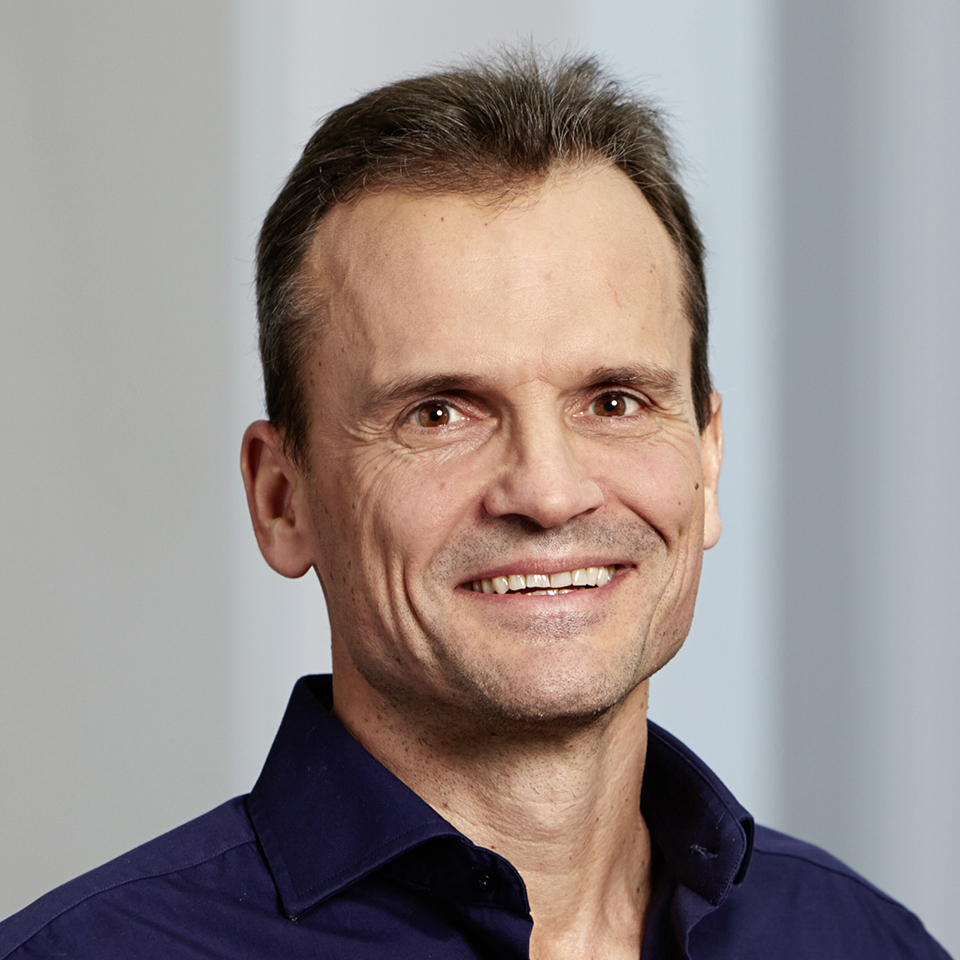
Santosh Nagarakatte is a Professor and Undergraduate Program Director in the Department of Computer Science at Rutgers University. His research focuses on hardware-software interfaces, compilers, formal verification, and numerical methods. He has contributed to projects like the RLIBM math library and verified eBPF ecosystems, emphasizing robustness and security in software systems. Education: PhD in Computer Science from the University of Pennsylvania. His work has been recognized with awards including the ACM Distinguished Member (2023), NSF CAREER Award (2015), and multiple distinguished paper awards at top conferences like PLDI and POPL. Research interests include compiler optimizations, verified compilers, memory safety, and high-performance computing. He has advised numerous PhD students and leads projects funded by Intel, NSF, and the eBPF Foundation. His lab focuses on practical formal methods and math library correctness.
Matthieu Martel is a Professor in Computer Science at Université de Perpignan Via Domitia and serves as Vice-President for International & Cross-Border Relations. He leads the Laboratoire de Mathématiques et de Physique (LAMPS) and is a co-founder and scientific advisor of Numalis, a startup focused on reliable numerical computation. His research spans precision tuning, scientific data compression, numerical accuracy, and safety-critical systems. He has advised numerous PhD students and collaborates on projects like Linguatec IA and Numalis . Research Interests: Green computing, precision tuning, neural network validation, embedded systems safety, and abstract interpretation. Recent work includes error-bounded compressed array computations and formal verification of neural networks. Professional Activities: Organizes EJCP 2024 and serves on conference committees (CODIT, CoDaC, ICSRS). Awards include the Best Paper Award at DRBSD 2023 and SC '23 Workshops. Labs & Teams: Active in LAMPS lab and collaborates with Numalis on software tools for reliable numerical computation.
Josie Esteban Rodriguez Condia is a Fixed-term Assistant Professor in the Department of Control and Computer Engineering (DAUIN) at Politecnico di Torino. She is a member of the CARS@PoliTO Interdepartmental Center - Center for Automotive Research and Sustainable Mobility and serves as an invited member of both the College of Electronic, Telecommunications, and Physics Engineering and the College of Computer, Film, and Mechatronics Engineering. Her research focuses on computer architecture reliability, particularly in GPU and AI accelerator systems. Key areas include functional testing, general purpose graphics processing units (GPGPUs), hardware accelerators, hardware architecture, and parallel processing. Her work addresses critical challenges in reliability assessment of AI-based automotive systems, self-test libraries for tensor cores, and hardening techniques for neural networks on GPUs. Her recent publications demonstrate a strong trend toward reliability engineering for AI hardware, with particular emphasis on automotive applications and GPU-based neural network implementations. The research spans fault injection methodologies, error modeling, and architectural solutions to enhance system resilience against soft errors and permanent faults. Dr. Rodriguez Condia actively supervises PhD students including Gustavo Vilar De Farias, Giuseppe Esposito, and Robert Alexander Limas Sierra, all working on reliability evaluation and enhancement of neural networks. She is a member of the PNRR Research Group for the National Center for HPC, Big Data and Quantum Computing (2022-2025). She teaches multiple courses including GPU Programming and High Performance Computing for both Computer Engineering and Quantum Engineering programs. Her editorial work includes serving as Guest Editor for APPLIED SCIENCES in 2024.
Nick Vannieuwenhoven is an Assistant Professor at KU Leuven, affiliated with the Department of Computer Science and the NUMA Division. He serves as the Exchange Coordinator for the Master in Mathematical Engineering and is an Associate Editor for The Electronic Journal of Linear Algebra and SIAM Journal on Applied Algebra and Geometry . His research focuses on tensor decompositions, numerical analysis, Riemannian optimization, and applications in data science. He obtained his PhD in 2015 under Professors Karl Meerbergen and Raf Vandebril, funded by the FWO (Research Foundation Flanders). His postdoctoral research (2015–2021) was also supported by FWO fellowships. His research group investigates tensor decompositions, multilinear algebra, and numerical techniques for data science, with a focus on condition number analysis and Riemannian optimization. Collaborators include experts like Carlos Beltrán, Paul Breiding, and Simon Telen. Current students include Jana Jovcheva, Bram Leys, and David Thorsteinsson, working on manifold-valued function approximation, group-invariant networks, and data-based engineering. Key awards include FWO fellowships for his PhD and postdoctoral studies. Grants include support for postdoctoral researchers via MSCA and FWO schemes. Notable projects involve Tucker compression libraries (ATC) and geometric analysis of tensor networks. His work bridges algebraic geometry, numerical analysis, and machine learning, emphasizing stability and computational efficiency.
Sylvie Boldo is a Research Director (Directrice de recherche) at Inria, affiliated with the Toccata project team. She is based at the Inria Saclay-Île-de-France research center and the LMF laboratory (Laboratoire de Méthodes Formelles) at Université Paris-Saclay. Her work focuses on formal proof techniques in Coq, floating-point arithmetic, and program verification. She has held significant roles in program committees for conferences like ARITH, NFM, and CPP, and serves as an associate editor for IEEE Transactions on Emerging Topics in Computing. Her research interests include formalizing mathematics in Coq, verified numerical algorithms, and analyzing floating-point errors in programs. Notable contributions include the Flocq library for floating-point arithmetic and the Coquelicot library for real analysis. She has advised multiple doctoral students, including David Hamelin, Houda Mouhcine, and Diane Gallois-Wong, and has led or contributed to several funded projects such as Nuscap (ANR) and EMC² (ERC Synergy). Her publications span formalized mathematics, verified compilation, and numerical analysis. Recent works include a comprehensive survey on floating-point arithmetic (Acta Numerica, 2023) and a mechanized proof of a wave equation solver (Journal of Automated Reasoning, 2022). She has also co-authored a book on formal verification of floating-point algorithms. Key grants include leadership in projects like MILC (Lebesgue integration formalization) and Verasco (verified compilers). Her work bridges theoretical computer science with practical applications in numerical methods and avionics systems.
Michele Chiari is a PostDoc Researcher at TU Wien's TrustCPS Group led by Prof. Ezio Bartocci. Previously, he was a PhD candidate and PostDoc at Politecnico di Milano's DEIB in the DeepSE group. His primary affiliations include TU Wien and the TrustCPS group, with a focus on formal verification and cyber-physical systems. Education: PhD candidate and PostDoc at Politecnico di Milano's Department of Electronics, Information, and Bioengineering (DEIB). Research interests include formal methods for safety-critical systems, temporal logic, automata theory, model checking for recursive probabilistic programs, infrastructure-as-code modeling (DOML), floating-point computation verification, and approximate computing. Research highlights: Development of POTL (Probabilistic Operator Temporal Logic), model checkers for operator precedence languages (POMC), and contributions to the PIACERE and CORPORA projects. His work bridges theoretical formal methods with practical applications in software engineering and embedded systems. Key projects include leadership of the EU-funded MSCA PF CORPORA project (2023–present) and contributions to the PIACERE H2020 initiative. Collaborations include tools like TAFFO (floating-point precision tuner) and DOML (Infrastructure-as-Code modeling framework). Labs/Teams: Core member of TU Wien's TrustCPS Group and former contributor to Politecnico di Milano's DeepSE Group. Active in conferences like CAV, RV, and CAiSE, with recent service roles on OOPSLA and RV program committees.
Markus Püschel is a Professor of Computer Science at ETH Zurich, leading the Advanced Computing Laboratory. He previously served as Head of the Department of Computer Science at ETH from 2013 to 2016. Before joining ETH in 2010, he was a Professor at Carnegie Mellon University (CMU) and retains adjunct status there. He holds a PhD in Computer Science (1998) and a Mathematics Diploma (1995) from the University of Karlsruhe. His research focuses on program generation for performance, Fourier analysis, signal processing, machine learning, and compiler optimization. He pioneered the SPIRAL system for generating optimized signal processing libraries and has contributed to algebraic signal processing theory. His work bridges mathematical foundations with practical high-performance computing, emphasizing automated code generation and domain-specific languages. Research trends in his articles include causal inference on directed acyclic graphs, quantized neural network inference, and efficient compiler techniques. His work on graph signal processing and causal analysis has led to novel methods in time-series data and DAG learning. Awards: IEEE Fellow (2020), Golden Owl Teaching Award (2015), NSF Discovery Grant (2008), and multiple best paper awards. Grants/Projects: Co-PI for Making Program Analysis Fast (SNF), SPIRAL GPU projects, and collaborations with industry partners like Intel and AMD. He advises over 40 PhD and master’s students, many of whom contribute to impactful projects in compilers, machine learning, and signal processing. His lab also co-founded the Swiss Data Science Center.
Michele Chiari is a researcher at TU Wien (Vienna University of Technology) specializing in formal methods, software verification, and approximate computing. With active contributions to academic conferences like SPLASH, ICFP, and ECOOP, they combine theoretical rigor with practical applications in programming language design and analysis. Research Focus Temporal logic and model checking Probabilistic program inference Floating-point verification techniques Parallel parsing algorithms Conference Involvement 2025: Member of OOPSLA Review Committee (SPLASH conference) 2025: Program Committee member for VORTEX-track 2024: Committee Member in VORTEX conference 2023: External Reviewer for ECOOP Research Papers-track Publications 2025: Boosting Parallel Parsing through Cyclic Operator Precedence Grammars (SLE track) 2025: Exact Inference for Nested Discrete Probabilistic Programs (LAFI track) 2021: Verification of Floating-Point C/C++ Programs with math.h/cmath Functions (ICSE Journal-First Papers)
Wei Yang is an Associate Professor in the Department of Computer Science at the University of Texas at Dallas, working within the Erik Jonsson School of Engineering and Computer Science. He holds a regular faculty position with an office in ECSS 4.225 and is actively engaged in teaching, research, and mentoring graduate students. His academic journey spans multiple prestigious institutions, and he currently serves on editorial boards for major software engineering journals. Dr. Yang received his Ph.D. in Computer Science from the University of Illinois at Urbana-Champaign in 2018, advised by Prof. Carl A. Gunter and Prof. Tao Xie. He earned his M.S. in Computer Science from North Carolina State University in 2013 under Prof. Tao Xie, and his B.E. in Software Engineering from Shanghai Jiao Tong University in 2011 under Prof. Jianjun Zhao. He was also a visiting researcher at the University of California, Berkeley, invited by Prof. Dawn Song. Dr. Yang's research spans multiple cutting-edge areas at the intersection of software engineering and security. His primary focus centers on software engineering for AI systems , particularly addressing challenges in deploying AI on edge devices like mobile phones, IoT devices, and autonomous vehicles. His pioneering work on efficiency robustness (initiated in 2019) explores how different inputs can trigger varying computational costs in neural networks, leading to novel attacks and defenses. He also develops infrastructure support for AI deployment , including compiler toolchains for dynamic-shaped neural networks and security analysis for IoT deployments. His research extends to mobile testing (since 2012), malware detection using expectation context analysis, and intelligent tools for software engineers and security researchers. Dr. Yang's publication record demonstrates a clear trajectory toward addressing critical challenges in AI security and efficiency. His recent work shows increasing focus on foundation models, large language models, and their security implications, while maintaining strong connections to practical software engineering challenges. The publications reveal a consistent pattern of high-impact research in top-tier venues across software engineering, AI, and security domains. NSF CAREER Award (2022) ACM SIGSOFT Distinguished Paper Award (2021) Amazon Research Award Dr. Yang actively mentors a large group of graduate and undergraduate students, with several PhD students currently working under his supervision. He serves as a faculty advisor for the ASTRO (AI Security and Trustworthiness Operations) team, which was selected as a red teaming participant in the Amazon Nova AI Challenge. His research is supported by significant grants, including the NSF CAREER award providing approximately $500,000 over five years. He emphasizes practical student development, helping them navigate the job market and transition from academic training to professional careers. Dr. Yang leads a vibrant research group focused on software engineering and security challenges in AI systems. His team, including the ASTRO group participating in the Amazon Nova AI Challenge, develops innovative techniques for testing, securing, and improving AI-based systems. The research environment fosters collaboration across multiple domains, with students working on projects ranging from mobile security to foundation model engineering.
Fredrik Dahlqvist is a faculty member at the University College London , Department of Computer Science , focusing on theoretical and applied aspects of probabilistic programming , semantics , and formal verification . His work bridges computer science with mathematical logic , machine learning , and programming language theory . Education: PhD in Coalgebraic Logics from Imperial College London (2014) His recent publications (2016–2025) explore model pruning , reparameterisation invariance , probabilistic numerical analysis , and categorical approaches to machine learning . Key themes include optimisation , cosine similarity , and omega-complete cone duality in probabilistic systems. Contact: f.dahlqvist@ucl.ac.uk (institutional) or f.p.h.dahlqvist@gmail.com (private), located at Gower Street, London WC1E 6BT, United Kingdom .
GANESH GOPALAKRISHNAN is a Professor of Computer Science at the University of Utah's School of Computing. His work focuses on formal verification of parallel/distributed systems, GPU programming, and numerical error analysis. He has contributed to tools like ISP for MPI verification, ARCHER for OpenMP race detection, and FLiT for floating-point consistency testing. His research spans theoretical foundations (e.g., concurrency models) and practical applications (e.g., GPU error analysis). Recent work includes advancing formal methods for mixed-precision computing and resilience in exascale systems. Notable projects include rigorous error estimation for floating-point operations and compiler-assisted verification techniques. Research Interests: Formal Verification of Parallel Systems | GPU & HPC Correctness | Floating-Point Numerical Analysis | Concurrency Bugs | Tools for Distributed Systems. Current work emphasizes hybrid approaches combining formal methods with dynamic analysis to address emerging challenges in heterogeneous computing architectures. Articles Trends: Recent publications (2020–2025) emphasize GPU verification (data races, error analysis), mixed-precision computing (matrix operations, tensor cores), and resilience in HPC systems. Tools like FPDetect and BinFPE highlight practical contributions to error detection in production runs. Workshops (DOE/NSF) indicate leadership in defining correctness strategies for exascale computing. Labs/Teams: Leads research groups focused on formal methods for parallel computing and numerical system reliability. Collaborations include Argonne National Lab, NVIDIA, and LLNL on verification tools and HPC correctness frameworks.
Gianmarco Cherchi is a Tenure-Track Assistant Professor and Computer Science Researcher in the Department of Mathematics and Computer Science at the University of Cagliari, Italy, where he also completed his PhD. He teaches courses in Data Visualization and Web Programming at the undergraduate level. His research lies at the intersection of Computer Graphics and Geometry Processing, with a strong focus on surface and volumetric mesh generation, optimization, digital fabrication, and polycube-based modeling. His work combines algorithmic innovation with practical applications in fabrication, visualization, and interactive systems. The recent publications highlight a consistent trend in advanced hexahedral meshing techniques (e.g., HexBox, VOLMAP), robust geometric computation (e.g., mesh booleans), and interactive tools (e.g., ProtoSketchAR, Py3DViewer). His research spans theoretical algorithm development, benchmark creation, and applied systems for VR/AR and simulation. His scientific accolades include the Young Investigator Award 2024 from the Shape Modeling International Organization, and prior Best Thesis Awards from the Eurographics Italy Association for both his M.Sc. and Ph.D. work. Cherchi actively collaborates with researchers such as Marco Livesu, Riccardo Scateni, and others, contributing to major surveys and state-of-the-art methods in hexahedral meshing. His work is supported by publications in top venues like ACM Transactions on Graphics (SIGGRAPH), Computer Graphics Forum (Eurographics), and IEEE VR. He has also developed practical software tools like Py3DViewer for geometry processing prototyping. He leads research in digital fabrication pipelines, as evidenced by publications on polycube decomposition for manufacturing and automated flat pattern generation. His lab work involves developing interactive and robust systems for 3D modeling and analysis.
Hendrik Ranocha is a Professor in Numerical Mathematics at Johannes Gutenberg University Mainz, Germany. His research focuses on the analysis and development of numerical methods for partial and ordinary differential equations, with particular emphasis on stability and structure-preserving techniques that transfer results from continuous to discrete levels. His educational background includes: PhD in Mathematics from TU Braunschweig (2016-2018), advised by Thomas Sonar MSc in Mathematics from TU Braunschweig (2014-2016) BSc in Mathematics from TU Braunschweig (2011-2014) Exchange student at Yonsei University, Seoul (2013) BSc in Physics from TU Braunschweig (2010-2013) Hendrik Ranocha's research spans Numerical Analysis and Scientific Computing . His work focuses on developing numerical schemes for hyperbolic balance laws and dispersive-dissipative equations, including Discontinuous Galerkin methods, spectral element methods, finite difference schemes, and flux reconstruction. He specializes in structure-preserving methods that conserve entropy/energy, utilizing summation by parts operators and mimetic properties. His research also encompasses Runge-Kutta methods, stability of time integration schemes, adaptivity in time and space, data-driven approaches, and uncertainty quantification. His recent publications demonstrate a strong focus on entropy-stable numerical methods, structure-preserving discretizations, and high-performance computing implementations in Julia. The research trends show increasing emphasis on practical software implementations (Trixi.jl, SummationByPartsOperators.jl), applications to physical systems like compressible Euler equations and shallow water equations, and addressing fundamental numerical challenges in stability and convergence. Hendrik Ranocha leads a research group at Johannes Gutenberg University Mainz with several PhD students and postdocs, including Louis Petri, Marco Artiano, Sebastian Bleecke, Saurav Samantaray, Arpit Babbar, and Valentin Churavy. He collaborates extensively with researchers such as Gregor Gassner, Andrew R. Winters, Michael Schlottke-Lakemper, and Jesse Chan on numerical methods and software development. He is actively involved in open-source scientific computing, contributing to projects like Trixi.jl (a Julia package for adaptive high-order numerical simulations of conservation laws), SummationByPartsOperators.jl, OrdinaryDiffEq.jl, NodePy, and RK-Opt. He is part of the SciML organization, which develops high-performance Julia libraries for scientific machine learning and computational science.
Aleksandar Zeljić is a Researcher at Stanford University's Center for Automated Reasoning and Center for AI Safety . He holds a PhD from Uppsala University's Department of Information Technology, supervised by Philipp Ruemmer, Christoph M. Wintersteiger, and Wang Yi. Research Focus: Automated reasoning (SAT/SMT solvers), formal verification of deep neural networks, and machine arithmetic analysis. Projects: Marabou (neural network verification), UppSAT (SMT approximation framework), mcBV (bit-vector SMT solver), and SmallFloats (Z3-based floating-point approximation). His recent publications focus on bit-vector interpolation, neural network optimization, and parallel verification techniques. Articles reveal expertise in formal methods , symbolic computation , and AI safety . Notable recognition includes the IJCAR Best Paper Award (2014) . Contributions to theoretical computer science include: Developing approximation frameworks for SMT solvers Advancing bit-vector and floating-point arithmetic verification Creating parallelization strategies for neural network analysis He has served as PC member for conferences like VSSTE, PAAR, and FOMLAS, and reviewed for journals including TCS and JAR.
Prof. Guy Even serves as a Professor in the School of Electrical Engineering at Tel Aviv University's Iby and Aladar Fleischman Faculty of Engineering. His research focuses on theoretical and applied aspects of computer engineering, with primary expertise in: Approximation algorithms for NP-complete problems in VLSI design Computer arithmetic systems Floating-point unit architecture Systolic array implementations Contact is available via email at guy@eng.tau.ac.il , phone (03-6407769), fax (03-6405027), and office location in Computer and Software Engineering room 202.