Asad Shabbir serves as Graduate Teaching Associate and Programme Coordinator for Aviation programmes at Buckinghamshire New University's College of Leadership and Innovation, where he also holds the Student Experience Coordinator role since joining in 2024. His educational background includes: Bachelor of Science in Aviation Management from University of Management and Technology, Lahore Master's degree in Air Transport Planning and Management from University of Westminster, London Mr. Shabbir specializes in supersonic aviation research , investigating its potential to revolutionize air travel through unprecedented speed and efficiency. His expertise spans aviation management systems , air transport infrastructure planning , and flight operations , informed by certifications in airside operations, air traffic management, and Cessna 172 flight simulation. Professional recognition includes: Associate Fellow of the Higher Education Academy (AFHEA) He teaches across all BSc Aviation Management pathways including Commercial/Private Pilot Training variants. No grant funding or student advising details are publicly documented. Laboratory or research team affiliations remain unspecified in available materials.
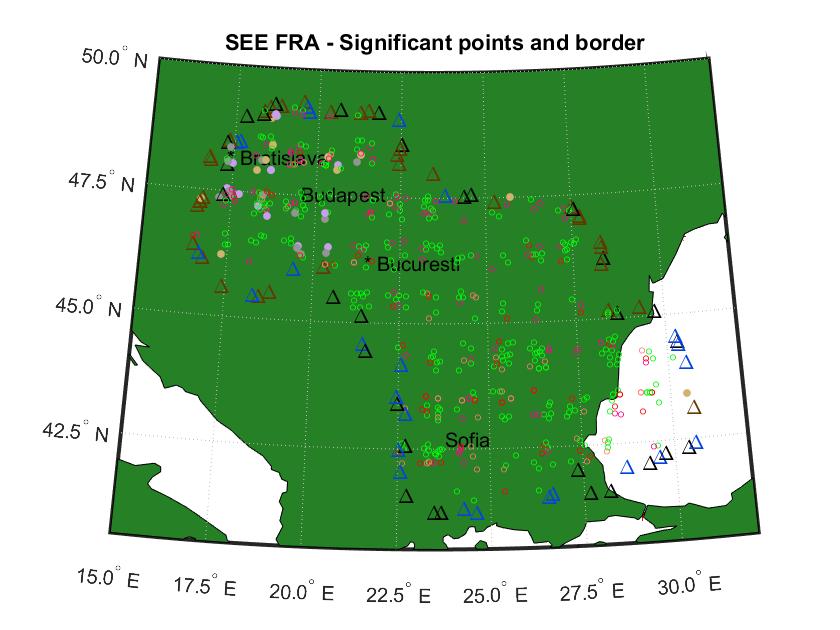
Peter Szabó is an Associate Professor at the Department of Aviation Technical Training , Faculty of Aeronautics , Technical University of Košice , Slovakia. He is actively involved in research at the intersection of mathematics, computer algebra, and aerospace engineering. Academic Affiliation: Technical University of Košice, Faculty of Aeronautics, Department of Aviation Technical Training Research Interests include: Mathematical modeling in aviation (Free Route Airspace, complex networks) Linear algebra and numerical methods with MATLAB/SageMath Calculus education and computational techniques Graph theory applications to air traffic systems Recent Article Trends highlight: Integration of calculus and numerical analysis for educational tools (2025) Mathematical axioms for airspace modeling (2022) Cloud computing in aviation research (2022) Linear algebra textbooks and computational exercises (2019) Advising : Mentored students on topics ranging from satellite stabilization to air traffic optimization.
Dr. Anne Krause is a researcher at the Institute for Training Science and Sports Informatics at the German Sport University Cologne. She is actively involved in research related to neuromuscular control, motor rehabilitation, and the physiological effects of altered gravity, with a focus on sensorimotor adaptation and whole-body vibration therapy. Her work bridges sports science, clinical rehabilitation, and space medicine. Her research interests center on neuromuscular control , postural stability , and rehabilitation interventions , particularly in conditions such as cerebral palsy and in extreme environments like microgravity. She employs biomechanical and neurophysiological methods to investigate how the human motor system adapts to perturbations, loading conditions, and therapeutic stimuli such as vibration. Her work has implications for both athletic performance and clinical populations. The trend in her publications from 2013 to 2017 reflects a strong focus on neurophysiological adaptation , sensorimotor training , and rehabilitation technologies . Her studies span diverse environments—from clinical settings with cerebral palsy patients to parabolic flight experiments simulating space conditions. This interdisciplinary approach integrates sports science with neurology and aerospace medicine. Scientific Awards: No scientific awards mentioned in the provided text. Advising and Grants: There is no explicit mention of students advised or research grants obtained. However, her collaborative work with senior researchers at DSHS suggests active participation in funded research projects, particularly in biomechanics and rehabilitation science. She has contributed to pilot studies involving clinical populations, indicating engagement with translational research. Labs and Teams: Dr. Krause is part of the research team at the Institute for Training Science and Sports Informatics at DSHS Cologne, collaborating closely with Prof. Albert Gollhofer, Dr. Ralf Ritzmann, and Dr. Katrin Freyler. This group conducts high-level research in motor control, biomechanics, and space-related physiology, utilizing advanced laboratory setups including vibration platforms, motion capture systems, and participation in parabolic flight campaigns.
Adilson Marques da Cunha is a Professor at the Brazilian Aeronautical Institute of Technology (ITA), with a focus on software engineering and computational systems. His career spans academic research and development in embedded systems, real-time applications, and machine learning methodologies. Affiliation: Brazilian Aeronautical Institute of Technology Research Interests: Dr. da Cunha's work centers on agile software development , embedded system optimization , and numerical integrator frameworks . He has contributed to deep reinforcement learning for robotics and recommender systems for news, while also exploring climate prediction models using big data. Publication Trends : 2025 papers focus on universal numerical integrators and Python testing frameworks; 2024 work involves autonomous air navigation; 2022 studies include humanoid robotics and climate modeling
Prof. Dr. Helmut Zacharias is a distinguished Professor of Experimental Physics at the Physical Institute of the University of Münster, where he leads a dynamic research group focused on ultrafast surface dynamics, quantum materials, and molecular spintronics. He is affiliated with the Center for Soft Nanoscience (SoN) and the Center for Nanotechnology (CeNTech), and has led numerous national and international research projects funded by DFG, EU Horizon 2020, and Volkswagen Foundation. His education includes a Dr. rer. nat. from the University of Bielefeld (1978) and habilitation there in 1984. He has held leadership roles as Managing Director of the Physical Institute, Dean of the Physics Department, and co-founder of CeNTech and SoN. He has also served on the ERC Starting Grant Panel and organized major international conferences. PhD, University of Bielefeld (1978) Habilitation, University of Bielefeld (1984) His research centers on chiral molecule-based spin filters , graphene and nanoribbons , ultrafast electron dynamics , and interstellar photochemistry . His group uses advanced techniques such as time-resolved photoemission, high-harmonic generation, and free-electron lasers (FLASH, European XFEL) to probe electron behavior at surfaces. The work has significant implications for spintronics, quantum computing, and astrochemistry. The recent publications reflect a strong focus on chirality-induced spin selectivity (CISS) , electron dynamics in 2D materials , and ultrafast pump-probe experiments at FELs . Themes include spin filtering through DNA and bacteriorhodopsin layers, band structure engineering in graphene nanoribbons, and desorption dynamics in interstellar ice analogs. His scientific honors include: Habilitation Prize, Westfälisch-Lippische Universitätsgesellschaft (1984) Heisenberg Fellowship, DFG (1986) Prof. Zacharias has supervised over 30 doctoral students and numerous master’s and bachelor’s candidates, fostering a strong training environment. His group has received significant funding for projects such as CHIRAL (spintronics), EUROPAH (interstellar molecules), and development of optical systems for FLASH and European XFEL. He collaborates internationally with institutions including Weizmann Institute, Max Planck Institutes, TU Berlin, and UC Berkeley. His laboratory specializes in ultrafast laser systems, including OPCPA, Mott polarimeters, and PEEM setups, enabling cutting-edge experiments in surface science and quantum materials. The group continues to push boundaries in understanding electron-spin interactions in chiral systems and dynamics in low-dimensional carbon materials.
Eric Giacomo Armando is a Full Professor at the Department of Energy (DENERG) within the College of Electrical and Energy Engineering at Politecnico di Torino. He serves as a member of the Power Electronics Innovation Center (PEIC) and leads the PEEMD research group. Research Interests: Electrical Machines Power Electronics Electric Drives Energy Conversion Sustainable Motor Drive Systems Wide Bandgap Semiconductors Recent Publications focus on GaN converter technologies, flux control algorithms, thermal management via 3D-printed heatsinks, and fault tolerance in multi-phase motors. His work appears in IEEE ECCE, APEC, and industry applications journals. Supervised Students: Stefano Savio (PhD, ongoing, researching GaN multilevel inverters for motorsport) Enrico Vico (completed PhD, focusing on overcurrent protection for GaN semiconductors) Projects: Includes EU-funded E-motors, PNRR SEMDY, and commercial contracts with HBM Italia Srl and Servotecnica SpA. He holds multiple national/international patents in traction inverters and battery chargers.
Giorgio Guglieri is a Full Professor of Flight Mechanics at Politecnico di Torino, where he serves as Head of the Department of Mechanical and Aerospace Engineering (DIMEAS). He is a member of the Academic Senate, the Executive Committee of Specialising Master's Programmes, and the steering board of the PhD Program in Aerospace Engineering. His work is centered at the intersection of flight mechanics, autonomous systems, and human-machine interfaces. Professor Guglieri's research spans multiple key areas in aerospace engineering. His primary interests include flight dynamics and control of both fixed-wing and rotary aircraft, flight simulation technologies, unmanned aerial systems for urban applications, and human factors in aviation. His work has significant applications in urban air mobility, precision agriculture using drones, and enhancing aviation safety through physiological monitoring of pilot workload. Analysis of his recent publications reveals strong trends toward integrating artificial intelligence with traditional aerospace engineering. His research group has produced significant work on UAV navigation in GNSS-denied environments, reinforcement learning for path planning, physiological monitoring for pilot stress assessment, and digital twin technologies for predictive maintenance. The research shows increasing focus on practical urban applications of drone technology, particularly in logistics, precision agriculture, and urban air mobility solutions. Professor Guglieri actively supervises numerous PhD students working on cutting-edge aerospace projects including drone navigation systems, pilot workload monitoring, urban air logistics, and advanced flight control systems. He leads multiple research projects funded by EU programs (including Horizon 2020), national research councils, and industry partners such as Leonardo, ENAC, and various agricultural technology companies. He heads the Flight Mechanics Research Team at Politecnico di Torino, which operates the STREAM Robotics Laboratory and collaborates extensively with international partners including ZHAW, University of Maryland, and multiple European research institutions. The team has developed patented technologies including an anti-sloshing tank for agricultural spraying drones and fixed-wing micro UAVs.
Kati Ahnert is a Researcher at the Department of Air Transport Technology and Logistics at Dresden University of Technology. Her work focuses on aviation safety and infrastructure design, particularly through the redesign of obstacle limitation surfaces aligned with performance-based navigation standards. Research expertise in obstacle limitation surfaces (OLS) redesign Specializes in Performance-Based Navigation (PBN) and Terminal Maneuvering Area (TMA) flight technical error quantification Teaches Air Traffic Control Cockpit Technologies, Navigation, Communication-Surveillance, and Security Serves as instructor for A320 simulator experiments and exhibition events
Adrien Gandolfo is a Researcher at the Catalysis and Atmospheric Reactivity for the Environment (CARE) group within the Institut de Recherches sur la Catalyse et l'Environnement de Lyon (IRCELYON), a joint research unit of CNRS and Claude Bernard University Lyon 1. He serves on the laboratory council, contributing to strategic oversight of the institute's environmental catalysis and atmospheric chemistry research programs. His research spans Atmospheric Chemistry , Heterogeneous Catalysis , and Environmental Chemistry , with emphases on air/water pollution control, sustainable chemistry, and energy transition. Gandolfo employs integrated thermodynamic, analytical, and reaction approaches using in situ and operando characterizations to bridge model systems with real-world applications. Key methodologies include microcalorimetry, electron microscopy, and spectroscopic techniques applied to pollutant conversion (CH 4 , CO 2 ) and biomass valorization. Recent publications reveal dual research thrusts: (1) Biogeochemical impacts of periodical cicada emergences on forest nitrogen cycling and soil respiration, and (2) Indoor air quality dynamics involving photocatalytic paints and nitrous acid (HONO) formation. This work combines field measurements with laboratory simulations, leveraging advanced platforms like IRCATECH for material characterization. His studies on VOC emissions, radical chemistry, and catalytic processes demonstrate cross-cutting expertise in environmental interfaces. Gandolfo actively contributes to IRCELYON's scientific community through initiatives like the VALOTHERBIO thematic school on biomass thermochemical valorization. His collaborative work within the CARE group focuses on sustainable solutions for environmental challenges, utilizing controlled-porosity materials and catalytic separation processes for energy transition applications.
Professor Ryszard Beniak is affiliated with the Opole University of Technology as a faculty member in the Department of Drive Automation and Robotics . He serves as a university professor and is actively involved in the Association of Polish Electrical Engineers (SEP) , holding leadership roles including Chairman of the Central Commission for Electrical Education and Vice-President of the SEP Opole Branch. Research Focus: Robotics, Drive Automation, Power Electronics, and Human-Machine Interaction Key Contributions: Advanced control algorithms for mobile robots, PWM optimization in three-level inverters, and hybrid intelligence systems for HMI Leadership Roles: SEP Main Board member, SEP Circle President at Opole Tech His recent publications emphasize precision control systems for robotic platforms, energy-efficient power electronics , and smart HMI subsystems . Notable works include Stewart-lift platform automation, adaptive quadcopter control, and innovative approaches to space vector modulation in inverters. While his research spans both theoretical and practical implementations, it consistently addresses efficiency improvements in electromechanical systems. As an expert in electrical engineering, Professor Beniak contributes to the Opole Electrical Engineering Days and participates in collaborative projects between academia and industry. His work integrates sensor systems, control theory, and energy optimization across diverse applications from humanoid robots to industrial drives.
Professor Zdobysław GORAJ is affiliated with Warsaw University of Technology as a faculty member at the Institute of Aeronautical Engineering and Applied Mechanics, Department of Airplanes and Helicopters. His roles include Head of the Airplanes and Helicopters Division at WUT, President of PSAS, and Board Member of the International Association of EASN. His research focuses on Aeronautical Engineering, particularly in UAV design, aerodynamics, and composite structures. His publications over the past decade highlight advances in mini/MALE UAVs for surveillance, aerodynamic modeling, fuel system optimization, and composite materials. Key themes include cost-effective aircraft design, reliability engineering, and flight stability. He has contributed to journals like Aircraft Engineering and Aerospace Technology and presented at international symposia.
Dr. Fawaz Y Annaz serves as Reader in Mechatronics at Birmingham City University, leveraging an international research career spanning the UK, Singapore, Japan, Malaysia, and Brunei. His expertise encompasses mechatronics engineering, robotics, and smart actuation systems, with significant contributions to aerospace, energy, and biomedical applications through leadership of the High Integrity System Laboratory and Mechatronics Group. His academic foundation includes: BSc in Electrical and Electronic Engineering (1987, University of East London) focusing on Electromagnetic Vehicle Levitation Control MSc in Engineering of Dynamic Systems (1989) researching Helical and Planar Induction Actuators PhD in Avionics (1996) addressing Architectures Consolidation in High Integrity Multi-Lane Smart Electric Actuators Dr. Annaz's research integrates robotics, control theory, and energy systems with notable emphasis on unmanned aerial vehicles (including swarm systems), microgrid resilience engineering, and electromechanical actuation. His multidisciplinary approach bridges theoretical control systems with practical applications in aerospace actuation, sustainable energy management, and speech production analysis, demonstrating consistent innovation across diverse engineering domains. Analysis of his publication trajectory reveals evolving research priorities: early work (2000-2015) centered on UAV navigation, actuator monitoring, and speech phoneme signatures, while recent publications (2020-2025) show strategic pivot toward AI-driven microgrid resilience, battery life optimization, and advanced UAV control systems—reflecting growing industry demand for sustainable energy solutions and autonomous systems. Scientific recognition includes: Granted European Patent for electromechanical actuator technology Two international patent applications Over 50 peer-reviewed publications Book and book chapters in mechatronics As an educator and research leader, Dr. Annaz has supervised numerous MSc and PhD students while directing international projects including Japanese Ministry of Education collaborations. His research output includes commercialization efforts for patented actuator technologies and development of educational platforms for robotics training. Current focus areas encompass deep reinforcement learning for energy management and swarm UAV systems. His laboratory initiatives include the High Integrity System Laboratory (operating in Japan and Malaysia) specializing in vibration control, active magnetic bearing systems, and artificial heart development, alongside the Malaysia-based Mechatronics Group advancing industrial robotics and unmanned vehicle technologies.
Nick Burdon is a Senior Lecturer in Engineering (Thermodynamics and Fluid Mechanics) at Wrexham Glyndŵr University . His academic career spans institutions including Cranfield University, Virginia Tech, and NAS Patuxent River, where he gained extensive experience in aviation and flight simulation testing. Education: BSc in Engineering from Loughborough University (2000); Cranfield Test Flight Course certification. Research Focus: Aviation (modern and historic), flight simulation, and thermodynamics. Expertise: Applied engineering principles to motorsport, speed hillclimbing, and sprints through self-prepared vehicles.
Emin Kuğu is an Assistant Professor in the Department of Software Engineering at TED University, Faculty of Engineering, since May 2020. He previously served as Deputy Head of Department and Head of the Computer Engineering Department at the Turkish Air Force Academy (2014-2017) and held part-time roles at other institutions. Education : PhD in Electrical and Computer Engineering (Old Dominion University, 2011), MSc in Software Engineering (Turkish Air Force Academy, 2005), BSc in Computer Science Engineering (Istanbul University, 1996). Research Interests : Emin's work spans Information Security , Cryptology , Software Security , Computer Networks , Communication Protocols , Databases , and Fuzzy Logic . His recent studies focus on machine learning for healthcare , deep learning in phishing detection , and location spoofing vulnerabilities in e-scooters. He has contributed to UAV path planning , intrusion detection , and remote sensing applications . Scientific Awards : Recipient of the Gene Newman Award for Excellence in M&S Research (Old Dominion University, 2009). Service and Leadership : Emin has led editorial roles at the Journal of Aeronautics and Space Technologies , served on competition juries (e.g., Turkish Exporters' Assembly InovaTİM Competition), and organized international conferences like the 36th Computer Engineering Department Heads Meeting (2022) and the 6th International Conference on Computer Science and Engineering (2021).
Dr. Neelakshi Majumdar is an Assistant Professor in the Department of Mechanical Engineering at the University of Arkansas, where she leads the Aerospace Systems Engineering and Transportation (ASYST) Lab. Her research focuses on enhancing aerospace and transportation safety through aerospace systems engineering, data analysis, machine learning, and human-subjects research. Ph.D. in Aeronautical and Astronautical Engineering, Purdue University (2023) M.S. in Aeronautical and Astronautical Engineering, Purdue University (2018) B.E. in Electronics and Communication Engineering, Chitkara University, India (2014) Dr. Majumdar's research integrates systems engineering principles with human factors and machine learning to address challenges in aviation safety, including inflight loss of control, stall/spin accidents, and maintenance-related incidents. Her lab develops predictive models using NTSB data and conducts experiments with flight simulators to assess pilot proficiency. Her recent publications in the Journal of Air Transportation and AIAA Scitech Forum highlight trends in machine learning applications for aviation safety , human factors in accident prevention , and emerging risks in Advanced Air Mobility (AAM) . She collaborates with institutions like the FAA and Advanced Air Mobility Institute, translating research into pilot training and regulatory improvements. Finalist, Stanley N. Roscoe Best Student Paper Competition (2023) 2nd Place Winner, Purdue University Research Symposium (2023) Rising Stars in Aerospace, University of Colorado Boulder (2022) Teaching Fellowship, Purdue University (2022) Outstanding Graduate Student Researcher Award, FAA PEGASAS (2021) Autodesk Design and Innovation Award (2019) At the ASYST Lab, Dr. Majumdar supervises graduate and undergraduate researchers, including Sydney Sommers , Mehedi Hasan , and Toluwalase Olatunji , while securing grants from the University of Arkansas Honors College. She also promotes STEM education through initiatives like youth workshops with flight simulators.