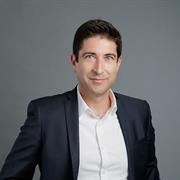
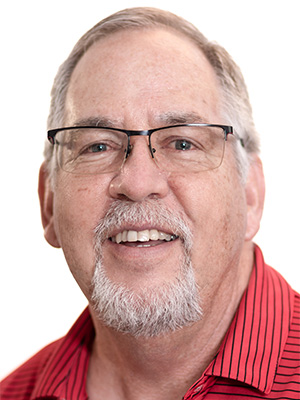
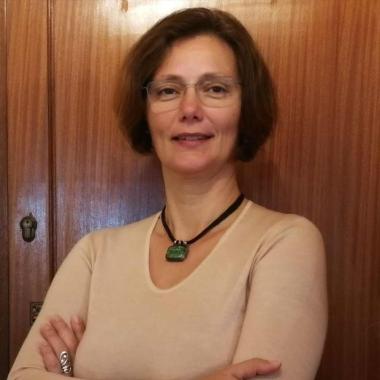
Joe Steer is a DPhil student and researcher at the University of Oxford , affiliated with the College of Engineering and working within the Oxford Thermofluids Institute . His academic journey includes an honours degree in Mechanical and Aerospace Engineering from the University of Adelaide (2019) and ongoing doctoral research under the supervision of Professor Matthew McGilvray and Dr. Tamara Sopek. Education : BEng (Hons) in Mechanical and Aerospace Engineering, University of Adelaide (2019) College : Lincoln College, University of Oxford Research Interests focus on critical aerospace challenges: gas giant entry physics, shock layer radiation, nonequilibrium hypersonic flows, and boundary layer transition. His work leverages advanced facilities like the T6 Stalker hypersonic wind tunnel and PWK1 arcjet to simulate planetary entry conditions. Publications span experimental hypersonics, shock tube dynamics, and satellite demise modeling. Recent studies examine methane effects in ice giant entry simulations and reverse time integration methods for LASTA 2.0, reflecting his expertise in thermofluid experiments and planetary probe design. Labs : Oxford Thermofluids Institute, T6 Stalker Wind Tunnel Group.
Dr. Chris J. Nicholls is a Senior Research Associate and Junior Research Fellow at Trinity College, University of Oxford, affiliated with the Oxford Thermofluids Institute. He holds a DPhil in Active Flow Control from Lincoln College (2016) and an MEng from Hertford College (2016). His research bridges fluid mechanics and control theory, focusing on fluidic devices, acoustically-excited flows, and aerodynamic control. Notable projects include fluidic oscillator development for aerospace applications, boundary layer control in wind tunnel experiments, and hydrogen-fuelled aviation technologies through the £31.4M Liquid Hydrogen Gas Turbine (LH2GT) project. He collaborates with industry partners like Rolls-Royce and Reaction Engines. Current projects involve acoustic modulation of fluid jets, stall prevention via flow injection, and sensor-integrated fluidic oscillators. He contributes to the Active Flow Control Group and Thermal Propulsion Systems initiatives. Recent work explores closed-loop control methodologies and nonlinear flight control systems for tiltwing VTOL aircraft. Affiliated with multiple colleges (Pembroke, St Catherine’s, Trinity, Jesus College), his work addresses challenges in thermal propulsion and zero-carbon aviation. Publications span Physics of Fluids , AIAA Journal , and other journals/conferences, emphasizing analytical modeling and experimental validation of fluid dynamics phenomena.
Associate Professor Jose Almeida Da Silva holds a position at RMIT University's School of Engineering in Melbourne, Australia. With over 20 years of academic experience, he specializes in aviation safety, aerospace materials, and structural integrity. His work bridges academia with industry through collaborations on projects involving accident investigation and safety management systems. He earned a 5-year Aeronautical Engineering degree from the University of Beira Interior (1991–1996), where he was recognized as the top graduate. Later, he received the Santander Scientific Merit Prize (2010–2013) as the best researcher in aerospace sciences. Professional credentials include a Remote Pilot Licence from CASA and memberships in the Royal Aeronautical Society and AIAA. Research focuses on aviation safety systems, composite materials, and passenger anthropometry's impact on aircraft performance. Recent work explores augmented reality in accident analysis and Bayesian networks for unmanned aircraft safety assessments. He supervises PhD/Masters students on topics like safety culture in military aviation and composite material maintenance strategies. Awards: Santander Merit Prize, Portuguese Air Force Merit Award, University of Beira Interior's Top Graduate Professional Affiliations: AIAA Senior Member, Royal Aeronautical Society Member Key Projects: Aviation Safety Programs, UAV Risk Modeling, Structural Fatigue Monitoring
Dr. Richard Yeun is a Senior Lecturer at RMIT University's School of Engineering (Melbourne, Australia) since January 2016. His expertise spans aviation safety management systems, risk management, airworthiness, and quality management. Prior academic roles include non-academic positions with organizations like the Civil Aviation Safety Authority (CASA), CAE Asia, Boeing-Alteon, and Pratt & Whitney, focusing on aviation safety, quality assurance, and regulatory compliance. Research interests include aerospace engineering, transportation systems, anthropometry's impact on aircraft safety, and regulatory frameworks. His recent work explores UAV applications, passenger anthropometry effects, and airline operations. He is open to supervising PhD/Masters students in aviation-related research. Teaching focuses on safety management systems, risk management, and aviation quality assurance. No awards are explicitly listed, but his extensive industry and academic experience underscores his contributions to aviation safety research and education.
Susan Redmond is a Research Fellow at the California Institute of Technology's Division of Physics, Mathematics and Astronomy, Department of Astronomy. Her work focuses on advancing observational astronomy through innovations in high-contrast imaging systems and balloon-borne telescopes. Key projects include the High-Contrast Imager for Complex Aperture Telescopes (HiCAT) and the Super Pressure Balloon-borne Imaging Telescope (SuperBIT), which enable exoplanet detection and diffraction-limited astronomical imaging from stratospheric platforms. She specializes in wavefront control algorithms, coronagraph design, and instrument validation for space and suborbital missions. Her research addresses challenges in maintaining dark zones for exoplanet imaging, optimizing segmented aperture systems, and developing broadband scalar vortex coronagraphs. Contributions span theoretical parameter studies, experimental testbed demonstrations, and flight data analysis from missions like SuperBIT and Spider. Collaborative efforts emphasize translating balloon-borne technology to next-generation space telescopes such as the Habitable Worlds Observatory. Notable achievements include system-level validations of coronagraph performance on HiCAT and pioneering stratospheric balloon missions achieving near-space conditions. Her work bridges instrumentation development with observational strategies, ensuring cutting-edge tools for future exoplanet and cosmology missions.
Edward John Nava is a Lecturer in the Department of Electrical and Computer Engineering at the University of New Mexico (UNM). He holds a Ph.D. in Engineering from UNM (2015), specializing in information security within cloud computing environments. Prior to academia, he served 31 years at Sandia National Laboratories, where he led high-consequence system analysis, vulnerability assessments, and research into inherently secure systems. Retired from the US Navy Reserve as a Commander, he also taught at the US Naval Academy and co-founded the Afloat University to train Navy personnel in secure IT operations. Education: Ph.D., Engineering, UNM, 2015 M.S., Electrical Engineering, Stanford University, 1980 B.S., Electrical Engineering, UNM, 1979 A.S., Electronic Engineering Technology, New Mexico State University, 1973 Research Focus: Enhancing information security in computer systems, particularly cloud environments, through robust architectures and software. His work emphasizes preventing inadvertent/intentional data compromise while maintaining performance. Teaching Areas: Software Design, Computer Networks, Operating Systems, and Data Structures. He has taught numerous courses since 2011, including Intro to Computer Networks and Software Engineering . Key Awards: Multiple Sandia National Laboratories Individual Performance Awards (2006–2010) US Navy Meritorious Service Medal (2001) Los Alamos Distinguished Performance Award (2005) Labs/Teams: Led multi-organizational teams at Sandia, including a Grand Challenge proposal for secure system design, and managed embedded computing groups with 75+ staff members.
Tatjana Bolic is a transportation engineer affiliated with the University of Westminster, where she is part of the Transport and Mobilities Centre and the Centre for ATM Research. Her work bridges academia and industry, focusing on interdisciplinary research in air traffic management and aviation systems. She chairs the SESAR 3 JU Scientific Committee and serves as Committee Research Coordinator for the Transportation Research Board's AV060 Committee. Education: PhD in Civil and Environmental Engineering, University of California at Berkeley (Thesis: Automation Adoption and Adaptation in Air Traffic Control) MSc in Civil and Environmental Engineering, University of California at Berkeley BA in Air Transportation Engineering, Faculty of Traffic and Transportation Engineering, University of Belgrade, Serbia Research Interests: Analysis of airline behavior and system performance in air traffic networks Aviation meteorology and its impact on flight operations Cybersecurity challenges in aviation infrastructure Human factors influencing air traffic control adaptation to new technologies Optimization of airport design and logistics Innovation diffusion in aviation technology adoption Professional Activities: Engaged in shaping future research directions through leadership roles in SESAR and Transportation Research Board committees. Previously held post-doctoral positions at the University of Trieste and consulted in Europe and the USA. Labs/Teams: Active contributor to the Transport and Mobilities Centre and the Centre for ATM Research at the University of Westminster.
Andrew Cook is Professor and Director of the Centre for Air Traffic Management Research at the University of Westminster. With over 30 years of experience in transport research, he specializes in air traffic management (ATM) systems, having joined the University in 1993 after completing his DPhil at Oxford University. His work focuses on operational performance assessment, delay management, passenger mobility, and complexity science within aviation systems, with research funded through SESAR, EUROCONTROL, and the European Commission. Cook earned his BA (Hons) in Natural Sciences from the University of Oxford in 1989, followed by a DPhil in Physiological Sciences in 1993. Before joining Westminster, he worked as a freelance transport researcher and as a Research Associate at the Transport Studies Unit, University of Oxford. His research spans multiple domains within air traffic management, with expertise in operational performance assessment, delay management cost-benefit evaluation, passenger mobility modeling, behavioral economics in aviation, complexity science, and agent-based simulation. Cook's work bridges theoretical research with practical applications, consistently focusing on delivering tangible benefits to airlines, passengers, and other stakeholders in the aviation ecosystem. He has led approximately 30 major European ATM research projects since 1999, primarily as project coordinator. Analysis of his recent publications reveals a strong emphasis on open science initiatives in ATM research, multimodal transport integration, environmental sustainability in aviation, and the development of advanced simulation tools like the Mercury platform. His work increasingly addresses challenges of integrating diverse transportation modes and creating more sustainable, passenger-centric aviation systems. Fellow, Royal Aeronautical Society Member, SESAR Scientific Committee Member, SESAR Master Plan Performance Ambitions Task Force Member, Editorial Board, Aerospace (journal) Member, International Scientific Committee, EASN International Conference Cook lectures on air traffic management and quantitative analysis methods for the Air Transport Planning and Management Masters course. He supervises, coordinates, and examines MSc/PhD research internally and externally, with invited lectures across Europe and in China. His teaching extends to the SESAR Knowledge Transfer Network summer schools, workshops, and PhD programs. As Director of the Centre for ATM Research, Cook leads a team that has developed practical solutions used by stakeholders across the European aviation ecosystem. The center maintains strong industry connections with airlines, airports, ANSPs, and key industry partners including Lufthansa Systems, Raytheon, Selex, Thales, and QinetiQ.
Overview Professor Paul D. Williams is a Professor of Atmospheric Science at the University of Reading's Department of Meteorology, leading the Weather Research Division. He specializes in atmospheric turbulence, jet streams, fluid dynamics, and climate change impacts on aviation. His research includes groundbreaking work on clear-air turbulence trends and climate model improvements. He has developed aviation turbulence forecasting algorithms and invented a numerical time integration scheme widely adopted in climate models. Research Interests Key areas include small-scale atmospheric/ocean features, clear-air turbulence dynamics, aviation meteorology, numerical modeling techniques, and stochastic parameterization. His work emphasizes the intersection of climate change and aviation safety, with a focus on turbulence prediction and jet stream behavior. Scientific Contributions Williams has published over 70 peer-reviewed articles, including in Nature and Geophysical Research Letters . He leads projects funded by Royal Society grants, NERC, and Leverhulme. Notable achievements include discovering climate change could triple severe turbulence and co-developing an award-winning turbulence forecasting algorithm. Awards & Editorial Roles Philip Leverhulme Prize in Earth Sciences (2017) Times Higher Education STEM Research Project of the Year (2020) Editor of Meteorology and Advances in Atmospheric Sciences Advising & Grants Supervised multiple postdoctoral researchers and graduate students. Active in securing grants totaling ~£3M annually for the Weather Research Division. Collaborates internationally on projects like improving climate models through stochastic ocean eddy parameterization. Labs & Teams Leads the Weather Research Division at Reading, collaborating with teams on volcanic plume measurements (VolcLab) and turbulence detection via balloon-borne instruments.
Dr. Siqi Ma is a Senior Lecturer at the University of New South Wales (UNSW), where he leads the Software Analysis and Testing Lab (SATLab) within the Institute for Cyber Security (IFCYBER) in the School of Engineering and Information Technology (SEIT). He also serves as the Postgraduate Program Coordinator for Cyber Security Operations at UNSW. Previously, he held a Lecturer position at the University of Queensland and completed his postdoctoral research at CSIRO Data61 after earning his Ph.D. from Singapore Management University (2018). His research focuses on automated vulnerability detection, mobile/IoT security, network security, and privacy-preserving technologies. His educational background includes a Ph.D. in Information Systems from SMU, postdoctoral work at Data61, and a visiting scholar stint at Carnegie Mellon University (2015). Key collaborations involve researchers from Purdue University, Singapore Management University, and CSIRO Data61, among others. Research interests span adversarial robustness in AI, secure software analysis, and federated learning mechanisms. Recent work includes EvilScreen Attack (smart TV hijacking), Medusa Attack (QR code vulnerabilities), and frameworks like FDFL for fair federated learning. His lab emphasizes open-source contributions and collaborations with industry partners. Grants include leadership in the UNSW-led 'Building National Cybersecurity Capabilities' project (2022) and funding from the Cyber Security CRC. Teaching responsibilities span courses in Information Assurance, Cyber Security Capstone, and Computer Systems Programming. Labs/Teams: SATLab collaborates with the Group of Software Security In Progress (G.O.S.S.I.P) and maintains an active open-source repository on Code-Analysis.org. Current projects focus on vulnerability detection, secure AI, and edge computing security.
Cemal Baykara is a Professor at Istanbul Technical University, Department of Mechanical Engineering. His research spans mechanical systems, automotive engineering, and materials science, focusing on innovative design and performance optimization. Research Interests: Mechanical Engineering, Automotive Systems, Unmanned Aerial Vehicles, Nonlinear Elasticity His recent work analyzes mechanical systems like camshaft designs, gearboxes, and UAVs under dynamic conditions. Publications emphasize computational modeling, experimental validation, and environmental impact reduction in engine systems. Key trends include functionally graded materials for structural applications, fuel efficiency in diesel engines, and magnetic field effects on wave propagation in viscoelastic media. Projects led by Baykara include vibration-based quality control systems, functional railway lifting equipment, and CVT designs for tractors. He has contributed to 18 research outputs and supervised numerous students.
John Francis Wade is a Lecturer at the Department of Electrical and Computer Engineering within the College of Engineering at the University of Tennessee, Knoxville. With over 35 years of experience in electrical engineering, he holds a PhD in Electrical Engineering - Fire Protection and has worked with prominent institutions like NASA, BWXT Nuclear Fuel Services, and Oak Ridge National Laboratory Modernization Division. Education: BS and MS in Electrical and Computer Engineering (ECE), PhD in Electrical Engineering - Fire Protection His research focuses on arc flash physics in industrial power systems, plasma behavior in electrical failures, and fire protection engineering . Recent publications analyze arc flash risks in single-phase systems and plasma treatment of alloys. Wade has authored several industry papers on arc flash investigations and NASA ISS Crew Procedure Authoring Tool training manual. His scientific contributions are highlighted by affiliations with IEEE, the National Academy of Forensic Engineers, and NASA commendations. Awards: Senior Member of IEEE, Affiliate Member of the National Academy of Forensic Engineers, ARES 1-X Mission Manager's Flight Commendation, NASA Letter of Commendation He provides technical oversight to junior engineers and coordinates engineering teams at Oak Ridge National Laboratory. Wade also maintains active involvement in amateur radio, SCUBA diving, and classical guitar in East Tennessee.
Dr. Sadeque Hamdan is a Senior Lecturer in Data Analytics at Bangor Business School, Bangor University, UK. His academic work focuses on optimization problems in sustainable transportation and supply chain management, with applications in both theoretical and practical domains. Education Postgraduate Certificate in Higher Education, University of Kent (2023) PhD in Complex Systems Engineering, University of Paris-Saclay (2020) MSc in Engineering Management, University of Sharjah (2015) BSc in Civil Engineering, University of Sharjah (2013) Research Focus Dr. Hamdan's research spans several interconnected domains: sustainable supply chain operations, transportation management, and operational research applications. His work employs advanced data analytics to solve complex optimization problems in logistics, aviation management, and green transportation systems. Publication Trends Recent publications (2023-2025) demonstrate a strong focus on sustainable transportation optimization, particularly electric vehicle charging systems, maritime logistics, and air traffic management. Methodologically, Dr. Hamdan frequently applies heuristic algorithms, multi-objective optimization, and combinatorial approaches to solve complex supply chain and transportation problems. Projects & Advising Dr. Hamdan leads the ongoing research project 'Sustainable Aviation and Emerging Technologies: Maximizing Operational and Resource Efficiency' (2025-2026). He actively supervises postgraduate students, though specific student names are not listed in available materials.
Eleonora Botta is an Assistant Professor in the Department of Mechanical and Aerospace Engineering at the University at Buffalo (SUNY), affiliated with the School of Engineering and Applied Sciences. Her research focuses on space debris removal, tethered systems dynamics, spacecraft control, and flexible structure dynamics. She leads the UB Space System Dynamics and Control Lab. Education: PhD in Mechanical Engineering from McGill University (2017), MEng in Space Engineering from Politecnico di Milano (2013), and BEng in Aerospace Engineering from Politecnico di Milano (2010). Research Interests: Dynamics and control of space tethers Active debris removal strategies Collision detection and avoidance systems Spacecraft dynamics and control Publications Trends: Recent work emphasizes robust debris capture methods, tether system optimization, and real-time control algorithms for uncooperative debris. Key themes include inertia estimation, net deployment validation, and solar-electric propulsion trajectory design. Awards: 2024 NFS Young Professional of the Year 2023 SEAS Early Career Teacher of the Year 2015 Amelia Earhart Fellowship Grants & Advising: Active in grant-funded research on space debris mitigation. Supervises graduate students in robotics, control systems, and astrodynamics. Labs/Teams: Directs the UB Space System Dynamics and Control Lab, collaborating with industry and NASA on debris removal technologies.
Professor Hamed Haddad Khodaparast is a faculty member in the School of Aerospace, Civil, Electrical and Mechanical Engineering at Swansea University, specializing in Aerospace Engineering. His roles include teaching and supervising postgraduate students in areas such as dynamics and advanced airframe structures. He has held academic positions from Lecturer to Professor since 2013, currently serving as a Professor since 2022. Research Interests: Structural Dynamics and Aeroelasticity Uncertainty Modeling and Propagation Vibration Control (Active/Passive) Composite Structures and Morphing Aircraft Reduced Order Modeling and Nonlinear Dynamics Recent Research Contributions: His work focuses on stochastic modeling, nonlinear system identification, and energy harvesting. Notable projects include gust load alleviation using hinged wingtips and nonlinear joint modeling for industrial applications. Collaborations involve aerodynamic optimization and experimental validation of piezoelectric systems. Grants and Supervision: Supervised PhD students on topics like nonlinear bolted joints and aeroelastic wing design. Active in interdisciplinary projects with industry partners, addressing challenges in morphing aircraft and structural health monitoring. Labs/Teams: Leads research in structural dynamics and aeroelasticity within the School’s Aerospace Engineering group, contributing to advanced composite materials and wind tunnel testing initiatives.