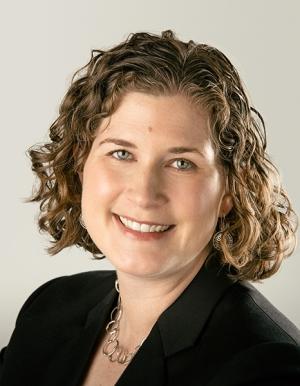
Shalyn Drake is a Lecturer in the Aviation Technology (AVTE) department at Utah State University , specializing in Drones . She is based at the Price campus and can be reached at 801-678-8452 or shalyn.drake@usu.edu . Research Focus: Her role emphasizes practical applications in Drone Technology , including operations, safety, and emerging uses in aviation. Her work aligns with advancements in Unmanned Aerial Vehicles (UAVs) , Remote Sensing , and Aerospace Engineering .
Karen M Feigh is a Professor and Associate Chair for Research in the Daniel Guggenheim School of Aerospace Engineering at the Georgia Institute of Technology, holding the prestigious David S. Lewis Professorship. Her interdisciplinary work integrates aerospace engineering with cognitive sciences to address human-machine interaction challenges in complex aviation and autonomy systems. Education B.S. in Aerospace Engineering, Georgia Institute of Technology MPhil in Aeronautics, Cranfield University, UK Ph.D. in Industrial and Systems Engineering, Georgia Institute of Technology Dr. Feigh's research centers on cognitive engineering applications for flight operations and air traffic management. Through ethnographic studies, human-in-the-loop experiments, and expert system design, she develops solutions that align technology with human cognitive processes to enhance safety and efficiency in NextGen air traffic concepts, vertical lift systems, and autonomous vehicle operations. Scientific Awards David S. Lewis Professorship in the School of Aerospace Engineering (2025) AIAA Wilbur and Orville Wright Graduate Award (2006) Zonta International Amelia Earhart Fellowship (2005) National Science Foundation Graduate Research Fellowship (2001-2006) Marshall Scholarship (2001-2003) As director of the Cognitive Engineering Center (CEC), Dr. Feigh mentors graduate researchers and leads interdisciplinary collaborations across Georgia Tech's research ecosystem. The CEC, embedded within the Vertical Lift Research Center of Excellence and Institute for Robotics and Intelligent Machines, secures funding from agencies including NSF and AIAA to advance adaptive intelligence for industrial robotics and air traffic control systems. Laboratories and Collaborations The Cognitive Engineering Center under Dr. Feigh's leadership conducts field work, human-subjects studies, and mathematical modeling to solve human-machine interaction challenges. The lab maintains active partnerships with NASA, FAA, and industry stakeholders to implement research findings in real-world aerospace operations, with current focus on adaptive interfaces for autonomous systems and crew decision support tools.
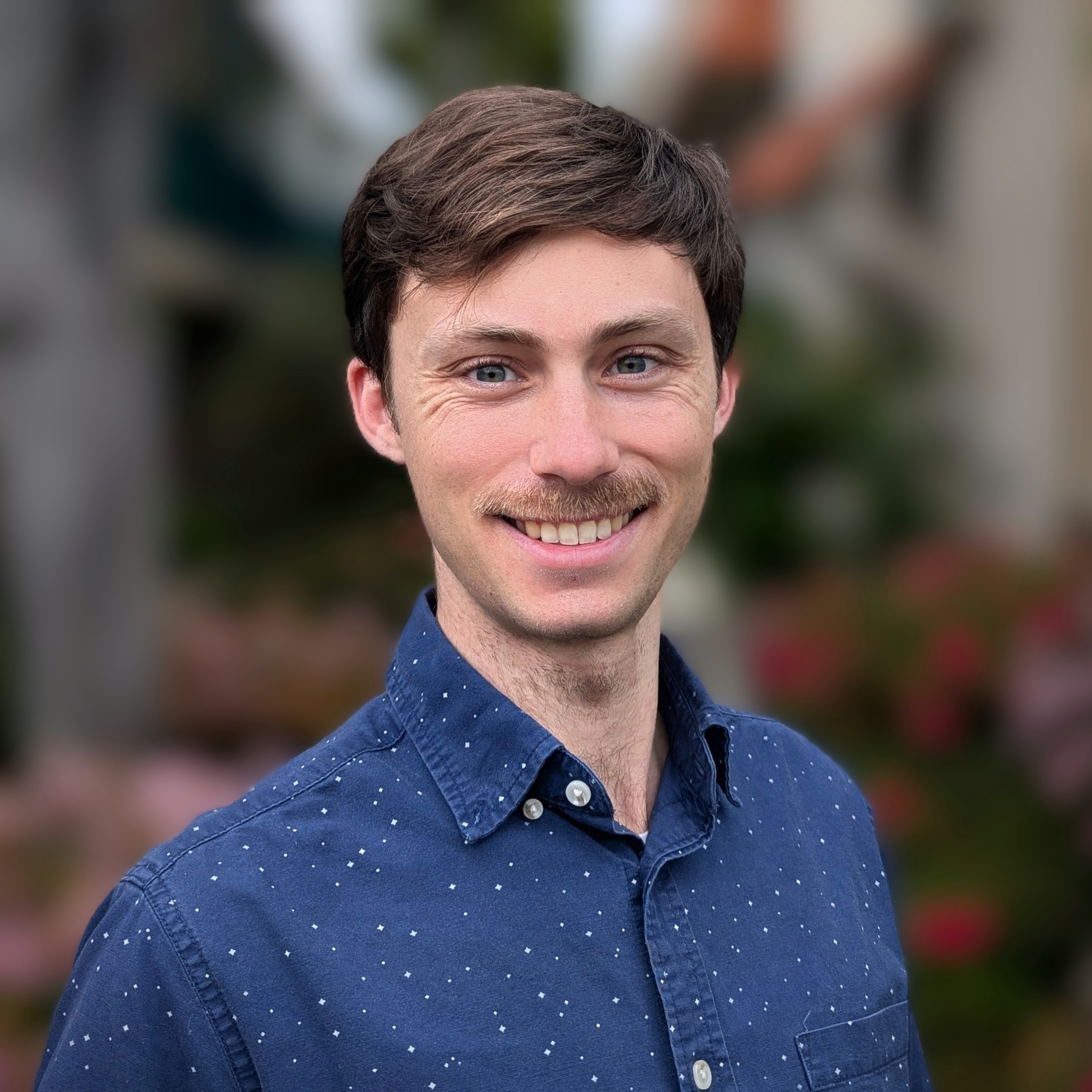
Keenan Albee is a Robotics Technologist at NASA’s Jet Propulsion Laboratory and an incoming Assistant Professor at the University of Southern California (starting Fall 2025). His research focuses on autonomous robotics for extreme environments including lunar missions, microgravity, and underwater operations. Education: Ph.D. in Aeronautics and Astronautics (Autonomous Systems), MIT (2022) S.M. in Aeronautics and Astronautics, MIT (2019) B.S. in Mechanical Engineering, Columbia University (2017) Albee’s work integrates optimal control , reinforcement learning , and motion planning to develop autonomy for mobile robotic systems operating under uncertainty. His expertise spans space robotics , microgravity systems , and underwater robotics , with a focus on environment-aware algorithm design. Recent research includes parametric information-aware motion planning (RATTLE algorithm), distributed multi-agent exploration, and robust control for uncooperative targets. His publications highlight on-orbit validation of autonomy algorithms via NASA’s Astrobee platform and upcoming lunar missions. Scientific Awards: NASA Space Technology Research Fellowship (2022) Albee actively develops open-source autonomy frameworks and will establish the Laboratory for Autonomous Systems in Exploration and Robotics (LASER) at USC. His work bridges theoretical control methods with real-world deployment, including first-of-its-kind achievements in space robotics.
Karthik Dantu is an Associate Professor in the Department of Computer Science and Engineering at the University at Buffalo, State University of New York, within the School of Engineering and Applied Sciences. His research focuses on mobile sensor networks, robot networks, networked embedded systems, mobile computing, wireless networks, and embedded operating systems. He leads the Distributed Robotics and Networked Embedded Sensing (DRONES) Lab and has received significant funding including an NSF CAREER Award. Dr. Dantu's educational background includes: PhD in Computer Science from University of Southern California (2009) BE in Computer Science from Sri Jayachamarajendra College of Engineering (1999) His research interests center on algorithmic and systems challenges in Edge Computing Systems, with particular focus on enabling seamless vision sensing in cloud-edge environments. Dantu's work bridges mobile systems and robotics, developing novel approaches for UAV software, visual SLAM, and distributed sensing. His research addresses critical challenges in resource-constrained environments, security, and real-time performance for mobile and robotic systems, with emphasis on practical implementations that solve real-world problems in autonomous systems. Dr. Dantu's publication record shows a strong trajectory in mobile systems and robotics research, with increasing focus on edge computing applications for visual sensing. His recent work demonstrates expertise in adapting visual SLAM to edge environments, securing mobile systems through technologies like Rushmore, and developing novel approaches for UAV software reliability and depth sensing. The research spans theoretical algorithms and practical system implementations, with particular strength in bringing academic research to practical applications in robotics and mobile computing. Dr. Dantu has received several scientific honors: NSF CAREER Award on Enabling Seamless Vision Sensing in Cloud-Edge Systems Outstanding service award from the Office of International Services NSF Travel Grant for SenSys 2005 Conference Travel Grant for SIGCOMM 2002 As an advisor, Dr. Dantu has mentored numerous PhD students to completion, with graduates now working at companies like Samsung Research and Zoox Inc., or continuing academic careers as Assistant Professors. His research is supported by substantial grants including a DARPA OFFSET Sprint 4 award ($470k), an NSF CAREER award ($550k), and multiple NSF collaborative grants totaling over $1.5 million. He serves on numerous conference committees including Mobicom, MobiSys, and ICRA, demonstrating leadership in the mobile systems and robotics research communities. Dr. Dantu leads the Distributed Robotics and Networked Embedded Sensing (DRONES) Lab at UB, which focuses on developing algorithms and systems for mobile sensor networks, robot networks, and embedded sensing applications. The lab's work spans theoretical foundations to practical implementations, with particular expertise in UAV systems, visual SLAM, and edge computing for robotics, maintaining strong collaborations with industry partners and other academic institutions to advance the state of the art in mobile and robotic systems.
Prof. Dr. sc. techn. ETH Oliver Staadt is Full Professor of Computer Science and Chair of Visual Computing at the University of Rostock , Germany. Since 2023 he also serves as Director of the Institute for Visual and Analytic Computing within the Faculty of Computer Science and Electrical Engineering . Previously he was Dean (2016–2018) and Vice Dean (2010–2016) of the same faculty. Education Ph.D. in Computer Science, ETH Zürich (2001) M.Sc. in Computer Science, TU Darmstadt (1994) Research Interests Prof. Staadt’s research spans virtual and augmented reality , computer graphics , visualization , telepresence , immersive analytics , and human–computer interaction . A particular focus lies on real-time rendering and display technologies for large high-resolution display systems, depth-image enhancement for RGB-D sensors, and interaction techniques that leverage spatial cognition and eye-tracking. His work is frequently applied to collaborative settings and microgravity environments, including experiments aboard parabolic flights and the International Space Station. Recent Publication Trends Between 2019 and 2021 his output centers on foveated rendering , AR viewpoint guidance , collaborative analytics on wall-sized displays , and embodied interaction metaphors . Earlier work addressed bandwidth-efficient telepresence, depth-image filtering, and physically-based animation. The corpus reveals a steady evolution from fundamental graphics algorithms toward applied immersive systems. Scientific Awards & Honors Fellow of the Eurographics Association Associate Editor, IEEE Transactions on Visualization and Computer Graphics (past) Associate Editor, Computers & Graphics (past) Associate Editor, Computer Animation and Virtual Worlds (past) Associate Editor, Frontiers in Virtual Reality (current) Chair, Expert Group on Virtual & Augmented Reality, German Informatics Society (2013–2020) Advising & Funding He has successfully supervised more than ten PhD graduates whose dissertations range from collision detection and physically-based animation to 3D interaction in microgravity and predictive user modeling. Current PhD researchers include Bipul Mohanto, Mana Takhsha, and Sven Kluge. His projects are supported by national and EU programs such as EVOCATION, SMOOTH, ARGuide, 3DPick, DIVA, and Telepresence. Labs & Teams Prof. Staadt leads the Visual Computing Group at Rostock, operating state-of-the-art facilities including large tiled display walls, VR/AR laboratories, and motion-capture systems. The institute hosts interdisciplinary collaborations with partners in visualization, computer vision, psychology, and aerospace engineering.
Xin Peng is a Professor and Deputy Dean at the School of Computer Science, Fudan University, China. He leads the CodeWisdom research team focusing on intelligent software engineering techniques for development, maintenance, and operation of software systems. His educational background includes a PhD in Computer Science (2001-2006) and Bachelor's degree in Computer Science (1997-2001), both from Fudan University. He progressed through the academic ranks from Assistant Professor (2006-2010) to Associate Professor (2010-2015) and finally to Professor (2015-present). Professor Peng's research interests span Software Analytics, Intelligent Software Development, Microservice systems, and AIOps. His work leverages AI technologies including deep learning and knowledge graphs to develop intelligent software engineering techniques. A significant portion of his recent work focuses on applying Large Language Models to various software engineering tasks, including vulnerability detection, API usage analysis, and test automation. His publication record shows a clear trend toward increasingly sophisticated applications of AI in software engineering, with recent work heavily featuring LLMs for tasks ranging from vulnerability patch porting to resource leak detection. The research spans multiple domains including microservice systems, automotive software, and Web of Things security. Best Paper Award of ICSM 2011 ACM SIGSOFT Distinguished Paper Award of ASE 2018 and 2021 IEEE TCSE Distinguished Paper Award of ICSME 2018, 2019, and 2020 IEEE Transactions on Software Engineering Best Paper award for 2018 Professor Peng serves in numerous leadership roles including Deputy Director of CCF Technical Committee on Software Engineering, Co-Editor-in-Chief of Journal of Software: Evolution and Process, and Associate Editor for ACM Transactions on Software Engineering and Methodology. He has been actively involved in program committees for major software engineering conferences including ICSE, ASE, ESEC/FSE, and ICSME. He leads the CodeWisdom research team at Fudan University, which has developed several benchmark systems including TrainTicket for microservice research. The team's work bridges academic research with industrial applications, particularly in microservice systems analysis and intelligent software development tools.
Terence Fan is an Assistant Professor of Strategy & Entrepreneurship (Education) and Academic Director of Accreditation Education at the Lee Kong Chian School of Business, Singapore Management University (SMU). He holds a PhD from the Massachusetts Institute of Technology (MIT), USA, and has been with SMU since 2004, serving as an Assistant Professor of Management before his current role. Education: PhD, Massachusetts Institute of Technology (2004) Master of Science in Finance, University of Cambridge (2003) Master of Science in Aeronautics and Astronautics & Technology and Policy, MIT (1999) Bachelor of Applied Science in Mechanical Engineering, University of British Columbia (1997) Research Interests: His work focuses on New Venture Strategy , Inter-firm Collaboration , Evolution of Technology , and International New Ventures . He explores topics such as airline industry dynamics, entrepreneurial learning, and global business expansion strategies. His research bridges strategic management, entrepreneurship, and transportation economics. Awards & Recognition: Best Paper Prize Nominee, Strategic Management Society (2008) Best Paper Award, U.S. Transportation Research Forum (2002-2003) Advising & Grants: While no student names are listed, his research often involves collaborative projects with industry partners. Grants and funding details are not explicitly mentioned in the provided text. Labs/Teams: No specific labs or teams are highlighted in the profile. However, his work contributes to SMU’s academic initiatives in strategy and entrepreneurship education.
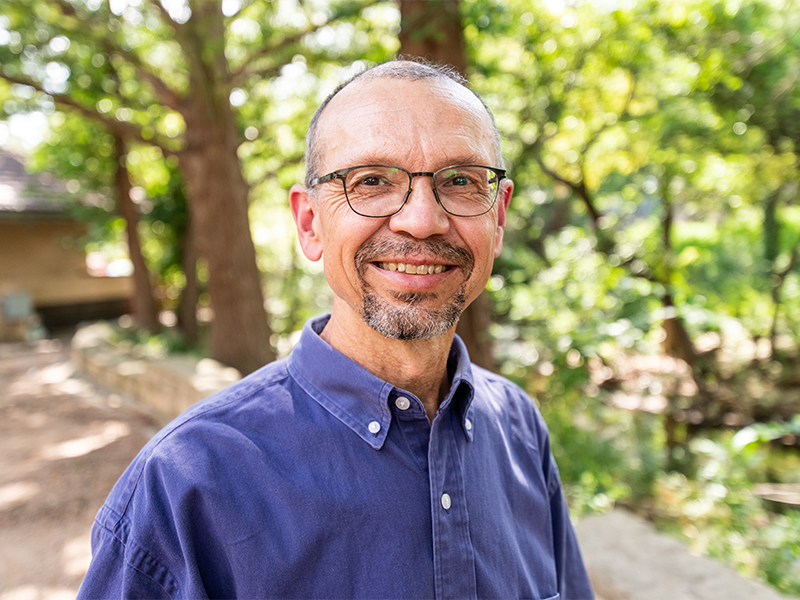
Matthew J. Hall is a Professor in the Department of Mechanical Engineering at the University of Texas at Austin , where he also holds the Louis T. Yule Fellowship in Engineering . He has been a faculty member since 1991 and is affiliated with the Cockrell School of Engineering . His research spans engine combustion processes , thermal fluids systems , engine controls , optical diagnostics , battery safety , and alternative fuels . He is particularly known for his work on cold-start emissions , spark ignition , engine friction reduction , and thermoelectric energy recovery . He teaches courses in Thermodynamics , including modeling of power cycles and HVAC systems , and has published over 150 technical articles. His recent work includes innovations in ammonia combustion , biomass gasification , and advanced engine diagnostics . Scientific Awards & Honors: Fellow of the Society of Automotive Engineers (SAE) Louis T. Yule Fellowship in Engineering Associate Editor, SAE International Journal of Engines Research Impact & Leadership: Prof. Hall leads multidisciplinary efforts in combustion science , energy systems , and sustainable propulsion . His lab has contributed to reducing engine friction by up to 40%, improving fuel efficiency at idle, and advancing the use of ammonia as a low-carbon fuel. He also explores thermoelectric generators for extending drone flight range and improving vehicle energy recovery systems.
Dr. Ahmed F. Abdelghany is the Associate Dean for Research and Professor of Operations Management at the David O'Maley College of Business, Embry-Riddle Aeronautical University, since January 2006. He specializes in commercial airlines, airports, big data cloud computing, business analytics, and operations research models. Prior to his academic career, Dr. Abdelghany worked in enterprise optimization at United Airlines, Chicago. Education: Ph.D. in Civil Engineering (Transportation Systems) from the University of Texas at Austin (2001) Dr. Abdelghany’s research focuses on airline network planning, flight scheduling, simulation of complex transportation systems, and NextGen air traffic management. He has authored two influential books: Modeling Applications in the Airline Industry (Routledge 2010) and Airline Network Planning and Scheduling (Wiley 2018). His publications analyze airline operations, competitive dynamics, and crowd management in transportation facilities. He teaches courses like Airline Management (BA 315) and Airline Operations & Mgmnt (BA 609), and participates in industry short courses. Dr. Abdelghany contributes to research projects such as NextGen air traffic implementation, integrated airport initiatives, and benefit-cost analysis of arrival management systems. His work bridges academic theory with real-world airline and transportation challenges.
Dr. Scott L. Nykl is a Professor in the Department of Computer Science at the Air Force Institute of Technology (AFIT), part of the Graduate School of Engineering & Management. He is a leading researcher in computer vision, real-time 3D graphics, and autonomous aerial systems, with a focus on automated aerial refueling and navigation in GPS-denied environments. Education: Ph.D. in Computer Science, Ohio University (2008–2013), Summa Cum Laude, GPA: 4.0/4.0 M.S. in Computer Science, Ohio University (2011–2012), Summa Cum Laude, GPA: 4.0/4.0 B.S. in Software Engineering, University of Wisconsin–Platteville (2002–2006), Summa Cum Laude, GPA: 3.94/4.0 Dr. Nykl's research interests include computer vision, sensor fusion, interactive virtual worlds, and real-time 3D graphics, with applications in aerospace and defense. His work bridges simulation and real-world deployment, particularly in autonomous aerial refueling using stereo and monocular vision. He has pioneered techniques in pose estimation, occlusion mitigation, and sim-to-real transfer learning. His recent publications and projects show a strong trend toward robust, vision-based navigation systems for unmanned and manned aircraft, with emphasis on reliability, accuracy, and real-time performance. His work frequently appears in IEEE, AIAA, and ION venues, reflecting its high technical and operational relevance. Scientific Awards and Recognitions: 2024 Harold Brown Award – Highest U.S. Air Force scientific honor 2024 General Bernard A. Schreiver Award 2025 AETC Airmen of the Year Multiple Air Force Outstanding Scientist/Engineer Awards (2017–2023) Best Paper Award, ACM SIGGRAPH i3D 2013 Forbes' The Greatest Young Inventors in America (2012) NSF GK-12 Fellow (2006) Dr. Nykl has advised numerous graduate students and collaborated extensively on projects involving automated aerial refueling, 3D reconstruction, and cyber education. He has secured significant research funding, including a $100,000 Ohio Third Frontier grant. His work has led to multiple patents and technology transfers. He leads research integrating virtual worlds, digital twins, and augmented reality for both research and pedagogy. Laboratories and Research Teams: His work is conducted within AFIT’s research ecosystem, involving collaborations with the Air Force Research Laboratory (AFRL), Boeing, and academic partners. He leads projects under the Aerial Refueling Systems Advisory Group (ARSAG) and presents regularly at ION, AIAA, and IEEE conferences.
Carl-Mikael Zetterling is a Professor and Head of Department at Kungliga Tekniska Högskolan (KTH) in Stockholm, Sweden, affiliated with the School of Electrical Engineering and Computer Science (ICT) and the Electronics and Embedded Systems department. His research focuses on process technology and device design for high-temperature, high-power silicon carbide (SiC) electronics, expanding into SiC-based analog and integrated circuits. He has authored over 300 publications, including books on SiC process technology and plagiarism prevention. Dr. Zetterling has held leadership roles such as Vice Dean of the School of ICT (2013–2017) and teacher representative on KTH's faculty board. He has collaborated internationally at Stanford University, Kyoto University, and Kyoto Institute of Technology. His work addresses applications in extreme environments, including Venus exploration and fusion reactor monitoring, with a focus on radiation tolerance and thermal resilience. The 15 most recent publications highlight trends in wide bandgap semiconductors, gamma irradiation effects on SiC devices, and high-temperature integrated circuits. His articles span structural health monitoring with machine learning, novel SiC diode designs, and radiation-hardened electronics. Key contributions include advancements in self-aligned contacts, trench MOSFETs, and compact modeling for extreme conditions. While no formal awards are listed, his roles in technical program committees (TMS Electronic Materials Conference, IEEE SISC Conference) and editorial work demonstrate significant academic service. He teaches courses ranging from digital design to high-temperature electronics, overseeing degree projects in embedded systems, communication, and nanotechnology.
Alberto Santini is an Associate Professor of Operational Research and a Ramon y Cajal fellow at Universitat Pompeu Fabra in Barcelona, Spain. He is also an affiliate professor at the Barcelona Graduate School of Mathematics and the Data Science Centre at the Barcelona School of Economics. During 2025-2027, he coordinates the Transportation group of the Spanish O.R. Society. His research focuses on optimization methods applied to transportation, logistics, and sustainability, including scheduling, vehicle routing, and heuristic algorithms. He has contributed to solving complex problems like last-mile delivery integration with public transport, airline flight scheduling, and energy-efficient vertical farming. His work often employs advanced techniques like column generation and decomposition strategies. Notable contributions include decomposition strategies for vehicle routing heuristics and the application of metaheuristics such as Adaptive Large Neighbourhood Search (ALNS). He is the founder of EUROYoung and AIROYoung, youth branches within prominent operational research societies. His GitHub repositories, such as cvrp-decomposition , provide open-source implementations of his algorithms. Santini’s research addresses real-world challenges like epidemic resource allocation and sustainable logistics, reflecting his commitment to both theoretical and applied operational research. Awards: Ramon y Cajal Fellow Labs/Teams: Leads Transportation group (Spanish O.R. Society), Founded EUROYoung/AIROYoung.
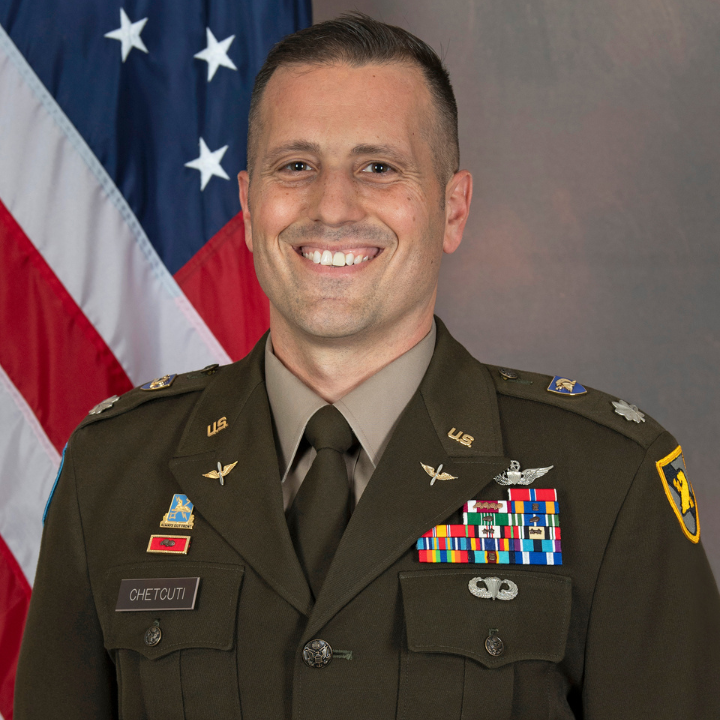
Steven C. Chetcuti is a Professor at the United States Military Academy . A dual-qualified Army Officer (Aviation and Military Intelligence), he has served in operational, intelligence, and academic roles, including company/battalion command and faculty positions. He directs the Academic Flight Program and flies the C-T206H aircraft with over 2,200 flight hours (>1,000 combat) across six Army aircraft types. Education : PhD in Aerospace Engineering (Georgia Institute of Technology), MA in Strategic Studies (U.S. Army War College), MS in Aerospace Engineering (University of Michigan), BS in Mechanical Engineering (U.S. Military Academy) Research Interests focus on engineering education , AI applications for military systems , system dynamics , and modeling/simulation . His current work explores AI integration into Army operational planning frameworks. Publication Trends include system dynamics for defense systems, logistics optimization for aviation, and application of modeling/simulation to humanitarian operations. His work bridges technical engineering solutions with military strategy. Scientific Awards : Honor Graduate, U.S. Military Academy (2002) Distinguished Graduate, U.S. Army War College (Senior Staff College)
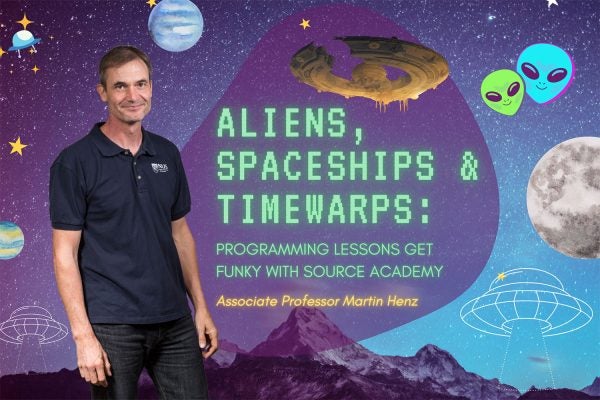
Martin Henz is an Associate Professor at the National University of Singapore , affiliated with the School of Computing and its Department of Computer Science . His academic journey includes an M.Sc. in Computer Science from Stony Brook University (1993) and a Dr.rer.nat. in Computer Science from Saarland University (1997). He has also worked as a Research Scientist at the German Research Centre for Artificial Intelligence. Research Focus : Scalable Experiential Learning, Systems for Teaching/Learning, AI in Education, Programming Languages, Algorithms, and Constraint Programming. Key Projects : Source Academy (immersive programming environment), Deep Teaching (LMS enhancements), and NUS Seafarers (maritime experiential learning). Publications span education technology, programming languages, and sustainable engineering, with recent works focusing on JavaScript-based pedagogy, automated question generation, and electric vehicle conversions. He supervised Rahul Singhal 's PhD, leading to the educational startup Cerebry, and co-founded Workforce Optimizer Pte Ltd with Alan Sevugan. Awards : NUS Annual Digital Education Award (2021) NUS Annual Teaching Excellence Award (2016/17) Fulbright Scholarship (1990) Startup @ Singapore Champion (2001)
Lena Funcke is an Assistant Professor of Theoretical Physics at Bonn University. Her research focuses on quantum computing, lattice field theory, and machine learning applications in physics. She explores topics such as topological phases, gauge theories, and quantum simulations. Her work bridges high-energy physics and computational methods, with a particular emphasis on overcoming noise challenges in quantum algorithms and leveraging machine learning for optimization tasks. Funcke’s research projects include C01 and C03, focusing on Hamiltonian lattice formulations and quantum computing methods for gauge theories. She investigates hybrid approaches combining Monte Carlo simulations with quantum computing to study quantum electrodynamics and topological systems. Her contributions highlight the interplay between theoretical physics and cutting-edge computational tools. Her publications span quantum algorithms for particle physics experiments, error mitigation strategies, and the application of normalizing flows to complex systems like the Hubbard model. She actively contributes to advancing the theoretical foundations of quantum computing and its practical implementation in solving fundamental physics problems.