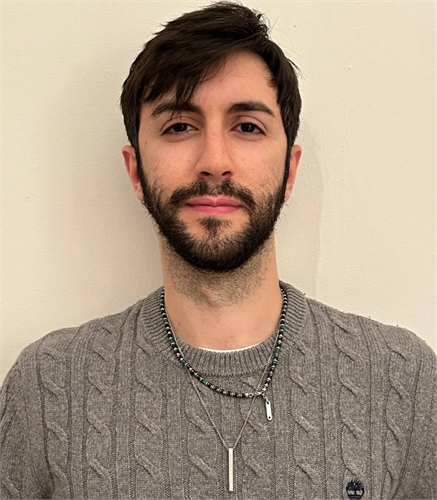
Alberto Milazzo is Full Professor of Aerospace Structures at University of Palermo's Engineering department. His research develops computational methods for aerospace structures, composite materials, and fracture mechanics. Teaching responsibilities include Aerospace Construction, Aerospace Structures, and Materials courses. Research advances numerical methods for structural analysis including discontinuous Galerkin formulations, boundary element techniques, and homogenization approaches for complex materials. Published work demonstrates applications in UAV design, morphing structures, and hydrogen storage systems for sustainable aviation. Recent projects involve European collaborations on multiscale analysis of aircraft structures.
Andrea De Martin is a fixed-term researcher at the Polytechnic University of Turin , affiliated with the Department of Mechanical and Aerospace Engineering (DIMEAS) and the Power Electronics Innovation Center (PEIC) . His work focuses on Prognostics and Health Management (PHM) for robotic and aerospace systems, particularly critical components like harmonic drives and flight control actuators. Key research areas: Actuators, Digital Twins, Flight Control Systems, PHM, Robotics He contributes to teaching courses like System Health Management and Servosystems at the PhD and Master’s levels, emphasizing aerospace and automotive applications. Recent publications highlight advancements in real-time electromechanical actuator modeling, fault detection in ball screws, and PHM systems for aircraft brakes. Scientific roles include guest editorships for journals like Aerospace and Actuators . He leads commercial research contracts with industry leaders such as Collins Aerospace and collaborates on national projects including PRIN and hybrid-electric aircraft systems development.
Davide Ferretto is an Assistant Professor at the Department of Mechanical and Aerospace Engineering (DIMEAS) at Politecnico di Torino. He received his PhD in Aerospace Engineering from Politecnico di Torino in 2020 with a dissertation on hypersonic transportation systems. His academic roles include teaching courses on aerospace systems and high-speed flight technologies, and supervising PhD students in aerospace engineering. Dr. Ferretto's research focuses on: Aircraft conceptual design for conventional and high-speed configurations Model-Based Systems Engineering approaches Life cycle cost assessment for aerospace systems Sustainable aviation technologies Environmental impact analysis of supersonic/hypersonic flight He actively contributes to European research projects (H2020/HE) focused on sustainable aviation and digital transformation in aerospace design. His publications primarily focus on sustainable aviation solutions, high-speed vehicle design, and thermal management systems. Recent works explore hydrogen propulsion, supersonic aircraft optimization, and life cycle cost analysis for hypersonic transport. Awards & Recognition: Premio di Qualità 2019 from Politecnico di Torino Research Leadership: He co-supervises PhD candidates Fabrizio Borgna and Giuseppe De Bari, and participates in the research group 'Design of aerospace systems and technologies (DIMEAS)'. Dr. Ferretto holds memberships in the American Institute of Aeronautics and Astronautics (AIAA) and Italian Association of Aeronautics and Astronautics (AIDAA), serving on technical committees for Systems Engineering and Hypersonic Technologies.
Mauro Mancini is a Fixed-term Assistant Professor at the Department of Mechanical and Aerospace Engineering (DIMEAS) at Politecnico di Torino. He belongs to the College of Mechanical, Aerospace, and Automotive Engineering and specializes in Flight Mechanics (Scientific disciplinary sector IIND-01/C) within Area 0009 - Industrial and Information Engineering. Dr. Mancini teaches multiple courses across various degree programs including Aerospace Engineering and Mechatronic Engineering. His teaching portfolio includes Advanced Flight Dynamics: Modeling and Simulation, Control Systems Design for Spacecraft Attitude Dynamics at PhD level, and Fundamentals of Flight Mechanics at undergraduate level. He has also delivered lectures for the English-taught Program at Ho Chi Minh City University of Technology. His research focuses on aerospace control systems with particular emphasis on spacecraft attitude dynamics, UAV control, and autonomous systems. Dr. Mancini employs advanced control techniques including sliding mode control, artificial potential fields, and adaptive control strategies to address challenges in spacecraft maneuvering, orbital dynamics, and precision agriculture applications. His work demonstrates strong interdisciplinary connections between aerospace engineering, robotics, and agricultural technology. Analysis of Dr. Mancini's publication record reveals a consistent research trajectory in spacecraft attitude control and autonomous vehicle systems. His work shows expertise in sliding mode control techniques applied to spacecraft with actuator constraints, orbital simulation for target inspection maneuvers, and precision agriculture applications. A notable trend is the integration of artificial potential fields with advanced control methodologies to solve complex navigation and maneuvering problems in both space and terrestrial environments. Dr. Mancini actively supervises three PhD students: Pierantonio Bertuccio, Jean-Luc Sarvadon, and Riccardo Enrico (whose research focuses on robust control of UAV under uncertain conditions). He has secured commercial research contracts including a 2024 Flight Mechanics project as Scientific Manager and previous collaborations with Ho Chi Minh City University of Technology. He is a member of the Dynamics, Control and Flight Simulation research group at DIMEAS, where he contributes to advancing aerospace control methodologies and their practical applications in both academic and commercial contexts.
Riccardo Garofalo is a Research Fellow and PhD student in Aeronautical and Space Engineering at the Space Systems and Space Surveillance Laboratory (S5Lab) of Sapienza University of Rome. His research fellowship (June 2023–June 2024) focuses on "On-board electronic systems for two-phase flow experiments in microgravity," aligning with his doctoral work in advanced space technologies. Education: Master's Degree in Aeronautical Engineering, Roma Tre University (2022) Bachelor's Degree in Aerospace Engineering, Sapienza University of Rome (2019) Research Focus: His work spans thermal management in microgravity, CubeSat sensor networks, and innovative tracking systems for stratospheric balloons and space vehicles. Key areas include two-phase cooling systems (e.g., Baridi-Sana project), IoT applications for wildlife monitoring via CubeSats, and software-defined radio navigation (STRAINS/TARDIS experiments). Publications: Garofalo's 13 articles emphasize experimental aerospace engineering, with recurring themes in thermal regulation, satellite navigation, and educational CubeSat projects. Trends show strong interdisciplinary integration of thermodynamics, materials science, and AI-assisted systems for space missions. Technical Proficiencies: LabVIEW, MATLAB, Python, C/C++, GNURadio, and STK for aerospace simulations, alongside expertise in Linux/Windows environments. Affiliations: Active contributor to ESA educational programs and S5Lab's CubeSat initiatives (GreenCube, WildTrackCube-SIMBA).
Dario Lodi Rizzini is an Associate Professor at the Department of Engineering and Architecture, University of Parma, where he conducts research and teaching in robotics, computer vision, and autonomous systems. He has held academic positions including Research Assistant (2015–2020) and Assistant Professor (2021–2023) before becoming Associate Professor. His work spans industrial, agricultural, and underwater robotics applications. Research Interests: Localization, Mapping, and Navigation (SLAM) for mobile robots 3D perception and point cloud processing Robot manipulation and grasping Perception-aware control and pose estimation Applications in industrial automation, precision agriculture, and underwater intervention His recent publications show a strong trend in geometric algorithms for rotation and point cloud registration, particularly using the Angular Radon Spectrum, as well as practical deployments in warehouse automation and agricultural robotics. He has developed scalable systems for variable-rate irrigation and industrial depalletizing, demonstrating real-world impact. Scientific Awards and Recognition: Team leader of the University of Parma team that won Sick Robot Day in 2012 and 2014 Active IEEE member with publications in top-tier journals including IEEE Transactions on Robotics, IEEE RA-L, and IEEE ICRA/IROS Advising and Grants: Dario Lodi Rizzini has mentored numerous PhD students and postdocs, including Riccardo Monica, Ernesto Fontana, and Asad Ullah Khan. He has collaborated on multiple industrial and national research projects focusing on robotics in agriculture, warehouse automation, and underwater intervention, including the Italian MARIS project on underwater robotics. Labs and Teams: He is a key member of the Robotics and Intelligent Machines Lab (RIMLab) at the University of Parma, contributing to research in autonomous systems, perception, and manipulation. He has led teams in robotic competitions and collaborative industrial projects.
Eleonora Atzeni is a Full Professor at the Polytechnic of Turin within the Department of Management and Production Engineering (DIGEP) . She serves as a member of the Interdepartmental Center IAM@PoliTo - Integrated Additive Manufacturing , contributing to multidisciplinary research initiatives. Her academic career spans over two decades with consistent involvement in teaching, research leadership, and industrial collaborations. Scientific Disciplinary Sector: IIND-04/A - Manufacturing Technologies and Systems ERC Sectors: PE8_9 - Production Technology, Process Engineering SDG Goals: Industry, Innovation, and Infrastructure (9); Responsible Consumption and Production (12) Her research focuses on Additive Manufacturing (AM) technologies, including Laser Powder-Bed Fusion (L-PBF) and Directed Energy Deposition (DED) , with emphasis on design optimization for AM , finishing processes , and residual stress analysis . Recent work explores hybrid decision-making frameworks for process selection and multi-material AM solutions. Key publications highlight advancements in AM interlocking structures, DED process control, and surface finishing techniques. She has authored articles in journals like DESIGNS and Journal of Manufacturing and Materials Processing , presented at conferences including CIRP , INSTM , and EURO PM . Awards: Best Paper Award (2014) - ICIDM, Canada Best Young Scientist Award (2012) - 4th International Conference on Additive Technologies, Slovenia Atzeni has supervised numerous PhD students including Chiara Beghetti and Federica Valenza , and leads projects such as "CIM 4.0 Academy" and "Assessment of Additive Manufacturing Systems" . Her work bridges academic research with industrial applications, particularly in aerospace and automotive sectors.
Dr. Rosario Marretta is Associate Professor in Fluid Dynamics at University of Palermo's Polytechnic School. Specializes in Computational Fluid Dynamics (CFD) and aircraft accident investigation techniques. Research includes aeroacoustic modeling, hydrodynamic analysis for marine applications, and experimental aerodynamics. Developed novel aircraft investigation methodologies documented in monograph on Alitalia Flight AZ112. Teaches aerodynamics and CFD courses for aerospace and mechanical engineering students. Supervises graduate research on aerodynamic interactions, shock control systems, and CFD applications in motorsports. Office hours held Mondays and Wednesdays with appointment scheduling available.
Angelo Lerro is a Fixed-term tenure-track Assistant Professor at the Department of Mechanical and Aerospace Engineering (DIMEAS) , Politecnico di Torino. He specializes in Flight Dynamics , Synthetic Sensors , and Urban Air Mobility , with expertise in Aerospace Engineering and Control Systems . Research interests include synthetic sensor development, flight mechanics, and control algorithms for urban air mobility vehicles. His work spans machine learning applications in aerospace systems and unconventional aircraft configurations . Recent projects involve neural networks for air data systems and nonlinear control models . Publications focus on Kalman filtering , UAV formation control , and VTOL design . Articles highlight advancements in flight data analysis and aerodynamic modeling . Awards : Proof of Concept Network (2015) by Area Park Trieste, Italy Teaching and supervision include PhD courses like Introduction to Flight Experimentation and mentoring students such as Giorgio Antonio Orlando and Gabriele Tarascio. He serves as a Scientific Manager for commercial research projects and Visiting Researcher at UCLA (2011).
Jacopo Serpieri is a Fixed-term Tenure-Track Assistant Professor at the Department of Mechanical and Aerospace Engineering (DIMEAS) of Politecnico di Torino, Italy. He holds a Ph.D. in Aerodynamics from Delft University of Technology (2018) and worked at ASML Netherlands (2018-2020) and Karlsruhe Institute of Technology (2020-2022) before joining Polito. His research focuses on active flow control and turbulent flow dynamics , with applications to drag reduction and climate action initiatives.
Oscar Gori is a Fixed-term Assistant Professor in the Department of Management and Production Engineering (DIGEP) at Politecnico di Torino, Italy, within the College of Mechanical, Aerospace, and Automotive Engineering. His research focuses on aerospace systems, particularly the design and environmental impact of high-speed vehicles. Gori earned his PhD in Aerospace Engineering from Politecnico di Torino in 2024 with a thesis on methodologies for high-speed vehicle design supporting environmental regulations. His research spans supersonic and hypersonic aircraft design, aerodynamic characterization, mission analysis, and aviation's environmental implications, especially CO 2 emissions and regulatory standards. He develops conceptual design tools to address sustainability challenges in high-speed transportation, with emphasis on aerodynamic modeling and emission-compliant vehicle configurations. Gori's publications (2021-2024) reveal a consistent focus on environmental challenges in high-speed flight, including CO 2 emission standards development, aerodynamic database integration for mission analysis, and vehicle re-design for reduced environmental impact. His work frequently involves the EU-funded STRATOFLY project, targeting sustainable solutions for civil and business jet applications. Scientific Awards: SUCCESSFULLY PARTICIPATE IN CALLS FOR RESEARCH FUNDING (Rimini School 2025, Politecnico di Torino) As a fixed-term assistant professor, Gori has not been documented as supervising graduate students. His involvement in the H2020 STRATOFLY project demonstrates active participation in major research grants focused on sustainable high-speed transportation systems, though specific grant leadership roles are not detailed in available sources. Gori is an integral member of DIGEP's aerospace research group, contributing to the STRATOFLY project through collaborations with European institutions on aircraft design, environmental impact assessment, and mission simulation. His work on Mach 2-5 vehicle concepts positions him at the forefront of sustainable high-speed aviation research.
Fabrizio Giulietti is a Full Professor of Flight Mechanics at the Department of Industrial Engineering, University of Bologna. He has been head of the Flight Mechanics Laboratory since 2006 and has served as Coordinator of the Master's Degree Course in Aerospace Engineering since October 1, 2018. His research focuses on: Flight mechanics and aircraft dynamics Control systems for atmospheric and spacecraft Unmanned Aerial Vehicles (UAVs) for civil applications Formation flight control of UAVs Spacecraft control systems, particularly for Low Earth Orbit missions Multi-rotor aircraft performance and applications Professor Giulietti has led several national and international projects including FP7-AAT-2008-RTD-1 (Personal Plane), FP7-SEC-2011-1 (AEROCEPTOR), and ESA-funded projects ESEO and ARMADA. His work has resulted in over 70 scientific publications with 766 citations and an h-index of 14 (Scopus). He serves as a reviewer for prominent journals including: Journal of Guidance, Control, and Dynamics (AIAA) Aerospace Science and Technology (Elsevier) The Aeronautical Journal (Royal Aeronautical Society) Transactions on Aerospace and Electronic Systems (IEEE) Professor Giulietti has been teaching in the field of atmospheric flight mechanics and aircraft design since 2004, including courses in Aircraft Design (2004-2006), Flight Mechanics (2006-present), and Flight Dynamics (2007-present). Since 2013, he has also served as a Visiting Professor at KU Leuven in Belgium. He coordinates the Flight Mechanics Laboratory at the University of Bologna, where his team works on UAV development for volcano monitoring, Earth Magnetic Field data acquisition in Antarctica, and other applications requiring advanced guidance, navigation, and control systems.
Paolo Maggiore is a Full Professor in the Department of Mechanical and Aerospace Engineering (DIMEAS) at the Polytechnic University of Turin. He has been actively involved in the Aerospace Engineering Doctoral College since the 19th cycle (2003/2004) through the current 40th cycle (2024/2025). He serves as a member of the PhotoNext Interdepartmental Center for Applied Photonics and the University Internship Commission. His research focuses on digital twin technology, prognostics and diagnostics of aerospace systems, and systems embedded sensors. His scientific work spans aerospace systems and plants within Industrial and Information Engineering, with particular emphasis on aerospace engineering (ERC Sector PE8_1). His research aligns with UN Sustainable Development Goals 7 (Affordable and Clean Energy) and 9 (Industry, Innovation, and Infrastructure). Professor Maggiore's publication record shows a strong focus on aerospace systems engineering, with recent work examining lunar exploration technologies, prognostics and health management systems, digital twin applications, and advanced sensor technologies. His research often combines theoretical modeling with practical aerospace applications, demonstrating a strong connection between academic research and industry needs. Machine learning applications in aerospace systems Digital twin development for aerospace applications Prognostics and health monitoring of critical aerospace components Space exploration technologies and lunar outpost development Advanced sensor integration and diagnostics He has received research funding from various sources including competitive calls, private entities, regional research programs, and commercial contracts, demonstrating the applied nature of his work and strong industry connections. As an educator, Professor Maggiore supervises numerous doctoral students across multiple cycles of the Aerospace Engineering program and teaches courses including Contamination Control Engineering, Advanced Numerical Modeling, and Telemetry in Aerospace Engineering.
Riccardo Patriarca is an Assistant Professor in Industrial Systems Engineering at Sapienza University of Rome's Department of Mechanical and Aerospace Engineering, part of the Faculty of Civil and Industrial Engineering. He holds adjunct professor and lecturer roles in courses such as Operations Management and Risk Management. His research focuses on resilience engineering, risk assessment, and safety management in complex socio-technical systems, including aviation, industrial plants, and critical infrastructures. He co-founded aiComply, a Sapienza spin-off addressing risk and compliance challenges. His work combines theoretical frameworks (e.g., STAMP, FRAM) with practical applications in cyber-physical systems and emergency response. Education: BSc and MSc in Aerospace/Aeronautical Engineering (Sapienza), PhD in Industrial and Management Engineering (2017). Postdoctoral research at Sapienza (2018–2021) and collaborations with Lund University and Eurocontrol. He has authored over 100 peer-reviewed papers, edited journals including Safety Science and Reliability Engineering , and serves as a guest editor for Sustainability . Research highlights include systemic safety analysis for advanced air mobility (eVTOLs), Bayesian methods for hydrogen safety, and resilience metrics for healthcare systems. Awards include the Royal Aeronautical Society Young Person Award (2017), Forbes 30 Under 30 (2019), and National Academic Qualification as Associate Professor (2018). His work bridges academia and industry, emphasizing human factors and digital transformation.
Bernardini Matteo is an Associate Professor at the Department of Civil and Environmental Engineering, Sapienza University of Rome. His research focuses on high-fidelity computational fluid dynamics (CFD), with particular emphasis on compressible turbulent flows, shock wave/boundary layer interactions, and exascale computing. He leads the development of the STREAmS solver, a high-performance compressible flow solver optimized for exascale architectures. His work addresses challenges in aerospace engineering, including planetary entry systems, cryogenic tank pressurization, and rocket nozzle dynamics. Key research areas include direct numerical simulation (DNS) and large eddy simulation (LES) of supersonic/hypersonic flows, aeroacoustics, and flow control using microramps and surface modifications. His numerical methods are applied to study phenomena such as liquid sloshing in spacecraft, aeroelastic interactions in parachutes, and thermal effects in boundary layers. He collaborates on projects involving solid rocket motors, wind turbine aeroelasticity, and HPC optimization for exascale platforms. Publications from 2023–2025 highlight advancements in exascale-ready CFD, cryogenic system modeling, and turbulence characterization under extreme conditions. His work bridges fundamental fluid dynamics research with aerospace engineering applications, emphasizing high-performance computing and multiphysics simulation.