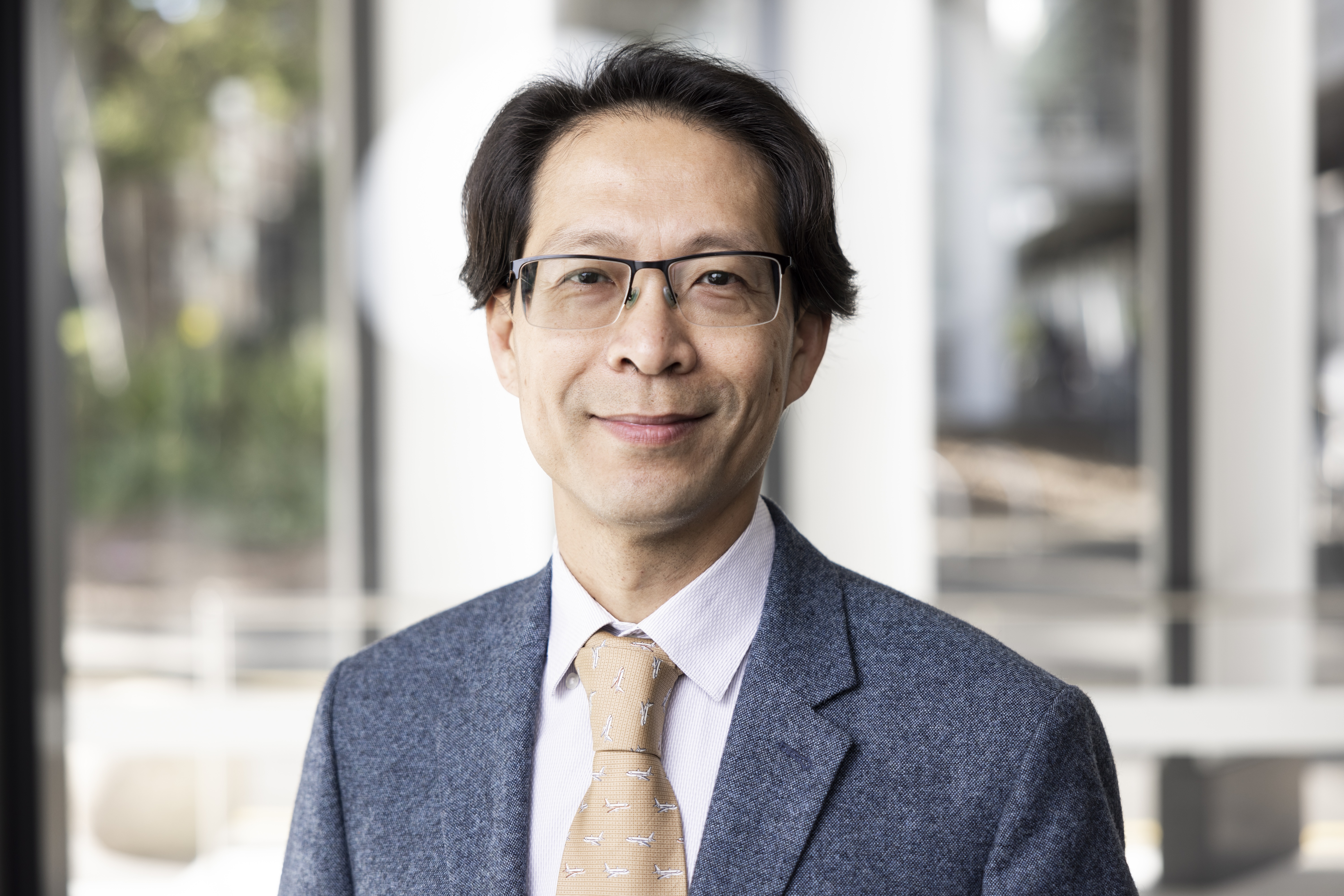
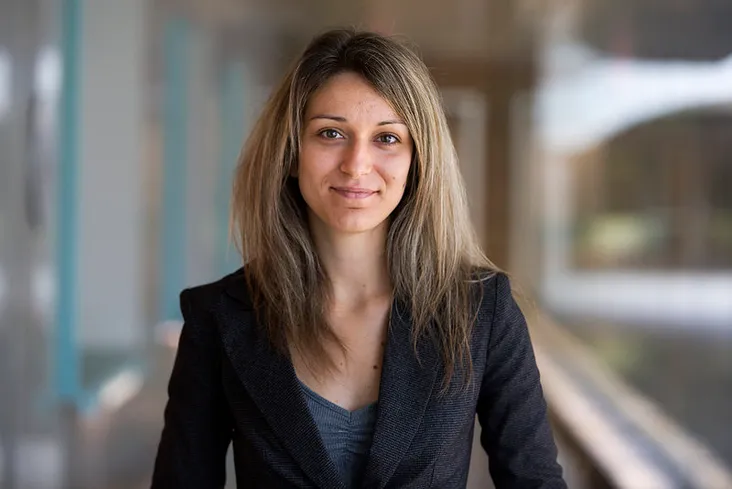
Srikanth Saripalli is Professor and Director of the Center for Autonomous Vehicles and Sensor Systems at Texas A&M. His research develops autonomous navigation systems for UAVs and ground vehicles, specializing in vision-based control, sensor calibration, and path planning algorithms for GPS-denied environments.
Raja Babu Kushwah is a Postdoctoral Research Associate in the Department of Entomology at Texas A&M University, working under Dr. Zach Adelman. His research focuses on vector-borne disease control, insecticide resistance mechanisms, and genetic control tools. He holds a Ph.D. in Life Sciences from Indira Gandhi National Open University, preceded by an M.S. in Biotechnology and a B.S. in Biology. His research interests include studying mosquitoes (Aedes spp.) and the global spread of infections they transmit, with a focus on developing interventions to combat insecticide resistance. Notable projects include analyzing knockdown resistance (kdr) mutations in Indian Aedes aegypti populations and demonstrating allelic-drive technology in Drosophila to reverse resistance. Current work in Adelman's lab involves making gene drives biodegradable for safer vector control. Publications highlight his expertise in vector genomics, gene drive systems, and insecticide resistance dynamics. His work bridges molecular biology, genetic engineering, and public health, addressing critical challenges in tropical disease mitigation. Collaborations include Prof. Ethan Bier's lab at UC San Diego, where he validated gene drive applications in Drosophila. Educations: B.S. Biology, Maharishi Dayanand University M.S. Biotechnology, Barakatullah University Ph.D. Life Sciences, Indira Gandhi National Open University Research trends in his articles emphasize kdr mutation studies, gene drive efficacy, and vector competence analysis. His transdisciplinary approach integrates molecular techniques, computational modeling, and field-based epidemiology to tackle global health threats posed by insect vectors.
William H. Warren is Chancellor's Professor of Cognitive and Psychological Sciences at Brown University. He leads the Virtual Environment Navigation Lab (VENLab) and has held this position since 1982. His research focuses on the visual control of human locomotion and navigation, applying dynamical systems theory and virtual reality techniques. He has served as Chair of Brown's Department of Cognitive and Linguistic Sciences (2002-2010) and remains active in academic leadership roles. Education: BA (Hampshire College, 1976), PhD (Experimental Psychology, University of Connecticut, 1982) Postdoctoral Training: University of Edinburgh (1983) Research interests include human crowd behavior, obstacle avoidance, and the interplay between vision and action. Key contributions involve modeling collective motion using agent-based simulations and analyzing spatial navigation through path integration and cognitive graphs. His work bridges basic science and applied domains like robotics and urban design. Notable awards include the Ken Nakayama Medal (2023), NIH Career Development Award, and Brown's Elizabeth Leduc Teaching Award. Active grants focus on crowd dynamics and locomotion control, totaling over $3.5M in funding since 2019. Teaching includes courses such as Perception and Action and Core Concepts in Cognitive Sciences . Academic service includes leadership roles in the International Society for Ecological Psychology and editorial boards in top journals.
Rafael Casado González is a Professor at the Department of Systems Informatics, School of Engineering, University of Castilla-La Mancha, Spain. He was previously an Associate Professor at the same institution and was promoted to Full Professor (Catedrático de Universidad) on May 23, 2023. His academic journey includes a Doctorate in Computer Engineering from UCLM (2001), a degree in Computer Engineering from Universidad de Murcia (1996), and a Technical Engineering in Systems Informatics from UCLM (1993). Doctor Ingeniero en Informática – University of Castilla-La Mancha (2001) Ingeniero Informático – Universidad de Murcia (1996) Ingeniero Técnico en Informática de Sistemas – University of Castilla-La Mancha (1993) His research spans Wireless Sensor Networks (WSNs) , Unmanned Aerial Vehicles (UAVs) , air traffic management , and high-performance network reconfiguration . He has made significant contributions to aviation safety, particularly in missed approach maneuvers , aircraft reinjection , and conflict resolution in U-Space . His work also extends to distributed forest fire monitoring and entrepreneurship education in engineering . The 15 most recent publications reflect a strong trend toward UAV traffic management , environmental sustainability in aviation , and intelligent systems for air navigation . His work combines simulation, machine learning, and real-time algorithms to improve safety and efficiency in complex airspace environments. Earlier works focus on network reconfiguration and localization in WSNs , indicating a long-standing interest in distributed and autonomic systems. Rafael Casado González has collaborated with prominent researchers such as Aurelio Bermúdez, Carlos T. Calafate, and Pablo Boronat across multiple publications. His affiliations are consistently with the University of Castilla-La Mancha, and he contributes to both technical and educational research domains. There are no listed scientific awards or honors in the provided text. He has advised or collaborated on various research projects, particularly in UAV systems and WSNs, though specific student names are not mentioned. His work has been supported through institutional affiliations and collaborative research, but no grants are explicitly listed. He is actively involved in developing simulation frameworks and real-time navigation systems for autonomous drones. While no specific lab or research group name is mentioned, his work on SensGrid , UAV navigation frameworks , and WSN-based fire monitoring systems suggests involvement in a research lab focused on intelligent distributed systems and aerospace applications.
Björn Olofsson is an Associate Professor and Senior Lecturer in the Department of Automatic Control at Lund University's Faculty of Engineering. He also serves as the Director of First and Second Cycle Studies and is a Project Manager. He is affiliated with major research initiatives including ELLIIT (the Linköping-Lund initiative on IT and mobile communication) and WASP (Wallenberg AI, Autonomous Systems and Software Program). His academic affiliations span Lund University and Linköping University, where he was appointed Docent in 2020. He holds an M.Sc. in Engineering Physics and a Ph.D. in Automatic Control, both from Lund University. His academic journey reflects a strong foundation in engineering and control systems. His research focuses on the autonomy of robots and vehicles, with emphasis on motion planning and optimal motion control. He explores applications in ground vehicles, unmanned aerial and surface vehicles, and industrial robotics. His work intersects with key global challenges, including sustainable transport and digitalization, aligning with UN Sustainable Development Goals related to technology and health. The 15 most recent publications analyzed show a consistent trend in autonomous systems, predictive control, and robotics. Topics include uncertainty-aware motion planning, human-robot collaboration, maritime autonomy, and learning-based control. The research integrates AI, machine learning, and advanced control theory, applied across aerial, marine, and terrestrial domains. Björn actively supervises multiple PhD students and has led numerous research projects, such as ELLIIT B14 and the Center for Construction Robotics. He is involved in organizing academic events like Robotics Week for Schools and manages the RobotLab LTH infrastructure. He has taught a range of courses including Applied Robotics, Autonomous Vehicles, and graduate-level courses on motion planning and optimal control. He also supervises Master’s theses in Automatic Control and Vehicular Systems.
Prof. M.J. Hoekstra is a Professor in Urban Design at Delft University of Technology's Faculty of Architecture and the Built Environment. His work focuses on integrating sustainability into engineering education, curriculum design, and urban planning. He has authored/co-authored influential textbooks like Inzicht: Academische Vaardigheden voor Bouwkundigen and contributed to over 60 research outputs. His research explores urban airspace management, drone traffic systems, and environmental impacts of aviation. Recipient of the 2018 Reed & Mallik Medal and 2016 Teacher of the Year Award Active in CDIO and SEFI conferences Prominent collaborations in urban morphology, air traffic control algorithms, and climate-conscious engineering Research emphasizes sustainable urban development and technological innovation in aviation systems. Recent projects include Metropolis II (centralized urban airspace control) and Whisper-ATC (aviation speech recognition). He also leads educational initiatives to improve academic skills for architecture students. Awards highlight his contributions to both pedagogy and technical innovation. His work bridges urban design theory with practical applications in smart city infrastructure and environmental policy.
Kai Virtanen is an Adjunct Professor in the Department of Mathematics and Systems Analysis at Aalto University's School of Science. He also serves as a Senior Scientist in Operations Research and Systems Analysis. His research focuses on dynamic multi-objective decision making under uncertainty, human performance in complex systems, and applications in military and aviation contexts. He holds a Doctoral degree in Engineering from Helsinki University of Technology. Research interests include optimization, decision analysis, simulation, Bayesian networks, and game theory applications. He has led projects involving air combat simulation, radar defense systems, and maintenance scheduling. Virtanen has received awards such as the Operations Researcher of the Year (2015) and Teacher of the Year honors (2007-2008, 2011). Key contributions span over 90 publications in journals like Journal of Defense Modeling and Simulation and European Journal of Operational Research . His work addresses challenges in air combat tactics, pilot decision-making, and system reliability. Current projects involve federated learning applications in military coalition operations and unmanned systems optimization. Academic service includes chairing the Systems Analysis Section of Finland's Scientific Advisory Board for Defense. Teaching focuses on systems analysis, simulation, and optimization methods.
Dr. Joseph Sanderson is an Associate Professor in the Department of Physics and Astronomy at the University of Waterloo. His primary affiliation is with the Faculty of Science, where he leads the Ultrafast Laser Matter Lab and serves as Principal Investigator for the Waterloo ALLS Reaction Microscope Facility and Waterloo Femto-Lab Laser Facility. His research focuses on femtosecond laser interactions with matter, particularly Coulomb explosion imaging and nanoparticle synthesis. Education: PhD in Physics (1991), University College London, UK; BSc in Physics & Astronomy (1986), University College London, UK. Research Interests: Coulomb imaging of small molecules using femtosecond lasers Femtosecond laser-induced nanoparticle production (e.g., polyyne chains, MoS₂, WS₂) 2D material modification for device applications Laser-driven surface engineering of metals and alloys Recent Publications Trends: Recent work emphasizes applications of femtosecond lasers in novel material synthesis (e.g., Mo₂C nanoparticles, graphene composites) and advanced sensing technologies (e.g., biosensors for viral detection). Key themes include laser-induced phase transitions, defect engineering in nanomaterials, and high-resolution molecular imaging. Awards: JSPS Fellowship (2009) Premier’s Research Excellence Award (2003) Teaching: PHYS 111: Physics 1 (taught 2019-2023) PHYS 256: Geometrical and Physical Optics (taught 2020-2023) SCI 238: Introductory Astronomy (2024) Labs & Facilities: He operates the Ultrafast Laser Matter Lab and oversees major facilities including the ALLS Reaction Microscope and Femto-Lab Laser systems at Waterloo. These resources support cutting-edge research in ultrafast laser-matter interactions and nanomaterial fabrication.
Navid Dadkhah Tehrani is an Adjunct Professor at Worcester Polytechnic Institute's Robotics Engineering Department, teaching graduate-level courses on machine learning applications in robotics. He concurrently serves as an Associate Technical Fellow at Lockheed Martin Corporation-Sikorsky Aircraft in Stratford, CT, where he advances autonomy in aerial vehicles including full-scale aircraft and drones. With over two decades of experience, he previously held roles at Aurora Flight Sciences (a Boeing company) as Senior Member of the Technical Staff. Education: PhD, University of Minnesota Research Focus: Autonomous aerial vehicle systems Motion planning and perception algorithms Task allocation strategies Integration of reinforcement learning/deep learning His work bridges academic theory with industrial applications, emphasizing real-world problem-solving in robotics autonomy. Professional Contributions: Expertise in fixed-wing and rotary-wing autonomy Development of advanced control systems Industry-academia collaboration through teaching
Silvia Ferrari is the John Brancaccio Professor of Mechanical and Aerospace Engineering at Cornell University, leading the Laboratory for Intelligent Systems and Controls (LISC) in Ithaca and co-directing the Cornell-Unibo Věho Institute on Vehicle Intelligence at Cornell Tech. She holds academic affiliations with both Cornell Engineering and Cornell Tech, focusing on interdisciplinary research in autonomy, robotics, and intelligent systems. Education: B.S., Aerospace Engineering, Embry-Riddle Aeronautical University (1997) M.A. and Ph.D., Mechanical and Aerospace Engineering, Princeton University (1999–2002) Research Interests: Her work spans computational intelligence, sensorimotor learning, adaptive control, and robotic autonomy. Key areas include active perception, neural network modeling, distributed sensor networks, and decision-making under uncertainty. She has pioneered methods in information-driven path planning and reinforcement learning, with applications to robotics, neuroscience, and environmental monitoring. Awards: Presidential Early Career Award for Scientists and Engineers (2006) NSF CAREER Award (2005) ONR Young Investigator Award (2004) Fellow of ASME and AIAA (2020) Labs & Leadership: As Director of LISC and co-Director of the Věho Institute, she fosters cross-campus collaborations in autonomy and urban technology. Her recent initiatives include organizing the Autonomy and Mobility Workshop, advancing Cornell’s ‘One Cornell’ research strategy.
Associate Professor Cheng-Lung Wu is an academic at the School of Aviation, University of New South Wales (UNSW), specializing in airline operations, airport terminal planning, and big data analytics. He holds a PhD from Loughborough University (UK) and has over 20 years of industry-academia collaboration experience. His work focuses on optimizing airline and airport processes, including aircraft scheduling, maintenance, and passenger behavior modeling. Research interests include: airport operations, schedule optimization, data-driven decision-making, and sustainability in aviation. Notable projects include fuel efficiency models for Qantas, passenger booking analytics for Virgin Australia, and airport digitalization strategies for Taipei Songshan Airport. His research has influenced industry standards, such as IATA’s delay data system and Chicago O’Hare’s terminal co-location strategy.
Dr. Martin Strohmeier is a post-doctoral researcher at the University of Oxford's Department of Computer Science, specializing in network and systems security with a focus on wireless aviation technologies, critical infrastructure protection, and satellite communication. His research bridges theoretical cybersecurity with real-world applications, particularly in securing air traffic control systems and space-based networks. Education: DPhil (Oxford) in Computer Science; MSc in Computer Science from TU Kaiserslautern, Germany. He previously conducted visiting research at Lancaster University’s InfoLab21 and Lufthansa AG. Research Interests: His work addresses vulnerabilities in aviation cybersecurity, satellite communication protocols, and adversarial machine learning. Notable projects include developing cyber-physical security solutions for air traffic control, analyzing GNSS disruptions, and co-founding the OpenSky Network to crowdsource aviation data for research. Awards: EPSRC Doctoral Prize Award (2021) for his doctoral work on wireless aviation security. OpenSky Network: Co-founder and active contributor to this collaborative platform that aggregates and analyzes global flight data to improve aviation safety and environmental impact studies. Current Projects: Investigating satellite authentication mechanisms, jamming-resistant systems, and personalized phishing defense strategies through augmented reality training.
Gautam Reddy is an Assistant Professor of Physics at Princeton University, leading the Reddy Lab. He holds a B.Tech in Engineering Physics from the Indian Institute of Technology, Bombay, and a Ph.D. in Physics from UC San Diego. His research bridges physics, biology, and machine learning to study information processing in natural and artificial systems. He previously served as an NSF-Simons Fellow at Harvard and a research scientist at NTT Research's Physics and Informatics Labs. His work investigates how biological and artificial systems learn and solve goal-oriented tasks through the lens of physics-inspired theory. Key areas include high-dimensional learning, evolutionary epistasis, olfactory processing, and reinforcement learning. The Reddy Lab collaborates with experimental biologists and machine learning researchers to develop phenomenological models and test theoretical frameworks using computational tools. Current projects explore in-context learning in transformers, modular structure in genotype-phenotype maps, and the interplay between decision-making and information theory in biological systems. He advises two graduate students (Tsai-Chun Pan and Ravin Ramaraj) and maintains active collaborations across disciplines.
Dimitra Panagou is an Associate Professor with the Department of Robotics and the Department of Aerospace Engineering at the University of Michigan. She directs the Distributed Aerospace Systems and Control Laboratory (DASC Lab) located in the Ford Robotics Building, where she leads research in safe and resilient autonomy for robotic systems. Her research interests focus on motion planning, coordination and control of robotic networks, autonomous multi-vehicle systems, nonlinear systems and control, navigation and guidance, distributed/decentralized control, and dynamic coverage. Professor Panagou's work emphasizes the development of planning, learning and control methods to address real-world, safety- and time-critical problems through provably correct solutions. Her research spans nonlinear systems, decision making under constraints and uncertainty, estimation and learning, mission planning, and networked control systems with applications across aerial, ground, marine, and space domains. Professor Panagou's recent publications (2024-2025) demonstrate a strong focus on control barrier functions, safety-critical control, resilient multi-robot systems, and risk-aware navigation. Her work bridges theoretical foundations with practical applications in autonomous systems, with particular emphasis on providing mathematical guarantees for safety and performance. The research spans multiple domains including aerial vehicles, marine systems, and ground robotics, addressing challenges in uncertain environments and under various constraints. Professor Panagou has received several prestigious awards including: NASA Early Career Faculty Award AFOSR Young Investigator (YIP) Award NSF CAREER Award IEEE TCAC Best Student Paper Award (for work from her lab) She has been invited to deliver a plenary talk at CDC 2024 and a keynote talk at ICRA 2025, highlighting her prominence in the control and robotics communities. Her research is supported by multiple grants from agencies including NASA, NSF, and AFOSR. The Distributed Aerospace Systems and Control Laboratory (DASC Lab) is equipped with state-of-the-art facilities including a fleet of UAVs (Hummingbirds, Firefly, and Solos), a high-precision motion capture system with 14 VICON cameras, drone LiDAR, and various sensors. The lab conducts both indoor and outdoor flight experiments, with permission for outdoor flights over the Wave Field at the University of Michigan's North Campus.
Ziho Kang is an Associate Professor in the Department of Industrial & Systems Engineering at the University of Oklahoma. His research focuses on human factors, human-systems engineering, and human-computer interaction, with applications in aerospace, healthcare, and education. He holds a Ph.D., M.S., and B.S. in Industrial Engineering from Purdue University and Korea University, respectively. Dr. Kang's work emphasizes developing algorithms to analyze complex biometric data such as eye movements and haptic interactions. His research domains include eye tracking, biometric analytics, virtual reality, and training methodologies. Key application areas include air traffic control, offshore energy operations, and educational technologies. His recent articles explore virtual reality learning systems, eye tracking frameworks for safety improvement, and multimodal analysis of human performance in dynamic environments. These studies reflect his focus on integrating human factors into technology design to enhance safety, efficiency, and learning outcomes. Awards: NSF CAREER Award, Hutchinson Medal, IEEE Andrew P. Sage Best Paper Award Experience: Postdoctoral training at University of Virginia and Drexel University; industry roles at Korea Stocks & Futures Exchange and Samsung Data Systems Labs: Directs a research lab focused on human factors and biometric analytics