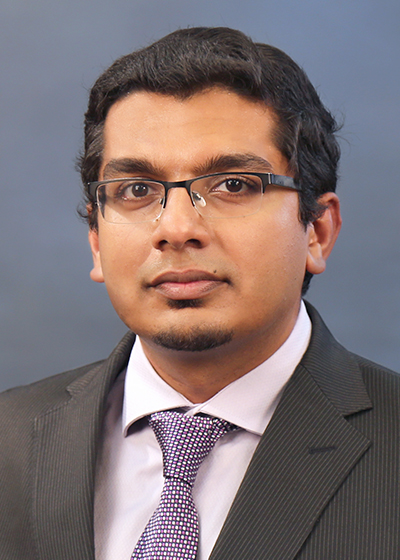
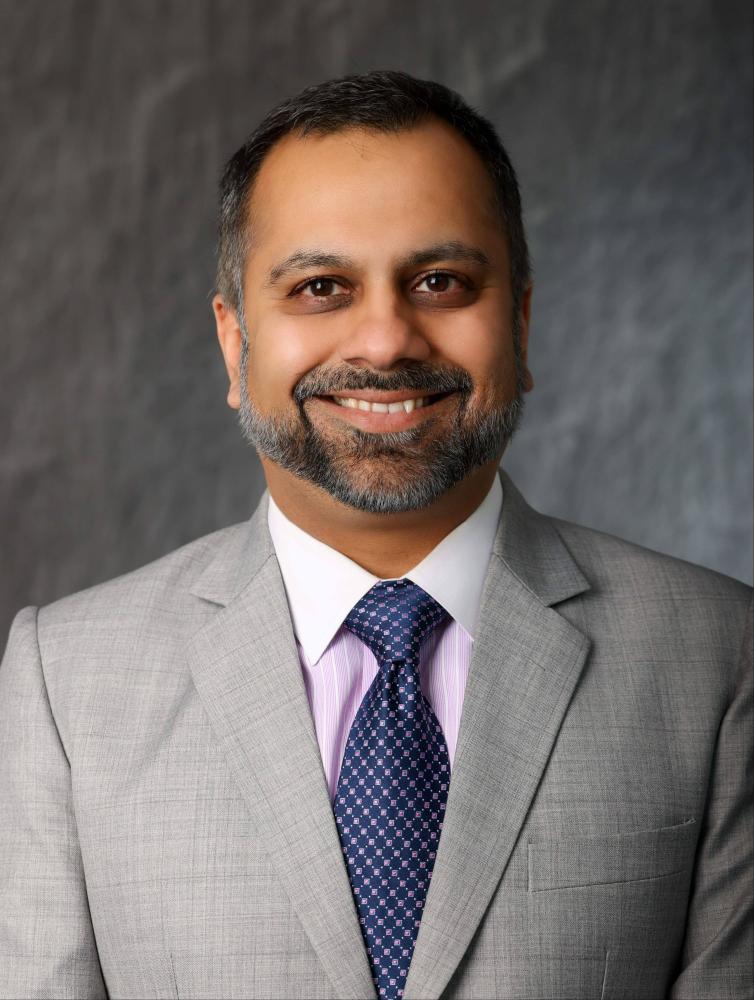
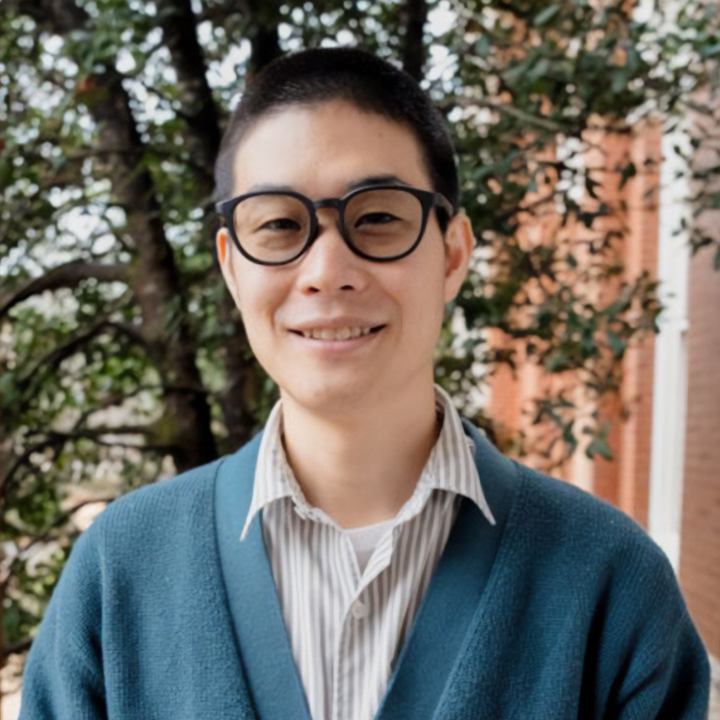
Animesh Chakravarthy is a Professor in the Department of Mechanical and Aerospace Engineering at The University of Texas at Arlington (UTA). He holds a PhD in Aeronautics and Astronautics from MIT (2007). His research focuses on Dynamics and Control, Robotics, Autonomous Systems, and Cyber-physical Systems, with notable contributions to UAV collision avoidance, swarm intelligence, and cyber-resilient networks. He has led over $5M in federal grants from NSF, NASA, and DOD, including a NSF CAREER Award (2014). His work has been featured in journals like IEEE Transactions and AIAA Journals, and news articles highlight innovations in drone safety and autonomous flight systems. Chakravarthy advises numerous graduate students and has supervised 20+ theses/dissertations. He is a Fellow of AIAA (2020), Member of the National Academy of Inventors (2021), and serves on editorial boards for major conferences (e.g., American Control Conference). His lab develops cutting-edge solutions for UAV swarms, morphing aircraft, and cyber-physical security.
Dr. Kamesh Subbarao is a Professor and director of the Aerospace Systems Laboratory (ASL) in the Mechanical and Aerospace Engineering Department at The University of Texas at Arlington (UTA). He has been a faculty member at UTA since 2003, progressing from Assistant Professor to Associate Professor and finally to Professor in 2019. His academic journey began with a PhD from Texas A&M University in 2001, followed by work at The MathWorks Inc. before joining UTA. Dr. Subbarao's educational background includes a PhD in Aerospace Engineering from Texas A&M University (2001), an MS in Aerospace Engineering from the Indian Institute of Technology (1995), and a BS in Aerospace Engineering from the Indian Institute of Technology (1993). His research interests span flight dynamics and control, unmanned vehicle systems, morphing wing aircraft structures, air traffic management, reduced order modeling of fluid-structure interactions, cooperative control of large scale interconnected systems subject to communication delays, multi-sensor fusion applied to aircraft guidance and spacecraft navigation, bipedal locomotion, and uncertainty characterization in orbital mechanics. His work focuses on nonlinear and adaptive control, linear and nonlinear filtering/estimation approaches, and cooperation and coordination for multiple unmanned vehicles subject to measurement uncertainties and distributed time delays. Dr. Subbarao's recent publications demonstrate strong focus on uncertainty quantification, cooperative control of multiple vehicles, UAV swarms, lunar exploration, and aircraft safety. His research shows a consistent trajectory toward more complex multi-agent systems, incorporating machine learning techniques for improved prediction and control, with applications spanning both terrestrial and space environments. President's Excellence in Teaching Award (2021) Lockheed Martin Aeronautics Company Excellence in Teaching Award (2016) AIAA Foundation Award for "Model Reference Adaptive Control" (2001) Best Paper of the Space Flight Mechanics Conference, American Astronautical Society (2021) Multiple Outstanding Reviewer awards from AIAA Journal of Guidance, Control, and Dynamics Dr. Subbarao has been actively involved in advising students, as evidenced by his nomination for the Outstanding Advisor Award in 2018-19. His research has been generously funded by major organizations including DARPA, NSF, AFRL, ONR, NASA, Lockheed Martin, Whirlpool Inc., Nextgen Aeronautics, and Hypercomp Inc. His laboratory work, particularly through the Aerospace Systems Laboratory, has produced significant contributions to the field of aerospace engineering and control systems. He is a Fellow of the Royal Aeronautical Society (FRAeS), an Associate Fellow of AIAA, and Senior Member of IEEE, ASME, and the American Astronautics Society (AAS), reflecting his standing in the academic and professional community.
Shreyas Narsipur is an Assistant Professor in the Department of Aerospace Engineering at Mississippi State University's Bagley College of Engineering. He directs the Applied Aerodynamics & Aeroacoustics Research Group, focusing on propeller-wing interactions, UAV aerodynamics, and unsteady flow control. Research bridges computational fluid dynamics, wind tunnel experimentation, and flight testing to advance low-Reynolds number aerodynamics. Current projects include NSF/NASA-funded work on distributed electric propulsion and aerodynamic sensing. Recent publications examine vortex dynamics, acoustic flow control, and off-board measurement techniques for UAVs. Articles demonstrate methodical validation across simulation, wind tunnel, and motion capture systems. Honors include NSF STTR and NASA RID awards for propulsion innovations. He chairs the AIAA Applied Aerodynamics Technical Committee (2026-2028) and serves as Undergraduate Coordinator. Doctoral candidates investigate propeller acoustics, adverse weather aerodynamics, and flow control under his supervision. Laboratory capabilities include low-turbulence wind tunnels, anechoic chambers, and motion capture systems.
Abhishek BERA is a Postdoctoral Researcher at the Interdisciplinary Centre for Security, Reliability and Trust (SnT) within the Space Robotics department at the University of Luxembourg. His research focuses on advanced robotics, telecommunications, and aerospace engineering, with particular emphasis on multi-robot coordination, UAV networks, and space exploration systems. He holds a strong record of innovation in resilient communication architectures, blockchain-based infrastructure, and 5G/6G technologies for disaster response and lunar exploration. Key research areas include: Multi-robot systems and planetary exploration 6G-UAV networks and edge computing Blockchain applications for space infrastructure Lunar mapping and resilient exploration systems IoT-enabled UAV networks His recent work explores cutting-edge topics such as ROS2 middleware optimization for planetary robotics, trustful coopetitive infrastructures for space missions, and edge-driven geofencing solutions for beyond-visual-line-of-sight (BVLOS) drone operations. His research bridges theoretical advancements with practical implementations in aerospace and telecommunications sectors.
Dr. Milind Sohoni is a Professor in the Department of Operations Management and Strategy at the University at Buffalo's School of Management. He is affiliated with the Stephen Still Institute for Sustainable Transportation and Logistics, focusing on interdisciplinary research in transportation systems, nonprofit operations, and optimization models. His research interests span airline operations optimization, supply chain management, decision analytics, and sustainability in logistics. Notable work includes studies on airline scheduling efficiency, gig economy staffing strategies, and nonprofit funding mechanisms. He holds a PhD and has contributed extensively to both academic and practical operational challenges. Recent publications (2022–2025) highlight trends in airline performance analysis, auction mechanism design, and disruption modeling in transportation networks. His work integrates theoretical frameworks with real-world applications in industries ranging from aviation to nonprofit sectors. No scientific awards are explicitly mentioned in the provided materials. Dr. Sohoni’s research collaborations and advisory roles are not detailed here, but his affiliations suggest involvement in large-scale logistics and transportation initiatives. He is based at the Jacobs Management Center in Buffalo, NY, and can be reached at milindso@buffalo.edu .
Professor Sandipan Mishra is a faculty member at Rensselaer Polytechnic Institute (RPI), holding the position of Professor in the Department of Mechanical, Aerospace, and Nuclear Engineering within the School of Engineering. He joined RPI in 2010 and has been affiliated with the Electrical, Computer, and Systems Engineering department. His research focuses on systems and control, learning, autonomy, and precision mechatronics, addressing challenges in advanced manufacturing, UAVs, and smart buildings. His work is supported by grants from NSF, ONR, ARL, DoE, and industry partners like General Electric and Sikorsky. Education: PhD in Mechanical Engineering from the University of California, Berkeley (2008). Awards include the NSF Early CAREER Award (2013), ASME Outstanding Young Investigator Award (2019), and multiple RPI teaching and research awards. He also serves as a Program Expert at the National Science Foundation for the CMMI division. Research emphasizes control systems integration into manufacturing processes, UAV autonomy, and smart building thermal management. His publications span over 50 journals and 150 conference papers, with recent work focusing on additive manufacturing control, autonomous systems, and human-in-the-loop optimization. Grants include collaborations with NSF, DoE, and industry on topics like laser powder bed fusion, aerial refueling, and building energy efficiency. His teaching includes courses on systems analysis, mechatronics, and advanced manufacturing systems.
Dr. Cameron Proctor is an Assistant Professor in the School of the Environment at the University of Windsor, specializing in remote sensing, unmanned aerial vehicles (UAVs), and peatland biogeochemistry. His research focuses on understanding carbon and nutrient dynamics in peatlands, particularly the interplay between plant roots, soil microbes, and climate change impacts. Education: Ph.D. (2017) Remote Sensing, University of Toronto M.Sc. (2011) Spatial Information Systems, University of Toronto B.Sc. (2004) Environmental Science, Trent University Research Interests: Root-soil-microbial interactions in peatlands Remote sensing and UAV applications for environmental monitoring Carbon sequestration and methanogenesis in wetlands Microplastic impacts on plant-soil systems His work integrates geospatial technologies with numerical modeling to address climate change challenges, emphasizing spatial and temporal dynamics of carbon processes. Awards: 2019 NSERC Postdoctoral Fellowship 2013 NSERC Alexander Graham Bell Canada Scholarship 2011 ESRI Canada Scholarship Advising & Labs: Leads the Plant Imaging and Carbon Transformation Research Group Focuses on lab, field, and controlled experiments to study root exudation and decomposition Develops UAV-hyperspectral systems for ecological monitoring Labs/Teams: PLANT IMAGING AND CARBON TRANSFORMATION Research Group Focus: Plant physiology, carbon transformation, climate adaptation strategies
Damiano Zanotto is an Associate Professor (with tenure) in the Department of Mechanical Engineering at Stevens Institute of Technology, within the Charles V. Schaefer, Jr. School of Engineering and Science. He directs the Wearable Robotic Systems Laboratory, focusing on wearable technology for rehabilitation, gait analysis, and injury prevention. His research integrates robotics, machine learning, and sensor systems to address mobility challenges in clinical and real-world settings. Education includes: Ph.D. in Mechatronics, University of Padua (Italy), 2011 M.S. in Mechanical Engineering, University of Padua (Italy), 2007 B.S. in Mechanical Engineering, University of Padua (Italy), 2005 His research explores three key areas: (1) Lower-extremity exoskeletons for locomotor assistance and rehabilitation, (2) Wearable sensors and ML models for gait disorder assessment and injury prevention, and (3) Cable-driven robots for suspended-load transportation. Work emphasizes real-world applicability, with projects funded by NIH, NSF, and DoD. Publications predominantly focus on gait analysis and rehabilitation robotics (2021-2024), leveraging machine learning for adaptive control and sensor validation. Trends include reinforcement learning for personalized training, instrumented insoles for ecological monitoring, and integrated robot-sensor systems for elderly mobility. Awards and honors include: NSF CAREER Award (2020) Outstanding Associate Editor, IEEE Robotics and Automation Letters (2023, 2024) Best Paper Award (2nd prize) at IEEE BioRob (2022) Columbia University Translational Fellowship (2015-16) He leads significant grants such as NIH R01 (2024) for digital biomarkers in neuromuscular disorders, NSF I-Corps (2023) for AI-enabled shoe insoles, and CDMRP projects (2022) for trauma recovery. The Wearable Robotic Systems Laboratory develops practical solutions like instrumented insoles and ankle exoskeletons, collaborating with clinical partners.
Mahesh Banavar is an Associate Professor in the Department of Electrical and Computer Engineering at Clarkson University, affiliated with the Coulter School of Engineering & Applied Sciences and the Institute for STEM Education. He directs the CoSiNe Lab and focuses on research in signal processing, machine learning, complex networks, and STEM education. His work addresses cybersecurity, behavioral biometrics, and continuous authentication. Education: B.E. in Telecommunications Engineering from Visvesvaraya Technological University (2005) M.S. and Ph.D. in Electrical Engineering from Arizona State University (2007, 2010) Research interests span signal processing applications in security and biometrics, machine learning for healthcare and autonomous systems, and innovative STEM education strategies. Notable awards include the Clarkson University Outstanding Advisor Award (2019), HKN Outstanding Teaching Award (2015-2016), and a Graduate Teaching Excellence Award (2008-2009). His publications emphasize localization algorithms, biometric authentication, and educational technology innovations. Labs/Teams: Director of the CoSiNe Lab, developing interdisciplinary research in signal processing and education.
Nobuaki Mizumoto is an Assistant Professor in the Department of Entomology & Plant Pathology at Auburn University's College of Agriculture. His research focuses on termite behavior, collective animal behavior, and evolutionary biology, with a particular emphasis on understanding social interactions, communication mechanisms, and ecological adaptations in insects. Key research areas include: Collective behavior in termites and ants, including tandem running and swarming patterns Evolutionary and genetic aspects of termite classification and phylogeny Behavioral ecology of mating systems and predator-prey dynamics Applications of genomic data to resolve taxonomic relationships Recent work highlights innovative approaches such as amber fossil analysis for behavioral reconstruction and development of tools like TManual for measuring animal-built structures. His lab's research bridges field observations with computational modeling to uncover principles underlying complex social behaviors. Publications span topics from termite tunneling strategies to the molecular basis of caste determination, demonstrating interdisciplinary integration of entomology, genomics, and behavioral ecology.
Ivano Benedetti is a Professor of Aerospace Constructions and Structures at the Department of Engineering, University of Palermo. He coordinates the Master's Degree in Aerospace Engineering and is part of the Teaching Board of the Doctorate in Mechanical, Manufacturing, Management and Aerospace Innovation, as well as the PhD in Civil, Environmental and Materials Engineering. His academic roles include being an invited professor at INSA Rouen and having held visiting positions at Northwestern University (Fulbright Scholar) and Imperial College London (Marie Curie Fellow). Education background includes a PhD in Aerospace Engineering from the University of Pisa (2008) and a Master's in Aerospace Engineering from the University of Palermo (2001). Research focuses on aerospace structures, computational mechanics, composite materials, and fracture analysis. Key areas include aeroelastic analysis, damage modeling in composites, and polycrystalline material behavior using advanced numerical methods like discontinuous Galerkin and boundary element techniques. His work addresses sustainable aviation (e.g., hydrogen storage), morphing technologies, and structural health monitoring. Publications span computational frameworks for aeroelastic simulations, high-order structural models, and micro-mechanical homogenization. He has supervised thesis projects on topics such as composite wing analysis, additive manufacturing fracture, and UAV applications. No scientific awards explicitly mentioned, but his research has been supported by international fellowships (Fulbright, Marie Curie). He contributes to editorial boards of journals in aerospace and materials science.
Adeel Akhtar is an Assistant Professor in the Department of Mechanical & Industrial Engineering at the New Jersey Institute of Technology (NJIT), USA. He holds a Ph.D. (2018) and MASc (2012) in Mechanical and Mechatronics Engineering/Electrical and Computer Engineering from the University of Waterloo, Canada, and a B.E. (2006) in Mechatronics Engineering from NUST, Pakistan. His research focuses on aerial robotics, nonlinear control systems, geometric control theory, and multi-agent coordination. His academic career includes work on path-following algorithms for robotic systems, hybrid control frameworks, and stabilization techniques for underactuated systems. Key contributions involve applying global parameterization and control barrier functions to ensure robust performance in challenging environments. Research interests span aerial robotics, control systems design, and mechatronics integration. Recent work emphasizes safety-critical control strategies for autonomous systems and coordinated multi-agent operations in dynamic environments. Award-winning educator with a focus on system dynamics and robotics pedagogy. Maintains an active research lab exploring advanced control methodologies for robotic vehicles and aerospace applications.
Professor Siu O'Young serves in Memorial University's Faculty of Engineering and Applied Science, specializing in Instrumentation, Controls, Automation and Robotics. His research focuses on Unmanned Aircraft Systems (UAS), with extensive work on aviation safety systems including radar-based positioning and collision avoidance. Recent innovations include methods for SSR positioning (2025), detect-and-avoid systems (2024), and ADS-B communication protocols. His publications demonstrate consistent advancement in radar signal processing, autonomous navigation, and safety-critical systems for aviation and marine applications. Key technical contributions span radar-based object tracking, transponder positioning systems, and autonomous vessel collision thresholds. Collaborative projects include soldier-robot teaming simulations and UAS computer modeling for sense-and-avoid applications.
Dr. Oscar De Silva is an Assistant Professor in the Department of Mechanical Engineering at Memorial University of Newfoundland. He holds a B.Sc. from the University of Moratuwa, Sri Lanka, and a PhD from Memorial University. His expertise spans instrumentation, controls, mechatronics, and robotics, with a focus on sensor design, state estimation, and navigation systems. Dr. De Silva's research interests include state estimation, control systems, nonlinear dynamics, navigation systems, sensor design, localization, mapping, and intelligent prosthetics. He has contributed to projects such as ice detection systems for marine safety and computer vision for robotics applications. Before his current role, he worked as a research fellow at the American Bureau of Shipping-Harsh Environment Technology Centre and taught at Memorial University as a sessional instructor. His work emphasizes practical applications in autonomous systems, industrial inspection, and environmental monitoring. Notable achievements include the IMechE UK Award for Outstanding Achievement and a Gold Medal in Mechanical Engineering. His research trends focus on integrating AI, LiDAR, and radar technologies for navigation and safety systems in robotics and marine environments. Awards: IMechE UK Award for Outstanding Achievement Gold Medal in Mechanical Engineering (University of Moratuwa) Fellow of Graduate Studies (Memorial University) Advising and Grants: While no specific student names are listed, his role as an Assistant Professor involves academic supervision. His grants and collaborations likely align with his research in robotics and sensor systems, though specific details are not provided here. Labs: He is associated with the Intelligent Systems Lab at Memorial University and previously contributed to the ABS HETC. His work often involves multidisciplinary teams focused on real-world engineering challenges.
Dr. Sameh Eisa is an Assistant Professor in the Aerospace Engineering and Engineering Mechanics Department at the University of Cincinnati's College of Engineering and Applied Science. He leads the Modeling, Dynamics and Control Lab (MDCL) and serves as Principal Investigator on multiple significant research grants from NSF and DARPA. Dr. Eisa earned his BSc in Electrical Engineering from Alexandria University, Egypt (2010) and completed his PhD in Applied and Industrial Mathematics at New Mexico Tech, USA (2017) without obtaining a Master's degree due to his strong publication record. Prior to joining the University of Cincinnati, he served as a Postdoctoral Researcher and Lecturer in the Mechanical and Aerospace Engineering Department at UC Irvine (2017-2021). His research spans three primary interconnected areas: Dynamical Systems and Control Theory - focusing on nonlinear dynamics, stability analysis, averaging theory, geometric control, and vibrational stabilization Mathematical Modeling and Control Systems - specializing in wind turbine dynamics, UAV control, and bio-inspired robotics Signal Processing and Imaging - applying machine learning techniques to signal and image analysis His work demonstrates strong interdisciplinary connections between mathematics, aerospace engineering, and renewable energy systems. Analysis of Dr. Eisa's recent publications reveals a consistent focus on nonlinear dynamics and control applications, particularly in wind energy systems and bio-inspired UAVs. His research shows a progression from fundamental mathematical control theory toward practical engineering applications, with increasing emphasis on bio-mimicry approaches for UAV flight efficiency. The publications demonstrate strong methodological rigor while addressing real-world engineering challenges in renewable energy and autonomous systems. Dr. Eisa currently leads four major research projects: NSF Grant #DMS-2318772 (2024-2027): $199,098 as PI for research on sensitivity and control theory for systems with extreme behaviors DARPA Teaming Agreement (2024-2031): PI for the ALBATROSS project Mission Oriented Rapid Solution Engineering ALBATROSS (2025-2027): PI MOR1077 JIT documents (2025-2027): PI for testing autonomous dynamic soaring methods These projects demonstrate his leadership in cutting-edge research at the intersection of control theory and aerospace applications. As Director of the Modeling, Dynamics and Control Lab (MDCL), Dr. Eisa oversees research focused on advancing theoretical frameworks for nonlinear control systems with applications to wind energy and bio-inspired UAVs. The lab serves as an interdisciplinary research environment bridging mathematics, aerospace engineering, and robotics, with particular emphasis on developing nature-inspired solutions for autonomous flight systems.