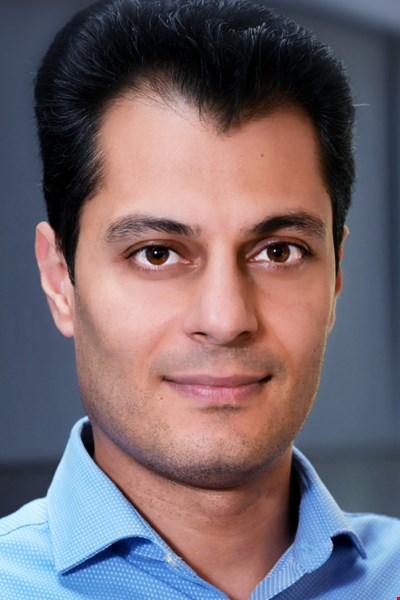
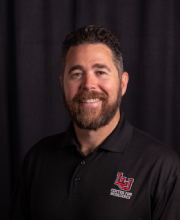
Dr. Jurgen Becque is an Associate Professor in Structural Engineering at the University of Cambridge's Department of Engineering. He specializes in cold-formed steel structures, stainless steel structural behavior, and stability analysis, with a focus on local-overall buckling interaction and innovative design methodologies. His work bridges experimental investigations with computational modeling and machine learning applications. Research Interests: Cold-formed steel structural systems Stainless steel column stability Local and overall buckling interaction Mechanics-based design optimization Machine learning for structural behavior prediction Recent publications demonstrate expertise in cross-sectional stability, connection mechanics, and composite systems like UHPC-confined stainless steel columns. His work addresses both monotonic and cyclic loading scenarios, contributing to Eurocode 3 design standards.
Micah Hale is a Professor and Department Head of Civil Engineering at the University of Arkansas, Fayetteville, and holds the Twenty First Century Endowed Leadership Chair in Civil Engineering. His work focuses on concrete materials, structural performance, and sustainable construction practices. Education: Ph.D., M.S., and B.S. in Civil Engineering from the University of Oklahoma. Dr. Hale’s research explores High-Performance Concrete , Bond Behavior of Prestressing Strands , and Mitigation of Alkali-Silica Reaction (ASR) . He also investigates Thermal Energy Storage applications for solar power systems and sustainable ultra-high-performance concrete (UHPC) development. His publications highlight advancements in concrete durability, prestressed girder analysis, and environmentally conscious material design. Recent studies emphasize calcium oxychloride formation , prestress transfer modeling , and self-consolidating concrete optimization. His scholarly output spans structural mechanics, chemical durability, and material sustainability. Awards: Twenty First Century Endowed Leadership Chair in Civil Engineering As an educator, Dr. Hale teaches Reinforced Concrete Design , Prestressed Concrete Design , and Concrete Materials and Mixture Proportioning . His contributions to engineering ethics education and student engagement further underscore his academic leadership.
Assoc Prof Ng Teng Yong is an Associate Professor at the School of Mechanical & Aerospace Engineering (NTU), specializing in numerical modeling and simulation. With a background as Research Manager at A*STAR Institute of High Performance Computing, his work spans materials science, nanotechnology, and aerospace engineering. Current focus on graphene-based desalination membranes Expertise in molecular dynamics simulations Investigates nanoscale fluid mechanics and structural dynamics Recent publications highlight advancements in energy-efficient electrodialysis, smart robotics, and nonlinear vibration analysis. His interdisciplinary approach integrates computational methods with experimental validation in additive manufacturing and soft material mechanics.
Ahmed Elbanna is an Associate Professor at the University of Illinois Urbana-Champaign (UIUC), affiliated with the Grainger College of Engineering and the Department of Civil and Environmental Engineering. He holds a Ph.D. from Caltech (2011) and has been on UIUC faculty since 2013. His research focuses on mechanics of complex systems, including earthquake dynamics, metamaterials, and biomaterials. He has received prestigious awards such as the NSF CAREER Award (2018) and the Donald Biggar Willett Faculty Fellowship (2020). Education: Ph.D. Civil Engineering, California Institute of Technology (2011) M.S. Applied Mechanics, California Institute of Technology (2006) M.S. Structural Engineering, Cairo University (2005) B.S. Civil Engineering, Cairo University (2003) Research Interests: Elbanna’s work spans theoretical and applied mechanics, with emphasis on fracture, wave propagation, and critical phenomena in geophysical and biological systems. Key areas include: Earthquake mechanics and granular matter dynamics Mechanical metamaterials for wave control Networked biological materials (e.g., bone, hydrogels) Modeling epidemic dynamics during the COVID-19 pandemic Awards & Recognition: National Science Foundation CAREER Award (2018) Donald Biggar Willett Faculty Fellow (2020) Journal of Applied Mechanics Award (2019) UIUC Teaching Excellence Awards (2018–2024) Service & Leadership: Member of the UIUC Faculty Senate (2020–present) Co-Chair, Computational Mechanics Committee (ASCE EMI, 2024–present) Leader, Computational Science Group at Southern California Earthquake Center (2019–present) Labs & Groups: Leads the Mechanics of Complex Systems Lab at UIUC, focusing on interdisciplinary research in geophysics, materials science, and computational modeling.
Professor Saskia Goes is a Professor of Geophysics at Imperial College London's Department of Earth Science & Engineering within the Faculty of Engineering. She specializes in geodynamics, subduction dynamics, and seismic hazard analysis using numerical modeling and geophysical data interpretation. Her affiliations include the Dynamic Earth and Hazards groups at the Imperial Centre for Geohazards Dynamics. Education: PhD in Geophysics from UC Santa Cruz (1995), Drs (BSc/MSc equivalent) from Utrecht University (1990). Prior roles include SNF Professor of Tectonophysics at ETH Zurich (2003-2005), Visiting Assistant Professor at the University of Michigan (1995-1996), and postdoctoral research at Utrecht University (1996-1999). Research focuses on mantle dynamics, lithosphere structure, and subduction zone processes. Her work integrates seismic imaging, machine learning, and numerical simulations to study phenomena like slab dynamics, mantle plumes, and fluid migration. Key themes include the interplay between tectonic forces and geochemical processes in continental and oceanic settings. Publications emphasize subduction zone processes, seismic tomography, and induced seismicity. She has led projects like the VoiLA initiative studying volatile recycling in the Lesser Antilles. Awards and recognition include invited lectures at leading conferences (AGU, EGU) and universities worldwide. Teaching includes undergraduate geodynamics, geohazards courses, and advanced MSc modeling modules. Active in promoting geohazard research through interdisciplinary collaboration and public engagement.
Kevin Mackie is Professor and Chair of the Department of Civil, Environmental and Construction Engineering (CECE) at the University of Central Florida’s College of Engineering. He has been a faculty member since 2006, advancing from assistant to full professor, and previously served as associate chair and interim department chair. His leadership includes spearheading departmental improvements in culture, workload policy, and digital accessibility. Education: Ph.D. in Civil Engineering, University of California, Berkeley (2004) M.S. in Civil Engineering, University of California, Berkeley (2000) B.E. in Engineering, Cooper Union, New York (1998) His research focuses on structural engineering , particularly in bridge engineering , performance-based seismic design , nonlinear analysis , and advanced materials for infrastructure repair . He integrates analytical, numerical, and experimental methods to assess and improve the resilience of civil infrastructure under extreme loads. His work addresses critical challenges in soil-structure interaction, seismic retrofitting, and the use of composites and smart materials. The 15 most recent publications reflect a strong emphasis on nonlinear modeling , seismic performance , and computational structural analysis of bridges and tall buildings. Key themes include fiber-based modeling, contact-friction problems, soil-structure interaction, and probabilistic assessment, demonstrating a consistent trajectory toward resilient and sustainable infrastructure systems. Scientific Awards: Faculty advisor of the year (2022, 2021, 2019) – ASCE East Central Branch and Florida Section Technical Contribution Leader Award Winner (2021) – ASCE East Central Branch Distinguished faculty member at UCF (2018) – Department of Housing and Residence Life Arthur N.L. Chiu Award for excellence as faculty advisor (2018) – Chi Epsilon Honor Society Mackie has been a dedicated mentor, supervising 11 doctoral , 18 master’s , and over 30 undergraduate students . His research has been funded by the National Science Foundation , U.S. Department of Transportation , Caltrans , FDOT , and industry partners. He has published nearly 200 papers and been cited over 7,000 times. He led the reaccreditation of CECE’s undergraduate programs and established the accelerated bachelor’s-to-master’s pathway. He leads the Structures Laboratory at UCF and collaborates with multidisciplinary teams on infrastructure resilience. His vision includes expanding graduate programs, strengthening industry partnerships, and diversifying the Senior Design curriculum to reflect real-world engineering challenges.
Florent Cosandier serves as a Lecturer in the Section of Microtechnology and Research Associate at the Micromechanical and Horological Design Laboratory (INSTANT-LAB) within the School of Engineering at Swiss Federal Institute of Technology Lausanne (EPFL). His dual roles bridge precision engineering education and advanced research in mechanical systems design. His research centers on compliant and flexure mechanisms with applications spanning horology, space instrumentation, and micro-technology. Key focus areas include parasitic error minimization in translation stages, dynamic balancing for mechanical oscillators, and additive manufacturing of complex compliant systems. Recent work demonstrates experimental validation of zero-force mechanisms and novel pivot designs for high-precision positioning. Analysis of his 15 most recent publications reveals a dominant trend in rectilinear stage development (6 articles), horological applications (4 articles), and space telescope assembly systems (3 articles). His work consistently emphasizes experimental validation, large-range motion capabilities, and parasitic shift elimination through innovative parallel mechanism configurations. Cosandier has advised at least one PhD student at EPFL: Kruis Johannes Richard Cornelis Geerit. He contributes to teaching through courses like "Advanced mechanisms for extreme environments" within the SMT-ENS unit. As a core member of INSTANT-LAB, he collaborates on projects involving metallic additive manufacturing for damping systems, micro-vibration suppression platforms, and silicon-based flexure mechanisms. His current research trajectory shows increasing focus on space applications and bi-material additive manufacturing techniques.
Kamal H. Khayat serves as the Jones Professor of Civil Engineering at Missouri University of Science and Technology and directs the Center for Infrastructure Engineering Studies (CIES), focusing on advancing concrete technology for sustainable infrastructure development. His research spans high-performance concrete (HPC), ultra-high-performance concrete (UHPC), self-consolidating concrete (SCC), and concrete rheology, with specialized expertise in 3D printing applications, fiber reinforcement systems, and shrinkage mitigation techniques. He investigates innovative materials like superabsorbent polymers and alternative binders to enhance durability and sustainability in concrete infrastructure. Analysis of his recent publications reveals dominant trends in digital fabrication of concrete, particularly 3D printing optimization and rheological modeling for structural build-up. His work increasingly integrates machine learning for material property prediction while emphasizing eco-friendly formulations using recycled aggregates and carbon-mineralization techniques. As Director of CIES, Khayat leads multidisciplinary research initiatives in infrastructure materials engineering, overseeing projects related to concrete rehabilitation, sustainable construction methods, and advanced material characterization techniques for civil infrastructure systems.
Dr. Ali Amin is a Senior Lecturer and ARC Industry Fellow at the School of Civil Engineering, The University of Sydney. He holds academic roles at ETH Zurich and The University of Toronto, and has consulting experience at Pells Sullivan Meynink. He earned a Bachelor of Engineering (Honours Class I) and PhD in Civil Engineering from UNSW Sydney, with awards including the 2017 Concrete Institute of Australia National Bursary Award and the 2016 UNSW Vice-Chancellor’s Teaching Excellence Award. His research focuses on structural analysis and design of high-performance and fiber-reinforced concrete structures, including contributions to Australian standards like AS5100.5-2017 and AS3600-2018. He teaches courses such as CIVL5269 (Advanced Concrete Structures) and CIVL3235 (Structural Analysis). Key research areas include fiber-reinforced concrete (FRC/SFRC) behavior, shear strength analysis, time-dependent deformation, and fluid-structure interaction in tall buildings. Collaborations include Professor Walter Kaufmann (ETH Zurich) and Professor Fausto Minelli (University of Brescia). Grants: ARC Industry Fellowship (2024), UNSW Goldstar Award (2018). Awards: 2017 Concrete Institute of Australia National Bursary Award, 2016 Teaching Excellence Award. His publications span over 50 peer-reviewed articles in journals like Journal of Structural Engineering , ACI Structural Journal , and conferences such as BEFIB and FraMCoS. Current research includes AI-based quality control in steel fabrication and performance evaluation of specialty cement in waste systems.
Dr. Eylem Asmatulu is an Associate Professor in the Department of Mechanical Engineering at Wichita State University (WSU), part of the College of Engineering. She joined WSU as an educator in 2015, became an Assistant Professor in 2017, and was promoted to her current rank in 2023. Previously, she worked in Environmental Health and Safety at WSU. She currently advises three PhD, three MS, and two BS students, having graduated 13 students since 2015. Her research focuses on recycling and reuse of materials, composite materials engineering, nanotechnology safety, and sustainable manufacturing. She has secured over $1.7 million in grants, published 131+ articles (h-index 26), and contributed to fields like thermal energy storage, biomedical nanomaterials, and aerospace material science. Her work emphasizes interdisciplinary approaches, combining machine learning for material property prediction and addressing safety concerns in nanotechnology across industries. Key projects include flame-retardant composites, biogas production optimization, and superhydrophobic nanofiber applications for water treatment. She actively promotes sustainability through recycling innovation and lean manufacturing practices in aerospace. Dr. Asmatulu’s research has been cited over 2,870 times. Her contributions span academia and industry, with a focus on translating innovations into practical solutions for environmental and industrial challenges.
Denizhan Yavas is an Assistant Teaching Professor in the Department of Mechanical Engineering at Rice University, joining in 2024. He holds a Ph.D. in Engineering Mechanics from Iowa State University (2018), an M.Sc. in Aerospace Engineering from Middle East Technical University (METU Ankara, 2013), and a B.S. in Mechanical and Aerospace Engineering (METU Ankara, 2010). Prior to Rice, he served as teaching faculty at the University of Central Florida. His research focuses on experimental and computational solid and fracture mechanics , with emphases on deformation/failure mechanisms in advanced composites and additively manufactured materials, architected materials, interfacial fracture, and ice adhesion. Key areas include bioinspired interfaces, interfacial fracture toughness, and material characterization under dynamic and static loading conditions. Notable recent work explores fracture behavior of 3D-printed thermoplastics, bioinspired soft-hard interfaces, and additive manufacturing techniques for enhancing interlaminar shear strength. These studies highlight cross-cutting themes in materials science, mechanical engineering, and aerospace applications. Awards: Preeminent Postdoctoral Award (University of Central Florida) Research Excellence Award (Iowa State University) Teaching Excellence Award (Iowa State University) Teaching & Advising: No current advisees listed, but actively involved in undergraduate/graduate mechanical engineering education. His work bridges fundamental mechanics research with practical applications in advanced manufacturing, materials design, and aerospace engineering.
Dr. Andrew Erwin is an Assistant Professor in Mechanical Engineering at the University of Cincinnati, focusing on robotics, human-robot interaction, and rehabilitation engineering. He holds a PhD and MS from Rice University (2018, 2014) and a BS from the University of Massachusetts Amherst (2012). Prior to UC, he was a postdoc at the University of Southern California and the Jet Propulsion Laboratory. His research explores how forces and movements are executed in healthy individuals, and how robotic devices can assist or restore function post-injury. Key areas include rehabilitation robotics, bio-inspired systems, haptic interfaces, and motor learning. He has received prestigious awards such as the NASA Postdoctoral Program Fellowship (2018) and the IEEE/ASME Transactions on Mechatronics Best Paper Award (2017). Dr. Erwin’s work integrates biomechanics, control systems, and neurophysiology. His lab develops devices like the SE-AssessWrist for wrist assessment and explores planetary seismometers for space missions. He maintains an active Google Scholar profile with over 25 publications. Education: PhD, Mechanical Engineering, Rice University, 2018 MS, Mechanical Engineering, Rice University, 2014 BS, Mechanical Engineering, University of Massachusetts Amherst, 2012 His current research emphasizes curriculum design for robotics learning, human-robot collaboration, and adaptive control systems. He offers a PhD position for Fall 2025 focusing on these areas.
Dr. Esmaeel Esmaeeli is a Senior Lecturer in Civil and Environmental Engineering at Brunel University London, serving as Course Director for the MSc in Structural Engineering. His work focuses on sustainable structural retrofitting solutions, safety, and resilience of concrete and masonry structures. Brunel University London (Current: Senior Lecturer) Queen’s University Belfast (Postdoctoral Fellow, Horizon 2020 MSC Fellowship) University of Minho (PhD research on Hybrid Composite Plate) K. N. Toosi University (MSc research on seismic strengthening) His research spans advanced materials like Strain-Hardening Cementitious Composite (SHCC) and Carbon Fibre Reinforced Polymer (CFRP) for seismic retrofitting, computational modeling of FRP-concrete interfaces, and dynamic response under extreme loads. Recent work includes the SMArtPlate and Hybrid Composite Plate (HCP) systems. Scientific recognition includes the Horizon 2020 Marie Skłodowska-Curie Individual Fellowship and a Portuguese Foundation for Science and Technology (FCT) scholarship. He has advised on structural vulnerability assessments and leads teams in consultancy projects.
Dr. Maria Anna Polak is a Professor in the Department of Civil and Environmental Engineering at the University of Waterloo, cross-appointed in the Faculty of Engineering. Her research focuses on advanced structural analysis, composite materials, and innovative construction technologies. She specializes in concrete structures, fiber-reinforced polymers (FRP/GFRP), and nondestructive evaluation methods. Her work addresses challenges in structural safety, durability, and sustainable design through computational modeling and experimental validation. Research Interests: Finite Element Analysis of Reinforced Concrete Structures FRP/GFRP Reinforcement for Concrete Applications Punching Shear Behavior and Design 3D-Printed Construction Materials Nondestructive Testing (NDT) with LiDAR and Ultrasonics Time-Dependent Behavior of Polymers and Composites Her recent publications emphasize advancements in computational modeling (FEA) for complex structural systems, material characterization of novel composites, and optimization of concrete components under seismic and environmental loads. Notable trends include integration of emerging technologies like smartphone LiDAR for on-site assessment and development of predictive models for FRP-degraded systems. Grants & Collaborations: Her work has been supported by industry partnerships (e.g., Horizontal Directional Drilling research) and academic initiatives. She contributes to international standards through experimental validation of design methods for modern construction materials. Labs/Teams: Active in the University of Waterloo's Structural Engineering and Applied Mechanics research group, focusing on smart infrastructure and material innovation.
Dr. Nicholas Brake is an Associate Professor at Lamar University's Department of Civil and Environmental Engineering, focusing on reclaimed materials, wireless power transfer applications in concrete, and fatigue fracture modeling for pavements. His research spans recycled concrete aggregate, coal ash utilization, and electromagnetic cementitious composites. Education: Ph.D., M.S., B.S. in Civil Engineering from Michigan State University Awards: Anita Riddle Fellowship (2018), Lamar Merit Award (2018), Presidential Faculty Fellowship (2015), and multiple scholarships during his studies. His research emphasizes three key areas: 1) Material reclamation using recycled concrete aggregate, coal combustion residuals, and EAF slag. 2) Electromagnetic transport properties for wireless vehicle charging applications. 3) Fatigue damage modeling in concrete pavements. Through 3D printing integration and design-build-test pedagogy, he enhances student learning outcomes. Recent publications focus on international engineering education (2020), magnetic concrete composites (2019), and advanced testing methodologies for civil infrastructure (2018). His teaching innovation includes developing nine Lamar University courses with active learning strategies that improved student design confidence (p Scientific Awards: Anita Riddle Excellence in Teaching Fellowship (2018) Presidential Faculty Fellowship for Teaching Innovation (2015) Outstanding Teaching Assistant Award at Michigan State (2011) Dr. Brake mentors undergraduate and graduate researchers, including doctoral candidates Mahdi Feizbahr and Hossein Hariri Asli (2023-2024). His lab (LUMS) houses advanced testing systems like Instron 5965/8803, MTS Insight 100SL, and thermal analyzers for material characterization.