Janki Bhimani is a Professor and Director of the Data Management Research Lab (DaMRL) at the School of Computing and Information Science, Florida International University (FIU). Her research focuses on Memory and Storage Systems, Cloud Computing, Performance Modeling, and Applied Machine Learning. She holds a Ph.D. in Computer Engineering from Northeastern University (2019), an M.S. in Electrical and Computer Engineering (2016), and a B.S. in Electrical and Electronics Engineering from GITAM University (2013). Prior to FIU, she taught at Northeastern University and collaborated with Samsung Semiconductor Research Labs on flash-based SSDs. Her research interests include emerging memory technologies, high-performance computing, and datacenter reliability management. She leads innovative projects like Heimdall (machine learning for storage I/O optimization) and MoKE (modular key-value storage emulation). Awards include FIU Top Scholar and KFSCIS Excellence in Applied Research. Teaching highlights include CIS 3530 (Data Structures), CIS 5346 (Storage Systems), and EECE 2560 (Engineering Algorithms). Her work emphasizes bridging theory and practice, with patents on storage system optimization and machine learning integration.
Bryan S. Kim is an Assistant Professor in the Department of Electrical Engineering and Computer Science at Syracuse University. His research focuses on computer systems, particularly data storage systems, emphasizing performance, reliability, and scalability in the context of heterogeneous hardware. He holds a Ph.D. and M.S. in Computer Science and Engineering from Seoul National University and a B.S. in Electrical Engineering and Computer Science from UC Berkeley. Prior to academia, he worked as a postdoctoral researcher at Seoul National University and as a manager at SK Telecom. Key research interests include SSD reliability, storage system design, and overcoming hardware limitations through innovative architectures. Notable recent work includes projects on capacity-variant storage systems, CXL-enabled SSDs, and RAID adaptations for heterogeneous SSDs. He has been awarded two NSF grants: the DESC proposal (CHIPLETS360) in 2025 and a CAREER award for bridging memory/storage gaps in 2025. Education: Ph.D. in Computer Science and Engineering, Seoul National University M.S. in Computer Science and Engineering, Seoul National University B.S. in Electrical Engineering and Computer Science, UC Berkeley Recent Awards: NSF DESC Proposal Award (2025) NSF CAREER Proposal Award (2025) Teaching: CSE486: Design of Operating Systems CIS341: Computer Organization & Programming Systems CIS700: Storage Systems for Big Data His students include Shao-Peng Yang, Xiangqun Zhang, and Omkar Desai. He advises on projects related to storage systems, and his work has been published in top-tier conferences like FAST, ATC, EuroSys, and OSDI.
Prof. Akshat Tanksale is a Professor in Chemical & Biological Engineering at Monash University, leading the Catalysis for Green Chemicals group. He specializes in heterogeneous catalysis for CO2 and biomass conversion into sustainable fuels/chemicals. His roles include Deputy Director of the ARC Research Hub for Carbon Utilisation and Recycling, and Carbon Theme Leader of the Woodside Monash Energy Partnership. Education: PhD (2008, University of Queensland) in nanomaterials/chemical reaction engineering, followed by postdoctoral research at UQ on biomass-to-fuels and hydrogen storage. Joined Monash in 2011. Research Focus: Innovating low/negative carbon emission technologies via catalyst design and CCU processes. Key areas include CO2 valorisation, biomass depolymerisation, and nanomaterials for energy storage (e.g., Zn-air batteries). His work aligns with UN SDGs addressing climate action and sustainable energy. Projects: Active in 11 projects (2021–2029), including leadership in carbon recycling via direct air capture and syngas conversion to acetic acid. Collaborates internationally on catalyst development and CO2 conversion. Awards: Multiple recognitions including Dean’s Award for Innovation (2020), Caltex Award (2018), and Australia-India Science & Tech Award (2010). Active in professional service, chairing IChemE Research Working Groups. Teaching: Offers courses CHE2162 (Mass/Energy Balances) and CHE3165 (Separation Processes).
Shimeng Yu is a full professor at the Georgia Institute of Technology's School of Electrical and Computer Engineering, holding the Dean’s Professorship. He earned his B.S. from Peking University (2009) and M.S./Ph.D. from Stanford University (2011/2013). His research focuses on semiconductor devices, non-volatile memories, 3D integration, and AI hardware accelerators. Yu leads SRC/DARPA JUMP 2.0 centers on memory/storage and 3D integration, with over 400 publications and 30,000+ citations (H-index 82). He serves on flagship conference committees (e.g., IEDM, VLSI) and editorial boards (IEEE EDL, JETCAS). Education: B.S., Microelectronics, Peking University (2009) M.S./Ph.D., Electrical Engineering, Stanford University (2011/2013) Research Themes: Emerging non-volatile memories for AI Monolithic 3D integration Energy-efficient computing systems His work spans device fabrication, circuit design, and system-level co-optimization. Recent projects are funded by NSF, DARPA, DOE, and industry partners (TSMC, Intel, Samsung), totaling >$17M. His lab, located at the Pettit Microelectronics Research Center, develops prototypes with cleanroom access. Awards: IEEE Fellow (2024) ACM/IEEE DAC Under-40 Innovators Award (2020) NSF CAREER Award (2016) Multiple editorship roles and distinguished lecturer appointments (IEEE EDS/CASS) Grants & Funding: Lead of two SRC/DARPA JUMP 2.0 centers Total research funding exceeds $17M
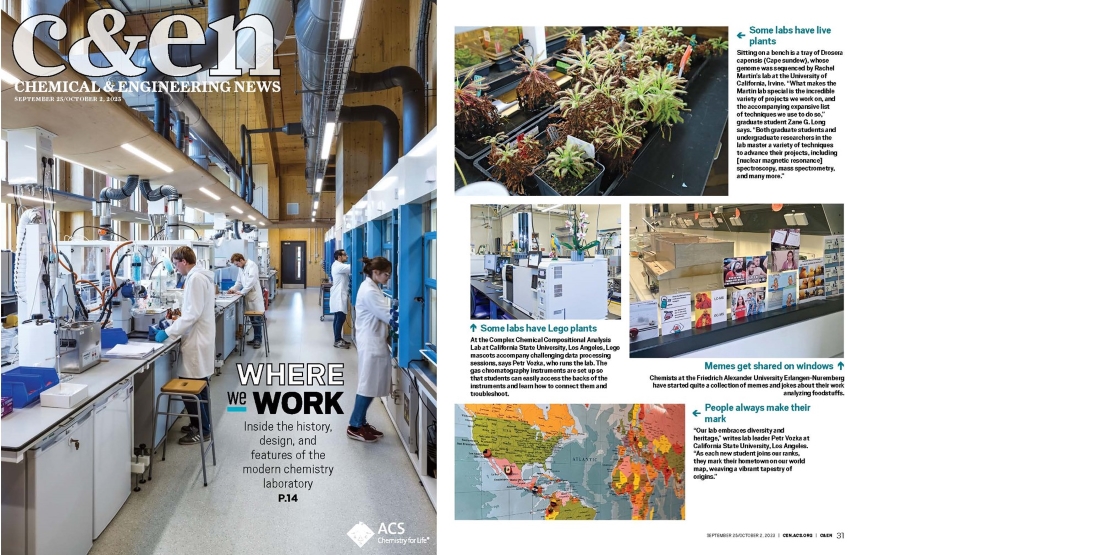
Dr. Petr Vozka is an Assistant Professor in the Department of Chemistry and Biochemistry at California State University, Los Angeles, where he leads the Complex Chemical Composition Analysis Lab (C³AL). His research focuses on the characterization of complex chemical mixtures using state-of-the-art techniques, including two-dimensional gas chromatography and high-resolution mass spectrometry, with applications in environmental science, plastic waste conversion, and forensic analysis. Dr. Vozka's research interests span multiple critical areas including the analysis of complex chemical mixtures, microplastics in the environment, conversion of plastic waste into alternative fuels, environmental impact of oil spills, and forensic fingerprint analysis. His work on microplastics has gained significant attention, with media coverage highlighting his findings that microplastics can penetrate blood vessels and have been found in the brain. His research on the Huntington Beach oil spill investigated the long-term effects of oil contamination on beaches used for recreation. Dr. Vozka has organized significant academic events including the Multidimensional GC: From Petroleum to Beyond symposium at ACS Fall 2025 and serves on the organizing committee for the Multidimensional Chromatography Workshop (MDCW). His laboratory, C³AL, is equipped with advanced instrumentation including GC-TOFMS, GC×GC-FID, and GC×GC-TOFMS systems, supported by partnerships with LECO Corporation and Anton Paar. Recipient of LECO Corporation's Pegasus® BT GC-MS instrument through a competitive selection process Principal Investigator for research funded by Naval Air Warfare Center Aircraft Division Collaborator with researchers from Purdue University, UCT Prague, Delft University of Technology, and California State Polytechnic University Dr. Vozka actively mentors undergraduate and graduate students, with numerous students receiving research awards including CSU COAST Undergraduate Student Research Grants, NSF REU placements, and Dean's List honors. His students regularly present research at national conferences including ACS meetings and the Multidimensional Chromatography Workshop. The C³AL lab provides hands-on experience with cutting-edge analytical instrumentation, preparing students for careers in analytical chemistry and related fields. As part of the LECO-C³AL Facility partnership, Dr. Vozka's lab serves as a training ground for students in comprehensive two-dimensional gas chromatography and mass spectrometry techniques. The facility aims to enhance knowledge and expand opportunities for students while equipping them with skills necessary to excel in graduate programs and analytical positions in industry and the military.
Roger Michaelides is an Assistant Professor of Earth, Environmental, and Planetary Sciences and Environmental Studies at Washington University in St. Louis. He leads the Radar Interferometry and Geospatial Science Laboratory (Radar Lab), focusing on radar remote sensing, geospatial techniques, and Arctic permafrost dynamics. His work integrates InSAR, radar altimetry, and multi-sensor fusion to study environmental processes like wildfire-permafrost interactions, coastal erosion, and climate change impacts. Michaelides earned a PhD in Geophysics from Stanford University (2020) and held postdoctoral positions at the Colorado School of Mines (2020–2022). He joined Washington University in 2022. His research emphasizes developing novel remote sensing methods for cryospheric and terrestrial systems, including NASA-funded studies tracking permafrost thaw and wildfire effects in the Arctic. Recent awards include a NASA Early Career Investigator Program Fellowship (ECIP-ES), supporting his $300,000 project on Arctic permafrost monitoring. He actively mentors graduate and undergraduate students, offering funded PhD opportunities in InSAR applications and climate science. His lab collaborates with agencies like NASA and the Indian Space Research Organization, leveraging satellite data from missions like NISAR. Key interests include radar signal processing, environmental modeling, and interdisciplinary approaches to Earth observation. Michaelides’ work bridges geophysics, ecology, and climate science, with applications to global environmental challenges such as permafrost degradation and wildfire prediction.
Prof. Dr. Wolfgang Hillert is a leading physicist at the University of Hamburg , serving as the Bjørn-Wiik Professor for Accelerator Physics since 2016. Affiliated with the Institute of Experimental Physics under the Faculty of Mathematics, Informatics and Natural Sciences, he specializes in Accelerator Physics , Superconducting Accelerator Technology , and Free-Electron Lasers (FEL) . His work focuses on polarized electron beams, SRF cavity optimization, and gravitational wave detection methods. Education: Physics degree from University of Bonn (1987), Promotion in Atmospheric Physics (1992), Habilitation in Physics (2001) Leadership Roles: Head of Accelerator Physics Group (2016–present), Managing Director of Institute of Experimental Physics (2019–2021) Research Trends: His recent work spans superconducting RF cavities for gravitational wave detectors ( 2025 ), resonant slow extraction in electron boosters, and atomic layer deposition of superconducting thin films. Publications highlight advancements in beam dynamics , cryogenic systems , and terahertz generation . Teaching & Outreach: He has lectured on Accelerator Physics since 2002 and engaged in public science communication, including talks on Physics of Music (2005–2021) and teacher training programs at DESY. Labs & Collaborations: Leads the Accelerator Physics Group at DESY, collaborates on projects like XFELO and BGO-OD beamline , and contributes to international schools (CAS) and symposia.
Mohamed Sarwat is an Associate Professor at Arizona State University specializing in databases , spatial data management , and recommender systems . His research focuses on GeoSpark —a cluster computing framework for spatial data—and its extensions like GeoSparkViz for visualization and GeoSparkSim for traffic simulation. Key Contributions: LARS* (Location-Aware Recommender System), Horton* (Graph Reachability), Sindbad (GeoSocial Platform), and Riso-Tree (Graph Database Indexing) Research Themes: Integration of spatial/temporal data with machine learning, efficient indexing for big geospatial datasets, and scalable frameworks for mobility data science His work spans collaborations with 23+ co-authors across institutions like University of Minnesota, University of Melbourne, and University of Salzburg. Current projects emphasize GeoTorchAI —a spatiotemporal deep learning system—and mobility data science infrastructure.
Richard D. Wesel is an Associate Dean for Academic and Student Affairs at a College of Engineering, where he has held leadership roles such as Vice-Chair of the Electrical Engineering Department. With Ph.D. and M.S. degrees in Electrical Engineering from Stanford University and MIT respectively, his research focuses on communication theory and channel coding, particularly low-density parity-check (LDPC) codes and turbo codes for efficient data transmission over noisy channels. Education: MIT (B.S., M.S.), Stanford (Ph.D.) Leadership: Associate Dean, Former Vice-Chair of Electrical Engineering Wesel's research explores advanced techniques for broadcast and multiple-access communication systems, emphasizing applications in wireless LANs, satellite communications, and optical networks. His work integrates machine learning with traditional decoding algorithms, as seen in recent publications on neural-network-optimized LDPC decoding and parallel trellis-stage-combining methods for high-throughput systems. His articles demonstrate a focus on finite-blocklength coding, including CRC-aided list decoding for convolutional and polar codes, and voltage optimization strategies for flash memory reliability. Wesel has authored over 100 publications and led a research group that won the 2006 Design Automation Conference's top award for optical multiple access design. Scientific Awards: National Science Foundation CAREER Award Okawa Foundation Award As an educator, Wesel received the TRW Excellence in Teaching Award in 2000 and has contributed to academic governance through roles on the Faculty Executive Committee and Undergraduate Council. His work bridges theoretical communication systems with practical implementations, including FPGA-based decoders and adaptive coding for fading channels.
Jaechun No is a Professor at the Department of Computer Science and Engineering, College of Engineering, Sejong University. With a Ph.D. from Syracuse University (1999), he previously served as a Researcher at Argonne National Laboratory (1999-2001) and Hewlett Packard HPDC Laboratory (2001-2003) before joining Sejong University in 2003. Education: B.S., Ewha Womans University (1985) M.S., Western Illinois University (1993) Ph.D., Syracuse University (1999) His research focuses on Cloud/Edge computing , NVMe SSD technologies , and large-scale distributed/parallel storage systems . Key achievements include optimizing KVM/QEMU and Docker I/O virtualization, developing machine learning-based server failure prediction systems, and advancing NVMe/NAND flash memory I/O caching mechanisms for hybrid file systems. Recent publications highlight his work on virtualized I/O performance control (L-DTC, 2025), GPU Direct I/O classification (e-CLAS, 2024), Kubernetes resource provisioning (2024), and virtual storage resource redistribution (vThrot, 2024). These reflect trends in virtualization optimization, machine learning integration, and distributed resource management. Jaechun No's research has been cited extensively, with 148 Scopus h-index and over 8,000 citations. His collaborations span multiple countries and institutions, focusing on I/O virtualization, storage technologies, and distributed computing environments. Professional Affiliations: Current Professor at Sejong University (2003-present) Researcher at Argonne National Laboratory (1999-2001) Researcher at Hewlett Packard HPDC Laboratory (2001-2003)
Greg Ganger is the Jatras Professor of Electrical and Computer Engineering at Carnegie Mellon University and Director of the Parallel Data Lab (PDL). His research focuses on computer systems, including cloud computing, storage systems, distributed systems, and machine learning infrastructure. He holds a Ph.D. in Computer Science and Engineering from the University of Michigan and completed postdoctoral work at MIT. Education: Ph.D., M.S., and B.S. in Computer Science from the University of Michigan (1991–1995). Research Interests: Ganger leads projects in cloud computing, storage/file systems, operating systems, and systems for big data and large-scale machine learning. Recent work includes optimizing cloud resource scheduling, developing sustainable storage solutions, and improving ML cluster efficiency. The PDL explores storage system architecture, file systems, and leveraging new storage technologies like non-volatile memory (NVM). Awards: 2021 OSDI Best Paper, 2021 SOSP Best Paper, 2021 SoCC Test of Time Award, and 2021 R&D 100 Award. His team's work on Kangaroo caching and MACARON cloud caching exemplifies cutting-edge contributions. Advising & Grants: Advises graduate students in ECE and Computer Science. Active in grants related to distributed storage, cloud systems, and ML infrastructure. Collaborates with industry partners like Los Alamos National Lab on storage systems. Labs/Teams: Directs the Parallel Data Lab (PDL), a leading research group in storage and distributed systems. Collaborates with CMU’s CyLab on security aspects of storage systems and ML infrastructure.
Dr. Biswajit Ray is an Associate Professor in the Department of Electrical and Computer Engineering at Colorado State University (CSU) , joining in Fall 2023. Previously, he served as an Associate Professor at the University of Alabama in Huntsville (UAH) until 2023. Education : B. Tech. in Electrical and Electronics Engineering (2006), National Institute of Technology M.S. in Electronics Design and Technology (2008), Indian Institute of Science Ph.D. in Electrical and Computer Engineering (2013), Purdue University His research focuses on data storage devices , hardware security , and electronics for extreme environments . He aims to enhance the security , reliability , and energy-efficiency of solid-state storage systems, with applications in IoT sensor nodes and non-volatile memory technologies . Professional Achievements : Holds 20 U.S. patents in 3D NAND Flash memory and storage systems Published over 75 research papers in international journals and conferences Honors and Awards : NSF CAREER Award (2022) NSF EPSCoR Research Fellowship (2020) University Distinguished Research and Creative Achievement Award (2023) at UAH Before academia, he worked at SanDisk Corporation (now Western Digital) in Milpitas, California, developing 3D NAND Flash memory technology.
Manos Athanassoulis is an Associate Professor in the Department of Computer Science at the College of Arts and Sciences, Boston University. He is the Founder and Director of the BU Data-intensive Systems and Computing (DiSC) lab and a member of the BU MiDAS group. His research focuses on data systems, particularly cloud data management, hybrid transactional/analytical workloads, and integration with emerging hardware such as non-volatile memory and heterogeneous computing. His educational background includes a PhD from EPFL (2014), an MSc in Computer Systems Technology, and a BSc in Informatics and Telecommunications from the University of Athens, Greece. Prior to BU, he was a Postdoctoral Researcher and Research Associate at Harvard University, supported by a SNSF Postdoc Mobility Fellowship. His research interests span data systems, database architectures, LSM trees, indexing, storage systems, and performance optimization. He explores how novel hardware can be leveraged to improve data management efficiency and scalability, especially in cloud environments. His recent publications (2021–2025) predominantly focus on LSM trees, covering topics such as compaction policies, Bloom filter tuning, DPU offloading, adversarial resilience, and sustainable caching. Earlier works include foundational contributions on access methods (RUM Conjecture) and optimal key-value stores (Monkey). The trend shows a consistent focus on data system efficiency, adaptability, and robustness under varying workloads and hardware constraints. Scientific Awards: NSF CAREER Award (2022) Facebook Faculty Research Award (2020) NSF CRII Award (2019) Best of VLDB 2017 and Best of SIGMOD 2017 SIGMOD Most Reproducible Paper Award (2017) Multiple ACM SIGMOD Distinguished PC Member recognitions (2018–2025) VLDB 2023 Best Demo Award RedHat Collaboratory Research Incubation Awards (multiple, 2021–2023) SNSF Postdoc Mobility Fellowship (2015–16) IBM PhD Fellowship (2011–12) Dr. Athanassoulis has advised numerous students and collaborators, evident from his co-authorship on works with researchers such as Niv Dayan, Stratos Idreos, and A. Ailamaki. His grants include major awards from NSF, Facebook, and RedHat, supporting research in robust data systems, hardware-software co-design, and learned cost models. He has also been recognized for teaching excellence at Harvard University. He leads the DiSC lab at Boston University, which focuses on data-intensive computing and systems research. The lab explores next-generation data architectures, particularly in cloud and hardware-aware environments. Collaborations with the BU MiDAS group enhance interdisciplinary research in data science and AI.
Bo Chen is a Professor in the Department of Mechanical Engineering – Engineering Mechanics and the Department of Electrical & Computer Engineering at Michigan Technological University. She directs the Intelligent Mechatronics and Embedded Systems (IMES) Laboratory, focusing on advanced controls, optimization, and artificial intelligence for connected and autonomous vehicles, electric vehicle–smart grid integration, and smart mobility. PhD in Mechanical and Aeronautical Engineering from the University of California, Davis (2005) Visiting Professor at Argonne National Laboratory (2014–2015, 2016) Sabbatical at Oak Ridge National Laboratory (2022–2023) Dr. Chen's research spans Mechatronics , Embedded Systems , Hybrid Electric Vehicles , and Cyber-Physical Systems . Her work includes vehicle-to-grid integration , battery control systems , and cybersecurity for automotive systems . Recent publications highlight advancements in predictive control algorithms for hybrid vehicles, consensus-based frequency regulation , and plausibly deniable encryption systems for mobile devices. Funded by the National Science Foundation, Department of Energy, and industry partners, her research has secured over $10 million in grants. ASME Fellow Best Paper Award (2008 IEEE/ASME MESA Conference) Top Cited Article Award (Journal of Computers & Graphics) Best Survey Paper Award (IEEE Transactions on ITS) Co-recipient of four Best Student Paper Awards Dr. Chen has held leadership roles as Chair of the Technical Committee on Mechatronics and Embedded Systems (IEEE ITS Society), Chair of the ASME Design Engineering Division's Technical Committee, and Associate Editor for IEEE Transactions on Intelligent Transportation Systems (2012–2019). She organized multiple international conferences and co-edited special issues on intelligent transportation systems.
Tanvir Arafin serves as an Assistant Professor in the Department of Cyber Security Engineering at George Mason University, where his research focuses on hardware security and trust mechanisms for emerging computing platforms. With publications in premier venues including IEEE Transactions on Very Large Scale Integration Systems, IEEE Transactions on Computers, and ACM International Conference on Computer-Aided Design, he addresses critical security challenges in next-generation systems through rigorous hardware-software co-design approaches. His research portfolio spans Hardware Security, Trusted Computing, and IoT Security, with specialized expertise in Side-Channel Attacks and Secure Hardware Design. Dr. Arafin investigates electromagnetic side-channel vulnerabilities in O-RAN networks, develops countermeasures for autonomous vehicle cybersecurity, and pioneers RRAM-based security solutions for memory-constrained devices. His work bridges theoretical security models with practical implementations, emphasizing real-world applicability in edge computing environments and autonomous navigation systems. Current projects explore machine learning integration for anomaly detection in connected vehicles and secure acceleration of cryptographic operations. Analysis of Dr. Arafin's 2022-2025 publications reveals strategic focus areas: electromagnetic fingerprinting for radio units in O-RAN (2025), spatial acceleration of Kolmogorov-Arnold Networks (2025), and NTT-based cryptography accelerators (2024). His research demonstrates consistent innovation in securing autonomous navigation systems and edge devices, with emerging work on in-memory computing architectures using resistive memory technologies. Key trends include hardware-centric defense against model inversion attacks, voltage overscaling for lightweight authentication, and robust multi-robot coordination in dynamic environments. Scientific Awards: No scientific awards, fellowships, or medals were documented in the source materials. Dr. Arafin leads significant collaborative research, including the NSF CISE-MSI grant (DP: CNS) for edge-based robust multi-robot systems. His educational initiatives feature Capture-the-Flag competitions targeting underrepresented students in cybersecurity. Current grant activities emphasize practical security solutions for autonomous navigation, multi-robot coordination, and IoT edge devices, with demonstrated focus on translating research into deployable countermeasures for real-world threats in dynamic operational environments.