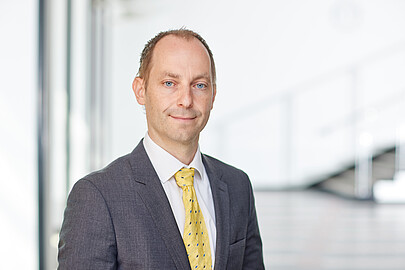
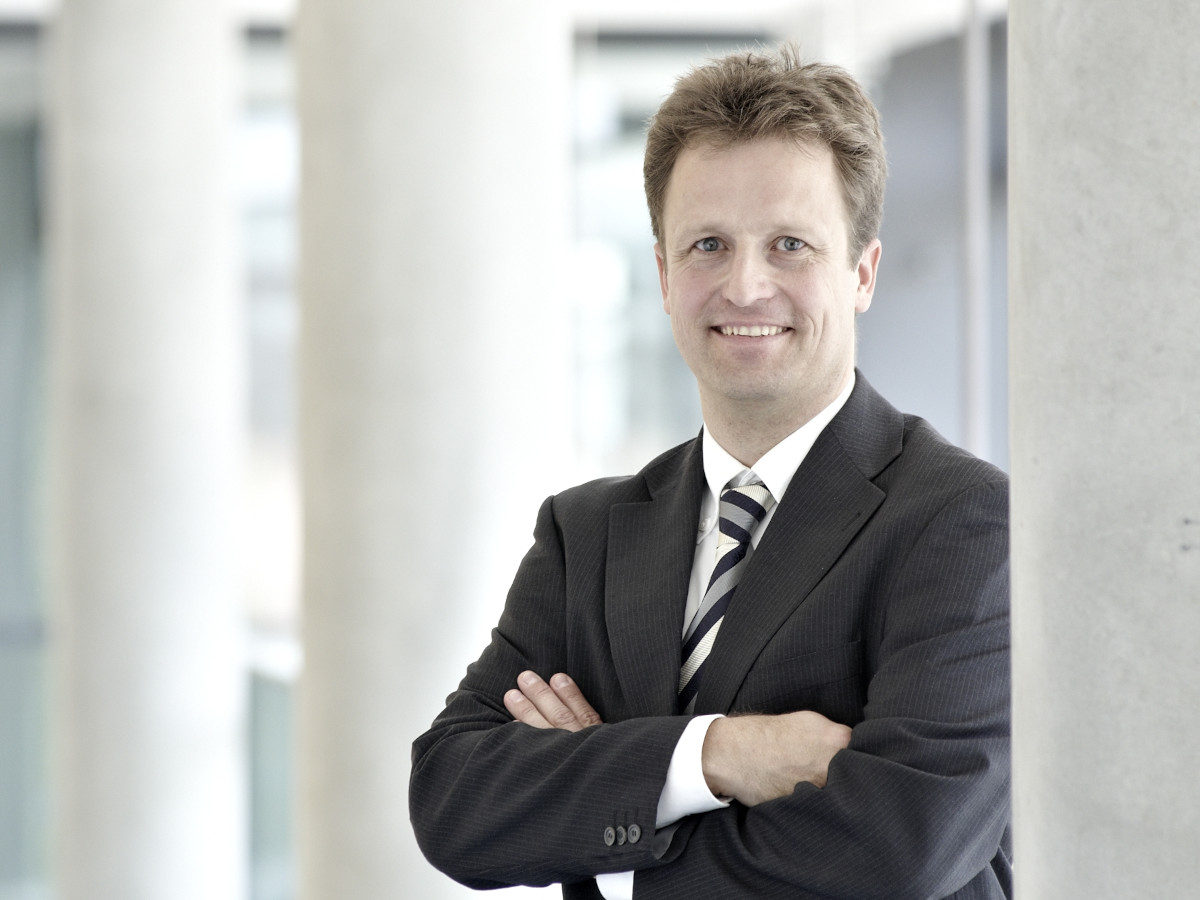
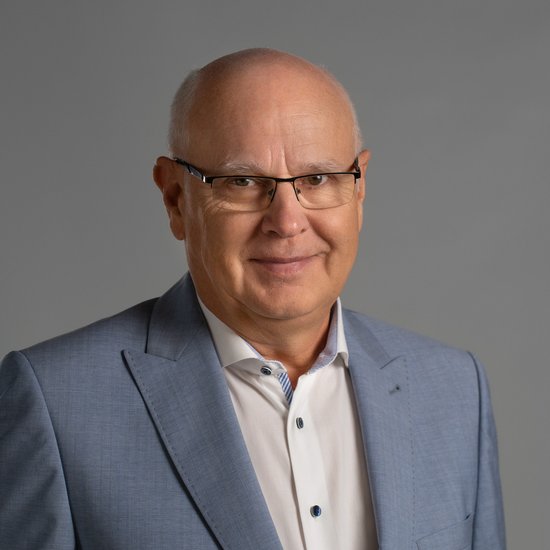
Christian Schlag is a Professor at the Finance Department of Goethe University Frankfurt’s Faculty of Economics and Business , where he also serves as Dean. He leads the Chair of Derivatives and Financial Engineering and coordinates young researchers at the Leibniz Institute for Financial Research SAFE. His research focuses on equilibrium asset pricing, derivative securities, and empirical capital market analysis. Research Trends : Schlag’s recent work explores volatility dynamics, climate risk in asset pricing, return predictability, and investor behavior. His 2023 publications examine time-varying consumption growth risk, equity factors, and individual stock volatility models. Earlier studies (2021–2015) address pricing kernels, welfare costs of temperature volatility, and model mis-specification in hedging. Student Placements : Former advisees hold positions at institutions like the European Central Bank, INSEAD, Australian National University, and Warwick Business School. His Chair of Derivatives and Financial Engineering collaborates with networks across Europe, North America, and Asia.
Thorsten Schmidt is Professor of Mathematical Stochastics at the University of Freiburg, succeeding Prof. Ernst Eberlein in the summer semester of 2015. He also serves as Senior Financial Engineer at MathFinance. Previously, he held professorships at Chemnitz University of Technology (2008-2015), Technical University Munich (2008), and University of Leipzig (2004 onwards). From 2017-2019, he was a Research Fellow at the Freiburg Institute for Advanced Studies (FRIAS) in a joint research group with the University of Strasbourg and USIAS on the topic of Linking Finance and Insurance. His research focuses primarily on financial and actuarial mathematics, stochastic processes, and statistics, with recent work on machine learning methods and their applications in financial mathematics and AI regulation. In Freiburg, his goal with his young team is to tackle complex challenges with improved mathematical models and apply these methodologies to various fields. Key Research Areas: Financial mathematics and credit risks Pricing and hedging of derivative financial products Statistics of stochastic processes Energy markets and nonlinear filter theory Machine learning applications in finance and insurance His recent publications show a strong trend toward integrating machine learning with traditional mathematical finance, particularly in risk management, insurance-finance arbitrage, and robust financial modeling. His work increasingly addresses ethical considerations in AI applications within finance, reflecting his broader interest in responsible AI development. Notable Awards: IDA Award Finance (2015) FRIAS-USIAS Research Fellow (2017/2018) IDA Award Machine Learning and AI (2020) MAPFRE Research Grant (2020) Luis Bachelier Fellow (2021) As Editor-in-Chief of Statistics and Risk Modeling and Associate Editor for Mathematical Finance and International Journal of Theoretical and Applied Finance, Schmidt plays a significant role in academic publishing. He leads the CRC 'Small Data' research center with Harald Binder, focusing on medical problems where disease progression must be estimated with few data points per patient. His LeanAI project, funded by the Vector Foundation, explores the connection between machine learning and theorem-proving software LEAN, aiming to develop AI that can translate between mathematics and formal proof systems. His laboratory work centers around the application of stochastic methods combined with machine learning to solve problems in finance and insurance where data is limited ('Small Data' initiative), with significant funding from DFG (€12 million for CRC Small Data) and the Carl Zeiss Foundation.
Christian Bayer is a Professor of Economics at the University of Bonn , specializing in macroeconomics with a focus on inequality , heterogeneous agent models , and business cycles . His research explores the interplay between economic shocks and income inequality, emphasizing the role of financial frictions in shaping macroeconomic outcomes. Key Research Areas: Macroeconomics, Inequality, Heterogeneous Agent Models, Financial Frictions, Business Cycle Analysis Recent Publication Trends: 2024 work on U.S. business cycle inequality, monetary unions, and pandemic consumption dynamics; 2023 studies on fiscal policy liquidity channels, energy shock responses, and wage determinants. Scientific Awards: Three ERC Grants for inequality research Collaborative Approach: Bayer actively mentors young researchers through international collaborations and peer-to-peer team dynamics, fostering interdisciplinary work with economists like Benjamin Born, Ralph Luetticke, and Moritz Kuhn. He leads projects on topics such as monopsony in East Germany and HANK model applications. Contact: Department of Economics, University of Bonn; christian.bayer@uni-bonn.de
Christoph Breuer is a Professor at the Institute of Sport Economics and Sport Management at the Deutsche Sporthochschule Köln. His work focuses on sports economics, club management, and policy analysis. He leads research initiatives examining sports integrity, club ownership dynamics, and volunteer engagement. Breuer is actively involved in editorial roles for journals such as the Journal of Global Sport Management and Sport Management Review. His research spans over 800 publications, including studies on pandemic impacts on athletes and clubs, sponsorship strategies, and logistics in sports organizations. He has received the SMAANZ Best Conference Paper Award 2024. Key projects include analyzing multi-club ownerships and evaluating prevention measures against sports match-fixing. He advises PhD students like Thomas Breuer and Christoph Pott. His grants include projects funded by third parties, such as the 'Sportentwicklungsbericht' series and investigations into sports integrity. Breuer collaborates internationally, addressing topics like equipment logistics and athlete well-being. His work bridges academic research with practical applications for sports policy and management. Editorial roles: Journal of Global Sport Management, Sport Management Review Key projects: Sport Development Report (SEB 3.0), UEFA EURO 2024 evaluation Media engagements: Over 100 press contributions on topics like sports economics and club financing
Ewa Batyra is an Affiliate Researcher at the Laboratory of Fertility and Well-Being within the Max Planck Institute for Demographic Research (MPIDR). Her work focuses on global demographic patterns related to fertility, family formation, and socioeconomic disparities. Key Research Areas: Fertility dynamics, child marriage, union formation, and the impact of education on demographic transitions. Geographic Focus: Global South, particularly Sub-Saharan Africa and Latin America. Recent Trends: Batyra's publications analyze post-disaster fertility shifts, unintended pregnancy outcomes, and the role of income inequality in delaying parenthood. She employs cross-national datasets and advanced statistical methods like fixed-effects modeling. Collaborations: Works with institutions such as the University of Pennsylvania (Hans-Peter Kohler), University of Oxford (Tiziana Leone), and Brazilian research teams on fertility forecasting.
Prof. Sven Rady is a leading academic at the Department of Economics at the Hausdorff Center for Mathematics , University of Bonn. He serves as a Hausdorff Chair for Mathematical Economics and Deputy Spokesperson for Collaborative Research Centre TR224. Research Interests include dynamic decision problems, equilibrium models, optimal learning, and strategic experimentation, with significant contributions to information economics and stochastic game theory. His work bridges mathematical modeling with economic theory, focusing on markets, learning dynamics, and policy implications. Scientific Awards include Fellow of the Econometric Society (2023) Teaching Awards at the University of Bonn (2021, 2022) CESifo Outstanding Referee Award (2013) Teaching Award of the State of Bavaria (2005) Key Collaborations involve interdisciplinary research at the intersection of economics and mathematics. He leads projects in the CRC TR224 and contributes to HCM initiatives on probabilistic modeling and information economics.
Prof. Dr. Thomas Heidorn is Professor of Banking Management at the Frankfurt School of Finance & Management, where he has served since the institution's foundation in 1991. He directs the Centre for Practical Quantitative Finance and teaches Financial Mathematics, Risk Management, Derivatives, and Treasury courses across Bachelor's and Master's programs. His academic journey includes: High School Diploma (Bloomfield Hills, Michigan, 1977) Abitur (Hannover, 1979) Pre-degree in Economics (University of Hannover, 1981) MA in Economics (University of Santa Barbara, 1983, Fulbright scholarship) Doctoral degree (Christian-Albrechts-University Kiel, 1986) Professor Heidorn's research centers on practical quantitative finance , with expertise in Investment Banking, Risk Management, Capital Markets, and Derivatives. His work spans Hedge Funds, Commodity Investments, ESG Integration, and Corporate Treasury strategies, emphasizing regulatory impacts like Basel III/IV and LIBOR transition. He bridges academic rigor with industry applications through extensive consulting for corporations and public institutions. His publication trends reveal consistent focus on evolving financial landscapes: recent works analyze post-LIBOR derivatives markets, ESG's impact on volatility, corporate hedging frameworks, and Basel regulation mechanics. This reflects his commitment to solving real-world banking challenges through quantitative methodologies. He actively shapes industry standards as: Board member of Reuters Innovation Award Head of Academic Advisory Board for Portfolio Institutionell Award Editor of Knapps Enzyklopädisches Lexikon Leader of DVFA's Expert Group 3 on Structured Product Ratings Professor Heidorn co-manages professional certification programs including the Certified Corporate Treasurer (with VDT) and HVB/Frankfurt School's Junior Exam Markets training. His office hours are Wednesdays 4-5 PM by appointment (Room 3.08).
Dr. Weert Canzler is a senior researcher and head of the Research Group "Digital Mobility and Social Differentiation" at the Berlin Social Science Center (WZB), where he has been affiliated since 1994. His career spans leadership roles including Deputy Chair of WZB's Academic Council (2000-2007), Senior Researcher in Science Policy (2009-2019), and current Speaker of the Leibniz Research Alliance "Energiewende" since 2013. His work critically examines mobility transitions through social science lenses, integrating energy policy, technological innovation, and societal transformation. Dr. Canzler's academic credentials include: Diploma in Political Science (minor in Economics and Law) from the Free University of Berlin (1985) Ph.D. in Sociology from the Technical University of Berlin (1995) Habilitation in Social Science Based Mobility Research from the Technical University of Dresden (2015) His research centers on the societal dimensions of mobility systems, with particular focus on the Energiewende 's impact on transportation. He investigates how digitalization reshapes travel behavior, the cultural entrenchment of automobility, and policy frameworks for equitable mobility transitions. His approach bridges sociology, urban planning, and technology assessment, emphasizing that sustainable mobility requires reimagining social practices alongside infrastructure. Current work analyzes autonomous vehicle fleets, parking policy reforms, and the psychological dimensions of driving freedom in congested cities. Analysis of Dr. Canzler's 2022-2025 publications reveals intensifying focus on post-pandemic mobility patterns and multi-crisis contexts (climate, energy, geopolitical). His scholarship increasingly addresses implementation barriers for autonomous shuttles, the political economy of parking reform, and narrative-building for mobility transitions. A distinctive thread examines winners/losers dynamics in public space reallocation, with growing attention to educational outreach for future mobility literacy. His interdisciplinary methodology combines qualitative analysis with policy evaluation. While specific grant awards aren't documented in available sources, Dr. Canzler's leadership of major research initiatives implies significant funding oversight. As head of a WZB research group and Leibniz Alliance speaker, he directs collaborative projects involving multiple institutions. His extensive co-authorship patterns suggest active mentorship of junior researchers, though formal student advising isn't explicitly referenced in his public profile. Dr. Canzler co-founded WZB's mobility research group in 1998 with Andreas Knie and currently leads the "Digital Mobility and Social Differentiation" team. Through the Leibniz Research Alliance, he coordinates nationwide energy transition research across 18 institutes. His teams maintain strong policy linkages with German federal ministries and international bodies, frequently translating research into practical guidance for urban planners and transport authorities.
Prof. Dr. Marcel Prokopczuk is a full Professor of Finance and Commodity Markets at Leibniz University Hannover, serving as Dean of the Faculty of Economics and Management since 2024. He holds a Ph.D. from the University of Mannheim and is a CFA Charterholder. His research focuses on commodity markets, capital market dynamics, derivatives, risk management, and household financial decisions. Affiliations: Institute of Finance and Commodity Markets, Leibniz Research Centre Energy 2050, Hannover Center of Finance and Insurance (HCFI). Roles: Editor of the Journal of Commodity Markets , Associate Editor of the Journal of Banking and Finance , and Board Member of CEMA. Research Interests: Commodity markets, derivatives pricing, energy finance, risk management, and the impact of historical factors on financial development. He has published extensively in top journals like Review of Economic Studies and Journal of Banking and Finance . Awards: Includes the Deutsche Bundesbank Prize (2024), FIRN Annual Conference Award (2017), and Best Teaching Award (2015). Grants & Advisory: Member of the German Business Foundation and involved in energy policy initiatives. His work bridges academic research with practical applications in financial markets and commodity pricing.
Christian Bayer is a Professor of Economics at the University of Bonn, affiliated with the Department of Economics and the Institute for Macroeconomics and Econometrics. His research spans macroeconomic dynamics, labor economics, and heterogeneous agent modeling, with a focus on inequality, fiscal policy, and business cycles. Research Interests: Macroeconomics, labor economics, income risk, computational economics, fiscal and monetary policy, business cycles. Collaborations: Benjamin Born, Ralph Luetticke, Moritz Kuhn, and others. Recent work explores HANK models , pandemic consumption , and energy shock responses , with applications to policy design. Key trends include integrating heterogeneous agent frameworks and numerical methods to analyze shock propagation and market frictions. Press Contributions: Regular op-eds in Frankfurter Allgemeine Zeitung on wealth distribution, CO₂ pricing, and gas dependency. Projects: Active revisions include "Which Ladder to Climb?" (2019) and "Monopsony Makes Firms..." (2022). He is associated with the Institute for Macroeconomics and Econometrics at the University of Bonn, contributing to policy-focused research and methodological advancements in economic modeling.
Prof. Markus Rudolf is a full Professor of Finance at WHU – Otto Beisheim School of Management since 1998, holding the Chair of Finance. He leads the WHU Center of Asset and Wealth Management and previously served as dean from 2015 to 2023. With a PhD and habilitation from the University of St. Gallen, his expertise spans banking, risk management, derivatives pricing, and Eurozone sovereign risk. He co-edits *Financial Markets and Portfolio Management* and advises major financial institutions such as Boeker & Paul AG. Research focuses include cryptocurrency dynamics, sustainable finance, and systemic risk. Notable contributions analyze market interdependencies, investor behavior, and regulatory frameworks like Basel II/Solvency II. His leadership roles include academic director of the Campus for Finance conference and supervisory board positions at financial firms.
Prof. Dr. Hendrik Scholz is a Professor at the Friedrich-Alexander University Erlangen-Nuremberg (FAU) , holding the Chair of Business Administration with a focus on Finance and Banking. His research spans portfolio management, performance analysis of investment funds, ESG (Environmental, Social, Governance) metrics, and capital market-oriented financial strategies. Education: University of Göttingen, Colorado College Academic Career: Habilitation at KU Eichstätt-Ingolstadt (2007), Senior Academic Councilor (2008–2009) Key research trends include ESG integration, sustainable indices, currency-hedged funds, and corporate credit spread analysis. His work combines empirical methods with machine learning, addressing market anomalies and risk management. Recent publications focus on diversity in corporate boards, fund flow dynamics, and ESG rating impacts. Collaborations with researchers like Greger, Hübel, and Webersinke highlight interdisciplinary approaches.
Benjamin Jung is Professor of Economics at the University of Hohenheim, specializing in international trade, quantitative modeling, and trade policy. He holds a PhD from Eberhard Karls University Tübingen and has held positions at the University of Konstanz, Paris School of Economics, and research fellowships at CESifo and IAW. His research examines trade policy impacts, firm-level trade dynamics, and welfare implications of economic integration. Key awards include the Young Economist Award (2009) and Best Paper Award (2008). RWT Group Dissertation Award FIW Research Conference Best Contribution (2007) GEP Postgraduate Conference Best Paper (2008) Young Economist Award (2009)
Marti G. Subrahmanyam is the Charles E. Merrill Professor of Finance, Economics, and International Business at NYU’s Leonard N. Stern School of Business, and a Global Network Professor at NYU Shanghai. He joined Stern in 1974 and holds a Ph.D. in Finance and Economics from MIT, alongside degrees from IIT Madras (Mechanical Engineering) and IIM Ahmedabad (Business Administration). Both alma maters awarded him Distinguished Alumnus status. His research focuses on corporate securities valuation, derivatives markets, market microstructure, and fixed income markets. He has published over 125 articles in top journals like Journal of Finance , Journal of Financial Economics , and Review of Financial Studies , and authored books such as Financial Options: From Theory to Practice . He serves on editorial boards of leading finance journals and founded the Review of Derivatives Research . Teaching & Mentoring: Teaches across NYU’s undergraduate, graduate, and executive programs. Advised over 80 doctoral committees (chairing 35), with students at top global business schools. Founded Stern’s Undergraduate Honors Program (2000) and NYU Shanghai’s Business Honors Program (2015). Awards: NYU’s Distinguished Teaching Medal (2003), Anneliese Maier Award (2016 – first economist recipient). Consulting & Boards: Advises global financial institutions, corporations, and governments. Board memberships include ICICI Bank (NYSE), Infosys (NYSE), and several startups in India/US. Non-profit roles include Indian School of Business and IIT Madras Foundation. Subrahmanyam’s global academic footprint includes visiting professorships at over 20 institutions worldwide, spanning Europe, Asia, and the Americas. His research emphasizes liquidity dynamics, credit risk, and systemic financial markets challenges.
Marco Wilkens is a full Professor of Finance and Banking at the University of Augsburg, where he has held his position since 2010. He serves as the head of the Chair of Finance and Banking within the Faculty of Economics (Wirtschaftswissenschaftliche Fakultät). Previously, he was Professor of Finance and Banking at the Catholic University of Eichstätt-Ingolstadt from 2001 to 2010. He has held numerous visiting professorships internationally, including at Queen's University (Canada), Macquarie University (Sydney), and the University of Sydney. Wilkens has served as Dean of the Faculty of Business and Economics at the University of Augsburg from 2019 to 2021. Professor Wilkens' research focuses primarily on Sustainable Finance and Climate Finance, with additional expertise in Investment Funds, Interest Rate Risk, Credit Risk, Risk Management, Bank Management, Valuation of Financial Instruments, and Financial Engineering. His work has evolved significantly toward climate-related financial research over the past decade, with numerous publications on carbon risk, sustainable investment strategies, and climate scenario analysis in banking. He has led several major research projects in sustainable finance funded by organizations including BMBF, Stiftung Mercator, and UBA. His recent publications demonstrate a strong emphasis on the practical applications of sustainable finance, with a particular focus on how investment funds can effectively address climate risk. His work examines carbon risk measurement, portfolio decarbonization effects, climate scenario analysis in banking, and the impact of ESG factors on investment performance. Wilkens has been instrumental in developing frameworks for quantifying transition risks in financial markets, as evidenced by his CARIMA (Carbon Risk Management) project. Impact Award of the LIFE Climate Foundation Liechtenstein (2020) Best Paper Award of the Southwestern Finance Association Conference (2018) Highest Impact Award of the Green Summit in Liechtenstein (2017) Multiple Best Teaching Awards for MBA programs at University of Augsburg (2014-2018) Professor Wilkens has supervised over 25 doctoral students to completion and currently mentors several doctoral candidates. He leads a substantial research team at the Chair of Finance and Banking, including multiple research associates and doctoral candidates. His research is supported by significant third-party funding, particularly in sustainable finance projects. Wilkens serves on numerous advisory boards including the Sustainable Finance Advisory Committee of the Federal Government, the bifa environmental institute, and the Foundation for Science of the Sparkassen-Finanzgruppe. He is a founding member of both the Centre for Climate Resilience and the Sustainable Finance Research Platform.