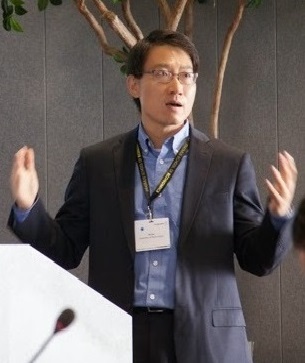
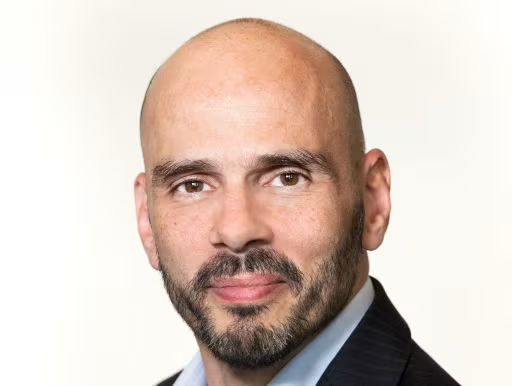
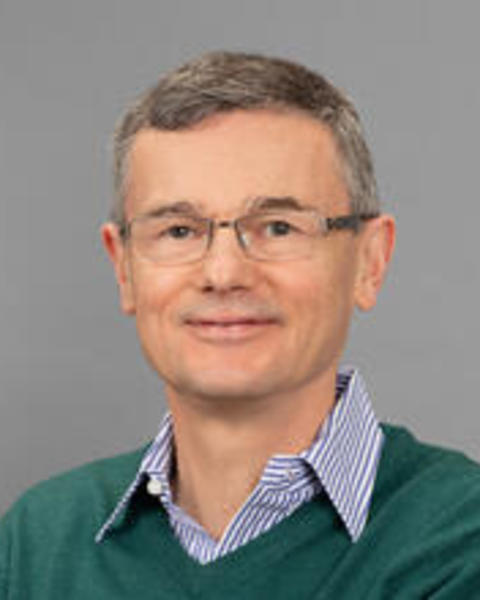
Nikolai Roussanov is the Moise Y. Safra Associate Professor of Finance at the Wharton School, University of Pennsylvania, and a Faculty Research Fellow at the National Bureau of Economic Research. His research spans asset pricing, econometrics, household finance, and macroeconomics, with a focus on market dynamics and behavioral economic factors. His research interests include: Asset pricing anomalies and risk factor modeling Household financial decision-making under uncertainty Macroeconomic impacts on commodity and currency markets Behavioral finance and mental accounting mechanisms Recent publications analyze inflation risks across asset classes, corporate bond valuation, behavioral retirement strategies, and the role of leisure economics in declining work hours. His work frequently integrates empirical finance and econometric methodologies. Scientific contributions include: Faculty Research Fellow, National Bureau of Economic Research His scholarship bridges technical financial modeling with real-world economic phenomena, covering topics like oil price shocks, mortgage liquidity, and systemic market failures.
Zhi Da is the Howard J. and Geraldine F. Korth Chair in Finance and Professor of Finance at the University of Notre Dame , Mendoza College of Business, Department of Finance. He completed his Ph.D. in Finance at Northwestern University’s Kellogg School of Management (2006), preceded by an M.Sc. in Financial Engineering from the National University of Singapore (2001) and a B.B.A. with First-Class Honors (1999) from the same institution. Holding editorial roles at Journal of Finance , Management Science , Review of Financial Studies and several other top journals, he is a leading voice in empirical finance research. Education Ph.D. in Finance, 2006 – Kellogg School of Management, Northwestern University M.Sc. in Financial Engineering, 2001 – National University of Singapore B.B.A. (1st Class Honors), 1999 – National University of Singapore Research Interests Zhi Da’s scholarship sits at the intersection of asset pricing , behavioral finance , and market microstructure . He investigates how investor attention, institutional trading, liquidity frictions, and information flows jointly determine the cross-section of expected returns. His work delves into retail margin trading, the role of pension-fund flows in exchange-rate dynamics, the informational content of SEC filings, and the efficiency of short-selling mechanisms. By combining large-scale data analytics, textual analysis, and structural modeling, he uncovers novel predictors of returns ranging from presidential approval ratings to real-time attention measures. Recent projects explore fractional trading ’s impact on price efficiency, hedging demand as a driver of intraday momentum, and the hidden effort problem in delegated portfolio management. These themes collectively advance our understanding of limits to arbitrage and the formation of extrapolative beliefs. Publication Landscape Spanning 2025 back to 2009, his 15 most recent articles in Journal of Finance , Review of Financial Studies , Management Science , Journal of Financial Economics , and Journal of Financial and Quantitative Analysis converge on three broad motifs: (1) micro-level trading frictions—liquidity costs, margin requirements, and short-selling constraints; (2) macro-finance linkages—exchange rates, fiscal policy, and global capital flows; and (3) information economics—attention allocation, media analytics, and regulatory disclosures. The collective evidence demonstrates that seemingly small trading or informational frictions aggregate into large, persistent cross-sectional return predictability. Honors and Awards 2017 William F. Sharpe Award for Best Paper, Journal of Financial and Quantitative Analysis Lead-article distinctions in Journal of Finance , Review of Financial Studies , and Management Science Featured coverage in SmartMoney and CNBC Teaching & Mentorship At Notre Dame’s Mendoza College, Professor Da teaches Investments (undergraduate and MBA) and Fixed Income Securities , integrating cutting-edge research insights into the curriculum. While specific advisees are not listed, his extensive co-author network (22+ recurring collaborators) attests to a vibrant mentoring environment. Laboratory & Data Resources He publicly distributes the NAT (Net Arbitrage Trading) dataset, a stock-quarter panel of arbitrage positions used in Chen, Da & Huang (2019). This resource has become a standard tool for researchers studying arbitrage capital movements.
Witold J. Henisz serves as Vice Dean and Faculty Director of the Impact, Value, and Sustainable Business Initiative at The Wharton School, University of Pennsylvania, holding the Deloitte & Touche Professorship in Management. His research centers on political and social risk identification, ESG impact materiality, and corporate diplomacy frameworks that transform stakeholder relationships into strategic assets. His educational background includes a Ph.D. in Business and Public Policy from UC Berkeley's Haas School and an M.A. in International Relations from Johns Hopkins SAIS. Henisz has served as Departmental Editor at Journal of International Business Studies and Associate Editor at Strategic Management Journal , reflecting his scholarly influence. Research interests converge on geopolitical risk quantification, stakeholder engagement optimization, and sustainable business model innovation. His work demonstrates how political hazards materially impact firm valuation and how corporate diplomacy can mitigate conflict through strategic stakeholder alignment. Recent publications leverage massive media datasets (4+ billion articles) to model populism dynamics, indigenous land conflicts, and ESG-credit risk linkages. Award highlights include the Aspen Institute Ideas Worth Teaching Award (2020), Iron Prof recognition (2019), and Academy of International Business Fellowship. His geostrategy framework Geostrategy by Design (2024) provides executives with actionable methods for navigating geopolitical volatility. Aspen Institute Ideas Worth Teaching Award (2020) Iron Prof recognition (2019) Academy of International Business Fellow (2014-present) Multiple Wharton Excellence in Teaching Awards (2006-2021) Industry Studies Association Best Paper Award (2019) Henisz consults through PRIMA LLC for multinational firms (Rio Tinto, Shell), financial institutions (Eaton Vance, World Bank), and NGOs. His executive education programs train leaders in ESG integration and geopolitical risk management, while his KEROVKA crisis simulation develops real-time strategic response capabilities. Media frequently cites his expertise on ESG controversies, with 50+ major publications featuring his analysis since 2022 including Financial Times , Bloomberg , and Wall Street Journal .
Olivier David Zerbib is an Assistant Professor of Sustainable Finance at CREST, ENSAE, Institut Polytechnique de Paris, and serves as an Associate Editor for the Review of Finance. His research bridges financial theory with environmental sustainability, focusing on market mechanisms for ecological challenges. His primary research areas include sustainable finance, environmental finance, and asset pricing, with specific expertise in green bonds, biodiversity valuation, and climate impact investing. He investigates how pro-environmental preferences influence pricing mechanisms, develops sustainable asset pricing models, and examines shareholder engagement strategies to curb greenwashing through quantitative methodologies. Analysis of his publications reveals a cohesive trajectory toward integrating environmental metrics into core financial frameworks, with significant contributions spanning green bond markets, sustainable CAPM development, and biodiversity economics. His work demonstrates methodological rigor through score-driven conditional betas and empirical validation across global markets. Dr. Zerbib's scientific recognition includes: #1 most cited article in the Journal of Banking and Finance over 3 and 5 years (2019) SUERF/UniCredit Research Prize (2018) Multiple Best Paper Awards at international finance conferences (2017-2020) European Investment Forum Research Prize Finalist (2021) He co-organizes the CMAP-CREST Quantitative Sustainable Economics and Finance seminar series with Patricia Crifo, Emmanuel Gobet, Peter Tankov, and Gauthier Vermandel, fostering collaboration between Ecole Polytechnique and ENSAE on quantitative approaches to sustainability challenges. His presentation record spans elite institutions including LSE, Yale, and the European Commission Joint Research Center.
Haoran Zhang is an Assistant Professor in the Department of Economics & Finance at Manhattan University. His research focuses on financial markets, corporate finance, and crisis impact analysis. He teaches courses such as Corporate Finance (FIN 324), Insurance and Risk Management (FIN 370), and Fixed Income Analysis (FIN 432). His work explores topics like herding behavior, market regulations, and the effects of financial crises on corporate strategies. With a publication record emphasizing China's financial markets and regulatory interventions, his research bridges theoretical models and real-world market dynamics. He holds no listed awards but has contributed to understanding post-crisis financial futures markets and retail investor behavior. His advising and grants activities are not detailed in the provided materials.
Duane J. Seppi is a Professor of Financial Economics at the Tepper School of Business , Carnegie Mellon University since 2001, currently holding the Richard C. Green Professor chair. His research focuses on market microstructure (price manipulation, limit orders, market liquidity) and derivative pricing for commodities. PhD in Finance from University of Chicago (1988) MBA from University of Chicago (1984) BA from Stanford University (1977) His work bridges financial theory with commodity operations , exploring topics like natural gas storage valuation , electricity price modeling , and merchant commodity asset management . Key publication trends include Nash equilibrium in price impact , latent trading demand analysis , and commodity real options . Scientific awards include: Best Paper Award (2015) WFA/NYSE Prize (2005) George Leland Bach Award (2002) Roger F. Murray Prize (1998) As a dedicated educator , he teaches option pricing , stochastic processes , and algorithmic trading . His editorial board service spans the Journal of Finance , Journal of Financial Markets , and Review of Finance . Duane has held visiting fellowships at the U.S. SEC , University of Vienna , and Nanyang Technical University .
Academic Profile: Damir Filipovic is a Full Professor and the Swissquote Chair in Quantitative Finance at the College of Management of Technology (CDM) of École Polytechnique Fédérale de Lausanne (EPFL), Switzerland. He previously held academic positions at the University of Vienna, University of Munich, and Princeton University, and served as Head of the Vienna Institute of Finance. Research Focus: Quantitative finance, risk management, stochastic processes, term structure modeling, volatility risk, and machine learning applications in financial markets. Industry Collaboration: Co-developed the Swiss Solvency Test for insurance capital requirements while consulting for the Swiss Federal Office of Private Insurance. Publications: Contributed extensively to journals like Journal of Financial Economics, Mathematical Finance, and Annals of Applied Probability, with a textbook on Term-Structure Models. Academic Service: Editorial board member of multiple journals and organizer of advanced workshops on systemic risk and financial technology. Recent Research: His work emphasizes machine learning for portfolio risk management, kernel-based yield curve estimation, and robust stochastic modeling. Keynote speaker at international conferences on finance and insurance mathematics, with over 15 recent publications in 2023-2025 addressing high-dimensional financial problems, neural control systems, and causal inference in market data. Education: Ph.D. in Mathematics from ETH Zurich (2000). Graduate of ETH Zurich and University of Vienna. Teaching & Mentorship: Supervises current and former EPFL Ph.D. students in quantitative finance, including Nicolas Camenzind, Joshua Hayes, Andrea Ruglioni, and ten others. Former students like Damien Ackerer and Lotfi Boudabsa now lead research in risk management. Labs & Programs: Directs EPFL's Finance and Technology Programme, leads the Computational Finance Group (CSF) at EPFL, and contributes to Swiss Finance Institute initiatives. Scientific Leadership: Served on EPFL Committee of Academic Evaluation and Doctoral Program Finance committee.
Professor Francisco Gomes is a Professor of Finance at the London Business School , where he has been a faculty member since 2000. His research focuses on capital markets, asset allocation, household finance, and macroeconomics , with a particular emphasis on life-cycle investing, retirement policy, and risk-sharing mechanisms. BA - Universidade Nova de Lisboa MA/PhD - Harvard University His work has been published in top-tier journals like The Journal of Finance , The Review of Financial Studies , and The American Economic Review . Recent publications analyze automation's impact on wealth dispersion, yield-chasing behavior in household investments, and optimal target-date fund strategies for retirement planning. Professor Gomes is a Research Affiliate of the Centre for Economic Policy Research (CEPR) and co-founded the CEPR Network on Household Finance. His research bridges theoretical models with empirical analysis, often incorporating computational methods (e.g., Fortran/Matlab code for life-cycle models).
Toomas Laarits is an Assistant Professor of Finance at the Leonard N. Stern School of Business, New York University, where he joined in 2019. His research lies at the intersection of asset pricing, financial intermediation, and monetary policy, with a focus on investor behavior, safe assets, and macroeconomic announcements. Education: PhD in Financial Economics, Yale University, 2019 MPhil in Financial Economics, Yale University, 2017 MA in Financial Economics, Yale University, 2016 AB in Mathematics, Harvard University, 2010 His research investigates puzzles in financial markets, such as the pre-FOMC announcement drift, retail investor behavior, and the role of safe assets in times of crisis. By combining empirical analysis with theoretical modeling, he explores how investors interpret public information, the hedging demand for Treasuries, and the impact of fiscal stimulus on equity markets. His interdisciplinary work also extends into financial history, examining the 1930 downturn and the evolution of financial architecture. The most recent research articles show a strong trend toward understanding decision-making under uncertainty, the role of information in asset pricing, and the behavior of retail investors using novel datasets such as browser activity. His work frequently appears in top finance journals and receives media attention from outlets like the Financial Times, Wall Street Journal, and The Economist. Scientific Awards: No awards mentioned in the text. Professor Laarits has advised or collaborated with researchers such as Marco Sammon and has been involved in multiple high-impact projects with leading scholars including Gary Gorton, Viral Acharya, and Robin Greenwood. While no formal grants are listed, the scope and publication record suggest active funding. He teaches Foundations of Finance at the undergraduate level and contributes to the academic life at NYU Stern through research and mentorship. Labs and Research Teams: No formal lab is mentioned. However, his extensive co-authorship network indicates active participation in collaborative research groups focused on financial economics, macro-finance, and market microstructure.
Eugene F. Fama, 2013 Nobel Laureate in Economic Sciences, is the Robert R. McCormick Distinguished Service Professor of Finance at the University of Chicago Booth School of Business. Widely regarded as the "father of modern finance," his work on the efficient markets hypothesis and risk-return relationships has profoundly influenced both academic and investment communities. Bachelor's, Tufts University (1960) MBA and PhD, University of Chicago Graduate School of Business (1964) Fama's research centers on theoretical and empirical finance, focusing on asset pricing models, market efficiency, and portfolio management. His recent publications emphasize factor investing, including the development of five-factor models and the analysis of international market anomalies. Key trends in his scholarship include empirical validation of the Capital Asset Pricing Model (CAPM), international factor analysis, and the distinction between luck and skill in mutual fund performance. His work remains foundational for quantitative finance and investment strategies. Scientific Awards and Fellowships Nobel Prize in Economic Sciences (2013) Deutsche Bank Prize in Financial Economics (2005) Morgan Stanley American Finance Association Award for Excellence in Finance (2007) Onassis Prize in Finance (2009) Chaire Francqui (1982) Nicholas Molodovsky Award from CFA Institute (2006) Fred Arditti Innovation Award (2007) Fellow of the American Finance Association (2001) Fellow of the Econometric Society Fellow of the American Academy of Arts and Sciences Fama serves as Advisory Editor for the Journal of Financial Economics and has mentored numerous PhD students through his academic career. His research continues to shape financial theory and practice, with ongoing analysis of market efficiency and factor-based investing.
John Y. Campbell is the Morton L. and Carole S. Olshan Professor of Economics at Harvard University, affiliated with the Department of Economics within the Faculty of Arts and Sciences. He is on leave during Fall 2024 and Spring 2025. His research focuses on financial economics and macroeconomics, including asset pricing, household finance, and portfolio choice. Campbell has authored influential books such as Fixed: Why Personal Finance is Broken (2025) and Financial Decisions and Markets (2018). He served as President of the American Finance Association (2005), delivered the American Economic Association’s Ely Lecture (2016), and holds honorary doctorates from multiple institutions. His roles include Research Associate (former Director) at NBER’s Program in Asset Pricing, and board member of Arrowstreet Capital, a quantitative asset management firm. Education: Honorary doctorates from BI Norwegian Business School, Maastricht University, University of Paris Dauphine, and Copenhagen Business School. Professional affiliations include Fellowships with the Econometric Society, American Academy of Arts and Sciences, British Academy, and honorary fellowships at Oxford’s Corpus Christi College. Research interests emphasize asset pricing dynamics, macroeconomic influences on financial markets, and household financial decision-making. His work integrates empirical methods to address policy-relevant questions in consumer finance and institutional investing. Recent trends in his publications focus on systemic risk, mortgage market design, and sustainable long-term investment strategies. Key contributions include analyzing fiscal policy impacts, equity valuation frameworks, and behavioral biases in household finance. Scientific awards highlight his academic leadership: multiple honorary degrees, prestigious fellowships, and recognition in global economic institutions. His advisory roles extend to policy-making via the Squam Lake Report (2010) and co-founding Arrowstreet Capital, applying academic insights to practical asset management challenges. Grants and advising: Campbell’s research has been supported by NBER and institutional partnerships. He advises on macroeconomic stability, financial regulation, and university endowment management strategies. His work often bridges theory and practice, influencing both academic discourse and real-world financial systems.
Xiaoping Lu is an Associate Professor at the School of Mathematics and Applied Statistics, University of Wollongong, Australia. She has served as Academic Program Director for the Bachelor of Mathematics (Advanced) program since 2008 and holds an ORCID identifier (0000-0003-1090-8437). Her research focuses on applied mathematics and financial mathematics, particularly in option pricing, stochastic volatility models, and computational finance. Research Themes: Transaction cost modeling, regime-switching financial markets, numerical methods for PDEs, utility-indifference valuation, and stochastic optimization algorithms. Awards: 2024 AustMS-WIMSIG Anne Penfold Street Award 2024 Cheryl E. Praeger Travel Award Leadership: President of the Asia Pacific Consortium of Mathematics for Industry (APCMfI) since 2024; leadership roles in ANZIAM and WIMSIG committees. Teaching: Coordinated courses like MATH142, MATH141, and MATH283; currently available for PhD supervision in topics including financial derivatives and stochastic liquidity risk. Funding: Contributed to grants like 'The AI Tutor' (2024) and industry partnerships for advanced mathematics education.
Prof. Michael HALLING is a Full Professor in Sustainable Finance at the University of Luxembourg's Faculty of Law, Economics and Finance, Department of Finance. His work focuses on sustainable finance, corporate finance dynamics, climate risk assessment, and financial regulation. He holds the prestigious Chair in Sustainable Finance and has published extensively on topics like MiFID II compliance, mutual fund fee structures, and post-pandemic market recovery. Contact: michael.halling@uni.lu Research Interests : Prof. HALLING’s research bridges theoretical finance with practical applications, emphasizing sustainable investment practices, corporate debt management, and regulatory frameworks. Key themes include: Climate risk modeling using public news sentiment analysis Impact of behavioral preferences on corporate investment decisions Automated compliance systems for financial institutions Market dynamics during crises (e.g., pandemic effects on capital access) Recent Publications Trends : Recent works analyze MiFID II regulatory impacts (2024), stochastic modeling of corporate investment (2023), and firm-specific climate risk quantification. His 2020 studies explored pandemic-driven shifts in corporate financing strategies. Awards : No awards explicitly mentioned in the provided texts. Grants & Advising : No student advisees or grant details provided in available data. Labs/Teams : No specific research group affiliations listed.
Cody Hyndman is a Full Professor and Acting Department Chair at the Department of Mathematics and Statistics, Concordia University, with a focus on Mathematical Finance, Machine Learning, and Stochastic Analysis. He has held significant administrative roles including Department Chair (2017–2023) and Acting Graduate Programs Director (2025–2025). Education: PhD, University of Waterloo (2005) MSc, University of Alberta BCom, University of Alberta His research spans Mathematical Finance , Stochastic Differential Equations , and Machine Learning , with notable contributions to arbitrage-free modeling, neural networks, and computational methods. Recent publications emphasize geometric deep learning and regularization techniques in finance. Scientific Awards: 2023: Concordia Academic Leadership Award Hyndman supervises graduate students in Mathematics and Statistics and co-founded the NSERC CREATE Program on Machine Learning in Quantitative Finance and Business Analytics (FIN-ML) , fostering industrial internships and interdisciplinary training.
Marti G. Subrahmanyam is the Charles E. Merrill Professor of Finance, Economics and International Business at the Leonard N. Stern School of Business, New York University , and a Global Network Professor of Finance at NYU Shanghai . He holds a PhD in Finance and Economics (MIT, 1974) , a post-graduate diploma from the Indian Institute of Management, Ahmedabad (1969) , and a B.Tech. in Mechanical Engineering from IIT Madras (1967) , where he has also served as a visiting professor. His career spans over five decades, with editorial roles at top journals like Journal of Finance and Review of Financial Studies . Research Focus : Derivatives markets, corporate finance, fixed income, market microstructure, ESG investing, and quantitative easing. Academic Leadership : Founded NYU Stern and NYU Shanghai Undergraduate Honors Programs, served on over 85 doctoral committees, chaired 35. Scientific Awards : New York University Distinguished Teaching Medal (2003) Anneliese Maier Award (2016) - First economist to receive this honor Distinguished Alumnus Awards from IIT Madras (2004) and IIM Ahmedabad (2011)