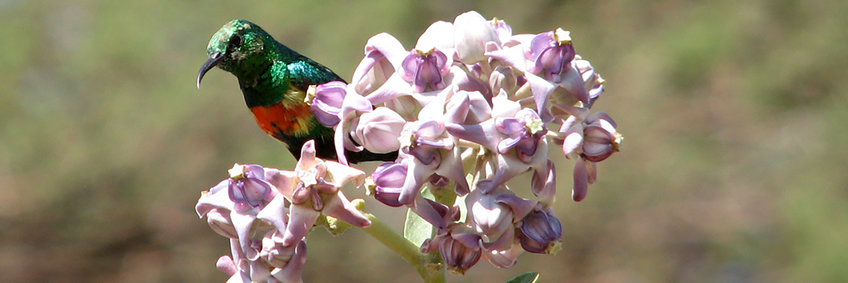
Maude Baldwin is the Director of the Evolution of Sensory and Physiological Systems department at the Max Planck Institute for Biological Intelligence. Her research focuses on the molecular and physiological mechanisms underlying sensory receptor evolution in vertebrates, particularly in birds. Education : Ph.D. from Harvard University (Department of Organismic and Evolutionary Biology, 2007-2014); B.A. from New York University (Gallatin School of Individualized Study, 2005). Research Interests include: Evolution of taste receptors, such as the repurposing of savory receptors for sweet detection in hummingbirds. Convergent evolution in sensory systems across vertebrates. Integrative approaches combining molecular methods, cell culture, and behavioral studies. Impact of dietary shifts on ecological and physiological adaptations. Publication Trends reveal a focus on comparative genomics , protein evolution , and sensory system adaptation , with specific attention to bird taste receptors , gene loss , and echolocation genetics . Labs & Teams : Baldwin leads a multidisciplinary team at the Max Planck Institute, recruiting researchers in comparative genomics , organoid technology , and vertebrate natural history . The group investigates sensory-diet coevolution and physiological trade-offs.
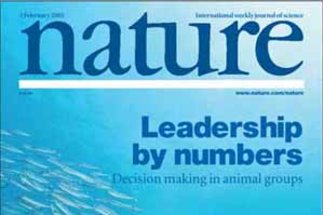
Jens Krause is a Professor and Head of Department at the Leibniz Institute of Freshwater Ecology and Inland Fisheries (IGB) in Berlin, leading the Research Group on Mechanisms and Functions of Group-Living. He holds a full professorship in Fish Ecology at Humboldt-Universität zu Berlin, Faculty of Life Sciences, Thaer-Institute, and since 2018 has been an Adjunct Professor at Technical University Berlin within the Excellence Cluster 'Science of Intelligence'. His research is centered on collective intelligence, social networks, decision-making, and behavioural ecology in fish and other animals. Full Professor in Fish Ecology, Humboldt-Universität zu Berlin Adjunct Professor at Technical University Berlin (since 2018) Head of Department, IGB Berlin PhD, University of Cambridge Diploma, Free University Berlin His work integrates experimental biology, network analysis, and biomimetic robotics to understand how animals make collective decisions. His expertise spans animal behaviour, evolution, and ecological physiology, with a strong focus on group-living dynamics. Recent research explores group hunting, predator evasion, social foraging, and the impact of environmental stressors on collective behaviour. The analysis of his recent publications reveals a strong trend in understanding collective behaviour in fish, including escape waves, social foraging, group hunting in marlins and sailfish, and the use of robotic agents to study social integration. His interdisciplinary approach combines marine biology, physics, robotics, and data science to uncover the mechanisms behind collective intelligence in both animal and human systems. Editorial Board, Behavioral Ecology Editorial Board, Fish and Fisheries Executive Board, Excellence Cluster 'Science of Intelligence' Advisory Board, Bimini Biological Field Station Foundation He advises numerous PhD students and postdoctoral researchers, and leads major research projects, including 'Developing exploration behaviour' funded by the Excellence Cluster. His work has been supported by extensive collaborations across Europe and North America, and he frequently publishes in top-tier journals such as Nature , Science Advances , Proceedings of the Royal Society , and Current Biology . His lab employs cutting-edge methods including automated tracking, social network analysis, and interactive robotics to study animal groups. His research group, 'Mechanisms and Functions of Group-Living', is embedded within the Excellence Cluster 'Science of Intelligence', where they investigate collective cognition, social information use, and the role of individual differences in group performance. The team combines field studies with laboratory experiments and computational modelling to understand the evolution and function of collective behaviour across species.
Prof. Iain D. Couzin is Director of the Max Planck Institute of Animal Behavior and holds a Professorship in Biodiversity and Collective Behavior at the University of Konstanz. He co-leads the German Research Foundation (DFG) Excellence Cluster “Centre for the Advanced Study of Collective Behaviour” and previously served as a full Professor in Princeton University’s Department of Ecology and Evolutionary Biology. His research focuses on uncovering the principles of collective behavior across biological scales, from neural networks to animal swarms and human societies. Research interests span experimental and theoretical approaches, leveraging cutting-edge technologies like AI-driven behavioral analysis and virtual reality for animals. These methods enable studies on coordination mechanisms in systems such as fish schools, locust swarms, and primate groups, with applications to robotics and social sciences. Key awards include the Leibniz Prize (Germany’s highest research honor), Royal Society Fellowship, and multiple citations as a Highly Cited Researcher. His leadership roles include directing interdisciplinary teams at the Max Planck Institute and the Konstanz Excellence Cluster, fostering collaborations across physics, computer science, and biology. Awards: Royal Society Fellowship (2025), Leibniz Prize (2022), Fyssen Prize (2024), Lagrange Prize (2019) Labs/Teams: Collective Behavior Lab (Max Planck Institute), Centre for the Advanced Study of Collective Behaviour (DFG Cluster)
Sven Würtz is a Research Group Leader in the Department of Fish Biology, Fisheries and Aquaculture at the Leibniz Institute of Freshwater Ecology and Inland Fisheries (IGB), Berlin. He leads the Molecular Fish Physiology research group, focusing on sustainable aquaculture, reproductive biology, stress, and nutritional physiology in fish. His research interests include Aquaculture Reproductive biology Stress physiology Nutritional physiology Molecular fish physiology Animal welfare in aquaculture Conservation of endangered fish species His recent publications reflect a strong trend in molecular and physiological research applied to aquaculture species such as sturgeon, pikeperch, tilapia, and turbot. Key themes include genomics of sex determination, stress responses, nutritional interventions (probiotics, creatine, carotenoids), animal welfare in RAS and crustacean farming, and responses to environmental stressors like algal toxins and nitrate. His work combines laboratory experimentation with field applications and policy-relevant outputs. Scientific contributions and projects include: Lead author on studies on shrimp and fish welfare Co-leader of the STURGEoNOMICS and CrustaWohl projects Contributor to IGB fact sheets on the Oder River environmental disaster Extensive collaboration with national and international researchers He mentors junior researchers and collaborates on projects involving grants and interdisciplinary teams. His work is often applied, aiming to improve aquaculture practices and conservation efforts. He is actively involved in research groups focusing on molecular mechanisms in fish and ecosystem resilience.
Dr. Matthew James Slater is the Head of the Aquaculture Research Group at the Alfred Wegener Institute, focusing on sustainable marine bioeconomy. His work emphasizes integrated multitrophic aquaculture (IMTA), holothurian ecology, and economic development through aquaculture. He leads applied research with industry partners to develop sustainable feed solutions and improve aquaculture practices. Research interests include optimizing feed ingredients from by-products (e.g., black soldier fly larvae, shrimp processing remains) and exploring the ecological roles of sea cucumbers. He investigates the effects of environmental factors (soundscapes, light, temperature) on aquatic species and promotes circular economy principles in aquaculture. Key contributions span over 60 peer-reviewed publications, with recent work on microplastic contamination in fish and the economic value of small-scale fisheries. His research integrates interdisciplinary approaches to address global challenges in aquaculture sustainability and food security. Contact: matthew.james.slater@awi.de | +49(471)4831-2727 | Alfred Wegener Institute, Bussestraße 27, 27570 Bremerhaven
Dr. Pablo Oteiza serves as Research Group Leader at the Max Planck Institute for Biological Intelligence in Martinsried, Germany, where he leads the Flow Sensing research group. Previously, he was Group Leader at the Max Planck Institute for Ornithology (2019-2024) and Research Associate there (2016-2019). His academic journey includes a postdoctoral fellowship at Harvard University's Department of Molecular and Cellular Biology and Center for Brain Science (2010-2016), and graduate studies at Universidad de Chile and the Max Planck Institute for Molecular and Cellular Biology (2004-2010). Dr. Oteiza's research program investigates how aquatic animals sense and respond to their hydrodynamic environment. His quantitative behavioral approach seeks to understand the fundamental principles governing flow navigation in fish and amphibians. His work spans sensory biology, neuroscience, biomechanics, and evolutionary biology, with zebrafish serving as a primary model organism. His research bridges physical hydrodynamics with biological sensory mechanisms, exploring how organisms extract meaningful information from fluid movements. Analysis of Dr. Oteiza's publications reveals a research trajectory evolving from developmental biology toward specialized sensory mechanisms. His work in high-impact journals demonstrates consistent focus on sensory systems across multiple scales - from cellular and molecular mechanisms to whole-organism behavior. His research shows particular strength in connecting physical stimuli with neural processing and behavioral outputs, especially in aquatic environments. As Research Group Leader, Dr. Oteiza oversees a laboratory investigating fundamental questions about hydrodynamic sensing. His team employs advanced techniques to study neural circuits, sensory processing, and behavioral responses to water flow, contributing significantly to our understanding of how organisms interact with their fluid environments. His collaborative work extends across international institutions, reflecting the interdisciplinary nature of his research.
Oliver Deussen is a Professor of Visual Computing at the University of Konstanz, recognized by the German Informatics Society (GSI) as a Fellow for his contributions to computer science. His research focuses on visualization, robotics, and environmental modeling, particularly in plant and landscape representation. He has pioneered methods in image manipulation and robotic painting, emphasizing digitalization's societal impacts. His work spans computational biology (e.g., schooling fish behavior) and AI-driven creative technologies. Research Interests: Visualization techniques, swarm behavior analysis, robotic creativity, and interdisciplinary applications of computer science. He explores how computational methods can model natural systems and enhance human-machine interaction. Awards: Fellow of the German Informatics Society (GSI) His research often bridges theory and practice, with contributions to SLAM frameworks, style transfer algorithms, and uncertainty visualization tools. Collaborations in robotics and biology reflect his commitment to applied computational research.
Professor Florian Diekert is a Professor of Environmental Economics at the University of Augsburg's Faculty of Business and Economics and a member of the Centre for Climate Resilience. He leads the Environmental Economics Lab, which focuses on designing, analyzing and testing strategies for sustainable and resilient development, with particular emphasis on socio-ecological systems under pressure and group decisions under strategic and natural uncertainty. Professor Diekert received his education from the Technical University Dresden (International Relations) and the University of Oslo (MPhil in Economics, PhD in Economics in 2011). His research employs economic experiments, theoretical modeling, and statistical analysis, often in interdisciplinary collaborations with natural scientists. Prior to joining the University of Augsburg in 2023, he was a Junior Professor in Heidelberg and conducted research visits at Columbia University and UC Santa Barbara. His research spans Environmental Economics , Resource Economics , and Behavioral Economics , with specific focus on socio-ecological systems, group decision-making under uncertainty, lab-in-the-field experiments, social norms, and early warning systems for ecological tipping points. His work integrates theoretical insights with practical applications for sustainable development policy, often through interdisciplinary collaborations with natural scientists. Professor Diekert's publication record reveals a consistent trajectory of high-impact research on climate resilience, fisheries management, and collective action problems. His recent work increasingly incorporates experimental methods to investigate how environmental conditions shape economic behavior across different cultural contexts (Chile, Norway, Tanzania), and how policy interventions can improve sustainability outcomes through behavioral insights. ERC Starting Grant 'NATCOOP' for research on how nature shapes preferences and incentives of economic agents and how this affects common-pool resource management Professor Diekert advises multiple doctoral students and leads a vibrant research team including postdoctoral researchers and doctoral candidates. His Environmental Economics Lab actively participates in major international conferences such as the Global Tipping Points Conference, Nordic Annual Environmental and Resource Economics Workshop, and European Association of Environmental and Resource Economists conference, demonstrating strong international engagement in his field. The Environmental Economics Lab at the University of Augsburg brings together economists, natural scientists, and policy experts to address pressing sustainability challenges through interdisciplinary research. The lab conducts both theoretical and experimental work, with field studies in various international contexts including Chile and Tanzania, and maintains strong connections with other research institutions across Europe and beyond.
Thomas Klefoth serves as Professor of Ecology and Nature Conservation and Fisheries Biologist at Bremen University of Applied Sciences, where he heads the ISTAB program (Institute for Sustainability and Environmental Management in Bremen). His expertise spans freshwater ecosystems, particularly gravel pit lakes, integrating fisheries science with biodiversity conservation and recreational angling management. His research focuses on ecological dynamics in small lake systems, examining angler behavior, habitat management, and species conservation. Key interests include ontogenetic niche shifts in fish, crayfish population viability, telemetry-based movement ecology, and socio-ecological aspects of environmental stewardship. His work consistently bridges empirical lake studies with stakeholder engagement to develop sustainable water management practices. Analysis of his recent publications reveals a strong interdisciplinary trend combining biotelemetry, experimental ecology, and social science methodologies. His research demonstrates how ecosystem-based approaches outperform single-species management, particularly in recreational fisheries contexts, while addressing contamination impacts and biodiversity-service trade-offs in human-dominated aquatic landscapes. Professor Klefoth leads multiple externally funded projects through 2028, including initiatives on sustainable water management by fishing clubs, campus greening, municipal biodiversity strategies, and organofluorochemical contamination. His advisory roles include service on the Lower Saxony Animal Welfare Advisory Board (2012-2020), Hameln Fishing Cooperative (as 2nd Deputy Chairman, 2015-2020), and Dümmer Advisory Board (2012-2015), demonstrating active integration of research with policy implementation.
R. Wirth is a senior researcher in the Department of Geochemistry at the Deutsches GeoForschungsZentrum (GFZ), Potsdam, Germany, specifically within the 3.5 Interface Geochemistry group. Previously, he was affiliated with the 3.6 Chemistry and Physics of Earth Materials group at the same institution. He is actively engaged in cutting-edge research involving nanoscale analysis of geological materials using transmission electron microscopy (TEM) and other advanced microanalytical techniques. The research interests of R. Wirth span a broad range of topics in geochemistry and mineralogy, including interface geochemistry, shock metamorphism, hydrothermal alteration, nanomineralogy, high-pressure mineral physics, and the formation and transformation of Earth materials. His work frequently addresses fundamental questions in petrology, economic geology, and planetary science, often focusing on the micro- to nano-scale processes that govern mineral behavior under extreme conditions. An analysis of Wirth's recent publications reveals a strong trend toward interdisciplinary geochemical research, combining advanced analytical methods with field and experimental studies. His work often involves collaboration with international teams and contributes to understanding geological processes such as impact cratering, mantle metasomatism, ore formation, and fossilization. The keywords and subfields from his articles highlight a consistent focus on microstructures, phase transitions, fluid-rock interactions, and the application of high-resolution microscopy in Earth sciences. R. Wirth has made significant contributions to the scientific community through his extensive publication record in high-impact journals such as Geology , American Mineralogist , and Contributions to Mineralogy and Petrology . His research has advanced the understanding of mineral behavior at the nanoscale, with implications for resource exploration, planetary science, and fundamental geochemical processes. Although no specific grants or advising roles are mentioned in the provided text, his collaborative publication pattern suggests an active role in research teams and scientific networks. His laboratory work is centered on advanced electron microscopy techniques at GFZ, where he likely leads or is a key member of a research team specializing in nanogeoscience. The consistent use of TEM, EELS, and microdiffraction in his studies indicates a well-equipped and specialized laboratory environment focused on high-resolution characterization of geological materials.
Julijana Gjorgjieva is a Professor at the Technical University of Munich, affiliated with the Graduate School of Systemic Neuroscience (GSN) and the Munich Center of Neuroscience (MCN). Her research focuses on theoretical approaches to understanding neural circuit organization during development and learning through synaptic plasticity mechanisms. Primary Research Focus: Theoretical Neuroscience & Technical Applications Secondary Research Focus: Cellular & Systems Neuroscience Her work examines synaptic plasticity, neural network dynamics, and cortical organization. Recent studies include inhibitory plasticity models, dendritic synaptic organization, and spontaneous activity in visual cortex development. She collaborates across sensory cortex research in mammals, flies, and fish. Publications highlight computational neuroscience methodologies applied to cortical dynamics, developmental neuroscience, and spike-timing-dependent plasticity. Her research integrates theoretical modeling with empirical data to analyze neural circuit behavior. She is a member of the GSN Scientific Board and contributes to academic leadership in computational neuroscience.
Ricardo Benavente is an Extraordinary Professor and Academic Director in the Department of Cell and Developmental Biology at the University of Würzburg's Biocenter. He leads the Benavente Lab, focusing on meiotic processes and synaptonemal complex (SC) structure. His career includes a Dr. med. from the University of Heidelberg, a habilitation (Dr. rer. nat. habil.), and postdoctoral work as an Alexander von Humboldt Fellow at the German Cancer Research Center. Research interests center on the functional organization of the cell nucleus during meiosis, particularly the synaptonemal complex and telomere dynamics. Techniques used include super-resolution microscopy and electron tomography, applied to mouse models and comparative studies across metazoans. Key findings include insights into SC protein conservation and meiotic chromosome behavior. Publications highlight structural studies of SC components (e.g., SYCP proteins), telomere-nuclear envelope interactions, and evolutionary aspects of meiosis. He contributed to the Latin-American Academy of Sciences since 2001 and collaborates with institutions like Uruguay's Clemente Estable Institute. His work bridges molecular mechanisms of meiosis with evolutionary biology, emphasizing structural and functional insights into genetic variability.
Dr. Franz Hölker is a Senior Scientist and Research Group Leader at the Leibniz-Institute of Freshwater Ecology and Inland Fisheries (IGB Berlin) and holds the position of Associate Professor (Privatdozent) in Zoology at the Department of Biology, Chemistry and Pharmacy, Freie Universität Berlin. Since 2022, he has served as Programme Area Speaker for 'Aquatic Biodiversity in the Anthropocene' at IGB Berlin, leading research on ecological responses to anthropogenic pressures. Leibniz-Institute of Freshwater Ecology and Inland Fisheries (IGB Berlin): Senior Scientist, Research Group Leader since 2008 Freie Universität Berlin: Associate Professor (Privatdozent) for Zoology since 2009 2012-2017: Deputy Head of Department Ecohydrology, IGB Dr. Hölker earned his Diploma in Biology from the University of Hamburg in 1992, completed his doctorate there in 1999 on fish bioenergetics in eutrophic lakes, and achieved his Habilitation at Humboldt-Universität zu Berlin in 2007 with research bridging ecology, behavior, physiology, and modeling in aquatic food webs. Dr. Hölker's research primarily focuses on freshwater ecology with particular expertise in light pollution, ecophysiology, night ecology, ecological modeling, and citizen science. His work investigates how artificial light at night (ALAN) affects aquatic ecosystems, including impacts on fish physiology, insect behavior, and broader ecological community dynamics. He has pioneered research on the ecological consequences of skyglow and developed methodologies for measuring and assessing ecological light pollution. His research group at IGB Berlin employs a combination of field measurements, laboratory experiments, and modeling approaches to understand how light pollution alters species interactions, community composition, and ecosystem functioning in aquatic environments. His extensive publication record demonstrates a consistent focus on understanding anthropogenic impacts on freshwater systems. Recent work shows increasing emphasis on interdisciplinary approaches, combining ecological field studies with modeling techniques to address complex environmental challenges. His research spans from organism-level physiological responses to ecosystem-level consequences of light pollution, with growing attention to conservation applications and citizen science engagement. The trend in his publications reveals expanding scope from fish ecology to broader ecosystem impacts, with increasing international collaboration and policy relevance. Dr. Hölker has led significant research projects examining the impacts of artificial light at night on freshwater ecosystems, often involving international collaborations across Europe. His work has contributed to policy discussions on sustainable lighting practices through participation in projects like the 'White Paper Citizen Science Strategy 2030 for Germany' and collaborations with lighting professionals to develop ecologically sustainable outdoor lighting guidelines. He leads a research team investigating the ecological impacts of light pollution, with particular focus on how artificial lighting affects nocturnal processes in freshwater ecosystems. His group has developed innovative methodologies for measuring ecological light pollution and has conducted extensive field and laboratory studies to document the impacts of different light spectra and intensities on aquatic organisms. The team's work has significant implications for conservation biology, particularly regarding the protection of nocturnal biodiversity in increasingly illuminated landscapes.
Dr. Sonja Zimmermann is a Senior Researcher at the Faculty of Biology, University of Duisburg-Essen , specializing in Aquatic Ecology . With over 20 years of experience in research and teaching, her work focuses on the environmental behavior, bioaccumulation, and toxicological effects of pollutants—particularly platinum group elements (PGEs: platinum, palladium, rhodium) from automotive catalysts—in aquatic ecosystems. She combines field studies, laboratory toxicity tests, and biomarker assays to investigate metal exposure and effects in organisms like zebra mussels, fish, and parasites. Research Areas : Ecotoxicology, Environmental Chemistry, Parasitology, Metal Toxicity, Aquatic Pollution, and Environmental Monitoring. Projects : Principal investigator in the German-South African Cooperation project PGEAquaTox . Her publications span over 40 peer-reviewed articles and book chapters, emphasizing PGEs' ecological impacts and innovative monitoring tools like artificial mussels. She serves as a reviewer for 20+ journals and teaches in the International Master's Program in Environmental Toxicology and Bachelor's Program in Biology , covering lectures, seminars, and practical courses.
Felix Mittermayer is a researcher at the Helmholtz Centre for Ocean Research Kiel (GEOMAR), affiliated with the Marine Evolutionary Ecology group within the Marine Ecology Division. He has been actively conducting climate change impact research since 2014, with institutional affiliations including the BONUS BIO-C3 project, Integrated School of Ocean Sciences (ISOS), and the Linnaeus Centre for Marine Evolutionary Biology (CeMEB). His research focuses on climate change impacts on marine organisms, particularly fish eggs and larvae. Using experimental ecology combined with genetic and genomic methods, he investigates organismal resilience and adaptation potential, with special emphasis on ocean acidification effects on Atlantic cod larvae. Key methodologies include transcriptomic analysis, epigenetic studies, and transgenerational experiments to assess adaptive capacity under changing ocean conditions. Mittermayer's publication record demonstrates significant contributions to understanding climate-driven changes in marine ecosystems, particularly regarding Baltic Sea species distributions, cod larval survival, and sprat population dynamics. His collaborative research spans multiple European institutions through EU-funded projects like BIO-C3. His academic journey includes: Bachelor in Marine Sciences (2010, University of Gothenburg): Focused on sprat reproductive biology Master in Marine Science (2013, University of Gothenburg): Sequencing aspartate aminotransferase gene in North Atlantic Littorina Mittermayer actively disseminates research through conference presentations at venues including the CeMEB Assembly and Fisheries Society of the British Isles symposiums, with particular emphasis on mate choice effects, transcriptomic responses, and epigenetic mechanisms in cod facing ocean acidification.