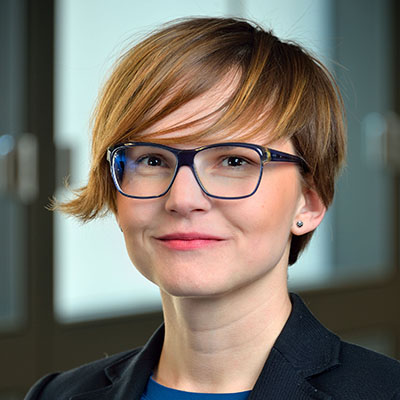
Vivek Amin is an Assistant Professor in the Department of Physics at Indiana University. His research focuses on theoretical investigations of condensed matter systems, particularly spintronics and spin-orbit torque mechanisms. He explores how spin and magnetic moments of electrons can be harnessed for information processing and storage, including applications in magnetic memories and neural networks. Education: B.S. in Electrical Engineering, University of Texas at Austin, 2006 Ph.D. in Physics, Texas A&M University, 2014 Research Interests: Spintronics and low-power spintronic devices Spin-orbit torque in materials like topological insulators and ferromagnets Design of spin-based neural networks Quantum materials and their magnetic properties Recent work includes studying interface-generated spin currents and their applications in energy-efficient computing. Awards: None explicitly listed in the provided text. Advising & Grants: No advisees or grants detailed in the text. His research is supported through institutional and collaborative efforts. Labs/Teams: Not specified in the provided materials.
Fernando Manuel da Silva Nogueira is an Associate Professor at the Department of Physics, Faculty of Sciences and Technology, University of Coimbra. He holds a PhD in Theoretical Physics from the same institution (1999) and has been a faculty member since 1990. His research focuses on materials discovery using ab-initio methods , computational physics, and development of scientific software tools like Octopus and APE . He leads the Condensed Matter Physics group at CFisUC (Centro de Física da Universidade de Coimbra) and has been Director of the Portuguese Physics Olympiad (2007-2018). Education: PhD in Theoretical Physics (1999), University of Coimbra MSc in Theoretical Physics (1993), University of Coimbra BSc in Physics (1990), University of Coimbra Research interests include computational materials science , nonlinear optics , density functional theory , and electronic structure calculations . He has authored 40+ peer-reviewed articles, 3 books, and directed over 25 research projects. His work spans topics like carbon nanotube properties, firefly bioluminescence mechanisms, and high-throughput materials discovery. He has organized 25+ conferences, advised 3 PhD students and 17 MSc students, and contributed extensively to open-source computational physics software. His ORCID is 0000-0003-3125-3660 .
Shailesh Chandrasekharan is a Professor of Physics in the Department of Physics at Duke University's Trinity College of Arts & Sciences, a position he has held since 2018. Prior to this, he served as Associate Professor of Physics (2005-2018) and Assistant Professor of Physics (1998-2004) at Duke. He has also held leadership roles including Director of Graduate Studies in the Department of Physics (2011-2014, 2019). Dr. Chandrasekharan received his education at prestigious institutions: a B.S. from the Indian Institute of Technology, Madras (1989), followed by an M.A. (1992), M.Phil. (1994), and Ph.D. (1996) from Columbia University. His research focuses on understanding quantum field theories non-perturbatively from first principles calculations, with particular emphasis on lattice formulations of these theories. He specializes in strongly correlated fermionic systems relevant to condensed matter, particle, and nuclear physics. A significant portion of his work involves developing novel Monte-Carlo algorithms to study quantum systems, with special attention to solutions for the notoriously difficult "sign problem" that affects quantum simulations. His expertise spans quantum computing applications, statistical physics, field theory, and critical phenomena. Analysis of his recent publications reveals a strong focus on qubit regularization techniques for lattice gauge theories, quantum critical phenomena, and applications to quantum computing. His work bridges theoretical physics with computational methods, particularly in the areas of asymptotic freedom, quantum phase transitions, and non-perturbative approaches to quantum field theory. The research demonstrates consistent innovation in addressing fundamental challenges in quantum simulation. Dr. Chandrasekharan has secured significant research funding, including the current "Lattice Gauge Theories on a Quantum Computer" project (2024-2028) as Principal Investigator, and long-term projects like "Lattice and Effective Field Theory Studies of Quantum Chromodynamics" (2005-2027) as Co-Principal Investigator. He currently advises PhD student Rui Xian Siew and has taught courses ranging from undergraduate General Physics to advanced graduate-level Quantum Mechanics and Electrodynamics. His teaching portfolio demonstrates breadth across physics education, with recent courses including PHYSICS 122DL (General Physics II), PHYSICS 762 (Electrodynamics), and PHYSICS 765 (Advanced Quantum Mechanics), showing his commitment to both foundational and advanced physics education. His research continues to push the boundaries of quantum field theory simulation and quantum computing applications.
Jaakko Akola is a Professor in the Department of Physics at the Norwegian University of Science and Technology (NTNU). His research focuses on computational materials science, particularly density functional theory (DFT) and atomistic simulations of materials, nanoparticles, molecules, and interfaces. He leads significant projects such as "SIDI" (inoculation in cast iron), "Infinity-RETIS" (chemical rare events), and "AllDesign" (rational alloy design), alongside coordinating EU-funded initiatives like "CritCat" for catalyst development. The Materials Theory group under Akola employs DFT, molecular mechanics, and Monte Carlo methods to explore atomic-scale structures and functions in technological applications. Key research areas include platinum-free catalysts for hydrogen energy, amorphous semiconductors for memory devices, noble metal nanoparticles in biological environments, and alloy design for cast iron and aluminum. Recent work integrates machine learning to advance theory-driven material design, reducing reliance on experimental trial-and-error. Akola's publications highlight advancements in hydrogen evolution catalysis, phase-change memory materials, and alloy precipitation. His projects often involve interdisciplinary collaborations with experimental teams. He teaches Quantum Physics 1 (FY2045) and Computational Physics (TFY4235) at NTNU, reflecting his commitment to education alongside research.
Prof. Juan P. Torres is a Professor at ICFO (Institut de Ciències Fotòniques) leading the Quantum Engineering of Light research group. His work focuses on generating and tailoring novel forms of classical and quantum light for fundamental quantum theory exploration and applications in secure communications, high-resolution imaging, and precision probing. His research centers on quantum optics and photonics with specialized expertise in spatial and frequency engineering of photons. He pioneers techniques for tailoring spatial entanglement through spontaneous parametric down-conversion schemes, enabling the generation of qudits with on-demand properties. His group actively develops quantum imaging methods using undetected light and explores high-dimensional quantum information processing. Analysis of his recent publications reveals dominant trends in quantum imaging with undetected photons, high-dimensional quantum teleportation, and decoherence-assisted quantum key distribution. His work consistently bridges theoretical quantum mechanics with practical implementations in optical coherence tomography and quantum communication protocols, emphasizing spatial mode manipulation. Prof. Torres maintains active international collaborations with leading researchers including Prof. Bahaa Saleh (CREOL), Prof. Malvin Teich (Boston University), Dr. Fabio Sciarrino (University of Rome), Prof. J. H. Eberly (University of Rochester), and Dr. Alfred U'Ren (UNAM). His laboratory features two fully equipped optical facilities with four optical tables, multiple laser systems across wavelengths, single-photon detectors, nonlinear crystals, and advanced spectroscopy equipment for quantum light generation and characterization.
Dr. Jonathan Yates is a Royal Society Research Fellow and University Lecturer in Materials Modelling at the University of Oxford, affiliated with the Department of Materials and St Edmund Hall. His research focuses on computational electronic structure theory, magnetic resonance (NMR parameters, EELS), and the development of Wannier functions for Fermi surface analysis. His research interests include: First-principles calculation of solid-state NMR parameters (chemical shifts, J-couplings, electric field gradients) Electron energy loss spectroscopy (EELS) for nanomaterials characterization Wannier functions theory and applications to anomalous Hall effect and electron-phonon interactions Development of computational tools: CASTEP-NMR, Wannier90, Optados Recent publications highlight his work on NMR crystallography of pharmaceutical compounds, hydrogen bonding analysis in carbohydrates, and structural characterization of chalcogenide glasses. His scientific awards include the prestigious Royal Society Research Fellowship. He has contributed to software development for solid-state simulations and collaborated on interdisciplinary studies involving NMR, DFT, and materials science. His academic career spans institutions including UC Berkeley, University of Cambridge, and University of Oxford.
Alexia Auffèves serves as a First Class Research Director (DR1) at the French National Centre for Scientific Research (CNRS) and holds a Visiting Research Professor position at the Centre for Quantum Technologies (CQT), National University of Singapore. She directs the CNRS International Research Lab MajuLab and co-founded the Quantum Energy Initiative (QEI), an interdisciplinary global consortium investigating the energy footprint of quantum technologies. She completed her experimental PhD under Nobel laureate Prof. Serge Haroche. From 2017-2022, she led the QuantAlps center for quantum science in Grenoble before launching the Quantum Energy Initiative in 2022. Dr. Auffèves pioneers research at the intersection of quantum energetics, quantum optics, and quantum foundations. Her work establishes fundamental principles for quantifying energy costs in quantum information processing, bridging theoretical physics with philosophical inquiry. Recent focus includes developing energy efficiency metrics for quantum processors and analyzing thermodynamic constraints in quantum measurements. Her 2023-2025 publications reveal a cohesive research trajectory centered on quantum thermodynamics. Key contributions include establishing energy cost frameworks for quantum measurements, demonstrating reservoir-free decoherence mechanisms, and linking quantum negativity to anomalous energy exchanges. These works consistently integrate theoretical modeling with experimental validation through collaborations with leading quantum hardware groups. She leads multiple high-impact projects including BACQ and HQI (French Quantum Strategy), NGap (NRF), and OECQ (French Public Bank of Investment), involving industry partners like Alice&Bob, Quandela, and EDF to optimize quantum processor energy efficiency. Dr. Auffèves mentors a multinational research team comprising Kiarn Laverick, Kian Hwee Lim, Samyak Prasad, Nathan Shetell, Harshit Verma, Hanlin Nie, and PhD student Tejas Acharya. Her group operates within MajuLab and the Quantum Energy Team, driving collaborative research across France, Singapore, and international institutions.
Johan Klarbring is an Assistant Professor in the Department of Physics, Chemistry and Biology (IFM) at Linköping University. His research focuses on theoretical material science using ab initio computational methods to study energy materials such as solid oxide fuel cells, batteries, solar cells, and thermoelectric devices. He combines quantum mechanics and statistical physics to analyze phase stabilities and electronic properties of dynamically disordered solids. His work emphasizes computational approaches to understand material behavior at finite temperatures, including defect formation, ionic transport, and anharmonic effects. Collaborations involve international teams and cutting-edge facilities like supercomputers for large-scale simulations. Key research themes include perovskite materials, machine learning force fields, and thermoelectric properties. Notable contributions address dynamic nanodomains in perovskites and vacancy-driven ion conduction mechanisms. His group (Ab initio methods and energy materials (TEAM)) explores eco-friendly applications of disordered solid materials. Recent projects include studies on lead-free perovskites, superionic transitions, and magnetism in halide double perovskites. He has contributed to over 30 peer-reviewed articles, with high-impact work in Nature Nanotechnology and Chemical Science .
Per Hyldgaard is a Professor at the Quantum Component Physics department of Chalmers University of Technology . His research focuses on developing and applying van der Waals density functionals (vdW-DF) to study molecular binding, nanomaterials, and condensed matter systems. Key areas include nonlocal correlation effects, electronic structure analysis, and material properties under extreme conditions. Research Interests: Hybrids of van der Waals functionals, quantum materials, adsorption mechanisms, and computational materials science. His work bridges theoretical frameworks with experimental validation, addressing challenges in predicting CO₂ adsorption, metallic surface interactions, and polymeric systems. Recent Projects: 2019–2022: VR-funded study on charge transfer in soft materials. 2015–2018: Consistent vdW-DF studies for molecular systems. 2014–2019: High-speed graphene-based electronics collaboration. Publications: Over 100 peer-reviewed articles, including foundational work on vdW-DF methods and applications in nanotubes, layered materials, and catalytic systems. Recent trends emphasize hybrid functional optimization and energy scaling laws in nanostructures. Grants & Teams: Collaborations with EU and SSF on bio-inspired molecular networks and high-speed electronics. Active in developing libvdwxc , a software library for vdW-DF functionals.
Professor Stewart Clark is a Professor in the Department of Physics at Durham University, where he serves as Head of the Condensed Matter Section. His academic career spans several decades with numerous publications in computational physics and materials science. He teaches Level 1: Modern Physics courses at the university and maintains active research collaborations across multiple institutions. Professor Clark's research focuses on computational approaches to understanding materials at the atomic level. His work primarily involves first-principles calculations and computer simulations of solid state, liquid, and molecular systems. He has made significant contributions to density functional perturbation theory , structural and vibrational properties calculations, and the development of techniques for excited electronic states . His research leverages high performance computing for large-scale simulations of complex materials systems. Analysis of Professor Clark's recent publications reveals a strong focus on advanced materials research in condensed matter physics. His work frequently employs computational methods to investigate electronic structures , magnetic properties , and phase transitions in quantum materials, perovskites, and two-dimensional systems. There's particular emphasis on materials behavior under extreme conditions such as high pressure, with applications spanning electronics, energy storage, and quantum technologies. As Head of the Condensed Matter Section, Professor Clark oversees research activities and likely mentors junior faculty and research staff. His extensive publication record spanning multiple decades suggests successful acquisition of research funding from various sources to support his computational physics research program. His work bridges theoretical physics and materials science, contributing to fundamental understanding of material properties with potential technological applications. Professor Clark's research likely involves computational laboratories with access to high-performance computing resources. His work demonstrates strong interdisciplinary connections between physics, chemistry, and materials science, with collaborations spanning multiple institutions as evidenced by his co-authored publications.
Christopher A. Sutton is an Assistant Professor in the Department of Chemistry and Biochemistry at the University of South Carolina, affiliated with the McCausland College of Arts and Sciences. His research focuses on computational materials discovery, integrating machine learning and first-principles methods to design and understand functional materials for energy applications. Education : B.S., University of Central Arkansas, 2004–2008 Ph.D., Georgia Institute of Technology, 2009–2014 Research Interests : Sutton’s work emphasizes machine learning-driven materials design, electronic structure calculations, and high-throughput screening for energy storage, optoelectronics, and catalytic systems. His lab explores domains such as perovskites, battery materials, and defect engineering. Grants & Funding : DOE/HFTO (Co-PI): $1,000,000 NSF EPSCoR RII Track 1: $20,000,000 DOD/DEPSCOR: $600,000 Awards : Alexander von Humboldt Postdoctoral Fellowship (2016–2018) 67th Lindau Nobel Laureate Meeting Attendee (Chemistry) Recipient of multiple fellowships and scholarships Labs & Teams : The Sutton Lab at USC specializes in machine learning for quantum mechanical property prediction and computational materials discovery. Collaborations include experimentalists and AI experts to bridge theory and application.
Loredana Valenzano-Slough is an Associate Professor in the Department of Chemistry at Michigan Technological University. She earned her PhD from the University of Southampton (United Kingdom) in 2003 and her MSc from the University of Torino (Italy) in 2000. Prior to joining Michigan Tech as an Assistant Professor in 2012, she held positions as an Assistant Research Scientist at Michigan Tech (2010-2012), Postdoctoral Associate at the University of Torino (2005-2010), and Postdoctoral Fellow at the University of Leiden (2003-2005). Her educational background includes: PhD, University of Southampton, United Kingdom, 2003 MSc, University of Torino, Italy, 2000 Dr. Valenzano-Slough's research focuses on computational characterization of molecules and materials across diverse domains. Her work addresses fundamental questions about intermolecular interactions, molecular driving forces, and molecular reactivity at the electronic structure level. She investigates how thermodynamics and kinetics determine structural development of materials at the molecular level, with particular emphasis on understanding how materials' morphologies influence their physical-chemical properties. Her research spans energetic materials, nanoporous materials, cementing materials, active pharmaceutical ingredients, crystal growth, nucleation processes, surfaces, and the effects of defects and solvents on material properties. Her group actively explores questions about nucleation initiation, crystal growth mechanisms, and the possibility of tailoring crystalline morphologies. Analysis of her recent publications reveals a strong focus on metal-organic frameworks (MOFs) for gas storage and separation applications, computational studies of energetic materials like RDX, and investigations into the structural and mechanical properties of various crystalline materials. Her work often combines computational modeling with experimental validation, demonstrating expertise in quantum mechanical calculations and materials characterization. The research spans multiple disciplines including computational chemistry, materials science, and physical chemistry with applications in energy storage, sensing technologies, and pharmaceutical development. Dr. Valenzano-Slough has been actively involved in mentoring students, with several undergraduate and graduate students contributing to her research projects. Her group has produced work on topics ranging from fluorescent probes for chemical detection to computational studies of material properties under various conditions. She has established collaborations with researchers at UCLA and maintains an active research program supported by university resources. She has received funding support including a start-up package from Michigan Tech and the UCLA MSGC-NASA Pruett Scholarship. Dr. Valenzano-Slough has presented her research at numerous conferences including APS March Meetings, ACS Spring Meetings, and specialized workshops on shock compression of condensed matter. She serves as a reviewer for multiple prestigious journals including JACS, Journal of Physical Chemistry, and Dalton Transactions. Her research group maintains active collaborations, particularly with Dr. H. Liu at MTU and Dr. G. Sant at UCLA, focusing on computational chemistry applications to materials science problems. The group utilizes high-performance computing resources at Michigan Tech for their computational studies, with team members regularly working across campus in both ChemSci and Rekhi Hall.
Dr. Soufiane Krik is a postdoctoral researcher at the Free University of Bolzano , affiliated with the Faculty of Engineering . His work focuses on sensing technologies , particularly developing flexible and sustainable electronic components via advanced printing methods. His research bridges materials science , nanotechnology , and green electronics . Education: Ph.D. in Physics, University of Ferrara (2021) M.Sc. in Physics and New Technologies, University of Casablanca (Physics Department) Dr. Krik's research spans chemiresistive gas sensors , Density Functional Theory (DFT) simulations , and biodegradable substrates for flexible electronics. Recent work explores Agave silk fibers , cellulose-based thermal sensors , and transient zinc sensors for biomedical applications. His publications (2018–2025) highlight expertise in metal oxide sensors , quantum dot functionalization , and environmentally friendly materials . He investigates oxygen vacancy dynamics , conjugated polymers , and biomaterial integration for next-generation sensors.
Aleksandra Vojvodic serves as Professor in the Department of Chemical and Biomolecular Engineering at the University of Pennsylvania and Director of the Penn Institute for Computational Science (PICS). Her research program centers on computational materials design for energy applications, utilizing theoretical frameworks to model surface and interface properties of complex materials. Her lab specializes in developing predictive models for chemical transformations and energy conversion processes, with demonstrated success in catalyst discovery. Key research thrusts include computational surface science of 2D materials (particularly MXenes), mineral carbonation for carbon capture, electrocatalysis for hydrogen evolution and water splitting, and stability mechanisms of nanomaterials under operational conditions. Recent work integrates machine learning potentials with molecular dynamics to unravel complex reaction pathways. Analysis of her 2022-2025 publications reveals dominant focus areas: MXene oxidation behavior (23% of recent work), mineral carbonation strategies (17%), and electrocatalyst design for ammonia synthesis and hydrogen production (30%). Her methodology consistently combines first-principles simulations with experimental validation, emphasizing industrially relevant conditions like aqueous environments and high-temperature operations. Vojvodic leads the Vojvodic Lab focused on computational materials discovery and co-founded 'The Highly Operational Team (HOT)' for f-Block materials research. Through PICS leadership, she oversees university-wide computational science initiatives spanning quantum materials, energy systems, and climate modeling.
Juan Maria García Lastra is a Professor and Head of the Atomic Scale Materials Modelling group in the Department of Energy Conversion and Storage at the Technical University of Denmark (DTU). His research focuses on theoretical studies of solid-state and molecular materials using advanced computational methodologies such as Density Functional Theory (DFT), Many-Body Perturbation Theory (MBPT), and Non-Equilibrium Green’s Functions (NEGF). Education: Ph.D. from the University of Cantabria (Spain), specializing in DFT developments. Postdoctoral research focused on energy-related materials including photovoltaic systems and battery technologies. Research interests include: Lithium-ion batteries, metal-air batteries, organic photovoltaics, heterogeneous catalysis, and electronic/thermal transport in nanomaterials like carbon nanotubes and graphene. His work contributes to UN Sustainable Development Goals through energy storage and conversion advancements. He supervises multiple PhD projects on topics like battery recycling strategies, computational design of energy materials, and machine learning applications in materials science. Collaborations span global institutions, with recent activities in sodium metal batteries, magnesium-sulfur battery electrolytes, and electrode design optimization. Labs/Groups: Leads the Atomic Scale Materials Modelling group at DTU Energy, focusing on computational methods for energy materials discovery and characterization.