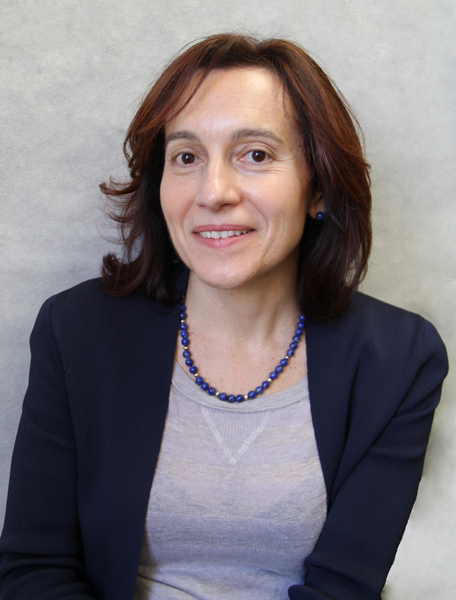
Dr. Zeila Zanolli is affiliated with Utrecht University , Netherlands. She is part of the Working Groups WG1 and WG2 , focusing on first-principles simulations of carbon-based nanomaterials. Her research explores structural, electronic, and optical properties of materials like carbon nanotubes, graphene, and C-based molecules, with an emphasis on UV-visible spectral signatures. Research Interests: Computational modeling of carbon nanostructures Theoretical spectroscopy for material characterization Electronic and optical properties of nanomaterials No funded grants, awards, or specific lab affiliations are detailed in the provided text.
Luca Magri is a Reader in Data-Driven Fluid Mechanics at Imperial College London's Department of Aeronautics. He holds affiliations as a Fellow of The Alan Turing Institute and a Hans Fischer Fellow at the Technical University of Munich (TUM). His research focuses on physics-constrained machine learning, chaotic systems, and fluid mechanics. Magri’s work bridges computational methods with fluid dynamics, addressing challenges in turbulence, combustion, and acoustics through innovative approaches like reservoir computing and adjoint-based optimization. Education & Career PhD in Engineering, University of Cambridge (2015) Postdoctoral Fellow, Stanford University Center for Turbulence Research (2015–2017) Lecturer at Cambridge University Engineering Department (2017–2018) Current: Reader at Imperial College London since 2018 Research Interests Magri’s research integrates machine learning with fluid dynamics to model chaotic systems, optimize combustion processes, and analyze turbulence. Key areas include: Physics-informed neural networks for extreme event prediction Adjoint-based methods for thermoacoustic stability Bayesian data assimilation in nonlinear systems Publications & Awards His impactful work has been recognized with awards such as the ERC Starting Grant (2019), Royal Aeronautical Society Fellowship (2022), and multiple fellowships from Stanford and Cambridge. Over 50 publications span journals like Journal of Fluid Mechanics and Proceedings of the Royal Society A . Grants & Collaborations Magri leads projects funded by the EU Horizon 2020, UKRI, and the ERC. He collaborates globally, including with TUM’s Institute for Advanced Study and Cambridge’s Engineering Department.
Dr. Attila Cangi is the Head of Department for Machine Learning for Materials Design at the Center for Advanced Systems Understanding (CASUS) , part of the Helmholtz-Zentrum Dresden-Rossendorf (HZDR) . His roles include leading research in computational materials science and developing scalable ML methods for electronic structure calculations. He has held permanent staff scientist positions at HZDR and Sandia National Laboratories, with postdoctoral experience at the Max Planck Institute. His research focuses on accelerating materials discovery through AI-driven simulations for energy storage, thermoelectrics, spintronics, and semiconductor modeling. Education: Ph.D. in Chemistry (Chemical and Materials Physics), University of California, Irvine (2011) M.Sc. in Physics, Rutgers University (2006) Research Interests: Dr. Cangi’s work integrates machine learning with first-principles simulations to model electronic structures, predict material properties (e.g., conductivity, magnetism), and simulate phase transitions. His lab leverages high-performance computing to address challenges in warm dense matter, plasma physics, and quantum transport phenomena. Key areas include: Development of physics-informed ML algorithms (e.g., MALA package) Electronic structure modeling at extreme conditions Design of sustainable materials for energy applications Lab & Collaborations: The Machine Learning for Materials Design group collaborates on projects like the European XFEL and employs tools such as atoMEC for average-atom modeling. Their work bridges theory and experiment, enabling predictions for novel materials under extreme environments.
Nicholas Mosey is an Associate Dean (Research) in the Faculty of Arts and Science at Queen's University and an Associate Professor in the Department of Chemistry. He leads the Mosey Group, which focuses on theoretical and computational chemistry, particularly in developing simulation methods and their application to catalysis, materials science, and tribology. His research integrates method development with high-performance computing to explore atomic-level phenomena in molecules and materials. Education: Ph.D. (2006) and B.Sc. (2001) in Chemistry from the University of Western Ontario. Postdoctoral fellowship at Princeton University (Mechanical & Aerospace Engineering). Joined Queen's University in 2008, becoming an Associate Professor in 2014. Research interests include computational chemistry, molecular modeling, reaction kinetics, catalysis mechanisms, and the interplay between mechanical forces and chemical reactions. Notable contributions include studies on anti-wear additives (ZDDP), tribological systems, and electrocatalysis. His work bridges theoretical and applied aspects, emphasizing practical applications in energy and materials. Publications span topics like catalytic materials, DFT methods, and nanoscale phenomena. The Mosey Group's work often involves collaborations across disciplines, yielding insights into surface chemistry, friction reduction, and energy-related materials. Leadership roles include overseeing research strategy within the Faculty and supervising a dynamic group of students and postdocs. Teaching focuses on general chemistry, quantum mechanics, and computational methods, emphasizing interdisciplinary connections.
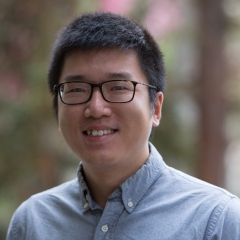
Yi Wang is a Golomb Visiting Assistant Professor of Mathematics at Purdue University's Department of Mathematics, affiliated with the College of Science. His research focuses on advanced materials science, particularly 2D semiconductors like tellurene and selenene, with applications in optoelectronics, energy harvesting, and neuromorphic engineering. He explores material properties such as chirality-dependent electrical responses, strain engineering, and quantum phenomena like spin-orbit interactions. His work bridges theoretical simulations and experimental fabrication, addressing challenges in nanoelectronics and wearable sensors. Key research themes include the development of memristors for synaptic emulation, photocatalytic oxidation systems, and pressure sensors inspired by biological structures. He has contributed to understanding superconducting field-effect transistors and gate-tunable spintronic behaviors in layered materials. Publications highlight interdisciplinary approaches to material design and device optimization for applications in photonics, robotics, and biomedical interfaces. Notable contributions include the revival of tellurium as a 2D semiconductor and advancements in van der Waals heterostructure optoelectronics. His research often involves collaborations across materials chemistry, physics, and engineering disciplines, reflecting a commitment to translating fundamental discoveries into functional devices.
Prof. Michele Pavone is a Full Professor of Physical Chemistry at the University of Naples Federico II, leading the MUSICHEM laboratory. His academic career includes roles as Associate Professor (2015–2024) and Researcher (2008–2015). He holds a PhD in Chemical Sciences (2007) and a Laurea in Chemistry (2004), both from the University of Naples Federico II. His research focuses on computational quantum chemistry to study materials for energy applications, including solar cells, batteries, and electrocatalysts. Key contributions include theoretical insights into perovskite materials, sodium-ion battery cathodes, and photocatalytic systems. Pavone has been recognized with awards such as the 2017 Emerging Investigators distinction for energy materials and the 2016 Carla Roetti Prize. Scientific achievements span over 100 publications in journals like Journal of Materials Chemistry A and ACS Applied Materials & Interfaces , with a focus on material interfaces, defect engineering, and energy storage mechanisms. He serves as Principal Investigator for the MUSICHEM lab, collaborating internationally (e.g., Princeton University, ENSCP Paris). Labs/Teams : MUSICHEM Laboratory (University of Naples) Grants : Not explicitly listed but implied through PI roles in major research projects
Laura Gagliardi is the Richard and Kathy Leventhal Professor in the Department of Chemistry at the University of Chicago (2020-present) and Director of the Chicago Center for Theoretical Chemistry. She previously held distinguished positions at the University of Minnesota, including Distinguished McKnight University Professor (2014-2020) and Director of the Inorganometallic Catalyst Design Center EFRC (2014-present). Her research spans computational chemistry, focusing on quantum methods for energy-related materials and catalysis. PhD, Theoretical Chemistry, University of Bologna (1997) First Degree, Industrial Chemistry, University of Bologna (1992) Research Interests Her work integrates first-principle methods with classical simulations to address energy challenges , including catalysis in porous materials , photovoltaic properties of semiconductors, and actinide separation . She develops quantum chemical methods for strongly correlated systems and computational design frameworks for novel materials . Scientific Awards 2023 Pauling Medal Award 2022 Elected Member of the German National Academy of Sciences (Leopoldina) 2021 Elected Member of the National Academy of Sciences 2021 Faraday Lectureship Prize 2020 Peter Debye Award in Physical Chemistry from the American Chemical Society 2020 Elected Fellow of the American Association for the Advancement of Science 2019 Elected Member of the International Academy of Quantum Molecular Science 2018 Humboldt Foundation Research Award 2016 Bourke Award of the Royal Society of Chemistry 2016 Elected Fellow of the American Physical Society Advising and Mentoring : She has mentored 24 graduate students (9 current), 36 postdoctoral scholars (5 current), and numerous undergraduates and K-12 students. Grants and Funding : Current support includes grants from the U.S. Department of Energy (Basic Energy Sciences, National Nuclear Security Administration), National Science Foundation, U.S. Air Force Office of Scientific Research, and Xcel Energy. Labs and Teams : She directs the Chicago Center for Theoretical Chemistry and previously led the Inorganometallic Catalyst Design Center EFRC (2014-present), Chemical Theory Center (2012-2020), and Nanoporous Materials Genome Center (2012-2014) at the University of Minnesota.
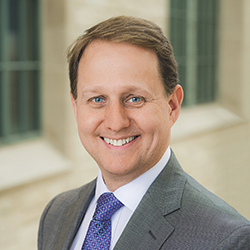
Christopher Schuh is the John G. Searle Professor of Materials Science and Engineering at Northwestern University, serving as Dean. His research focuses on structural materials, including metals and ceramics, emphasizing disorder control in microstructures to optimize mechanical properties. He leads the Schuh Group, combining experiments, theory, and simulations to study processing-structure-property relationships. Schuh is a serial entrepreneur, co-founding Xtalic Corporation (nanocrystalline coatings) and Desktop Metal (3D metal printing). His work spans over 250 publications in journals like Science and Acta Materialia . Education: BS in Materials Science and Engineering, University of Illinois at Urbana-Champaign PhD in Materials Science and Engineering, Northwestern University Research Interests: Schuh's group explores nanocrystalline alloys, grain boundary engineering, microparticle impact dynamics, and shape memory ceramics. His innovations include nanocrystalline coatings for electronics and scalable additive manufacturing techniques. Recent projects involve quantifying plasticity in extreme strain rates and developing alloys for rapid sintering. Awards: Fellow of ASM International Fellow of the Minerals, Metals and Materials Society Member of the National Academy of Inventors Member of the National Academy of Engineering Grants & Advising: Schuh oversees a lab with active PhD students (e.g., Tyler Lucas, Daniel Ng) and collaborates on projects like the 'B09-NANO for Industry 3' initiative. His grants fund research into microstructural evolution and cold spray technologies. Labs & Teams: The Schuh Group operates at the intersection of academia and industry, with a focus on translational research. Current projects include shape memory ceramics and high-velocity microparticle impact analysis.
Mikko Hakala is a Researcher at the School of Science, Aalto University. His expertise lies in materials science and computational physics, focusing on surface physics, electronic transport, and first-principles modeling. He holds a Master's degree from Helsinki University of Technology (2004) and a Doctoral Thesis from Aalto University (2013). Research interests include the study of metal adatoms on surfaces, interfacial oxide growth in silicon-based materials, and numerical methods for electron transport in nanostructures. His work integrates theoretical modeling with experimental insights, contributing to semiconductor device applications and nanotechnology. Notable contributions include studies on silicon-hafnia interfaces and alkali halide surface dynamics. He has organized workshops such as 'Scientific Computing in Practice' (2017) and presented at international conferences like the International Supercomputing Conference (2011). Awarded a project grant as Principal Investigator for CodeRefinery/Darst (2021), his collaborative efforts span computational materials science and interdisciplinary research. No scientific awards are explicitly listed in the provided information.
Qiang Cui is Professor of Chemistry at Boston University specializing in computational biophysics and molecular simulations. His research employs multi-scale modeling approaches to study biological systems including membrane remodeling, protein allostery, and enzyme mechanisms. Recent work advances force field development (CHARMM/DFTB+), membrane biophysics, and machine learning applications in molecular biophysics. Publications demonstrate strong methodological focus on QM/MM techniques, free energy calculations, and integrated experimental-computational approaches. Ongoing investigations include lipid membrane interactions with nanoparticles, synaptic fusion mechanisms, photosynthetic energy transfer, and allosteric regulation in proteins.
Sahar Sharifzadeh is an Associate Professor in the Department of Electrical & Computer Engineering at Boston University's College of Engineering. She holds an affiliation with the Boston University Institute for Global Sustainability (IGS). Her research focuses on predicting and understanding functional material properties using first-principles electronic structure methods, aiming to design novel materials for energy and technology applications. She earned her PhD in Electrical Engineering from Princeton University, an MA from Princeton, and a BS in Electrical Engineering from UC Berkeley. Her research group develops computational frameworks to model quantum mechanical phenomena in materials, including nanotubes, semiconductors, and biological systems. Recent work emphasizes machine learning integration and defect engineering in materials. She has contributed to software tools like Nexmd v2.0 for molecular dynamics simulations. Her advising and grants focus on training researchers in interdisciplinary computational methods. She collaborates with the IGS to advance sustainable energy technologies through material innovation.
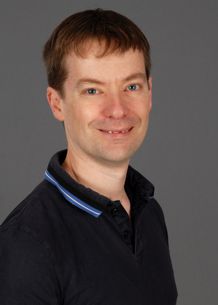
Dr. Phil Hasnip is an EPSRC Research Software Engineering Fellow at the University of York's School of Physics, Engineering and Technology. His work focuses on developing robust software tools for materials modeling, particularly through the CASTEP program, and promoting Research Software Engineering (RSE) skills globally. He holds a PhD from the University of Cambridge and has extensive postdoctoral experience. Research Interests: Combines computational methods with materials science to solve complex problems in energy, electronics, and advanced manufacturing. Specializes in quantum mechanical simulations, high-performance computing (HPC), and software engineering for scientific research. Key projects include optimizing CASTEP for emerging architectures and enhancing exascale readiness through the Particles at Exascale (PAX) initiative. Grants & Awards: EPSRC Fellowship (2018–2023) supports software improvements for materials modeling and RSE advocacy. Collaborates with NVIDIA, ARM, and national facilities like Diamond Light Source. Teaching: Advanced computational methods, Linux, LaTeX, and scientific communication. Labs/Teams: Leads the Research Software Engineering Group at York, collaborating with interdisciplinary teams on software frameworks like BOUT++ for fluid simulations. Future Work: Expanding software accessibility for non-specialists and advancing exascale-ready computational tools.
Dr. Bolin Liao is an Associate Professor in the Department of Mechanical Engineering at the University of California, Santa Barbara (UCSB) , affiliated with the College of Engineering. His research focuses on nanoscale energy transport phenomena and their applications in sustainable energy technologies. He leads the Transport for Energy Applications Laboratory (TEALab), which develops advanced experimental and computational tools to study energy conversion at atomic scales. Education: PhD in Mechanical Engineering, Massachusetts Institute of Technology (MIT) BS in Microelectronics, Tsinghua University Research Interests: Nanoscale energy transport in electronic/photonic materials Thermoelectric and photovoltaic device optimization Ultrafast optical/electron microscopy (SUEM, TDTR) Multiscale simulation of carrier interactions Applied clean energy systems design Awards: Young Investigator Awards (ONR, AFOSR) Early Career Awards (DOE, NSF) Hellman Family Faculty Fellowship Advising & Grants: Actively mentoring graduate students and postdocs in mechanical engineering, materials science, and physics. Current funding includes major grants from NSF, DOE, and ONR. Lab opportunities available for undergraduates, graduate students, and visiting scholars. Lab Activities: TEALab operates at the intersection of fundamental physics and applied engineering, with projects spanning computational modeling (first-principles simulations), experimental techniques (ultrafast microscopy), and device prototyping for clean energy applications.
Jin Chen is an Associate Research Scientist at the Yale School of Medicine and holds an Associate Professor position at Huazhong University of Science and Technology. He specializes in surgical education and training, with clinical roles including Deputy Chief Physician and Doctor-in-Charge at Tongji Hospital. His academic journey includes a PhD and MD from Huazhong University, alongside a visiting scholar stint at the University of Kentucky. Dr. Chen’s research focuses on advanced materials science, catalysis, and nanotechnology, with notable contributions to 2D materials, electrochemical processes, and MXene-based systems. His work bridges theoretical simulations and practical applications, addressing challenges in energy conversion and environmental sustainability. Education includes a PhD and MD in Otolaryngology-Head and Neck Surgery (Huazhong University, 2013), an MS in the same field (2010), and an MD in Clinical Medicine from Wuhan University (2007). He has received awards such as the Honor Graduate Student/Postdoctoral Fellow Travel Award and an International Award from the Association for Research in Otolaryngology. His research interests span catalytic mechanisms for CO2 reduction, nanomaterial growth dynamics, and computational modeling of materials. Recent publications highlight innovations in single-atom catalysts, graphene applications, and MXene superconductors. Dr. Chen’s contributions are pivotal in advancing nanotechnology’s role in energy and environmental solutions. Awards: Travel Award (2013), International Research Recognition (2013). Grants & Funding: Details not explicitly provided in text. Labs/Teams: Affiliated with surgical education teams at Yale and research groups at Tongji Hospital, though specific lab names are not mentioned.
Dr. Paulo Siani is a Researcher at the University of Milano-Bicocca, Italy, specializing in multi-scale modeling of biomembranes and drug design. His research focuses on coarse-graining modeling, atomistic simulations, and bioinorganic nanosystems for biomedical applications. He holds a PhD in Theoretical and Computational Chemistry from the University of São Paulo, Brazil (2018), and conducted a Visiting PhD at the University of Southern Denmark (2015–2016). Education: PhD in Theoretical and Computational Chemistry, University of São Paulo (2014–2018) MSc in Theoretical and Computational Chemistry, University of São Paulo (2012–2014) BSc in Chemistry, State University of Maringá, Brazil (2008–2012) Research Interests: Dr. Siani’s work bridges computational chemistry and nanomedicine, with emphasis on molecular dynamics simulations of lipid systems, nanoparticle-membrane interactions, and functionalized nanodevices for targeted therapies. His ERC-funded project (SMART BIOINORGANIC HYBRIDS FOR NANOMEDICINE) explores novel hybrid systems for photodynamic therapy and drug delivery. Key Projects: ERC Consolidator Grant 2016–2021: Developing bioinorganic hybrids for nanomedicine applications Labs/Teams: Active member of the NanoQLab at the University of Milano-Bicocca, focusing on computational nanomedicine and multi-scale modeling.