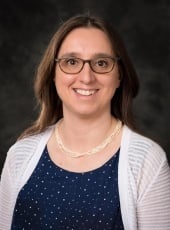
Pär Olsson is a Professor in the Department of Nuclear Science & Engineering at KTH Royal Institute of Technology. His research focuses on computational and experimental studies of radiation damage in nuclear materials, with particular emphasis on understanding defect dynamics, microstructural evolution under irradiation, and the behavior of advanced nuclear fuels. He leads courses such as Multiscale Modeling of Nuclear Materials and Radiation Damage Physics, emphasizing both theoretical and practical aspects of materials science in nuclear contexts. His research interests include the development of advanced accident-tolerant fuels (e.g., UN-UO2 composites), the computational modeling of radiation effects in metals like Fe and W, and the interplay between solute atoms and defects in irradiated materials. His work combines first-principles calculations, kinetic Monte Carlo simulations, and experimental validation to address challenges in nuclear energy systems. Notable contributions include studies on fission product solubility in nuclear fuels, oxygen’s role in tungsten defect evolution, and the thermal performance of UN-based composites. His team’s projects, such as the M4F initiative (Multiscale Modelling for Fusion and Fission Materials), aim to bridge atomistic and continuum-scale models for material design. Pär Olsson collaborates extensively with international institutions and contributes to nuclear materials education through course coordination and supervision of graduate studies in physics and materials science.
Shailesh Chandrasekharan is a Professor of Physics in the Department of Physics at Duke University's Trinity College of Arts & Sciences, a position he has held since 2018. Prior to this, he served as Associate Professor of Physics (2005-2018) and Assistant Professor of Physics (1998-2004) at Duke. He has also held leadership roles including Director of Graduate Studies in the Department of Physics (2011-2014, 2019). Dr. Chandrasekharan received his education at prestigious institutions: a B.S. from the Indian Institute of Technology, Madras (1989), followed by an M.A. (1992), M.Phil. (1994), and Ph.D. (1996) from Columbia University. His research focuses on understanding quantum field theories non-perturbatively from first principles calculations, with particular emphasis on lattice formulations of these theories. He specializes in strongly correlated fermionic systems relevant to condensed matter, particle, and nuclear physics. A significant portion of his work involves developing novel Monte-Carlo algorithms to study quantum systems, with special attention to solutions for the notoriously difficult "sign problem" that affects quantum simulations. His expertise spans quantum computing applications, statistical physics, field theory, and critical phenomena. Analysis of his recent publications reveals a strong focus on qubit regularization techniques for lattice gauge theories, quantum critical phenomena, and applications to quantum computing. His work bridges theoretical physics with computational methods, particularly in the areas of asymptotic freedom, quantum phase transitions, and non-perturbative approaches to quantum field theory. The research demonstrates consistent innovation in addressing fundamental challenges in quantum simulation. Dr. Chandrasekharan has secured significant research funding, including the current "Lattice Gauge Theories on a Quantum Computer" project (2024-2028) as Principal Investigator, and long-term projects like "Lattice and Effective Field Theory Studies of Quantum Chromodynamics" (2005-2027) as Co-Principal Investigator. He currently advises PhD student Rui Xian Siew and has taught courses ranging from undergraduate General Physics to advanced graduate-level Quantum Mechanics and Electrodynamics. His teaching portfolio demonstrates breadth across physics education, with recent courses including PHYSICS 122DL (General Physics II), PHYSICS 762 (Electrodynamics), and PHYSICS 765 (Advanced Quantum Mechanics), showing his commitment to both foundational and advanced physics education. His research continues to push the boundaries of quantum field theory simulation and quantum computing applications.
Ramazan Tuğrul SENGER is a Professor in the Department of Physics at İzmir Ekonomi Üniversitesi since February 2024. Previously, he held administrative roles at İzmir Yüksek Teknoloji Enstitüsü (IYTE) as Dean of the Graduate School of Natural and Applied Sciences, a member of the Senate, and Head of the Physics Department. He earned his Ph.D. (2000), M.Sc. (1996), and B.Sc. (1994) in Physics from Bilkent University. Education : Bilkent University (Ph.D., M.Sc., B.Sc.) Past Positions : Bilkent University (Researcher, Lecturer), Emory University (Postdoctoral Researcher), TÜBİTAK-UEKAE (Expert Researcher), IYTE (Assistant Professor → Associate Professor → Professor) His research focuses on computational materials science , particularly quantum transport phenomena and spintronics in low-dimensional systems. He has extensively studied thermoelectric properties of nanostructured materials and excitonic behavior in halide perovskites . His recent publications highlight advancements in perovskite microribbons (exciton mobility), strain-engineered 2D magnets (α-RuCl3), and thermoelectric performance of transition metal dichalcogenides. These works employ first-principles calculations and evolutionary algorithms for material optimization. Scientific Awards : TÜBA GEBİP Award (2006) FABED Young Scientist Award (2009) ODTÜ Mustafa N. Parlar Foundation Research Incentive Award (2010) Fulbright Fellowship (2019-2020) He has supervised PhD theses on topics like "Thermoelectric Properties of Nanoscale 2D Materials" and "Polaronic Excitons in 2D Structures." His work has been supported by grants from TÜBİTAK, DPT, and international institutions.
Jaakko Akola is a Professor in the Department of Physics at the Norwegian University of Science and Technology (NTNU). His research focuses on computational materials science, particularly density functional theory (DFT) and atomistic simulations of materials, nanoparticles, molecules, and interfaces. He leads significant projects such as "SIDI" (inoculation in cast iron), "Infinity-RETIS" (chemical rare events), and "AllDesign" (rational alloy design), alongside coordinating EU-funded initiatives like "CritCat" for catalyst development. The Materials Theory group under Akola employs DFT, molecular mechanics, and Monte Carlo methods to explore atomic-scale structures and functions in technological applications. Key research areas include platinum-free catalysts for hydrogen energy, amorphous semiconductors for memory devices, noble metal nanoparticles in biological environments, and alloy design for cast iron and aluminum. Recent work integrates machine learning to advance theory-driven material design, reducing reliance on experimental trial-and-error. Akola's publications highlight advancements in hydrogen evolution catalysis, phase-change memory materials, and alloy precipitation. His projects often involve interdisciplinary collaborations with experimental teams. He teaches Quantum Physics 1 (FY2045) and Computational Physics (TFY4235) at NTNU, reflecting his commitment to education alongside research.
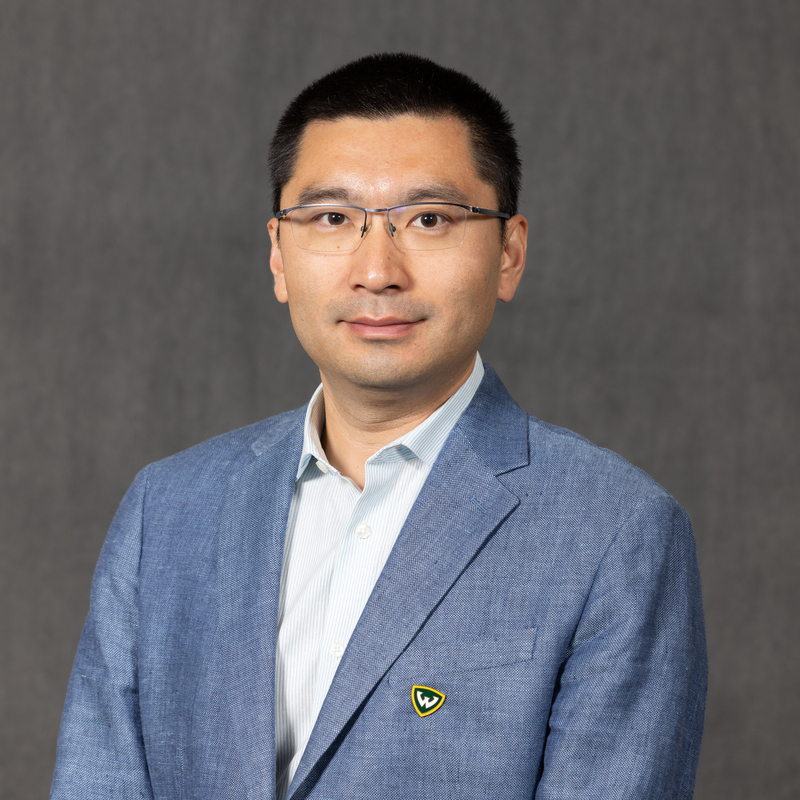
Zhenfei Liu is an Associate Professor in the Department of Chemistry at Wayne State University, affiliated with the College of Liberal Arts and Sciences. His research focuses on theoretical and computational studies of electronic structure at molecule-substrate interfaces and nanostructured materials. Key areas include developing new electronic structure methods, studying functional materials for energy conversion, and analyzing charge transport in molecular junctions. He holds a B.S. from Peking University (2007), a Ph.D. in theoretical chemistry from UC Irvine (2012), and completed a postdoc at Lawrence Berkeley National Laboratory (2012–2018). His work is supported by grants from NSF, DOE, ACS, and the Sloan Foundation. Research interests emphasize first-principles methods for predicting energy conversion mechanisms in quantum dots, metal-organic frameworks, and 2D materials. He explores charge transport properties in molecular junctions and defects' impact on material performance. Notable awards include the 2024 Alfred P. Sloan Fellowship and NSF CAREER Award. He teaches advanced courses in quantum chemistry and statistical thermodynamics, and leads the Liu Group at WSU.
Dr. Jonathan Yates is a Royal Society Research Fellow and University Lecturer in Materials Modelling at the University of Oxford, affiliated with the Department of Materials and St Edmund Hall. His research focuses on computational electronic structure theory, magnetic resonance (NMR parameters, EELS), and the development of Wannier functions for Fermi surface analysis. His research interests include: First-principles calculation of solid-state NMR parameters (chemical shifts, J-couplings, electric field gradients) Electron energy loss spectroscopy (EELS) for nanomaterials characterization Wannier functions theory and applications to anomalous Hall effect and electron-phonon interactions Development of computational tools: CASTEP-NMR, Wannier90, Optados Recent publications highlight his work on NMR crystallography of pharmaceutical compounds, hydrogen bonding analysis in carbohydrates, and structural characterization of chalcogenide glasses. His scientific awards include the prestigious Royal Society Research Fellowship. He has contributed to software development for solid-state simulations and collaborated on interdisciplinary studies involving NMR, DFT, and materials science. His academic career spans institutions including UC Berkeley, University of Cambridge, and University of Oxford.
Arpita Chari is a Research Fellow at Chalmers University of Technology, specializing in Virtual and Digital Production Systems. Her work bridges Industry 4.0, Resilience Engineering, and Sustainability in Production Systems, focusing on integrating digital technologies to enhance resource efficiency and enable lean circular manufacturing. Her research explores the implementation of resilient and sustainable practices in manufacturing, emphasizing dynamic capabilities, digital platforms, and supply chain optimization. Key projects include the Digitala Stambanan initiative and the Produktion2030 strategic innovation program, which address sustainability transitions and systemic resilience. 2024 Highlights: Analyzed dynamic capabilities for resilience-sustainability integration, characterized battery lifecycle challenges, and modeled risk prioritization in supply chains. 2023 Themes: Digital platform adoption, battery production systems, and value chain sustainability in the Digitala Stambanan project. 2022–2021 Foundations: Developed frameworks for green manufacturing, circular supply chains, and stakeholder-driven sustainability in textiles.
Professor Stewart Clark is a Professor in the Department of Physics at Durham University, where he serves as Head of the Condensed Matter Section. His academic career spans several decades with numerous publications in computational physics and materials science. He teaches Level 1: Modern Physics courses at the university and maintains active research collaborations across multiple institutions. Professor Clark's research focuses on computational approaches to understanding materials at the atomic level. His work primarily involves first-principles calculations and computer simulations of solid state, liquid, and molecular systems. He has made significant contributions to density functional perturbation theory , structural and vibrational properties calculations, and the development of techniques for excited electronic states . His research leverages high performance computing for large-scale simulations of complex materials systems. Analysis of Professor Clark's recent publications reveals a strong focus on advanced materials research in condensed matter physics. His work frequently employs computational methods to investigate electronic structures , magnetic properties , and phase transitions in quantum materials, perovskites, and two-dimensional systems. There's particular emphasis on materials behavior under extreme conditions such as high pressure, with applications spanning electronics, energy storage, and quantum technologies. As Head of the Condensed Matter Section, Professor Clark oversees research activities and likely mentors junior faculty and research staff. His extensive publication record spanning multiple decades suggests successful acquisition of research funding from various sources to support his computational physics research program. His work bridges theoretical physics and materials science, contributing to fundamental understanding of material properties with potential technological applications. Professor Clark's research likely involves computational laboratories with access to high-performance computing resources. His work demonstrates strong interdisciplinary connections between physics, chemistry, and materials science, with collaborations spanning multiple institutions as evidenced by his co-authored publications.
Qihang Liu serves as Professor in the Department of Physics at Southern University of Science and Technology (SUSTech), where he leads a research group focused on theoretical condensed matter physics and computational materials science. Previously Associate Professor at SUSTech (2018-2023), he maintains active collaborations with Peking University and international institutions including University of Colorado Boulder and Northwestern University. Education: Ph.D. in Condensed Matter Physics, Peking University (2007-2012) B.S. in Physics, Peking University (2003-2007) Research Focus: His work centers on symmetry-driven phenomena in quantum materials, particularly spin-group theory for magnetic systems and topological effects induced by spin-orbit coupling. Key contributions include: Development of FINDSPINGROUP program for spin symmetry identification Prediction of unconventional magnetism in antiferromagnets Design principles for quantum anomalous Hall effect in superlattice structures Computational exploration of spin-orbitronics materials Publication Trends: Recent publications (2019-2022) demonstrate consistent innovation in symmetry applications to magnetic topological materials, with emphasis on antiferromagnetic spintronics and computational design of novel quantum states. His work bridges theoretical predictions with experimental realizability in systems like Mn-Bi-Te compounds. Scientific Recognition: SUSTech Young Researcher Award (2021) SUSTech Young Professor Award (2022) Shenzhen Jieqing Talent Project (2022) Stanford Top 2% Scientists (2021, 2022) Grants & Leadership: Principal Investigator for China's National Key R&D Program "Quantum Control and Quantum Information" (2020), securing major funding for quantum materials research. His group actively mentors graduate students while developing next-generation spintronic materials and symmetry-based computational tools. Research Infrastructure: The Liu Research Group maintains specialized computational facilities for first-principles calculations and collaborates with experimental teams to validate theoretical predictions on spin-orbit coupling effects and topological phenomena in low-dimensional systems.
Associate Professor Kevin Laws is a materials scientist specializing in bulk metallic glasses and amorphous alloys at the School of Materials Science & Engineering, University of New South Wales (UNSW). His research focuses on the design, discovery, and development of magnesium- and aluminum-based metallic glasses for structural and functional applications, with expertise in die-casting, strip casting, and post-production processing of bulk metallic glasses. Professor Laws has held significant positions including Project Manager at the ARC Centre of Excellence for Design in Light Metals since 2009 and Postdoctoral Fellowship at UNSW since 2008. His research contributions are extensive, with over 30 refereed journal publications and approximately $100k in research funding since 2008. His work extends to international collaborations, having served as a Visiting Scientist at both the Swiss Federal Institute of Technology (ETH) in Zürich and the United States Air Force Research Laboratories. His primary research interests include bulk metallic glasses, amorphous alloys, magnesium and aluminum alloy development, composite materials, and advanced processing techniques. Professor Laws has made significant contributions to understanding the thermal and mechanical properties of metallic glasses, with applications spanning from structural components to functional devices. His recent work shows progression into high-entropy alloys, tungsten boride structures, and advanced characterization techniques while maintaining his core focus on metallic glasses. Professor Laws' publication record demonstrates a strong trajectory of research excellence, with consistent output of high-impact papers in leading materials science journals. His work shows increasing sophistication in both experimental techniques and computational modeling approaches, reflecting the evolving nature of materials science research. ARC Centre of Excellence Postdoctoral Research Fellowship (2007-) Invited Research Position at Swiss Federal Institute of Technology (2010) Invited Research Position at US Air Force Research Laboratory (2011) Member of Institute of Engineers, Australia (2003-) Member of Society of Automotive Engineers-International (2001-) Professor Laws has co-supervised 10 honors and 6 PhD students in the past 4 years, demonstrating his commitment to education and mentorship. He serves as course coordinator for Welding and Joining Processes and contributes as a guest lecturer for polymer engineering and demonstrator for foundry casting, rolling, and mechanical testing. His teaching responsibilities complement his research activities, creating a synergistic relationship between education and discovery. His research is conducted within the School of Materials Science & Engineering at UNSW, where he collaborates with colleagues on projects related to advanced materials development and characterization. The school provides state-of-the-art facilities for materials processing and characterization, enabling Professor Laws to pursue his research on metallic glasses and related materials.
Johan Klarbring is an Assistant Professor in the Department of Physics, Chemistry and Biology (IFM) at Linköping University. His research focuses on theoretical material science using ab initio computational methods to study energy materials such as solid oxide fuel cells, batteries, solar cells, and thermoelectric devices. He combines quantum mechanics and statistical physics to analyze phase stabilities and electronic properties of dynamically disordered solids. His work emphasizes computational approaches to understand material behavior at finite temperatures, including defect formation, ionic transport, and anharmonic effects. Collaborations involve international teams and cutting-edge facilities like supercomputers for large-scale simulations. Key research themes include perovskite materials, machine learning force fields, and thermoelectric properties. Notable contributions address dynamic nanodomains in perovskites and vacancy-driven ion conduction mechanisms. His group (Ab initio methods and energy materials (TEAM)) explores eco-friendly applications of disordered solid materials. Recent projects include studies on lead-free perovskites, superionic transitions, and magnetism in halide double perovskites. He has contributed to over 30 peer-reviewed articles, with high-impact work in Nature Nanotechnology and Chemical Science .
Per Hyldgaard is a Professor at the Quantum Component Physics department of Chalmers University of Technology . His research focuses on developing and applying van der Waals density functionals (vdW-DF) to study molecular binding, nanomaterials, and condensed matter systems. Key areas include nonlocal correlation effects, electronic structure analysis, and material properties under extreme conditions. Research Interests: Hybrids of van der Waals functionals, quantum materials, adsorption mechanisms, and computational materials science. His work bridges theoretical frameworks with experimental validation, addressing challenges in predicting CO₂ adsorption, metallic surface interactions, and polymeric systems. Recent Projects: 2019–2022: VR-funded study on charge transfer in soft materials. 2015–2018: Consistent vdW-DF studies for molecular systems. 2014–2019: High-speed graphene-based electronics collaboration. Publications: Over 100 peer-reviewed articles, including foundational work on vdW-DF methods and applications in nanotubes, layered materials, and catalytic systems. Recent trends emphasize hybrid functional optimization and energy scaling laws in nanostructures. Grants & Teams: Collaborations with EU and SSF on bio-inspired molecular networks and high-speed electronics. Active in developing libvdwxc , a software library for vdW-DF functionals.
Xavier Rocquefelte is a Professor at ISCR (Institut des Sciences Chimiques de Rennes) within the University of Rennes 1, which is affiliated with CNRS (Centre National de la Recherche Scientifique). His office is located at Campus de Beaulieu, Building 10B - Room 212, 263 avenue du Général Leclerc, Rennes, France. He maintains an active research profile with numerous publications in advanced materials science and condensed matter physics. Professor Rocquefelte's research spans multiple domains within materials science, with particular emphasis on magnetic materials, crystallography, and computational approaches to understanding material properties. His work frequently intersects with condensed matter physics, particularly in the study of antiferromagnetism, multiferroics, and topological materials. He has made significant contributions to the understanding of defect engineering in perovskites and other complex oxide materials, as well as the development of novel synthesis methods for functional materials. His research also extends to optical materials, particularly those exhibiting mechanoluminescent properties, and to the computational modeling of material behaviors under various conditions. Analysis of his recent publications reveals a strong focus on the intersection of magnetism and material structure, with increasing attention to quantum materials and topological phenomena. His work demonstrates expertise in both experimental synthesis techniques and advanced computational methods, allowing for comprehensive characterization of material properties. The research portfolio shows consistent productivity across multiple subfields, with particular emphasis on the relationship between crystal structure, defects, and functional properties in advanced materials. Professor Rocquefelte maintains an active research program with collaborations across multiple institutions, as evidenced by his extensive publication record in high-impact journals. His work contributes significantly to the understanding of fundamental material properties while maintaining relevance to potential applications in energy storage, electronics, and optical technologies.
Christopher A. Sutton is an Assistant Professor in the Department of Chemistry and Biochemistry at the University of South Carolina, affiliated with the McCausland College of Arts and Sciences. His research focuses on computational materials discovery, integrating machine learning and first-principles methods to design and understand functional materials for energy applications. Education : B.S., University of Central Arkansas, 2004–2008 Ph.D., Georgia Institute of Technology, 2009–2014 Research Interests : Sutton’s work emphasizes machine learning-driven materials design, electronic structure calculations, and high-throughput screening for energy storage, optoelectronics, and catalytic systems. His lab explores domains such as perovskites, battery materials, and defect engineering. Grants & Funding : DOE/HFTO (Co-PI): $1,000,000 NSF EPSCoR RII Track 1: $20,000,000 DOD/DEPSCOR: $600,000 Awards : Alexander von Humboldt Postdoctoral Fellowship (2016–2018) 67th Lindau Nobel Laureate Meeting Attendee (Chemistry) Recipient of multiple fellowships and scholarships Labs & Teams : The Sutton Lab at USC specializes in machine learning for quantum mechanical property prediction and computational materials discovery. Collaborations include experimentalists and AI experts to bridge theory and application.
Loredana Valenzano-Slough is an Associate Professor in the Department of Chemistry at Michigan Technological University. She earned her PhD from the University of Southampton (United Kingdom) in 2003 and her MSc from the University of Torino (Italy) in 2000. Prior to joining Michigan Tech as an Assistant Professor in 2012, she held positions as an Assistant Research Scientist at Michigan Tech (2010-2012), Postdoctoral Associate at the University of Torino (2005-2010), and Postdoctoral Fellow at the University of Leiden (2003-2005). Her educational background includes: PhD, University of Southampton, United Kingdom, 2003 MSc, University of Torino, Italy, 2000 Dr. Valenzano-Slough's research focuses on computational characterization of molecules and materials across diverse domains. Her work addresses fundamental questions about intermolecular interactions, molecular driving forces, and molecular reactivity at the electronic structure level. She investigates how thermodynamics and kinetics determine structural development of materials at the molecular level, with particular emphasis on understanding how materials' morphologies influence their physical-chemical properties. Her research spans energetic materials, nanoporous materials, cementing materials, active pharmaceutical ingredients, crystal growth, nucleation processes, surfaces, and the effects of defects and solvents on material properties. Her group actively explores questions about nucleation initiation, crystal growth mechanisms, and the possibility of tailoring crystalline morphologies. Analysis of her recent publications reveals a strong focus on metal-organic frameworks (MOFs) for gas storage and separation applications, computational studies of energetic materials like RDX, and investigations into the structural and mechanical properties of various crystalline materials. Her work often combines computational modeling with experimental validation, demonstrating expertise in quantum mechanical calculations and materials characterization. The research spans multiple disciplines including computational chemistry, materials science, and physical chemistry with applications in energy storage, sensing technologies, and pharmaceutical development. Dr. Valenzano-Slough has been actively involved in mentoring students, with several undergraduate and graduate students contributing to her research projects. Her group has produced work on topics ranging from fluorescent probes for chemical detection to computational studies of material properties under various conditions. She has established collaborations with researchers at UCLA and maintains an active research program supported by university resources. She has received funding support including a start-up package from Michigan Tech and the UCLA MSGC-NASA Pruett Scholarship. Dr. Valenzano-Slough has presented her research at numerous conferences including APS March Meetings, ACS Spring Meetings, and specialized workshops on shock compression of condensed matter. She serves as a reviewer for multiple prestigious journals including JACS, Journal of Physical Chemistry, and Dalton Transactions. Her research group maintains active collaborations, particularly with Dr. H. Liu at MTU and Dr. G. Sant at UCLA, focusing on computational chemistry applications to materials science problems. The group utilizes high-performance computing resources at Michigan Tech for their computational studies, with team members regularly working across campus in both ChemSci and Rekhi Hall.