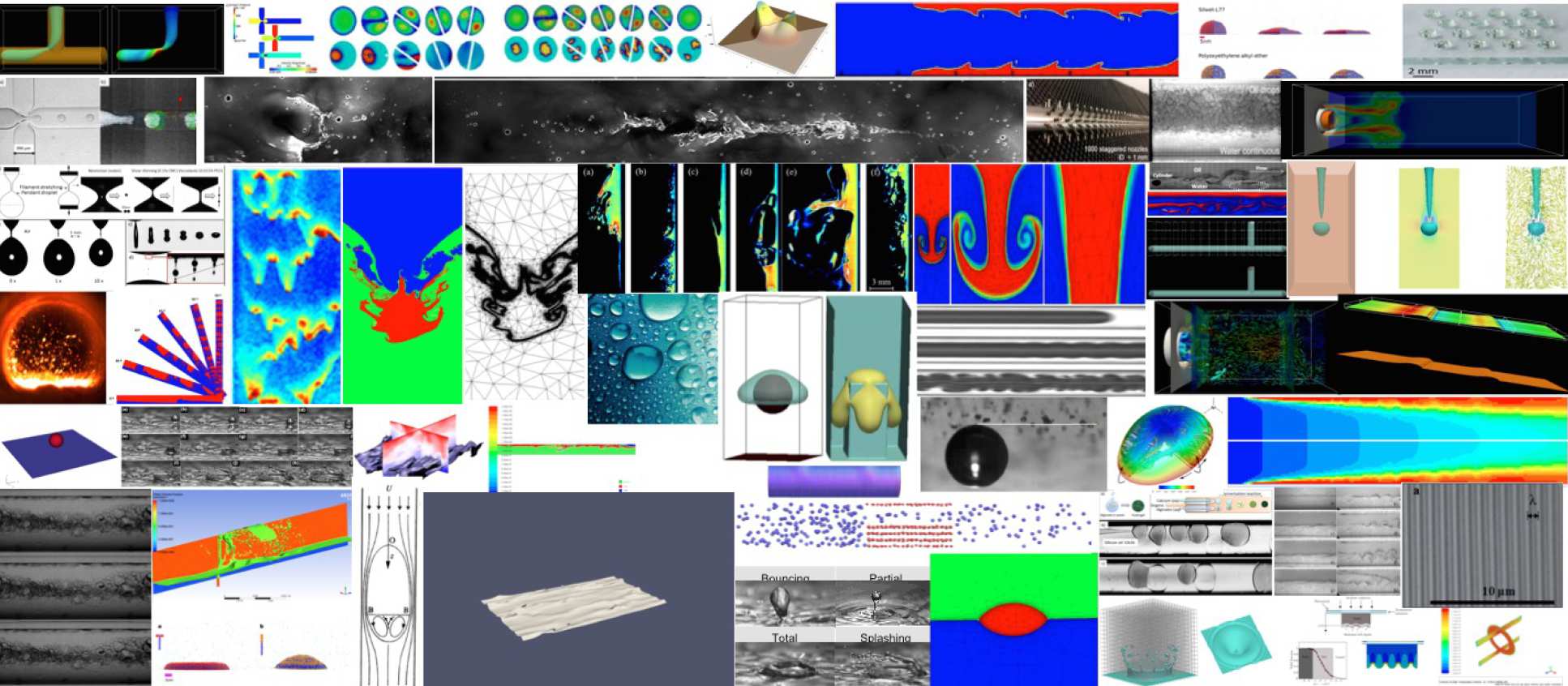
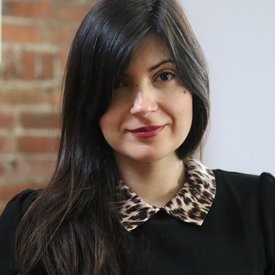
Professor Omar Matar is a Professor of Fluid Mechanics and RAEng/PETRONAS Research Chair in Multiphase Fluid Dynamics at the Department of Chemical Engineering, Imperial College London. He leads the Matar Fluids Group, focusing on interfacial fluid mechanics, multiphase flows, computational fluid dynamics (CFD), and applications in energy, manufacturing, and nanotechnology. His roles include Head of Department of Chemical Engineering, Director of the PETRONAS Centre for Engineering of Multiphase Systems (PETCEMS), and Editor-in-Chief of the Journal of Engineering Mathematics. Education: PhD in Chemical Engineering, Princeton University (1993) MEng Chemical Engineering, Imperial College London (1989) Research Interests: Interfacial fluid mechanics, multiphase flows, CFD, and machine learning 2D materials exfoliation and scale-up, immersive technologies (AR/VR) Applications in energy systems, nanotechnology, and personalized education Awards: Fellow of the Royal Academy of Engineering (2020) Recipient of the Imperial College President’s Medal (2020) EPSRC Programme Grant Principal Investigator (MEMPHIS, PREMIERE) Grants & Projects: MEMPHIS: £5M EPSRC-funded Programme Grant (2012–2017) PREMIERE: EPSRC Programme Grant (2019–present) PETCEMS: PETRONAS-funded Centre for Multiphase Systems Engineering Labs & Collaborations: Leads the Matar Fluids Group, collaborating with institutions like UCL, University of Edinburgh, and industry partners such as BP and First Light Fusion. Active in developing high-performance CFD codes (e.g., BLUE) and machine learning-driven models for multiphase systems.
Susan Holmes is Professor at the School of Media, Language and Communication Studies at the University of East Anglia (UEA), where she joined as Reader in Television in 2007 and was appointed to Professor in 2018. She is an active member of several research groups including Media Equality, Film, Television and Media, Gender and Its Intersections Steering Committee, and HealthUEA. Her work spans television studies, celebrity culture, and feminist approaches to eating disorders. Professor Holmes received her academic training at the University of Sussex (BA in English and Media Studies), followed by an MA in Film from the University of Southampton, and completed her PhD on British film and television in the 1950s at the same institution. Prior to joining UEA, she taught Media and Cultural Studies at the Southampton Institute (now Southampton Solent University) and television and film at the University of Kent. Her research focuses on several interconnected areas that challenge traditional disciplinary boundaries. In television studies, she has made significant contributions to understanding British television history, particularly through her books 'British TV and Film in the 1950s' and 'Entertaining TV: the BBC and Popular Programme Culture in the 1950s,' where she challenges canonical ideas about early BBC television. Her work on reality TV examines historical development, generic labeling, and celebrity. Since 2014, she has conducted important empirical research on feminist approaches to eating disorders, analyzing media representations and working directly with people with lived experience. A key focus of this research examines how feminist approaches are neglected in contemporary eating disorder treatment, with implications for both clinical practice and cultural understanding. She co-founded the influential Celebrity Studies journal in 2010 and edited it for the first eight years of its publication. Analysis of Professor Holmes' recent publications reveals a clear trajectory where her expertise in media and television studies converges with her feminist scholarship on eating disorders. Her most recent work (2023-2025) increasingly focuses on cross-cultural applications of feminist approaches to eating disorders (including work in China), the use of innovative methodologies like Photovoice, and examinations of therapeutic alliance in treatment settings. Simultaneously, she continues to analyze contemporary media representations, particularly focusing on motherhood, true crime television, and reality TV through feminist lenses. This dual focus demonstrates how media representations shape cultural understandings of both celebrity and health conditions. Professor Holmes' significant contributions to academia have been recognized with several prestigious awards: Senior Fellowship from Advance HE (2024) UEA engagement award (2017) ALPSP award nomination for Celebrity Studies as best new journal (2011) She currently runs the Feminist Media Studies research cluster at UEA and is actively supervising postgraduate research in areas including popular television, television/film history, British TV history, stardom/celebrity, and feminist approaches to eating disorders. Her current major research project is the 'ALLIANCE study' (2024-2026), funded by the National Institute for Health and Care Research, which aims to develop practice and policy recommendations to support effective therapeutic alliance in inpatient treatment for eating disorders. This builds on her earlier British Academy-funded research on 'Entertaining Television: British TV, the BBC and Popular Programme Culture in the 1950s' (2007-2008). Professor Holmes plays a significant role in the academic community through her editorial work, serving on the boards of journals including Archives of Psychology, Big Data & Society, and Critical Studies in Television, and previously as co-founder and editor of Celebrity Studies. She has also been active in media engagement, contributing expert commentary on topics ranging from Netflix's portrayal of eating disorders to Celebrity Big Brother.
Steven G. Kellman is a Professor of English at the University of Texas at San Antonio (UTSA), where he has taught since 1976. A leading scholar in comparative literature and literary translingualism, he was UTSA's first Ashbel Smith Professor (1995-2000) and has received numerous accolades including the National Book Critics Circle Balakian Citation and the New York Society Library Award for Biography. His academic foundation includes: Ph.D. in Comparative Literature, University of California at Berkeley (1972) M.A. in Comparative Literature, University of California at Berkeley (1969) B.A. in English & General Literature, State University of New York at Binghamton (1967) Kellman's research focuses on comparative literature, modern and contemporary literature, prose fiction, literary translingualism, film, and biography. He pioneered the study of writers who create in non-native languages, examining how linguistic displacement fuels creativity and shapes identity across cultural boundaries. His work bridges literary analysis with cultural history, particularly in American literature and biography. His recent publications demonstrate sustained engagement with translingualism, pandemic-era literary interpretation, and biographical recovery of marginalized voices. Articles from 2022-2025 reveal consistent thematic threads: re-examining classic texts like Camus' The Plague through contemporary crises, analyzing translingual writing as spiritual practice, and recovering erased narratives in literary partnerships. Honors include the National Book Critics Circle Nona Balakian Citation (2006), New York Society Library Award for Biography (2006), and Gemini Ink Literary Excellence Award (2008). Additional distinctions: UTSA COLFA Researcher of the Year Award (2019-2020) McGinnis-Ritchie Award for Nonfiction (2008) San Antonio Public Library Foundation Arts and Letters Award (2005) Two UTSA President's Distinguished Achievement Awards in Research Excellence (1990-91, 2005-2006) Kellman has secured prestigious fellowships including the Fulbright Distinguished Chair at Sofia University and Harvard's John E. Sawyer Fellowship. He served four terms on the National Book Critics Circle board and edits Brill's Literary Multilingualism series, demonstrating sustained commitment to advancing literary scholarship through editorial leadership and institutional service.
Dr. Jules Rawlinson is a Senior Lecturer in Digital Design at the Reid School of Music , University of Edinburgh. He serves as Programme Director for the MSc Sound Design and contributes to MSc Design and Digital Media, ESALA undergraduate courses, and the Reid School's MSc Digital Composition and Performance. PhD in Composition (University of Edinburgh, 2011) MSc Sound Design (University of Edinburgh, 2006) BA Combined Arts (Sunderland University) Jules investigates audiovisual composition , live electronics , and interactive performance systems , blending machine learning , virtual environments , and corpus-based sound synthesis . His work explores non-linear narrative structures , graphical scores , and political sound-art through collaborations like Raw Green Rust and projects such as Lie Still My Sleepy Fortunes and w[i]nd . His 15 most recent outputs span audiovisual installations , generative sound systems , and collaborative performances , focusing on virtual reality , spectral transformation , and digital improvisation . Jules co-founded the LLEAPP network and has secured grants from EPSRC and New Media Scotland's Alt-w Fund . He supervises PhD students Tim Bentley, Hal Xu, Benjamin Cantil, and Liam Peacock, with works showcased at festivals including Sonorities , Edinburgh International Film Festival , and Edinburgh Festival Fringe . His Requiem for Edward Snowden was featured in BBC Radio 3's Hear and Now and selected for Creative Scotland's Made In Scotland Showcase.
Darshana Sreedhar Mini is an Assistant Professor in the Department of Communication Arts at the University of Wisconsin–Madison, where she teaches and conducts research at the intersection of feminist media, gender & sexuality studies, transnational media, migrant media, and South Asian screen cultures. She is also the Director for Media and Gender Justice at the 4W Initiative and holds affiliations with the Center for Southeast Asian Studies, Gender and Women’s Studies, Center for Visual Cultures, Center for South Asia, and the Havens Wright Center for Social Justice. Ph.D., Division of Cinema and Media Studies, University of Southern California M.Phil., Center for Studies in Social Sciences, Calcutta (CSSSC), India Dr. Mini’s research centers on Global Media Cultures, Transnational Cinemas and Migration, South Asian Cinema, and Feminist Media. Her work critically examines soft-porn cinema in India, media publics, censorship, labor in the entertainment sector, and migrant media practices. Her first book, Rated A: Soft-Porn Cinema and Mediations of Desire in India (UC Press, 2024), is a groundbreaking study that combines archival and ethnographic methods to explore the social and cultural impact of Malayalam soft-porn from the 1970s to the 2000s. Her second book project, Telegeographies of Indian Migration , investigates media flows between South Asia and Southeast Asia, focusing on colonial-era labor migration and its lasting effects on identity and community formation. Her recent publications span a diverse range of topics including South Asian pornographies, digital intimacy, anti-caste activism, #MeToo and intersectional feminism, transnational empathy in cinema, and media infrastructures. These works reflect a strong trend toward interdisciplinary, feminist, and decolonial scholarship that challenges dominant canons in film and media studies. Edward Cameron Dimock, Jr. Prize in the Indian Humanities, AIIS, 2024 Early Career Award, NCA, 2024 Race, Ethnicity and Indigeneity Fellow, IRH, UW-Madison, 2024 Byerly Award for Feminist Political Economy, ICA, 2023 First Book Award, The Center for Humanities, UW-Madison, 2022 SCMS Student Writing Award, 2017 Dr. Mini has been actively involved in academic service and leadership, including directing the Media and Gender Justice initiative, co-organizing seminars on migrant media, and contributing to feminist and anti-caste scholarship. Her research has been supported by prestigious grants from the Social Science Research Council (SSRC), American Institute of Indian Studies (AIIS), National Endowment for the Humanities (NEH), and the University of Wisconsin–Madison. She also leads a significant grant-funded project as Principal Investigator for the 'South Asian Film and Media Collection' at UW-Madison. She is a key member of several collaborative research environments, including the Center for Visual Cultures and Performance Studies (CVCPS), the Wisconsin Center for Film and Theatre Research (WCFTR), and the 4W Initiative, where she directs programming on media and gender justice. These affiliations reflect her commitment to interdisciplinary, socially engaged scholarship and the creation of inclusive academic communities.
Michael E. Heyes is Associate Professor of Religion and Chair of the Department at Lycoming College, where he teaches courses on religion, literature, and the history of Christianity. He received his Ph.D. in Religious Studies from Rice University (2015) and an M.A. in Comparative Religion from the University of Washington (2008). Previously, he held a visiting instructorship at the University of South Florida – Tampa. Education: Ph.D., Religious Studies, Rice University, 2015 M.A., Comparative Religion, University of Washington, 2008 Heyes' research interests span both medieval and modern religious phenomena. His work explores religion and literature , monstrosity and demonology , saints’ lives , gender and race in religious narratives , and American civil religion . He has published extensively on how religious identities are constructed through narratives of the monstrous, from medieval hagiography to contemporary film and conspiracy theories like QAnon. His teaching includes introductory religion, theory-driven courses, religion in fiction and film, and western esotericism. His scholarly output includes two monographs— Demons in the USA (2024) and Margaret's Monsters (2020)—and an edited volume, Holy Monsters, Sacred Grotesques (2018). His articles analyze themes such as demonic corporeality, the racialization of monsters in film, and the gendered dynamics of sainthood. The publications reveal a strong interdisciplinary trend, blending religious studies with literary analysis, cultural criticism, and film theory, particularly focusing on how media shapes spiritual imagination. Scientific Awards: No awards listed in the provided text. Heyes is actively involved in academic service, including co-editing The Journal of Gods and Monsters and organizing special issues on displacement and monstrosity. He has also issued calls for book chapters, such as on Lovecraftian horror in Japan, indicating ongoing research leadership. There is no mention of advising students or receiving grants in the provided material. He maintains a scholarly presence on Academia.edu and has presented at various academic forums. Labs and Research Teams: Co-editor, The Journal of Gods and Monsters Organizer of academic panels and symposia on religion and monstrosity
Matt Denny is a Teaching Fellow in Film & Television Studies at the University of Warwick's Faculty of Arts, where he also serves as Widening Participation and Outreach Officer. He convenes core modules including Visual Cultures, Transnational Action Cinema, and Film Analysis and Methods for both undergraduate and postgraduate students, while acting as primary contact for SMLC Joint Honours students. He earned his First Class BA, MA for Research, and PhD (2016) all in Film and Television Studies from Warwick. His doctoral thesis examined film authorship and postmodern cinema, establishing foundations for his ongoing research trajectory. Denny's research centers on Film Theory with emphasis on authorship and representation, Contemporary Hollywood Cinema specializing in action genres, British Horror Cinema including folk horror and gothic traditions, and Film-Philosophy exploring post-structuralism and posthumanism. His work consistently examines intersections between genre conventions, philosophical frameworks, and contemporary socio-technological concerns. His 15 most recent publications reveal strong thematic continuity in folk horror studies, posthuman representations, and genre theory. Denny frequently analyzes how horror and science fiction reflect contemporary anxieties about technology, identity, and temporality, with recurring focus on folk horror's resurgence and AI's philosophical implications in cinema. Denny actively contributes to academic communities through memberships in The Fear Network, British Association of Film, Television and Screen Studies (BAFTSS), and International Gothic Association. His public engagement includes podcast appearances on Gender and AI, Eavesdropping at the Movies, and TRT World discussions about Scorsese and Marvel cinema. Though previously conducting research primarily in personal time without institutional funding, Denny now benefits from 10% research allocation under Warwick's new workload model. He has presented at numerous international conferences while maintaining significant teaching responsibilities across multiple course levels. Denny leads departmental outreach initiatives and collaborates with Warwick's Institute of Advanced Studies through The Fear Network. His interdisciplinary approach connects film studies with philosophy, gender studies, and emerging technologies through projects like the Genetics: Science and Society module with IATL.
Alice Kelly is an Assistant Professor of Literature and History at the University of Warwick . As the Co-Convenor of the English and History degree , she is actively involved in interdisciplinary teaching and research. Education: BA in English Literature, University of Sussex MSt in English and American Studies, University of Oxford PhD in English Literature, University of Cambridge Her research expertise lies in twentieth-century literary and cultural history , particularly Anglo-American modernism and literary and cultural memory, especially of war . She is the author of Commemorative Modernisms: Women Writers, Death and the First World War (2020) and has edited a special issue on American First World War Literature (2022). Her recent publications and public engagement explore the intersection of literature, memory, and cultural history , including commentary on The Great Gatsby and its centenary significance . She has also contributed to discussions on contemporary fiction , reviewing works such as Orbital and James . She has received multiple scientific awards , including the British Academy Rising Stars Engagement Award , the Women in the Humanities Fellowship at TORCH Oxford , and the Fox International Fellowship at Yale University .
Professor Megan Richardson is an Honorary Professor at the University of Melbourne's Law School, specializing in intellectual property, privacy rights, and legal theory. She has contributed significantly to privacy law reform through advisory roles with the Australian Law Reform Commission and NSW Law Reform Commission. Research focuses on: Evolution of privacy rights in digital contexts Intellectual property intersections with personality rights Data governance frameworks Legal responses to automated decision-making Historical development of privacy doctrines Publication trends show increasing engagement with technology-law interfaces, particularly algorithmic systems and data rights. Recent work examines AI's impact on privacy, blockchain applications, and pandemic surveillance technologies, often employing interdisciplinary approaches combining law with cultural studies. Scientific Awards: No awards mentioned in provided materials. Research Leadership: Serves as Coordinating Editor for Cambridge Elements Series: Data Rights and Wrongs. No specific student advising information available.
Prof Joanna Callaghan is a Professor of Filmmaking at the University of Sussex's School of Media, Arts and Humanities. She holds a PhD from the University of Sussex and a Master's in Art and Media Practice from the University of Westminster. Her work merges philosophical inquiry with filmmaking, focusing on ontology, feminist perspectives, and hybrid narrative forms. Education: PhD in Published Works, University of Sussex (2018) Masters in Art and Media Practice, University of Westminster (N/A) Bachelor of Arts in Social Sciences, University of Technology Sydney Her research explores philosophical questions through film, including identity, migration, and ontology. Notable works include the award-winning Love in the Post: From Plato to Derrida (2014), and her recent autobiographical film Record (2020). She has led major initiatives like the AHRC-funded Filmmaking Research Network (2016-2019) to advance practice-based research. Her films have screened globally at venues like the Australia Centre for the Moving Image and festivals such as Brighton Cine-City. Awards include the British Association of Film, Television and Screen Studies' First Prize for Love in the Post . Callaghan chairs REF2021's Communications, Media and Cultural Studies panel and has held leadership roles in academic organizations including the Media, Communication and Cultural Studies Association's Practice Network.
Omer Bartov is the Samuel Pisar Professor of Holocaust and Genocide Studies at Brown University, where he holds a prominent position in the Department of History within the School of Humanities and Social Sciences. He is recognized globally as a leading scholar on the Holocaust, genocide, and war in modern Europe, with a particular focus on Eastern Europe and memory politics. His academic journey began with a BA from Tel Aviv University and a DPhil from Oxford University, followed by a distinguished career marked by leadership in research and teaching. Born in Israel BA, Tel Aviv University (1979) PhD, Oxford University (1983) Bartov's research explores the dynamics of ethnic coexistence and violence, especially in borderlands such as Galicia. His work bridges military history, cultural studies, and memory studies. He has authored seminal books including Hitler's Army , Mirrors of Destruction , Anatomy of a Genocide , and Tales from the Borderlands , all of which have shaped contemporary understanding of genocide and historical memory. His recent scholarship incorporates environmental history and personal political reflection, particularly regarding Israel-Palestine. His publications reveal a consistent engagement with themes of mass violence, denial, representation, and historical accountability. Articles such as 'Blind spots of genocide' and 'What is the Environmental History of the Holocaust?' demonstrate his innovative approach to integrating memory, ethics, and interdisciplinary perspectives. His work often centers on microhistories, like the town of Buczacz, to explore broader questions of community collapse and survival. Bartov has received numerous accolades, including: National Jewish Book Award (2018) Zócalo Book Prize (2019) Ab Imperio Award (2018) Election to the American Academy of Arts and Sciences (2005) John Simon Guggenheim Fellowship (2003–2004) National Endowment for the Humanities Fellowships Berlin Prize Fellowship He has held visiting fellowships at Harvard, Princeton, the United States Holocaust Memorial Museum, and the Israel Institute for Advanced Studies. His teaching includes courses on modern genocide, Germany, and Israel-Palestine. While specific advisees are not listed, his senior academic rank and editorial roles suggest extensive mentorship. He is currently active in research and publication, with recent and forthcoming books on first-person history and the political history of Israel and Palestine.
**Roles & Affiliations:** Research Professor of Communication and Journalism at USC Annenberg; Norman Lear Chair in Entertainment, Media and Society; Director of the Norman Lear Center since 2000. Previously served as Associate Dean of USC Annenberg (1997–2007). **Education:** PhD in Modern Thought and Literature (Stanford University), MA in English (Cambridge University as a Marshall Scholar), BA summa cum laude in Molecular Biology (Harvard University). Former Harvard Lampoon President. **Research Focus:** Explores media’s societal impact, including campaign coverage, public health messaging in entertainment, science communication via narrative, and the attention economy’s democratic effects. Leads the Norman Lear Center, studying media’s role in shaping culture and society. **Key Contributions:** Authored/co-authored works like *Warners’ War: Politics, Pop Culture & Propaganda in Wartime Hollywood* (2004) and *What Is An Educated Person?* (1980). Coined concepts like “Informed Citizen Disorder” to critique media-driven apathy. **Awards:** Received six first-place journalism awards from the Los Angeles Press Club (2012–2017) for columnwriting. Recognized for media commentary on *All Things Considered*, *Marketplace*, and Air America Radio’s *So What Else Is News?* **Career Highlights:** Former speechwriter for Vice President Walter Mondale, Disney Studios VP/producer (12 years), and screenwriter for films like *The Distinguished Gentleman* (Eddie Murphy). **Current Projects:** Led the Grand Avenue Civic Park digital civic initiative, blending technology and public engagement. Regularly critiques media’s role in politics and democracy on platforms like *Moyers & Company*.
Shakti Bhagchandani is a UAE-born filmmaker and full-time Lecturer in Screenwriting at Yale University's Film and Media Studies Program. She holds an MFA in Screenwriting and Directing from Columbia University. Her work focuses on narrative short films exploring social, political, and cultural themes through cinematic storytelling. Education: MFA in Screenwriting & Directing, Columbia University Her research interests include cinematic representation of cultural identity, political satire, and the intersection of personal narrative with societal structures. Her films have been showcased globally at festivals like Sundance, Venice, and Locarno, with Lostfound marking her breakthrough as the first UAE filmmaker at Sundance. Recent projects include post-production work on Carousel (starring Olivia Washington) and development of the feature screenplay Without . She also serves as editor on the BBC/BFI-backed feature The Life and Times of Sir Douglas Weatherford . Awards: Hollywood Foreign Press Association Fellowship, Sundance Screenwriters Lab Alum, Stockholm Film Festival International Jury Award Her teaching emphasizes narrative construction and ethical storytelling. Current projects include a three-part short film series and collaborations with international film festivals.
Anna Weinstein is an Associate Professor of Screenwriting in the Department of English at Kennesaw State University, where she coordinates the Graduate Certificate in Screen & Television Writing. She is a core faculty member in the Master of Arts in Professional Writing program and an affiliated faculty member in the Gender and Women's Studies program. Her educational background includes an M.F.A. in Creative Writing & Writing for the Performing Arts from the University of California, Riverside, and a B.A. in Speech Communication from the University of North Carolina, Chapel Hill. Anna's research focuses on screenwriting, women's representation in film and television, and industry studies. Her creative work includes developing a limited series on Georgian author Lillian E. Smith and adapting 'The Jack Tales' for film. She frequently explores contributions of women both in front of and behind the camera, advancing critical discourse on gender in media. Analysis of her recent publications reveals a consistent emphasis on female-driven narratives and global women directors. Her work predominantly features interviews with filmmakers and critical analyses of women's roles in cinema history, highlighting diverse voices and underscoring her commitment to documenting underrepresented perspectives in screenwriting and media studies. Anna Weinstein serves as Secretary for the Screenwriting Research Network (2022-2024) and Co-chair of the Film Area for the Popular Culture Association (2021-present). As Coordinator of the Graduate Certificate program, she mentors students in screenwriting and professional writing, fostering next-generation media creators through curriculum development and personalized guidance.
Mona Awad serves as an Esther M. Larsen Faculty Fellow in the Humanities and Assistant Professor in the English Department at Syracuse University. An acclaimed novelist and creative writing instructor, she has established herself as a significant voice in contemporary literary fiction with a focus on horror, fairy tales, and feminist narratives. Her academic journey includes a Ph.D. in English and Creative Writing from the University of Denver (2018), an M.F.A. in Fiction from Brown University (2014), an MScR in English Literature from the University of Edinburgh (2010), and a B.A. in English from York University (2004). Awad's research and creative interests center on Contemporary Fiction, Fairy Tales, and Horror, with particular attention to feminist perspectives and psychological complexity. Her work often explores themes of female experience, identity, trauma, and the boundaries between reality and imagination. She examines how traditional narrative forms can be subverted to address contemporary social issues, particularly those affecting women. Her teaching at Syracuse includes specialized courses such as Horror in Fiction and Film , The Art of the Fairy Tale , and advanced fiction workshops that explore villains and psychological tension. Her recent publications demonstrate a consistent engagement with horror-inflected feminist literature, often blending elements of satire, psychological fiction, and magical realism. These works frequently examine the female experience through unconventional narrative structures and explore themes of bodily autonomy, social expectations, and psychological transformation. Her writing has appeared across prestigious literary platforms including The New York Times Magazine, McSweeney's, Lithub, Vogue, and Electric Literature. Her scientific awards include numerous prestigious recognitions: the Amazon Best First Novel Award and Colorado Book Award for 13 Ways of Looking at a Fat Girl (2016), the Ladies of Horror Fiction Award for Best Novel for Bunny (2019), and the International Dublin Award (2022). She has also been a finalist for the Scotia Bank Giller Prize, New England Book Award, and Goodreads Choice Award for Best Horror. Awad actively engages with the literary community through readings, workshops, and panels at major festivals including the Vancouver Writer's Festival, Toronto International Festival of Authors, Montclair Literary Festival, and Miami Book Festival. Her teaching portfolio at Syracuse University includes graduate and undergraduate courses in fiction writing, with a focus on specialized topics that reflect her research interests. She serves on departmental committees including the Agenda committee and Creative Writing committee within the English Department.