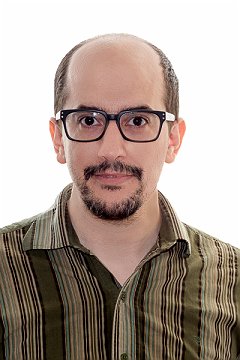
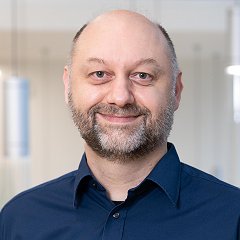
Georg Zetzsche is a tenure-track faculty member at the Max Planck Institute for Software Systems (MPI-SWS) in Kaiserslautern, Germany, since November 2018. He leads the Models of Computation group , focusing on theoretical foundations of formal verification and synthesis for infinite-state systems. His work bridges decidability, computational complexity, and automata theory , with applications to program analysis and concurrent systems .
Francisco Ferreira is a Lecturer (tenure track, equivalent to Assistant Professor) in the Department of Computer Science at Royal Holloway, University of London. Previously, he was a postdoctoral Research Associate in the Department of Computing at Imperial College London, working with Professor Nobuko Yoshida. Dr. Ferreira's primary research interests include type systems and formal logic, formal meta-theory, concurrency and process calculi, session types, temporal logic and other modal logics, and principled approaches to programming. His work bridges theoretical foundations with practical applications, particularly in the realm of communication protocols and programming language design. His publication record demonstrates a strong focus on session types and their applications, with a trajectory moving from foundational theoretical work to practical implementations. Over the past decade, his research has increasingly emphasized the verification and implementation of communication protocols, resulting in tools and frameworks that ensure communication safety in distributed systems. Scientific Awards: ICFP'12 Student Research Competition First Place Dr. Ferreira has teaching experience in programming languages and paradigms, having served as both a lecturer and teaching assistant for COMP 302. His industrial experience includes Haskell consulting for Erudite Software, game programming for Bluberi, and developing mission-critical software for Motorola Argentina in the telecom industry.
Bernd Finkbeiner is a Professor of Computer Science at Saarland University and a faculty member at the CISPA Helmholtz Center for Information Security . He leads the Reactive Systems Group, which merged with CISPA in 2020, focusing on formal methods for ensuring system safety and security. University: Saarland University Research Institution: CISPA Helmholtz Center for Information Security His research spans synthesis, verification, and monitoring of reactive systems , with applications to program repair, static/dynamic analysis, and security guarantees . Recent work includes coinductive proofs for hyperliveness, asynchronous hyperproperty verification, and symbolic execution for bug detection. Key trends in his publications include: Hyperliveness and fairness in reactive systems Symbolic execution for hyperbug identification Integration of synthesis and verification techniques Formal guarantees for cybersecurity and software reliability He contributes to academic communities through committee roles at conferences like POPL, ICFP, SPLASH, and VMCAI.
Ranjit Jhala is a Professor of Computer Science Engineering at UC San Diego's Jacobs School of Engineering, where he leads the Programming Systems Group. His research spans Programming Languages and Software Engineering, focusing on building reliable systems through Type Systems, Model Checking, Program Analysis, and Automated Deduction. His current projects include Flux for Rust verification, Liquid Haskell refinement types, and techniques for analyzing timing channels. Professor Jhala teaches courses on Programming Languages (CSE 130) and Graduate Programming Languages (CSE 230), with extensive experience teaching compilers and verification topics. Professor Jhala advises several students including Alexander Bakst, Ben Cosman, and Marc Andrysco. Notable former students include Niki Vazou (Postdoc at Maryland), Ravi Chugh (University of Chicago), and Patrick Rondon (Google).
Stuart Jonathan Russell is a Distinguished Professor of Computer Science, Cognitive Science, and Computational Precision Health at the University of California, Berkeley. He holds the Smith-Zadeh Chair in Engineering and is also a Professor of Computational Precision Health at the University of California, San Francisco. Russell is the founder and leader of the Center for Human-Compatible Artificial Intelligence (CHAI) at UC Berkeley and serves as an Honorary Fellow of Wadham College, Oxford. His academic journey began with a B.A. in Physics from the University of Oxford, followed by a Ph.D. in Computer Science from Stanford University. Throughout his distinguished career, Russell has received numerous prestigious honors including the IJCAI Computers and Thought Award (1995), IJCAI Award for Research Excellence (2022), Fellow of the Royal Society (2025), and Member of the National Academy of Engineering (2025). Russell's research spans multiple domains within artificial intelligence, with a recent focus on ensuring AI systems remain beneficial to humanity. His work includes significant contributions to machine learning, probabilistic reasoning, knowledge representation, planning, real-time decision making, and inverse reinforcement learning. In recent years, his research has increasingly focused on AI safety, value alignment, and developing frameworks for human-compatible AI systems that maintain human control as AI capabilities advance. His publication record shows a clear trend toward addressing the long-term challenges of AI development, particularly the control problem and value alignment. The research spans theoretical foundations of AI, practical applications in robotics and decision making, and critical examinations of the societal implications of increasingly capable AI systems. Russell's work has evolved from foundational AI research to increasingly focus on the alignment problem and mechanisms for ensuring AI systems remain beneficial. Russell has received numerous scientific awards recognizing his contributions to the field: IJCAI Computers and Thought Award (1995) AAAI Fellow (1997) ACM Fellow (2003) AAAS Fellow (2011) Blaise Pascal Chair (2012) Reith Lectures (2021) Officer of the Order of the British Empire (OBE) (2021) Fellow of the Royal Society (2025) Member of the National Academy of Engineering (2025) Russell has advised numerous doctoral students including Marie desJardins, Eric Xing, and Shlomo Zilberstein, and has mentored many postdoctoral researchers who have become leaders in the field. His research has been supported by various grants from organizations including the National Science Foundation, Defense Advanced Research Projects Agency, and other funding bodies focused on advancing AI research with careful consideration of safety and societal impact. He has been particularly active in securing funding for research on human-compatible AI and value alignment. He founded and leads the Center for Human-Compatible Artificial Intelligence (CHAI), which brings together researchers from multiple disciplines to address the challenge of creating AI systems that reliably do what humans want them to do. The center collaborates with other research groups including the Berkeley Artificial Intelligence Research (BAIR) lab, the Kavli Center for Ethics, Science, and the Public (KCESP), and the Institute for Cognitive and Brain Sciences (ICBS), creating a rich interdisciplinary environment for addressing the challenges of AI safety and human compatibility.