Michael Lampis is a Maître de conférences HDR (Assistant Professor) at LAMSADE , Universite Paris Dauphine. His research focuses on theoretical computer science , particularly in approximation algorithms , parameterized complexity , and graph algorithm design . He has held post-doctoral positions at Kyoto University and KTH, Stockholm, and earned his PhD from the Graduate Center of CUNY under Amotz Bar-Noy. Research Interests include: Structural Graph Parameters (treewidth, pathwidth, clique-width) Algorithmic Meta-Theorems Approximation Schemes Combinatorial Optimization Computational Complexity Recent Research Trends highlight his work on parameterized approximation algorithms for graph problems (e.g., feedback vertex set, matching) and complexity analysis of games/puzzles. His projects S-EX-AP-PE-AL (ANR JCJC), COAL-GAS (CNRS-PSL), and collaborations with Japanese institutions (PARAGA, GRAPA) emphasize cross-border innovation. Scientific Awards include: Best Student Paper Award at WG 2025 Best Paper Award at SOFSEM 2024 Advising involves PhD students Ioannis Katsikarelis, Louis Dublois, and Manolis Vasilakis, alongside Master's advisees like Edouard Nemery and Alban Guerbois. He actively participates in peer review for conferences (ICALP, ESA, STACS) and journals (Algorithmica, JCSS, DAM).
Dr. Dorota Leszczyńska-Jasion serves as Associate Professor at Adam Mickiewicz University in Poznań, Poland, within the Faculty of Cognitive Science and Department of Logic and Cognitive Science. Her academic profile centers on foundational logic research with significant interdisciplinary applications. Her educational trajectory features: Habilitation (post-doctoral degree) in Social Science (2019) from Adam Mickiewicz University based on From Questions to Proofs. Between the Logic of Questions and Proof Theory Ph.D. in Philosophy (2006) from University of Zielona Góra with dissertation The Method of Socratic Proofs for Normal Modal Propositional Logics M.A. in Philosophy (2003) from University of Zielona Góra Her research pioneers Proof Theory through the Method of Socratic Proofs —a question-based deduction framework enabling loop-free decision procedures for modal logics. She extends this work to Erotetic Logic (logic of questions), developing Erotetic Search Scenarios that model human inquiry processes. Current innovations include Distributive Deductive Systems for classical/non-classical logics and Synthetic Tableaux with unrestricted cut rules, bridging theoretical logic with computational applications. Over the past decade, her publication pattern reveals escalating focus on unifying proof-theoretic and semantic approaches. Recent work integrates correspondence analysis with Socratic proofs and develops distributive frameworks for first-order logic, demonstrating consistent advancement from modal logics toward comprehensive deductive systems with computational relevance. Her scholarly recognition includes: Foundation for Polish Science Scholarship START (2013) Foundation for Polish Science Scholarship under Prof. Wiśniewski's FPS Award (2002-2004) She currently directs the National Science Centre-funded project Distributive Deductive Systems (2017-2023) and previously contributed to major grants including Erotetic Logic in Question Processing (2013-2017) and Inferential Erotetic Logic and Problem-solving (Foundation for Polish Science). Her research program consistently secures competitive funding for exploring the intersection of formal logic, cognitive modeling, and computational methods. As core member of the Reasoning Research Group, she advances theoretical foundations of deductive systems while fostering collaborations across logic, computer science, and cognitive studies. The group's work on erotetic frameworks provides formal tools for modeling scientific inquiry and human reasoning processes.
Pierluigi Minari is Full Professor of Logic (PHIL-02/A) at the University of Florence's Department of Literature and Philosophy, where he has served as Department Director since 2019. He holds a joint appointment at Ghislieri College in Pavia, teaching 'Institutions of Logic' since 2007. His education includes a PhD in Philosophy (1989) and a Master's degree cum laude (1980), both from the University of Florence through joint programs with Pisa, Siena, and Turin universities. Research focuses on: Non-classical logics (intermediate/modal/many-valued/substructural) Proof theory and formal semantics Combinatory logic and λ-calculus Historical development of logical systems Algebraic approaches to truth theories Publications emphasize proof-theoretic methods, historical analyses of modal logic (particularly Oskar Becker's work), and computational foundations. Recent works show strong engagement with intuitionistic systems, formal verification, and philosophical logic.
Dr. Shahin Mehdipour Ataee is an Assistant Professor at the State University of New York at Fredonia with teaching experience since 2007. His office hours are held Tuesdays (12:30-2:00 PM), Wednesdays (3:30-5:00 PM by appointment), and Thursdays (12:30-2:00 PM). Education: Ph.D. in Computer Engineering - Information Systems Track, Eastern Mediterranean University (2018) M.S. in Software Engineering, Qazvin Azad University (2010) B.S. in Computer Engineering - Software Track, Mazandaran University of Science and Technology (2007) His research focuses on Machine Learning , Deep Learning , and Semantic Web technologies, with applications in AI problem-solving, multimedia pattern recognition, and web service frameworks. Recent publications demonstrate expertise in logic-based systems and computational methods. Awards: Teaching Excellence Award 2024-2025 Teaching Excellence Award 2023-2024 Research Excellence Award 2022-2023 He teaches a broad spectrum of computer science courses including core subjects like Algorithms, Operating Systems, and specialized topics in AI/ML. While no active lab or grants are mentioned, his publication record indicates ongoing scholarly activity.
Shachar Itzhaky is an Associate Professor in the Department of Computer Science at Technion - Israel Institute of Technology, Haifa. His research spans multiple areas of programming languages, formal methods, and software engineering, with a focus on making program development and verification more accessible and efficient. He has served on program committees for numerous prestigious conferences including PLDI, POPL, SPLASH, and ICFP. Dr. Itzhaky's research interests center around program synthesis, automated reasoning, and formal verification. His work in program synthesis explores techniques for automatically generating programs from high-level specifications, with applications in end-user programming and software development. In automated reasoning, he has made significant contributions to e-graph based reasoning, invariant inference, and property-directed verification. His research in formal methods focuses on practical applications for program verification, particularly for data structures and security properties. An analysis of his recent publications reveals a strong focus on leveraging advanced formal techniques for practical program understanding and generation. His work consistently bridges theoretical foundations with practical applications, particularly in program synthesis, verification, and end-user programming tools. The trend shows increasing integration of machine learning techniques with traditional formal methods, as well as expanding applications to security and privacy domains. ACM SIGPLAN John C. Reynolds Doctoral Dissertation Award Dr. Itzhaky has been actively involved in the programming languages research community, serving on numerous program committees and contributing to the advancement of formal methods and program synthesis. His work has practical implications for software development tools, security analysis, and end-user programming environments. While specific grant information isn't detailed in the provided text, his extensive publication record in top-tier venues suggests successful funding for his research endeavors. His work on projects like Object Spreadsheets and Lifty demonstrates a commitment to creating practical tools that address real-world programming challenges. Dr. Itzhaky's research is conducted within the vibrant programming languages and formal methods group at Technion's Computer Science department. His work intersects with multiple research threads including program synthesis, verification, and security, suggesting collaboration across these areas within the department. His tools like EPR-based Verification, PDR∀, and VeriCon represent significant technical contributions that likely form the basis of ongoing research projects with students and collaborators.
José Fragoso Santos is an Assistant Professor in the Department of Computer Science and Engineering at Instituto Superior Técnico, University of Lisbon, and a member of INESC-ID where he conducts research as part of the SAT group. His research focuses on embedding formal methods into software development processes, with particular emphasis on JavaScript program analysis and verification. His educational background includes: PhD in Computer Science from University of Nice Sophia Antipolis (2014) Master's degree in Information Systems and Computer Engineering from Instituto Superior Técnico, Universidade de Lisboa (2008) Dr. Santos' research centers on JavaScript verification, symbolic execution, and secure information flow. He led the development of JaVerT, the first separation-logic-based tool for JavaScript analysis and testing, which has gained significant interest from both industry and academia. His work bridges theoretical formal methods with practical applications, particularly in web security and program analysis. He has made substantial contributions to understanding JavaScript semantics, symbolic execution techniques, and secure information flow in web applications, with publications in premier venues like PLDI, POPL, and ECOOP. His recent publications demonstrate a strong focus on symbolic execution for JavaScript and related languages, with applications in web security and program verification. The research shows progression from foundational work on information flow security to advanced techniques like compositional symbolic execution and multi-language analysis platforms. His work on JaVerT and Gillian has established significant research directions in program analysis for dynamic languages. His notable scientific achievements include: Facebook research award for the JaVerT project Dr. Santos has supervised numerous graduate students on projects related to JavaScript verification, symbolic execution, web security, and formal methods. His research has practical applications, as evidenced by the collaboration with Amazon R&D engineers to verify critical components of the AWS Encryption SDK using JaVerT. He has served on program committees for major conferences including PLDI, OOPSLA, and IJCAI, demonstrating his standing in the programming languages community. As a member of the SAT group at INESC-ID, Dr. Santos collaborates with researchers working on formal methods, program verification, and software security. His current projects include extending JavaScript symbolic execution to Web Workers, developing formal semantics for JavaScript regular expressions, and creating first-order solvers for program analysis. He continues to push the boundaries of what's possible in JavaScript program analysis and verification.
Ranjit Jhala is a Professor of Computer Science Engineering in the Jacobs School of Engineering at the University of California, San Diego. His research focuses on building reliable computer systems through programming languages and software engineering techniques. His primary research interests include Programming Languages, Formal Verification, and Software Engineering. He draws from and contributes to areas such as Type Systems, Model Checking, Program Analysis, and Automated Deduction, bridging theoretical foundations with practical implementations for real-world software development. Prof. Jhala's publication record shows a consistent trajectory in refinement type systems, evolving from Liquid Haskell to Flux for Rust, while also exploring neurosymbolic approaches to error repair and type error diagnosis. His work demonstrates a commitment to making formal verification techniques accessible to practitioners. He leads the Programming Systems Group at UCSD, mentoring graduate students and collaborating with researchers across the programming languages community. His service includes General Chair roles for POPL 2018 and PLDI 2022, reflecting his leadership position in the field. Prof. Jhala is also known for his mentoring activities, including talks on academic presentation skills and participation in ICFP's mentoring programs for students and early-career researchers.
Umang Mathur is a Presidential Young Professor (Assistant Professor) in the School of Computing at the National University of Singapore (NUS), where he leads the FOCS Lab and is affiliated with PLSE@NUS (Programming Languages and Software Engineering group). He has established himself as a leading researcher in Formal Methods, with significant contributions to concurrency analysis and program verification. Dr. Mathur received his PhD from the University of Illinois at Urbana-Champaign under Prof. Mahesh Viswanathan. Prior to joining NUS, he worked as a Research Scientist at Facebook Inc. and as a Research Fellow at the Simons Institute for the Theory of Computing. His doctoral work was supported by a Google PhD Fellowship. PhD: University of Illinois at Urbana-Champaign Current Position: Presidential Young Professor at NUS School of Computing Previous Positions: Research Scientist at Facebook, Research Fellow at Simons Institute His research spans Formal Methods and Logic with applications to Programming Languages, Software Engineering, and Cyber-Physical Systems. Dr. Mathur specializes in developing algorithmic techniques for analysis of concurrent software and understanding decidability boundaries in verification and synthesis. His work bridges theoretical foundations with practical implementations, making verification techniques more efficient for real-world systems. Analysis of his recent publications reveals a strong focus on practical concurrency analysis, with many papers addressing race detection, deadlock prediction, and memory model verification. His research consistently demonstrates how theoretical computer science can solve practical software engineering challenges, particularly in making verification techniques scalable and efficient for industrial applications. Google PhD Fellowship ESEC/FSE 2018 Distinguished Paper Award ASPLOS 2022 Best Paper Award POPL 2023 ACM SIGPLAN Distinguished Paper Award CPP 2024 Distinguished Paper Award Dr. Mathur actively mentors numerous PhD students, Master's students, and undergraduates through the FOCS Lab. His research group has received support from Google Research grants and other funding sources. He serves on program committees for major conferences including PLDI, POPL, and ASPLOS, and has organized events like PLMW@PLDI. His teaching includes courses on Data Structures and Algorithms, Foundations of Logic in Computer Science, and advanced topics in Programming Languages. As director of the FOCS Lab, Dr. Mathur oversees a vibrant research group focused on foundational aspects of computer science with direct applications to programming languages and software engineering. The lab maintains strong international collaborations and regularly publishes in top-tier venues, reflecting its significant contributions to the field of formal methods and programming languages.
Denis Kuperberg is a CNRS researcher at LIP (Laboratoire de l'Informatique du Parallélisme), ENS Lyon, where he is part of the Plume research team. His work bridges theoretical computer science with interdisciplinary applications, particularly in systems biology. His primary research interests include automata theory, synthesis, verification, games, logics, decidability procedures, complexity, and proof theory. Kuperberg's work often explores the connections between formal methods and practical applications, as evidenced by his recent interdisciplinary publications on thermodynamic consistency of autocatalytic cycles. His research demonstrates a strong focus on both theoretical foundations and practical implementations, with several software tools developed for research purposes. Kuperberg's publication record shows a clear evolution from purely theoretical work in automata and logic toward more interdisciplinary research. His recent papers (2022-2025) demonstrate increasing engagement with biological applications while maintaining strong theoretical foundations. Key themes across his publications include history-determinism in automata, cyclic proof systems, positive fragments of logic, and applications to verification problems. Best Paper Award at ICALP 2025 (with Thomas Colcombet and Amina Doumane) Kuperberg actively supervises multiple students at various levels, including PhD candidates (Iris Magniez–Papillon, Émile Hazard, Laureline Pinault), postdoctorates (Thomas Kosc, Marc Bagnol), and numerous interns. His teaching portfolio includes advanced courses on Graphs, Machines and Logics at ENS Lyon Master 2 program, Theory of Regular Languages at EPITA Lyon, and specialized topics like Mathematical Aspects of Automata Theory. He leads the development of research software including EmergeNS (for simulating chemical reaction networks and tracking autocatalytic dynamics), Stamina and Acme (for solving decision problems from automata theory), and Electrum (a specification language analyzer). These tools demonstrate his commitment to bridging theoretical computer science with practical implementations.
Ümit Atlamaz is an Assistant Professor in the Department of Linguistics at Boğaziçi University, where he also serves as Deputy Department Head. His academic work spans theoretical morphosyntax and computational linguistics, with a focus on case theory, agreement phenomena, and computational approaches to linguistic analysis. Dr. Atlamaz received his academic training at prestigious institutions: PhD in Linguistics, Rutgers University, USA (2019) MA in Linguistics, Boğaziçi University, Turkey (2012) BA in Foreign Language Education, Boğaziçi University, Turkey (2009) His research expertise lies at the intersection of theoretical syntax and computational linguistics. Dr. Atlamaz investigates complex phenomena including case theory, differential object marking, agreement disruptions, and null arguments from a generative perspective. His computational work focuses on natural language inference, sentiment analysis, and ontological representations, particularly for Turkish and other languages. His theoretical work often examines challenging cases from Kurmanji, Laz, and Turkish to refine our understanding of syntactic principles. Dr. Atlamaz's publication record demonstrates a consistent trajectory from theoretical syntax toward increasingly computational approaches. While his earlier work focused on case and agreement phenomena in Kurdish and Caucasian languages, his recent publications show a growing emphasis on computational methods, including neural network approaches to morphological analysis and computational modeling of language change. His research bridges formal linguistic theory with practical computational applications. Dr. Atlamaz actively contributes to the academic community through teaching and collaboration. He teaches both undergraduate and graduate courses in syntax, semantics, and computational linguistics. He co-organizes the ST@BU (Syntactic Theory at Boğaziçi University) reading group, which focuses on advanced topics in syntactic theory. His collaborations span multiple institutions and include work with researchers at Facebook and Google on natural language processing projects. Dr. Atlamaz leads research projects including "Turkish Eksiltim" (Boğaziçi University Scientific Research Projects 19348) and participates in multiple collaborative research initiatives. He has presented his work at numerous international conferences and workshops, demonstrating active engagement with the global linguistics community.
Janusz Michał Czelakowski serves as Professor and Rector at Opole University, Poland, where he has been employed since 1992. Previously, he worked at the Polish Academy of Sciences in Warsaw from 1972 to 1992. He held visiting professorships at Iowa State University during 1990/1991 and 1994/1995. His educational background includes a Master's degree in Mathematics from the University of Wrocław (1972) and a PhD in Mathematics from the University of Warsaw (1975). Czelakowski's research spans mathematical logic and algebra , with particular expertise in abstract algebraic logic, universal algebra, and formal action theory. His work demonstrates strong interdisciplinary connections between computer science (25%) and mathematics (75%), focusing on theoretical foundations including model theory, Boolean algebra, first-order logic, and infinitistic methods. His notable monographs include Protoalgebraic Logics (Kluwer, 2001), Freedom and Enforcement in Action: Elements of Formal Action Theory (Springer, 2015), and The Equationally Defined Commutator: A Study in Equational Logic and Algebra (Birkhäuser, 2015), representing significant contributions to his field. Among his honors: Gold Cross of Merit (2002) Gold Medal for Long Service (2019) With an h-index of 2 according to Web of Science and a total ministerial score of 584, his scholarly impact is reflected in over 100 publications. His research integrates advanced mathematical techniques with philosophical considerations of action and logic, maintaining active scholarly engagement as evidenced by his current administrative and academic roles.
Carles Noguera Clofent serves as Associate Professor in the Department of Information Engineering and Mathematics at the University of Siena since 2022. His academic trajectory includes lecturing at the University of Lleida (2006-2007), postdoctoral research at the University of Siena (2007-2009), junior research at the Artificial Intelligence Research Institute (2009-2012), and scientist positions at the Czech Academy of Sciences (2013-2022) where he led funded projects and taught at Charles University. His educational foundation comprises: Mathematics degree from University of Barcelona (2001) Ph.D. in Logic and Foundations of Mathematics from University of Barcelona (2006) Philosophy degree from University of Barcelona (2007) A logician bridging mathematics, philosophy, and computer science, his research pioneers algebraic structures in many-valued logics with applications in AI. Key contributions include fuzzy logic semantics, temporal reasoning systems, and probabilistic truth-value frameworks, establishing him as a leading theorist in non-classical logics. Analysis of his 2024-2025 publications reveals sustained innovation in many-valued logic foundations, with growing emphasis on computational applications. Work spans pure theory (e.g., asymptotic truth-value laws) to implementable systems (e.g., tableau methods for interval temporal logic), demonstrating seamless integration of abstract mathematics with AI/CS challenges. He has directed multiple research projects at the Czech Academy of Sciences while maintaining teaching commitments in Prague institutions. Current advising activities and grant details beyond the Czech period remain unspecified in available materials. His institutional affiliations highlight enduring ties to the Artificial Intelligence Research Institute (IIIA-CSIC) and Czech Academy of Sciences, where he developed core methodologies later refined at Siena for logic-based AI systems.
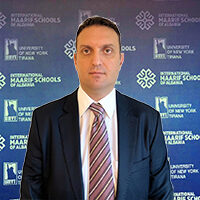
Marenglen Biba is a Full Professor and Dean of the Faculty of Engineering and Architecture at the University of New York Tirana, where he also chairs the Department of Computer Science. His academic journey includes a Ph.D. in Computer Science from the University of Bari, Italy (2009), and a Laurea degree cum laude from the same institution (2004). His research spans: Core AI/ML : Machine learning algorithms, statistical relational learning, pattern recognition Language technologies : NLP for Albanian, stemming, morphological analysis Applied domains : Computational biology, social network mining, emotion detection Recent publications (2018–2021) focus on NLP for low-resource languages, deep learning surveys, and emotion-aware data mining. Award highlights include: ICT Academic of the Year 2012 (Albania) Best Paper Award at ILP 2008 Multiple University of Bari research grants He has led EU-funded projects like ADRIATinn (€4.6M budget) and maintains collaborations with the University of Washington, University of Bari, and Asian universities. Administrative leadership includes decade-long oversight of UNYT's Computer Science department and current deanship.
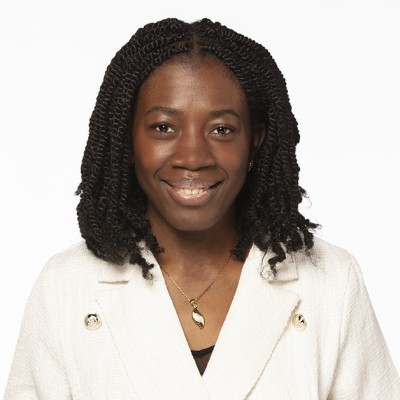
Ange Adrienne Nyamen Tato serves as an Assistant Professor in the Department of Teaching and Learning Studies at Laval University's Faculty of Education. Her academic journey spans multiple institutions across Canada and Morocco, with a strong interdisciplinary background combining computer science, artificial intelligence, and educational theory. PhD in Computer Science (Artificial Intelligence) from University of Quebec at Montreal (UQAM), 2020 Master's degree in Computer Science from University of Quebec at Montreal (UQAM), 2015 Engineering degree in Information Systems from Mohammedia School of Engineers in Morocco, 2014 DEUST in Mathematics, Computer Science and Physics from Hassan II University, Morocco, 2011 Professor Tato's research focuses on the intersection of artificial intelligence and education, with particular expertise in generative AI applications for educational contexts, machine learning algorithms, intelligent tutoring systems, educational data mining, and serious game design. Her work addresses critical challenges in educational technology including transparency, assessment practices, and engagement issues that have limited the adoption of AI-powered learning tools. She is particularly interested in the ethical implications, environmental impact, and potential biases of AI in educational settings. Her recent publications demonstrate a consistent focus on developing sophisticated models for user behavior prediction, adaptive learning systems, and integrating pedagogical knowledge into AI frameworks. The research spans multiple domains including logical reasoning development, socio-moral reasoning, piloting training, and general educational applications of deep learning and knowledge tracing techniques. Professor Tato has secured significant research funding, including a $192,500 NSERC Discovery Grant for her project 'Optimizing Generative Artificial Intelligence for Education: Towards a Holistic Approach Integrating Teachers and Learners.' This five-year project aims to develop pedagogically aware large language models (PA-LLMs) that better serve educational purposes by integrating educational theories, human learning factors, and bias correction mechanisms. Principal Investigator for NSERC Discovery Grant ($192,500 over 5 years) PC Member for ICCE 2023 and 2024 conferences PC Member for EDM 2024 conference PC Member for AIED 2024 conference Professor Tato teaches graduate courses including TEN-7028 Games and Learning and TEN-7030 Digital Intelligence in Education: Opportunities and Challenges. She is currently accepting Master's students interested in AI applied to education. Her previous professional experience includes work as an Artificial Intelligence Specialist at Beam Me Up Augmented Intelligence (2018-2022) and a postdoctoral fellowship in Deep Learning applied to aeronautics in partnership with Bombardier and CAE (2020-2022).
Jean-François Côté is a Full Professor at the Department of Operations and Decision Systems within the Faculty of Business Administration at Laval University. His research focuses on combinatorial optimization, stochastic programming, and mathematical programming with applications in vehicle routing, cutting and loading problems, and logistics optimization. Dr. Côté holds a Doctorate in Computer Science, Operations Research from the University of Montreal, along with Master's and Bachelor's degrees in the same field from the same institution. His academic credentials provide a strong foundation for his interdisciplinary research at the intersection of computer science and operations research. His research spans several key areas in operations research including: Combinatorial optimization techniques for complex routing problems Stochastic programming approaches for handling uncertainty in logistics Mathematical programming models for integrated decision making Vehicle routing and delivery optimization in various contexts Cutting and loading problems in transportation and manufacturing Professor Côté's recent publication record demonstrates a strong focus on solving complex logistics and transportation problems with mathematical rigor. His work addresses challenging real-world problems including same-day delivery optimization, bike sharing systems, home healthcare routing, and automotive manufacturing sequencing. His methodological contributions include novel algorithmic approaches such as logic-based Benders decomposition, disaggregated integer L-shaped methods, and branch-and-regret algorithms. Dr. Côté has published extensively in top-tier operations research journals including: INFORMS Journal on Computing European Journal of Operational Research Transportation Science Computers & Operations Research Operations Research He actively collaborates with researchers across North America and Europe through the CIRRELT research center. His work addresses practical problems faced by industries including transportation, healthcare, manufacturing, and e-commerce. Professor Côté supervises graduate students working on cutting-edge optimization problems and contributes to advancing both theoretical and applied aspects of operations research. His laboratory, part of the broader research ecosystem at Laval University, focuses on developing innovative mathematical models and algorithms to solve complex decision-making problems in logistics and supply chain management.