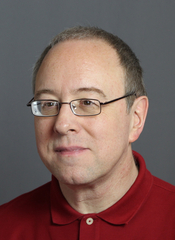
Dr. Uwe Waldmann is a researcher at the Max Planck Institute for Informatics in Saarbrücken, Germany, affiliated with the Automation of Logic research group. He leads research initiatives in Combinations of Deductive Systems and First-Order Model Checking , contributing to formal logic and automated reasoning. Contact: uwe@mpi-inf.mpg.de . Research areas: Automated reasoning, model checking, deductive systems As an academic researcher, Waldmann's work focuses on theoretical foundations of logic in computer science. His contributions span formal methods, theorem proving, and computational complexity. He also serves as Ombudsperson for the institute, ensuring ethical standards in research practices.
Roberto Hofmeister Pich is a Full Professor of Philosophy at the Pontifícia Universidade Católica do Rio Grande do Sul (PUCRS) in Brazil. He holds a PhD from the University of Bonn (2001) and has held postdoctoral fellowships from the Alexander von Humboldt-Stiftung and Fulbright Commission. His roles include Vice-President of the Société Internationale pour l'Étude de la Philosophie Médiévale (SIEPM) since 2017 and Ambassador of the University of Bonn in Brazil since 2019. Education: Philosophy, Universidade Federal do Rio Grande do Sul Evangelical Theology, Escola Superior de Teologia PhD, University of Bonn (Thesis: Philosophy of John Duns Scotus) Research Interests: His work spans medieval and early modern philosophy, focusing on scholasticism, Latin American colonial philosophy, and the philosophy of religion. He explores topics like divine knowledge of contingent futures, the evolution of the concept of will, cognitive processes in scholasticism, and the ideological foundations of slavery in Latin America. Scientific Awards: Alexander von Humboldt-Stiftung Postdoctoral Fellowships (2004-5, 2006-7, 2011-12) Fulbright Commission Fellowship (2009-10) Grants & Projects: Served as First Holder of the CAPES/Uni-Bonn Chair (2018-19, 2019-20), leading the project The Philosophy of Black Slavery . Co-organized the 2017 SIEPM International Congress in the Southern Hemisphere.
Sean Holden is a Professor in the Department of Computer Science and Technology at the University of Cambridge, affiliated with The Computer Laboratory. He holds positions at both the University and Trinity College. His research focuses on automated theorem proving, machine learning, and their intersections with formal methods and AI. He leads the development of the Connect++ theorem prover, which won the Best Newcomer award at CASC 2024. His work spans areas including connection calculus, graph neural networks, and reinforcement learning in games like Mahjong. Holden's academic contributions include over 50 publications in top venues such as IJCNN, ICPRAM, and Journal of Automated Reasoning. Notable works include foundational research on Bayesian methods in theorem proving and machine learning applications in bioinformatics and medical imaging. He serves as an Associate Editor for IEEE Transactions on Artificial Intelligence since 2023. His research group explores topics like protein graph embeddings, medical AI (e.g., breast cancer classification via MUGI-MRI), and the integration of machine learning with automated reasoning systems. Collaborations span institutions including Trinity College and international partners in computational biology and AI.
Martina Seidl is a researcher and principle investigator at TU Wien's Institut für Softwaretechnik und Interaktive Systeme (E188). Her main affiliation is within the Faculty of Informatics. She leads the FAME Project (Formalizing and Managing Evolution in Model-Driven Engineering), focusing on advancing formal methods in software engineering. Her research interests include formal verification techniques, SAT/QBF solving algorithms, model-driven engineering, and automated reasoning. She has contributed to advancements in quantified Boolean formula (QBF) solving, parallel computing methodologies for logical problems, and formal methods in software model analysis. Her work spans theoretical computer science and practical applications in automated theorem proving and model checking. Notable contributions include expansion-based QBF solving approaches, parallel solving frameworks, and feature-based classifications of formal verification techniques. Seidl co-organized the QBF Gallery initiative, which curates benchmark suites for quantified Boolean formula competitions. She has also published extensively on clause redundancy optimization, blocked clause analysis, and the integration of formal methods in educational contexts like UML@Classroom.
Adithya Murali is an Assistant Professor at the University of Wisconsin-Madison's Department of Computer Science. His research focuses on Formal Methods and Programming Languages , specifically democratizing software verification through data-driven logic learning and neuro-symbolic approaches. He holds a Ph.D. from the University of Illinois at Urbana-Champaign (UIUC), advised by P. Madhusudan Parthasarathy. Education: Ph.D. in Computer Science (UIUC, 2024), B.Tech. from BITS-Pilani (2017) Roles: Subreviewer for PLDI, CONCUR, ICALP, and LICS; Teaching Assistant for courses in Logic, Compilers, and Trustworthy AI His research interests center on reducing the cognitive burden of software verification, enabling non-experts to verify code through innovative techniques like logic learning from data. Cross-disciplinary work integrates machine learning with symbolic reasoning, exemplified in projects like the CLEVR VDP Dataset and GQA VDP Dataset for visual discrimination puzzles. Recent publications span formal verification frameworks (e.g., FO-Complete Heap Logics), neuro-symbolic systems, and automated reasoning. His work has received the ACM Europe Best Paper Award (OOPSLA 2023) . Awards: Ray Ozzie Fellowship (2018), Gold Medal (BITS-Pilani 2017), INSPIRE Scholarship (2012-2016) Grants: UIUC Travel Grants, SIGPLAN Funding He advises students across UIUC and UW-Madison, focusing on program synthesis, verification, and AI integration. Collaborations include the Formal Methods Seminar at UIUC and volunteer roles at major conferences.
Miki Hermann is a CNRS Researcher at the Laboratory of Computer Science (LIX) at École Polytechnique, France. He is affiliated with the Algorithms and Complexity research group and maintains an active research program in theoretical computer science and computational logic. His research interests span computational complexity, constraint satisfaction problems, satisfiability, and logic in computer science. Hermann's work focuses on the theoretical foundations of computational problems, particularly examining complexity classifications, counting problems, and algorithmic solutions for logical and combinatorial structures. His research bridges theoretical computer science with practical applications in artificial intelligence and data analysis. The analysis of his recent publications reveals a consistent focus on computational complexity across various logical frameworks. His work demonstrates expertise in classifying the complexity of constraint satisfaction problems, propositional logic systems, and graph-theoretic problems. Notable research directions include minimal inference problems, counting complexity, and applications of satisfiability to big data transformation through his MCP project. Hermann is part of the Algorithms and Complexity research group at LIX (CNRS, UMR 7161), where he contributes to theoretical computer science research. He has developed significant software projects including MCP (Multi-Classification Project) for transforming datasets into propositional formulas and GYT (Generalized Young Tableaux) for solving variadic polynomial equations over non-negative integers.
Santiago Ivan Pinzon Palacios serves as Professor and Chair in the Department of Mathematics at the University of the Andes, Colombia, with core responsibilities in academic leadership and mathematical research. His research expertise centers on Model Theory and Algebraic Geometry, with specialized investigations into Zariski Geometries, Compact Structures, and Inverse Limits. This work bridges foundational logic and geometric frameworks, particularly examining axiomatization of valued fields and compactness properties in structural mathematics. His scholarly output includes a significant 2016 publication analyzing inverse limits of compact structures, which demonstrates trends toward unifying atomic compactness with profinite structural analysis in mathematical logic. The research emphasizes intrinsic characterization of profinite systems and retract properties within ultraproduct constructions. No scientific awards or honors are documented in available records. Information regarding graduate student supervision, research grants, or collaborative funding initiatives is not provided in current sources. Similarly, no laboratory affiliations or research team memberships are specified within the institutional context.
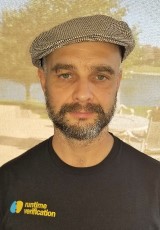
Grigore Rosu is a Professor in the Department of Computer Science at the University of Illinois at Urbana-Champaign , where he leads the Formal Systems Laboratory (FSL) . He is also the founder and President of Runtime Verification, Inc. (2010) and Pi Squared, Inc. (2023). Rosu's research bridges theoretical foundations and practical system development in formal methods , software engineering , and programming languages . His academic journey includes a Ph.D. in Computer Science (2000, University of California at San Diego), an M.S. in Fundamentals of Computing (1996, University of Bucharest), and a B.A. in Mathematics (1995, University of Bucharest). Prior to UIUC, he worked as a Research Scientist at NASA Ames Research Center (2000-2002) and took a sabbatical at Microsoft Research (2008). Rosu's research has shaped the field of runtime verification (coined with Klaus Havelund in 2001), introduced the K framework (2003) for executable semantics, and pioneered matching logic as a unifying foundation for formal reasoning. His work spans automated coinduction, monitoring-oriented programming, and formal semantics for C, Java, JavaScript, Python, and the Ethereum Virtual Machine. He has received numerous awards, including the NSF CAREER , Dean's Award for Excellence in Research , and IEEE/ACM Most Influential Paper Award . Scientific Honors : AAAS Fellow (2022) IEEE Fellow (2021) Test of Time Awards (RV 2001, 2018; RV 2003, 2023) Distinguished Paper Awards (ASE 2008, ASE 2016, OOPSLA 2016, ETAPS 2002) NSF CAREER Award (2005) Dean's Award for Excellence in Research (2014) Rosu teaches advanced courses in programming language design , formal semantics , and blockchain technology . His innovations have been commercialized through Runtime Verification, Inc., serving clients like NASA, Boeing, Toyota, and blockchain entities such as Ethereum Foundation.
Fredrik Engström is a Senior Lecturer and Associate Professor in Logic at the Department of Philosophy and Logic, Faculty of Humanities, University of Gothenburg. He also serves as Vice-Dean for Postgraduate Education and Facilities within the Faculty of Humanities. He has been affiliated with the University of Gothenburg since 2006, progressing from research assistant to senior lecturer in 2018. PhD in Mathematics (2004), Chalmers University of Technology Doctoral studies partially completed at the University of Birmingham under Richard Kaye Former Senior Lecturer in Mathematics, Mid Sweden University Head of Department (2016–2021), Department of Philosophy, Linguistics and Theory of Science His research lies at the intersection of mathematical logic, philosophical logic, and cognitive modeling. Key areas include dependence logic, generalized quantifiers, definability, logicality, and the foundations of team semantics. He leads the VR-funded project The Foundations of Team Semantics: Meaning in an Enriched Framework , which explores the expressive power and philosophical implications of modern logical systems. The 15 most recent publications reflect a sustained focus on formal systems with team semantics, particularly dependence logic extended with generalized quantifiers. His work combines deep technical results in model theory and proof theory with cognitive and philosophical considerations, especially in reasoning under bounded resources and the nature of logical constants. Collaborations with prominent logicians such as Juha Kontinen, Jouko Väänänen, and Claes Strannegård highlight the interdisciplinary nature of his research. Scientific Awards: No awards listed in the provided text. Fredrik Engström has supervised or co-supervised several students, though specific names are not listed. He has led significant institutional roles, including departmental leadership and vice-dean responsibilities. His grants include funding from the Swedish Research Council (VR) for foundational research in logic. He is active in multiple research communities, presenting at international logic and philosophy workshops. He is involved in research teams focused on logic and cognition, particularly in projects combining formal logic with cognitive modeling. His future work likely continues to explore the foundations of semantics, the limits of expressiveness in logical systems, and the cognitive plausibility of formal reasoning frameworks.
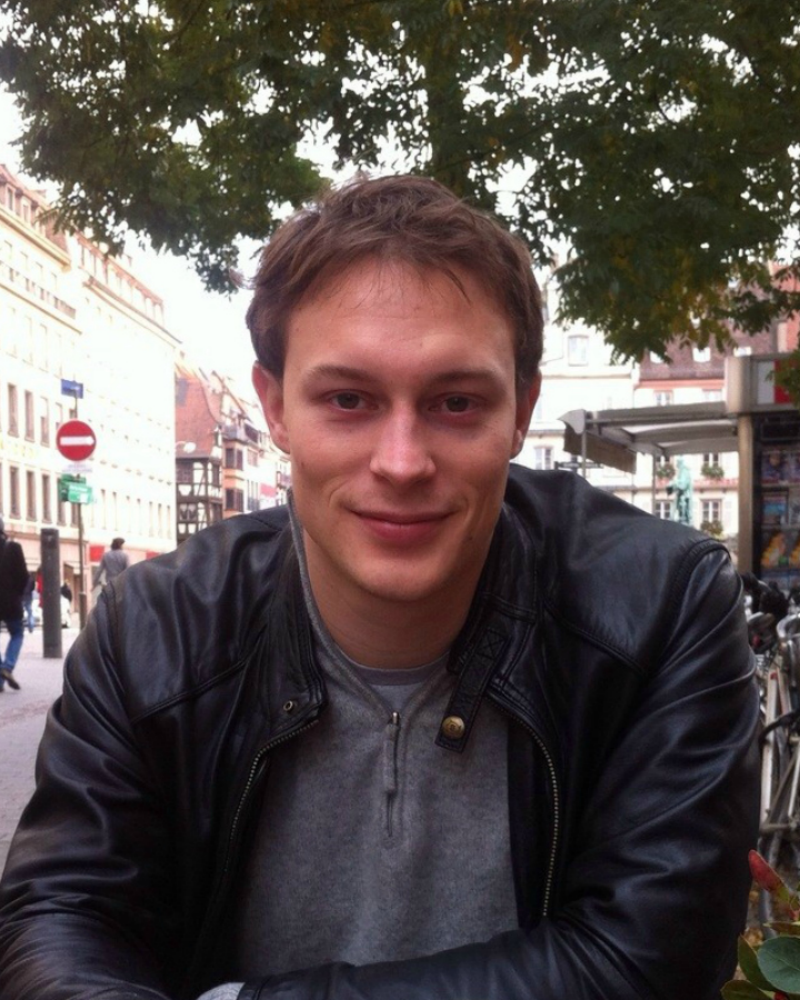
Pierre Boutry is an Associate Professor at the Department of Mathematics and Computer Science of the University of Strasbourg. He is affiliated with the IGG team of the ICube Laboratory. His academic positions include prior roles as a research engineer at Inria and the University of Strasbourg. Education: Ph.D. in Mathematics and Computer Science, University of Strasbourg (2018) M.Sc. in Engineering Mathematics and Computational Science, Chalmers University of Technology (2013) Engineering degree (M.Sc. equivalent), ENSIIE, Strasbourg (2009) Research interests focus on the formalization and foundations of geometry using proof assistants like Coq and Isabelle, cryptography, and automated deduction methods. His work includes contributions to the CV2EC tool for translating cryptographic proofs and formalizing the Poincaré Disc Model for hyperbolic geometry. Key publications include studies on Tarski's axioms, equivalence of parallel postulates, and arithmetization of geometry. He has collaborated with researchers such as Gabriel Braun, Pascal Schreck, and Julien Narboux. Teaching roles span courses on computer-assisted proofs, functional programming, logic, and cryptography. He also co-developed Coq training modules for Inria Academy.
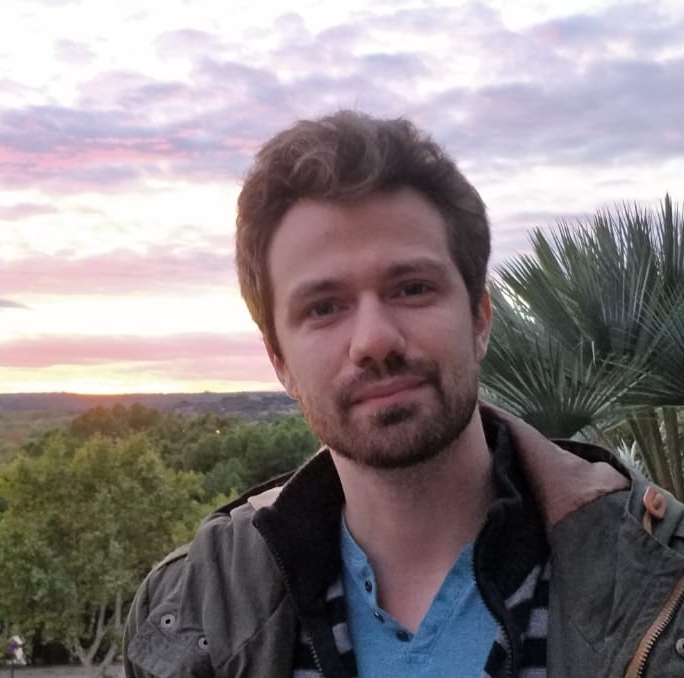
Alessio Mansutti is an Assistant Professor at IMDEA Software Institute, Madrid, where he conducts research in logic and formal methods in computer science. Prior to this, he was a Research Associate in the Automated Verification Group at the University of Oxford. His research focuses on decision procedures for arithmetic theories, separation logic, modal logics, and proof theory. Key areas include Presburger arithmetic with non-linear operations (exponentiation, GCD), quantifier elimination, complexity analysis, and logical expressiveness. He has made significant contributions to the decidability and complexity of extended arithmetic and spatial logics. The recent publications show a strong trend in developing quantifier elimination techniques for linear-exponential and counting extensions of arithmetic, analyzing reachability in separation logic, and designing internal calculi for modal and spatial logics. His work bridges theoretical logic with practical verification and optimization problems. Scientific Awards : None mentioned in the text. Advising and Grants : Alessio Mansutti is currently leading independent research funded by the Madrid Regional Government under the César Nombela grant 2023-T1/COM-29001. There is no mention of formal students or advisees, suggesting he may be early in his independent career. He was previously involved in the ERC project ARiAT (2020–2024) led by Christoph Haase, focusing on advanced reasoning in arithmetic theories. Labs and Teams : He is affiliated with the IMDEA Software Institute and was part of the Automated Verification Group at the University of Oxford. His research is deeply collaborative within the formal methods and logic communities, particularly in decision procedures and logical foundations for program verification.
Paweł Sobociński is a Professor of Trustworthy Software Technologies at the Department of Software Science, School of Information Technologies, Tallinn University of Technology (TalTech), where he also leads the Laboratory for Compositional Systems and Methods. He is a principal investigator in several major research projects including the Estonian Research Council’s PRG1210 (ALICE), the EU-funded CHESS cybersecurity hub, and the EXAI Centre of Excellence in AI. His academic background includes faculty positions at the University of Southampton and research roles at the University of Cambridge and institutions in France and Italy. His research lies at the intersection of computer science and mathematics, with a focus on applied category theory. He investigates compositional modeling of systems, where the behavior of complex systems emerges from the structured interaction of their components. His work employs string diagrams, process algebras, Petri nets, and categorical semantics to develop formal methods for verifying and reasoning about concurrent and cyber-physical systems. He is particularly known for his contributions to graphical linear algebra and diagrammatic reasoning. The recent publications highlight a strong trend in diagrammatic methods, especially string diagrams, for expressing logic, algebra, and system behavior. These works span from foundational categorical structures to applications in electrical circuits, concurrency, and formal verification, demonstrating a unifying thread of compositional reasoning. His leadership in organizing conferences like LICS 2024 and ICALP 2024 underscores his central role in the theoretical computer science community. His scientific recognition includes numerous invited talks and tutorials at major international venues such as CONCUR, QPL, MFPS, and ETAPS, as well as leadership roles in academic organizations. He is an Associate Editor for journals including Compositionality , Mathematical Structures in Computer Science , and Logical Methods in Computer Science , and has served on the steering committee of ETAPS. Sobociński has supervised multiple PhD students and postdoctoral researchers, including Owen Stephens, Fabio Zanasi, Mario Román, and Elena di Lavore. He is also the director of the PhD programme in ICT at TalTech and has received research grants from the Estonian Research Council, the European Commission, and the Estonian Ministry of Education and Research, supporting his work in trustworthy software, AI, and cybersecurity. He leads the Laboratory for Compositional Systems and Methods at TalTech, a research group focused on developing and applying compositional techniques in software science, with applications in AI, security, and formal verification. The lab fosters international collaboration and is active in organizing workshops and summer schools.
Christoph Haase is an Associate Professor at the Department of Computer Science, University of Oxford, and a Fellow of St Catherine’s College. His research focuses on developing rigorous mathematical methods for algorithmic verification, automated reasoning, automata theory, and logic in computer science. University of Oxford, UK (Current) University College London, UK (Former) ENS Paris-Saclay, France (Former) Microsoft Research Cambridge, UK (Former) His work includes fundamental contributions to decision procedures for arithmetic theories, particularly in Presburger and Büchi arithmetic, and applications to verification of software and hardware systems. He leads the ARiAT project, funded by an ERC Starting Grant (2020–2025), aiming to advance quantifier elimination and complexity bounds for arithmetic theories. Key publication trends include verification , automata theory , arithmetic logic , computational complexity , and automated reasoning . Collaborations span institutions like University of Paris, UCL, and Microsoft Research. Scientific Awards : ERC Starting Grant (2019) EPSRC Doctoral Prize (during DPhil studies) He has supervised PhD and MEng projects on topics such as SAT solving, linear arithmetic, and matrix semigroups, often co-supervising with researchers like Stefan Kiefer and James Worrell. Teaching includes Logic and Proof at Oxford and Operating Systems at ENS Paris-Saclay.
Jens Claßen is an Associate Professor in the Department of People and Technology at Roskilde University, Denmark, where he is a member of the Programming, Logic and Intelligent Systems research group. His academic career includes prior positions as Assistant Professor at the same institution, postdoctoral researcher at Simon Fraser University, and Ph.D. candidate and teaching assistant at RWTH Aachen University. His research lies in Knowledge Representation and Reasoning, a core area of Artificial Intelligence, with a focus on symbolic approaches to agent cognition. Key interests include reasoning about action and change, beliefs, planning, agent program verification, synthesis, and machine ethics. He applies formal logic and automated reasoning techniques to model intelligent behavior in dynamic environments. The recent publications highlight a strong trend in formal methods for agent systems, particularly in first-order logic frameworks, linear temporal logic synthesis, and progression in action theories. His work bridges theoretical AI with practical verification and synthesis techniques for intelligent agents. Scientific Awards: No awards listed in the provided text. Jens Claßen has served as a sessional instructor and visiting lecturer at Simon Fraser University and FH Aachen University of Applied Sciences, teaching courses in artificial intelligence and knowledge representation. He has advised students at various levels, though specific names are not listed. His research is supported through institutional affiliations and active participation in major AI conferences like AAAI. He has contributed to open-source tools such as a PDDL parser, belief projection system, and GOLOG verification framework, indicating engagement in both theoretical and implementational aspects of AI. He leads and contributes to research in the Programming, Logic and Intelligent Systems group at Roskilde University, focusing on foundational aspects of intelligent agents. His open-source projects suggest active involvement in tools that support reasoning and planning research, fostering reproducibility and collaboration in the AI community.
Chris Miller is a Professor in the Department of Mathematics at The Ohio State University, located at 231 W 18th Ave, Columbus, OH. He holds a PhD from the University of Illinois at Urbana-Champaign (1994), advised by L. van den Dries. His research focuses on applying model theory to real analytic geometry, asymptotic analysis, and o-minimal structures, emphasizing definable sets and functions in well-behaved first-order structures on the real numbers. His work explores foundational questions in model theory, including expansions of o-minimal structures, asymptotic behavior of functions, and the interplay between definability and geometric properties. Recent contributions include corrections to foundational papers on o-minimal expansions, canonical products, and fast sequences. His preprints and upgrades address technical refinements in these areas, advancing the understanding of tameness conditions and definable completeness in ordered fields. Miller’s research also intersects with geometric measure theory and harmonic analysis, with a focus on multifunctionality of definable structures. He actively publishes on topics like harmonic exponential terms and corrections to prior work, maintaining a strong presence in mathematical logic and real analysis. While no explicit awards or grants are listed, his extensive publications reflect sustained contributions to foundational mathematics.