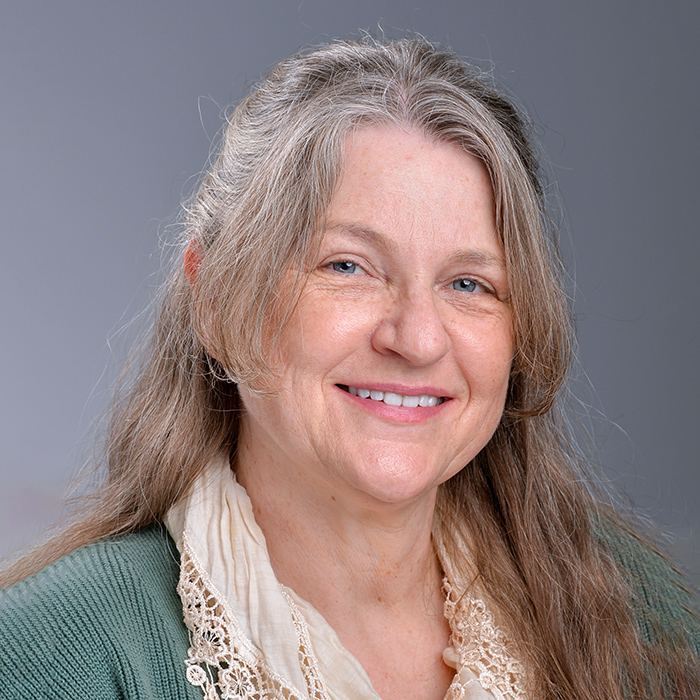
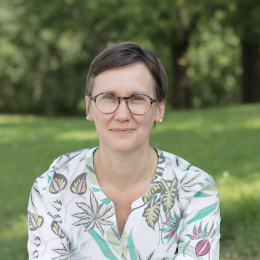
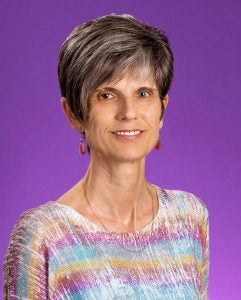
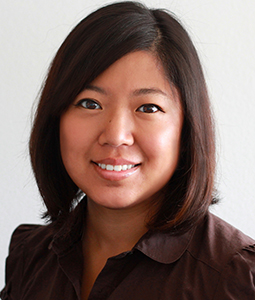
Sung Park-Johnson is an Associate Professor at DePaul University's College of Education, Department of Leadership, Language and Curriculum. She serves as Director of the Bilingual Education/English as a Second Language Minor and co-director of the Bilingual Language Development (BiLD) Lab. Specializes in bilingual and heritage language acquisition Focuses on code-switching, language assessment, and syntactic development Active in community-based research initiatives Her recent work examines Korean-English bilingualism in early childhood education and investigates syntactic patterns in heritage speakers. Research spans longitudinal studies, classroom pedagogy applications, and sociolinguistic analysis of language dominance indicators. Scientific awards include: DePaul University Excellence in Teaching Award (2020) University Research Council Summer Research Grant (2020) Provost’s Collaborative Research Fellowship (2018)
Marinella Caruso is a Senior Lecturer at the University of Western Australia (UWA), situated in the School of Humanities' Discipline of European Languages and Cultures. Previously, she held a Lecturer position at Flinders University's School of Languages (1998–2000). Her research focuses on Italian language attrition, language contact phenomena, and second-language acquisition methodologies, with particular emphasis on adolescent learners' motivation and flipped learning strategies in higher education. Her work integrates Q methodology to study learner motivation and vision, exploring how identity and cultural belonging shape language learning trajectories. Key projects include investigations into Italian heritage language acquisition, migrant identity through language clubs, and student engagement in language courses. She has edited significant volumes like Enabling Learning: Language Teaching for Australian Universities (2024) and co-authored studies on face-to-face learning efficacy in language education. Academically, Caruso's recent publications analyze adolescent motivation through Q methodology, flipped classrooms in Italian instruction, and resilience in language teaching post-pandemic. Her articles often bridge pedagogical innovation with sociolinguistic insights, addressing practical challenges in language maintenance and curriculum design. Caruso has received multiple teaching awards, including the 2024 Western Australian Association for Teachers of Italian Exemplary Teacher Award and the 2016 UWA Award for Exceptional Contribution to Education Futures. She leads research projects such as Grammatical Changes in the Verb System of Australian Italian (2007) and collaborates on grants advancing language pedagogy. Her work emphasizes interdisciplinary approaches, blending language theory with practical classroom applications.
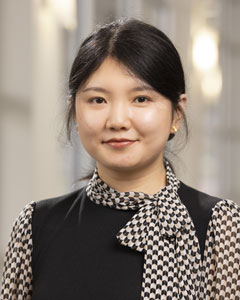
Dr. Wenjia “Jia” Cai is a Professor of Practice of Psychology at Indiana Tech’s College of Arts and Sciences. She teaches courses including Introduction to Psychology, Aging, Learning and Cognition, and Research Writing. Her research focuses on bilingualism, psycholinguistics, and the cognitive/linguistic development of multilingual speakers. She holds a Ph.D. and M.S. from the University of Edinburgh and a B.A. from Remin University of China. Education: Ph.D., University of Edinburgh; MS, University of Edinburgh; BA, Remin University of China Her research explores interfaces in bilingualism, particularly reflexive processing and syntactic phenomena in first-language attrition. Recent work includes studies on Mandarin-English bilingual speakers’ cognitive and linguistic dynamics. She has been recognized with awards such as the Edinburgh Award for Leadership in Student Opportunities and the Eric Liddell Chinese Saltire Scholarship. Her teaching philosophy emphasizes supporting students through challenging phases and celebrating their growth. Awards: Edinburgh Award, Teaching Award 2017, Eric Liddell Scholarship As an academic advisor for Psychology and Cognitive Science, she also mentors students in research methods and statistics. Outside academia, she enjoys tea parties, gardening, and D&D.
Prof. Agnieszka Libura is a distinguished academic at the University of Wrocław's Faculty of Philology, affiliated with the Department of Applied Linguistics. She holds the title of Professor (prof. UWr) and leads the Center for Cognitive Research on Language and Communication since 2019. Her primary research focuses on cognitive linguistics, semantics, and pragmatics, with particular attention to conceptual integration theory, metaphor, and humor analysis in digital contexts. Prof. Libura has held significant roles in academic societies, serving as vice-chair (2011–2015) and chair (2015–2019) of the Polish Society for Cognitive Linguistics. Her scholarly contributions include monographs like *Teoria przestrzeni mentalnych i integracji pojęciowej* (2010) and edited volumes such as *Cognitive Amalgams in Art* (2007). She teaches courses on linguistics, metaphor theory, and semantics, and has experience in Polish language education internationally, including at Humboldt University in Berlin. Her research explores interdisciplinary intersections between language, culture, and cognition. Recent work examines multimodal humor in internet memes, conceptual blending in science fiction, and heritage language attrition patterns. She actively engages in public intellectual discourse, contributing to debates on language policy and cognitive approaches to literature. Prof. Libura’s publications span over 50 articles and books since 1995, reflecting her commitment to advancing cognitive linguistics methodologies. Her current projects investigate internet humor’s sociocultural dimensions and the application of conceptual integration theory to contemporary linguistic problems.
Eva-Maria Schnelten is a Tutor in the Department of Linguistics and English Language at the University of Edinburgh's School of Philosophy, Psychology and Language Sciences. Her research focuses on foreign language acquisition, attrition, dominance, attitudes, aptitude, and policies. She is affiliated with Bilingualism Matters, a research centre promoting bilingualism research and public engagement. Teaching roles include undergraduate courses on First Language Acquisition (2020-2021) and Second Language Acquisition (2017-2018), alongside continuous contributions (2016-2020) in Language Pathology tutoring. Her academic supervision is supported by senior colleagues Prof Antonella Sorace and Dr Thomas Bak. Research interests emphasize applied linguistics and psycholinguistics, with a particular focus on multilingualism dynamics. No specific grants or lab affiliations are detailed in the provided information.
Dr. Mattia Zingaretti is a Lecturer in Applied Linguistics and TESOL at York St John University, affiliated with the School of Education, Language and Psychology. His research focuses on bilingualism, second language acquisition, and first language attrition, with notable contributions to understanding hate speech perception in bilingual speakers. He holds a PhD from the University of Edinburgh and is a Fellow of Advance HE. Education: BA in English and German (Sapienza University of Rome), MSc in English Language (University of Edinburgh), PhD in Linguistics (Edinburgh), and PGCert in Academic Practice (Edinburgh). Professional roles include Research and Knowledge Exchange Lead at the Community Language School and membership in organizations like Bilingualism Matters and BAAL. Research highlights include studies on L1 attrition mechanisms, cognitive effects of intensive language learning, and multilingualism in education. His work bridges academia and public engagement, with outputs in journals like Language at Work and collaborations on projects like the TEAM initiative. Teaching involves modules on multilingualism, TESOL foundations, and language acquisition. Awards include recognition for teaching excellence and contributions to educational outreach.
Dr Dianne Stratton-Maher is a Senior Lecturer in Nursing at the University of Southern Queensland (UniSQ), with over a decade of experience in academic education. Based at the Ipswich campus, she serves as the First Year Student Experience Coordinator and has held the role of Program Director, integrating theory and clinical skills across undergraduate nursing courses. Employment : Senior Lecturer (2014–2024), University of Southern Queensland Education : BHlthSc (UNE, 1992), GDipEd (Newcastle, 2006), MNurs (UNE, 2012), PhD (RMIT, 2022) Her research focuses on Generative AI and the transition of clinicians into academic roles. She leads initiatives to ethically integrate ChatGPT into nursing assessments, emphasizing digital literacy and responsible technology use. Recent publications highlight trends in Generative AI's educational applications, ethical frameworks for AI use, and transitions of clinicians into academia. Her 2025 work introduces the ETHICAL framework for generative AI in research, while earlier studies explore career retention among early-career nurses and cultural safety in nursing education. Awards : Member of the Australian College of Nursing (MACN); National Committee member, Australian Nurse Teachers Society Dr Stratton-Maher supervises research in nursing and education, and contributes to the Institute for Resilient Regions at UniSQ, aligning her work with broader academic and clinical advancements.
Josep Alba is a Professor in the Department of Spanish Latin American, Latinx, & Caribbean Studies at the College of the Holy Cross. He specializes in Spanish linguistics, Romance philology, and applied linguistics, teaching courses such as Intermediate Spanish, Spanish for Business, Phonetics & Phonology, and Bilingualism in the Spanish-Speaking World. Born near Barcelona, he holds a Ph.D. in Linguistics from Cornell University and is a first-generation college graduate. His research integrates theoretical and applied linguistics, with a focus on: Historical evolution of Spanish collocations (13th century to present) Diachronic Construction Grammar and corpus-based analysis Syntax of light verb constructions and argument structure Spanish as a second language pedagogy Alba's publications (2007–2020) analyze collocation patterns in Spanish through diachronic linguistics, corpus methods, and philology. Key themes include: Constructionalization/obsolescence of verb-noun collocations Inchoative structures and dative experiencers Paradigmatic shifts in emotion/state nouns Comparative Romance philology (Spanish, Catalan, Italian) No awards, grants, or supervised students are documented in the provided text.
Gyu-Ho Shin is an Assistant Professor in the Department of Linguistics within the College of Liberal Arts and Sciences at the University of Illinois at Chicago (UIC). He holds a PhD in Linguistics from the University of Hawai’i at Mānoa and previously taught at Palacký University Olomouc and the University of Hawai’i at Mānoa. His research focuses on the cognitive and computational mechanisms underlying language acquisition and development. He investigates how exposure to linguistic environments interacts with general cognitive abilities to shape linguistic knowledge, employing a methodological pluralism that combines corpus analysis using NLP, behavioral experiments, and computational modeling. His work is grounded in usage-based constructionist theories and emphasizes explainability in AI and AI literacy for researchers. His research spans interdisciplinary areas including language acquisition, computational linguistics, corpus linguistics, psychology of language, and second language acquisition, with a particular focus on Korean. His recent publications in journals like Cognitive Science , Developmental Science , and Studies in Second Language Acquisition reveal trends in using advanced computational methods to model child and adult language comprehension, particularly of complex constructions in Korean, and in analyzing learner corpora to understand proficiency development. He has been awarded significant research grants from organizations such as the Academy of Korean Studies and Language Learning journal, supporting his work on Korean language acquisition and computational methods. Shin advises students and conducts research involving interdisciplinary teams, often collaborating with colleagues on projects related to Korean linguistics and computational modeling. He teaches courses at UIC on AI for language research, computational linguistics, statistics, and the psychology of language, continuing a strong commitment to pedagogy in quantitative and computational methods.
Ludmila Isurin is a Professor and Undergraduate Studies Chair in the Department of Slavic and East European Languages and Cultures at The Ohio State University. She holds affiliations with the OSU Interdepartmental Graduate Program in Second Language Studies, the Center for Cognitive and Brain Sciences, the Crane Center for Early Childhood Research and Policy, the Mershon Center for International Security Studies, and the Undergraduate International Studies Program. Dr. Isurin earned her Ph.D. in Second Language Acquisition and Psycholinguistics from Louisiana State University (1999). Her interdisciplinary research bridges psycho- and sociolinguistics, memory studies, and social sciences, focusing on bilingualism, first language attrition, collective memory construction, and immigration dynamics. Key research themes include: Media’s role in shaping collective memory (e.g., Russian-American relations) Language maintenance among diasporic communities Cognitive mechanisms of language forgetting Identity negotiation in immigrant populations Her recent work explores how media narratives influence national memory constructs in Russia and the U.S., funded by the James S. McDonnel Foundation. She directs the Second Language Acquisition track in her department and teaches courses on bilingualism, diaspora studies, and cognitive linguistics. Award-winning publications include *Collective Remembering: Memory in the World and in the Mind* (2017), a nominee for the APA Global Psychology Book Award, and *Reenacting the Enemy: Collective Memory Construction in Russian and U.S. Media* (2022). Her research integrates content analysis with empirical participant data, emphasizing interdisciplinary methodologies. Notable recognitions: Fellow of the Psychonomic Society Editorial Advisory Board member for *Bilingual Processing and Acquisition* Current projects include studying 'Memory of Defeat in the Shaping of Collective Future Thought,' examining how historical narratives influence societal futures. She actively mentors students in Slavic linguistics and second language acquisition research.
Professor Marcela Cazzoli is a Professor at the School of Modern Languages and Cultures at Durham University. She holds a BA, MA, and PhD, and is a Senior Fellow of the Higher Education Academy (SFHEA) and a Chartered Linguist (CL). Her research focuses on Modern Languages Education, Hispanic Linguistics, Sociolinguistics, Language Contact, and First/Second Language Acquisition/Attrition. She has held significant roles including Member of Council at the Chartered Institute of Linguists (2023), Vice-Chair of its Educational Trust Board (2021), and Vice-Chair of Languages and Intercultural Education at the University Council for Languages (2020). Her educational background includes advanced qualifications in linguistics and education. Research interests emphasize sociolinguistic awareness in education, transnational language practices, and the impact of language contact contexts on linguistic attrition and acquisition. She has advised at least one postgraduate student, Lucy Charilaou. Her work critiques educational policies like the GCSE curriculum’s impact on university progression and advocates for inclusive language pedagogy. Key Publications: Analysis of language attrition in Spanish-English contexts (2009–2011) Studies on transnational language teaching methodologies (2016–2021) Critiques of language education policies (2022) Her contributions to professional organizations and curriculum reform discussions highlight her leadership in modern languages education. She emphasizes the importance of transcending standard language varieties in teaching to reflect global linguistic realities.
Dr. Diana Emanuel is a Professor in the Department of Speech-Language Pathology and Audiology at Towson University's College of Health Professions, where she has taught for over 30 years. She holds a Ph.D. and M.S. in Communication Disorders from Pennsylvania State University, and a B.S. in Speech-Language Pathology and Audiology from Towson State University. Education Ph.D. Communication Disorders, Pennsylvania State University, 1993 M.S. Communication Disorders, Pennsylvania State University, 1990 B.S. Speech-Language Pathology and Audiology, Towson State University, 1988 Her research focuses on occupational stress, burnout, and resilience among audiologists, examining professional challenges through mixed-methods approaches. She leads the 'Lived Experience of the Audiologist' project investigating practice evolution and workforce sustainability. Additional interests include clinical education methodologies and hearing science applications. Diana's publications demonstrate consistent focus on professional challenges in audiology, with recent works emphasizing workforce retention, educational equity, and clinical innovation. Her research employs both quantitative surveys and qualitative interviews to examine systemic issues. Awards and Honors University System of Maryland Regent's Award for Excellence in Teaching (2011) She developed Towson University's first doctoral program (Au.D.) and served as its director for 17 years, followed by 8 years as department chair. She authored the textbook Hearing Science and created the Pure Tone Hearing Screening in Schools video training series to support clinical practice.
Dobrinka Genevska-Hanke is affiliated with the University of Oldenburg , specifically the School of Linguistics and Cultural Studies and the Institute for English and American Studies . Her work focuses on core areas of linguistics, including language acquisition, attrition, and typology. Research Interests: Language Acquisition (L2 grammar), First Language Attrition, Learnability, Multilingual Development, Heritage Languages, Language Typology, and Language Change. Contact Information: Office A6 2-211; Email: dobrinka.genevska.hanke@uol.de ; Phone: +49 441 798 3191. Consultation hours are available via Stud.IP.
Dorota Lubinska is a Senior Lecturer at the Department of Teaching and Learning , Stockholm University. Her academic profile focuses on Swedish as a Second Language and Polish language in Sweden , with expertise in multilingualism and heritage language education. Ph.D. in Bilingualism, Stockholm University M.A. in Swedish with German minor, Adam Mickiewicz University Postgraduate Diploma in Foreign Language Teaching, Nicolaus Copernicus University Her research spans migration-related language dynamics , family language policies , and second language assessment . Key projects examine Polish complementary schools , conjunctive relations in beginner writing , and grammatical instruction for adult learners . Recent publications analyze second language teaching methodologies and cross-linguistic educational trends , particularly focusing on Sweden's Polish community. She actively supervises B.A. and M.A. students in language education contexts.
Lida Cope is a Professor and Interim Chair in the Department of English at East Carolina University (ECU). She holds dual M.A. degrees from Palacký University (Czech Republic) and the University of Arizona, as well as a Ph.D. from the University of Arizona. As an external research associate at the University of Texas at Austin, she directs the Texas Czech Legacy Project, an initiative documenting the unique Texas Czech dialect through an open-access digital archive. She also coordinates ECU’s Linguistics program. Her research focuses on language attrition, heritage language maintenance, and the intersection of language, culture, and identity in Texas Czech communities. Key themes include the sociolinguistic dynamics of diaspora communities, multilingualism in minority contexts, and ethnolinguistic identity formation. Her work bridges applied linguistics, sociolinguistics, and cultural anthropology. Cope teaches courses in descriptive linguistics, TESOL methodologies, language structure, and sociolinguistics. Her publications span academic journals like International Journal of the Sociology of Language and Language and Education , as well as edited volumes addressing endangered language documentation and revitalization strategies. She actively collaborates with interdisciplinary teams to address language preservation challenges in diasporic communities. Her current projects emphasize community-driven documentation of Texas Czech linguistic and cultural heritage, leveraging digital tools for long-term preservation. She also contributes to pedagogical innovations in linguistics education, particularly in preparing TESOL professionals to work with heritage language speakers.




/prod01/yorksjacuk/media/content-assets/staff-profile-images/d9bb06ee-2a34-464a-a6db-32b06347b3ab.jpg)