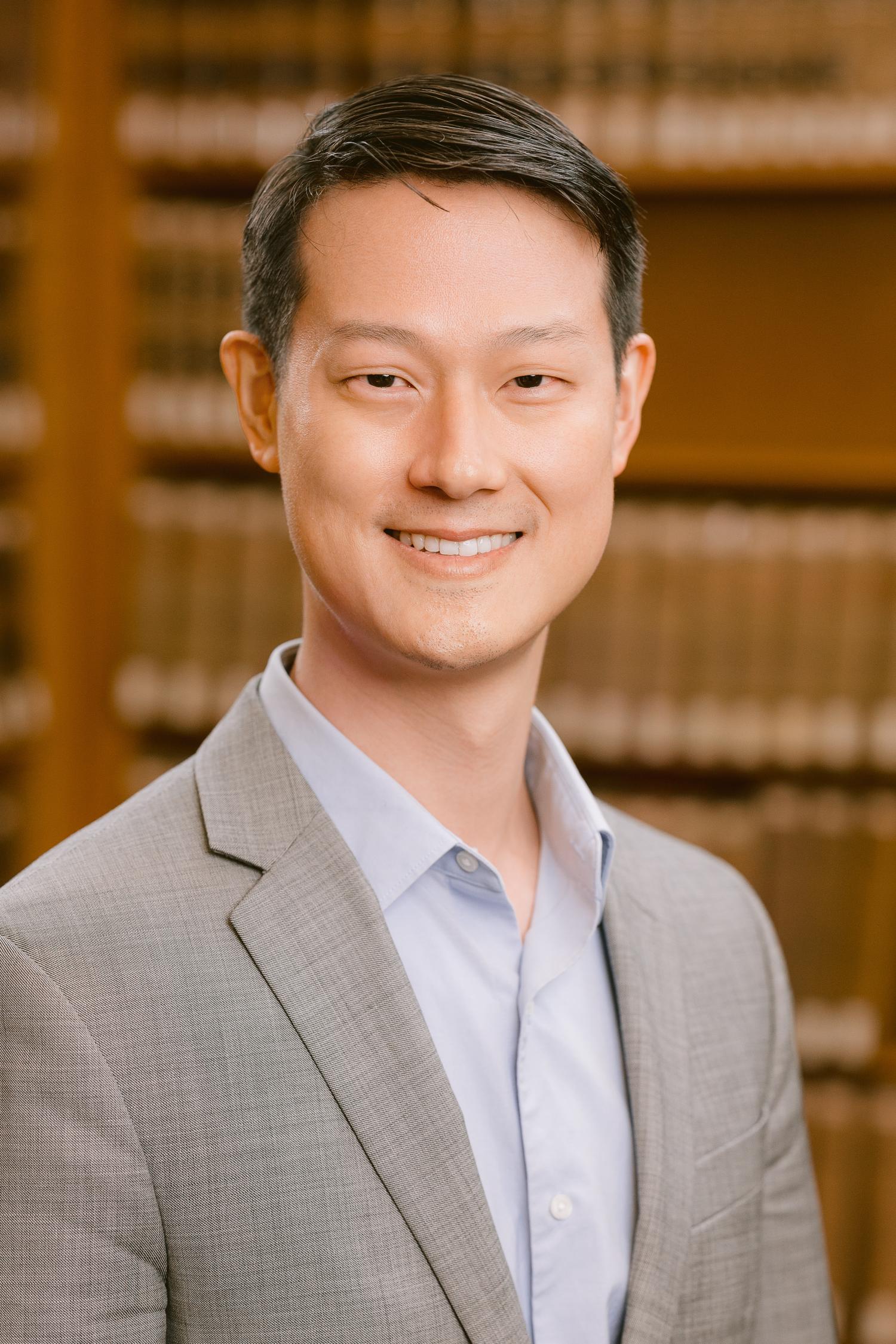
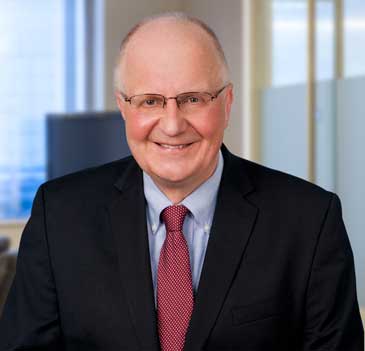
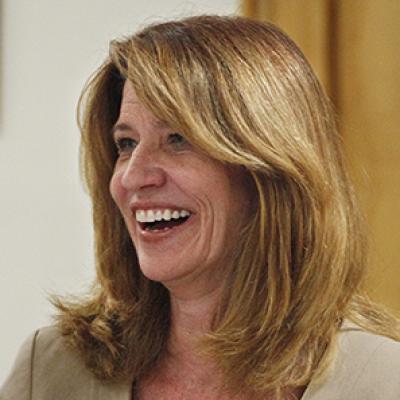
Susan Fino is a Professor at the College of Liberal Arts and Sciences, Wayne State University. Her research focuses on public law, American constitutional law, administrative law, and the role of state supreme courts. She holds a B.A. from Johns Hopkins University, an M.A. and Ph.D. from Rutgers University. She has received the President's Award for Excellence in Teaching. Her courses include American Government (PS1010) and Constitutional Law (PS5110/PS5120), taught across multiple terms from 2023 to 2025. Dr. Fino's research explores judicial federalism, state constitutional frameworks, and legal interpretations of rights. Her work analyzes topics like church-state relations, taxation provisions in state constitutions, and assisted suicide debates. She has written extensively on state supreme court dynamics, including landmark cases and institutional performance metrics. Her scholarship bridges legal theory with practical governance challenges at both state and federal levels. Her publications span over three decades, addressing evolving legal landscapes such as the Rehnquist Court’s federalism approach and technological impacts on criminal sentencing. She consistently engages with issues at the intersection of law, politics, and societal values.
Bryan H. Choi is an Associate Professor of Law at the University of Colorado Law School , where he bridges law and computer science to address software and AI safety. His work on software liability has influenced national cybersecurity strategy discussions. As an Adviser for the ALI Principles Project on Civil Liability for Artificial Intelligence , he shapes legal frameworks for emerging technologies. Education : JD and AB in Computer Science from Harvard University; clerkships with U.S. Court of Appeals judges Leonard I. Garth and William C. Bryson. Roles : Former joint appointment at Ohio State University Law School and Computer Science Department; Faculty Fellow at UPenn's CTIC; Director of Law and Media at Yale's ISP. Research Focus : Choi's scholarship examines software liability , AI accountability , and privacy law through interdisciplinary lenses. He critiques institutional approaches to software safety and advocates for empirical legal frameworks over participation-based models. Recent Articles address AI malpractice , NIST software standards , and forensic tool validation , reflecting trends in AI regulation and cyber-physical system liability . His 2021 NSF grant funded technical-legal methods for safety-critical systems. Awards & Grants : National Science Foundation (NSF) Grant (2021) Adviser, ALI Principles Project on Civil Liability for Artificial Intelligence Community Engagement : Active in Law and Computer Science communities , serving on committees for the ACM Symposium , Cybersecurity Law and Policy Scholars Conference , and co-organizing the AAAI Bridge Program on AI and Law .
Frederic Bloom is a Professor of Law at the University of Colorado College of Law, where he has taught since 2012. His scholarship focuses on structural, methodological, and design issues in modern federal courts. He earned his J.D. from Stanford Law School (Order of the Coif) and a B.A. from Washington University in St. Louis. Education: J.D., Stanford Law School (Order of the Coif) B.A., Washington University in St. Louis Bloom's research spans federal courts, constitutional law, jurisdictional design, and procedural frameworks. His work explores temporal dynamics in legal systems, judicial accountability mechanisms, and institutional constraints. Key publication themes include Judicial structure and supermajoritarianism Temporal analysis in adjudication Jurisdictional myths and realities Court litigation dynamics Awards: Order of the Coif (Stanford Law School) As a former clerk for Judge Sidney Thomas (9th Circuit) and Judge Marilyn Hall Patel (N.D. Cal), his academic practice integrates doctrinal analysis with institutional critique.
Bruce Grohsgal serves as the Helen S. Balick Professor in Business Bankruptcy Law at Widener University Delaware Law School, where he joined the faculty in July 2014 after over 30 years of legal practice. His primary academic affiliation is with Widener University's Law School, where he teaches Bankruptcy, Contracts I and II, Secured Transactions, International Bankruptcy, and Financial Regulation. Prior to academia, he practiced at Pachulski Stang Ziehl & Jones, LLP in Wilmington, Delaware, representing major entities in high-profile bankruptcy cases including Solyndra, Global Home Products, and Trans World Airlines. Professor Grohsgal's research focuses on bankruptcy law with particular expertise in business restructuring, student loan dischargeability, and financial institution insolvency. His work critically examines the absolute priority rule, structured dismissals, and the legislative history behind student loan nondischargeability. He has extensively analyzed how bankruptcy courts handle debtor-creditor agreements, lease rejections, and the recharacterization of debt claims as equity. His scholarship consistently bridges theoretical legal analysis with practical restructuring challenges faced by practitioners. As Editor-in-Chief of the Norton Journal of Bankruptcy Law and Practice and the Norton Annual Survey of Bankruptcy Law, Grohsgal significantly influences bankruptcy scholarship. His recent publications (2020-2023) demonstrate a concentrated focus on student loan bankruptcy discharge mechanisms, evolving interpretations of the absolute priority rule, and procedural innovations in Chapter 11 cases. The articles reveal growing scholarly attention to consumer bankruptcy issues within traditionally corporate-focused bankruptcy scholarship. Professor Grohsgal actively engages with policy development through congressional testimony, including written submissions for H.R. 1667 (Financial Institution Bankruptcy Act of 2017). He directs the Institute of Delaware Corporate and Business Law and previously chaired the Delaware State Bar Association's Bankruptcy Section. His practical experience informs his academic work, particularly regarding first-day motions, asset sales in bankruptcy, and derivatives treatment in insolvency proceedings.
Elizabeth Pollman is a Professor of Law and Co-Director of the Institute for Law & Economics at the University of Pennsylvania Carey Law School. She specializes in corporate law, governance, and entrepreneurship, with a focus on venture capital-backed startups and dual-class structures. Her work examines issues such as CEO turnover, ESG integration, and regulatory frameworks in corporate law. Her research has been published in top-tier journals including the Harvard Law Review, Columbia Law Review, and Duke Law Journal. She co-authored *Business Organizations: A Contemporary Approach* and co-edited *Research Handbook on Corporate Purpose and Personhood*. Pollman has received teaching awards, including the Harvey Levin Memorial Award (2022) and LLM Prize (2021 & 2024). Before joining Penn, she taught at Loyola Law School and held visiting roles at UC Berkeley and the University of Sydney. She practiced at Latham & Watkins and clerked for the Ninth Circuit Court of Appeals. She earned her BA and JD from Stanford University, both with distinction. Her current projects include analyzing governance dynamics in dual-class firms and exploring the historical and modern evolution of corporate purpose clauses. She co-directs the Institute for Law & Economics, which focuses on interdisciplinary research at the intersection of law and economic analysis.
Renita Coleman is an Associate Professor at the University of Texas at Austin's School of Journalism and Media, where she has taught since 2005 after achieving tenure in 2009. With expertise in agenda-setting theory, visual communication, and media ethics, she has authored over 30 peer-reviewed articles and two influential books: 'Designing Experiments for the Social Sciences' (2018) and 'The Moral Media' (2005). Her research examines how visual elements shape ethical reasoning and public perception in news media. Her academic credentials include: Ph.D. in Journalism, University of Missouri (2001) M.A. in Journalism, University of Missouri (1997) B.S. in Journalism, University of Florida (1979) Coleman's research program centers on the intersection of visual communication and moral decision-making in journalism. She investigates how photographs influence ethical reasoning among journalists, the framing of health news through visual elements, and racial dynamics in journalistic ethics. Her work employs experimental methods to analyze affective agenda-setting, where emotional responses to visual stimuli shape public priorities. This approach bridges communication theory with practical journalism ethics. Recent publications reveal intensifying focus on polarization mechanisms, climate change communication, and fact-checking efficacy. Coleman's scholarship increasingly examines how adaptive framing strategies overcome audience resistance, particularly regarding scientific consensus issues. Her methodological rigor in experimental design provides robust evidence for how visual and emotional elements drive media effects beyond traditional textual analysis. Professor Coleman has received extensive recognition for scholarly excellence: Multiple AEJMC top paper awards across divisions (2002-2014) Teacher of the Year at LSU (2002-2004) Ranked #1 for AEJMC convention productivity (1999-2008) She teaches doctoral seminars in qualitative methods and experimental design while mentoring graduate students in visual communication and ethics research. As associate editor of Journalism & Mass Communication Quarterly, she shapes scholarly discourse in the field. Though specific grant funding isn't detailed in available materials, her sustained publication record demonstrates consistent research activity. Coleman's background as a 15-year newspaper professional (including roles at the Raleigh News & Observer and Orlando Sentinel) informs her applied research perspective.
Craig Barkacs is a Professor of Business Law at the University of San Diego's Knauss School of Business. He holds a JD/MBA from USD and a BA in Philosophy from Kenyon College. His career spans legal practice, academia, and business consulting, with a focus on negotiation, ethics, and corporate social responsibility. Education: JD/MBA (University of San Diego), BA in Philosophy (Kenyon College) Research interests include business ethics, workplace discrimination, international business law, and the psychology of power in negotiations. He actively contributes to media commentary on legal, ethical, and political issues, and co-founded The Barkacs Group, a consulting firm specializing in negotiation and ethics training for corporations. His media engagements include analyses on privacy laws, pregnancy discrimination, and corporate political alignment. He teaches in USD's study abroad programs and graduate business courses, blending practical industry insights with academic rigor.
Neal R. Feigenson serves as the Lynne L. Pantalena Professor of Law at Quinnipiac University School of Law, where he has been a faculty member since 1987. He teaches core courses including torts, evidence, civil procedure, and visual persuasion in the law, blending doctrinal instruction with interdisciplinary perspectives on legal cognition. Education: BA, University of Maryland JD, Harvard University Professor Feigenson's scholarship fundamentally explores how cognitive and social psychology shapes legal decision-making processes, with particular emphasis on the transformative impact of visual and multimedia evidence in courtroom settings. His research investigates juror perception biases, the psychological mechanisms behind legal blame attribution, and the evolving challenges posed by digital evidence presentation in both physical and virtual courtrooms. This work bridges empirical psychological research with practical legal theory to address critical issues in evidence evaluation and judicial procedure. Analysis of his recent publications (2021-2024) reveals a concentrated focus on virtual legal proceedings, demonstrating how video evidence framing influences juror judgments about police conduct and damage awards. His scholarship consistently examines the tension between technological innovation in evidence presentation and foundational legal principles of fairness, credibility assessment, and human interaction within the justice system. Scientific Awards: No specific scientific awards, fellowships, or major honors are documented in the available sources. While detailed information about student advising and research funding is unavailable, Professor Feigenson maintains an active scholarly profile with over 60 publications. His professional activities center on teaching and research within Quinnipiac's law school, where he maintains an office in the School of Law and Education building (Room 110C) and welcomes media inquiries regarding his expertise in legal psychology and evidence law.
Michael W. McConnell is the Richard and Frances Mallery Professor of Law and the director of the Constitutional Law Center at Stanford Law School, and a senior fellow at the Hoover Institution. He previously held chaired professorships at the University of Chicago and the University of Utah, and visiting professorships at Harvard and New York University. From 2002 to 2009, he served as a circuit judge on the US Court of Appeals for the Tenth Circuit, nominated by President George W. Bush and confirmed by a Democratic-majority Senate by unanimous consent. McConnell's research focuses primarily on constitutional law and theory, with special emphasis on church and state relations, equal protection, and the separation of powers. His scholarly work examines the historical foundations of constitutional principles and their application to contemporary legal issues. He has published extensively on religious liberty, federalism, and executive power, contributing significantly to debates on originalism and constitutional interpretation. McConnell is particularly known for his nuanced understanding of the Establishment Clause and his arguments that the Constitution promotes religious pluralism rather than secularism. His recent scholarship demonstrates how constitutional structures can accommodate religious diversity while maintaining government neutrality. His recent publications and commentary demonstrate a consistent focus on the balance of power between branches of government, particularly executive authority. McConnell has been actively engaged in legal debates surrounding presidential power, including Trump-era challenges to traditional constitutional boundaries. His scholarship shows a commitment to preserving constitutional structures while adapting them to modern governance challenges, with particular attention to how historical understandings inform contemporary constitutional interpretation. 2025 Notre Dame Prize for Religious Liberty Canterbury Medal from the Becket Fund for Religious Liberty Thomas M. Cooley Book Prize (2021) As a former Tenth Circuit judge and Supreme Court clerk for Justice William J. Brennan Jr., McConnell brings practical judicial experience to his academic work. He has argued fifteen cases before the US Supreme Court, most notably achieving an 8-1 victory in a Takings Clause case representing California raisin farmers. His expertise is frequently sought in constitutional challenges, including recent amicus briefs challenging presidential tariff powers. McConnell also serves as co-chair of the Meta Oversight Board, applying his constitutional expertise to digital free speech issues and content moderation policies. McConnell is actively involved with Hoover Institution research teams, particularly the 'Socialism and Free Market Capitalism: The Human Prosperity Project' and the 'Regulation and Rule of Law Initiative,' where he serves as co-chairman. His work bridges academic scholarship and practical legal application, influencing both constitutional theory and contemporary legal debates. He regularly engages with policymakers, participates in congressional testimony, and contributes to public discourse through media appearances and commentary on pressing constitutional issues.
Amy Kapczynski is a Professor of Law at Yale Law School and Faculty Director of the Global Health Justice Partnership. She co-founded the Law and Political Economy blog and serves as Faculty Co-Director of the Law and Political Economy Project. Her research focuses on how law interacts with political economy, particularly in areas like intellectual property, healthcare, and global justice. Kapczynski holds a J.D. from Yale Law School and advanced degrees from Princeton University, Cambridge University, and Queen Mary University of London. Her work bridges legal scholarship with social movements, advocating for equitable access to medicines and critiquing neoliberal policies. Notable contributions include analyses of pharmaceutical market power, FDA regulation, and the role of intellectual property in healthcare innovation. She has testified before legislative bodies and contributed op-eds to outlets like the New York Times and Washington Post . Kapczynski’s articles span topics such as trade secrets, vaccine distribution, and the legal underpinnings of informational capitalism. Her recent work emphasizes systemic critiques of political economy frameworks and proposes reforms to address market concentration in pharmaceuticals. She received the YLW Faculty Excellence Award in 2022 for her teaching and scholarship. In addition to her academic roles, Kapczynski collaborates with interdisciplinary teams on projects like the Global Health Justice Partnership, addressing systemic inequities in global health systems and advocating for evidence-based policies to improve healthcare access.
Benny Moldovanu is Professor of Economics at the University of Bonn, where he holds the Chair of Microeconomics. He is a principal investigator in the Collaborative Research Center TR 224 (CRC TR 224) and a member of the Cluster of Excellence ECONtribute: Markets & Public Policy, as well as the Hausdorff Center for Mathematics and the Bonn Graduate School of Economics (BGSE). Education: Detailed curriculum vitae available at CV link . Research Interests: His research focuses on auctions and mechanism design , microeconomic theory , information design , voting theory , and dynamic allocation problems . He has made significant contributions to understanding strategic behavior in auctions, optimal voting rules, and the design of mechanisms under incomplete information. Recent Publications Trend: Recent work (2020–2025) explores entropy-regularized optimal transport in information design, optimal security design for risk-averse investors, order independence in sequential voting, and insurance design under adverse selection. These studies combine sophisticated theoretical tools with applications in finance, political economy, and market design. Scientific Awards and Honors: Winner of the first AEA Best Paper Award for the American Economic Journal: Microeconomics (2009) for “Dynamic Revenue Maximization with Heterogeneous Objects: A Mechanism Design Approach”. Advising and Doctoral Training: Professor Moldovanu has supervised a large cohort of doctoral students and postdocs, many of whom now hold faculty positions worldwide (e.g., Philipp Strack—Clark Medal recipient, Alex Gershkov, Andreas Kleiner, Xianwen Shi, Thomas Kittsteiner). He teaches Microeconomics II (summer 2025) and offers thesis supervision to BGSE students. Labs and Research Groups: He leads the Microeconomics Research Group at Bonn and coordinates research activities in the CRC TR 224 project B01, focusing on market design and information economics.
Shelley Thompson is Pro Vice-Chancellor for Student Experience at Bournemouth University, with a distinguished career spanning journalism and academia. She previously served as Deputy Dean of the Business School and Head of the Department of Communication and Journalism within the Faculty of Media and Communication. Her academic and administrative roles reflect deep engagement with media, communication, and gender studies. Bournemouth University, Faculty of Media and Communication Department of Communication and Journalism Pro Vice-Chancellor, Student Experience Education: PhD in Journalism, Bournemouth University, 2012 MA in Journalism Studies, Cardiff University, 2009 BA (Hons) in Journalism, University of Massachusetts, Amherst, USA, 2000 PGCE in Education Practice, Bournemouth University, 2015 Fellow of the Higher Education Academy, 2015 Shelley Thompson's research centers on science journalism, with a focus on how emerging and controversial science is framed in the media. She investigates gender disparities in science reporting, particularly the underrepresentation of women’s voices in scientific discourse. Her work extends to political communication, youth political participation, and the role of journalists as gatekeepers in the digital era. She employs critical discourse analysis, framing theory, and interdisciplinary methods to explore media narratives and public engagement. Her recent publications span psychology, media studies, and political science, with recurring themes in misinformation, cultural cognition, and gendered representation. Articles such as 'Utilising online eye-tracking to discern the impacts of cultural backgrounds on fake and real news decision-making' and 'Perceptions of women as political leaders at a time of crisis' highlight her interdisciplinary approach, combining media analysis with cognitive and psychosocial research. Her work consistently addresses issues of equity, public understanding, and democratic engagement. Scientific Awards and Recognition: Investigative Reporting Awards First Amendment Award for a series on a secret government payment Shelley Thompson actively supervises PhD students and has contributed to postdoctoral mentorship in areas including science journalism, political communication, and stigma in mental health discourse. She has secured research funding through Bournemouth University’s Fusion Fund for international collaboration. Her public engagement includes speaking at the BU Festival of Learning on topics like 'Women in Science' and publishing accessible commentary in The Conversation . She is a member of MeCCSA and contributes to the Politics and Media Research Group. She leads and participates in interdisciplinary research teams focused on media, public perception, and socio-technical systems, especially through projects analyzing news framing, digital gatekeeping, and the impact of media on public understanding of science and politics.
Brian Carroll is a Professor of Communication at Berry College, located on the world's largest campus. He holds a PhD in Journalism & Mass Communication from UNC Chapel Hill, along with an MA in Political Science (UNC Greensboro) and a BA in Journalism (UNC Chapel Hill). His research focuses on the Black Press, First Amendment issues, race and public memory, media law, and media depictions of crime. Professional affiliations include the American Journalism Historians Association and the Society of Professional Journalists. Carroll's work bridges media history and cultural studies, with notable publications like When to Stop the Cheering? (2007) and A Devil's Bargain (2014), which examine the Black Press’s role in sports integration and civil rights. His 2023 works address both digital media practices and Shakespearean studies, showcasing interdisciplinary reach. His website CubanXGiants explores baseball history through a cultural lens. No grants or advisees are listed in available records.
Sarah Song is a Professor of Law, Philosophy, and Political Science at the University of California, Berkeley, holding the Milo Rees Robbins Chair in Legal Ethics. She serves as Associate Dean of the Jurisprudence and Social Policy (JSP) PhD Program and the Legal Studies Program. Her work focuses on political theory, citizenship, migration, multiculturalism, and feminist jurisprudence. Song’s research bridges legal philosophy and democratic theory, addressing issues like immigration ethics, gender equality, and the boundaries of democratic inclusion. She earned a BA from Harvard, MPhil from Oxford, and PhD from Yale. Prior to Berkeley, she was an Assistant Professor at MIT. Notable works include Justice, Gender, and the Politics of Multiculturalism (2007), awarded the 2008 APSA Ralph Bunche Award, and Immigration and Democracy (2018), reviewed in The New Yorker . Her current research explores free speech ethics in democratic societies. Song directed the Kadish Center for Morality, Law, and Public Affairs (2015–2020), co-sponsoring the Workshop in Law, Philosophy, and Political Theory. She has held fellowships from the American Academy of Arts and Sciences and the Woodrow Wilson Foundation. Education: BA Harvard (1996), MPhil Oxford (1998), PhD Yale (2003) Awards: Ralph Bunche Award, AAAS Fellowship, Woodrow Wilson Fellowship Labs/Initiatives: Kadish Center, JSP PhD Program
C. Colt Anderson is a Professor at Fordham University, currently listed in the Graduate School of Education faculty directory. He previously served as Academic Dean of Fordham's Graduate School of Religion and Vice President of Academic Affairs at the Washington Theological Union, bringing extensive administrative experience to his academic role. His educational background includes: BA from the University of Georgia MA in Religious Studies from the University of Georgia PhD in Historical Theology from Marquette University (1998) Professor Anderson's research centers on historical theology , church reform , and eschatological perspectives , with particular focus on: The early Franciscan movement as theological framework Contemporary religious nationalism Catholic sexual abuse crisis analysis Christian spirituality and ecclesial leadership Communication of the Gospel in modern contexts His publication trajectory reveals a significant evolution from medieval Franciscan studies toward urgent contemporary issues. Recent works increasingly address institutional failures in religious organizations, faith's relationship to political systems, and crisis response mechanisms within ecclesial structures, demonstrating consistent application of historical insights to modern challenges. Professor Anderson has received notable recognition including: Catholic Press Association award for history (2007) for 'The Great Catholic Reformers' Bronze Award for political science (2021) for 'Faith, Nationalism, and the Future of Liberal Democracy' Honorable mention from The Catholic Media Association (2021) Prior to academia, he served as theological consultant to the Democratic Party of Georgia and worked as an award-winning scriptwriter and film producer, demonstrating interdisciplinary engagement beyond traditional academic boundaries. Information regarding student advising and research grants is not documented in available sources.