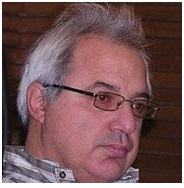
Dr. Christos Antonopoulos is an Associate Professor at the Department of Electrical and Computer Engineering, University of Patras. He holds a Diploma and PhD in Electrical Engineering from the University of Patras (2002, 2008) and has participated in over 16 European research projects (FP5, FP6, FP7, Horizon 2020) and 6 national projects. Research Interests: Wireless Networks Cyberphysical Systems Embedded Software Architecture Internet of Things Cross-Layer Protocols Sensor Networks Technical Expertise: His work involves network simulation, power optimization, and reconfigurable computing. He has published >100 journal/conference papers and 13 book chapters with over 1000 citations.
Georgios Papadourakis is a Professor at the Department of Electrical and Computer Engineering of the Hellenic Mediterranean University (formerly TEI of Crete). His academic career includes roles as Rector of TEI Crete (2017–2017), Dean of the School of Engineering (2017–2018), and Head of the Department of Applied Informatics and Multimedia (1999–2002). He has held visiting and permanent faculty positions at the University of Central Florida, University of Crete, and FORTH Institute of Computer Science. Education: B.Sc. Electrical Engineering (1978), Michigan Technological University M.Sc. Electrical Engineering (1981), University of Cincinnati Ph.D. Electrical Engineering (1986), University of Florida His research focuses on Intelligent Systems , Cyber Security , Engineering Education , and Open Distance Learning . He has published over 38 journal articles and 182 conference papers, coordinated 110+ projects, and chaired 15 international conferences. He established and led the Neural Networks and Expert Systems Laboratory and the Intelligent Systems Laboratory . Advising and grants: Supervised 2 current Ph.D. students, 3 Master’s theses, and completed 17 Master’s, 3 Ph.D., and 4 collaborative Ph.D. projects. Active in academic governance, including membership in the Research Council, Executive Committee for Career Services, and TEI of Crete Council (2012–2016). He currently directs the MSc program in Informatics Engineering and previously directed the Informatics and Multimedia program.
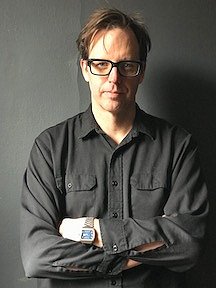
Byron Cook is Professor of Computer Science at University College London (UCL) and Director of Automated Reasoning at Amazon Web Services. He leads Amazon's Automated Reasoning Group (ARG) and has driven the broad adoption of formal methods across AWS services. His career spans academia and industry, with significant contributions to program verification and automated reasoning. His research focuses on verification, automated reasoning, program analysis, computer/network security, programming languages, theorem proving, logic, and applications to hardware design, operating systems, and biological systems. Cook's work bridges theoretical foundations with practical applications in cloud security and system reliability, particularly through his leadership in applying formal methods to AWS infrastructure. Cook's recent publications demonstrate a strong focus on applying automated reasoning to cloud security challenges, particularly around access control policies, network reachability, and cryptographic implementations. His work shows a clear trajectory from theoretical program verification toward practical security applications in large-scale cloud environments, with emphasis on making formal methods accessible to developers through "one-click" verification tools. Scientific Awards: FREng (Fellow of the Royal Academy of Engineering) As an academic advisor, Cook has mentored numerous PhD students and interns who have gone on to significant careers in programming languages and verification research. His work at Amazon has secured substantial research funding for developing and deploying automated reasoning tools across AWS services. Cook founded and leads Amazon's Automated Reasoning Group (ARG), which develops tools like IAM Access Analyzer, Tiros, Zelkova, and T2. Previously, he managed the Programming Principles and Tools (PPT) group at Microsoft Research Cambridge, where he co-founded projects including TERMINATOR, SLAyer, and the Bio Model Analyzer (BMA).