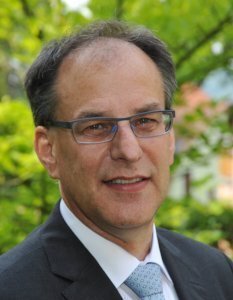
Scott Michael Olson is a Professor in the Department of Civil and Environmental Engineering at the University of Illinois at Urbana-Champaign, with a 0% affiliate appointment in the Department of Geology. He holds roles as Associate Head and Director of Graduate Studies. His academic journey includes a B.S., M.S., and Ph.D. in Civil Engineering from UIUC (1993, 1995, 2001). Prior to academia, he worked in private practice with firms like Woodward-Clyde Consultants and URS Corporation, while also teaching at the University of Missouri-Rolla. Dr. Olson specializes in geotechnical engineering, focusing on geohazard identification, liquefaction engineering, laboratory testing, and paleoseismology. He teaches courses in geotechnical engineering, including CEE 380, CEE 484, and graduate-level topics like rock mechanics. His research emphasizes practical applications in infrastructure resilience, with notable contributions to understanding soil behavior under seismic loads and tailings material dynamics. Dr. Olson has been recognized with prestigious awards, including the Walter L. Huber Prize (2012), NSF CAREER Award (2009), and Arthur Casagrande Award (2004). He actively contributes to professional organizations such as the American Society of Civil Engineers and the Earthquake Engineering Research Institute, and has served on national review panels for NSF and USGS. His consulting work bridges academic research with industry challenges in geotechnical risk mitigation.
Steven Swanson is a Professor in the Department of Computer Science and Engineering at the University of California, San Diego, within the Jacobs School of Engineering. He is the Director of the Non-Volatile Systems Laboratory (NVSL), where he leads cutting-edge research in non-volatile memory, storage systems, and hardware-software co-design. His work bridges computer architecture, systems, and software to develop efficient, reliable, and secure computing platforms. Ph.D., University of Washington, 2006 B.S., University of Puget Sound, 1999 Dr. Swanson's research centers on non-volatile and persistent memory systems , exploring how next-generation storage technologies can transform computing. His lab develops full-stack solutions including file systems like NOVA and Orion , programming models such as NV-Heaps , and hardware prototypes like Moneta and Onyx . The team also works on low-power co-processors (e.g., GreenDroid ) and tools for debugging and verifying persistent memory programs. Research spans system reliability, security, energy efficiency, and performance optimization. His recent publications reveal a strong focus on persistent memory safety , zero-copy I/O , RDMA-based distributed file systems , and real-world characterization of Intel Optane . These works appear in top venues including ASPLOS, FAST, MICRO, and USENIX ATC, demonstrating sustained innovation in storage and systems research. Scientific honors include: NSF CAREER Award Google Faculty Award Facebook Faculty Award NetApp Faculty Fellow Dr. Swanson has advised 15 PhD students and 4 postdocs , many now faculty or senior engineers at Google, Microsoft, Intel, and other leading tech firms. He has secured significant research funding and leads major community initiatives such as the annual Non-Volatile Memories Workshop and Persistent Programming In Real Life (PIRL) . His educational efforts include innovative courses on robotic system design, quadcopter building, and modern storage systems, emphasizing hands-on learning and real-world implementation. The Non-Volatile Systems Laboratory (NVSL) under his leadership fosters a collaborative, international research environment, hosting visitors and postdocs from around the world. The lab is recognized globally as a pioneer in storage systems research and a key contributor to the adoption of persistent memory technologies in industry.
Stephan J. Goetz is a Professor in the Department of Agricultural Economics, Sociology and Education at the College of Agricultural Sciences, Pennsylvania State University. He is based at 207C Armsby Building, University Park, PA 16802, and can be reached at sjg16@psu.edu. His research spans agricultural economics, regional development, and rural policy, with a strong emphasis on human and social capital, innovation, and community well-being. His research interests focus on the role of markets and human capital in economic growth and poverty reduction. Key areas include regional food systems, self-employment, social network analysis, targeted regional development, agritourism, direct farm sales, and the digital divide. His work often integrates data science, spatial analysis, and policy evaluation to understand rural economic dynamics. The recent publications highlight a consistent trend in analyzing rural innovation, food system resilience, and socioeconomic impacts of technology and crises. His work combines empirical methods with optimization models, often using county-level U.S. data. Themes include food hub logistics, cloud computing in rural economies, pandemic-related food insecurity, and gender impacts in farming. While no specific awards are listed, his extensive publication record in high-impact journals reflects scholarly recognition. He has collaborated with researchers across disciplines, suggesting active grant-funded projects and likely student mentorship, though formal advisees are not named. He is involved in research on equitable communities and the built environment, and affiliated with initiatives related to health and environmental sustainability. His work with extension services indicates engagement with public outreach and community development programs.
Camille Landais is a Professor of Economics at the London School of Economics and Political Science (LSE), where she leads the Department of Economics. She serves as Director of STICERD (Suntory and Toyota International Centres for Economics and Related Disciplines) and Co-Director of the LSE-Gates Hub for Equal Representation in the Economy (H.E.R.). Additionally, she is a member of the French Council of Economic Advisers (CAE). Her research expertise spans Public Finance, Labour Economics, Applied Microeconomics, and Microeconometrics, with a focus on gender inequality, taxation policies, and child penalties. Landais holds a PhD in Economics from the Paris School of Economics. Her research interests include optimizing public spending efficiency, analyzing the economic impacts of family policies, and addressing wealth inequality through tax reforms. Recent work emphasizes the 'child penalty' phenomenon, migration responses to wealth taxation, and strategies for achieving full employment. She has contributed to high-impact publications such as the Review of Economic Studies and collaborates internationally on projects like the Child Penalty Atlas. Landais teaches advanced courses in public economics and actively engages in policy advising. She directs research centers that prioritize interdisciplinary approaches to economic challenges and inequality reduction. Her work frequently involves large-scale data analysis, including banking data and microsimulation techniques, to evaluate policy outcomes. Education: PhD in Economics, Paris School of Economics Research Centers: Director of STICERD, Co-Director of H.E.R., International Inequalities Institute Associate Teaching: EC325/EC426/EC534 (Public Economics modules) Professional Roles: Member of French Council of Economic Advisers, Editor of LSE Public Policy Review
Amir Sufi is the Bruce Lindsay Distinguished Service Professor of Economics and Public Policy at the University of Chicago Booth School of Business, where he has been a faculty member since 2005. He serves as a Research Associate at the National Bureau of Economic Research and co-director of its Corporate Finance Program. Bachelor’s Degree, Walsh School of Foreign Service, Georgetown University (1999) PhD in Economics, Massachusetts Institute of Technology (2005) His research focuses on finance , macroeconomics , and corporate finance . Key areas include household debt dynamics , credit market structure , income inequality , and interest rate impacts on productivity growth . Recent work examines customer capital investment and low-interest rate effects on market concentration . Selected scientific awards include the 2017 Fischer Black Prize, Econometric Society Fellow (2022), and American Academy of Arts and Sciences Fellow (2024). His peer-reviewed publications and working papers span topics from syndicated loans to global household debt cycles , with notable contributions to understanding credit-driven business cycles and government-led consumer credit programs . He teaches courses in leveraged finance , private credit , and corporate restructuring .
Sanjeev Dewan is a Professor of Information Systems and Associate Dean of Masters Programs at the Paul Merage School of Business, University of California, Irvine. He also serves as Faculty Director of the Master of Science in Business Analytics program. Prior to joining UCI in 2001, he held faculty positions at the University of Washington and George Mason University. PhD, University of Rochester MS, University of Rochester Bachelor of Technology, Indian Institute of Technology, Delhi His research focuses on the economics of digital platforms , social and mobile analytics , and the valuation of technology investments . He investigates how information technology creates business value, impacts consumer behavior, and influences firm performance. His work spans electronic markets, Web 2.0 technologies, IT productivity, and the digital divide. The most recent publications reveal a strong emphasis on empirical analysis of digital platforms , including studies on gender bias in open source communities, quality certification in the sharing economy (e.g., Airbnb), personalized ranking in app stores, and mobile health applications. His research frequently uses large-scale datasets to examine behavioral patterns, market dynamics, and the economic implications of IT innovations. Faculty Service Award for 2023-24, UCI Paul Merage School of Business Best Paper Award, INFORMS 2019 e-Business Cluster Faculty Service Award for 2016-17, UCI Paul Merage School of Business Best Paper Award, INFORMS Conference on Information Systems and Technology (2009) INFORMS Service Award (2009) INFORMS Certificate of Appreciation (2008) Beta Gamma Sigma Honor Society (1991) University of Rochester Fellowship (1985–1990) Sanjeev Dewan has advised numerous PhD students who have secured faculty positions at leading institutions such as the University of Wisconsin-Madison, HKUST, Penn State, and the University of Hong Kong. His editorial service includes senior editor roles at Information Systems Research and associate editor at Management Science . He has also chaired tracks at ICIS and served as program co-chair for PACIS. There is no indication of external grant funding in the provided text, but his sustained publication record and leadership roles suggest significant research activity and institutional support. He is actively involved in academic leadership and research dissemination, contributing to major conferences and editorial boards. His work bridges theory and practice, particularly in digital platform ecosystems and analytics-driven decision-making.
Professor Vania Sena is a Chair in Entrepreneurship and Enterprise at the Management School of the University of Sheffield. She is a leading scholar in innovation, entrepreneurship, big data analytics, and institutional economics, with a strong focus on productivity, SMEs, and collaborative innovation systems. Her work spans finance, public policy, and technology management, often employing advanced econometric and network analysis methods. Her research interests include big data and performance , open and collaborative innovation , institutional impacts on innovation , entrepreneurship and SMEs , circular economy , and peer-to-peer lending . She has extensively studied the role of human capital, governance, and intellectual property in firm performance and innovation outcomes. The 15 most recent articles reflect a consistent trajectory in data-driven innovation research, with increasing emphasis on AI, machine learning, resilience in supply chains (notably hydrogen), and the circular economy. Her publications appear in top journals such as Technological Forecasting and Social Change , British Journal of Management , Journal of Banking & Finance , and Journal of Economic Literature , showcasing interdisciplinary reach and methodological rigor. Her scientific contributions include influential reviews on appropriability mechanisms and innovation, empirical studies on R&D spillovers, and frameworks for evaluating resilience in emerging energy systems. While specific awards are not listed, her publication record indicates significant recognition in the field. She has supervised doctoral researchers, including recent completions on immigrant entrepreneurship and institutional effects on business survival. Her work is supported by extensive collaborations across Europe and beyond. She is actively involved in PhD supervision and research leadership within the Entrepreneurship, Strategy and International Business group. Professor Sena has contributed to major research themes such as the impact of big data on SMEs, stakeholder diversity in innovation, and the role of policy in enabling circular economy business models. She is also engaged in policy-relevant research on financial inclusion, data intelligence in local government, and the effects of labor market restructuring.
Pawel Janas is an Assistant Professor of Economics at the California Institute of Technology (Caltech) since 2022. He is also a Faculty Research Fellow at the National Bureau of Economic Research (NBER). His research combines historical data analysis with modern quantitative methods at the intersection of finance and public economics. Education : B.A./B.S. in Economics and Mathematics from the University of Colorado, Boulder (2016); M.S. in Economics (2016); Ph.D. in Economics from Northwestern University (2022). Janas explores how financial crises impact long-term economic outcomes, focusing on: Municipal fiscal responses during economic downturns Educational attainment during the Great Depression Financial stabilization policies and labor market trajectories Insurance industry-driven capital flows across U.S. regions His empirical work leverages newly digitized datasets spanning 1880-1950, including: County-level manufacturing statistics (1927-1937) City-level financial records (1924-1938) Historical insurance industry data Scientific achievements include: NBER Faculty Research Fellowship Publication in Journal of Public Economics (2025) Upcoming article in Journal of Economic History (2026) He teaches Data Science for Finance and Economics at the undergraduate level and U.S. Economic History at both B.S. and Ph.D. levels. Janas' work provides critical insights into financial market frictions, fiscal austerity mechanisms, and the role of household resources during economic crises.
Maurizio Conti is a Full Professor of Economics at the Department of Economics, University of Genova . He holds a PhD from the University of Essex and an MSc from the University of Warwick, with additional affiliations as an IZA Research Fellow and board member of the Italian Association of Labor Economics (AIEL) . Educational Background : PhD in Economics (Essex, 2004); MSc Economics (Warwick, 2000); Laurea in Business and Economics (Genova, 1998). Research Focus spans labour economics , industrial economics , and transport economics . Key topics include: Impact of labour market institutions (e.g., employment protection, unions) on firm investment in physical/human capital Transport infrastructure effects on productivity, house prices, and regional development Policy evaluation in regulated industries and public procurement Recent Publications analyze high-speed rail impacts, cooperative industrial relations, and firm dynamics under regulatory frameworks, with methodologies ranging from quasi-experimental designs to cross-country comparative analyses. Scientific Recognition : IZA Research Fellow (since 2006) Organized conferences like the Genoa Labour Workshop and participated in COMPIE and NERI networks Teaching includes courses on MICROECONOMICS , Economic Policy , and Transport Economics , with a focus on applied analysis, productivity measurement, and regulatory frameworks.
Stephen Weymouth is Provost's Distinguished Associate Professor and Dean’s Professor at Georgetown University’s McDonough School of Business. He holds a primary academic appointment as Associate Professor and focuses on the political economy of globalization and technological change. His research bridges international business, political science, and public policy. Weymouth earned his Ph.D. in Political Science and International Affairs from the University of California, San Diego (2010), an M.A. in Latin American Studies from the same institution (2006), and a B.S. in Economics from Arizona State University (1999). His research interests include the political environment of business, digital globalization, trade and exchange rate politics, governance of the digital economy, and the societal implications of artificial intelligence. He investigates how globalization, technological disruption, and economic change influence political behavior, voting, and policy outcomes. His work often employs quantitative methods and large-scale data to analyze firm-level and electoral dynamics. His recent publications, appearing in top journals like American Political Science Review , International Organization , and British Journal of Political Science , reveal a strong thematic focus on the intersection of economic globalization and political behavior. Trends include the impact of deindustrialization on voter backlash, the effects of inflation and pandemics on elections, and the political economy of digital trade and AI. His book Digital Globalization: Politics, Policy, and a Governance Paradox (Cambridge University Press) synthesizes these themes, emphasizing the growing tension between digital innovation and regulatory governance. Weymouth is actively engaged in policy discourse, having authored issue briefs for the Atlantic Council on digital trade policies in India and Bangladesh. He teaches core MBA courses such as Business and Policy in the Global Economy and specialized courses on AI and economic transformation. While no formal awards are listed, his named professorships reflect institutional recognition. He advises students and collaborates widely, though specific advisees are not named. His research contributes significantly to understanding how global economic forces shape political institutions and public sentiment.
Professor Georgios Chortareas is a Professor of Economics at King's Business School, part of King's College London. He serves as Director of the Data Analytics for Finance and Macro Research Centre and is affiliated with the Qatar Centre for Global Banking & Finance. His research focuses on monetary policy, international finance, central banking, exchange rate economics, and fiscal policy coordination. He has contributed to understanding real exchange rates, current accounts, banking efficiency, and the impact of quantitative easing on stock markets. Affiliations : Data Analytics for Finance and Macro Research Centre, Qatar Centre for Global Banking & Finance His work bridges theoretical and applied economics, with notable contributions on policy conflict resolution in monetary unions, volatility-growth linkages, and the role of central bank interventions. He has published extensively in journals like the Journal of Economic Behavior and Organization, European Journal of Political Economy, and International Journal of Finance and Economics. Research highlights include analyzing fiscal leadership strategies in monetary unions, the asymmetric New Keynesian Phillips Curve, and the effects of financial development on economic growth. His studies often employ advanced econometric techniques to address policy-relevant questions.
Uwe Cantner is a Full Professor of Economics at Friedrich Schiller University Jena and holds a professorship at the University of Southern Denmark/Odense. He has held significant roles such as Vice President for Young Researchers and Diversity Management at FSU Jena (2014–2024), Chairman of the German Federal Government's Commission of Experts for Research and Innovation (EFI), and Spokesman of the DFG-GRK 1411 Research Training Group. His work focuses on the economics of innovation, evolutionary economics, industrial economics, productivity measurement, and public finance. Education : Dipl.oec. in Business Administration/Economics (1985) from University of Augsburg; MA in Economics (1984) from Wayne State University; Dr.oec.publ. (1990) and Dr.rer.pol.habil. (1996) from Ludwig-Maximilians-University Munich. Cantner's research bridges theoretical and empirical analyses of innovation systems, technological sovereignty, and entrepreneurial ecosystems. He has contributed to debates on missions-oriented innovation policy, productivity dynamics in global value chains, and the role of institutional transparency in regional development. His recent publications analyze industrial policy frameworks (2023), digitalization challenges in European higher education (2022), and corruption-innovation linkages (2020). Articles span evolutionary economics, environmental economics, and policy analysis, with cross-cutting themes in sustainability, governance, and regional development. Cantner actively shapes academic discourse as President of the International Joseph A. Schumpeter Society (since 2015) and editorial roles in journals like the Journal of Evolutionary Economics . He has directed graduate programs and contributed to EU energy transition research through expert surveys.
John Van Reenen holds the Ronald Coase School Professorship at the London School of Economics (LSE), serves as a Digital Fellow at MIT, and directs the Programme for Innovation and Diffusion (POID). His primary academic affiliation remains with LSE where he maintains an active research profile with publications extending into 2025. Van Reenen's research centers on innovation economics, labor markets, and productivity with deep expertise in management practices and firm dynamics. His work examines resource misallocation effects in developing economies like Mexico, structural transformation impacts on labor concentration, and spillover mechanisms from superstar firms. Key contributions span industrial organization, development economics, and technology policy, often utilizing firm-level data to analyze innovation diffusion and organizational resilience. Recent publications (2021-2025) reveal consistent focus on management-productivity linkages, structural economic transformation, and innovation systems. His research increasingly addresses climate-related business resilience, military innovation dynamics, and cross-border spillovers from foreign direct investment. Methodologically, he combines rigorous econometric approaches with subjective expectation data and firm-to-firm transaction analysis. Major recognitions include: 2009 Yrjö Jahnsson Award (European equivalent of Bates Clark Medal) 2014 European Investment Bank Prize for Excellence in Economic and Social Research 2017 Order of the British Empire (OBE) 2022 Honorary Foreign Membership in the American Economic Association No specific student advising or grant information appears in the source material, though his POID leadership implies research coordination responsibilities. As Director of the Programme for Innovation and Diffusion, Van Reenen oversees a research initiative investigating innovation drivers and diffusion mechanisms across global firms and economies, fostering collaboration between LSE, MIT, and international policy institutions.
Gabriel Felbermayr is a Professor of Economics at Vienna University of Economics and Business (WU) and Director of the Austrian Institute of Economic Research (WIFO) since 2021. He holds a PhD in Economics and has held academic positions at the University of Munich (ifo Center for International Economics), Kiel University (Chair in Economics), and the University of Tübingen. University Professor: WU Vienna (2021–) Director: WIFO Vienna (2021–) President: Kiel Institute (2019–2021) Research Interests include international trade theory, labor markets in open economies, European integration, migration economics, and climate-trade intersections. His work combines theoretical models with empirical policy analysis, focusing on globalization challenges, supply chain disruptions, and economic sanctions. Current Projects Trump 2.0 Transatlantic Tariff Scenarios Scientific Awards include recognition for his research contributions, though specific award names are not detailed in the text. He has led major projects for institutions like the Austrian Economic Chamber and the Foundation for Family Businesses. Education includes studies at the University of Linz and University of Florence (PhD). His publications span journals like Journal of International Economics , Review of World Economics , and World Development .
Yan Huang is an Associate Professor of Business Technologies at the Tepper School of Business, Carnegie Mellon University. She holds a Ph.D. in Information Systems and Management from Carnegie Mellon University (2013) and a B.Sc. (with honors) in Information Systems and Management from Tsinghua University, Beijing, China (2009). Prior to joining Carnegie Mellon University, she served as an Assistant Professor of Technology and Operations at the University of Michigan–Ann Arbor, Ross School of Business (2013-2018). Her educational background includes: B.Sc. (with honors) in Information Systems and Management, Tsinghua University, Beijing, China (2009) Ph.D. in Information Systems and Management, Carnegie Mellon University, Pittsburgh, United States (2013) Dr. Huang's research examines the economic and social impacts of technologies and identifies effective designs and policies for technology-enabled markets and platforms. She employs economic theories, structural modeling, statistical modeling, machine learning methods, and an understanding of the underlying technologies in her research. Her recent work focuses on the economics of artificial intelligence (AI) and machine learning (ML), with particular attention to algorithmic fairness, transparency, and collusion. She is among the first to bring economic and social perspectives to research on fair ML. Additionally, she studies digital platforms and online markets, examining how firms can leverage data-driven strategies to optimize pricing, personalization, and user engagement. Her recent publications demonstrate a strong focus on the intersection of AI/ML with economic principles, particularly in areas like algorithmic bias, pricing strategies, and platform regulation. A significant portion of her work examines how machine learning algorithms impact financial lending decisions, housing markets, and content creation platforms. Her research methodology frequently combines structural econometric modeling with empirical analysis of real-world data, providing both theoretical insights and practical implications for platform design and policy. Dr. Huang has received several prestigious awards for her scholarly contributions: AIS Senior Scholar Best Publication of 2023 Award for "Algorithmic Transparency with Strategic Users" Runner Up, Best Paper Published in Information Systems Research for 2021 for "Crowds, Lending, Machine, and Bias" INFORMS Information Systems Society Sandy Slaughter Early Career Award Finalist, Best Student Paper Award, CIST 2021 for "Human-Algorithmic Bias: Source, Evolution, and Impact" Pounds Fellowship As an active member of the academic community, Dr. Huang serves on various committees at CMU including the MSBA Curriculum Review Committee and the Tepper School Strategic Plan Task Force. She has also held editorial positions for Management Science, Information Systems Research, and the International Conference on Information Systems. Her teaching portfolio includes courses on Human and Algorithmic Bias, Modern Data Management, and PhD-level instruction at the Tepper School.