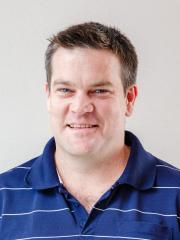
Jouni Björkman is a Lecturer at Seinäjoki University of Applied Sciences (SEAMK) , specializing in physics and fire safety technology . Holding a Doctor of Philosophy degree and a docent in medical physics (medical imaging) and radiation safety at the University of Tampere, his research bridges fire safety engineering with medical and radiation physics . He contributes to physics and technology teaching and assessment and psychometrics . His work includes fire load inventory studies for commercial buildings, functional fire safety planning methodologies, and risk assessment frameworks in fire safety systems. Publications like Fire loads are key factors in fire analysis (2012) and Functional fire safety planning (2011) highlight his focus on empirical data collection and stakeholder collaboration. He also explores veterinary biomechanics (FCSI index, 2018) and emergency medicine (2022 trauma mortality studies). Notable contributions span fire protection (e.g., Smoke alarm quality control , 1988), interdisciplinary education (2006 article on physics/chemistry committees), and innovative applications in the PUU-HUBI book (2015). While no scientific awards are explicitly mentioned, his career integrates applied research , teaching , and technical consultancy in fire safety and medical physics domains.
BONNEU FLORENT is a faculty member at the University of Avignon and Pays de Vaucluse , affiliated with the Institute of Agrosciences, Environment and Health and the CER Mathematics Department . His research focuses on spatial statistics, spatial econometrics, and location-allocation problems. Specializes in spatio-temporal point processes and spatial structure analysis Develops kriging-based forecasting methods for conditional intensity modeling Investigates biodiversity patterns and economic concentration metrics Recent work includes spatial modeling of wildfire occurrences, grapevine disease patterns, and herbicide impact studies. He contributes to educational planning through simulation approaches and applies mass transportation theory in spatial optimization problems. Bonneu collaborates with the Mathematics Laboratory (UPR 2151 LMA) , focusing on statistical tools for spatial data analysis. His methodological contributions span stochastic modeling, optimization algorithms, and geospatial applications across environmental science, agricultural economics, and emergency management.
Dr. Michael Gallen is an Analytical Chemist at the Queensland Alliance for Environmental Health Sciences (QAEHS), The University of Queensland, specializing in environmental contaminant analysis using advanced chromatography and mass spectrometry techniques. He joined QAEHS in 2013 and manages the Gas Chromatography/Mass Spectrometry (GC/MS) arm of the research group, focusing on non-polar chemical targets such as PBDEs, PCBs, dioxins, organochlorine pesticides, and PAHs. Education: PhD in Organic Chemistry (Natural Product Synthesis, 2008), The University of Queensland. Professional Roles: Former Forensic Chemist at Queensland Health (2009–2013), now leading GC-MS operations at QAEHS. His research spans environmental contaminant quantification, including microplastics in seafood and biosolids, PFASs in estuarine systems, and persistent pollutants from fires and landfill leachate. His work employs high-resolution GC-MS, triple quadrupole GC-MS/MS, and GC-Orbitrap instruments. Article trends highlight expertise in pyrolysis-GC-MS for plastic analysis, passive sampling for water quality, and toxicology of environmental chemicals in human and wildlife samples. Dr. Gallen's technical contributions include method development for rapid non-destructive testing of brominated flame retardants and surface oxidation effects on microplastic quantification. He collaborates extensively on multidisciplinary projects addressing chemical persistence, exposure pathways, and environmental health risks.
Dr. Andrew Banks serves as an Adjunct Fellow at the Queensland Alliance for Environmental Health Sciences (QAEHS), part of The University of Queensland, while working full-time as a principal chemist at the Queensland Racing Integrity Commission's Racing Science Centre. His dual affiliation bridges academic research with applied forensic chemistry in regulatory contexts. Education: PhD in Firefighters' exposure to potentially toxic combustion products, School of Pharmacy, The University of Queensland (2021) Research Interests: Occupational Chemical Exposure : Specializing in firefighter exposure to polycyclic aromatic hydrocarbons (PAHs), flame-retardants, and PFAS through air, dust, and biomonitoring studies Environmental Chemistry : Focusing on persistent organic pollutants in indoor environments, human exposure pathways, and decontamination efficacy Analytical Chemistry Methods : Developing advanced techniques for measuring contaminants in complex matrices including air, dust, biological samples, and firefighting gear Publication Trends: Banks' recent work (2020-2024) demonstrates consistent focus on environmental contaminants affecting occupational health, particularly firefighters. His 15 most recent publications reveal strong collaboration with QAEHS researchers on PFAS distribution, PAH exposure mechanisms, and decontamination protocols. The research employs sophisticated analytical approaches to address real-world exposure risks, with increasing emphasis on reproductive health impacts and exposure mitigation strategies. Scientific Awards: No awards or fellowships were documented in the provided materials. Advising and Grants: While no formal students are listed, Banks contributed to the multi-year Firefighter Exposure Risks and Subsequent Reproduction Effects project (2016-2023). His research appears supported through institutional affiliations rather than individual grant awards mentioned in the text. Labs and Teams: Banks maintains active collaboration with QAEHS researchers while applying his expertise at the Racing Science Centre. His work integrates analytical chemistry capabilities across both institutions, focusing on environmental health applications in regulatory and occupational settings.
Professor Jianqiao Ye is a distinguished academic at Lancaster University, where he joined in 2012 as a Professor and Chair of Mechanical Engineering. He is an active member of the Lancaster Intelligent, Robotic and Autonomous Systems Centre (LIRA), contributing significantly to research and teaching in engineering disciplines. His academic leadership extends beyond Lancaster University, as he serves as an Engineering Program Consultant at Blackpool & Fylde College and the external examiner for the UG Mechanical/Sustainable Energy Engineering program at Queen Mary University of London. Professor Ye's research spans a broad spectrum of academic and industrial interests with significant impact in multiple engineering fields. His work focuses on: Failure and damage mechanisms of fibre reinforced composites Advanced steel-concrete composite structures Geopolymer and green cementitious materials Cement and concrete carbonation processes Offshore oil and gas structures Vibration energy harvesting technologies His research methodology integrates traditional testing with cutting-edge numerical modeling and optimization techniques, extending to applications of modern analytical instruments such as X-CT, SEM, XRD, and EDS. More recently, he has incorporated data-driven approaches including metamodelling, machine learning, and digital twin technologies into his research portfolio, demonstrating adaptability to emerging technological trends. The analysis of Professor Ye's recent publications reveals a strong focus on sustainable construction materials, particularly ultra-high performance concrete (UHPC) and its variants. His work consistently addresses practical engineering challenges related to structural integrity under extreme conditions such as fire exposure, high temperatures, and mechanical loading. There's a clear trend toward integrating digital technologies with traditional engineering approaches, especially in the development of digital twin applications for construction equipment monitoring and structural analysis. His research shows increasing collaboration across disciplines, combining materials science, structural engineering, and computational techniques to solve complex problems in construction and infrastructure. Professor Ye's exceptional contributions to science have been recognized through prestigious awards: World's top 2% most influential scientist (Lifetime Scientific Influence Ranking) by Stanford University and Elsevier World's top 2% most influential scientist (2023 Global Scientists Influence Ranking) by Stanford University and Elsevier Professor Ye has successfully supervised multiple PhD students including Thamer Almotlaq, Kai Pang, Zhefeng Zhang, and Siyu Zhao, demonstrating his commitment to academic mentorship. His research has attracted substantial funding from leading organizations including the European Commission, EPSRC, Royal Society (RS), Royal Academy of Engineering (RAE), and major industrial partners such as Airbus, BAE Systems, Dunlop, DSTL, Force Technology, ITASCA, and QinetiQ. This diverse funding portfolio reflects the strong industrial relevance and academic excellence of his research program. As a key member of the Lancaster Intelligent, Robotic and Autonomous Systems Centre (LIRA), Professor Ye contributes to a vibrant research ecosystem that bridges traditional engineering disciplines with emerging technologies. His work on digital twin applications for construction equipment and his integration of machine learning with structural analysis position him at the forefront of the fourth industrial revolution in civil and mechanical engineering. The collaborative nature of his research, evidenced by partnerships with institutions worldwide including Sydney University, Australian National University, Nanyang Technological University, Stanford University, and leading Chinese universities, creates a rich environment for knowledge exchange and innovation.
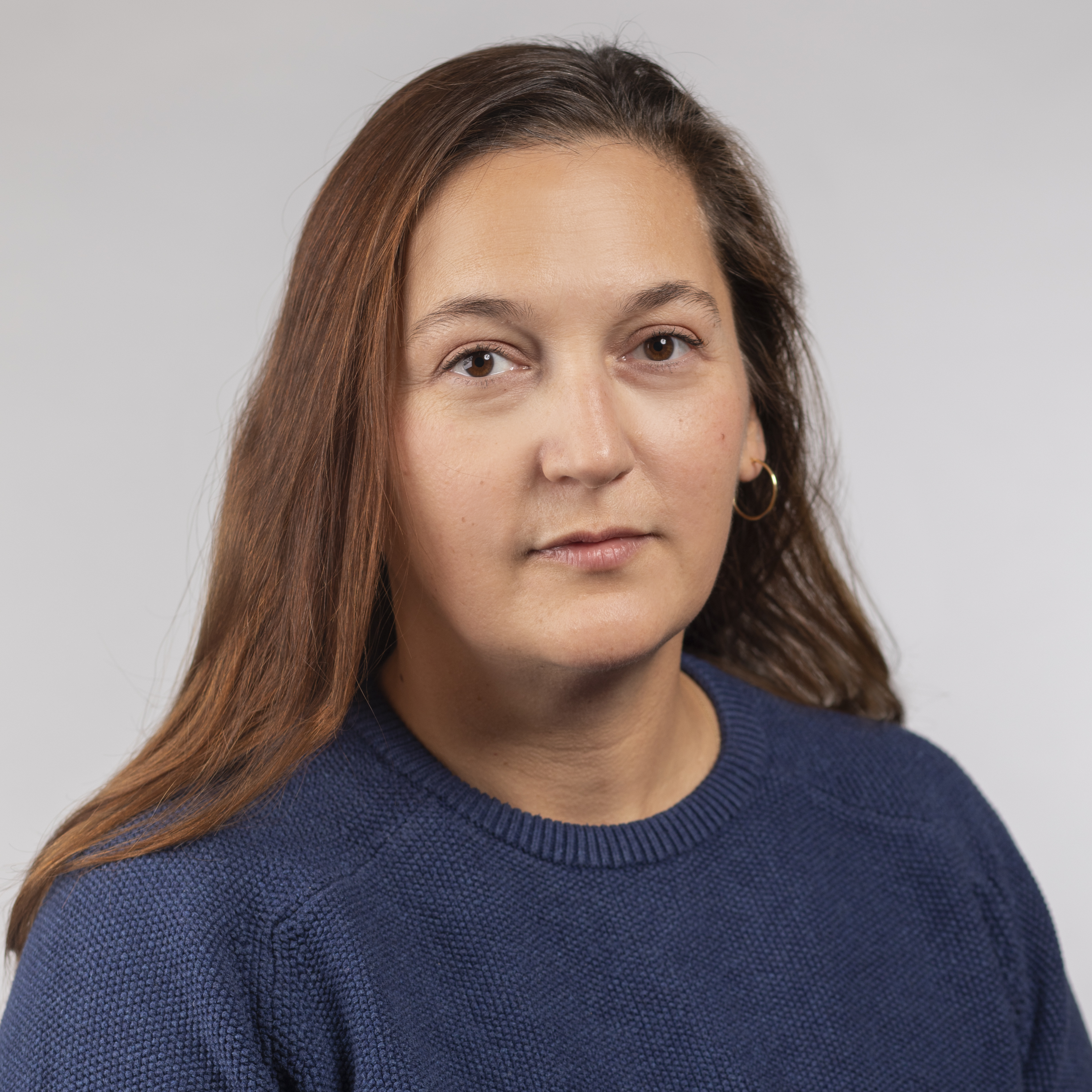
Inge Rörig-Dalgaard is a Senior Researcher at the Department of Environmental and Resource Engineering, Materials & Durability, Technical University of Denmark (DTU). Her expertise focuses on building material durability, particularly electrochemical desalination techniques for medieval masonry conservation and salt-damage mitigation in fired clay bricks. Her research spans desalination (100% fingerprint weight), building materials (71%), electrochemical desalination (61%), and electromigration (61%), with significant work on clay bricks (56%) and brick masonry (47%). She investigates moisture transport, relative humidity effects, and electric field applications to develop sustainable conservation strategies for cultural heritage structures. Recent publications demonstrate experimental rigor in medieval plaster analysis, mortar identification, and salt-crystallization testing. These reflect converging trends in electrochemical conservation methods, accelerated durability assessment, and climate-resilient heritage preservation. Dr. Rörig-Dalgaard actively supervises two PhD candidates: R. Stenholt-Jacobsen (lime mortars for brick reuse, 2023-2027) and J. Bartholdy (hydrogel desalination of wall paintings, 2021-2025). Her research is supported by DTU-funded projects and international collaborations through RILEM technical committees. She operates within DTU's Materials & Durability research group, utilizing advanced electromigration setups and hydrogel application systems for non-invasive conservation. Current work focuses on scaling lab-developed desalination protocols for real-world heritage sites while optimizing brick-reuse methodologies.
Dr. Sergii Kashkarov is a Lecturer in Hydrogen Safety at Ulster University within the Belfast School of Architecture & the Built Environment , focusing on advanced safety mechanisms for hydrogen storage systems. His work integrates computational fluid dynamics (CFD), fire safety engineering, and quantitative risk assessment (QRA) to address hazards in hydrogen vehicles and maritime applications. Dr. Kashkarov actively contributes to hydrogen safety research through projects like MANGOS (maritime hydrogen storage innovation) and HYLANTIC , collaborating with institutions across Europe. His research explores self-venting composite tanks , blowdown modeling , and fire resistance of hydrogen vessels, ensuring compliance with global safety standards. His publications highlight fire-induced tank rupture , blast wave propagation , and hazard distance nomograms for hydrogen storage in vehicles and tunnels. He also participates in Advance HE (Higher Education Academy) to enhance academic training in hydrogen safety. Key Research Areas: Hydrogen Storage, Fire Safety, CFD Modeling, Maritime Decarbonization Projects: MANGOS, HYLANTIC, Northern Ireland Green Seas Recognition: Publications in International Journal of Hydrogen Energy , Hydrogen , and Green Energy and Sustainability Dr. Kashkarov’s work aligns with UN Sustainable Development Goals, particularly SDG 7 (Affordable Energy) and SDG 13 (Climate Action) , by advancing zero-emission hydrogen technologies.
Dr. Raquel Caro Carretero is an Associate Professor at the School of Engineering (ICAI) of Comillas Pontifical University in Madrid. With 26 years of teaching experience , she chairs the Disasters Chair at Comillas and contributes to research in Statistics, Migration, Big Data, Space Sciences , and Sustainable Development Goals (SDGs) . Her work bridges industrial organization with social vulnerability and environmental risk assessment . Education: PhD in Economics and Business Administration (Comillas Pontifical University) Additional Training: Actuarial Sciences Degree (Universidad Complutense de Madrid); Pedagogical Accreditation Certificate Research Highlights: Her publications focus on multivariate statistical analysis for engineering and AI applications in disaster modeling, with recent work on wildfire risk monitoring and microplastics in salt production . She has led strategic partnerships under Erasmus+ and contributed to Martian atmospheric studies via the Meiga-MetNet research group. Scientific Awards: Award for 2006 Best Research in Corporate Social Responsibility Grants & Projects: Collaborated on European Human Rights Agency-funded research, led projects like Martian Data Analysis (ESP2016-79135-R), and participated in climate migration studies. Her work aligns with disaster resilience , climate policy , and smart city initiatives .
Professor Adam J Crewe is a leading academic at the University of Bristol's School of Civil, Aerospace and Design Engineering, specializing in Earthquake Engineering. His research focuses on structural dynamics, soil-structure interaction, and advanced testing methodologies for seismic resilience. Ph.D. in Earthquake Engineering from University of Bristol Key research areas include: Dynamic behavior of bridges and masonry structures under seismic loads Full-scale laboratory testing using shaking tables and teleoperation systems Advanced gas-cooled reactor core seismic analysis Corrosion-damaged structural elements Hybrid testing methodologies and real-time substructuring Recent research trends show strong focus on nuclear reactor seismic safety (48% fingerprint match), vibration isolators (10%), and polymer-based structural solutions (8%). Scientific achievements: Nuclear Reactor Seismic Studies Prize (2017) P-LEX Research Recognition (2014) Contributions to UKCRIC soil-foundation-structure interaction facility As Principal Investigator, he has managed major projects including: UKCRIC - Bristol Soil-Foundation-Structure Interaction Facility (2010-2025) FIELD INVESTIGATION OF THE MW8.8 CHILE EARTHQUAKE (2010) WISER: Women's Institutes & Seismic Engineering Research (2004-2006) He manages the EQUALS Laboratory and UKCRIC Soil-Foundation-Structure Interaction Laboratory, pioneering innovations in shaking table control systems and real-time dynamic substructuring.
Zeris Christos is a Professor in the Department of Structural Engineering at the National Technical University of Athens (NTUA), where he also directs the Reinforced Concrete Laboratory. His work focuses on seismic performance evaluation, fire-resistant concrete, and composite material applications. Academic Rank: Professor Department: Structural Engineering Institution: NTUA Research interests include: Seismic behavior of reinforced concrete (RC) structures Advanced cementitious composites with carbon nanotubes Corrosion resistance in concrete materials Second-order effects in structural analysis Rocking oscillators and soft story dynamics Blast mitigation strategies for structural systems His recent publications emphasize numerical modeling of seismic performance, chloride penetration in CNT-reinforced concrete, and cyclic load testing of RC interfaces. Key trends include fire-resistant concrete innovation and seismic retrofitting methodologies.
Patrick van Hees serves as Professor and Head of the Department of Building and Environmental Technology at Lund University's Faculty of Engineering (LTH). He actively contributes to LTH Profile Areas including Aerosols, Circular Building Sector, and The Energy Transition, with an ORCID ID 0000-0002-7405-607X. His research specializes in fire safety engineering, focusing on: Fire behaviour of construction materials Performance-based fire engineering methodologies Computational fire modeling and development Sustainable fire retardant systems for wood structures Fire emissions in built environments Key research fingerprints include Fire Safety Engineering (71% prominence), Cone Calorimeter applications (74%), Heat Release Rate analysis (60%), and Ignition dynamics (55%). His publication trends show increasing focus on oxygen reduction systems (2024), fire emissions scaling (2023), and radiation shielding material safety (2025), demonstrating consistent contributions to fire dynamics modeling and sustainable building safety standards. Professor van Hees serves on editorial boards for leading journals: Fire Safety Journal (2014–present) Fire Science Reviews (2012–present) Fire Technology (2010–2020) He delivered the invited talk 'The Urgent Need for System Thinking in Fire Safety' (2016) and manages the Civil Engineering Laboratory infrastructure. His supervised work includes doctoral projects on sustained flame conditions and residential fire prevention, with active leadership in the MSB-funded project 'Fire Emissions from New and Existing Materials' (2022–2027) addressing workplace environmental challenges.
Carmen García Ruiz is a Professor in the Department of Analytical Chemistry, Physical Chemistry and Chemical Engineering at the University of Alcalá, where she coordinates the Research group in chemical and forensic sciences. Her academic career spans over two decades with continuous research funding from national and European sources. University of Alcalá (Primary Appointment) Instituto Universitario de Investigación en Ciencias Policiales (IUICP) (Collaborative Research) European Union Research Projects (H2020 RISEN and others) Ministerio de Ciencia e Innovacion (Past Collaborations) Professor García Ruiz's research focuses on applying advanced analytical techniques to forensic problems. Her work centers on vibrational spectroscopy (Raman and FTIR) for analyzing explosive residues, biological fluids, and document evidence. She has pioneered methods using bio-photonic emission studies, mass spectrometry, and chromatographic techniques for forensic applications. Her laboratory integrates traditional forensic chemistry with data mining and artificial intelligence approaches to enhance evidence interpretation. Her recent publications (2020-2023) demonstrate a strong output in high-impact forensic journals covering drug-facilitated sexual assaults, Raman spectroscopy applications, and taphonomic studies. She has authored the textbook 'Introducción a la Química Forense' (2020) and contributed to the 'Manual de Criminalística y Criminología.' Principal Investigator for 2025 project on multiespecies forensic science Co-Investigator on H2020 RISEN project (284,550 euro budget) Multiple national research projects on forensic toxicology and explosive analysis Development of specialized equipment including ultra-weak photon emission spectrometers Professor García Ruiz teaches Forensic Chemistry Laboratory, Chemical Submission, and Fundamentals of Criminalistics Investigation. She has developed innovative teaching methods focused on team-based learning and competency assessment. Her laboratory serves as a hub for forensic analysis, collaborating with law enforcement agencies and international research groups to advance forensic science methodology and application.
Paulo Noriega is an Assistant Professor at Universidade de Lisboa's Faculdade de Arquitectura, where he researches human-environment interactions through virtual reality. As Vice-Director of ergoUX Lab, he leads studies in cognitive ergonomics, emotional design, and safety systems. His affiliations include: Research Centre for Architecture, Urbanism and Design (CIAUD) Interactive Technologies Institute UNIDCOM/IADE ADUUX (Association of Development of Usability and UX) His research examines how environmental variables influence behavior across three levels: perceptual responses to stimuli like light/color, decision-making in architectural spaces, and emotional engagement. Current projects include FEELS (VR study of home office ergonomics) and VR applications for building safety design. Noriega's 130+ publications demonstrate consistent focus on VR methodologies applied to evacuation behaviors, automotive interfaces, and cultural heritage. Recent work explores multimodal alarms in emergencies (2025), non-anthropomorphic AI agents (2026), and tangible interfaces in vehicles (2024). Key trends include human factors in safety-critical systems, affective computing, and cross-cultural UX evaluation. He teaches extensively in Design programs, covering cognitive ergonomics, emotional design, and neuroscience applications. As supervisor, he has guided multiple master's and PhD theses in Design and Ergonomics. His funded research includes 9 grants from Fundação para a Ciência e a Tecnologia, focusing on VR's role in safety systems and environmental interaction studies. At ergoUX Lab, Noriega's team develops VR protocols for evaluating architectural spaces, emergency responses, and user experiences. The lab's multidisciplinary approach integrates psychophysics, biosensors, and behavioral analysis to advance human-centered design.
Magdolna Békés-Gardánfalva serves as a chemistry lecturer at the Hungarian University of Fine Arts (MKE) since 2006 and at the Hungarian National Museum's Art Conservation Assistant program. Her expertise applies chemical principles to art conservation, specializing in archaeological textile analysis and museum environmental safety. Her educational background includes: Doctoral studies at the University of West Hungary Károly Simonyi Faculty of Engineering, Wood Science and Art (2015–) Art Conservation Assistant secondary OKJ training at the Hungarian National Museum (2006) University Diploma from the University of Veszprém, Faculty of Teacher Training, Department of Chemistry and Environmental Science (2000–2006), with a thesis on "Formation of black crust on the surface of coarse limestones found in built environments" Graduated from Cistercian Order Nagy Lajos High School, biology-chemistry department (1996–2000) Her research integrates chemistry with cultural heritage preservation through experimental analysis of material degradation. She investigates natural dyes in archaeological textiles using advanced instrumentation like SEM-EDX, examines environmental impacts on artifacts, and develops safety protocols for museum workplaces. Her work bridges theoretical chemistry with practical conservation techniques to address preservation challenges in built environments and archaeological contexts. Publication trends reveal consistent focus on material analysis techniques for cultural heritage, evolving from foundational safety systems (2011) to sophisticated textile diagnostics (2017). Her research demonstrates increasing technical specialization in analytical methods while maintaining core emphasis on environmental factors affecting artifact preservation. Scientific awards: No scientific awards were mentioned in the provided text. She has trained conservators through structured curricula covering occupational safety, applied chemistry, and textile materials but no specific advisees or research grants were documented. Her professional contributions include conference presentations on dye testing methodologies and color reconstruction limitations for archaeological textiles. She operates within the National Restorer and Restorer Training Center at the Hungarian National Museum, where she develops practical chemistry modules for conservation training and collaborates on material analysis projects for artifact preservation.
Professor Katarzyna Rzeszut is a distinguished academic at Poznań University of Technology, holding the position of Professor in the Faculty of Civil Engineering and Transport, Institute of Construction. With the academic qualifications of dr hab. inż. (Doctor Habilitated, Engineer), she has established herself as a leading expert in civil engineering, particularly in steel structures and structural mechanics. Her research interests span multiple specialized areas within structural engineering, with particular emphasis on thin-walled and cold-formed steel structures, structural stability analysis, fire resistance of building systems, and the application of composite materials (especially CFRP textiles) for structural strengthening. Professor Rzeszut's work bridges theoretical analysis with practical engineering applications, as evidenced by her numerous technical reports addressing real-world structural issues. Analysis of her recent publications (2023-2025) reveals a strong focus on experimental and numerical investigations of steel structures reinforced with composite materials. Her work examines sigma-type beams, trapezoidal sheeting systems, and adhesive joints between steel and CFRP textiles, with particular attention to load-bearing capacity, failure mechanisms, and structural behavior under various conditions. This research addresses critical gaps in current design methodologies and contributes to safer, more efficient structural systems. Professor Rzeszut maintains an active research program with consistent publication output across reputable international journals and conference proceedings. Her work demonstrates both depth in specialized structural engineering topics and breadth across multiple aspects of civil engineering. While specific awards aren't documented in the available information, her extensive publication record and professorial position reflect significant recognition within her field. Her research group appears to focus on experimental structural testing combined with advanced numerical modeling techniques. Students working with Professor Rzeszut would gain valuable experience with optical measurement methods, structural testing protocols, and computational analysis of complex structural systems. Her involvement in practical engineering projects suggests opportunities for students to engage with real-world structural challenges alongside theoretical research.