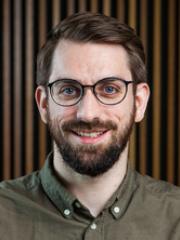
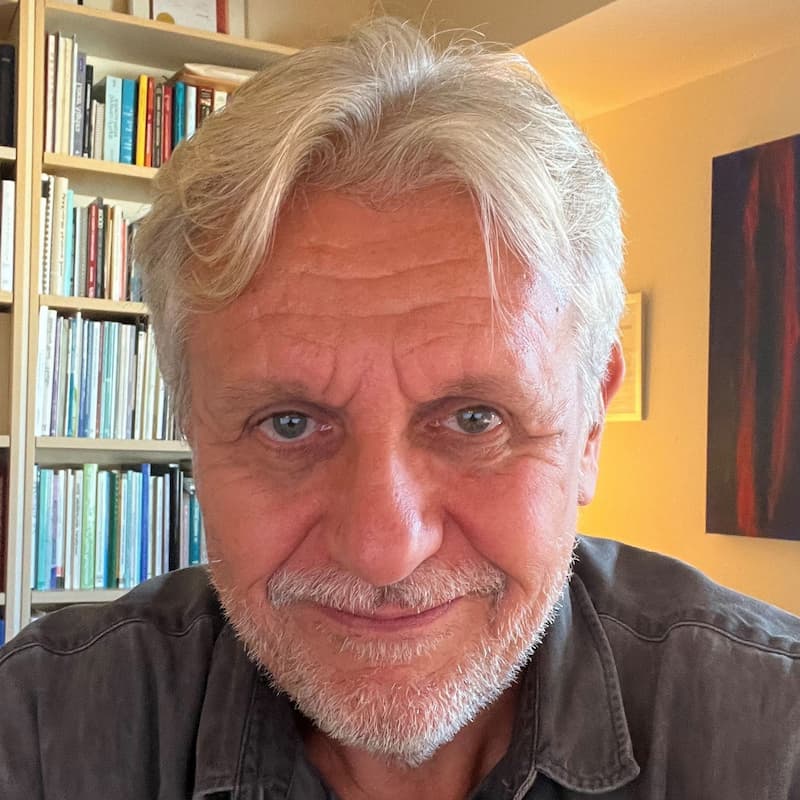
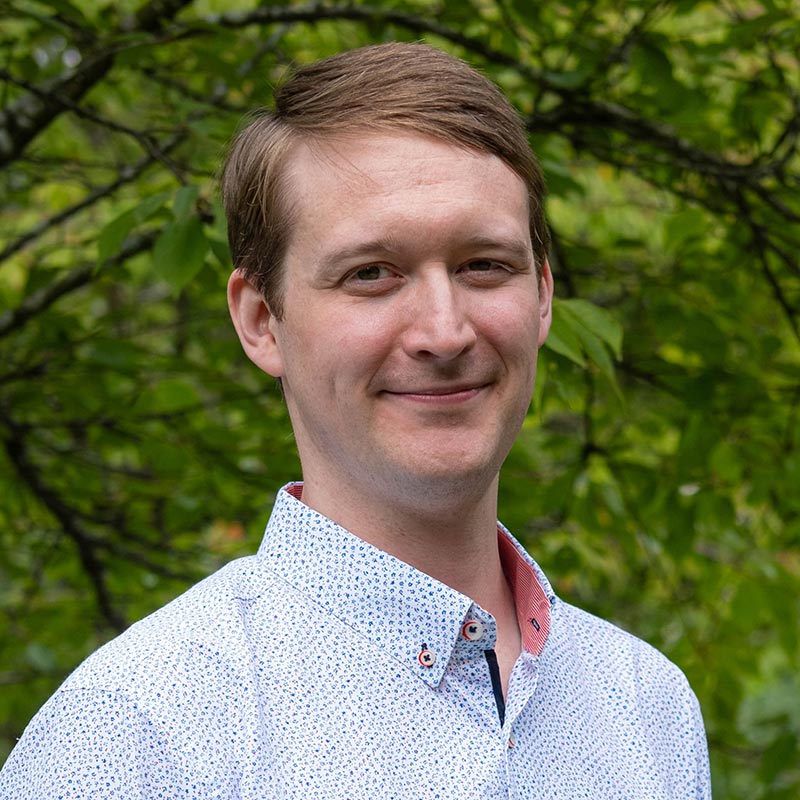
Prof. Konrad Świrski is a faculty member at the Department of Power Machines and Equipment within the Faculty of Power and Aeronautical Engineering at Warsaw University of Technology. He serves as the Supervisor of the Power Engineering Program , President of Transition Technologies S.A. , and holds key roles in national nuclear safety and industry collaboration.
Dr. Martyn McLaggan is an Adjunct Fellow in Fire Safety Engineering at the School of Civil Engineering, The University of Queensland. His research focuses on the fire performance of building façades, combustible cladding, and modern architectural materials. Prior roles include Research Consultant and Postdoctoral Fellow at DBI – The Danish Institute of Fire & Security Technology and Lund Technical University, where he developed experimental frameworks for assessing fire risks in external insulation systems. PhD in Fire Testing Frameworks for Phase Change Materials and Hemp-Lime Insulation, University of Edinburgh MEng in Architectural Engineering, University of Strathclyde His research spans fire dynamics in ventilated façades, structural stability under fire conditions, and sustainable insulation materials. Key contributions include leading the Cladding Materials Library and co-developing protocols for fire testing methodologies. He has collaborated extensively on large-scale compartment fires and hybrid steel-timber structures. Recent publications emphasize upward flame spread on cladding materials, fire risk classification for high-rise buildings, and self-extinction frameworks for mass timber. His work has informed fire safety standards and building codes, particularly for innovative façade systems and insulation materials.
Morteza Gholami Haghighi Fard is a researcher affiliated with Aalto University's School of Engineering and Department of Civil Engineering. His work focuses on fire safety engineering, combustion characteristics, and thermal modeling of polymeric materials. His research involves experimental and computational studies on heat flux distribution in charring materials, fire performance of electrical cables, and development of nanopolysaccharide-based hybrid foams. Key methodologies include cone calorimetry, FDS-simulation, and 2D thermal modeling. Recent publications analyze gas evolution in self-extinguishing polymers, combustion dynamics of non-charring cylinders, and uncertainty management in fire risk assessments. Collaborations span multiple disciplines with researchers from materials science and fire engineering backgrounds.
Dr. Nabil Allaf is a Lecturer at the Wellington School of Architecture, Victoria University of Wellington, New Zealand. His academic career includes positions as Teaching Fellow at Victoria University of Wellington (2019-2020) and Associate Lecturer at École Nationale Supérieure d'Architecture et de Paysage de Lille in France (2020-2021). Dr. Allaf holds a Bachelor of Architecture (2003-2006) and Master of Architecture (2006-2008) from École Nationale Supérieure d'Architecture de Nantes, France, and a PhD from Victoria University of Wellington. His research focuses on the integration of seismic structure and architecture, architectural assessment of seismic retrofit design solutions for existing and heritage buildings, and the technical, societal, and environmental challenges of high-rise buildings. Dr. Allaf's work bridges architectural design with engineering principles to create earthquake-resilient structures that maintain architectural integrity and heritage value. His research has practical applications in seismic retrofitting, particularly for unreinforced masonry buildings common in New Zealand's architectural heritage. Analysis of Dr. Allaf's publications reveals a strong emphasis on seismic retrofitting of buildings, particularly unreinforced masonry structures. His work spans architectural design, structural engineering, and earthquake resilience, with a growing focus on educational aspects of seismic design. Recent publications address facade systems and high-rise building challenges, demonstrating expanding research scope while maintaining core focus on seismic safety and architectural integration. Dr. Allaf currently supervises doctoral research on 'Architectural Design Education for Earthquake Resilience,' examining the effectiveness of different educational content and workflows. His teaching portfolio includes courses on Architecture Design Integration Capstone, Structures, and Structural Systems for Building Science, reflecting his expertise in both architectural design and structural principles. His professional background includes architectural practice in France and consulting work with several New Zealand architectural firms.
Laura Chasmer is an Associate Professor in the Department of Geography and Environment at the University of Lethbridge . Her research focuses on boreal ecosystems, permafrost thaw, wildfire ecology, and remote sensing techniques. Research Interests Wildfire impacts on boreal carbon cycling and vegetation regeneration Permafrost thaw and ecosystem transitions LiDAR and remote sensing applications in wetland and forest monitoring Climate change effects on boreal hydrology and carbon balance Publications & Methodologies Her work utilizes bi-temporal LiDAR, multispectral imaging, and data fusion to analyze ecosystem changes across Canada's boreal regions. Recent studies examine wildfire smoke effects on carbon uptake, post-fire vegetation recovery, and climate-driven wetland drying trends.
David Gil Méndez is a Full Professor in Computer Architecture and Technology at the Department of Information Technology and Computing, University of Alicante. He earned his Doctorate in Computer Engineering from the University of Alicante in 2008 and has supervised 5 PhD theses to date. Member of European Network of Scientific Excellence in AI (ELLIS) Coordinator of 3 European COST Action projects (2021-2027) Published 50+ JCR journal articles His research focuses on Big Data applications, Machine Learning, Data Mining, IoT, and Human Activity Recognition, with particular emphasis on healthcare AI and clinical data analysis. He has developed frameworks for decentralized IoMT environments and conducted extensive work on explainability in medical machine learning models. Recent publications address metastasis prediction in rare tumors (2025), photovoltaic energy forecasting (2022), and blockchain voting systems (2020). His work spans both theoretical and applied domains, including educational data mining and cyber-physical systems. As teaching experience, he has delivered courses in Operating Systems (14 times), Computational Modeling (5 times), Data Mining (5 times), and Big Data Technologies (5 times) at University of Alicante across multiple engineering disciplines. He leads research projects funded by: European Commission (3 active COST Actions) Valencian Government (2020-2021) Spanish Ministry of Education (2009-2010)
Professor Jacqueline Christmas is a faculty member at the University of Exeter's Department of Computer Science. Her research spans interdisciplinary domains including maritime engineering, computer vision, machine learning, oceanography, and biomedical engineering. Institutional Affiliation: University of Exeter Core Expertise: Computer vision, machine learning, environmental monitoring Specialized Areas: Maritime engineering applications, sea state estimation, biometric recognition Collaborations: Active in Exeter Marine and Environmental Intelligence networks Her recent publications focus on sea wave prediction using radar data, computer vision applications in archaeology, and advanced Bayesian learning methods. Articles demonstrate expertise in environmental remote sensing, biometric security systems, and maritime engineering challenges, particularly in oceanographic and aerospace recovery contexts. She contributes to environmental intelligence initiatives through interdisciplinary research and maintains a strong publication record across statistical modeling, image analysis, and predictive systems.
Simon A. Levin is the James S. McDonnell Distinguished University Professor in Ecology and Evolutionary Biology at Princeton University, where he has been affiliated since 1992. He also holds an Adjunct Professorship at Cornell University. His research bridges ecological theory, evolutionary biology, and environmental economics, focusing on macroscopic patterns in ecosystems, infectious disease dynamics, and sustainable management of global commons. B.A., Johns Hopkins University Ph.D., University of Maryland (Mathematics) Levin’s work integrates mathematical modeling with ecological data to study resilience, pattern formation, and multiscale processes in natural systems. He explores how individual-level ecological and evolutionary mechanisms generate collective outcomes at ecosystem and biosphere scales, emphasizing the importance of scale mismatches in conservation challenges. Recent publications highlight his contributions to epidemic modeling coupled with human behavior, spatial ecology of savanna-forest boundaries, and network-based analyses of social-ecological systems. His 2025 work on risk compensation and surveillance systems demonstrates how behavioral feedbacks influence disease containment strategies. MacArthur Award (1988) Kyoto Prize in Basic Sciences (2005) A.H. Heineken Prize for Environmental Sciences (2004) National Academy of Sciences member Fellow of AAAS and American Academy of Arts and Sciences As director of the Princeton Center for BioComplexity, Levin mentors over 100 graduate students and postdocs. His lab investigates topics like microbial interactions, climate-driven ecosystem shifts, and prosocial behavior in resource governance.
Dr. Stavros Avramidis is a Professor and Head of the Department of Wood Science at the University of British Columbia's Faculty of Forestry. His research focuses on advanced wood physics and drying technologies, integrating computational modeling, spectroscopic analysis, and machine learning applications. Wood-water relations and sorption thermodynamics Fluid flow and heat transfer mechanisms Fractal modeling of nano-pore networks Radio frequency vacuum drying optimization Machine learning for wood property prediction Recent publications demonstrate his leadership in applying data science to wood processing challenges, with emphasis on thermal modification, moisture dynamics, and multispectral identification. He actively supervises graduate research through thesis programs in Forestry (MSc, MASc, PhD) while collaborating on interdisciplinary projects related to wood technology and sustainability. Contact: stavros.avramidis@ubc.ca
Jos Lelieveld is Professor in Atmospheric Physics at Johannes Gutenberg University Mainz and Spokesperson of the Paul Crutzen Graduate School, with a concurrent part-time professorship at the Cyprus Institute, Nicosia. He served as Director of the Atmospheric Chemistry Department at the Max Planck Institute for Chemistry from 2000 until August 2025. His career spans atmospheric chemistry, air quality, and climate-health interactions with international collaborations across Europe, Cyprus, and the Amazon. His educational background includes: Undergraduate in Biology, University of Leiden Ph.D. in Physics, University of Utrecht (1990) Lelieveld's research examines atmospheric chemical processes, pollution-climate interactions, and human health impacts. He investigates biogeochemical cycles, ozone formation, and particulate matter effects using advanced modeling and field measurements. Recent work focuses on Mediterranean urban heat islands, Amazonian atmospheric chemistry, and cardiovascular damage from air pollution-traffic noise synergies, emphasizing climate change hotspots like Cyprus. Analysis of his 2024-2025 publications reveals three dominant trends: (1) Urban climate adaptation in Mediterranean regions using high-resolution modeling, (2) Biogenic volatile organic compound dynamics in tropical forests under deforestation pressure, and (3) Mechanistic studies of air pollution's cardiovascular impacts through toxicology and epidemiology. His work increasingly integrates machine learning for health risk forecasting. Details on academic advising and research grants were not specified in source materials, though his leadership in the Paul Crutzen Graduate School indicates significant mentorship responsibilities. His research infrastructure includes the EMAC atmospheric chemistry model and collaborations with the Cyprus Institute's climate research division.
Roberto Hernan Gonzalez serves as a Full Professor in the Department of Economy and Social Sciences at Burgundy School of Business (BSB), actively contributing to the "Decisions and Behaviors" disciplinary team with research focused on organizational transformation, behavioral decision-making, and institutional design. His scholarly work spans behavioral economics, experimental methodology, and organizational behavior, examining how uncertainty, social incentives, and complex systems shape human decisions. Key investigations include contract negotiation dynamics, peer effects in automated environments, and the psychological mechanisms underlying incentive responsiveness, consistently employing controlled laboratory and field experiments to generate empirical insights. Analysis of his 2021-2025 publications reveals a cohesive trajectory exploring decision architecture under uncertainty, with increasing emphasis on human-technology interaction (e.g., "The boss is a machine!") and stochastic reward systems. His research demonstrates methodological rigor through real-effort experimental designs across diverse contexts from labor markets to arbitration processes, published in leading economics journals and presented at major international forums including SEET and ASFEE conferences. Professor Gonzalez actively engages with the academic community through conference presentations at institutions like Georgetown University in Qatar, editorial contributions to the Journal of Economic Psychology, and collaborative research networks across Europe. His affiliation with BSB's "Decisions and Behaviors" team positions him at the intersection of economic theory and behavioral science, advancing understanding of decision processes in organizational contexts.
Douglas Woolford is a Professor of Environmetrics at the Department of Statistical and Actuarial Sciences, University of Western Ontario. His research focuses on data science, forest fire prediction, and stochastic modeling. Education: Ph.D., University of Western Ontario, 2007 Woolford's work bridges statistical methodology with practical applications in wildland fire management, risk assessment, and mathematical education. He develops predictive models for fire occurrence and suppression effectiveness, collaborating with forestry and environmental agencies. His 15 most recent publications (2025-2021) span topics like rare event prediction, fire weather interpolation methods, and industrial protocol evaluation. Articles appear in journals including Canadian Journal of Statistics , International Journal of Wildland Fire , and Environmetrics . Woolford supervises postdoctoral and graduate researchers, including Shuai You (Ph.D.), Nathan Phelps, Zixuan Yang, and others. His lab contributes to wildfire risk modeling and policy analysis in Canada.
Paul Pickell is an Assistant Professor of Geomatics in the Department of Forest Resources Management at the University of British Columbia Faculty of Forestry. His work focuses on education and pedagogy in forestry, sustainable forest management, and technology-driven innovation in environmental monitoring. University: University of British Columbia School: Faculty of Forestry Department: Department of Forest Resources Management Academic Rank: Assistant Professor Dr. Pickell's research integrates geomatics, remote sensing, and fire ecology to analyze forest dynamics across boreal ecosystems. He explores drought-fire associations, anthropogenic disturbance regimes, and forest fragmentation patterns, leveraging Landsat time series and airborne laser scanning data for large-scale ecological surveillance. His publications reveal a strong emphasis on fire research, boreal forest monitoring, and geospatial analysis. Key trends include algorithm development for fuel type classification, predictive modeling of burn windows, and longitudinal studies of forest recovery post-disturbance.
David Icove serves as an Adjunct Professor in the Fire Science and Emergency Management Department within the Henry C. Lee College of Criminal Justice and Forensic Sciences at the University of New Haven. Dr. Icove's research interests focus on critical areas of public safety and emergency response. His expertise spans fire science investigation methodologies, emergency management protocols, disaster preparedness systems, and the intersection of fire science with criminal justice procedures. His work addresses contemporary challenges in risk assessment, incident command systems, and the forensic analysis of fire-related incidents. As an adjunct faculty member, Dr. Icove brings practical field experience to the academic environment, bridging theoretical knowledge with real-world applications in fire science and emergency management. Contact information: Email: DIcove@newhaven.edu Phone: (865) 974-8051
Rachel Dowty Beech serves as Senior Lecturer in Fire Science and Emergency Management and Coordinator of the M.S. Emergency Management Program at the University of New Haven, within the Henry C. Lee College of Criminal Justice & Forensic Sciences and the Department of Fire Science. Previously, she held positions at Louisiana State University as Director of the Disaster Science and Management Program, Assistant Professor-Research in the Department of Geography and Anthropology, and Assistant Professor-Research at the Stephenson Disaster Management Institute. Dr. Dowty Beech earned her Ph.D. in Science and Technology Studies from Rensselaer Polytechnic Institute, M.S. in Wetland Restoration Biology from Southeastern Louisiana University, and B.S. in Biology from Southeastern Louisiana University. Her research focuses on how environmental, social, and cultural factors shape disasters and emergency management. She examines cross-cultural emergency management approaches, organizational culture in disaster contexts, communication and coordination during crises, decision-making processes in disasters, and environmental disasters involving petrochemicals. Her work emphasizes environmentally and socially sustainable methods of mitigation and recovery, integrating cultural theory with practical emergency management applications. Dr. Dowty Beech's publications span disaster dynamics, anthropology of disasters, and pedagogy in emergency management education. Her recent work addresses vulnerability of resource users to environmental hazards, organizational culture in supply chains during disruptions, and cultural perspectives on humanitarian logistics. Scholarship of Teaching and Learning (SoTL) Advancement at the American Educational Research Association Conference (2019) for FEMA education research Advisor of the Year Award, Louisiana State University (2012-2013) Service Learning Scholars Award, Louisiana State University (2009) Dr. Dowty Beech has secured significant research funding from the National Science Foundation, U.S. Department of Homeland Security, Louisiana Sea Grant, and other organizations. She has served as a panel reviewer for NSF grant proposals and developed educational programs including online courses and graduate certificate programs in emergency management. Her teaching includes courses such as Principles of Emergency Management, Holistic Disaster Recovery, and Pandemic Emergency Management.