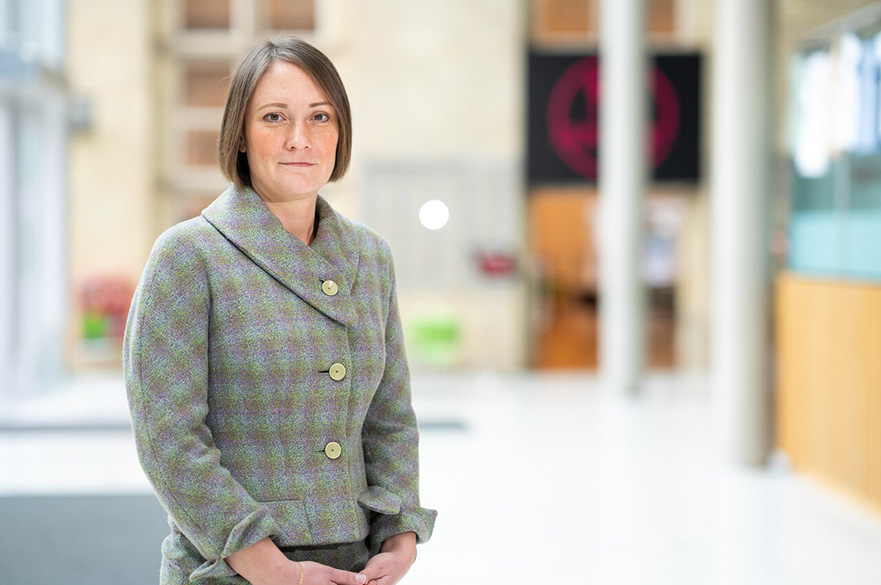
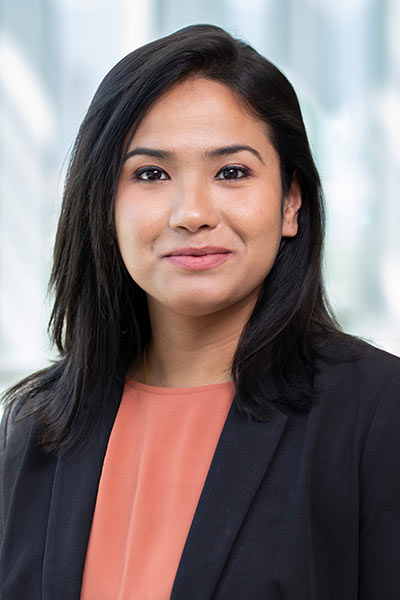
Angela Sasic Kalagasidis is a Professor and Department Head at Chalmers University of Technology , leading the Building Physics research group. She serves as a board member of the Moisture Center at Lund University of Technology , contributing to interdisciplinary research in building science. Building Physics Heat and Mass Transfer Energy Efficiency Moisture Safety Indoor VOC Emissions Climate Change Adaptation Her recent publications focus on aerogel-based materials for insulation, urban heat island mitigation , and thermal energy storage systems . Key methodologies include CFD simulations , field testing , and life cycle assessment frameworks . Research trends show emphasis on: Advanced computational tools for hygrothermal analysis Integration of phase change materials in building systems Climate resilience in building envelopes Optimization of ventilation and moisture control
Marco Badami is a Full Professor at the Department of Energy (DENERG) , Polytechnic of Turin. He serves as Scientific Director for national and EU-funded research projects in energy systems and has been a Course Lecturer for Energy Systems and Industrial Use of Energy since 2010. He supervises PhD students in Energetics and Electrical Engineering . Research Interests: His work spans energy systems optimization, machine learning applications for industrial energy efficiency, smart grids, cogeneration scheduling, blockchain-based energy data immutability, and predictive maintenance algorithms for photovoltaic plants. Current projects focus on AI-driven energy audits, optimized control systems for industrial microgrids, and digital twin architectures. Collaborations: He works with Trigenia Srl, Stogit SpA, and international institutions on commercial research contracts. His scientific contributions include 15+ publications on topics like LSTM forecasting for solar energy, deep reinforcement learning for multi-energy systems, and decentralized peer-to-peer energy trading platforms.
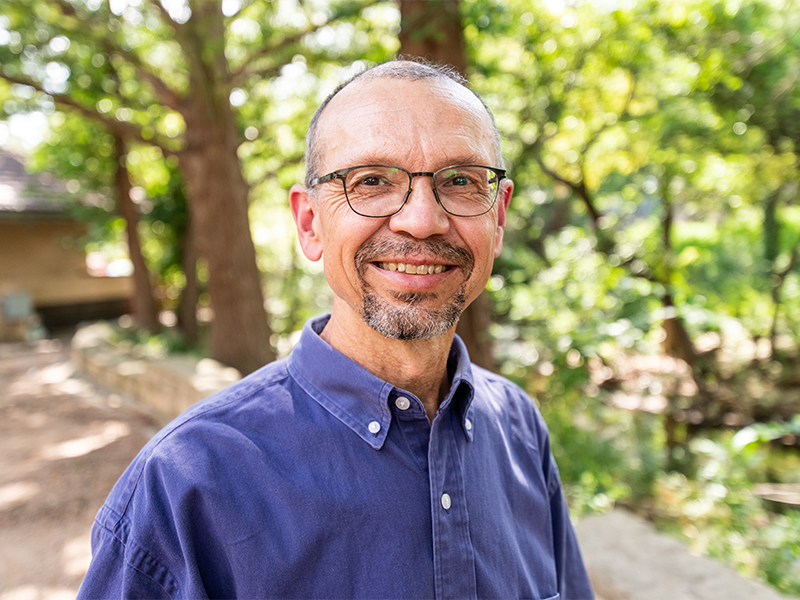
Matthew J. Hall is a Professor in the Department of Mechanical Engineering at the University of Texas at Austin , where he also holds the Louis T. Yule Fellowship in Engineering . He has been a faculty member since 1991 and is affiliated with the Cockrell School of Engineering . His research spans engine combustion processes , thermal fluids systems , engine controls , optical diagnostics , battery safety , and alternative fuels . He is particularly known for his work on cold-start emissions , spark ignition , engine friction reduction , and thermoelectric energy recovery . He teaches courses in Thermodynamics , including modeling of power cycles and HVAC systems , and has published over 150 technical articles. His recent work includes innovations in ammonia combustion , biomass gasification , and advanced engine diagnostics . Scientific Awards & Honors: Fellow of the Society of Automotive Engineers (SAE) Louis T. Yule Fellowship in Engineering Associate Editor, SAE International Journal of Engines Research Impact & Leadership: Prof. Hall leads multidisciplinary efforts in combustion science , energy systems , and sustainable propulsion . His lab has contributed to reducing engine friction by up to 40%, improving fuel efficiency at idle, and advancing the use of ammonia as a low-carbon fuel. He also explores thermoelectric generators for extending drone flight range and improving vehicle energy recovery systems.
Maria Garlock is the Daniel Tsui Professor in Engineering at Princeton University, serving as Co-Director of the Program in Architecture and Engineering and Head of Forbes College. Her roles also include membership in the Executive Committee of the Council on Science and Technology, Associated Faculty in the School of Architecture, and Associated Faculty in the Program in Latin American Studies. Garlock holds a PhD in Structural Engineering (Lehigh University, 2002), an MS in Civil Engineering (Cornell University, 1993), and a BS in Civil and Environmental Engineering (Lehigh University, 1991). Her research focuses on resilient structural design for extreme hazards like fires, earthquakes, and storm surges. She explores both isolated and cascading multi-hazard scenarios while also analyzing historical structural designs (e.g., Félix Candela’s thin-shell concrete umbrellas) and improving STEM education for non-technical majors through innovative teaching methods, including MOOCs and scale model exhibitions. Recent work emphasizes coastal defense systems using hyperbolic-paraboloid forms and steel-concrete girder performance under shear stress. Garlock has received notable honors including the ASCE SEI Fellowship (2016 T.R. Higgins Lectureship), President’s Award for Distinguished Teaching (2012), and the Emerson Electric Co. Faculty Advancement Award (2006). In education and grants, she teaches courses like Structures and the Urban Environment and Advanced Design of Steel/Concrete Structures , and has secured government funding for STEM literacy initiatives. Her research collaborations include the BRITE Pivot project and studies on Cuba’s historic National School of Ballet domes. She also leads efforts in deploying kinetic umbrellas as flood barriers and advancing probabilistic models for fire fragility in multi-hazard contexts. Garlock’s work bridges engineering and art, exemplified by her preservation studies of Candela’s architectural masterpieces and pedagogical innovations that emphasize creativity in structural design.
Dr. M.Z. Naser is an Assistant Professor in the Glenn Department of Civil Engineering at Clemson University. His research focuses on causal and explainable machine learning methodologies applied to structural engineering, materials science, and fire safety. He holds a PhD from Michigan State University and an M.S. from the American University of Sharjah. Naser teaches courses such as Machine Learning for Civil Engineers and Structural Fire Engineering, emphasizing interdisciplinary innovation. His work bridges data-driven analysis with domain-specific knowledge to address challenges in resilient infrastructure design, including fire-resistant materials, structural retrofits, and AI-driven decision-making. Education: PhD, Michigan State University; M.S., American University of Sharjah Research Themes: Explainable AI, Fire Engineering, Structural Materials, Causal Inference Key Projects: Developing SPINEX framework, wildfire classification models, and cognitive infrastructure systems Recent publications analyze over 1000 fire tests to uncover spalling mechanisms, explore synthetic fire tests via GANs, and benchmark automated ML platforms. His work on causal diagrams for civil engineers and firefighter algorithms highlights contributions to both theory and practical applications. Naser also advocates for integrating AI into engineering education, emphasizing ethical and transparent model deployment.
Dr. Jenna Yentes is an Associate Professor in the Department of Kinesiology and Sport Management at Texas A&M University, affiliated with the College of Education and Human Development. Her research focuses on functional resiliency in aging populations, biomechanics of chronic obstructive pulmonary disease (COPD), and nonlinear analysis of human movement. She leads studies on gait stability, respiratory-gait coupling, and exoskeleton-assisted walking. Notable contributions include quantifying locomotor reserve and exploring firefighter performance in protective gear. Education: Ph.D. in Biomechanics (University of Nebraska, 2013), M.S. in Kinesiology (California State University Fullerton, 2006), B.A. in Kinesiology (University of Northern Colorado, 2000). Research Interests: Reserve capacity in older adults' mobility and cognition Biomechanical adaptations in COPD patients Methodological rigor in nonlinear data analysis (e.g., entropy metrics) Firefighter physical performance under protective gear Recent Articles Trends: Focus on entropy-based gait analysis, COPD biomechanics, dual-task interference in aging, and exoskeleton effects on interlimb coordination. Methodological rigor in parameter selection for nonlinear algorithms is a recurring theme. Awards: 2023 Faculty Climate Award (Texas A&M), 2019 Promising Scientist Award (International Society of Posture and Gait Research), and 2019 Chancellor's Commission on the Status of Women Award (University of Nebraska). Advising & Grants: Mentors graduate students (noted in publications) and collaborates with TEEX Fire Academy and multiple Texas A&M research centers including the Huffines Institute for Sports Medicine and the Center for Population Health and Aging. Research supported by institutional and federal grants. Labs/Teams: Active in Texas A&M's Human Movement and Aging Lab, collaborating with interdisciplinary teams in sports medicine, rehabilitation engineering, and pulmonary research.
Rowena Hill is a Professor of Psychology at Nottingham Trent University's School of Social Sciences, specializing in disaster psychology and emergency response systems. She holds key roles including ESRC Policy Fellow for Climate Change, Honorary Research Lead for the Fire Fighters Charity, and Chair of the National Fire Chiefs Council's Academic Collaboration Group. Her work bridges academic research with policy, focusing on resilience strategies for emergency responders, community risk management, and mental health support systems. Education: Not explicitly stated in provided texts Her research emphasizes psychological health in emergency contexts, including pandemic response, climate adaptation, and familial impacts of frontline work. She has led over 60 evidence-based reports for UK pandemic policy during her 2020–21 secondment to the C19 National Foresight Group. Key interests include humanitarian assistance frameworks, public risk communication, and organizational resilience in critical sectors. Recent publications analyze firefighter wellbeing, police resilience training, and extreme weather preparedness. Notable achievements include establishing evaluation frameworks for fire service interventions and advising national security inquiries. Awards: Fellow of the British Psychological Society, Fellow of the Higher Education Academy Dr. Hill collaborates with governmental bodies and emergency services, contributing to policy development through evidence synthesis. Her work addresses systemic challenges in emergency service collaboration, climate change adaptation, and psychological support structures for responders and affected communities. She leads the NTU Emergency Services Research Unit, focusing on operational learning and health strategies for emergency personnel. Current projects explore long-term resilience in post-pandemic recovery and climate-related disaster preparedness.
Terri S. Hogue is a Professor in the Department of Civil and Environmental Engineering at the Colorado School of Mines, where she also serves as Dean of Earth and Society Programs and Director of the Center for a Sustainable WE 2 ST. Her work bridges engineering, hydrology, and environmental sustainability, with a strong focus on semi-arid regions. Education: PhD in Hydrology and Water Resources, University of Arizona, 2003 MS in Hydrology and Water Resources, University of Arizona, 1998 BS in Geology, University of Wisconsin-Eau Claire, 1995 Her research focuses on hydrologic and land surface processes, particularly in the context of water resource management, climate variability, urbanization, and natural hazards. She integrates field observations, remote sensing, and modeling to study catchment responses to wildfires, urban development, and climate change. Her work emphasizes improving hydrologic forecasts and understanding human-environment interactions in water-limited systems. The 15 most recent publications highlight consistent themes in hydrologic modeling, remote sensing applications, evapotranspiration estimation, post-wildfire hydrology, and urban water systems. Her research spans both observational and computational methods, with strong applications to real-world water management challenges in the western U.S. Scientific Awards and Honors: NSF Faculty Early Career Development (CAREER) Award, 2009 NSF Fellowship Trainee Award (multiple years) NASA Earth Observing System (EOS) Graduate Fellowship, 2001–2002 AMS Journal of Hydrometeorology Editor’s Award, 2011 UCLA Professor of the Year (2004, 2007, 2010) Appointment to National Academy of Sciences Board on Atmospheric Sciences and Climate, 2013 AMS Science and Policy Colloquium Fellowship, 2002 Multitude of scholarships and fellowships from NASA, NSF, and professional societies Dr. Hogue has been actively involved in advising and research leadership through her Hogue Research Group and the Center for a Sustainable WE 2 ST. She has secured significant grants, including the NSF CAREER Award, and contributes to national science policy through service on the AGU Hydrology Section and the National Academy of Sciences. Her work emphasizes interdisciplinary collaboration, data-driven modeling, and sustainable solutions for water-stressed regions. She leads the Hogue Research Group and the Center for a Sustainable WE 2 ST, both of which focus on integrated water, energy, and environmental systems. These teams bring together engineers, hydrologists, and environmental scientists to tackle pressing sustainability challenges through research, education, and policy engagement.
Anja Müller is a Professor at the University of Siegen , specializing in English Literature and Cultural Studies within the Faculty of Humanities. Her research spans 18th-century English literature , children's and young adult literature , and neomedievalism in contemporary media, including A Song of Ice and Fire and role-playing games. She leads the Research Center for European Children's and Young Adult Literature and co-edits the book series Studies in European Literature for Children and Young Adults . Education : Magister Artium (1995), PhD (2000) in English Literary Studies Positions : W3 Professor at University of Siegen (since 2010), previously held positions at TU Chemnitz, Otto-Friedrich University Bamberg, and Ernst-Moritz-Arndt University Greifswald Research Focus : Explores intersections of childhood construction , canon formation , and intermedial adaptation . Notable projects include DFG-funded work on canon and social imaginaries in British children's literature and the edited book series on European children's literature. Publication Trends reflect her expertise in 18th-century cultural discourse (e.g., periodicals, garden symbolism), children's canon dynamics , and fantasy literature analysis (e.g., Tolkien, Stoppard, Game of Thrones). Scientific Recognition : Children's Literature Association Honor Book (2009) CDE-Award (2002) for her dissertation DFG and Fritz Thyssen Stiftung project funding International fellowships (e.g., Roger W. Eddy Fellowship, DAAD grants) Labs and Teams : Directs the Research Center 'European Children's and Young Adult Literature' and collaborates with institutions like the University of Tübingen and Routledge. Coordinates DFG projects and international conferences on canon studies and childhood representation.
Paolo Riva is a Full Professor of Structural Engineering at the Department of Design and Technologies of the Faculty of Engineering, University of Bergamo. He has served as Dean of the Faculty of Engineering (2009-2012) and Director of the Department of Engineering at the same university since 2012. His expertise lies in seismic engineering and structural analysis of reinforced concrete structures. Professor Riva graduated in Civil Engineering from Politecnico di Milano in 1984 and earned his Ph.D. in Civil Engineering from the University of Waterloo, Canada in 1987. He began his academic career as a researcher at the University of Brescia (1991-2001), became Associate Professor there in 2001, and joined the University of Bergamo as Full Professor in 2005. His primary research interests focus on the seismic behavior of reinforced concrete structures, particularly structural walls and prefabricated structures. He also specializes in seismic retrofitting of historic buildings, nonlinear analysis of reinforced concrete structures, and fire behavior of reinforced concrete structures. His work bridges theoretical analysis with practical applications for enhancing structural safety in earthquake-prone regions. Professor Riva's recent publications demonstrate a strong focus on seismic damage assessment, structural retrofitting solutions, and sustainability in structural engineering. His research often addresses practical challenges in post-earthquake scenarios, including damage identification through advanced monitoring techniques and development of innovative retrofit strategies for existing structures. A notable trend is his increasing emphasis on integrating sustainability principles into seismic retrofitting practices. Seismic Reliability of Structures (WP3 - Reluis), 2022, 24 months Structural vulnerability models for natural hazards and industrial cascading effects, 2024, 33 months Sustainable Approaches For Earthquake Resistant_REhabilitation solutions for the BUILT environment, 2024, 15 months Professor Riva has directed all these research projects as Scientific Director. His expertise has been recognized through appointments to post-seismic emergency commissions following major earthquakes in Italy, where he provided critical guidance on intervention methods for seismic repairs and improvements for public and monumental buildings.
Yue Li is the Leonard Case Jr. Professor in the Department of Civil and Environmental Engineering at Case Western Reserve University. He specializes in resilient and sustainable infrastructure systems, focusing on structural reliability, probabilistic design, and climate change adaptation. His research addresses risk assessment for infrastructure under extreme events, including earthquakes, hurricanes, and climate impacts. Education: PhD in Civil Engineering, Georgia Institute of Technology, 2005 Research Interests: Dr. Li’s work integrates advanced statistical methods and data-driven approaches to enhance infrastructure resilience. Key areas include: Probabilistic modeling of structural systems Risk-informed decision-making for multi-hazard mitigation Climate change impacts on material durability and performance Asset management and lifecycle cost analysis Notable Contributions: His recent publications emphasize data-driven resilience metrics for water systems and seismic risk assessment for bridges. He has pioneered frameworks for evaluating infrastructure vulnerability under climate change, including corrosion effects and extreme weather adaptation. Awards: ABSE Outstanding Paper Award (2023) Case School of Engineering Teaching Award (2020) Nomination for John S. Diekhoff Award (2019) Leadership Roles: Dr. Li serves as Section Editor for the ASCE Journal of Structural Engineering and chairs multiple technical committees on safety and reliability. He leads initiatives to standardize multi-hazard design practices and resilience evaluation methodologies.
Yelva Roustan is a Lecturer at CEREA (joint laboratory between École Nationale des Ponts et Chaussées and EDF R&D) since 2005, specializing in air quality modeling . Her research focuses on multiscale modeling approaches, source-concentration relationships, and pollutant deposition processes. She teaches at the National School of Bridges and Roads, sharing knowledge from her research in atmospheric transport and environmental science. Her work addresses urban pollution challenges, including the impact of low-emission vehicles on air quality, urban tree effects, and pollutant dynamics in street networks. She has developed the MUNICH street-network model and contributed to projects like EURODELTA for multi-pollutant analysis across Europe. Her methods integrate data assimilation, inverse modeling, and Bayesian techniques to improve emission source reconstruction and model accuracy. Key contributions include studies on radioactive release scenarios (e.g., Fukushima, 106Ru event) and urban infrastructure impacts on pollution. Her research bridges atmospheric science with engineering solutions for sustainable urban environments. She holds a PhD in Environmental Engineering from École Nationale des Ponts et Chaussées (2005) and an HDR in Numerical Modeling of Atmospheric Pollutants (2020).
Aaron Shugar is a Professor and current Bader Chair in Art Conservation at Queen’s University. With a background in archaeometallurgy and conservation science, he specializes in non-destructive analysis techniques for cultural heritage, including X-ray fluorescence (XRF), Raman spectroscopy, and hyperspectral imaging. His work bridges art history, material degradation, and technological innovation. Honours H.B.A. in Anthropology and Law & Society from York University M.S. in Archaeological Materials from the University of Sheffield Ph.D. in Archaeometallurgy from University College London His research focuses on historic artist’s pigments , ancient metallurgy , and technical history of artifacts , with particular interest in degradation pathways and manufacturing processes. Recent publications highlight trends in AI integration with XRF analysis and preservation of modern materials in art conservation. Bader Chair in Art Conservation Mellon Foundation Professor in Conservation Science Aaron co-directed the Archaeometallurgy Laboratory at Lehigh University, served as a guest scientist at NIST, and remains a research associate at the Smithsonian Institution. He actively contributes to TEFAF’s Scientific Vetting Committee and acts as a forensic materials expert for the Court of Arbitration for Art.
Michelle Leishman is a Professor and Director of the Smart Green Cities Research Centre and Australian Harmony Centre for Ecosystem Futures at Macquarie University's School of Natural Sciences. Her work bridges urban ecology, plant conservation, and climate change adaptation through projects like Which Plant Where (with Hort Innovation), urban greening initiatives (with Sydney Water), and ecosystem restoration (with Botanic Gardens of Sydney). Her research focuses on urban greenspace and plant-environment interactions , particularly invasive species impacts , vegetation responses to climate change , and ecosystem restoration . She has published extensively on topics like urban tree resilience , riparian vegetation recovery , and plant-pathogen dynamics . Her recent work includes biostimulant applications for drought tolerance and myrtle rust susceptibility in Australian flora. Michelle is a Fellow of both the Royal Society of NSW and the Australian Academy of Technological Sciences and Engineering . She received the 2022 NSW Premier's Prize for Biological Sciences and the 2017 BHERT Award for Outstanding Collaboration , reflecting her leadership in applied ecological research.
Dr. Srishti Banerji is an Assistant Professor in the Department of Civil and Environmental Engineering at Utah State University and Director of the Systems, Materials, and Structural Health (SMASH) Lab. She leads research on advanced construction materials, structural resilience under extreme loads (particularly fire), sustainable infrastructure, and structural health monitoring. Her group focuses on experimental testing, numerical simulations, and developing design solutions for civil infrastructure. Education: PhD in Civil (Structural) Engineering, Michigan State University (2021) MS in Civil (Structural) Engineering, Concordia University (2016) BS in Civil Engineering, National Institute of Technology Silchar (2013) Research Focus: Her work spans: 1) Characterization of high-performance/sustainable materials (e.g., UHPC, recycled glass pozzolan), 2) Structural behavior under fire exposure, 3) Integration of electric charging systems in concrete pavements, 4) Non-destructive testing and structural health monitoring, and 5) Retrofitting techniques for infrastructure strengthening. She employs machine learning, thermo-mechanical modeling, and full-scale experimentation. Publication Trends: Her 13+ journal articles primarily analyze fire resistance of concrete/timber structures, UHPC material properties at high temperatures, sensor-based infrastructure monitoring, and sustainable material development. Recent works increasingly incorporate machine learning and electrification concepts. Awards & Honors: Teacher of the Year (USU, 2025) ASCE ExCEEd Faculty Teaching Fellowship (2023) Top Cited Article Award, Fire and Materials Journal (2023) SHMII-11 Early Career Grant (2022) NSERC Scholarship (2015) Best Conference Paper (SEC 2016) Current Projects & Teams: She leads 5+ funded projects including fire performance of polymer concrete, self-healing concrete for bridges, and Utah-sourced UHPC development. Mentees include 3 PhD students (Abdullah Al Sarfin, Mehrnoosh Nazari, Mahmoud Ali) and alumni working on sustainable materials and additive manufacturing.