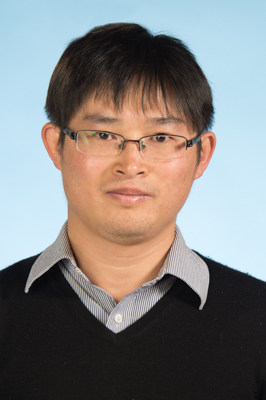
Professor Andrea Frangi is affiliated with the Institute of Structural Engineering at ETH Zurich, where he leads research and teaching in Structural Timber Engineering , Hybrid Structures , and Fire Safety Engineering . Education: Dipl. in Civil Engineering (ETH Zurich, 1995), Ph.D. in Technical Science (ETH Zurich, 2001). His research interests focus on timber structures, hybrid systems, and fire safety. Recent work explores rate-dependent connections, adhesive bonding in timber-mortar composites, and fire resistance of cross-laminated timber. Notable publication trends include: Advancements in strip-reinforced timber beams and epoxy hybrid-adhesives . Fire safety studies on charring rates , compartment fires , and progressive collapse in timber structures. Material testing under cyclic loading , high-speed loads , and moisture exposure . He teaches courses such as Timber Structures I/III , Fire Science , and Structural Fire Design , and collaborates with organizations like Eurocode 5 committees and the International Association for Fire Safety Science.
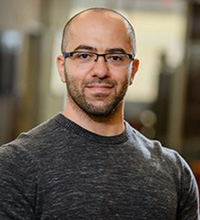
Henri Servaes is a Professor of Finance at London Business School , holding the Richard Brealey Professorship of Corporate Governance. His research focuses on corporate finance, governance, corporate social responsibility, and mutual funds, with publications in top-tier journals like the Journal of Finance and Review of Financial Studies. BSc and BBA from European University MSIA and PhD from Purdue University His work explores the financial implications of ESG (Environmental, Social, and Governance) and CSR (Corporate Social Responsibility), including how social capital and trust affect corporate performance and debt markets. He has contributed to understanding performance fees in mutual funds, credit ratings in acquisitions, and the role of public relations in M&A strategies. Henri’s research highlights include ESG’s influence on consumer behavior (2024), the bond market benefits of ESG performance (2023), and the long-term impact of CSR during the 2008 financial crisis. He has received prestigious awards, including the Journal of Financial Economics All Star Paper and Journal of Finance Distinguished Paper Brattle Prize. Scientific Awards Journal of Financial Economics All Star Paper Journal of Finance Distinguished Paper Brattle Prize He has taught corporate finance and mergers & acquisitions at London Business School and previously held faculty roles at the University of Chicago, Katholieke Universiteit Leuven, Duke University, and the University of North Carolina at Chapel Hill. His work has been presented at over 100 universities and major finance conferences globally.
Jonathan Cullen is Professor of Sustainable Engineering at the University of Cambridge and President of Fitzwilliam College, specializing in resource efficiency and decarbonization through top-down analysis of industrial material and energy systems. His work bridges academic research with industry applications across energy-intensive sectors. Education: Bachelor's in Chemical and Process Engineering, University of Canterbury, New Zealand MPhil in Engineering for Sustainable Development, University of Cambridge PhD in Engineering Fundamentals of Energy Efficiency, University of Cambridge His research develops metrics for quantifying energy and material consequences of production systems, focusing on circular economy implementation, minimum energy requirements, and zero-carbon transition pathways. Key applications target cement, steel, plastics, and petrochemicals where he pioneers methods like exergetic analysis and material flow accounting to expose carbon lock-ins and circularity opportunities. Recent publications reveal three dominant trends: (1) Frameworks for theoretical minimum energy requirements across industrial processes, (2) Geopolitical analysis of critical mineral flows and ownership structures, and (3) Circular economy metrics for plastics and construction materials. These consistently employ system-scale modeling validated through industry partnerships. Research Funding: Lead: C-THRU ($4M, VKRF) - carbon clarity in petrochemical supply chains Co-I: UK FIRES (£5.2M, EPSRC) - industrial decarbonization program Co-I: CirPlas (£1.25M, UKRI) - plastic waste elimination 7+ projects (EPSRC, Innovate UK, Horizon 2020) Academic Leadership: Teaching: Energy Systems and Policy (MPhil in Energy Technologies) Undergraduate supervision in Materials/Mathematics Graduate Tutor at Fitzwilliam College IPCC AR6 Lead Author (Industry Chapter) He directs the Resource Efficiency Collective, which develops open-source tools like Mat-dp for material demand projections and Starter Data Kits for energy planning. Current work focuses on scaling circular business models for construction retrofitting and quantifying geopolitical risks in critical mineral supply chains.
Markku Karjalainen is a Professor in the Department of Architecture at Tampere University's Faculty of Built Environment. With over 80 research publications spanning from 2016 to 2025, he has established himself as a leading expert in timber construction and wooden building systems in Finland. Professor Karjalainen's research primarily focuses on timber construction , particularly multi-story wooden buildings, dovetail wood construction techniques, and sustainable building practices. His work spans architectural design, structural engineering, fire safety, and environmental impact assessment of wooden structures. He has conducted extensive statistical analyses of Finnish timber residential buildings, examining construction practices from 1995 to the present. His research demonstrates a strong commitment to advancing wooden construction technologies while addressing practical challenges in fire safety, structural performance, and building physics. Analysis of his recent publications (2023-2025) reveals a consistent focus on dovetail construction techniques for mass timber elements, with numerous studies examining structural performance, fire properties, and air permeance. His work bridges theoretical research with practical applications in the construction industry, particularly in Finland where wooden multi-story construction has seen significant growth. Karjalainen's research often involves international collaboration, with studies comparing practices across different countries and examining global perspectives on timber construction. His scholarly output demonstrates a methodical progression from basic statistical analysis of building practices to increasingly sophisticated investigations of specific construction techniques and their performance characteristics. This evolution reflects both his growing expertise and the maturation of timber construction as a field of academic inquiry.
Markus König is a Professor of Informatics in Civil Engineering at Ruhr University Bochum, where he has been researching and teaching since October 2009. His work focuses on Building Information Modeling (BIM), digital construction technologies, and civil engineering informatics, with significant contributions to the development and implementation of digital methods in German construction industry. Dr. König earned his degree in civil engineering with a focus on applied computer science at Leibniz University Hannover, where he also completed his doctorate on cooperative building planning at the Institute for Building Informatics. He subsequently held a junior professorship for Theoretical Methods of Project Management at Bauhaus University Weimar before joining Ruhr University Bochum. His research spans multiple cutting-edge areas including Building Information Modeling (BIM), construction process simulation, tunneling informatics, infrastructure asset management, and the application of artificial intelligence and computer vision in civil engineering. As chair of the Building Informatics Working Group from 2012-2016, he played a key role in developing the first national BIM curriculum for German universities and serves as editor of the book 'Building Information Modeling: Technological Foundations and Industrial Practice.' Analysis of his recent publications reveals a strong trend toward semantic technologies, digital twins, automated compliance checking, and the integration of AI in construction processes. His work increasingly focuses on information containers, ontology development, and the application of large language models to infrastructure data, reflecting the evolving landscape of digital construction. Dr. König's significant contributions to digital construction have been recognized with prestigious awards: Lower Saxony-Bremen Construction Industry Award (2017) for 'services in the development and introduction of digital construction in Germany' Konrad Zuse Medal (2020) While specific details about his advising and grant activities aren't explicitly mentioned in the provided text, his extensive publication record with numerous co-authors suggests active supervision of doctoral students and research staff. His involvement in multiple collaborative research projects is evident from his publication history. At Ruhr University Bochum, Professor König leads a research group focused on civil engineering informatics, with particular emphasis on BIM, digital construction technologies, and their application across the building lifecycle. His team appears to work at the intersection of computer science and civil engineering, developing innovative solutions for construction process optimization, infrastructure management, and digital transformation of the AEC industry.
Dorothy Noyes is Professor of Folklore at The Ohio State University with a joint appointment in the Departments of English and Comparative Studies and courtesy appointments in Anthropology, French and Italian, and Germanic Languages and Literatures. She serves as Director of the Mershon Center for International Security Studies and teaches in the Program in International Studies, having previously directed the Center for Folklore Studies from 2005 to 2014. She earned her Ph.D. in Folklore and Folk Life from the University of Pennsylvania. Her research centers on political ritual and the traditional public sphere in Europe, folklore theory, and international policy careers of culture concepts, authoring key works including 'Fire in the Plaça: Catalan Festival Politics After Franco' and 'Humble Theory: Folklore’s Grasp on Social Life', with her current project 'Exemplary Failures: Gesture and Pedagogy in Liberal Politics'. Noyes' scholarship consistently explores intersections of cultural tradition, political expression, and international relations, with recurring themes of civic engagement, national identity formation, and ritual dynamics across European contexts. Her methodological approach bridges ethnographic fieldwork with theoretical innovation in folklore studies. Her recent publications demonstrate sustained focus on political ritual, cultural policy, and tradition's role in contemporary society, with increasing attention to sensory studies and material culture following pandemic-era disruptions to communal practices. Noyes has received significant recognition for her contributions to folklore studies: Elected Fellow of the American Folklore Society (2005) Honorary Doctorate from the University of Tartu, Estonia (2019) As current President of the American Folklore Society and former executive board member of the Société Internationale d'Ethnologie et de Folklore, Noyes has shaped international scholarly discourse through leadership roles and interdisciplinary projects including the Göttingen Working Group on Cultural Property. Her institutional leadership spans the Mershon Center for International Security Studies and the former Center for Folklore Studies, where she fostered collaborations connecting folklore scholarship with international security policy and cultural heritage management.
Sunday Oyadiji is an Associate Professor in the Department of Mechanical and Aerospace Engineering at The University of Manchester. He holds a BSc (First Class) and PhD in Mechanical Engineering from the same institution (1979 and 1983). Before joining the University of Manchester in 1991, he served as a Lecturer at Obafemi Awolowo University, Nigeria, and conducted postdoctoral research at Heriot-Watt University and the University of Manchester. His research focuses on viscoelasticity, smart materials for vibration isolation, structural fault identification, and composite materials. Key areas include fracture mechanics, multibody dynamics, and biomechanics. He contributes to the Aerospace Research Institute and Digital Futures platforms, advancing aerospace engineering and structural fire safety. Recent work involves stress-intensity factor analysis using 3D-DIC and finite element methods, constitutive modeling of elastomeric foams, and graphene-based energy storage systems. His publications span high-impact journals like Engineering Fracture Mechanics and Polymer .
Matthias Ihme is a Professor in the Department of Mechanical Engineering and Photon Science Directorate at Stanford University. His research focuses on large-eddy simulation (LES) of turbulent reacting flows, aeroacoustics, combustion-generated noise, numerical methods, and high-order schemes. He holds a Ph.D. from Stanford University (2008), an M.Sc. in Computational Engineering from the University of Erlangen (Germany, 2002), and a Dipl.-Ing. in Mechanical Engineering from Munich University of Applied Sciences (Germany, 2000). His work bridges computational fluid dynamics, combustion science, and photon science, with notable contributions to supercritical fluid dynamics, machine learning integration in fluid simulations, and high-fidelity atmospheric transport modeling. Recent research emphasizes ultrafast cluster dynamics, shock-induced interface behavior, and stochastic ignition mechanisms in advanced fuel systems. Publications highlight interdisciplinary advancements, including physics-informed ML frameworks for reacting flows and experimental studies using X-ray photon correlation spectroscopy. His projects often involve high-performance computing and collaboration with national labs like SLAC.
Dr. Ángeles Rivero Pacho is an Assistant Professor (Teaching) in the Department of Electromechanical Engineering at the University of Warwick's School of Engineering. She leads the Electromechanical Engineering Degree Apprenticeship (EMDA) programme and actively contributes to energy systems research. Education PhD in Mechanical Engineering (Sustainable Thermal Energy Technologies, 2014), University of Warwick, UK MSc in Design of Rotating Machines (2010), Cranfield University, UK MEng in Industrial Engineering (2010), Universidad Politécnica de Valencia, Spain Dr. Rivero Pacho specializes in sorption heating and cooling technologies, with a focus on carbon-ammonia adsorption heat pumps, and data analysis of energy systems. Her work extends to absorption HVAC, district heating networks, and low-temperature heat distribution modeling. Her recent publications explore advancements in adsorption heat pump design, thermal resistance in activated carbon, and district heating innovations using thermochemical transmission. These studies emphasize sustainability, efficiency optimization, and material performance. Scientific Awards Ted Perry Award for Student Research (2014/15) Dr. Rivero Pacho has participated in EPSRC-funded projects including LoT-NET (2019–2024) and i-STUTE (2013–2018). She also serves as Programme Manager for EMDA, a member of the Athena Swan self-assessment team, and the School of Engineering's Equality and Diversity Committee.
Associate Professor Fangbao Tian is a distinguished researcher and academic at UNSW Canberra's School of Engineering and Technology, where he also serves as Deputy Head of School for Research since July 2023. Previously, he held positions as Senior Lecturer (2017-2021) and Lecturer (2014-2017) at the same institution after completing postdoctoral research at Vanderbilt University. His academic journey began with a BSc (2006) and PhD (2011) in Theoretical and Applied Mechanics and Engineering Mechanics from the University of Science and Technology of China. Dr. Tian's research focuses on Computational Fluid Dynamics (CFD) tools for complex flows and fluid-structure interaction, with particular emphasis on bio-inspired applications. His work spans modeling laryngeal aerodynamics and vocal-fold vibration, fluid-structure interaction of plates in viscous fluid, fish swimming and insect flight, blood flow dynamics, and non-Newtonian flow phenomena. Recent work has expanded into Martian atmosphere aerodynamics, showing his research's growing interdisciplinary nature. His extensive publication record demonstrates consistent contributions across fluid dynamics, with recent trends showing increasing focus on compressible flows, bio-inspired flight systems, heat transfer applications, and computational methods like Lattice Boltzmann approaches. The research shows strong connections between fundamental fluid mechanics and practical applications in aerospace, biomedical engineering, and environmental systems. UNSW Canberra Goldstar Award 2022 IEEE Outstanding SMCS Chapter Award 2021 Outstanding Volunteer Award 2021 UNSW Canberra Silverstar Award 2018 UNSW Canberra Silverstar Award 2017 Journal of Fluids and Structures Highly Cited Research 2017 ARC DECRA 2016 Dr. Tian actively supervises PhD students across diverse topics including bushfire-enhanced wind loads, bio-inspired flight on Mars, flow control optimization, and fluid-structure interactions in compressible flows. He has secured over $5 million in external funding as Chief Investigator, including significant Australian Research Council projects examining Martian atmosphere aerodynamics, bio-inspired flapping wings, and cardiovascular flow modeling. His editorial roles include Associate Editor for Journal of Fluids and Structures and Scientific Reports, reflecting his standing in the fluid dynamics research community.
David Chevan is a Professor in the Music Department at Southern Connecticut State University (SCSU), where he teaches Jazz History, American Music, and Jewish Music courses. He also offers applied instruction in improvisation for students of all skill levels and directs the SCSU Jazz Standards Ensemble. Academic Rank: Professor of Music Key Research Areas: Jazz, improvisation, Jewish music, ensemble pedagogy Performance Highlights: Co-founder of The Afro-Semitic Experience, Nu Haven Kapelye, and Theodicy Jazz Collective His scholarly work appears in the Grove Dictionary of American Music (2013), focusing on jazz musicians like Doc Cheatham and Scott LaFaro. Recent performances include concerts in Toronto, Italy, and at the Middletown Fireworks Festival (2024). He has received grants from CSU-AAUP for projects like Music for the Nu Haven Kapelye and Jazz Souls on Fire . Chevan's performances blend jazz with interfaith themes, including collaborations at venues like the State Capitol Building (Hartford, 2024) and the Great Synagogue of Florence (2023). He also explores improvisation pedagogy through presentations at conferences such as the College Music Society Northeast Chapter Meeting (2017).
Dr. Marina Bock is a Chartered Civil Engineer and Lecturer in Civil Engineering at Aston University's College of Engineering and Physical Sciences. She specializes in structural engineering with expertise in metallic structures, additive manufacturing, and numerical modeling. Currently accepting PhD students, her work bridges academic research and industry applications in sustainable construction. Her educational background includes: PG Cert in Building and Design and Construction Technology, University of Wolverhampton (2017-2018) PhD in Local Buckling and Web Crippling Response of Stainless Steels, Universitat Politècnica de Catalunya (2010-2015) MSc in Patch Loading of Hybrid Plate Girders, Universitat Politècnica de Catalunya (2004-2010) Dr. Bock's research integrates laboratory experiments and numerical modeling to advance metallic structural systems, with pioneering work in additive manufacturing for construction. Her investigations span stainless steel design code development, corrosion prevention in reinforced concrete using hydrogels, and cold-formed steel behavior. Recent projects focus on sustainable infrastructure solutions through novel composite materials. Analysis of her 2022-2025 publications reveals dominant themes in additive manufactured aluminum structures, cold-formed steel design methodologies, and sustainable paving materials for urban heat island mitigation. Her work consistently addresses practical engineering challenges through experimental validation and code-compliant design solutions. Scientific recognition includes: IStructE Academic Research Award Commendation (2021) for research on aluminum SHS/RHS under biaxial bending Dr. Bock has secured significant research funding including a Royal Society Research Grant (£20k, 2023) for additive manufactured Al7075 aluminum and Innovate UK funding (£437k) for UV-reflective resin-based paving. Previous internal projects (£20k) focused on structural aluminum applications. She supervises PhD research in additive manufacturing and corrosion prevention while maintaining industry collaborations. Her experimental work utilizes advanced university laboratories for structural testing, with collaborations spanning European research consortia and industrial partners. Current projects involve multi-institutional teams developing reusable structural systems and solar-energy-harvesting building envelopes.
Simon Rodway is a Senior Lecturer in the Department of Welsh and Celtic Studies at Aberystwyth University, where he has been a faculty member since 2003. He holds a PhD in Middle Welsh from Aberystwyth University and previously worked at the National University of Ireland, Galway. He is an active researcher, Principal Investigator on multiple externally funded projects, and editor of the Journal of Celtic Linguistics. Research interests: His work focuses on Middle Welsh, medieval Welsh manuscripts, Old and Middle Irish, Celtic philology, personal names, and Celtic mythology. His research explores linguistic, literary, and cultural aspects of early medieval Celtic societies, particularly in Wales and Ireland. The trend in his recent articles reflects a deep engagement with philological analysis, manuscript studies, and the literary traditions of medieval Wales and Ireland. He frequently publishes on topics such as Ogham inscriptions, Welsh poetic genres, personal nomenclature, and the intellectual history of Celtic scholarship. His work bridges linguistics, history, and literature, often contributing to broader discussions on Celtic identity and cultural continuity. Scientific awards: While no formal awards are listed in the provided text, his sustained research output, editorial leadership, and successful acquisition of competitive grants (e.g., from the Leverhulme Trust and Horizon Europe) indicate high recognition within the field. Advising and grants: Rodway supervises postgraduate students, including PhD and MPhil candidates in Welsh and Celtic Studies. He has led several externally funded research projects, including 'MAIRWEN - Mapping Argument Structure in Early Irish and Welsh' (Horizon Discovery), 'A transcript of the Welsh Law manuscript that escaped the 1858 Wynnstay fire' (British Academy), and current projects 'Celtic Britain and Ireland' (Leverhulme Trust) and 'ARWEN: Amatory and Romantic Language in Welsh Panegyric Poetry' (Horizon Europe), demonstrating strong grant-writing success and research leadership. Labs, teams, and collaborations: He collaborates with scholars such as G. R. Isaac on digitizing and analyzing medieval Welsh manuscripts, resulting in multiple datasets. He also works with researchers like Krista Kapphahn on funded projects. His editorial roles with Brepols, Gwasg Carreg Gwalch, and the Modern Humanities Research Association reflect active participation in academic networks and publishing communities.
Maria Garlock is the Daniel Tsui Professor in Engineering at Princeton University, serving as Co-Director of the Program in Architecture and Engineering and Head of Forbes College. Her roles also include membership in the Executive Committee of the Council on Science and Technology, Associated Faculty in the School of Architecture, and Associated Faculty in the Program in Latin American Studies. Garlock holds a PhD in Structural Engineering (Lehigh University, 2002), an MS in Civil Engineering (Cornell University, 1993), and a BS in Civil and Environmental Engineering (Lehigh University, 1991). Her research focuses on resilient structural design for extreme hazards like fires, earthquakes, and storm surges. She explores both isolated and cascading multi-hazard scenarios while also analyzing historical structural designs (e.g., Félix Candela’s thin-shell concrete umbrellas) and improving STEM education for non-technical majors through innovative teaching methods, including MOOCs and scale model exhibitions. Recent work emphasizes coastal defense systems using hyperbolic-paraboloid forms and steel-concrete girder performance under shear stress. Garlock has received notable honors including the ASCE SEI Fellowship (2016 T.R. Higgins Lectureship), President’s Award for Distinguished Teaching (2012), and the Emerson Electric Co. Faculty Advancement Award (2006). In education and grants, she teaches courses like Structures and the Urban Environment and Advanced Design of Steel/Concrete Structures , and has secured government funding for STEM literacy initiatives. Her research collaborations include the BRITE Pivot project and studies on Cuba’s historic National School of Ballet domes. She also leads efforts in deploying kinetic umbrellas as flood barriers and advancing probabilistic models for fire fragility in multi-hazard contexts. Garlock’s work bridges engineering and art, exemplified by her preservation studies of Candela’s architectural masterpieces and pedagogical innovations that emphasize creativity in structural design.
Dr. M.Z. Naser is an Assistant Professor in the Glenn Department of Civil Engineering at Clemson University. His research focuses on causal and explainable machine learning methodologies applied to structural engineering, materials science, and fire safety. He holds a PhD from Michigan State University and an M.S. from the American University of Sharjah. Naser teaches courses such as Machine Learning for Civil Engineers and Structural Fire Engineering, emphasizing interdisciplinary innovation. His work bridges data-driven analysis with domain-specific knowledge to address challenges in resilient infrastructure design, including fire-resistant materials, structural retrofits, and AI-driven decision-making. Education: PhD, Michigan State University; M.S., American University of Sharjah Research Themes: Explainable AI, Fire Engineering, Structural Materials, Causal Inference Key Projects: Developing SPINEX framework, wildfire classification models, and cognitive infrastructure systems Recent publications analyze over 1000 fire tests to uncover spalling mechanisms, explore synthetic fire tests via GANs, and benchmark automated ML platforms. His work on causal diagrams for civil engineers and firefighter algorithms highlights contributions to both theory and practical applications. Naser also advocates for integrating AI into engineering education, emphasizing ethical and transparent model deployment.