

Brett Sanders is a Professor in the Department of Civil and Environmental Engineering at the Samueli School of Engineering, University of California, Irvine. His research focuses on developing innovative algorithms for flow and transport in river and coastal systems and integrating information technologies to create more accurate and efficient simulation tools for flood hazard assessment. His primary research interests include: Flooding and erosion hazards, particularly coastal flooding and urban flooding Surface water quality Low impact development impacts on hydrology Dam-break flooding Aerial and terrestrial lidar scanning Geographical information systems High performance computing for simulation tools Social dimensions of flood risk and adaptation behaviors Dr. Sanders' recent publications (2024-2025) reveal a comprehensive research program addressing both technical and social aspects of flood risk. His work spans computational hydrodynamics, flood hazard mapping, infrastructure vulnerability assessment, and the socioeconomic dimensions of flood risk. He has made significant contributions to understanding multi-grid modeling of urban flooding, post-fire flood hazards, satellite-based monitoring of land motion, and social inequalities in flood exposure. His research demonstrates how flood dynamics are more complex than simple bath-tub filling models suggest, with important implications for urban planning and climate adaptation. Dr. Sanders has received recognition as a Chancellor's Professor at UC Irvine, indicating distinguished scholarly achievement. His educational background includes: Ph.D. in Civil Engineering from the University of Michigan (1997) M.S. in Civil Engineering from the University of Michigan (1994) B.S. in Civil Engineering from the University of California, Berkeley (1993)
جستجوی استاد راهنمای دانشگاهی
برای مسیر پژوهشیتان، استاد راهنما، استاد دانشگاه و پژوهشگر مناسب را پیدا کنید و با آنها ارتباط بگیرید.
نمایش ۱۶-۳۰ از ۱٬۳۹۵ استاد راهنما
اطلاعات پروفایلها از صفحات عمومی دانشگاهها گرفته شده و ممکن است بهروز نباشد.
Jari Puttonen is a Professor of Structural Engineering at Aalto University's Department of Civil Engineering, School of Engineering. His research focuses on structural analysis, fire safety, materials science, and nuclear infrastructure safety. He has held roles as Principal Investigator in projects related to nuclear waste repository concrete modeling and aging management of NPP infrastructure. He has advised over 20 academic visitors and served in doctoral thesis committees. Education: Doctoral degree (1987), Licentiate (1984), and Master's degree (1979) in Engineering and Technology from Helsinki University of Technology (now part of Aalto University). Research Interests: Steel and composite materials behavior under extreme conditions Fire resistance of structural systems Long-term performance of concrete in nuclear facilities Non-destructive testing of construction materials Seismic resilience of critical infrastructure Awards: Recipient of the Knight, First Class of the Order of the White Rose of Finland (2020), PUUPalkinto 2010, and Schweighofer Prize 2011 for innovative energy facade research. Grants & Projects: Led 13 research projects including PERCO2_2023 (nuclear waste repository modeling) and CONAGE2022 (NPP concrete aging). Active in EU-funded initiatives and industry collaborations. Labs & Teams: Core member of Aalto's Structural Engineering Research Group, collaborating with Chalmers University and Technical University of Munich on advanced materials testing.
Ivan Coleمشاهده پروفایل
استاد مدعو
Prof. Ivan Cole is an Adjunct Professor at RMIT University's School of Engineering, specializing in rapid materials discovery for corrosion protection, nanostructures, and additive manufacturing. His work integrates computational modeling with high-throughput experimentation, focusing on corrosion inhibitors, biocompatible surfaces, and additive manufacturing process optimization. With over 30 years of experience across academia and industry (including leadership roles at CSIRO and Centro-Svilluppo Materiali), he leads the Rapid Discovery & Fabrication Team (RDF) to advance these research areas. Research Interests: Corrosion science, microbially induced corrosion (MIC), additive manufacturing surfaces, nanostructure sensing, multiscale modeling, and green materials discovery. His team addresses challenges in corrosion protection, biomedical implants, and environmental remediation through innovative methodologies. Awards: 2019 Australian Corrosion Medal 2016 CSIRO Lifetime Achievement Award 2013 Best Paper in NACE Corrosion Supervision & Projects: Active in mentoring PhD/Master’s students across corrosion inhibition, additive manufacturing, and nanostructure design. Notable projects include developing quorum sensing inhibitors for biofilm control, in-situ monitoring for metal AM, and eco-friendly corrosion inhibitors. Labs & Collaborations: Leads the Rapid Discovery & Fabrication Team and collaborates with industry partners to translate research into practical solutions for materials durability and sustainability.

Farhad Aslaniمشاهده پروفایل
دانشیار
Dr. Farhad Aslani is an Associate Professor in the Department of Civil, Environmental and Mining Engineering at the University of Western Australia (UWA), serving as Director of the Materials and Structures Innovation Group. He leads the $250M Australian Composites Manufacturing CRC and co-leads UWA's Engineering Materials Research Cluster. His research focuses on innovative construction materials, including self-sensing concrete, 3D-printed composites, and fire-resistant materials. He has secured over $20M in CRC funding and holds leadership roles in national/international conferences. Key awards include the 2024 Concrete Institute WA Rising Star Award and multiple citation milestones. His work aligns with sustainable development goals, emphasizing eco-friendly materials and infrastructure resilience. Education: PhD in Structural Engineering, University of Technology Sydney (2014) Certificates in Leadership, Research Commercialization, Public Policy, and Project Management from Curtin University, Queensland University of Technology, RMIT, and UTS. Research Interests: Smart materials, sustainable concrete technologies, additive manufacturing, blast/fire resistance, and composites for infrastructure. His lab develops self-sensing concretes, lightweight engineered composites, and electromagnetic shielding materials. Grants & Projects: $4.3M ACM CRC project on composite repairs ARC grants for nanocomposite coatings and fire facilities Main Roads WA funding for timber bridge strengthening Expertise: Structural design, composite materials, and industrial collaborations (e.g., Woodside, Holcim). He advises on major projects like the Morley Ellenbrook Rail Line and Forrestfield Airport Link. Awards: 2024 Concrete Institute WA Rising Star Highly Cited Scholar (ScholarGPS, 2024) Most Cited Paper Awards (2018–2020)

Rhett C. Smith is a Professor of Chemistry at Clemson University, leading a research group dedicated to sustainable materials innovation since 2006. His work focuses on transforming industrial waste streams into high-performance composites through green chemistry approaches. His academic background includes: B.S. in Chemistry from the University of Toledo Ph.D. in Chemistry from Case Western Reserve University NIH Postdoctoral Fellowship at MIT Professor Smith's research pioneers waste valorization using elemental sulfur and biomass derivatives. Key areas include: Upcycling mixed plastic and food waste into structural materials Developing sulfur-based polymers for sustainable construction Creating circular economy solutions for agricultural byproducts His group's work bridges fundamental chemistry with commercial applications in South Carolina's industrial sector. Recent publications reveal a strong trend toward atom-economical processes using waste sulfur and biomass. The research emphasizes scalable technologies for plastic recycling and sustainable cement alternatives, with increasing focus on food waste upcycling and flame-retardant composites. Major recognitions include: National Merit Scholar and NIH Postdoctoral Fellowship Two-time InnoVision Award Finalist (2024 Sustainability category) Fats and Proteins Research Foundation Innovate Award Fred Bisplingoff Research Innovation Award Professor Smith has mentored over a dozen Ph.D. students to successful careers in national labs and industry. His group secured seven major grants in Spring 2024 from NSF, USDA, and industry partners to advance sustainable materials for structural applications. Current projects focus on upcycling post-consumer waste streams and developing carbon-negative building materials. The Smith Research Group operates as a collaborative hub within Clemson's chemistry department, recently expanding to include four faculty co-leaders (Tennyson, Ashlyn Smith, and Sauceda). The team maintains strong industry partnerships while promoting academic accessibility through open educational resources.
Mark Crowleyمشاهده پروفایل
دانشیار
Mark Crowley is an Associate Professor in the Department of Electrical and Computer Engineering at the University of Waterloo , with a cross-appointment in the Cheriton School of Computer Science . He is actively involved in the Waterloo Artificial Intelligence Institute (WAII) , the Waterloo Institute for Complexity and Innovation (WICI) , and serves as National Secretary for the Canadian Artificial Intelligence Association (CAIAC) , coordinating the Canadian Conference on AI . Research interests span the theoretical and applied aspects of Reinforcement Learning , Deep Learning , Manifold Learning , and Ensemble Methods . His work addresses challenges in domains with spatial dynamics, multi-agent systems, and uncertainty, particularly in Computational Sustainability (forest fire management, sustainable forestry), Autonomous Driving , Medical Imaging , and Material Design . Recent research focuses on integrating causal modeling with generative representation learning to improve out-of-distribution robustness in motion forecasting applications. Key publications include foundational work on ChemGymRL environments for safe chemical process reinforcement learning, Generative Causal Representation Learning for robust forecasting, and collaborative work on multi-advisor reinforcement learning in multi-agent settings. He co-authored a textbook Elements of Dimensionality Reduction and Manifold Learning (Springer, 2023) with Prof. Ali Ghodsi and Prof. Fakhri Karray. Teaching includes graduate and undergraduate courses in Algorithm Design , Computational Intelligence , Reinforcement Learning , and Data Modeling at the University of Waterloo since 2018. His research group has produced several notable graduates including Benyamin Ghojogh (2021), who continued as a postdoc until 2022.
- Optimal Control Under Uncertainty
- Bioenergy Supply Chain Design
- Surrogate Multi-Objective Optimization
- +۱۳ مورد دیگر
Kishalay Mitra is a Professor at the Indian Institute of Technology Hyderabad , with affiliations to the Department of Chemical Engineering , Department of Climate Change , and Department of Artificial Intelligence . He also holds visiting professorships at Washington University in St. Louis and University of Washington, Seattle . His work in the Global Optimization & Knowledge Unearthing Laboratory (GOKUL) spans interdisciplinary optimization, machine learning, and their applications in industrial-scale engineering problems. Education : Ph.D. from IIT Bombay. Research Interests : Mitra's research focuses on optimization under uncertainty , surrogate modeling , multi-objective optimization , and integrating machine learning with physics-based models . His work addresses real-world challenges in wind energy , bioenergy supply chains , chemical process control , nanoscience , and environmental modeling (e.g., PM10 spatiotemporal analysis, forest fire prediction, and carbon capture). Article Trends : His recent publications emphasize wind energy systems (layout optimization, yaw control, forecasting), materials science (precipitate growth prediction, polymerization), and industrial processes (crystallization, grinding circuits). Techniques include neural operators , Bayesian optimization , generative adversarial networks (GANs) , and explainable AI .
Yelda Turkanمشاهده پروفایل
دانشیار
Dr. Yelda Turkan is an Associate Professor in the School of Civil and Construction Engineering at Oregon State University, where she leads research in automation, computer vision, and machine learning for sustainable infrastructure. She holds a PhD from the University of Waterloo and dual BS degrees in Civil Engineering and Geomatics Engineering from Istanbul Technical University. Her work focuses on leveraging lidar, digital twins, and BIM to improve construction operations and decision-making in the built environment. She has secured over $4M in grants from NSF, FHWA, and other agencies, and currently leads the NSF Convergence Accelerator-funded 'Deep Reality' project for AI-driven infrastructure management. Education: Ph.D., Civil Engineering, University of Waterloo, 2012 M.S., Engineering Informatics & Remote Sensing, Istanbul Technical University, 2006 B.S., Civil Engineering (double major in Geomatics Engineering), Istanbul Technical University, 2005/2003 Professional Roles: Vice President, International Association for Automation and Robotics in Construction (IAARC) Chair, ASCE Computing Division Education Committee Associate Editor, ASCE OPEN Journal Her research emphasizes automation in construction quality control, infrastructure inspection via drones and lidar, and immersive education tools using VR/AR. Recent projects include automated curb ramp compliance analysis, wildfire impact modeling, and digital twin development for timber structures. She has published over 80 peer-reviewed articles and actively promotes computing integration in civil engineering education and professional practice.
- Corrosion and Surface Technology
- Hydrogen Embrittlement of Metals
- Material Technology for the Oil Industry
- +۴ مورد دیگر
Roy Johnsen is a Professor in the Department of Mechanical and Industrial Engineering at the Norwegian University of Science and Technology (NTNU), specializing in corrosion and surface technology. With a Dr.ing. degree from NTH (1984), he has extensive industry experience from Statoil Research Centre (1985-1991) and CorrOcean (1991-2004), where he expanded the company globally. His current research focuses on hydrogen embrittlement, corrosion protection, and integrity management in offshore systems, with collaborations across Europe, Asia, and the Americas.
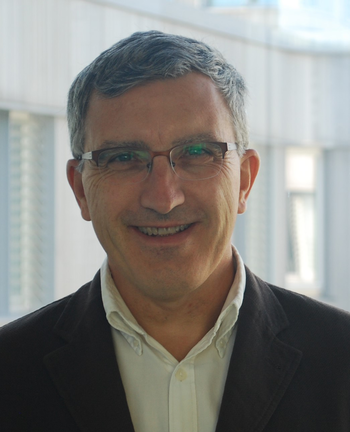
Alberto Cantera Glera is a Professor at the Institute of Iranian Studies within the Department of History and Cultural Studies at Freie Universität Berlin. His research focuses on Zoroastrian studies, Avestan language and literature, Iranian linguistics, and manuscript studies. He teaches courses on Young Avestan, Pahlavi, Zoroastrian rituals, and Iranian literature, with office hours held on Thursdays from 3-5 p.m. Professor Cantera Glera's research interests center on Zoroastrian religious practices, particularly the Long Liturgy, Avestan textual criticism, and the transmission of Zoroastrian texts through manuscript traditions. His work bridges linguistic analysis with religious studies, examining how ritual practices evolved from ancient to medieval Iran. He has made significant contributions to understanding the relationship between oral performance and written transmission in Zoroastrian traditions, as well as the linguistic features of Avestan and Middle Persian texts. His recent publications reveal a consistent focus on Zoroastrian ritual structures, particularly the Long Liturgy, with increasing attention to the relationship between textual manuscripts and ritual performance. The articles show progression from linguistic analysis of Avestan texts toward broader studies of ritual practice, sacred geography, and the historical development of Zoroastrian religious authority. His work demonstrates sophisticated integration of manuscript evidence with ritual theory and historical linguistics. PRIX ROMAN ET TANIA GHIRSHMAN 2021 Professor Cantera has supervised numerous PhD students including Nils Purwins, Stefan Härtel, Yusef Saadat, Jaime Porro, Soheil Delshad, and Xue Li. His research has been supported through various academic projects related to Zoroastrian manuscript studies and Avestan textual criticism, contributing significantly to the field of Iranian studies at Freie Universität Berlin.
Katherine Swancutt is Reader in Social Anthropology at King's College London, where she serves as Director of the Religious and Ethnic Diversity in China and Asia Research Unit (REDCARU) and Project Lead for the ERC Synergy Grant 'Cosmological Visionaries: Shamans, Scientists, and Climate Change at the Ethnic Borderlands of China and Russia' (2020-2026). She has conducted anthropological fieldwork for over two decades across Asia, focusing on Southwest China (among the Nuosu), Mongolia, Inner Mongolia, and Buryat regions of Russia. Her research centers on the anthropology of religion, with particular emphasis on shamanism, animism, dreams, and the relationship between cosmology and the environment. Her fieldwork explores how religious innovations are used to manage conflict and shape everyday life among diverse ethnic communities. She has established herself as a leading scholar in indigenous knowledge systems and their relevance to contemporary environmental challenges. Dr. Swancutt's extensive publication record reveals consistent thematic focus on ritual practices, divination systems, and cosmological frameworks, particularly among the Nuosu people of Southwest China. Her recent work examines how spiritual practices intersect with environmental change, social renewal, and cultural memory, bridging anthropology, religious studies, and environmental humanities to create innovative frameworks for understanding indigenous cosmologies in the context of climate change. ERC Synergy Grant 'Cosmological Visionaries' (£6m project connecting shamans, scientists, and rural communities) Author of four major publications including 'Fortune and the Cursed' (2012) and 'Crafting Chinese Memories' (2021) Founder of REDCARU, now an international network with branches in Chinese universities Recipient of significant research funding including ERC Synergy Grant As an educator, Dr. Swancutt teaches anthropology of religion at all levels and supervises PhD students focusing on long-term ethnographic fieldwork among ethnic minorities in China, Mongolia, or Russia. She actively engages with public audiences through exhibitions like 'Vital Signs: Another World is Possible' at the Science Gallery London, which showcases indigenous visions of climate change.
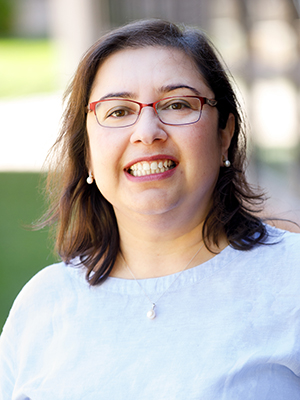
Eylem Asmatuluمشاهده پروفایل
دانشیار
Dr. Eylem Asmatulu is an Associate Professor in the Department of Mechanical Engineering at Wichita State University (WSU), part of the College of Engineering. She joined WSU as an educator in 2015, became an Assistant Professor in 2017, and was promoted to her current rank in 2023. Previously, she worked in Environmental Health and Safety at WSU. She currently advises three PhD, three MS, and two BS students, having graduated 13 students since 2015. Her research focuses on recycling and reuse of materials, composite materials engineering, nanotechnology safety, and sustainable manufacturing. She has secured over $1.7 million in grants, published 131+ articles (h-index 26), and contributed to fields like thermal energy storage, biomedical nanomaterials, and aerospace material science. Her work emphasizes interdisciplinary approaches, combining machine learning for material property prediction and addressing safety concerns in nanotechnology across industries. Key projects include flame-retardant composites, biogas production optimization, and superhydrophobic nanofiber applications for water treatment. She actively promotes sustainability through recycling innovation and lean manufacturing practices in aerospace. Dr. Asmatulu’s research has been cited over 2,870 times. Her contributions span academia and industry, with a focus on translating innovations into practical solutions for environmental and industrial challenges.
Dr. Guangliang Cheng is an Associate Professor in the Department of Computer Science at the University of Liverpool. His research focuses on deep learning, computer vision, and perception algorithms with applications in remote sensing, medical imaging, and autonomous systems. Prior to his current role, he served as a vice research director in the Autonomous Driving Group at SenseTime and completed postdoctoral research at the Aerospace Information Research Institute, Chinese Academy of Sciences. Ph.D. in Pattern Recognition from the National Laboratory of Pattern Recognition (NLPR), Institute of Automation, Chinese Academy of Sciences (CASIA) Postdoctoral Researcher at Aerospace Information Research Institute, Chinese Academy of Sciences (2017–2019) Dr. Cheng’s research integrates computer vision and deep learning to address challenges in semantic segmentation, domain adaptation, and robust detection. Recent work explores wavelet-based multimodal fusion for remote sensing and attention-guided architectures for medical imaging. His 2025 publications span journals like GIScience & Remote Sensing and Knowledge-Based Systems , emphasizing scalable solutions for geospatial and biomedical applications. In 2025, Dr. Cheng’s article trends highlight remote sensing semantic segmentation, cross-domain medical imaging, and drone-based fire detection. His collaborations span institutions such as SenseTime, Chinese Academy of Sciences, and University of Liverpool teams, focusing on frequency-domain fusion, attention mechanisms, and GPU optimization. As a supervisor, Dr. Cheng seeks highly motivated PhD students to join projects supported by scholarships including the Centres for Doctoral Training (CDT) and Duncan Norman Scholarship. He serves as Module Co-ordinator for COMP338: Computer Vision (2024–2025) and actively reviews for top-tier journals and conferences.
Dimitrios E. Anagnostou is Associate Professor in the Institute of Sensors, Signals & Systems within Heriot-Watt University’s School of Engineering & Physical Sciences, Edinburgh. He directs an anechoic-chamber & microwave characterisation facility, leads a thriving research group, and is currently recruiting PhD candidates. Education & Career: BSEE, Democritus University of Thrace, Greece (2000) MSEE, University of New Mexico, USA (2002) PhD, University of New Mexico, USA (2005) Post-doc, Georgia Tech (2005-2006) Assistant → tenured Associate Professor, South Dakota School of Mines & Technology (2007-2016) Associate Professor, Heriot-Watt University (2016-present) Research Focus: His work spans compact & reconfigurable antennas, 5G Massive-MIMO arrays, metasurfaces, metamaterials, functional materials (VO 2 ), RF-MEMS, microwave packaging, radar sensing for assisted-living, and AI/deep-learning applications in electromagnetics. He pursues “green” RF electronics printed on paper/organic substrates and hybrid integration of antennas on solar cells. Recent Publication Trends (2022-2025): Output is dominated by metasurface-enabled beam-steering antennas, VO 2 -based reconfigurable devices, radar absorbers/rasorbers, biomedical radar for vital-sign monitoring, and AI-assisted signal processing, with strong emphasis on experimental validation and open-access dissemination. Scientific Awards & Fellowships: IEEE John D. Kraus Antenna Award DARPA Young Faculty Award Marie Skłodowska-Curie Individual Fellowship (H2020) ASEE Campus Star Award Young Alumni Award, University of New Mexico Honored Faculty Award, SDSMT (×4) Distinguished Scientist Living Abroad, Hellenic Ministry of Defense Advising & Grants: He has mentored numerous PhD and MSc researchers; his students have won Best PhD Thesis and faculty-wide Engineering Prizes. He is supported by EU and UK research grants and continuously seeks motivated doctoral applicants. Facilities & Teams: He manages the Microwave Facility (anechoic chamber, mm-wave measurement systems) and collaborates with international academic/industry partners across Europe, North America and beyond.
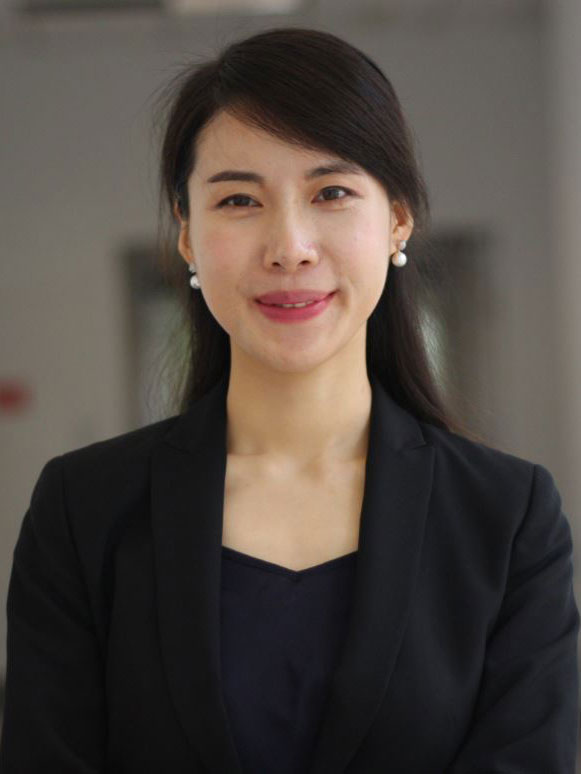
Hongli Zhuمشاهده پروفایل
دانشیار
- Electrochemical energy storage
- Sustainable biomass-derived materials
- Advanced manufacturing
- +۶ مورد دیگر
Dr. Hongli (Julie) Zhu is an Associate Professor in the Department of Mechanical and Industrial Engineering at Northeastern University's College of Engineering. Her research focuses on sustainable energy storage, multifunctional materials, and advanced manufacturing, with emphasis on developing environmentally friendly biomass-derived materials, all solid-state batteries, and flow batteries. She leads the ZHU Lab at Northeastern University, which is dedicated to creating safer, cheaper, and higher performance energy storage solutions while exploring multifunctional materials derived from nature. Dr. Zhu received her PhD from South China University of Technology and Western Michigan University (2004-2009). She conducted postdoctoral research at KTH Royal Institute of Technology in Sweden (2009-2011), focusing on biodegradable and renewable biomaterials from natural wood, followed by additional postdoctoral work at the University of Maryland (2012-2015), where she researched nanocellulose and energy storage. Dr. Zhu's research spans multiple disciplines at the intersection of materials science, energy storage, and sustainable manufacturing. Her work addresses critical challenges in energy storage technology, including developing all solid-state batteries, flow batteries, and high energy density battery systems. She has pioneered research in sustainable biomass-derived materials, particularly investigating cellulose, hemicellulose, and lignin for applications in bendable, implantable, and biocompatible electronics. Her lab also focuses on advanced manufacturing techniques, including high-speed roll-to-roll processing for emerging advanced materials and devices. Analysis of Dr. Zhu's publication record reveals a strong focus on next-generation battery technologies, particularly solid-state systems. Her research demonstrates significant contributions to understanding and improving lithium dendrite suppression, electrode architecture optimization, and interface stabilization in solid-state batteries. She has also made substantial advances in sustainable materials derived from natural resources, developing applications for cellulose nanostructured fibers, paper, and aerogel/hydrogel systems. MRS Communications Early Career Distinguished Presenters and JMR Distinguished Invited Speakers (2024) Selected in Stanford University List of Top 2% Scientists Worldwide (2021-2024) College of Engineering Faculty Fellow (2023) Soren Buus Outstanding Research Award (2022) Women in Materials Science, Advanced Materials (2021 and 2022) Women Scientists at the Forefront of Energy Research, ACS Energy Letters (2020) Innovator of the Year 2013, Maryland Jakob Wallenberg Scholarship, Sweden Dr. Zhu has secured significant research funding from various sources, including the National Science Foundation and Department of Energy. Her current projects include "Uncovering the mechano-electro-chemo mechanism of fresh Li in sulfide based all solid-state batteries through operando studies" (NSF), "Enabling Advanced Electrode Architecture through Printing Technique" (DOE), and "Engineering the Metal Sulfide Interface in All Solid State Batteries through Operando Study" (NSF). She collaborates with industry partners including Rogers Corporation and has developed patented technologies related to sustainable materials and energy storage. Dr. Zhu serves as Codirector of Advanced & Intelligent Manufacturing, Editor of Progress in Materials Science, and on the Editorial Advisory Board of Chemical Society Reviews. The ZHU Lab at Northeastern University is a highly interdisciplinary research group that bridges scales from the nanoscopic to macroscopic and system level. The lab's work has led to numerous patents, including "Natural fiber composites as a low-cost plastic alternative" and "Fire-retardant Nanocellulose Aerogel, and Methods of Preparation and Uses Thereof." The group focuses on making energy storage safer, cheaper, and higher performing while exploring multifunctional materials derived from nature, with particular emphasis on applying high-speed roll-to-roll manufacturing to emerging advanced materials and devices.
نمایش نتایج تا ۷۵۰ مورد اول. برای یافتن نتایج دقیقتر، جستجوی خود را با فیلترها محدود کنید.