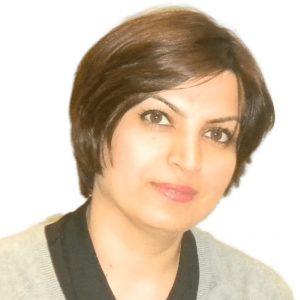
Angela Sasic Kalagasidis is a Professor and Department Head at Chalmers University of Technology , leading the Building Physics research group. She serves as a board member of the Moisture Center at Lund University of Technology , contributing to interdisciplinary research in building science. Building Physics Heat and Mass Transfer Energy Efficiency Moisture Safety Indoor VOC Emissions Climate Change Adaptation Her recent publications focus on aerogel-based materials for insulation, urban heat island mitigation , and thermal energy storage systems . Key methodologies include CFD simulations , field testing , and life cycle assessment frameworks . Research trends show emphasis on: Advanced computational tools for hygrothermal analysis Integration of phase change materials in building systems Climate resilience in building envelopes Optimization of ventilation and moisture control
Stefan Gössling is a Professor of Tourism Research at Linnaeus University and Human Ecology at Lund University. His research focuses on the sustainability of tourism, transport, and mobilities, with particular attention to climate change, carbon emissions, and policy design. Key Research Areas: Climate change mitigation in tourism, transport sustainability, environmental impact assessment, carbon management, and mobility studies. His recent publications analyze global air transport emissions, net-zero aviation challenges, decarbonization strategies, and climate risks to tourism in the European Union. Collaborative work with international colleagues explores economic, behavioral, and policy dimensions of sustainable tourism. Selected Trends: Articles reveal growing emphasis on carbon inequality, transport justice, climate policy barriers, and systemic changes in urban and aviation contexts. Many studies employ interdisciplinary methods combining environmental science, economics, and behavioral analysis.
Evangelia Petridou serves as Associate Professor in the Department of Humanities and Social Sciences at Mid Sweden University, where she is core faculty at the Risk and Crisis Research Centre (RCR). Her academic work bridges political science and practical crisis management, with emphasis on European policy processes and Swedish governance structures. Her research focuses on policy entrepreneurship dynamics during crises, particularly examining how actors navigate institutional constraints in emergency contexts. Key areas include reactive policy entrepreneurship, risk communication across EU nations, and the operationalization of national policy styles during pandemics. She integrates theoretical frameworks like Kingdon's Multiple Streams with empirical analyses of Swedish municipal responses to disasters. Recent publications (2022-2025) reveal three dominant trends: conceptual expansion of policy entrepreneurship to street-level bureaucrats, methodological innovation through immersive simulations in crisis training, and comparative analyses of European pandemic responses. Her work consistently addresses the tension between centralized policy directives and local implementation challenges, especially in decentralized systems like Sweden. Dr. Petridou leads multiple externally funded projects including FUTURESILIENCE, LEGITIPREP, and RISE (Resilience in Sweden: Governance, Social Networks and Learning). She directs the RCR Lab at Mid Sweden University, which pioneers experimental design in crisis management education through virtual/physical immersion classrooms. Her collaborative network spans 15+ European institutions with frequent co-authorship on cross-national policy studies.
Professor Natascha Kljun is a leading academic at Lund University , affiliated with the Centre for Environmental and Climate Science (CEC) and the Department of Physical Geography and Ecosystem Science. She serves as Assistant Director and Manager at CEC, and is a Principal Investigator for the BECC: Biodiversity and Ecosystem services in a Changing Climate initiative. Kljun coordinates the MERGE: ModElling the Regional and Global Earth system project and contributes to the LTH Profile Area: Aerosols and LU Profile Area: Nature-based future solutions . Her research focuses on boundary layer meteorology , land-surface-atmosphere interactions , and footprint modelling to determine the upwind surface area of influence for atmospheric flux measurements. She developed the widely used Flux Footprint Prediction (FFP) model, which scales crosswind distribution and improves greenhouse gas budgeting. Her work addresses vegetation-atmosphere carbon and water vapour exchange and upscaling local flux measurements to regional scales, considering heterogeneous surfaces and complex terrain. Current projects include CLIMB-FOREST (European Commission Horizon Europe) and JACOBIAn (atmospheric CO2 and black carbon transport modelling). Kljun is a Web of Science Highly Cited Researcher (top 1% in 2024 and 2025), and her work contributes to UN Sustainable Development Goals 13 (Climate Action), 15 (Life on Land), and 11 (Sustainable Cities). Her recent publications include studies on post-wildfire soil respiration and carbon emissions from Nordic boreal forests.
Ivo Jacobs is a Researcher at the Department of Philosophy, Lund University, specializing in Cognitive Science within the Faculty of Humanities and Theology. He is affiliated with the LUCS Cognitive Zoology Group and the LU Profile Area: Natural and Artificial Cognition. His work is centered at the Lund University Cognitive Science (LUCS) research center, with his office located at Helgonavägen 3, Lund (Room LUX:B476). Dr. Jacobs' research focuses on the evolution of cognition across multiple dimensions - mechanism, development, phylogeny and fitness value - with particular emphasis on crocodilians, palaeognaths (ratites and tinamous), corvids and primates. His work spans three overlapping projects: independent cognitive evolution in primates and corvids; reconstructing the minds of early birds and non-avian dinosaurs; and the origins of pyrocognition (fire-related cognition) in animals, extinct hominins and modern humans. His research output shows significant trends in comparative cognition, particularly examining cognitive similarities and differences across diverse species. His work bridges traditional disciplinary boundaries, connecting zoology, cognitive science, evolutionary biology, and philosophy. Recent publications demonstrate growing interest in pyrocognition and the cognitive implications of fire use throughout evolutionary history. Dr. Jacobs has secured substantial research funding, including a project on pyrocognition funded by the Swedish Research Council (2020-2024). He has served as Principal Investigator for the Pyrocognition project and as Assistant Supervisor for research on the sociality of extinct dinosaurs. His editorial work includes peer-review and editorial roles for journals such as Animal Cognition, Journal of Comparative Psychology, Frontiers in Psychology, and Behavioural Brain Research. His research collaborations span international boundaries, with recent external collaborations across multiple countries. His work has attracted attention across academic platforms, with mentions on X (Twitter), Bluesky, and readership on Mendeley.
Lennart Bergström is a Professor of Materials Chemistry at Stockholm University since 2004. He leads the Lennart Bergström group, focusing on sustainable materials, thermal insulation foams, and nanoparticle self-assembly. His research integrates materials science, colloid chemistry, and X-ray/neutron scattering techniques. He serves on the Swedish Research Council’s Scientific Council for Natural and Engineering Sciences, and as deputy director of MISTRA SafeChem. His work emphasizes developing eco-friendly materials from waste and biomass, including thermally insulating foams and upcycled textiles. He has published over 250 papers, achieving an H-index of 73. Awards include the Humboldt Research Prize (2012) and Staudinger-Dürrer Medal (2025). He has mentored 14 professors and 60+ PhD/postdoc alumni globally. Key research areas include moisture-dependent thermal conductivity, colloidal processing of nanomaterials, and magnetic nanoparticle assembly. Recent articles highlight advancements in nanocellulose-based foams, neutron tomography of biomaterials, and fire-retardant composites. Awards and honors include Fellowships from the European and American Ceramic Societies, and the Royal Society of Chemistry. His lab collaborates on projects like Cellutech/StoraEnso and SwedNESS. He chairs the Sustainable Chemistry MSc program at Stockholm University.
Nasrine Olson is a researcher at the Department of Library and Information Science, University of Borås. She serves as Director of INCLUDE - Center for Inclusion Research and coordinates the Horizon Europe MuseIT project, focusing on inclusive digital heritage technologies. Her work bridges accessibility research, human-centered design, and cultural heritage preservation.
Bengt-Gunnar Jonsson is a Professor in the Department of Biology at Mid Sweden University's School of Natural Science, Design and Sustainable Development. With over 25 years of research experience, he specializes in boreal forest ecology, deadwood dynamics, and biodiversity conservation. His work focuses on wood-inhabiting fungi , lichen communities , and forest fragmentation effects , particularly in northern Sweden's high conservation value forests . Jonsson has been pivotal in developing green infrastructure models and climate-adaptive forestry strategies . Key research themes: forest conservation, fungal ecology, climate change mitigation, deadwood management Research tools: presence-absence sampling, Bayesian modeling, long-term ecological monitoring Policy contributions: EU Biodiversity Strategy evaluations, IPBES initiatives His recent publications (2025-2020) demonstrate sustained expertise in forest carbon dynamics , saproxylic community analysis , and landscape-scale conservation . Jonsson frequently collaborates with international researchers on temperate and boreal forest biodiversity , with notable work on functional ecology and ecosystem service trade-offs . Current projects include 'Climate - collaborative learning initiative' and 'Functional green infrastructure in boreal forests' . Scientific contributions span multiple systematic reviews in environmental management, including Forest Ecology and Management and Environmental Research Letters . He has co-authored Cambridge University Press 's Biodiversity in Dead Wood and contributed to IPBES policy frameworks. Jonsson's research integrates empirical forest monitoring with theoretical ecological modeling , particularly in wood decomposition processes and fungal community dynamics .
Mais A.M. Qandeel serves as Senior Lecturer at Örebro University's School of Behavioural, Social and Legal Sciences, specializing in International Law and Law & Technology. She holds a Ph.D. in International Humanitarian Law from the University of Fribourg (Switzerland) and an LLM from the University of Pittsburgh (USA), with over 15 years of experience at international institutions across Switzerland, Belgium, Netherlands, USA, and Palestine. Her research centers on three critical themes: (1) Palestine under military occupation, (2) implications of digital technologies on human rights and cybersecurity norms, and (3) environmental protection in armed conflicts. Her teaching portfolio includes Legal Tech, AI and Automation , Cybersecurity and Cybercrime , and Comparative Law , covering digital discrimination, data privacy, and international cyber norms at both graduate and undergraduate levels. Her recent publications reveal a clear trajectory toward digital rights in occupied territories, with 2024-2025 works focusing on cyber surveillance in Palestine, facial recognition regulation, and constitutional frameworks for digital rights. These integrate environmental law with conflict studies through agent-based modeling of environmental damage. Dr. Qandeel actively participates in the LDA - Law, Digitization and AI research environment and leads projects like Investigating Digital Rights in Palestine . Her scholarly impact spans editorial roles in Law and Sustainable Development: Swedish Perspectives (2021) and contributions to the Max Planck Encyclopedia of Comparative Constitutional Law . Her operational framework includes directing FIRE Conference initiatives and presenting at major venues including RightsCon, CPDP.ai, and International Court of Justice symposia. Current work examines data violence in occupied territories and the ICJ's 2024 advisory opinion on Palestine.
Professor Daniel Söderberg is affiliated with KTH Royal Institute of Technology, where he holds the position of Professor of processes from fibre-based materials from forest raw materials. His research focuses on understanding natural material formation processes, particularly using cellulose nanofibrils as building blocks, to develop scalable industrial methods for creating high-performance bio-based materials. He employs advanced experimental techniques such as synchrotron X-ray imaging and neutron scattering to study material behavior at the nanoscale, contributing to sustainable, renewable material innovations. His research interests revolve around the development of bio-based materials and industrial processes inspired by natural mechanisms. Key areas include: Nanofibril assembly and self-organization in fluid systems Cellulose nanofibril-based composites and thin films Scalable production of high-performance bio-based materials Advanced characterization techniques (e.g., synchrotron X-ray imaging, neutron scattering) Material dynamics under various environmental conditions (e.g., humidity, compression) Integration of renewable materials into electronic and structural applications Recent research trends emphasize the application of machine learning for analyzing material dynamics, optimization of spray deposition techniques for scalable production, and exploration of lignin and cellulose nanocomposites for renewable materials. Collaborations with facilities like the MAX IV synchrotron highlight his focus on advanced imaging and structural analysis for material innovation. In advising and grants, Dr. Söderberg has contributed to research projects involving pilot-scale manufacturing processes and collaborations with advanced facilities like the MAX IV synchrotron. While specific student names or detailed grant information are not provided here, his work reflects a strong emphasis on team-based research in nanomaterials and sustainable technologies. He is also involved in academic ceremonies at KTH, including the 2021 Professorial Inauguration. Dr. Söderberg collaborates with the ForMAX beamline at MAX IV synchrotron in Lund, focusing on multiscale structural characterization of hierarchical materials. His research also involves the pilot-scale Experimental Paper Machine (XPM) for material production studies, examining fire retardant composites and nanopaper fabrication.
Michael Försth is a Professor and Chief Educational Officer at Luleå University of Technology's Department of Built Environment and Natural Resources. He has held his professorship since 2014 and became head of education in 2022. His research focuses on fire safety, hydrogen safety, and innovative materials for construction. He has extensive experience in fire technology, including roles at RISE since 2006. Research interests include fundamental studies of fire phenomena (e.g., water droplet breakup, spark dynamics in calorimeters) and applied work like bus interior material standards and cable fire testing. Current work emphasizes hydrogen safety, aiming to develop physics-based models for risk assessment. Teaching responsibilities include courses on fire engineering, risk management, and fire dynamics, as well as MOOCs on hydrogen safety. He has supervised over 100 students and mentored doctoral candidates. Notable collaborations include projects on biochar-concrete composites and tunnel fire suppression systems.
Jana Johansson is a Lecturer at Linköping University's Department of Theme Environmental Change (TEMAM). Her research focuses on environmental pollutants, particularly per- and polyfluoroalkyl substances (PFAS), using fieldwork, experimental studies, and advanced analytical techniques. Courses: Biogeochemistry and Environmental Analysis (746G61), The Complexity of Environmental Issues (746G57), The Origin of Social Systems (746G63) Research projects: PFAS emissions from waste incineration, environmental chemistry teaching modules for secondary schools Her work combines high-resolution mass spectrometry and combustion ion chromatography for pollutant analysis, with recent publications examining PFAS transport through sea spray aerosols, industrial emissions, and atmospheric dispersion. She actively contributes to research communication , including audio documentaries and the podcast The People Behind the Alarms about environmental pollution history. Recent grant recipient from the Kamprad Family Foundation (2025) for environmental sustainability research. Her publications since 2012 demonstrate consistent focus on PFAS contamination, pollutant transport mechanisms, and environmental risk assessment. Scientific Awards : Kamprad Family Foundation grant (2025)
Sebastian Hönel is a postdoctoral researcher at Linnaeus University, affiliated with the Faculty of Technology and the Department of Computer Science and Media Technology. He is an active member of the Data Intensive Software Technologies and Applications (DISTA) research group and currently serves as a co-Principal Investigator in the project "In-line visual inspection using unsupervised learning" focused on manufacturing defect detection using machine learning techniques. Hönel completed his Doctoral Thesis in 2023 titled "Quantifying Process Quality: The Role of Effective Organizational Learning in Software Evolution" and earned his Licentiate Thesis in 2020 on "Efficient Automatic Change Detection in Software Maintenance and Evolutionary Processes," both from Linnaeus University. His educational background demonstrates a strong foundation in software engineering and data analysis. Hönel's research spans software engineering, machine learning, and data science. Initially focusing on applying Machine Learning and Deep Learning to software evolutionary processes and organizational learning, his current work emphasizes unsupervised and zero/few-shot learning techniques for industrial anomaly detection. He has particular expertise in Deep Density Estimation (especially Normalizing Flows) and Representation Learning, with applications in manufacturing quality assessment and software maintenance. His research interests include anomaly detection methodologies, architectural innovations in autoencoders, and methodological considerations for evaluation metrics in machine learning applications. An analysis of his publication record reveals a consistent focus on bridging software engineering with advanced machine learning techniques. His most recent work shows a strategic shift toward industrial applications of unsupervised learning, particularly in manufacturing defect detection, while maintaining his foundational work in software metrics and quality assessment. The publications demonstrate progression from theoretical software metrics to practical applications of deep learning in quality inspection systems. Hönel actively contributes to academic education by teaching (Deep) Machine Learning courses (4DV652, 4DV660, 4DV661) and previously served as a teaching assistant for agile product development courses (1DV508, 4DV611). His role as co-PI on the visual inspection project indicates successful research funding and leadership capabilities. While specific grant details aren't provided in the available information, his position suggests ongoing research support. As part of the DISTA research group, Hönel collaborates extensively with colleagues including Ericsson, Löwe, and Wingkvist on projects that combine software engineering with advanced data analysis techniques. His work environment supports interdisciplinary research at the intersection of computer science, software engineering, and machine learning applications, with particular emphasis on practical implementations in both software development contexts and manufacturing quality control systems.
Zeinab Shirvani is a Digital Futures Postdoctoral Fellow at KTH Royal Institute of Technology, affiliated with the Division of Geoinformatics in the Department of Urban Planning and Environment. Her research focuses on leveraging remote sensing and AI techniques to study forest disturbances, particularly in Miombo woodlands of southern Africa. She earned a PhD in Remote Sensing/Cartography from TU Dresden (Germany, 2020) and previously conducted postdoctoral research at the Swedish University of Agricultural Sciences (SLU). Her current project, 3Dfire (2023-2025), employs Sentinel satellite data and deep learning algorithms (e.g., RAUNet5) to enhance forest fire detection and analysis. This work aims to inform climate-smart forest management strategies, addressing challenges like fire severity, anthropogenic impacts, and climate change effects in vulnerable ecosystems. Key research themes include wildfire dynamics, AI-driven spatial-temporal analysis, and sustainable forest governance. Collaborating with Professors Yifang Ban and Ulla Mörtberg, her interdisciplinary approach bridges geoinformatics, environmental science, and climate policy. Outputs include high-impact publications on fire regimes, vegetation recovery, and landscape degradation. Zeinab’s broader contributions span deforestation modeling, landslide susceptibility mapping, and drought impacts on ecosystems. Her work integrates object-based image analysis, GIS, and machine learning to solve complex environmental challenges, with applications in both academic and policy contexts.
Britt-Marie Steenari is a researcher at Chalmers University of Technology, specializing in resource recovery from waste materials through advanced thermal and hydrometallurgical methods. Her work focuses on metals extraction from electronic scrap, paint residues, and municipal solid waste ash using techniques like pyrolysis, solvent extraction, and thermodynamic modeling. She also investigates biomass combustion and waste gasification, particularly the behavior of minerals and metal compounds during these processes. Her research emphasizes sustainable resource management, including the recycling of lithium-ion batteries, solar cell waste, and metal oxide varistors. She employs spectroscopic methods (e.g., XANES) and leaching processes to characterize and recover valuable metals such as copper, zinc, rare earth elements, and antimony. Key applications include waste-to-resource strategies for construction materials and energy systems. Britt-Marie has contributed to projects on phosphorus recovery in the Baltic Sea region and the use of fly ash in cement. Her work bridges environmental engineering, metallurgy, and materials science to address global challenges in circular economy and pollution control.