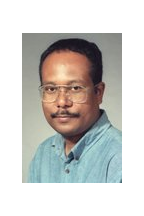
Mohamed Beshir is a Professor in the Department of Civil and Environmental Engineering at Carleton University, Ottawa, Canada. His research focuses on fire safety engineering, urban fire spread in informal settlements, and enhancing resilience in low- and middle-income communities. He teaches courses such as Fundamentals of Fire Safety Engineering and Fire Dynamics I , contributing to advanced engineering education. Education : PhD in Fire Safety Engineering, University of Edinburgh (2022). Professional Experience : Previously worked as a fire engineer at a leading UK consultancy, addressing fire safety in residential, retail, and historical buildings. Prof. Beshir’s research interests include fire and smoke dynamics, combustion modeling, compartment fires, and fire safety resilience. His work addresses environmental and economic sustainability in construction, alongside human behavior in fire scenarios. His scientific contributions span fire dynamics in informal settlements, wind effects on flashover, and energy harvesting technologies. He has received awards like the Sheldon Tieszen Student Award (2020) and the Best MSc Thesis Poster award (IMFSE, 2017). Teaching : CIVE 5609/IPIS 5504 (Fire Safety Engineering), CIVE 5610 (Fire Dynamics I). Collaborations : Worked with researchers like R. Walls, Y. Wang, and D. Rush on large-scale fire experiments and CFD modeling.
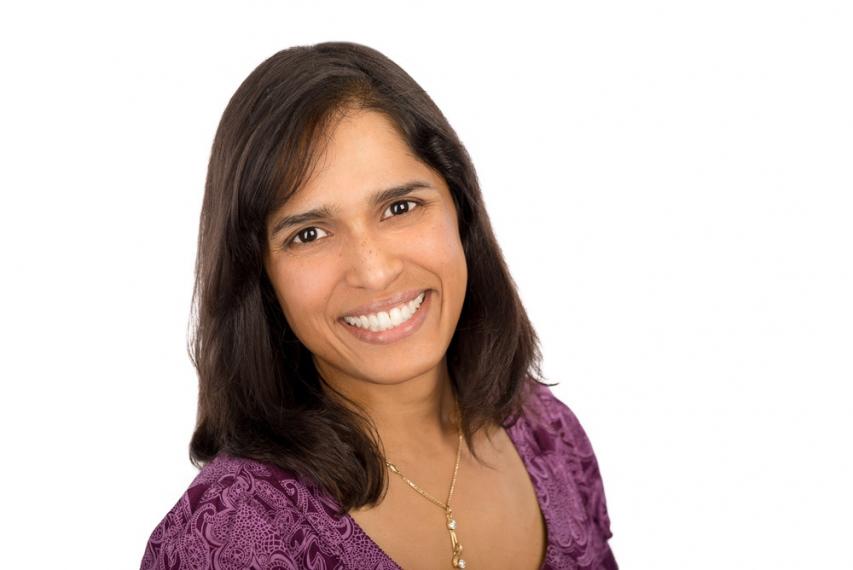
Patrick Baylis is an Assistant Professor of Environmental Economics at the Vancouver School of Economics, University of British Columbia. His research focuses on how people respond to environmental threats such as wildfires, air pollution, and extreme temperatures. He employs large datasets, natural language processing, and spatial information in his work, primarily using R/RStudio and Python for data analysis. Dr. Baylis earned his PhD from the University of California Berkeley in 2016 in Agricultural and Resource Economics. Prior to joining UBC, he was a postdoctoral fellow at the Stanford Center on Food Security and the Environment. He also worked as a research assistant at the Energy Institute at Haas and is a proud alumnus of Carleton College. His research interests span environmental economics with a particular focus on climate change impacts, energy economics, and behavioral responses to environmental threats. His work often examines the intersection of climate, health, and economic behavior, using innovative methods like social media data analysis to measure sentiment responses to temperature changes and other environmental factors. Analysis of his publication record reveals a strong focus on using big data approaches to understand human responses to environmental challenges. His work frequently appears in top journals including Nature Climate Change, PNAS, and the Journal of Public Economics. His research spans multiple subfields including wildfire economics, air quality valuation, climate migration, and the behavioral impacts of temperature extremes. Dr. Baylis has received significant media attention for his work, with coverage in major outlets including The New York Times, The Washington Post, The Guardian, and The Atlantic. His research on temperature and suicide rates, as well as climate perception, has been particularly influential in connecting environmental conditions with human behavior and mental health outcomes. He maintains an active research program examining critical environmental challenges, including wildfire risk, air pollution impacts, climate adaptation strategies, and the economic dimensions of climate change. His work combines rigorous economic analysis with innovative data collection and processing methods to provide new insights into how humans respond to environmental threats.
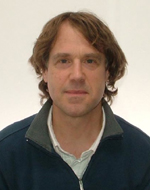
Mark Crowley is an Associate Professor in the Department of Electrical and Computer Engineering at the University of Waterloo , with a cross-appointment in the Cheriton School of Computer Science . He is actively involved in the Waterloo Artificial Intelligence Institute (WAII) , the Waterloo Institute for Complexity and Innovation (WICI) , and serves as National Secretary for the Canadian Artificial Intelligence Association (CAIAC) , coordinating the Canadian Conference on AI . Research interests span the theoretical and applied aspects of Reinforcement Learning , Deep Learning , Manifold Learning , and Ensemble Methods . His work addresses challenges in domains with spatial dynamics, multi-agent systems, and uncertainty, particularly in Computational Sustainability (forest fire management, sustainable forestry), Autonomous Driving , Medical Imaging , and Material Design . Recent research focuses on integrating causal modeling with generative representation learning to improve out-of-distribution robustness in motion forecasting applications. Key publications include foundational work on ChemGymRL environments for safe chemical process reinforcement learning, Generative Causal Representation Learning for robust forecasting, and collaborative work on multi-advisor reinforcement learning in multi-agent settings. He co-authored a textbook Elements of Dimensionality Reduction and Manifold Learning (Springer, 2023) with Prof. Ali Ghodsi and Prof. Fakhri Karray. Teaching includes graduate and undergraduate courses in Algorithm Design , Computational Intelligence , Reinforcement Learning , and Data Modeling at the University of Waterloo since 2018. His research group has produced several notable graduates including Benyamin Ghojogh (2021), who continued as a postdoc until 2022.
Gerda de Vries is a Professor in the Department of Mathematics & Statistical Sciences at the University of Alberta, Faculty of Science. Her research focuses on mathematical physiology, dynamical systems, and mathematical modeling, particularly in cellular biophysics, pattern formation, and systems biology. She has contributed extensively to understanding complex biological systems through interdisciplinary approaches combining mathematics and biology. Her work spans applications in radiation biology (e.g., cell cycle dynamics and low-dose radiation effects), biophysics (microtubule organization, motor proteins), ecology (predator-prey interactions, forest fire modeling), and education (adapting primary literature for STEM teaching). Recent research highlights include analyzing saddle-node bifurcations, bystander effects in radiation, and collective behavior in animal groups. De Vries has published over 50 peer-reviewed articles since 2000, with a focus on bridging abstract mathematical theory to concrete biological phenomena. Notable contributions include models of pancreatic β-cell dynamics, immune system versatility, and educational frameworks for mathematical biology. Her academic career includes leadership in curriculum development and interdisciplinary research, though no specific grants or awards are explicitly listed in the provided information.
Steven Laureys, MD, PhD, is a Professor at the University of Liège where he leads the Coma Science Group within GIGA Consciousness. He holds dual prestigious appointments as Canada Excellence Research Chair in Integrative Neuroscience for Sustainable Mental Health and Canada Excellence Research Chair in Neuroplasticity. His clinical roles include neurologist and clinical professor at the Centre du Cerveau of the CHU of Liège, and Director of Research at the FNRS. Laureys' research focuses on alterations in consciousness across multiple states including coma, vegetative state, minimally conscious state, locked-in syndrome, anesthesia, sleep, meditation, and hypnosis. His work integrates multimodal neuroimaging (fMRI, PET, EEG), electrophysiology, and behavioral assessments to develop diagnostic and prognostic tools for disorders of consciousness (DOC). Key methodological approaches include brain connectivity mapping, metabolic analysis, and AI-driven modeling of neural dynamics. His publication portfolio reveals a strong emphasis on brain connectivity dynamics (42% of recent articles), AI applications in consciousness assessment (23%), and translational neurorehabilitation (18%). The work consistently bridges fundamental neuroscience with clinical applications, particularly in developing individualized diagnostic frameworks and neuromodulation therapies for DOC patients. Major scientific recognition includes: Francqui Prize (2017), Belgium's highest scientific honor Generet Prize (2019) Appointment as Editor-in-Chief of Brain Connectivity journal (2024) Two Canada Excellence Research Chairs (2023-2024) Laureys directs the internationally recognized Coma Science Group, which operates within the GIGA Consciousness research center. The group maintains extensive international collaborations across Europe, North America, and Asia, with particular focus on developing standardized assessment protocols and innovative neuromodulation approaches for disorders of consciousness. Current research directions emphasize neuroplasticity mechanisms, meditation's impact on brain health, and sustainable mental health frameworks through integrative neuroscience approaches.
Dr. Jesse Vermaire is an Associate Professor in the Department of Geography and Environmental Studies at Carleton University . With a Ph.D. from McGill University and M.Sc. from the University of New Brunswick, his research focuses on the impacts of environmental change on freshwater ecosystems, particularly climate warming, nutrient enrichment, and extreme events like droughts and storm surges. His lab employs paleolimnological techniques and long-term datasets to study ecosystem resilience and recovery. Education: B.Sc. Honours (University of Guelph), M.Sc. (UNB), Ph.D. (McGill) His work spans multiple subfields, including microplastic pollution, metal contamination from historical mining, wildfire effects on lakes, and riparian development impacts. Recent publications highlight studies on plastic ingestion by Arctic seabirds, legacy arsenic pollution in Cobalt, Ontario, and critical thresholds for freshwater conservation. Collaborations with researchers like S.J. Cooke and J.P. Smol demonstrate his interdisciplinary approach. Key trends in his 15 most recent articles include: 1) Quantifying microplastic pollution in diverse ecosystems (Arctic, mangroves, agricultural soils); 2) Analyzing historical contamination impacts (arsenic, gold, lead mining); 3) Investigating climate-fire-sediment interactions; 4) Advancing monitoring methodologies (community science, multi-matrix sampling); 5) Critiquing environmental restoration practices; and 6) Developing evidence-based conservation frameworks.
Aaron Shugar is a Professor and current Bader Chair in Art Conservation at Queen’s University. With a background in archaeometallurgy and conservation science, he specializes in non-destructive analysis techniques for cultural heritage, including X-ray fluorescence (XRF), Raman spectroscopy, and hyperspectral imaging. His work bridges art history, material degradation, and technological innovation. Honours H.B.A. in Anthropology and Law & Society from York University M.S. in Archaeological Materials from the University of Sheffield Ph.D. in Archaeometallurgy from University College London His research focuses on historic artist’s pigments , ancient metallurgy , and technical history of artifacts , with particular interest in degradation pathways and manufacturing processes. Recent publications highlight trends in AI integration with XRF analysis and preservation of modern materials in art conservation. Bader Chair in Art Conservation Mellon Foundation Professor in Conservation Science Aaron co-directed the Archaeometallurgy Laboratory at Lehigh University, served as a guest scientist at NIST, and remains a research associate at the Smithsonian Institution. He actively contributes to TEFAF’s Scientific Vetting Committee and acts as a forensic materials expert for the Court of Arbitration for Art.
Kshirasagar Naik is a Professor in the Department of Electrical and Computer Engineering at the University of Waterloo, Ontario. He is actively involved in graduate research supervision and has been a member of IEEE since 1994. His academic career spans decades, with a focus on wireless communication, energy efficiency, and cybersecurity. 1992, Doctorate in Computer Engineering from Concordia University, Ontario 1988, Master of Mathematics in Computer Science from University of Waterloo, Ontario 1983, MTech in Computer Engineering from Indian Institute of Technology, Kharagpur, India 1981, BScEng in Electronics and Telecommunication from Sambalpur University, India His research interests include Mobile and Ad Hoc Networks , Cybersecurity , Internet of Things (IoT) , and Intelligent Transportation Systems . He has published extensively on energy optimization in wireless devices, delay-tolerant networks, and security protocols for vehicular systems. Recent publications highlight the integration of Machine Learning and IoT in environmental monitoring, particularly forest fire detection and prediction. Other works focus on cybersecurity , vehicular networks , and energy optimization in data centers and handheld devices. Professor Naik is currently accepting graduate students for research in mobile systems, network protocols, and green computing at the University of Waterloo.
Patrick Desrosiers serves as an Adjunct Professor in the Department of Physics, Physical Engineering and Optics within Université Laval's Faculty of Science and Engineering, while conducting neuroscience research at the CERVO Brain Research Center. He co-directs Dynamica, a multidisciplinary complex systems research group, and participates in UNIQUE (neuroscience-AI integration) and CIMMUL (mathematical modeling applications). His academic training spans physics and mathematics at Université Laval, the University of Melbourne, and CEA-Saclay. Dr. Desrosiers' research centers on mathematical and computational neuroscience , with signature contributions in dimensionality reduction and network resilience analysis . His work bridges biological and artificial neural networks , zebrafish brain mapping , and neurovascular coupling using advanced techniques from spectral graph theory , random matrix theory , and dynamical systems . Current investigations focus on neural decoding under chronic stress and structural-functional relationships in brain networks. Analysis of his 2023-2025 publications reveals three dominant trajectories: (1) Low-dimensional representations for predicting cognitive decline and neural dynamics, (2) Network reconstruction methodologies applied to neuroscience and biodiversity, and (3) Development of computational tools like NeuroTorch for neural data analysis. His work consistently integrates mathematical rigor with biological relevance across species and scales. His recognition includes: Professeur étoile prize for exceptional teaching (Faculty of Science and Engineering, Université Laval, 2018) As Dynamica co-director, he mentors a research team comprising Antoine Légaré, Arthur Légaré, Benjamin Claveau, Jordan Charest, Marziyeh Pourmousavi, Pierre-Luc Larouche, Vincent Savard, Vincent Thibeault, and Zahra Yazdani. His collaborative framework connects physics, mathematics, and neuroscience to address fundamental questions in neural network organization, with funding evident through sustained publication output and lab operations. Dynamica Lab ( https://dynamicalab.github.io/ ) serves as the operational hub for his interdisciplinary research, maintaining active collaboration with CERVO Brain Research Center and international institutions.
Ayesha Ali is a Professor of Statistics and Director of the Master of Data Science program at the University of Guelph. She holds a PhD in Statistics from the University of Washington (2002) and has expertise in statistical methods for complex high-dimensional systems, including ecological networks, causal inference, and bioinformatics. Her research integrates graphical Markov models, machine learning, and statistical computing to address challenges in plant-pollinator networks, livestock genetics, and disease risk modeling. Education: B.Sc. Honours in Statistics and Actuarial Science, University of Western Ontario (1996) M.Sc. in Statistics, University of Toronto (1998) Ph.D. in Statistics, University of Washington (2002) Research Interests: Graphical Markov models and ecological networks Causal inference and longitudinal data analysis Machine learning and high-dimensional predictive modeling Statistical methods for livestock genetics and animal health Computational statistics and bioinformatics Articles Trends: Her recent work spans interdisciplinary applications, including veterinary oncology biomarker discovery, remote sensing for agricultural suitability, and pipeline development for cross-species transcriptomics. She emphasizes graphical structure exploitation in regression and predictive modeling, with contributions to both theoretical and applied statistical methodologies. Awards: Canadian Journal of Statistics Award (2020) for groundbreaking work on doubly sparse regression NSERC Discovery Grant (2018) NSERC Collaborative Research and Development Grant (2015) Advising & Grants: She has supervised numerous graduate and undergraduate students on projects ranging from plant-pollinator network analysis to bioinformatics. Her grants include NSERC-funded research on milk fatty acid genetics and statistical methods for clustered data. Labs/Teams: Involved in the Bioinformatics program at the University of Guelph, contributing to interdisciplinary research collaborations in ecology and animal science.
Dr. Sophie Wilkinson is an Assistant Professor at the School of Resource & Environmental Management, Simon Fraser University (SFU) since 2023. Her interdisciplinary research focuses on wildfire ecology and ecosystem management, integrating field studies, experimental fires, GIS, and ecological modeling to enhance resilience against wildfires. She holds a PhD in Ecohydrology from McMaster University, with prior degrees from the University of Leeds. Her work emphasizes understanding wildfire severity patterns and ecological tipping points in Canadian boreal forests and peatlands. Collaborating with the Canadian Forestry Service and land managers, she translates research into practical solutions, including a new fuel moisture index for wildfire danger rating systems. Key research themes include peatland ecohydrology, climate change impacts, and fire management strategies. She teaches REM 471 (Forest Ecosystems and Management) and is developing a community science platform (iWetland) for wetland monitoring. Wilkinson’s studies highlight the interconnectedness of human activities, environmental health, and wildfire dynamics. Her publications span over 30 peer-reviewed articles since 2020, addressing topics like peat burn severity thresholds, seismic line impacts on boreal ecosystems, and turtle nesting habitat recovery post-fire. She actively engages with policymakers and communities to bridge academic findings and real-world applications.
Leithen M'Gonigle is an Associate Professor in the Department of Biological Sciences at Simon Fraser University (SFU), specializing in Terrestrial Ecology. His research focuses on species interactions, including sexual selection, host-parasite dynamics, and Allee effects, with a strong emphasis on linking theoretical models to empirical data. He integrates mathematical approaches with field studies to address questions about species persistence, evolution, and conservation. M'Gonigle holds a PhD in Zoology from the University of British Columbia (2011) and a BSc in Mathematics (Honours with Distinction) from the University of Victoria (2005). His work bridges ecological theory and applied conservation, particularly in agricultural and post-fire ecosystems. Recent projects examine pesticide impacts on pollinators, habitat restoration in farmlands, and climate change effects on bumblebee distributions. He teaches courses like BISC 300 (Evolution) and collaborates with conservation programs to translate scientific insights into practical solutions. M'Gonigle’s lab (B8227) investigates pollinator metacommunity dynamics, agroecology, and the evolutionary consequences of species interactions. While no specific awards are listed, his extensive publication record reflects contributions to ecological modeling, biodiversity monitoring, and sustainable agriculture practices.
Dr. Qingye Lu is an Associate Professor in the Department of Chemical and Petroleum Engineering at the University of Calgary. Her research focuses on bioadhesion, colloid and interfacial chemistry, nanomaterials, and their applications in environmental and energy systems. She holds a PhD in Analytical Chemistry from the University of Alberta and has postdoctoral training in Civil and Environmental Engineering and Chemical and Materials Engineering. She leads the Laboratory of Interfacial Science and Advanced Materials (LISAM), developing advanced materials for sustainability, energy, and environmental challenges. Education: PhD in Analytical Chemistry, University of Alberta MSc in Physical Chemistry, Wuhan University BSc in Chemistry, Wuhan University Research Interests: Bioinspired materials for CO2 capture and oil/water separation Interfacial science in energy systems (e.g., solar evaporation, fuel cells) Environmental applications: wastewater treatment, heavy metal adsorption Awards: Early Career Research Excellence Award (2020) Queen Elizabeth II Graduate Scholarship (2008–2009) Advising: Seeks motivated Master’s and PhD students across disciplines. Labs: LISAM Lab focuses on interfacial science and advanced materials for energy and environment.
Gaang Lee is an Assistant Professor in the Department of Civil and Environmental Engineering at the University of Alberta's Faculty of Engineering, where he joined in 2022 after earning his Ph.D. from the University of Michigan. His research pioneers 'sympathetic' built environments that enhance safety, health, productivity, and comfort for workers and users through integration of wearable biosensors, AI, extended reality, and robotics with psychophysiological theories. Education: Ph.D in Civil and Environmental Engineering, University of Michigan, Ann Arbor (2022) - Emphasis: Construction Engineering and Management; Graduate Certificate in Computational Discovery and Engineering Graduate Certificate in Computational Discovery and Engineering, University of Michigan, Ann Arbor (2022) M.S. in Architectural Engineering, Yonsei University, South Korea (2012) - Emphasis: Construction Engineering and Management B.S. in Architectural Engineering, Yonsei University, South Korea (2010) Dr. Lee combats technological exclusion for marginalized groups (construction workers, older adults) by developing empathetic technologies for workplaces, buildings, and urban spaces. His work applies human sensing, AI, and digital twins to create environments that adapt to diverse human needs, with key projects spanning psychophysiological safety monitoring, human-robot collaboration, and inclusive urban design. He integrates psychophysiological and socio-cognitive theories to address real-world gaps in construction engineering and computer science. His recent publications (2023-2025) reveal strong trends in AI-driven safety hazard identification, biosensor-based stress/fatigue monitoring, and virtual reality for construction team dynamics. A critical emerging focus is equity-centered technology design, with increasing publications addressing inclusive built environments and technological access for vulnerable populations through graph-based algorithms, domain adaptation, and interpretable AI models. Scientific Awards: No awards mentioned in the provided text. Dr. Lee actively recruits students for his 'Empathetics' research group starting in 2026, prioritizing candidates with empathy, research motivation, and commitment to diversity and inclusion. While specific grants are not detailed, his research program receives institutional support from the University of Alberta and likely external funding given its interdisciplinary scope and industry relevance. He leads the 'Empathetics' research group (part of Attentive Hub) which emphasizes diversity as fundamental to innovation. Current projects include psychophysiological monitoring for occupational safety, trustable human-robot collaboration systems, and extended reality frameworks for empathetic built environments. The group collaborates with IHT LAB (https://www.iht-lab.com/) and focuses on deploying technologies that make daily surroundings safe, healthy, and truly inclusive for all individuals.
André Longtin is a Full Professor in the Department of Physics at the University of Ottawa, affiliated with the Faculty of Science. He co-directs the Centre for Neural Dynamics & Artificial Intelligence and holds cross-appointments in Cellular and Molecular Medicine, Mathematics and Statistics. His research focuses on nonlinear dynamics, stochastic systems, and computational neuroscience, with applications to sensory processing, neural coding, and thermodynamic principles in biological systems. Education: B.Sc. (Honours Physics, Université de Montréal), M.Sc. (Physics, Université de Montréal), Ph.D. (Physics, McGill University, 1989). Postdoctoral training at Los Alamos National Laboratory. Research Interests: Theoretical biophysics, neural modeling, entropy production in biological systems, delayed dynamical systems, and interdisciplinary applications of nonlinear science. His group explores computations in hippocampus and zebrafish pallium, epilepsy mechanisms, neural coding in electrosensory systems, and autonomous stochastic rhythms. Recent Work: Articles highlight entropy dynamics in humans, myelin plasticity effects on neural networks, and reservoir computing with delayed loops. Awards include APS Fellowship (2003) and the NSERC Brockhouse Prize (2017). Editorial Roles: Biological Cybernetics, Frontiers in Computational Neuroscience, and others. Collaborations span systems neuroscience, clinical specialties, and engineering.