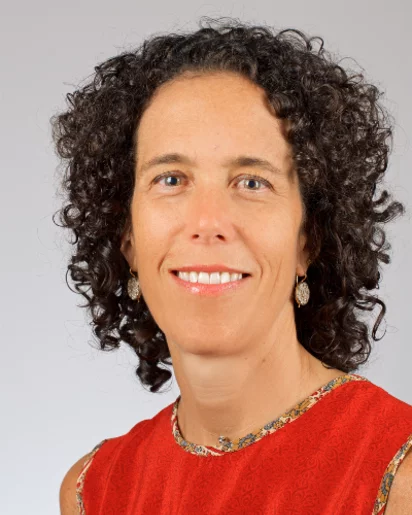
Raine Viitala is an Assistant Professor at Aalto University's Department of Energy and Mechanical Engineering. His research focuses on mechanical vibration analysis, electromagnetic influence in rotating systems, and sustainable energy management in industrial applications. Aalto University Department of Energy and Mechanical Engineering His work spans mechanical engineering , fluid dynamics , and machine learning applications . Recent publications address torsional vibration modeling, aerostatic bearing design, and AI integration in pulp & paper industry energy systems. Viitala's research trends include digital twin technology for collaborative design, eddy current sensing for tool monitoring, and nonlinear damping solutions for mechanical systems.
Dr. Matthew Whelan is an Associate Professor and EPIC Assistant Director of Research for Energy Infrastructure at the University of North Carolina at Charlotte. He is affiliated with the Department of Civil and Environmental Engineering and specializes in structural health monitoring, sensing technologies, and infrastructure resilience under dynamic loads. Current roles: Associate Professor, EPIC Assistant Director of Research for Energy Infrastructure Department: Civil and Environmental Engineering Research Interests: Dr. Whelan focuses on full-scale structural testing, ambient vibration monitoring, and the application of wireless sensor networks for bridge and building diagnostics. His work addresses deterioration modeling, blast and impact load responses, and digital twin integration for infrastructure management. Key Trends: Recent publications highlight advancements in concrete constitutive modeling, blast testing of cold-formed steel systems, and digital twins for construction quality monitoring. His work bridges computational simulations (e.g., LS-DYNA) with experimental validation using high-rate wireless sensors. Professional Background: He obtained all his degrees (B.S., M.S., Ph.D.) in Civil and Environmental Engineering from Clarkson University and has been a faculty member at UNC Charlotte since 2010. Dr. Whelan is a licensed Professional Engineer.
Dr. Wojciech Solowski is an Associate Professor at Aalto University , specializing in computational simulations of soils and granular materials with a focus on numerical methods and constitutive modeling. His research spans geotechnical engineering, environmental geomechanics, and computational mechanics. Research Interests : Numerical modeling (FEM/MPM), THMC behavior of soils, unsaturated soil mechanics, soil improvement, frost susceptibility, ground vibrations, and laboratory testing. Scientific Contributions : Dr. Solowski has extensively advanced the Material Point Method (MPM) for large deformation problems in geotechnics and developed the in-house finite element code Thebes for THMC coupling simulations. His work addresses critical challenges in nuclear waste repositories, soft soil stabilization, and offshore sediment characterization. Publication Trends : Recent articles focus on MPM for marine clay analysis, THMC coupling in bentonite barriers, 3D shrinkage deformation measurements, and geophysical-geotechnical integration for offshore wind farms. His research emphasizes practical applications in energy transition and infrastructure resilience. Affiliations : Mineral Based Materials and Mechanics research group at Aalto University. Committee Roles : International Secretary of the Finnish Geotechnical Society; member of ISSMGE TC106 (unsaturated soils) and ERTC7 (numerical methods).
Erik Johnson is a Professor of Civil Engineering at an unspecified university, affiliated with the Sonny Astani Department of Civil and Environmental Engineering. He has held leadership roles such as Associate Chair, Interim Chair, and currently serves as Vice Dean for Academic Programs. His research focuses on smart structures, structural vibration control, and computationally-efficient simulation algorithms for dynamical systems, with applications in controllable damping devices and seismic mitigation. Education: B.S., M.S., Ph.D. in Aeronautical and Astronautical Engineering (University of Illinois at Urbana-Champaign), Graduate Certificate in Biblical Studies (Trinity Evangelical Divinity School) Professional Affiliations: Senior Member of AIAA; Member of ASCE and ASME; Chair of ASCE technical committees; Associate Editor, ASCE Journal of Engineering Mechanics His work spans disciplines including control theory, structural engineering, and computational methods. Articles highlight Bayesian approaches, inverse problems, and sensor placement optimization under uncertainty. Erik contributes to advancing seismic resilience and mechatronic systems for civil infrastructure. Scientific Awards: 2001 NSF CAREER Award, 2005 International Association for Structural Safety and Reliability Medal, 2016 University of Illinois Distinguished AE Alumnus Award
Philippe Tassin is a Professor of Physics at Chalmers University, specializing in electromagnetic structured media and computational electrodynamics. He teaches optics, quantum mechanics, and computer science courses, earning recognition through the Golden Chalk award and Chalmers' Pedagogical Prize. M.Sc. and Ph.D. (summa cum laude) from Free University of Brussels Postdoctoral work at Iowa State University and Ames Laboratory (US DOE national lab) His research spans metamaterials, plasmonics, and nanophotonics, with significant contributions to inverse design methodologies using machine learning. He has authored influential papers in Science , Nature Photonics , and Physical Review Letters , and frequently presents at international conferences. Recent publications highlight advancements in liquid metal composites for electromagnetic absorption, AI-driven metasurface design, and adaptive meshing for photonic simulations. His work integrates computational physics with experimental validation across multiple electromagnetic domains. KAW Fellowship Swedish Research Council Grant IEEE & SPIE Fellowships BAEF Alumni Award Frans Van Cauwelaert Award (Royal Flemish Academy) As editor of Photonics and Nanostructures , member of the Young Academy of Sweden, and vice-chair of IEEE Photonics Sweden Chapter, he actively contributes to academic leadership and public science communication.
Michael Raupach is a Professor at RWTH Aachen University holding the Chair of Building Materials Science - Building Conservation. His work focuses on concrete durability, reinforcement corrosion, and sustainable construction materials, with particular expertise in alkali-activated binders, carbon textile reinforcement, and electrochemical monitoring systems. Research Interests: Concrete durability, corrosion protection, sustainable materials, structural maintenance, BIM applications, and non-destructive testing. Recent Work: Investigates electrically heated carbon textile reinforced concrete systems, develops hybrid alkali-activated materials for realkalization, and explores chloride diffusion mechanisms in low-carbon binders. Publications: Active in journals covering concrete technology, corrosion engineering, and sustainable construction methods.
Niclas Jansson is a researcher at the PDC Center for High Performance Computing at KTH Royal Institute of Technology. He holds an M.S. in Computer Science (2008) and a Ph.D. in Numerical Analysis (2013) from KTH. His career spans roles such as postdoctoral researcher at RIKEN Advanced Institute for Computational Science (2013-2016) and visiting scientist at RIKEN (2018-2021), where he contributed to the Japanese exascale program Flagship 2020. A core focus of his research involves extreme-scale computing and numerical method development. He is a key developer of RIKEN's multiphysics framework CUBE , the HPC branch of FEniCS , and the spectral element flow solver Neko . His work is currently supported by a Swedish Research Council Starting Grant aimed at enhancing high-order spectral element methods for exascale fluid simulations. Niclas has published extensively on topics such as GPU acceleration , adaptive finite element methods , in situ visualization , and extreme-scale turbulence modeling . He also teaches Computational Fluid Dynamics (SG2212) at KTH.
Univ.-Prof. Dr.-Ing. habil. Sven Klinkel is a Professor at RWTH Aachen University , affiliated with the College of Civil Engineering and the Department of Structural Mechanics and Structural Dynamics . He holds leadership roles as Chair of the Senior Council, Faculty Council, and Doctoral Committee. Current research focuses on structural engineering , computational mechanics , and seismic analysis . Key projects include carbon-reinforced concrete structures , isogeometric analysis , and digital fabrication . Recent publications address nonlinear systems , topology optimization , and naturally shaped timber . Contact: dekanat@fb3.rwth-aachen.de
Jeffrey Erochko is an Assistant Professor in the Department of Civil and Environmental Engineering at Carleton University, Ottawa, Canada. His research and teaching focus on structural engineering, particularly seismic-resistant and self-centering systems for timber and hybrid structures, as well as innovative pedagogical techniques in engineering education. B.A.Sc. Engineering Science, University of Toronto Ph.D., Civil Engineering, University of Toronto Prof. Erochko’s research spans advanced seismic design for timber buildings, hybrid simulation methods, fire performance of structural systems, and nonlinear dynamic analysis of multi-hazard scenarios. His work integrates experimental testing with computational models to enhance resilience in civil infrastructure. Key trends in his publications include hybrid timber-steel/concrete systems, self-centering dampers, nonlinear modeling of seismic responses, and fire safety engineering. His pedagogical contributions emphasize technology-driven assessment tools like micro-video projects and weighted rubrics. He leads the Carleton Hybrid Simulation Research Group and collaborates with the university’s multi-hazard infrastructure protection facility, which explores integrated experimental and computational approaches to natural hazards such as earthquakes, fire, blast, and wind.
Rafael Sebastian is a Full Professor at Universitat de Valencia and General Director for Science and Research of the Generalitat Valenciana. He leads the Computational Multiscale Simulation Lab (CoMMLab) and collaborates with institutions like Oxford University and Yale University. Department of Computer Science, Universitat de Valencia CoMMLab Founder Spanish Network of Excellence in Cardiac Modeling His research focuses on multi-scale computational models and artificial intelligence for patient-specific cardiac simulations , aiming to improve arrhythmia risk stratification and therapy planning . Key topics include cardiac conduction system modeling , scar-related ventricular tachycardia , and machine learning pipelines for clinical applications. Recent publications emphasize automata-based simulations for atrial arrhythmias, machine learning in arrhythmia localization, and 3D geometric characterization of aortic diseases. Trends show integration of computational modeling with clinical data and medical imaging . Scientific Awards: Best Poster Award, Functional Imaging and Modeling of the Heart (2021) Cum Laude Award, SPIE Medical Imaging (2009) Student Presentation Award (2011) He has supervised 7 PhD/Master students and led grants exceeding €1 million, including projects like iSARC-GENETICS and iCardioTwins , focusing on digital twin technology and cardiac disease stratification .
Cody Scarborough is an Assistant Professor in the Department of Electrical, Computer, and Energy Engineering at the University of Colorado Boulder. He earned his B.S. in Electrical and Computer Engineering from the University of Texas at Austin (2017) and his Ph.D. from the University of Michigan (2022). His research focuses on space-time modulated electromagnetic metamaterials, non-linear electromagnetics, and reconfigurable intelligent surfaces. He leads the Electromagnetic Metamaterials Research Group (EMRG), advancing next-generation communication systems and energy-harvesting technologies. Scarborough has pioneered novel boundary conditions like the interpath relation, reducing computational demands for analyzing space-time periodic structures. His work has earned best student paper awards at EuCAP 2021 and Metamaterials 2021. He teaches courses such as Electromagnetic Fields I and Electromagnetic Metamaterials, mentoring over 100 students. His research group explores parametric amplification, frequency conversion, and bandwidth enhancement through active metamaterial control. Education: B.S. UT Austin (2017), Ph.D. University of Michigan (2022) Labs/Teams: Electromagnetic Metamaterials Research Group (EMRG) Key Contributions: Space-time modulated antennas, N-path network analysis, interpath relation theory He holds provisional patents on parametric time-modulated antennas and efficient computational methods for metamaterial design. Beyond academia, he enjoys music, hiking, and skiing in Boulder's Flatirons.
Dr. Matthew Frost is a Reader in Geotechnical Engineering at Loughborough University, serving as Associate Dean for Education & Student Experience and Director of Undergraduate Studies. He holds multiple professional certifications including CEng, FICE, FPWI, and SFHEA. With over 25 years of experience, he focuses on geotechnical and transport engineering, emphasizing industry-relevant research and applied solutions. His work bridges academic research with practical applications in infrastructure resilience, sustainability, and railway/highway systems. Key research interests include transport infrastructure resilience to climate change, railway and highway material performance, non-destructive testing, and sustainable drainage systems. He has led over £1.5m in research grants, including projects like Futurenet (assessing UK transport network climate resilience) and HS2 earthworks performance assessment. Notable contributions include developing LCA frameworks for pavement materials and evaluating the Nottingham Workplace Parking Levy's impact on urban mobility. His publications span geotechnical testing methodologies, railway vibration analysis, and sustainable infrastructure design. He has supervised over 15 doctoral students and pioneered tools for infrastructure maintenance management. Awards include an ICE Journal Award for work on Futurenet climate resilience studies. Current projects include geotechnical performance monitoring for high-speed rail and innovative drainage solutions for sports facilities. Matthew Frost actively collaborates with industry partners such as Network Rail, HS2, and Balfour Beatty, ensuring research translates to real-world engineering solutions. His educational role emphasizes student experience innovation and curriculum development in civil engineering education.
Professor Keith Worden is a Professor of Mechanical Engineering at the University of Sheffield's School of Mechanical, Aerospace and Civil Engineering. His research focuses on applications of advanced signal processing and machine learning to structural dynamics, particularly in aerospace systems. He has held this position since 1995 and has contributed significantly to the field of structural health monitoring (SHM), including work on nonlinear system analysis and damage detection. His work emphasizes pragmatic engineering solutions and collaboration with industries like aerospace and offshore sectors. Education: Holds a degree from York University and a PhD in Mechanical Engineering from Heriot-Watt University. Career highlights include research at Manchester University before joining Sheffield. Research Interests: Specializes in structural dynamics, SHM using machine learning, nonlinear systems, and vibration analysis. Key themes include population-based SHM frameworks, damage prognosis, and environmental adaptation in monitoring systems. His group develops algorithms for automated inspection and diagnosis, leveraging neural networks, genetic algorithms, and other biological-inspired methods. Articles Trends: Recent publications focus on population-based SHM methodologies, transfer learning applications, and algorithm development for novelty detection, damage localization, and risk-informed decision frameworks. His work bridges theoretical advancements with practical engineering challenges. Grants & Advising: Extensive grants and collaborations in SHM, wind turbine monitoring, and aerospace structures. Advises on projects involving machine learning in structural dynamics and probabilistic modeling. Labs & Teams: Leads research groups exploring computational tools for SHM, including the application of Gaussian processes, Bayesian methods, and data-driven models. Collaborates internationally on projects such as the RAPTOR telescope system and offshore wind farm monitoring.
Dr Sergii Veremieiev is an Associate Professor in the Department of Engineering at Durham University. His research focuses on fluid mechanics modeling, particularly in free-surface and multiphase flows, capillary phenomena, and computational fluid dynamics. He holds a PhD in Mechanical Engineering from the University of Leeds and has held academic positions at Liverpool John Moores University and Durham University since 2013. Education: Bachelor of Physics, Donetsk National University (2006) Master of Physics, Donetsk National University (2007) PhD in Mechanical Engineering, University of Leeds (2011) Research Interests: Dr Veremieiev’s work integrates computational and experimental approaches to study complex fluid dynamics phenomena, including droplet impact dynamics, rivulet instabilities, and high-performance numerical simulations using finite element and finite volume methods. His research addresses challenges in renewable energy systems, agricultural pesticide applications, and industrial flow optimization. Teaching: He teaches modules in fluid mechanics, nuclear engineering, and computational fluid dynamics (CFD) analysis at both undergraduate and postgraduate levels, including coursework in thermal renewables and design practicum. Advising & Grants: Supervised 4 completed PhD students and currently guides 5 active researchers. Develops numerical tools such as a C++/MPI free-surface solver and MATLAB subroutines for fluid dynamics analysis.
Federica Marone Welford is a Beamline Scientist at the TOMCAT beamline of the Swiss Light Source (SLS) at the Paul Scherrer Institute (PSI) . She holds an Earth Sciences degree with a focus on seismology and a PhD in seismology from ETH Zurich , following a postdoctoral fellowship at the Berkeley Seismological Laboratory . Her work centers on advancing tomographic reconstruction algorithms, mitigating artifacts, and optimizing computational infrastructure for high-speed X-ray imaging at the TOMCAT beamline. Research Focus: X-ray tomography methodology, data compression, real-time reconstruction systems, and applications in paleontology, earth sciences, additive manufacturing, and energy research. Collaborations: Engages with global researchers and industry partners, particularly in battery/fuel cell analysis and laser powder bed fusion. Teaching: Lectures at ETH Zurich on X-ray imaging techniques. Publications highlight her contributions to X-ray scattering tensor tomography, dynamic process visualization, and computational advancements in imaging systems.