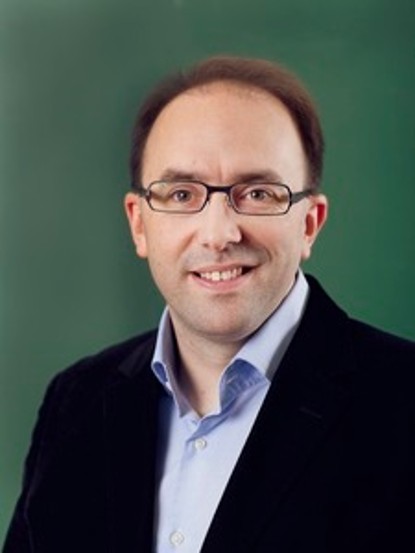
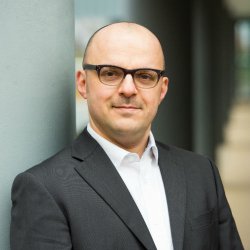
Achim Schwenk is a Professor at Technische Universität Darmstadt specializing in theoretical nuclear physics, strongly-interacting many-body systems, ultracold quantum gases, and nuclear astrophysics. His research bridges fundamental nuclear interactions with astrophysical phenomena like neutron stars. His work focuses on ab initio calculations, effective field theory, and dense matter properties. Recent publications highlight applications to neutron star equations of state, neutrinoless double beta decay, and nuclear structure uncertainties. Scientific awards and honors are not explicitly mentioned in the provided text. His research group at TU Darmstadt utilizes advanced theoretical frameworks like chiral effective field theory and many-body perturbation theory.
Dr. Piotr Omenzetter is a Senior Lecturer at the School of Engineering , University of Aberdeen, specializing in structural health monitoring (SHM), dynamic testing, and reliability analysis of civil infrastructure. His research focuses on offshore structures, wind turbines, bridges, and buildings, with applications of artificial intelligence and signal processing. Positions: Senior Lecturer (University of Aberdeen) Education: ME (Technical University of Gdansk), PhD (University of Tokyo) Research Interests include: Structural Health Monitoring (SHM) for offshore and subsea systems, wind turbines, and bridges Theoretical and experimental structural dynamics, including soil-structure interaction Reliability analysis under uncertainty and earthquake engineering Artificial intelligence (neural networks, deep learning) and signal processing (time series analysis) Structural control and optimization for wind farms and bridges Publication Trends show a focus on data-driven approaches like SHM and finite element model updating to assess damage severity in wind turbines and bridges. His work integrates machine learning (e.g., distance metric learning, neuro-fuzzy systems) and optimization algorithms (virus optimization, sequential niche techniques) to enhance damage detection accuracy. Teaching Responsibilities include courses on structural dynamics and reliability analysis for oil & gas engineering students. He has reviewed for 17 journals, including Computer Aided Civil and Infrastructure Engineering and Engineering Structures .
Mehdi Pouragha is an Associate Professor in the Department of Civil and Environmental Engineering at Carleton University's Faculty of Engineering and Design in Ottawa, Canada. He holds a BSc and MSc from Sharif University of Technology in Iran and a PhD from the University of Calgary. His academic career focuses on advanced geomechanics research with applications in both theoretical and practical engineering contexts. Dr. Pouragha's research spans multiple interconnected areas within geomechanics, with particular emphasis on constitutive modeling of geomaterials, micromechanics of granular materials, thermo-hydro-mechanical behaviors, and computational geomechanics. His work integrates theoretical approaches with advanced numerical methods to address complex problems in soil mechanics, permafrost engineering, and unsaturated soil behavior. His research program bridges fundamental micromechanical understanding with practical engineering applications, particularly in cold regions and climate change adaptation contexts. Analysis of Dr. Pouragha's recent publications reveals a strong trend toward multiscale modeling approaches that integrate discrete element methods with continuum mechanics. His work increasingly incorporates machine learning techniques to enhance computational efficiency while maintaining physical accuracy. The research spans both fundamental theoretical developments in constitutive modeling and practical applications in permafrost engineering, tailings management, and soil-structure interaction problems. His publications consistently demonstrate a focus on connecting microscale mechanisms to macroscale material behavior. Dr. Pouragha teaches several core civil engineering courses including Geotechnical Engineering, Fundamentals of Geomechanics, Numerical Methods in Geotechnical Engineering, and Professional Practice. His teaching portfolio reflects his research expertise while providing students with both theoretical foundations and practical engineering skills.
Bo Wang is an active academic researcher primarily affiliated with multiple Chinese institutions, with strong connections to Tsinghua University, Beijing Jiaotong University, and other leading Chinese universities. His research spans artificial intelligence, machine learning, computer vision, medical image analysis, and intelligent control systems, demonstrating significant interdisciplinary work across computer science, engineering, and biomedical applications. Primary institutional affiliation: School of Computer Science and Technology at multiple Chinese universities Active research areas: AI/ML applications in healthcare, computer vision, federated learning, and intelligent control systems Extensive publication record across top-tier venues in multiple disciplines Wang's research interests focus on the intersection of artificial intelligence and practical applications. His work demonstrates strong expertise in developing novel machine learning architectures for medical image analysis, including applications in CT imaging, MRI, and sperm tracking. He has made significant contributions to federated learning approaches for large language models, sliding mode control systems, and molecular optimization frameworks. His research consistently bridges theoretical advances with practical implementations across healthcare, manufacturing, and environmental monitoring domains. Analysis of Wang's recent publications reveals a strong trend toward interdisciplinary AI applications, particularly in medical imaging and bioinformatics. His work on VAE-GANMDA for microbe-drug association prediction, ACE-QSM for accelerating MRI acquisition, and text-guided molecular optimization demonstrates innovative approaches at the intersection of AI and life sciences. Wang also maintains active research in industrial applications including digital twin technology for energy systems and robust scheduling approaches for multi-factory production. Notable research contributions include: FLFT: A Large-Scale Pre-Training Model Distributed Fine-Tuning Method with Federated Learning VAE-GANMDA: Microbe-drug association prediction model ACE-QSM: Accelerating quantitative susceptibility mapping using diffusion models Digital twin-empowered power consumption prediction systems Wang actively collaborates with researchers across China and internationally, with publications spanning computer science, engineering, medical imaging, and environmental science journals. His work demonstrates strong technical depth across multiple AI methodologies while maintaining focus on practical applications that address real-world challenges in healthcare, manufacturing, and environmental monitoring.
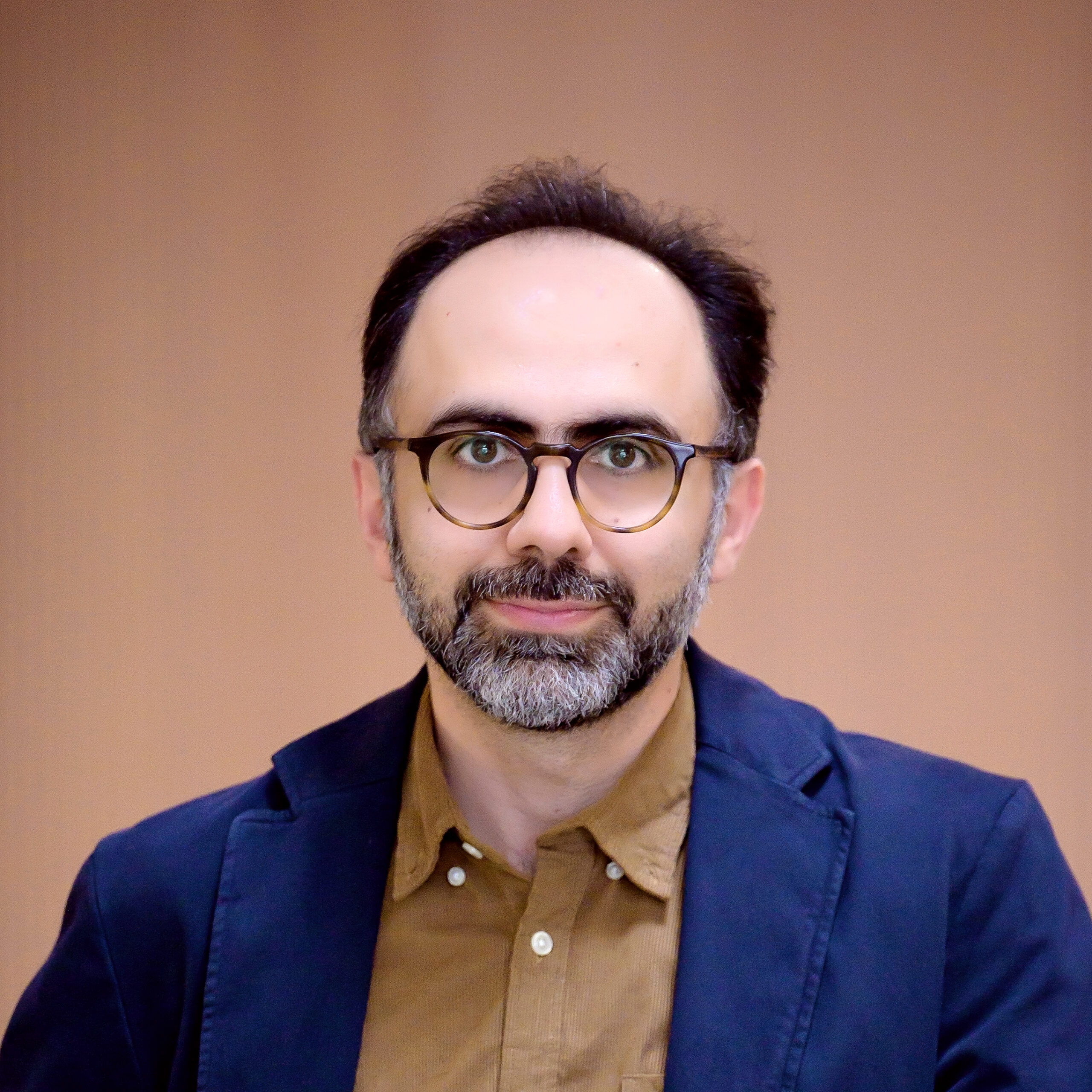
Thomas Breunung is a Researcher and Principal Investigator of the Dynamics, Structures, and Data (DSD) Lab at the University of Wisconsin-Madison's Department of Mechanical Engineering. His work integrates applied mathematics, physics, and data science to study nonlinear structural dynamics, vibrations, and stochastic systems, with applications in aerospace engineering, biological systems, and oceanography. He holds a PhD from ETH Zurich (2021), an MS and BS from Technische Universität Darmstadt (2016, 2013). His research focuses on analytical, computational, and experimental methods to understand complex dynamic systems, including vibration attenuation, rogue wave prediction, and nonlinear oscillator identification. Notable awards include the 2023 ASME Outstanding Reviewer Award and the 2020 USNC/TAM Fellowship. Current courses taught include E M A 545 (Mechanical Vibrations) and M E 440 (Intermediate Vibrations). The DSD Lab emphasizes interdisciplinary collaboration, combining theoretical rigor with practical engineering solutions. Breunung's recent work explores data-driven forecasting of extreme events, stochastic noise utilization in vibration control, and robust system identification techniques. Ongoing projects include improving predictions of freak waves using field measurements and developing computationally efficient models for nonlinear mechanical systems.
Leif A. Carlsson is the J.M. Rubin Foundation Professor in the Department of Ocean and Mechanical Engineering at Florida Atlantic University. His research focuses on composite materials, sandwich structures, solid mechanics, and finite element analysis. He holds a Ph.D. from Chalmers University of Technology. His work emphasizes fracture mechanics in composite materials, moisture effects on polymers, and structural integrity of aerospace and marine composites. Key research areas include honeycomb core mechanics, face/core interface fracture, and environmental degradation of materials. Recent studies explore water diffusion in polymers, thermal effects on composites, and failure modes under various loading conditions. His contributions span over 50 peer-reviewed articles since 2009, with a focus on advancing composite material design and durability. Notable projects include the analysis of single-face honeycomb sandwich structures (2025), geometrical imperfection sensitivity in honeycomb cores (2023), and low-temperature fracture characterization of foam cores (2020). His work bridges experimental testing and computational modeling to address real-world challenges in aerospace and marine engineering applications.
Prof. Vanessa Styles is a Professor and Head of the School of Mathematical and Physical Sciences at the University of Sussex. Her research focuses on mathematical and computational analysis of nonlinear partial differential equations, with applications in physical sciences, including materials science, fluid dynamics, and biological modeling. She specializes in numerical methods for evolving surfaces, phase field models, and free boundary problems. Her work often involves interdisciplinary collaborations, addressing challenges in lithium batteries, tumor growth, and cell migration. Prof. Styles has led major grants, including ModCompShock (EU) and Leverhulme-funded projects on cell migration mechanics. She teaches calculus courses and actively contributes to academic leadership. Her research interests span computational fluid dynamics, numerical analysis of PDEs, and mathematical biology. Recent work emphasizes tumor growth modeling via phase field approaches, crystal growth in batteries, and cell migration force estimation. She has published extensively in journals like Interfaces and Free Boundaries and Journal of Computational Physics , with a focus on rigorous error analysis and algorithm development. Grants include funding for modeling grain boundary motion (EPSRC), 3D cell migration (Leverhulme), and shock interface modeling (EU). Her research bridges theoretical analysis and practical applications, with contributions to both fundamental mathematics and engineering/medical fields.
Dario Bojanjac is an Assistant Professor at the Department of Wireless Communications, Faculty of Electrical Engineering and Computing, University of Zagreb. His research focuses on mathematical modeling of electromagnetic processes, numerical methods for Maxwell's equations, and applied mathematics techniques like asymptotic analysis. He holds a PhD in mathematics (2015) and electrical engineering (2009), with extensive visiting scholar experience at institutions such as École Polytechnique Fédérale de Lausanne (EPFL) and the University of Michigan. Education: PhD in Mathematics (2015), Faculty of Science, University of Zagreb PhD in Electrical Engineering (2009), Faculty of Electrical Engineering and Computing His research interests include electromagnetic wave scattering, homogenization of Maxwell's equations, and computational electromagnetism. Recent work explores ground-based SAR systems, deep learning applications in radar data analysis, and flood classification using multivariate approaches. He has received awards including the Swiss Government Excellence Scholarship and Croatian Government Fellowship. His projects include satellite electromagnetic field measurements and metamaterial-based invisibility cloak realization. He participates in lab initiatives like AOLAB2 and coordinates projects such as BODYSEN and HybridAccess. Awards: Swiss Government Excellence Scholarships CIME Foundation Fellowship European Science Foundation Fellowship Bojanjac has advised on multiple research projects and contributed to educational initiatives like the MILE interactive learning system. His lab collaborations include work on sensor systems and optical communication technologies.
Basca Jadamba is a Professor in the School of Mathematics and Statistics at the Rochester Institute of Technology (RIT), part of the College of Science. She serves as Associate Head of the Applied and Computational Mathematics program. Her research focuses on inverse problems, stochastic optimization, partial differential equations, numerical analysis, finite element methods, and mathematical modeling. She has advised undergraduate and graduate students in research and teaches courses at both levels. Jadamba holds a BS from the National University of Mongolia, an MS from the University of Kaiserslautern (Germany), and a Ph.D. from the University of Erlangen-Nuremberg (Germany). Her academic journey includes joining RIT’s School of Mathematics and Statistics in 2008. She is actively involved in academic leadership, including serving as the faculty advisor for RIT’s Student Chapter of the Association for Women in Mathematics. Her research contributions span theoretical and numerical methods for inverse problems, with applications in elasticity imaging and parameter identification in stochastic systems. She has co-authored books and peer-reviewed articles on topics such as uncertainty quantification in variational inequalities, optimization formulations for inverse problems, and numerical methods for partial differential equations. Jadamba’s work emphasizes bridging mathematical theory with practical applications, particularly in engineering and environmental science. Her recent publications highlight advancements in stochastic approximation methods, convex optimization frameworks, and the role of Inf-Sup conditions in inverse problems. She has explored applications ranging from tumor localization in elasticity imaging to congestion network analysis with random data. Her teaching portfolio includes courses like Multivariable Calculus, Mathematical Modeling, and Applied Inverse Problems, reflecting her expertise in both foundational and advanced mathematical topics.
İzzet Özdemir is an Associate Professor in the Department of Civil Engineering at Izmir Institute of Technology (IYTE). He holds a B.S. from Orta Doğu Teknik Üniversitesi, an M.S. from Universität Stuttgart, and a Ph.D. from Eindhoven University of Technology, all in Civil Engineering. His research focuses on advanced materials modeling, microscale mechanics, and fluid-structure interaction in biomedical and engineering applications. Key areas include crystal plasticity, strain gradient plasticity, and micromechanical modeling of size effects in materials processing. Education: B.S., Civil Engineering, Orta Doğu Teknik Üniversitesi M.S., Civil Engineering, Universität Stuttgart Ph.D., Civil Engineering, Eindhoven University of Technology Research emphasizes computational modeling of material behavior under extreme conditions, with recent work on magnetically driven micro-swimmers and fracture mechanics in polycrystalline systems. His publications span topics from microforming simulations to photocatalytic thin films. Publications reflect interdisciplinary strengths in mechanical engineering, materials science, and applied mathematics. Ongoing work explores bioinspired propulsion systems and nanoscale deformation mechanisms.
Andreas C Cangellaris is a Professor at the University of Illinois at Urbana-Champaign, affiliated with the College of Engineering and the Department of Electrical and Computer Engineering. He leads research in the Coordinated Science Lab, focusing on electromagnetic modeling, signal integrity, and high-speed interconnects. His work spans nanotechnology, stochastic analysis, and machine learning applications in electromagnetics. Education details are not explicitly provided in the text, but his academic career includes significant contributions to computational electromagnetics, including the development of PEEC methods and neural network-based models for high-speed systems. Research interests emphasize modeling uncertainties in electromagnetic systems, metamaterials, and power delivery networks. He has pioneered techniques like the Stochastic Latency Insertion Method (LIM) and FFT-based macromodeling for stochastic systems. Key awards include the Humboldt Research Award (2004) and IEEE Fellow designation (2000). His grants and advising activities are not detailed here, but his lab focuses on advancing electromagnetic compatibility and high-speed link design. Notable collaborations involve stochastic modeling of fiber-weave effects in PCBs and inverse design methodologies using tandem neural networks.
Dr. S. Alireza Behnejad is an Associate Professor in the Department of Civil and Environmental Engineering at the University of Surrey, UK. He holds a PhD in Geometry of Spatial Structures (2018) and serves as Director of the Spatial Structures Research Centre founded in 1963. His roles include Programme Leader for Undergraduate Civil Engineering and member of the University Ethics Committee. Behnejad is Editor-in-Chief of the International Journal of Space Structures and a key member of the International Association for Shell and Spatial Structures (IASS), including organizing the 2020/21 virtual IASS conference. Behnejad’s research focuses on spatial structures, bamboo engineering, and pedagogical methods. Notable projects include the Bamboo For Sustainable Construction initiative (with global partners) and the DAD Project , promoting hands-on learning through physical models. He has been awarded the Vice-Chancellor's Teacher of the Year (2021) for enhancing student learning. His work bridges historical architectural forms (e.g., Iranian Karbandi vaults) with modern engineering challenges, emphasizing sustainability and education. Behnejad collaborates with institutions worldwide, including Brazil’s University of São Paulo and China’s Southwest Jiaotong University. He supervises postgraduate students on topics like spatial structure conceptual design and leads efforts to improve engineering education through full-scale physical models and international student exchanges.
Varvara G. Kouznetsova is an Associate Professor in Multi-scale Mechanics of Solids at the Department of Mechanical Engineering of Eindhoven University of Technology (TU/e). Her roles include leading the Mechanics of Materials group and teaching courses such as Advanced Computational Continuum Mechanics and Material Models. She holds a PhD in Mechanical Engineering from TU/e and a degree in Applied Mathematics from Perm State Technical University, Russia. Prior to her current position, she was a Research Fellow at NIMR and M2i institutes and an Assistant Professor at TU/e from 2006 to 2018. Her research focuses on developing multi-scale techniques for materials ranging from advanced steels to metamaterials, emphasizing emergent phenomena across scales. Key interests include computational homogenization, wave propagation, and fracture mechanics. She has supervised 54 academic works and contributed to 160+ research outputs, including influential studies on metamaterials and multiscale analysis. Her recent articles explore topics like reduced-order modeling for elastomeric metamaterials, multiscale FEM-MD coupling for nanocrystalline metals, and acoustic metamaterial transient analysis. She collaborates internationally and maintains datasets on platforms like 4TU.Centre for Research Data. Courses taught include Computer-Aided Engineering and Composite Materials Design.
Jichun Li is a Professor in the Department of Mathematical Sciences at the University of Nevada, Las Vegas. His research focuses on mathematical modeling, scientific computing, and numerical analysis with applications to electromagnetism and metamaterials. He specializes in developing advanced numerical methods like Finite Element Methods (FEM), Discontinuous Galerkin (DG), and Finite-Difference Time-Domain (FDTD) schemes for simulating wave propagation in complex media such as metamaterials and photonic crystals. Key research areas include metamaterials (e.g., hyperbolic metamaterials, cloaking devices), electromagnetic wave manipulation (e.g., surface plasmon polaritons on graphene), and computational techniques for solving Maxwell’s equations in dispersive and nonlinear media. His work addresses challenges like numerical stability, superconvergence analysis, and implementation of Perfectly Matched Layers (PML) for absorbing boundary conditions. Recent efforts involve integrating deep learning with numerical PDE methods for financial applications and advancing time-domain simulations for metamaterial cloaking and optical black holes. He has contributed to software tools like MATLAB-based edge element codes for metamaterial modeling. His research bridges theoretical analysis and practical simulation, with applications in photonics, quantum optics, and computational electromagnetics. Notable achievements include over 150 peer-reviewed articles, methodological innovations in numerical electromagnetics, and active participation in interdisciplinary collaborations at the Center for Applied Math & Statistics. His work emphasizes high-order methods and rigorous mathematical validation for engineering and scientific problems.
Andreas Taras is a Full Professor at ETH Zurich's Department of Civil, Environmental and Geomatic Engineering, where he serves as Deputy Head of the Institute of Structural Engineering. His research focuses on steel and composite structures, structural stability, and fatigue behavior. Key research domains include: innovative steel-concrete-timber composite systems, stability and reliability of metallic structures, fatigue life prediction in bridges, and structural optimization using advanced analysis methods. His work integrates experimental testing with computational approaches to advance sustainable structural design. Recent investigations explore cutting-edge applications like iron-based shape memory alloys in structural glass systems, robotic additive joining for reclaimed steel, and novel hybrid systems combining folded sheet steel with cement-free concrete. Publications demonstrate consistent innovation in structural materials and connection technologies.