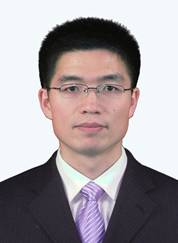
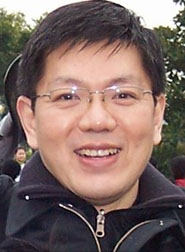
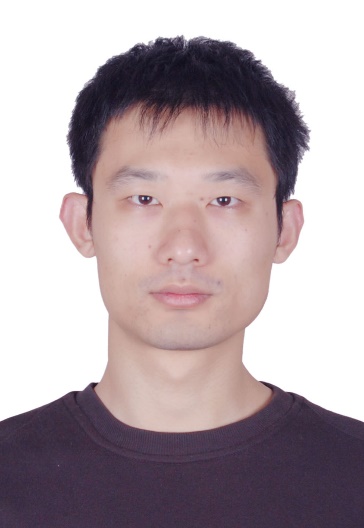
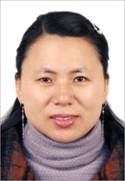
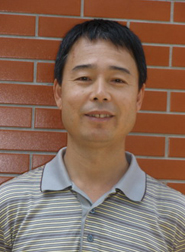
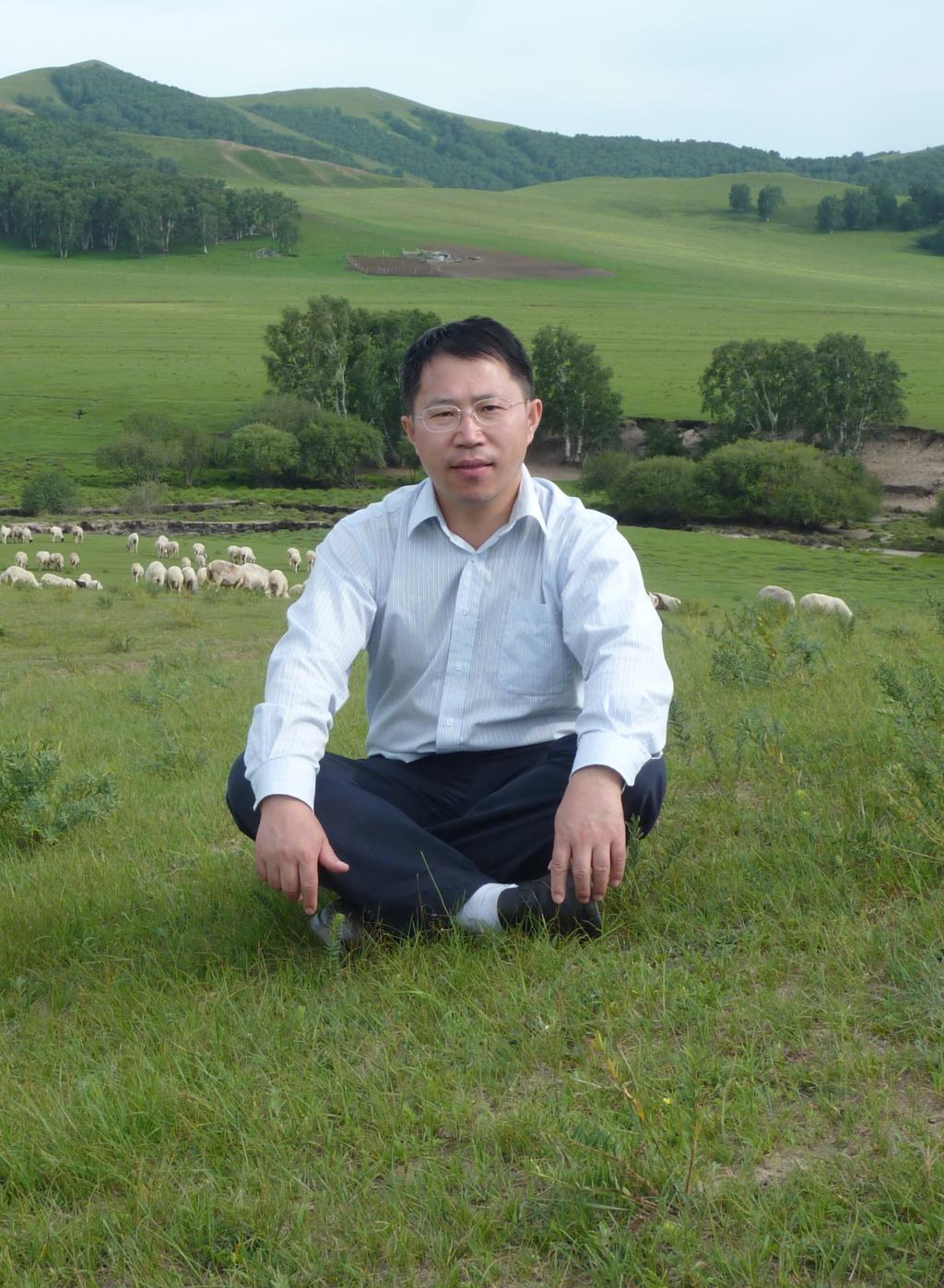
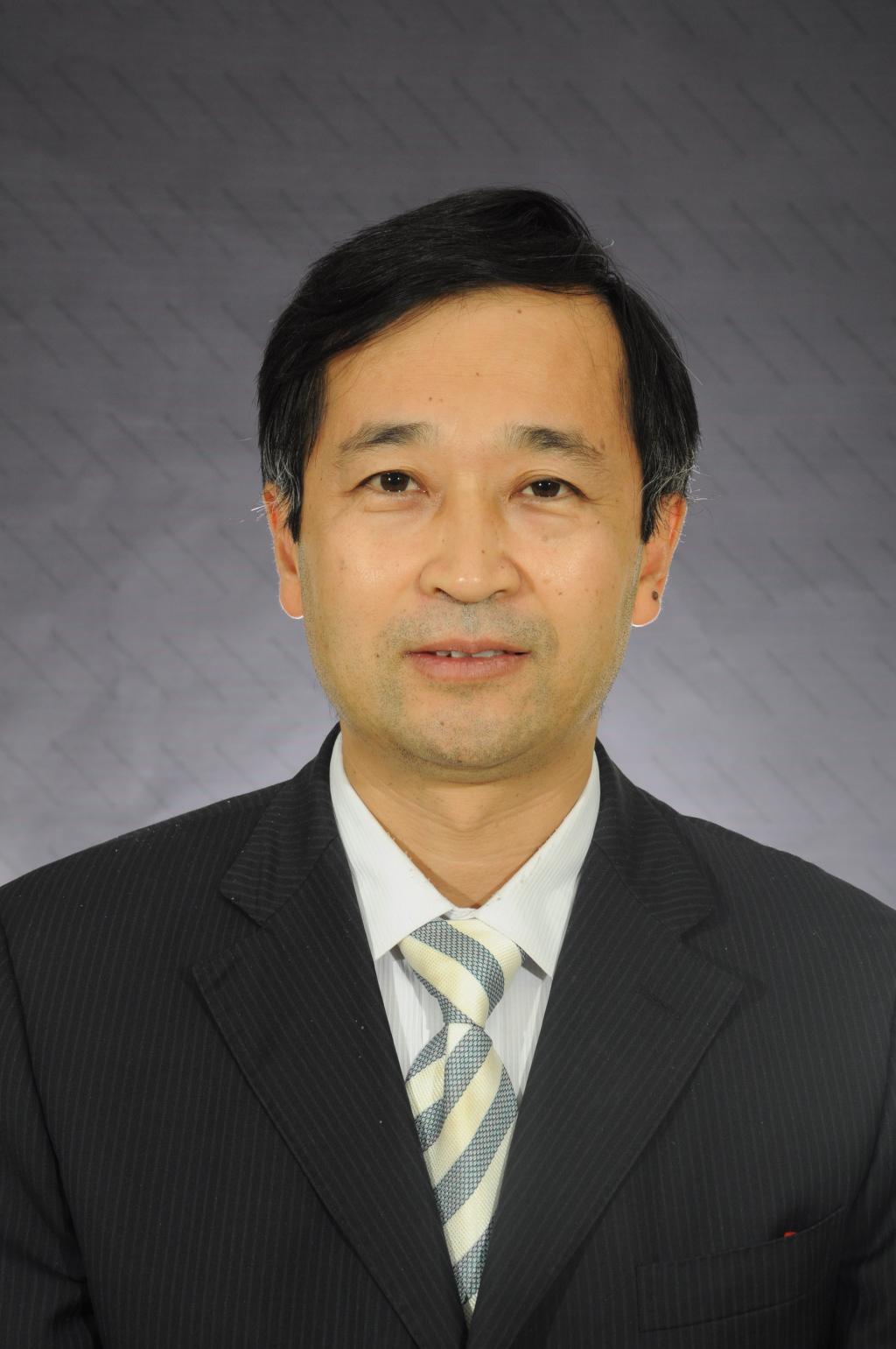
Yiguo Xue is a Professor and PhD Tutor at the Geotechnical and Structural Engineering Center, School of Civil Engineering, Shandong University. He has contributed extensively to tunnel engineering, subsea infrastructure, and slope stability analysis through advanced prediction models and numerical simulations. Research Interests: New tunnel geological condition prediction technologies Subsea tunnel and underground energy storage systems High slope stability evaluation Engineering exploration methods His recent work focuses on tunnel safety, subsea structural mechanics, and AI-driven hazard prediction models. Publications highlight his expertise in rockburst analysis, water inrush risk, and excavation optimization using machine learning and numerical frameworks. Scientific Awards: Recipient of China's Top 100 Most Influential Domestic Academic Paper Award (2008 paper on tunnel geological hazard forecasting) He has secured multiple national invention patents for tunnel monitoring devices (e.g., vibration sensors, collapse prediction systems) and developed specialized software for displacement prediction and rock classification.
Professor Chen Jianfei is a Chair Professor at the Department of Marine Science and Engineering, Southern University of Science and Technology (SUSTech), Shenzhen, China. He previously held academic positions at Queen’s University Belfast (2013-2019), University of Edinburgh (2002-2013), and Zhejiang University (1987-1992). His leadership roles include serving as President of the International Institute for FRP in Construction (IIFC) from 2014 to 2018. PhD in Civil Engineering, University of Edinburgh (1996) MSc in Structural Engineering, Zhejiang University (1987) BEng in Structural Engineering, Zhejiang University (1984) Professor Chen’s research spans civil engineering and mechanics of bulk materials , focusing on: Application of high-performance FRP composites in civil infrastructure Development of advanced discrete/finite element methods for structural analysis Mechanics of granular solids and bulk material flow in silos Seawater sea-sand concrete and high-performance concrete systems Hybrid floating structures and subsea pipelines His publications include the foundational monograph FRP-Strengthened RC Structures (translated into Chinese, Korean, Persian) and over 300 papers. Google Scholar cites exceed 7,664 (Web of Science), with an h-index of 30. His work has been adopted into international standards. Honors include: 2021 IIFC Medal (highest award in FRP composites) 2016 Howard Medal (oldest ICE award, since 1872) 2016 Elsevier Highly Cited Researcher in Civil Engineering 2015 Frederick Palmer Prize (ICE journal best paper) 2006 President’s Award (IIFC) He has secured major grants for projects like Re-use of Wind Turbine Blades (US-Ireland partnership, $1.3m) and FRP Confined Seawater Concrete (NSFC, RMB747,000).
Dr. Song Yu is an Associate Professor at the Department of Engineering Mechanics , School of Civil Engineering , Shandong University , with expertise in rock mechanics, fracture mechanics, and numerical simulation techniques. Education: B.E. (1989), M.E. (1992) in Machine Building, Ph.D. (2004) in Mould & Die Engineering, Post-doctoral research (2005-07) in Die & Mold CAD at Shanghai Jiao Tong University, Visiting Scholar at UC San Diego (2008) Research focuses on rock and soil mechanics , fracture mechanics , nondestructive AE detection , and numerical simulation for rock-metal interaction. Pioneered 3D DDA method applications in rock mechanics and fluid-solid coupling models. Recent publications emphasize geotechnical stability analysis under seismic loads, coupled hydro-mechanical modeling , and hexahedral mesh algorithms in metal forming. His work bridges computational methods with practical geotechnical challenges. Notable grants: National Natural Science Foundation of China (51579140), State Key Laboratory of Geotechnical Mechanics projects Teaches advanced topics in Finite Element Method (FEM) , structural optimization, and ANSYS simulation techniques. Collaborated with institutions including Shanghai Jiao Tong University and UC San Diego.
Chao YUAN is a Professor in the Department of Engineering Mechanics at the School of Civil Engineering, Shandong University, China. He obtained his PhD in Geomechanics/Civil Engineering from Université Grenoble Alpes (France) in 2016, following MSc and BEng degrees from Shandong University. Education : PhD (2012-2016), MSc (2009-2012), BEng (2005-2009) Prior Appointments : Postdoctoral Associate at University of Calgary (2017-2019), Postdoctoral Research Fellow at Université Grenoble Alpes (2016-2017) Research Interests focus on granular material mechanics through advanced computational methods. His work includes discrete element modeling , multi-physics/multiphase couplings , unsaturated soil mechanics , and soil conditioning in Tunnel Boring Machines . Key contributions involve pore-scale simulations of hydromechanical interactions and stability analysis of tunnels and slopes. Publication Trends emphasize computational geotechnics , with studies on drainage dynamics, wetting-induced collapse, and machine learning applications in geomechanics. His articles span journals like Granular Matter , Proceedings of the National Academy of Sciences , and Acta Geotechnica , reflecting interdisciplinary approaches to granular media. Contact : chao.yuan@sdu.edu.cn , chaoyuan.geo@outlook.com
Shu-Gang Ai is a Research Assistant Professor at the Southern University of Science and Technology's School of Earth and Space Sciences. He holds a PhD in Civil Engineering from Tongji University (2021) and a Master's in Architectural and Civil Engineering from the same institution (2016). His research focuses on carbon dioxide geological sequestration, disaster prevention in complex rock masses, and finite element-discrete element numerical software development. His publications highlight expertise in geosynthetic reinforcement mechanics, landfill stability analysis, and computational geoscience. Recent work includes multiscale modeling of material interfaces and leachate distribution monitoring using geophysical methods. While no formal awards are listed, his contributions span both theoretical and applied studies in geotechnical and environmental engineering.
Dr. Ke Gao is an Associate Professor in the Department of Earth and Space Sciences at Southern University of Science and Technology (SUSTech) in Shenzhen, China. He joined SUSTech in 2019 after completing postdoctoral research at Los Alamos National Laboratory in the United States. Dr. Gao holds a Ph.D. in Rock Mechanics from the University of Toronto, which he obtained in 2017. His educational background includes: 2021–present: Associate Professor, Department of Earth and Space Sciences, Southern University of Science and Technology 2019–2020: Assistant Professor, Department of Earth and Space Sciences, Southern University of Science and Technology 2017–2019: Post Doc, Solid Earth Geophysics, Los Alamos National Laboratory, USA 2012–2017: Ph.D., Rock Mechanics and Rock Engineering, University of Toronto, Canada Dr. Gao's research primarily focuses on rock mechanics and fault mechanics, with particular emphasis on the development of multiphysics coupling models based on the combined finite-discrete element method (FDEM). His work investigates rock fracturing mechanisms, hydraulic fracturing, and the stick-slip characteristics in sheared granular faults. He has made significant contributions to tensor-based statistical methods for characterizing stress variability and heterogeneity in fractured rock masses. His research bridges computational mechanics with earthquake physics, creating innovative approaches to understanding fundamental geological processes. Analysis of Dr. Gao's recent publications reveals a strong focus on computational geomechanics and earthquake physics. His work consistently applies and advances the combined finite-discrete element method (FDEM) to solve complex rock mechanics problems. There's a clear progression from fundamental method development to applications in earthquake source mechanics and hydraulic fracturing. The integration of machine learning techniques with traditional computational methods represents an emerging trend in his recent work, particularly for predicting slip behavior in granular fault systems. Dr. Gao has received several notable recognitions: Best Paper Award at the 7th International Symposium on In Situ Rock Stress (2016) National Overseas High-level Talent Program (Youth) (2020) Shenzhen 'Peacock Plan' B Talents (2021) Dr. Gao serves as principal investigator for multiple research projects funded by prestigious organizations including the National Natural Science Foundation of China, Ministry of Science and Technology key research and development projects, Guangdong Province general projects, and Shenzhen City general projects. He actively mentors graduate students and postdoctoral researchers, recruiting candidates with backgrounds in solid geophysics, rock mechanics, geological engineering, computational mechanics, and related disciplines. His research group provides comprehensive training in both theoretical and experimental aspects of rock mechanics and earthquake physics. Dr. Gao is affiliated with several professional organizations including the American Rock Mechanics Association, American Geophysical Union, International Society for Rock Mechanics, Canadian Geotechnical Society, Society of American Seismology, and ASCE Engineering Mechanics Institute, reflecting the interdisciplinary nature of his work spanning rock mechanics, geophysics, and computational engineering.
Chen Xi is a Research Associate Professor in the Department of Mechanics and Aerospace Engineering at Southern University of Science and Technology (SUSTech), where she has served since July 2021 (initially as Research Assistant Professor until December 2023). She was selected as a Master's Supervisor in December 2021 and was honored with the 2022 Outstanding Researcher Award from the Department of Mechanics and Aerospace Engineering. In February 2023, she was selected for the 8th China Association for Science and Technology Young Talent Support Program. Dr. Chen earned her bachelor's degree in Aircraft Power Engineering (2012) and Ph.D. in Science and Technology of Aeronautics and Astronautics (2019) from Northwestern Polytechnical University. Prior to joining SUSTech, she worked as a Mechanical Engineer at Siemens AG in Germany (2016-2017) and completed postdoctoral research at SUSTech (2019-2021). Her research focuses on rotating machinery applications including aero-engines, marine gas turbines, large drive motors, and wind turbines. She conducts theoretical research in nonlinear dynamics, structural vibration, and rotor dynamics; numerical simulation research in fluid-solid coupling algorithms, stability analysis, and vibration control; and engineering technology research in damper design, high-speed dynamic balancing, condition monitoring, and fault diagnosis. Her work has led to significant innovations in rotor dynamics modeling, maneuvering flight vibration analysis, and high-speed dynamic balancing techniques. Dr. Chen serves as a reviewer for numerous prestigious journals including Journal of Sound and Vibration, Nonlinear Dynamics, and ASME journals. She is an active member of several professional societies including the Chinese Society of Aeronautics and Astronautics and the American Society of Mechanical Engineers. Her research has resulted in over 28 publications, numerous patents, and significant contributions to large aircraft engine engineering. Dr. Chen has secured or participated in 12 research projects totaling 17.04 million yuan in funding. She has applied for 11 national patents (8 inventions, 3 utility models), with 5 authorized, 2 published, and 4 under review. Her notable achievements include the First Prize of the 2016 National Defense Science and Technology Progress Award for her work on high-speed dynamic balancing of turbofan engines. As a dedicated educator, Dr. Chen serves as a teaching assistant for courses including Introduction to Aeronautics and Astronautics and Mechanics, and General Theory of Aerospace Engine Engineering. She actively mentors graduate students and leads a research group focused on advancing rotating machinery technology.
Dr. Fu Yong is an Assistant Professor and doctoral supervisor at the Department of Marine Science and Engineering , Southern University of Science and Technology (SUSTech), Shenzhen, China. He earned his PhD in Geotechnical Engineering from the National University of Singapore (NUS) in 2018, preceded by a Master's (Tongji University, 2013) and Bachelor's (Shanghai University, 2010) in Civil Engineering . Current Role: Assistant Professor, SUSTech (2020–present) Prior Roles: Research Fellow (NUS, 2018–2020), Research Engineer (NUS, 2017–2018) Dr. Fu specializes in marine geotechnical engineering , with key focuses on offshore wind power foundation design, deep-sea anchoring technologies, and underground space development. His technical expertise includes large deformation finite element modeling (CEL/RITSS methods), stochastic analysis , and machine learning (GWO-MLP optimization). His work bridges laboratory experiments (centrifuge and field tests) with computational simulations to address challenges in marine infrastructure. Marine foundation design for offshore wind turbines and marine ranches Deepwater dynamic penetration anchoring systems Horizontal deep soil mixing equipment for underground space Finite element simulation of large deformations and thermal effects His publication trends reveal a consistent focus on offshore anchoring mechanics, shale fracture modeling, and machine learning integration for geotechnical predictions. Recent works (2024–2025) emphasize torsional effects in suction anchors, sand-GFRP interface behavior, and advanced constitutive models for cemented soils. Key journals: Geotechnique , Ocean Engineering , Physics of Fluids , Computers and Geotechnics Dr. Fu has received multiple scientific awards , including the 2024 SUSTech Undergraduate Teaching Award, 2022 SUSTech Outstanding College Mentor Award, and NUS Research Scholarship (2013–2017). Selected Honors: 2024 First Prize, SUSTech Undergraduate Teaching Award 2022 SUSTech Outstanding College Mentor 2020 Shenzhen Overseas High-level C Talent He actively contributes as a reviewer for 18+ international journals and serves on editorial boards for journals like Sustainable Structures . His work on machine learning-driven anchor penetration prediction (2024) and hybrid phase-field shale fracture modeling (2024) exemplifies interdisciplinary innovation.
Dr. Zeying YANG is an Associate Professor and Master Tutor in the Department of Civil Engineering at Shandong University's School of Civil Engineering. His expertise lies in bridge engineering, with a focus on health monitoring, maintenance, and advanced construction technologies. Research Interests: Bridge health monitoring, damage diagnosis, and early warning systems Bridge maintenance and reinforcement technologies Steel and steel-concrete composite bridge structures Intelligent bridge construction using BIM, GIS, and GPS Long-span bridge construction monitoring His research spans theoretical developments and practical applications, including neural networks for load assessment, CFRP reinforcement techniques, and innovative construction control methods for cable-stayed bridges. Laboratory and Contact: He is based at the School of Civil Engineering, Qianfoshan Campus, Shandong University, Jinan, China. For inquiries, he can be reached at yangzy@sdu.edu.cn .
Jianhua Liu is an Associate Professor at the Department of Hydraulic Engineering , School of Civil Engineering, Shandong University . With expertise in hydraulic structure engineering and geotechnical engineering, he has conducted extensive research on mechanical analysis, finite element methods, and rock-soil media computation. Education: Bachelor's Degree in Water Conservancy and Hydropower Engineering (1986), Hohai University Master's Degree in Hydraulic Structure Engineering (1990), Hohai University Doctorate in Geotechnical Engineering (2006), Shandong University His research focuses on design and mechanical analysis of hydraulic structures , including concrete/earth-rock dams and underground caverns, with an emphasis on finite element methods, Lagrangian analysis, and rheological deformation. He has contributed to numerical simulations of rockmass stability in projects like the Xiao-Lang-Di hydro-junction. He has published over 10 scientific papers and undertaken multiple research projects, including stability analysis of high arch dam shoulders and anti-seepage wall mechanics. Selected Professional Activities: Visiting Scholar at University of Arizona and Case Western Reserve University (2008-2009) Worked at Yellow River Survey, Design & Research Institute (1990-1993) Active research at Shandong University since 1993 Research Funding: 2000-2001: Yellow River Embankment Anti-seepage Wall Analysis (20,000 CNY) 2004: Xiao-Lang-Di Underground Cavern Stability Study (25,000 CNY) 2006-2007: Da-Gang-Shan High Arch Dam Rock Stability Study (15,000 CNY)
Dr. Hou Chao is an Associate Professor and PhD Supervisor at the Department of Ocean Science and Engineering , Southern University of Science and Technology (SUSTech) since 2019. Previously, he held academic positions at the University of Sydney (2015-2019) and served as a lecturer there (2018-2019). He received his BEng (2009) and PhD (2014) in Structural Engineering from Tsinghua University , where he was recognized as an outstanding graduate and awarded the National Scholarship of China (2013). Research Interests focus on High-performance composite structures Sustainable marine engineering systems Load and marine environment coupling effects Modular construction technology Corrosion resistance in offshore structures Publication Trends reveal expertise in concrete-filled steel tubular (CFST) structures under extreme conditions. His work spans mechanical behavior analysis, fatigue assessment, and innovative connection design for modular buildings, with methodological focus on experimental testing, finite element modeling, and machine learning applications. Key sub-fields include localized corrosion effects, post-fire performance, and reliability-based design frameworks. Scientific Recognition : 2022 Ministry of Education Natural Science First Prize (3/5) China Patent Excellence Awards (2/2, 5/10) Inclusion in Stanford-Elsevier Top 2% Scientists (2023, 2024) Dean’s Outstanding Teaching Award, University of Sydney (2018) Editorial roles: Structures , Advances in Structural Engineering He has secured over 10 international research grants, including National Natural Science Foundation of China projects and Shenzhen Science & Technology Innovation Commission awards. His work is codified in 7 Chinese national standards, applied in critical infrastructure like the Wenchuan Kequ Bridge.
Yufeng Lin is an Associate Professor in the Department of Earth and Space Sciences at Southern University of Science and Technology's School of Science. He holds a B.S. in Geophysics from Wuhan University (2007), M.S. from Peking University (2010), and Ph.D. from ETH Zurich (2015), followed by postdoctoral research at the University of Cambridge. His research spans planetary dynamos , fluid dynamics of planetary interiors , and tidal interactions in exoplanetary systems . Key focus areas include magnetic field generation mechanisms, convection in rotating celestial bodies, and tidal dissipation processes. His work integrates theoretical modeling, numerical simulations, and experimental approaches to address fundamental questions about Earth and planetary evolution. Recent publications reveal strong trends in geomagnetic field analysis (using dynamic mode decomposition), Jovian system dynamics , and core-mantle interactions . His research consistently bridges geophysics and astrophysics, with increasing emphasis on computational methods for modeling complex fluid systems. IUGG SEDI Doornbos Memorial Prize (2022) National Special Expert (Youth) (2020) Pearl River Talents Plan Young Top Talent (2019) Swiss NSF Postdoctoral Fellowships (2014, 2016) Dr. Lin advises multiple graduate students (including J. Li and J.Y. Xu) and leads significant research initiatives including an NSFC Original Exploration Project (2023-2027) and a key sub-project in China's National Key R&D Program on Martian processes. His laboratory focuses on computational geodynamics and planetary fluid mechanics, with ongoing collaborations across international institutions.
Dr. Li Mingwu is an Assistant Professor and doctoral supervisor in the Department of Mechanics and Aerospace Engineering at Southern University of Science and Technology (SUSTech). He joined SUSTech in 2023 after completing a postdoctoral fellowship at ETH Zurich (2020-2022). Education: B.Eng. in Engineering Mechanics (2013), Huazhong University of Science and Technology M.Eng. in Computational Mechanics (2016), Dalian University of Technology Ph.D. in Mechanical Engineering (2020), University of Illinois at Urbana-Champaign His research focuses on nonlinear dynamics and control, with achievements in high-dimensional nonlinear vibration model reduction, spacecraft trajectory optimization algorithms, complex mission design, fluid-structure interaction, and flexible multibody dynamics. He has published over 20 first/corresponding author papers and developed key software tools: COCO (Continuation Core for nonlinear analysis) SSMTool 2.x (Exact Nonlinear Model Reduction Toolbox) Research trends include: Exact reduced-order models for nonlinear systems Applications in soft robotics and rotating machinery Bifurcation analysis and multistability phenomena Computational optimization for control systems Scientific recognition: NODYCON23 Best Paper Award (twice) ICDVC 2022+1 Best Oral Presentation Award Organizer of ICVE 2021 and ECCOMAS 2022/2024 Young Editor of Acta Mechanica Sinica Guest Editor for Journal of Dynamics and Control special issue Teaching contributions include courses on: Vibration Theory (MAE318) Advanced Numerical Analysis (MAE5002) Nonlinear Dynamics and Chaos (MAE5034)
Qiangyong Zhang is a Professor and PhD Tutor at the School of Civil Engineering , Shandong University , serving as Deputy Dean. His work focuses on geotechnical engineering, particularly deep underground structures and rock mechanics. Stability analysis of surrounding rock in deep caves Numerical and physical simulation of geotechnical systems Mechanical properties of fractured rock masses High slope reinforcement Rock-soil interaction mechanics Underground engineering disaster risk control Tunnel construction mechanics His research trends emphasize zonal disintegration mechanisms, time-dependent rock behavior, seepage-stress coupling, and advanced numerical/experimental methods for underground energy storage. Scientific contributions include: Over 15 recent publications in high-impact journals Development of specialized geomechanical test systems Fundamental studies on creep, fracturing, and reinforcement Scientific awards : Recognized as Taishan Scholar Distinguished Expert . Collaborative network spans multiple institutions, with co-authors from Chinese academia and industry in energy/geotechnical sectors.
Hetao Hou is a Professor and PhD Tutor at the School of Civil Engineering , Shandong University . With a Doctor of Engineering from Tongji University (2005) and Master/Bachelor degrees from Shandong University, his research focuses on seismic and shock absorption technologies in steel structures, innovative prestressed concrete systems, lightweight energy-saving composite wall panels, and prefabricated construction methods. Key research themes include: Replaceable energy-consuming beam-column joints New buckling-restrained brace designs Precast concrete structural systems Steel-concrete composite components Holds 34 patents in structural engineering, including composite shear walls, precast slab systems, and seismic connection nodes Co-authored 67+ publications in journals like Engineering Structures , Structural Control and Health Monitoring , and Engineering Mechanics with international collaborators His work bridges experimental testing and numerical modeling of composite structures, focusing on seismic resilience and prefabrication technologies. Patents demonstrate practical applications in earthquake-resistant construction systems.