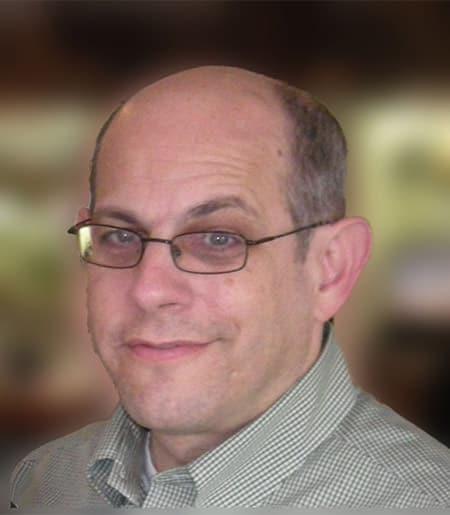
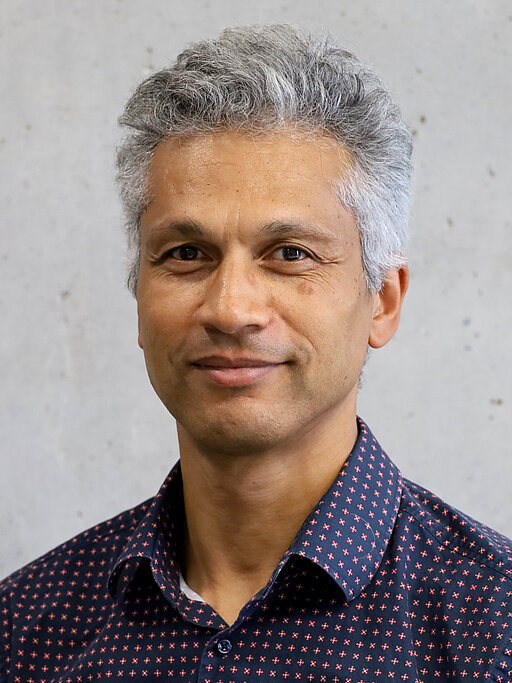
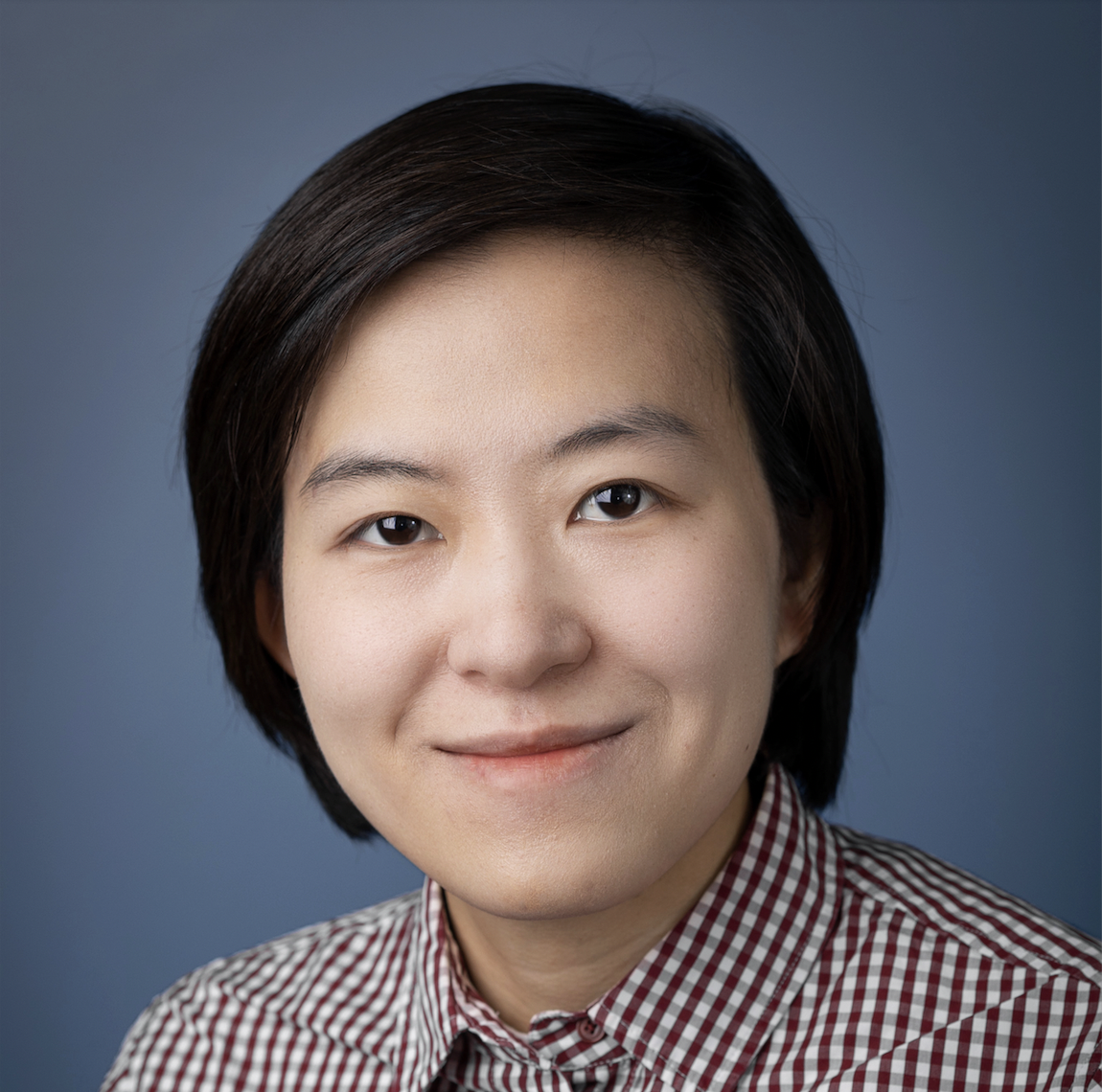
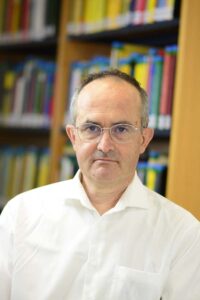
Mario Wille is a Lecturer at the Department of Computer Science within the TUM School of CIT at Technische Universität München. His research focuses on High Performance Computing (HPC), Parallel Algorithms, and GPU Programming. He is actively involved in projects such as ChEESE-2P (Exascale in Solid Earth), targetDART, and Invasive Computing. Wille teaches courses like Algorithms for Scientific Computing and Practical High-Performance Computing, and supervises student projects related to ExaHyPE engine development. His work includes advancing GPU offloading techniques and dynamic mesh adaptation for extreme-scale simulations. Office: Leibniz Supercomputing Centre, Boltzmannstr. 1, Room E.2.048 Projects: ChEESE-2P, SFB/TRR 89 Subproject A4 Research interests span computational seismology, parallelization strategies, and extreme-scale simulation methodologies. He has advised over 15 student theses since 2021, focusing on topics like Kokkos integration, seismic benchmarks, and volcano eruption modeling. Wille’s publications emphasize HPC algorithms and applications, with recent work presented at ISC High Performance 2023.
Edward Swartz is a Professor of Mathematics at Cornell University, affiliated with the College of Arts and Sciences. He holds a B.A. in Mathematics from the University of Rochester (1981), an M.S. from Yale University (1989), and a Ph.D. from the University of Maryland (1999). His research focuses on combinatorics, topology, commutative algebra, and geometry, with a specialization in matroids and simplicial complexes. Recent work includes studies on pseudomanifolds, normal surfaces, and g-vectors in manifold boundaries. He teaches advanced courses like Math 7410 on combinatorial topics such as polymatroids. Research interests span the interplay between combinatorial structures and topological/algebraic properties, including matroid representations, face enumeration, and singularities in geometric complexes. Key contributions include topological finiteness theorems and enumeration of 3-dimensional pseudomanifolds. His courses emphasize supervised research and advanced topics in combinatorics. Awards and recognitions include being honored for teaching and advising by Cornell. His work often bridges discrete mathematics with continuous geometry, leveraging algebraic methods to resolve topological questions. Ongoing research explores minimal simplicial decompositions of lens spaces and g-theorems for manifolds with boundary.
Aleksey Sikstel is a part-time faculty member at RWTH Aachen University , holding the title of Vertr.-Prof. (Part-Time Lecturer). His research focuses on advanced numerical methods for hyperbolic conservation laws, including Discontinuous Galerkin schemes, stochastic Galerkin formulations, and error estimation techniques. Key research areas: Numerical Analysis, Computational Fluid Dynamics, and Applied Mathematics Primary affiliation: Faculty 10 Institutions at RWTH Aachen University Contact: aleksey.sikstel@rwth-aachen.de His work emphasizes coupling hyperbolic systems, entropy-stable discretizations, and adaptive grid methods. Recent publications analyze Baer-Nunziato-type models, multiresolution strategies, and boundary control for hyperbolic equations.
Dr. Michael Redle is a researcher at RWTH Aachen University, specializing in computational methods for magnetohydrodynamics (MHD) and astrophysical simulations. He holds a PhD in Applied Mathematics from North Carolina State University (2023), an M.Sc. (2020) from the same institution, and a B.Sc. (Hons) in Mathematics from Oregon State University (2018). His research focuses on Finite Volume Schemes for hyperbolic conservation laws, Structure-Preserving Methods (e.g., well-balanced and divergence-free schemes), and Astrophysical Simulations of core-collapse supernovae in magnetic fields. His work bridges numerical analysis and applied mathematics, with applications to geophysics and astrophysics. Recent publications (2024) explore advanced central-upwind schemes for MHD systems, emphasizing divergence-free treatments and path-conservative approaches. These studies address rotating shallow water MHD and ideal MHD scenarios, advancing computational frameworks for fluid dynamics. No scientific awards are listed, and no advising/grants are mentioned. He is associated with The Lab at RWTH Aachen University, contributing to interdisciplinary computational research initiatives.
Associate Professor Nicholas Williamson is affiliated with the School of Aerospace, Mechanical and Mechatronic Engineering at The University of Sydney, specializing in fluid dynamics and environmental fluid mechanics. His research focuses on turbulent transport phenomena in stratified flows, urban environmental flows, and computational fluid dynamics. Current research students include Omar Azmi Abedullah (hydrogen storage systems), Ankith DAS (urban atmospheric dispersion modeling), and Mark GEORGE (Navier-Stokes solvers). He leads grants such as the ARC Discovery Project on riverine thermal stratification and non-Boussinesq effects in natural convection. Publications highlight work on stratified channel flows, buoyant jet dynamics, and entrainment mechanisms. His research bridges theoretical fluid mechanics with environmental applications, including algal bloom dynamics in rivers and urban air quality modeling. Key collaborations include Prof. Stephen Armfield and Dr. Mike Kirkpatrick on turbulent mixing and boundary layer stability. His work is published in journals like Journal of Fluid Mechanics and Physics of Fluids .
Dr. Jian Zhou serves as a Reader in the Department of Computing and Mathematics at Manchester Metropolitan University, specializing in fluid mechanics and numerical methods for coastal and environmental engineering applications. His research focuses on developing mathematical models for coastal, estuarine, and river systems with particular emphasis on sediment transport and wave dynamics. Dr. Zhou earned his BSc in River Mechanics and Engineering from Wuhan University, followed by an MSc in Fluvial Mechanics from Tsinghua University, and completed his PhD in Fluid Mechanics at the University of Leeds. His educational background established the foundation for his expertise in computational hydraulics and environmental modeling. His research interests center on numerical methods for fluid dynamics, particularly lattice Boltzmann methods, high-resolution Riemann solvers, Cartesian cut-cell methods, and pressure correction techniques (SIMPLE, SIMPLER, SIMPLC). These computational approaches are applied to coastal engineering challenges including wave overtopping, sediment transport, and environmental pollutant dispersion. His work bridges theoretical computational methods with practical engineering solutions for coastal defense and water resource management. Dr. Zhou's publication record demonstrates consistent contributions to computational hydraulics, with recent work focusing on wind effects on wave overtopping, antibiotic transport in aquatic environments, and advanced lattice Boltzmann implementations. His research shows strong interdisciplinary connections between fluid mechanics, environmental science, and computational mathematics. Lloyds Science of Risk Prize (2012) Editor-in-Chief of European Journal of Mathematics and Applications Academic Editor for British Journal of Applied Science & Technology Associate Editor for Canadian Journal of Applied Mathematics Editorial Board Member for multiple mathematics and engineering journals Dr. Zhou supervises PhD students including Elysia Barker and leads the Digital Simulation for Hydrodynamics (DiSH) research group. His externally funded projects include NERC grants for wave overtopping assessment tools and UK-Africa network initiatives addressing antimicrobial resistance in Lake Victoria Basin. He maintains strong industry connections with organizations including Royal HaskoningDHV, HR Wallingford, Environment Agency, and EDF Energy. The DiSH research group, led by Dr. Zhou, focuses on developing computational tools for hydrodynamic simulation with applications in coastal engineering, environmental management, and water resource protection. The group's work integrates numerical modeling with practical engineering solutions for real-world challenges.
Urpo Nikanne is a Professor of Finnish Language at the Faculty of Arts, Psychology and Theology, Åbo Akademi University. His research focuses on Finnish linguistics, theoretical linguistics, syntax, semantics, and lexical studies. He has published extensively on topics such as null subjects in Finnish, linguistic methodology, and language policy. His work contributes to understanding language structure, cognitive semantics, and the societal role of language. Research interests include syntax-semantics interfaces, linguistic theory development, and language policy analysis. Recent publications highlight studies on Finnish syntax, comparative syntax between Estonian and Finnish, and methodological frameworks in linguistics. He has supervised two academic works and contributed to edited volumes on linguistic research methods. His interdisciplinary approach bridges theoretical linguistics with sociocultural dimensions of language use.
Giacomo Albi is an Associate Professor in Numerical Analysis at the Department of Computer Science, University of Verona. He holds a PhD in Mathematics and Computer Science from the University of Ferrara (2014) and has conducted research at TU München under an ERC project on optimal control. His expertise spans numerical methods for kinetic equations, optimal control of high-dimensional systems, and mathematical modeling of multi-agent systems in socio-economic and biological contexts. Teaching includes modules like Numerical Analysis I, Logistic Optimization, and Foundation of Data Analysis. He leads research in contemporary applied mathematics, focusing on multi-scale particle systems and PDEs. Projects include data-driven control strategies, efficient numerical schemes for PDEs, and computational social dynamics. Active in the INdAM Research Unit, he also contributes to third mission activities and oversees internationalization efforts in Erasmus programs. Research groups involve advanced methods for transport phenomena, high-dimensional control, and computational social dynamics. Key interests include plasma confinement control, opinion-epidemic modeling, and evacuation strategies using multi-scale models.
Elena Gaburro is an Associate Professor at the Department of Computer Science, University of Verona. Her research focuses on advanced numerical methods for solving hyperbolic partial differential equations (PDEs) in complex systems, including applications in fluid dynamics, magnetohydrodynamics, and general relativity. She leads the ERC-StG project ALcHyMiA (2024-2029) with a €1.5M budget. Specialized in Finite Volume and Discontinuous Galerkin schemes Develops structure-preserving and Arbitrary-Lagrangian-Eulerian (ALE) methods Works with adaptive grids and unstructured meshes Her research has been supported by Marie Curie grants, ANR-JCJC ImPreVu, and DFG grants. She has held academic positions at Inria Bordeaux and University of Trento.
Leitao Chen is an Assistant Professor of Mechanical Engineering at the College of Engineering, Embry-Riddle Aeronautical University. His research focuses on multiscale modeling using the Boltzmann equation, thermal management systems for high-power CPUs and electric vehicle batteries, and low-temperature plasma dynamics. He holds a Ph.D. in Mechanical Engineering and has contributed to over 15 peer-reviewed publications since 2016. Dr. Chen is actively involved in professional organizations such as the American Society of Mechanical Engineers (ASME) and chairs the Heat Transfer in Energy Systems Technical Committee under ASME. Education: B.S., Mechanical Engineering M.S., Power Machinery & Engineering Ph.D., Mechanical Engineering Research Interests: Computational modeling of thermal systems Plasma dynamics and fluid simulations Thermal management for electric vehicles Advanced materials for heat transfer enhancement Multiscale modeling using Boltzmann equations Awards: 2023 Tennessee State University Faculty Excellence Award in Research 2017 Outstanding Reviewer Awards from Computers and Fluids, Physica D, and Renewable Energy Courses Taught: ME 409: Vehicle Aerodynamics ME 413: Preliminary Design for High Performance Vehicles with Laboratory ME 433: Senior Design for High Performance Vehicles with Laboratory
Komla Domelevo is a Professor at the Chair of Mathematics VI (Mathematics in the Natural Sciences) , Institute of Mathematics, University of Würzburg. His research focuses on mathematical and numerical analysis of complex flows , including sprays, turbulence, and combustion, as well as discrete harmonic analysis and stochastic methods. Education : Ecole Polytechnique (Bachelor), Universite Pierre et Marie Curie (Master), Ecole Polytechnique (PhD) Previous Affiliations : University of Jerusalem (Post-Doc), University of Toulouse (Assistant Professor) His methodological expertise spans finite volume methods , Discrete-Duality Finite Volume methods , and discrete Hilbert transforms . Scientific awards and student advising details are not publicly listed in the current materials.
Xinyi (Cindy) Zhang is a Postdoctoral Researcher in Biostatistics at Johns Hopkins University, mentored by Professors Brian Caffo and Zheyu Wang. She earned her Ph.D. in Statistics from the University of Toronto in 2023 under Professors Dehan Kong, Linbo Wang, and Stanislav Volgushev, following a Master's degree from UC Berkeley and dual Bachelor's degrees from the University of Toronto in Statistics and Mathematical Application in Economics and Finance. Ph.D. in Statistics, University of Toronto, 2018–2023 M.S. in Statistics, University of California, Berkeley, 2017–2018 B.Sc. in Mathematical Application in Economics and Finance, University of Toronto, 2014–2017 B.Sc. in Statistics, University of Toronto, 2014–2017 Her research develops statistical and machine learning methods for high-dimensional, complex data structures with applications in causal discovery, neuroimaging, and personalized healthcare. Key challenges addressed include unmeasured confounders, incomplete data, and massive-volume datasets, with recent expansion into deep learning for brain imaging in Alzheimer's disease detection. Methodological innovations focus on causal inference frameworks, latent variable modeling, and multi-view data integration. Her 13 publications (2022-2024) reveal a cohesive trajectory in biostatistical methodology, emphasizing causal inference techniques for observational studies and neuroimaging applications. Notable themes include instrumental variable methods for invalid instruments, fMRI multiple testing procedures, and Alzheimer's disease biomarker modeling using MRI and deep learning. The work bridges theoretical statistics with real-world healthcare challenges, particularly in neurodegenerative disease progression. Dr. Zhang has received significant recognition during her graduate training: Ontario Trillium Scholarship (2018–2022) SSC Annual Meeting Student Travel Grant (2022) SGS Conference Grant, University of Toronto (2020) Department Citation Award, UC Berkeley (2018) ASA Nonparametric Statistics Section Student Paper Award Finalist (2018) Dean’s List Scholar, University of Toronto (2015–2017) She has extensive teaching experience as a TA for 12+ statistics courses at the University of Toronto and UC Berkeley, covering mathematical statistics, probability, and data analysis. Her service includes journal reviewing for JASA and Scandinavian Journal of Statistics, conference session chairing at JSM and ICSA symposia, and peer review for UAI and IEEE conferences. No independent student advising or grant leadership is documented.
Vincent Moureau is a CNRS Research Fellow (HDR) at the CORIA laboratory, specializing in advanced computational fluid dynamics and combustion modeling. His research focuses on Large-Eddy Simulation (LES) of turbulent flows, spray dynamics, and thermo-acoustic instabilities in complex geometries. He is a core developer of the YALES2 solver, a high-order unstructured code for multiphase reactive flows. Positions: Research Fellow at CORIA, HDR, and affiliated with INSA de Rouen for teaching. Key Expertise: LES in gas turbines, piston engines, and wind turbines; numerical methods for HPC systems. He has taught courses on numerical methods, aerodynamics, and CFD software training. His work earned awards including the 2018 Grand Prix ONERA and the Digital Simulation Collaboration Award. His research includes industrial collaborations with SAFRAN and INRIA. Labs/Teams: Leads the YALES2 development team and contributes to the SIAME project for exascale computing. Active in the SIAME and MATI projects for aero-thermal systems and combustion modeling.
Professor Alexander Pasko was a distinguished academic at the Faculty of Media & Communication , Bournemouth University, renowned for his contributions to Computer Graphics , 3D Modeling , and Biomedical Engineering . His research focused on Functional Representations (FRep) , additive manufacturing , and scientific visualization , with applications in bioprinting, heterogeneous object modeling, and dynamic data analysis. A memorial article in Computers and Graphics (2022) honored his legacy. His work spanned theoretical advancements in FRep-based modeling and practical innovations in 3D printing , biomedical simulations , and multisensory data analysis . Key themes included the integration of computational methods for tissue engineering , material science , and artistic shape generation . He also explored applications in education, such as accessibility tools for disabled children in 3D printing. Publications highlighted his expertise in finite element methods , topology optimization , and hybrid modeling techniques . His research bridged computer science and biomedical engineering, addressing challenges like multi-material volume modeling and real-time animation . Though no specific awards were listed, his prolific publication record and posthumous recognition underscore his impact on academic and applied fields. Grants and advising details were not explicitly mentioned in the provided texts.
Jean-Pierre Croisille is a Professor at the University of Lorraine , affiliated with the UFR Mathematics Computer Science Mechanics department. He is a key member of the Partial Differential Equations research team, focusing on numerical methods and computational techniques for solving complex fluid dynamics and wave propagation problems. His research interests span Applied Mathematics , Computational Physics , and Numerical Analysis , with a strong emphasis on high-order compact schemes, finite volume methods, and spherical harmonics approximations. His work addresses challenges in simulating shallow water equations , Navier–Stokes systems , and Kuramoto–Sivashinsky-type equations , particularly on irregular or spherical domains. His publications reveal a consistent trend toward optimizing convergence properties of numerical schemes and enhancing accuracy in long-time simulations . Notable areas include Cubed Sphere modeling, Sturm–Liouville problems , and biharmonic equations in irregular domains.