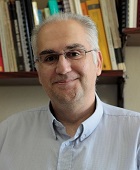
Michalis Xenos is a Professor in the Department of Mathematics at the University of Ioannina, Greece. He holds a PhD in Applied Mathematics (2003) from the University of Patras and has held postdoctoral positions at the University of Illinois at Chicago (2003-2007) and Stony Brook University (2007-2011). His research spans Applied Mathematics, Fluid Mechanics, and Biomechanics, with a focus on Magnetohydrodynamics (MHD), Computational Fluid Dynamics (CFD), and Fluid-Structure Interaction (FSI) in cardiovascular systems. Education : BSc (1996), MSc (1998), PhD (2003) in Applied Mathematics, University of Patras. Affiliations : University of Ioannina (2011-present), Stony Brook University (postdoctoral, 2007-2011), University of Illinois at Chicago (postdoctoral, 2003-2007). His work involves modeling blood flow in aneurysms, optimizing mechanical heart valves, and analyzing hemodynamic factors in vascular diseases. Collaborators include Prof. A.A. Linninger (UIC), Prof. D. Bluestein (SUNY), and Prof. U. Morbiducci (Politecnico di Torino). His publications address MHD flows, AAA rupture risk prediction, thrombogenicity in devices, and nonlinear differential equations.
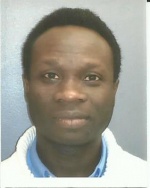
Dr. Lateef Akanji is a Senior Lecturer in the Department of Petroleum Engineering at the School of Engineering, University of Aberdeen, where he has been contributing since 2014. He previously served as Lecturer and Head of the Petroleum Technology Research Group at the University of Salford, Assistant Professor at King Saud University, and Visiting Lecturer at the University of Leoben. His academic journey includes a PhD from Imperial College London and degrees from the University of Ibadan. University: University of Aberdeen School: School of Engineering Position: Senior Lecturer, Petroleum Engineering Email: l.akanji@abdn.ac.uk Education: PhD, Petroleum Engineering, Imperial College London M.Sc., Petroleum Engineering, University of Ibadan B.Sc. (Honours), Petroleum Engineering, University of Ibadan DIC (Diploma of Imperial College) Research Interests: Dr. Akanji's research centers on multiphase flow in porous and permeable media, with applications in enhanced oil recovery (EOR) in clastic, carbonate, and unconventional shale reservoirs. His work integrates theoretical, experimental, and computational fluid dynamics, utilizing platforms like Python, C++, and Fortran. He is pioneering the application of artificial intelligence in petroleum engineering, particularly in EOR screening and production optimization. His research includes pore-scale modeling, gas-lift systems, and nuclear reactor flow dynamics. Publication Trends: His recent publications (2025–2021) reflect a strong focus on fluid displacement in porous media, shale reservoir characterization, AI applications in energy, and nuclear safety. Notable themes include computational modeling of multiphase flow, biosurfactant EOR, and advanced numerical methods for reservoir simulation. Scientific Awards and Honors: Fellow of the Higher Education Academy (FHEA) Chartered Engineer (CEng) Chartered Petroleum Engineer European Engineer (Eur Ing) Member of the Energy Institute (MEI) Advising and Grants: Dr. Akanji supervises numerous PhD students in areas such as AI-based production optimization, permeability upscaling, and biosurfactant EOR. He leads research funded by PTDF, TETFUND, Sonangol, and Elphinstone, focusing on high-pressure high-temperature flow loops, gas-lift pilot rigs, and neuro-fuzzy screening systems. His collaborative projects involve institutions in the UK, Austria, and Australia. Laboratories and Research Platforms: He contributes to the development of the Complex System Modelling Platform (CSMP++), a C++-based API for simulating multi-physics flow in porous systems, co-developed with ETH Zurich and Montanuniversität Leoben. He also leads a technology innovation platform for EOR, including experimental rigs for biosurfactant screening and gas-lift stability testing.
David Del Rey Fernandez is an Assistant Professor in the Department of Applied Mathematics at the University of Waterloo. He holds the Pratt & Whitney Canada Research Chair in Industrial Artificial Intelligence, serves as Associate Director of the Waterloo Institute for Sustainable Aeronautics, and is a Research Cluster Lead (Modelling) for the Future Cities Institute. He also acts as Graduate Officer for the Computational Mathematics Program. Education: PhD from University of Toronto Institute for Aerospace Studies Postdoctoral fellowship at NASA Langley Research Center Research interests focus on numerical methods for partial differential equations, including: Machine learning integration for simulations Quantum numerical methods Summation-by-parts and finite-element/discontinuous Galerkin/flux reconstruction methods Efficient computation technologies like mesh adaptation Awards & Recognition Canadian Applied and Industrial Mathematics Society Early Career Award (2024)
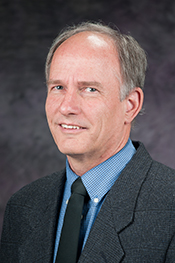
Mitchell L. Neilsen is a Professor in the Department of Computer Science at Kansas State University's College of Engineering, where he also serves as the graduate program director. He holds the Warren and Gisela Kennedy - Carl and Mary Ice Keystone Research Scholar position and maintains an active research program with multiple ongoing projects. His educational background includes a Ph.D. in Computer Science (1992), M.S. in Computer Science (1989), and M.S. in Mathematics (1987), all from Kansas State University, plus a B.S. in Mathematics Education from the University of Nebraska-Kearney (1982). After beginning his career as an assistant professor at Oklahoma State University, he returned to K-State in 1996. Research Interests: Cyber-Physical Systems: Design, Analysis, Verification of systems integrating computing, networking, and physical processes Distributed Systems: Algorithms, design, and analysis of distributed computing systems Scientific Computing: Computational Fluid Dynamics, Finite Element Analysis, High Performance Computing, and Simulation Application Areas: Agriculture technology, Dam safety analysis, Mobile applications, Natural resources management, and Real-time Embedded Systems His research program shows clear evolution toward agricultural technology applications, particularly high-throughput phenotyping, while maintaining strong foundations in cyber-physical systems and scientific computing. Recent publications indicate increasing integration of machine learning and computer vision techniques into traditional research areas. Research Funding: National Science Foundation U.S. Department of Agriculture Sandia National Laboratories Department of Homeland Security Private industry partners Dr. Neilsen has mentored numerous graduate students through their M.S. and Ph.D. programs, with recent advisees focusing on applications in agricultural technology, dam safety, and embedded systems. His advising approach emphasizes practical applications of theoretical computer science concepts. Current Teaching (Fall 2024): CIS 450 - Computer Architecture and Operations CIS 625 - Concurrent Software Systems CIS 720 - Advanced Operating Systems
Olivier ALLIX is a Professor at the Laboratoire de Mécanique et Technologie (LMT) at École Normale Supérieure de Cachan (ENS-Cachan). His research focuses on computational mechanics, including multiscale modeling of composite materials, structural failure analysis, and non-intrusive coupling strategies. He has held leadership roles such as Head of LMT-Cachan and Vice-president of the International Association for Computational Mechanics (IACM). Expertise: Computational structural mechanics, material failure, inverse problems, and multiscale approaches. Editorial Roles: Associate editor of multiple journals including Computational Mechanics and Computer Methods in Applied Mechanics and Engineering . Awards: IACM Fellow, Euromech Fellow, and recipient of the Gay-Lussac Humboldt Prize (2019). His work integrates experimental mechanics with computational methods, emphasizing big data applications and model validation. He has organized major conferences like the World Congress on Computational Mechanics and co-led international research initiatives such as the IRTG ‘Virtual Material and Structures’ with Hannover University. Teaching includes advanced courses on structural dynamics, composite materials, and computational mechanics at the Master’s level. His research group collaborates with industries like Safran, IFPEN, and DGA on projects involving fatigue analysis, mooring systems, and composite testing.
Hong Wang is a Professor in the Department of Mathematics at the University of South Carolina, part of the McCausland College of Arts and Sciences. He specializes in numerical analysis and differential equations, with a focus on numerical methods for fractional and variable-order equations. His work addresses complex boundary conditions, optimal control, and scientific computing challenges in advection-diffusion systems. Education Ph.D. in Mathematics, University of Wyoming (1992) Research Interests His research emphasizes numerical approximation techniques for differential/integral equations, particularly fractional diffusion-wave equations, variable-order models, and stochastic systems. Key areas include finite element methods, spectral methods, and fast algorithms for solving high-dimensional and time-dependent problems. He explores applications in optimal control, viscoelasticity, and multi-scale modeling. Recent Work Trends Recent publications highlight advancements in fractional calculus applications, including variable-exponent diffusion, distributed-order equations, and stochastic fractional differential equations. His work often combines theoretical analysis with computational efficiency, addressing challenges like nonsmooth parameters and singular density functions. Grants and Advising No specific grants or advisees are listed, but his research collaborations span computational mathematics, applied physics, and engineering systems. Labs/Teams No dedicated lab or team is explicitly mentioned, though his research aligns with computational and applied mathematics groups at the University of South Carolina.
James Reed Farre is a Researcher and Head of the Geometry Research Group at the Max Planck Institute for Mathematics in the Sciences. He holds a PhD in Mathematics from the University of Utah (2019), completed an NSF Postdoctoral Fellowship at Yale University (2019-2021), and served as a Juniorprofessor (W1/Assistant Professor) at Heidelberg University (2022-2023). His academic journey includes postdoctoral positions in Heidelberg’s research group under Beatrice Pozzetti and a Gibbs Assistant Professorship at Yale. Farre’s research focuses on hyperbolic geometry, Teichmüller theory, dynamical systems, and geometric group theory. Key areas include earthquake flows, character varieties, convex projective structures, and bounded cohomology. His work bridges low-dimensional topology with ergodic theory and geometric analysis. Publications (2016–2024) explore topics like affine laminations, hyperconvex representations, and minimal surfaces in hyperbolic 3-manifolds. Recent work addresses Mirzakhani’s twist torus conjecture and Hamiltonian flows for surface group representations. Farre frequently collaborates with leading mathematicians such as Yair Minsky, Beatrice Pozzetti, and Anna Wienhard. He has contributed to algorithmic CAD research and STEM education initiatives, including a chapter in *Directions for Mathematics Research Experience for Undergraduates* (2015). His current role involves leading a research group focused on geometry and dynamics at the Max Planck Institute.
Atreyee Banerjee is a Researcher and Early Career Fellow at Albert-Ludwigs-Universität (Oct 2024–Jun 2025) and a Postdoctoral Researcher at the Max Planck Institute for Polymer Research (MPIP), Mainz, Germany, under Prof. Kurt Kremer. She completed her PhD in Chemical Science at CSIR-National Chemical Laboratory (2017) and postdocs at Cambridge University (2017–2019) and MPIP (2019–present). Education PhD (2017): CSIR-NCL, Pune, India (Supervisor: Dr. Sarika Maitra Bhattacharyya) MSc (2011): Visva Bharati, Santiniketan (Physical Chemistry) BSc (2009): Visva Bharati, Santiniketan Research Interests Focused on data-driven analysis of complex systems, including supercooled liquids, polymers, and organic crystals. Specializes in combining theory, simulations, and machine learning to study structural/dynamical properties. Key areas include glass transition, free energy landscapes, and polymer dynamics. Publications Overview Recent work includes machine learning approaches to glass transition in acrylic polymers (J. Chem. Phys., 2023), data-driven analysis of polymer dynamics (ACS Macro. Lett., 2023), and thermodynamic studies of supercooled liquids (Soft Matter, 2022). Research emphasizes methodological innovations like PCA clustering and basin-hopping optimization. Awards Recipient of DST-India Travel Award (2017), Best Research Scholar Award (CSIR-NCL, 2017), Shell-India Computational Talent Prize Bronze (2015), and multiple best poster awards (2014–2015). Grants & Labs Collaborates with Dr. Oleksandra Kukharenko in the Polymer Theory Group at MPIP. Active in computational initiatives like the ENGAGE Summer School (2023). Research involves datasets from GROMACS trajectories and open-source tools (e.g., scikit-learn).
Ansgar Jüngel is a Full Professor for Analysis of Nonlinear Partial Differential Equations (PDEs) at the Technische Universität Wien (TU Vienna), affiliated with the E101-Institute for Analysis and Scientific Computing. His academic journey includes roles at universities in Berlin, Konstanz, Mainz, and Vienna since 1991. He specializes in mathematical analysis of cross-diffusion systems, entropy methods, semiconductor models, and quantum fluid dynamics. Notable achievements include an ERC Advanced Grant (2021) and the Tsungming-Tu Award (2011). Research focuses on nonlinear PDEs with applications in physics, engineering, and biology, emphasizing rigorous existence theory, numerical methods, and entropy-based approaches. Recent projects include 'Emerging network structures and neuromorphic applications' and 'Taming complexity in partial differential systems.' His teaching includes courses on partial differential equations, calculus of variations, and computational finance. Publications span over 200 works, with key contributions on cross-diffusion models, quantum hydrodynamics, and energy-transport systems. He has supervised numerous PhD students and collaborates internationally on topics like semiconductor simulations and stochastic interacting particle systems. Grants include an FWF Special Research Programme and ERC funding.
Camilla Fiorini is an Associate Professor at the National Conservatory of Arts and Crafts (CNAM) in Paris, where she conducts research at the Mathematical and Numerical Modeling Laboratory (M2N). She serves as Principal Investigator for the ANR-funded SPARCL project (2025-2029) focusing on structure-preserving reduced order models for conservation laws. Her academic background includes a PhD in Applied Mathematics from the University of Versailles and both MSc/BSc degrees in Mathematical Engineering from Politecnico di Milano. Her research centers on computational fluid dynamics, numerical analysis of PDEs, and sensitivity methods, with specific applications in uncertainty quantification and reduced order modeling. Current projects develop novel approaches for conservation laws that maintain structural properties while improving computational efficiency and reliability. Fiorini's publication record demonstrates consistent focus on sensitivity analysis techniques for complex fluid systems, shock-capturing methods, and uncertainty propagation in hyperbolic PDEs. She received the SMAI-GAMNI PhD Award 2019 (French ECCOMAS Award) for her doctoral dissertation on sensitivity analysis for nonlinear hyperbolic systems. As Principal Investigator of the SPARCL project, she leads a team developing new reduced basis construction techniques for conservation laws. Fiorini actively advises graduate researchers including PhD students Nathalie Nouaime (2021-2024) and Nicolas Lepage (2022-present), plus multiple Master's candidates. Her research group collaborates with institutions including Inria, Sorbonne University, ONERA, and CEA. Current projects include ANR JCJC-funded SPARCL and ANR AHEAD initiatives. She leads the SPARCL research group at M2N laboratory, collaborating with researchers including Alessia Del Grosso, Iraj Mortazavi, and Taraneh Sayadi on reduced order modeling techniques. The team focuses on developing computationally efficient ROMs that preserve physical structures in conservation laws.
Ramazan Yeniçeri is a Lecturer at Istanbul Technical University's Department of Aeronautical Engineering. His research focuses on Unmanned Aerial Vehicles (UAVs), Field Programmable Gate Arrays (FPGAs), and computational fluid dynamics, with applications in hardware acceleration and autonomous flight systems. Academic Rank: Lecturer University: Istanbul Technical University Department: Aeronautical Engineering Research Interests: Yeniçeri's work bridges aerospace engineering and computer science, emphasizing: FPGA-based hardware acceleration for aerospace systems UAV communication networks (FANETs) and formation flight Dynamical modeling for 6-DoF systems Autopilot software and real-time operating systems Scientific Awards: He has received the BOEING Academic Work Encouragement Award (2017) and the Best Doctoral Thesis Award (2015) . Project Leadership: As Principal Investigator (PI), he leads projects like: "IHA Kayıt, Takip, Kontrol ve Hava Trafik Yönetim Sistemi" (2024–2025) "FPGA Tabanlı 6DoF Dinamik Hızlandırıcı Tasarımı" (2024) "EU Sürü İHA" (2020–2022) His recent publications highlight trends in UAV communication, FPGA acceleration, and multi-sensor tracking.
Gregory R. Chambers serves as an Assistant Professor in the Department of Mathematics at Rice University, conducting research at the intersection of metric geometry and geometric analysis. His work addresses quantitative topology, min-max theory, and isoperimetric inequalities, with applications in stability estimates and symmetrization methods. Chambers actively contributes to the academic community through co-organizing Rice University's Geometry Seminar. Education: B.S. from the University of Toronto (2009) Ph.D. from the University of Toronto (2014) Prior to joining Rice, Chambers held an L.E. Dickson Instructorship at the University of Chicago. His research program investigates geometric problems using quantitative approaches, with recent publications focusing on the square peg problem, geodesic nets, and monotone homotopies. Current work demonstrates a trend toward discrete geometric analysis, including cubical isoperimetric problems and Uryson width, while maintaining connections to classical minimal surface theory and stability of geometric inequalities. Scientific Awards: No awards documented in available sources. Advising and Grants: No information regarding student advisees or research funding is provided in the text. Labs and Teams: Chambers co-organizes Rice University's Geometry Seminar, facilitating collaborative research discussions in geometric mathematics.
Prof. Wojciech Sobieski is a faculty member at the Department of Mechanics and Fundamentals of Machine Design within the Faculty of Technical Sciences at the University of Warmia and Mazury in Olsztyn . His research focuses on fluid mechanics, numerical modeling, and porous media analysis, with applications in environmental engineering, hydraulic systems, and 3D printing. Academic Rank: Professor Scientific Discipline: Mechanical Engineering Key Research Areas: Tortuosity Analysis, Multiphase Flow, DEM Simulations His recent publications highlight advancements in computational methods for granular porous media, fluid flow modeling, and thermodynamic applications. Notable trends include the use of the Waterfall Algorithm for geometric analysis and sensitivity studies of numerical models like the Eulerian multiphase approach. He has contributed to understanding Forchheimer's laws and cavitation phenomena in hydraulic systems. Prof. Sobieski oversees the PathFinder Project , a research initiative focused on numerical modeling of porous media. His laboratory maintains infrastructure for multiphase flow simulations and particle-scale modeling. He has supervised 2 doctoral students to completion but currently has no active advisees.
Daniel A. Klain is a Professor in the Department of Mathematics & Statistics at the University of Massachusetts Lowell , part of the College of Sciences. His career focuses on geometric and discrete mathematics, with significant contributions to Convex Geometry and its intersections with probability and combinatorics. Education: Ph.D. in Mathematics (1994), Massachusetts Institute of Technology B.S. in Mathematics (1990), Massachusetts Institute of Technology Research Interests span Convex Geometry, Geometric Tomography, Integral Geometry, and Combinatorics. His work explores geometric inequalities, valuations, and symmetrization techniques, often bridging classical geometry with modern probabilistic and discrete methods. Article Trends highlight his focus on Convex Geometry and Integral Geometry, with studies on Steiner symmetrization, shadow covering, and valuations. His publications also reflect interests in geometric probability, number theory, and educational insights. Scientific Awards and Grants: Mathematical Sciences Teaching Excellence Award (2010, 2003) Sigma Xi Young Faculty Award (2000) Jon A. Bucsela Prize in Mathematics (1990) NSF Graduate Fellowship (1990) National Merit Scholar (1986) NSF grants (2003, 1998, 1996) for convex geometry and geometric analysis Service and Collaborations: Active in teaching, research, and academic service, Klain has co-authored works in geometric probability and presented at numerous international workshops and seminars. His career integrates rigorous mathematical inquiry with educational innovation.
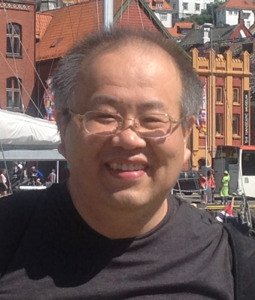
Chris Valentin Nielsen is an Associate Professor in the Department of Civil and Mechanical Engineering at the Technical University of Denmark (DTU). His research focuses on metal forming, joining processes, and tribology, with expertise in formability, tool development, and numerical modeling. His work contributes to UN Sustainable Development Goals related to sustainable manufacturing. He supervises PhD students in projects such as sustainable busbars for electric vehicles and adjustable tool design for high-volume production. His research interests include metal forming (e.g., deep drawing, ironing), joining technologies (resistance welding, laser welding), and advanced manufacturing methods like additive manufacturing. He employs finite element modeling and experimental analysis to bridge fundamental and applied research. Collaborations span global institutions, addressing challenges in material behavior, process optimization, and tool durability. Recent publications explore topics such as dieless Nakajima testing for additive materials, punch design improvements, and asperity deformation mechanics. His work emphasizes sustainability, robust production systems, and eco-friendly lubrication solutions. Projects involve interdisciplinary teams, integrating numerical simulations with industrial applications to enhance manufacturing efficiency and material performance.