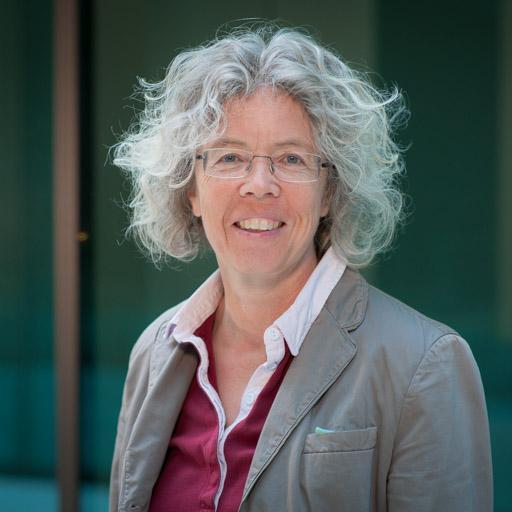
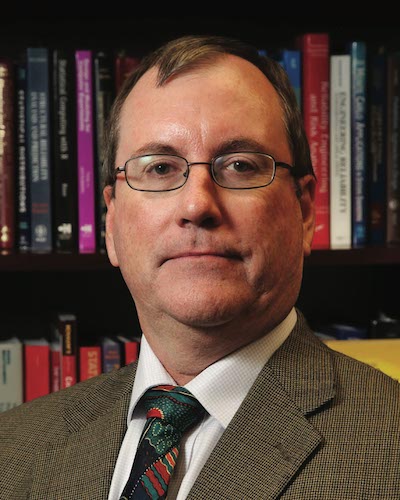
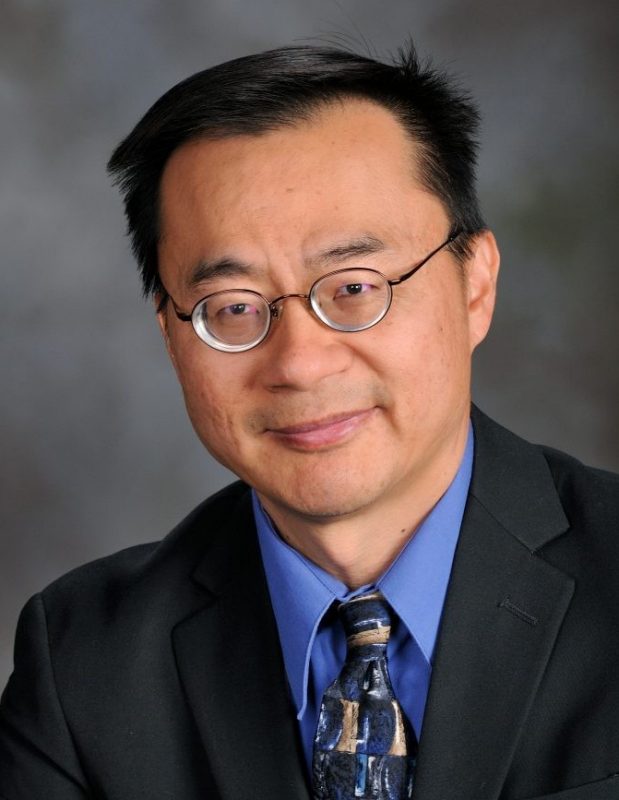
Prof. Ursula Eicker is the Canada Excellence Research Chair in Smart, Sustainable and Resilient Cities and Communities at Concordia University , leading cutting-edge research in urban energy systems. Her work integrates 3D city modeling, renewable energy systems, and sustainable transport to develop zero-carbon city strategies. PhD in Solid State Physics (Heriot-Watt University) Habilitation in Renewable Energy Systems (Technische Universitat Berlin) Research Interests focus on urban simulation platforms, district energy networks, and climate-resilient infrastructure. The INSEL4Cities platform enables holistic urban modeling for building demands, transportation, and greenery. Her Residential Densification studies demonstrate 65% energy reduction through retrofits and solar integration. Recent publications explore urban solar shading , transactive energy systems , green infrastructure equity , and decentralized hydrogen production . Awards include the German-African Innovation Incentive and recognition for photovoltaic research in Egypt. Over 50 graduate students in her lab examine zero-carbon pathways. Teaches ENCS 691 on urban energy systems. Secured 10M CAD for the CERC chair and multiple grants. Co-Director of Concordia's Next Generation Cities Institute .
Tony Keene is an Associate Professor in the School of Chemistry at University College Dublin, specializing in molecular magnetism and functional coordination materials. With a strong background in crystallography and materials science, he leads research on coordination polymers and metal-organic frameworks (MOFs) for advanced applications in sensing and energy storage. 2002: BSc (Hons) in Chemistry, University of Southampton, UK 2007: PhD in Chemistry, University of Glasgow, UK Postdoctoral Fellow, Universität Bern, Switzerland 2009: Postdoctoral Fellow, University of Sydney, Australia 2012: Postdoctoral Fellow, University of Adelaide, Australia; Marie Curie Fellow, University of Southampton, UK 2014: Research Scientist, EPSRC National Crystallographic Service, University of Southampton, UK 2015: Lecturer in Inorganic Chemistry, University College Dublin, Ireland Professor Keene's research focuses on the rational design of coordination polymers and porous metal-organic frameworks (MOFs) to create materials that can detect chemical and physical changes through magnetometry. His work provides unique insights into absorption processes in MOFs that cannot be obtained through standard gas sorption analysis. He has a strong interest in developing separation techniques for insoluble materials, enabling the purification of product mixtures on a laboratory scale and allowing for better characterization of target compounds without interference from impurities. His research bridges the gap between molecular magnetism and functional materials design. Analysis of Professor Keene's recent publications reveals a strong focus on crystallography, molecular magnetism, and materials science. His work spans from fundamental structural studies of coordination compounds to applied research on energy storage materials like supercapacitors and battery cathodes. A recurring theme is the use of advanced characterization techniques, particularly X-ray crystallography and magnetic measurements, to understand structure-property relationships in novel materials. His research increasingly incorporates computational modeling to complement experimental findings. Member, Royal Society of Chemistry Member, British Crystallographic Association Professor Keene is actively involved in academic leadership and student engagement. He chairs the Graduate Studies Committee and the School of Chemistry Outreach and Recruitment Team. He coordinates multiple research projects for students and teaches courses ranging from introductory chemistry to specialized topics like computational X-ray crystallography. His outreach work brings chemistry to diverse audiences of all ages and interests through the School of Chemistry's enthusiastic outreach team. As head of the Outreach Team in the School of Chemistry, Professor Keene leads initiatives that bring chemistry to a wide range of audiences. His research group focuses on molecular magnetism and functional coordination materials, with particular expertise in crystallographic characterization and magnetic measurements of novel compounds.
Dr. Piotr Darnowski is a researcher at the Institute of Heat Engineering (IHE), Warsaw University of Technology. His work focuses on nuclear reactor safety analysis, computational modeling, and probabilistic risk assessment. His research spans: Advanced reactor safety analysis methodologies Gen-III/IV reactor thermal-hydraulics Artificial intelligence applications in nuclear systems Fast reactor technology and fuel cycle analysis Uncertainty quantification in severe accident codes Recent publications demonstrate expertise in: AP1000/MELCOR coupled simulations Cobalt-60 activation studies PWR pressurized thermal shock analysis Gen-III+ reactor safety improvements Artificial neural network reactor modeling
Harry Millwater is the Samuel G. Dawson Endowed Professor and Associate Chair for Research in the Mechanical Engineering Department at the University of Texas at San Antonio's Margie and Bill Klesse College of Engineering and Integrated Design. With over three decades of academic and research experience, he has established himself as a leading expert in structural mechanics and computational methods. Dr. Millwater's primary research focuses on fracture mechanics, probabilistic structural analysis, sensitivity analysis, and computational mechanics. His work bridges theoretical developments with practical applications in structural reliability, fatigue analysis, and digital twin technologies. He has pioneered methods using hypercomplex variables for sensitivity analysis, which have significantly advanced the field of computational mechanics and structural engineering. His extensive publication record shows a clear evolution from foundational work in probabilistic structural analysis to cutting-edge research in hypercomplex automatic differentiation applied to structural mechanics. Recent publications demonstrate a strong focus on developing arbitrary-order sensitivity analysis methods using hypercomplex mathematics, with applications spanning structural dynamics, fracture mechanics, additive manufacturing, and uncertainty quantification. His scientific recognition includes multiple U.S. Air Force Research Lab Summer Faculty Fellowships awarded in consecutive years (2005-2007). These prestigious awards reflect the practical impact of his research on aerospace engineering applications. Dr. Millwater's research has been supported by significant funding from defense and aerospace sectors, particularly the Air Force Office of Scientific Research. His work on probabilistic methods for risk assessment of airframe digital twin structures represents a major contribution to modern structural integrity assessment. He has also contributed to educational initiatives focused on improving STEM education at Hispanic-serving institutions. His laboratory work centers on computational mechanics, with emphasis on developing and implementing advanced numerical methods for structural analysis. The ZFEM (Complex Variable Finite Element Method) framework appears to be a cornerstone of his research program, enabling high-precision sensitivity calculations that have broad applications across engineering disciplines.
Michael S. Hsiao is a Professor in the Bradley Department of Electrical and Computer Engineering at Virginia Tech. His research focuses on design, test, verification, and diagnosis of complex hardware and software systems. He earned his Ph.D., M.S., and B.S. in Electrical Engineering from the University of Illinois. Notably, he was elected an IEEE Fellow in 2013 for contributions to automatic test pattern generation. His work spans natural language processing in hardware verification, hybrid AI systems, and formal methods. He has authored over 80 peer-reviewed publications and led significant research projects. Education: Ph.D., University of Illinois, 1997 M.S., University of Illinois, 1993 B.S., University of Illinois, 1992 Research Interests: Testing and Verification of Hardware Systems Computer Architecture and Digital Design Algorithm Development for Hardware Diagnostics Natural Language Processing in Design Automation Recent Article Trends: Recent work emphasizes integrating NLP with formal verification (e.g., translating English specifications to SystemVerilog assertions), hybrid AI systems for intent clarification, and robotic path-finding using natural language. These contributions bridge abstract language-based specifications with rigorous engineering validation. Awards: IEEE Fellow (2013) – For contributions to automatic test pattern generation of integrated circuits Advising & Grants: While specific student names are not listed here, his research has been supported by over 160 projects. He has also contributed to industry collaborations, including work on anti-counterfeit ICs and hardware security.
Vahid Vaziri is a Senior Lecturer (Associate Professor) in the School of Engineering at the University of Aberdeen, where he has been serving since February 2020, initially as a Lecturer and promoted to Senior Lecturer in December 2021. He is actively involved in teaching, research, and PhD supervision, and holds leadership roles as Programme Co-ordinator for several MSc programmes in Advanced Mechanical and Structural Engineering. PhD in Engineering – Dynamics and Control of Nonlinear Engineering Systems MSc in Complex Systems Engineering – Control of Rotational Motion in Parametric Pendulum System BSc in Control & Instrument Engineering – Using fuzzy logic to find the best controller for multi-model systems His research focuses on nonlinear dynamics and control , with applications in vibration suppression, wave energy harvesting, drill-string dynamics, rotor dynamics, and AI/ML integration in engineering systems. He investigates coexisting attractors, passive and active vibration control, and fracture mechanics in tubular components. His work bridges theoretical modeling with experimental validation. The recent publications highlight a strong trend in nonlinear control systems , smart materials (e.g., dielectric elastomers, piezoelectrics), and energy systems (e.g., wind turbines, geothermal). The research spans modeling, simulation, and experimental validation, with increasing integration of AI techniques for system identification and control. Keywords such as fractional-order modeling, sliding mode control, and thermo-electro-mechanical coupling reflect technical depth and interdisciplinary reach. Scientific service and recognition: Board member and Subject Editor, Nonlinear Dynamics journal External Examiner, Robert Gordon University (2023–2027) Reviewer for top journals including Journal of Sound and Vibration , Mechanical Systems and Signal Processing , and Physica D Co-organizer of major conferences: ENOC 2027 (Aberdeen), ICOVP&WMVC 2025 (Lisbon), and multiple mini-symposia on nonlinear dynamics and drilling control Vahid Vaziri supervises multiple PhD and MSc students and leads or co-leads several externally funded research projects. He has served as Principal Investigator on industry-funded projects with ANSA, iVDynamics, and Baker Hughes, and as Co-Investigator on grants from the Royal Society of Edinburgh, Petroleum Technology Development Fund, and SPARK. His work involves collaboration with energy and technology firms, focusing on real-world engineering challenges in oil and gas, renewables, and smart systems. He is a founding member of the Geothermal Energy Advancement Association (GEAA), demonstrating commitment to sustainable energy innovation. He is affiliated with key research groups including the Centre for Applied Dynamics Research and the Artificial Intelligence, Robotics and Mechatronic Systems Group at the University of Aberdeen.
Ben Greenman is a Researcher at Brown University , specializing in Gradual Typing , Formal Methods , and Programming Language Design . He has developed tools like Forge for teaching formal methods FlowFPX for floating-point exception debugging CnD for specification visualization His work bridges theoretical advancements and practical software engineering challenges. Research Trends: Recent publications focus on Temporal logic misconceptions (2024-2025) Gradual typing performance (2023-2025) Tool-driven formal methods education (2023) Language design for macro systems (2023) Numerical computation reliability (2023) Key Contributions: Unified deep/shallow type systems Blame assignment strategies Collapsible contracts Corpus studies for type analysis Visual debugging frameworks
Gunnar Tibert is an Associate Professor at KTH Royal Institute of Technology's School of Aerospace, Moveability, and Naval Architecture. He specializes in deployable structures for aerospace applications, with a focus on bistable composites, tensegrity systems, and space deployment mechanisms. His roles include examiner and course responsible for courses like Spacecraft Dynamics and Project in Aerospace Engineering . Education: Ph.D. in Deployable Tensegrity Structures for Space Applications (KTH, 2002), Licentiate in Numerical Analyses of Cable Roof Structures (KTH, 1999). Research Interests: Structural dynamics, composite materials, space system design, and vibration suppression in deployable systems. His work spans both peer-reviewed articles and experimental studies, including sounding rocket experiments for space web deployment. Recent publications focus on planetary sunshade systems for climate engineering, metamaterials for vibration control, and additive manufacturing in satellite components. He collaborates on projects like the Suaineadh space web experiment and B2D2 composite boom deployment. Notable contributions include form-finding methods for tensegrity structures and material characterization for bistable tape springs. His research combines experimental testing, numerical simulations, and aerospace engineering principles to advance deployable space technologies.
Rob Hierons is Professor and Chair in Testing at the University of Sheffield's School of Computer Science. His research develops automated testing techniques for software systems, focusing on model-based testing, distributed systems, and recently autonomous robotics. He aims to enhance software quality through efficient test generation from specifications and code. His work spans theoretical foundations and practical applications, including CSP-based testing models and diversity-based test optimization. Current interests include verification of robotic systems and causal testing frameworks. He has published extensively in software engineering venues and serves in editorial roles for major testing journals.
Dr. Yang Liu is a Lecturer in Mechanical Engineering at the University of Leicester, joining in February 2024. Prior to this, he held a postdoctoral position at Imperial College London, focusing on fatigue, creep-fatigue, and hydrogen-related issues in aerospace and nuclear industries. His research integrates micro-mechanical experiments with computational models to address industrial challenges in materials science and engineering. His academic background includes extensive work on crystal plasticity modeling, hydrogen embrittlement in zirconium alloys, and the mechanical behavior of advanced materials under extreme conditions. Key focus areas include the development of multiscale models to predict material responses to thermomechanical loading, irradiation damage, and environmental effects. Dr. Liu's recent publications highlight advancements in understanding hydride precipitation mechanisms, strain rate sensitivity in zirconium alloys, and fatigue nucleation in titanium alloys. His work bridges fundamental material science with practical industrial applications, particularly in aerospace and nuclear sectors. His research is characterized by a strong emphasis on combining experimental data with advanced computational techniques, such as crystal plasticity finite element modeling and uncertainty quantification. Collaborations with industry stakeholders ensure his findings address real-world challenges in material design and performance optimization.
Hajime Kaneko is an Associate Professor at the Department of Mathematics, Faculty of Pure and Applied Sciences, University of Tsukuba . His research focuses on Uniform Distribution Theory , Diophantine Approximation , and Transcendental Number Theory , with a particular emphasis on the behavior of number sequences in beta expansions and geometric progressions involving algebraic numbers. Key research topics include Markoff-Lagrange Spectrum , Sturmian Type Numbers , and Digit Exchange Properties in numerical systems. He has actively participated in and organized seminars such as DARF (Diophantine Analysis and Related Fields) and the 2024 Workshop on Number Theory and Ergodic Theory at Kanazawa University. His recent publications highlight collaborations with prominent mathematicians like Shigeki Akiyama , Thomas Stoll , and Wolfgang Steiner . Notably, his work on the Markoff-Lagrange Spectrum (2024) and binary digits of algebraic numbers (2023) has advanced the understanding of digit patterns and their connections to Diophantine equations. He also contributes to the study of rotational beta expansions and irrationality exponents through symbolic dynamics and Padé approximations.
Sam Cocking is a Researcher at the University of Cambridge , affiliated with the Department of Engineering . He works at the Centre for Smart Infrastructure and Construction , focusing on structural monitoring and assessment of ageing railway infrastructure. Research Focus: Structural monitoring, masonry/concrete construction, acoustic emission, fibre-optic sensing, and decarbonisation/climate resilience decision-support tools for transport infrastructure. Projects: UK National Hub for Decarbonised, Adaptable, and Resilient Transport Infrastructures (DARe), monitoring church pinnacles, and structural assessment of a 350-year-old tree. Technologies: Fibre-optic sensing, acoustic emission sensors, videogrammetry, LiDAR, and finite-element modeling. Collaborations: Centre for Smart Infrastructure and Construction (CSIC), DARe Hub. Research Trends: Publications emphasize masonry arch bridges, structural monitoring technologies, seismic analysis, and machine learning applications for form-finding. Studies span 2016-2025, reflecting long-term engagement with infrastructure resilience and historical preservation. Conservation Efforts: Interdisciplinary work includes monitoring church pinnacles and ancient trees, bridging civil engineering with cultural and environmental conservation.
Gilles Brassard is a Full Professor in the Department of Computer Science and Operations Research at the Université de Montréal's Faculty of Arts and Sciences. He holds the Canada Research Chair in Quantum Computing and serves as Scientific Director of INTRIQ (Institut transdisciplinaire d'information quantique). His affiliations include membership in the Centre de recherches mathématiques (CRM), Institut Courtois, LITQ (Laboratoire d’informatique théorique et quantique), and talents (Laboratoire d'Intelligence Artificielle pour la Cybersécurité). Brassard's research spans quantum computing, quantum and classical cryptography, foundations of quantum mechanics, and privacy protection. He pioneered quantum teleportation and quantum cryptography, demonstrating how quantum mechanics enables unconditionally secure communication. His work explores quantum advantages in computation, including algorithms that could break classical cryptography while quantum cryptography provides countermeasures. Key concepts he developed include quantum teleportation (inspiring Star Trek-like applications) and quantum pseudo-telepathy games. His recent publications reveal strong focus on quantum key distribution security proofs, relativistic cryptography for secure positioning, and privacy protection against data brokers. Trends show increasing emphasis on practical quantum cryptography implementations, noise resilience in quantum communication, and intersections with machine learning. The 2023-2025 articles particularly address real-world quantum security challenges and foundational quantum information questions. Gerhard-Herzberg Canada Gold Medal for Science and Engineering Killam Prize in Natural Sciences Officer of the Order of Canada Fellow of the Royal Society Brassard has supervised over 40 graduate students across quantum information topics, including quantum algorithms, entanglement simulation, and privacy-preserving systems. His current research is funded by major Canadian grants including NSERC Discovery Program ($20965), FRQNT Strategic Regroupments, and CIFAR. Recent projects include QUORUM (Québec Ontario Consortium on Quantum Protocols) and quantum machine learning initiatives. He leads the theoretical quantum information group within LITQ, focusing on quantum communication complexity and cryptographic applications of quantum phenomena.
Dr.-Ing. Ann-Kathrin Goldbach is a Professor at the Chair of Statics and Dynamics within the School of Engineering and Design at the Technical University of Munich . She has served as Deputy Chair since 2021 and Habilitation candidate since 2022, with a focus on CAD-integrated design cycles for structural membranes and isogeometric analysis. Her roles include Chief Representative for Equality of Women in Science since 2023. Master's Degree in Civil Engineering, Technical University of Munich (2013) Bachelor's Degree in Civil Engineering, Technical University of Munich (2009-2012) PhD in Structural Engineering, Technical University of Munich (2021) Research Focus : Goldbach specializes in parametric design workflows, isogeometric analysis, and lightweight membrane structures. Her work bridges CAD/CAE integration, wind engineering, and multidisciplinary optimization for additive manufacturing. Key projects include the FlexWing and MistralWind initiatives, emphasizing fluid-structure interaction and digital twins for durable construction systems. Article Trends : Recent publications highlight CAD-integrated parametric modeling, nonlinear behavior of membrane structures, fluid-structure interaction under wind loads, and digital twin applications in construction. Collaborations with TUM faculty and international institutions reflect her multidisciplinary approach. Teaching Contributions : She leads courses on Isogeometric Analysis , Computational Design , and Membrane Workshop , while supervising student theses and project-based learning initiatives. 2024: Doce et Delecta Teaching Award for Membrane Workshop 2023: TUM Learning Professional Certification 2019: IASS Hangai Prize for CAD-integrated design research
Robert S. Salzar is an Associate Professor in the Academic General Faculty, Research Track at the University of Virginia, serving as Principal Scientist at the Center for Applied Biomechanics. With over 25 years of engineering mechanics expertise, his work focuses on injury biomechanics for automotive and military contexts, particularly behind-armor blunt trauma and underbody blast scenarios. Dr. Salzar holds a doctorate in engineering mechanics and completed a post-doctoral NRC appointment at NASA-Glenn Research Center studying aerospace composites before becoming Assistant Professor of Civil Engineering at City University of New York. His research spans thoracic compliance modeling, PMHS testing for military injury databases, and WIAMan manikin development. His primary research interests include injury biomechanics, blast trauma mechanisms, and computational modeling for injury prediction. Recent work emphasizes military applications, with significant contributions to understanding thoracic/pelvic injury thresholds and developing biofidelic models for behind-armor blunt trauma and underbody blast environments. Analysis of his 2020-2025 publications reveals dominant trends in military injury biomechanics, particularly thoracoabdominal injury criteria, pelvic fracture modeling, and blast wave interactions with human tissues. Key subfields include WIAMan validation, animal model development, and impulse-based injury criteria for ballistic impacts. Scientific recognition includes: University of Virginia MAE Research Scientist of the Year (2016) As Principal Scientist, Dr. Salzar leads research projects funded by military safety agencies, directing experimental and computational studies on injury mechanisms. His work involves collaboration with defense contractors and government laboratories to translate biomechanical findings into improved body armor and vehicle safety standards. The Center for Applied Biomechanics, where he conducts core research, specializes in PMHS testing, animal model development, and computational simulations for military and automotive injury prevention, with recent focus on underbody blast and behind-armor trauma scenarios.