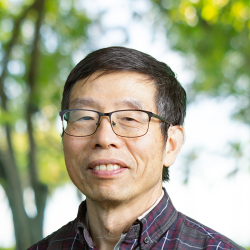
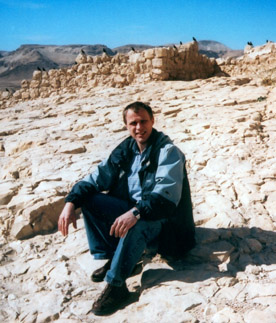
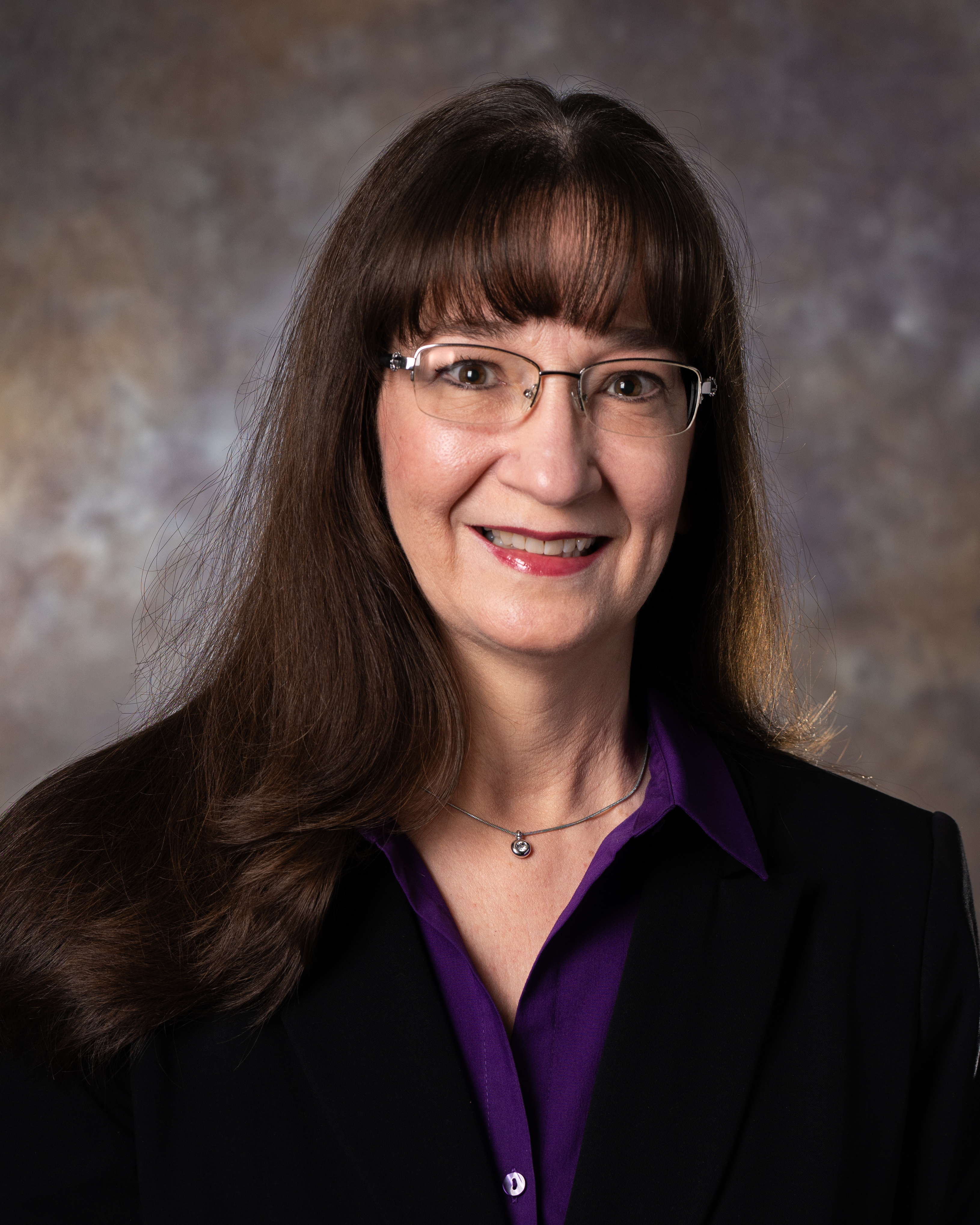
Professor Jiahua Chen is a faculty member in the Department of Statistics at the University of British Columbia (Vancouver Campus), holding the rank of Professor since 2001. He is a member of the Royal Society of Canada (2022) and has held a Canada Research Chair (Tier I) from 2007-2020. His research focuses on finite mixture models, density ratio modeling, variable selection, empirical likelihood, survey sampling, asymptotic theory, and experimental design. Education : - Ph.D. in Statistics, University of Wisconsin-Madison (1990) - M.Sc. in Systems Science, Academia Sinica, China (1985) - B.Sc. in Mathematics/Physics, University of Science and Technology of China (1982) Key Awards : - Gold Medal, Statistical Society of Canada (2014) - CRM-SSC Prize (2005) - Fellowships: ASA (2009), IMS (2005) Professional Contributions : - Editorships in journals like Canadian Journal of Statistics and Statistical Science - Leadership roles in statistical societies (e.g., President, International Chinese Statistical Association, 2005-2006) Software : - Developer of the MixtureInf2.0 R package for finite mixture model analysis.
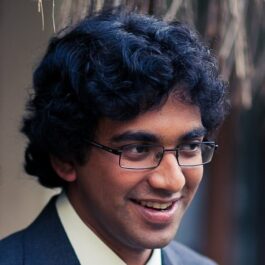
Aravindan Vijayaraghavan is an Associate Professor in the Department of Computer Science at Northwestern University (affiliated with McCormick School of Engineering). He also holds courtesy appointments in the Industrial Engineering and Management Sciences (IEMS) department. Research interests include theoretical computer science , machine learning algorithms , quantum information , and combinatorial optimization under non-worst-case paradigms. He leads IDEAL (Institute for Data, Economics, Algorithms and Learning) as Site Director at Northwestern and former Institute Director (2023-24). Academic Background : PhD in Computer Science from Princeton University (advisor: Moses Charikar ) Bachelor's Degree in Computer Science from Indian Institute of Technology Madras Postdoctoral work at Courant Institute (NYU) and Carnegie Mellon University via Simons Collaboration grants Research Contributions : Developed smoothed analysis frameworks for random matrices with dependent entries Created sum-of-squares certificates for anti-concentration beyond Gaussian distributions Advanced quantum entanglement certification algorithms for subspaces Improved weak-to-strong generalization theory with data distribution expansion properties Designed error-tolerant e-discovery protocols for legal document classification Scientific Recognition : NSF CAREER Award NSF AITF Award (CCF-1637585, CCF-2154100) Google Research Scholar Program grant Amazon Research Awards program support Simons Postdoctoral Fellowship Academic Leadership : General Chair for FOCS 2024 Co-organizer of Junior Theory Workshop and Northwestern QTW series Active in program committees for COLT , ICML , NeurIPS , and STOC conferences Teaching Portfolio : CS262: Mathematical Foundations of CS (Continuous Mathematics for Computer Science) CS212: Mathematical Foundations of Computer Science (multiple offerings since 2015) CS496: Graduate Algorithms (since 2016) CS396/496: Quantum Computation & Information (co-taught with S. Rao) CS497: Machine Learning Theory (Spring 2025 offering)
Sebastiano Boscarino is an Associate Professor of Numerical Analysis (MAT/08) at the Department of Mathematics and Computer Science, University of Catania, Italy. His research focuses on numerical methods for conservation laws , stiff problems , hyperbolic systems with relaxation terms , and kinetic problems , with a special emphasis on semi-Lagrangian methods. Education: Ph.D. in Applied Mathematics (2006, University of Catania), Laurea in Mathematics (2001, University of Catania) Research Projects: Coordinated national and international projects including PRIN 2017/2022 and European MODCLIM/MODCOMPSHOK. From 2016 to 2023, his publications highlight high-order semi-implicit and IMEX schemes for evolutionary PDEs , particularly in gas dynamics , Boltzmann equations , and shallow water models . Collaborations include institutions in the USA, South Korea, and Germany. He has organized international workshops and minisymposia at conferences like ICIAM, SCICADE, and ODS2018, and serves as a referee for journals such as SIAM Journal on Scientific Computing and Journal of Computational Physics. His teaching includes courses in Numerical Analysis and participation in PhD programs since 2017.
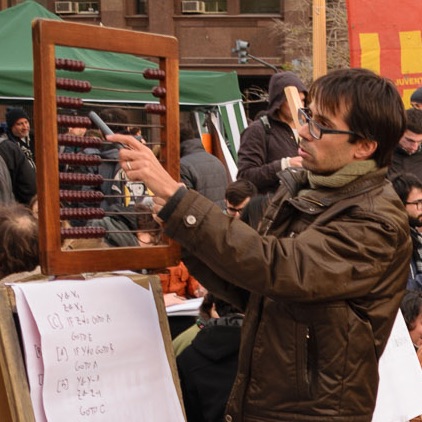
Santiago Figueira is a Professor at the Department of Computer Science, Faculty of Exact and Natural Sciences, University of Buenos Aires, and a Researcher at the Institute of Computer Science (ICC), CONICET (Argentine National Council for Scientific and Technical Research) in Buenos Aires, Argentina. He leads the Logic, Language and Computability Research Group (GLyC) and co-directs the Argentinian-French Laboratory SINFIN, a collaborative initiative between Université Paris-CNRS and Universidad de Buenos Aires-CONICET. Additionally, he is a researcher in the Quantum Information, Computation, and Communication team (QuICC). Dr. Figueira's research spans theoretical computer science with a strong emphasis on computability theory, algorithmic randomness, Kolmogorov complexity, and mathematical logic. His work extends to applications in database theory, quantum information, and cognitive modeling. He has made significant contributions to modal logics, model theory, and the theory of databases, particularly in the context of data trees and XPath query languages. His interdisciplinary approach bridges formal methods with practical applications in quantum computing and human cognition. His publication record demonstrates a consistent trajectory of high-impact research, with recent work focusing on modal logic extensions, quantum information theory, cognitive modeling of concept learning, and database query languages. His collaborations span international institutions, particularly with French researchers through the SINFIN laboratory, and with cognitive scientists studying human memory and concept formation. Dr. Figueira has supervised numerous PhD students and postdoctoral researchers, including Gabriel Goren-Roig, Santiago Cifuentes, Edwin Pin Baque, Sergio Romano, Gabriel Senno, and Sergio Abriola. His former postdocs and CONICET researchers include Guido Bellomo, María Emilia Descotte, and Ariel Bendersky, indicating an active and productive research group. He has developed lecture notes in Spanish on Logic and Computability (2020) and Computability Theory (2021), contributing to academic education in his field. His research group GLyC serves as a hub for theoretical computer science research in Argentina, fostering collaborations between Argentine and international researchers.
Imad Al-Qadi is the Grainger Distinguished Chair in Engineering and Director of the Illinois Center for Transportation (ICT) at the University of Illinois at Urbana-Champaign. He holds a Ph.D. in Civil Engineering from Penn State University and has held academic positions at Virginia Tech and Penn State. His research focuses on sustainable transportation infrastructure, pavement mechanics, and autonomous vehicles. Al-Qadi is a Fellow of the American Society of Civil Engineers (ASCE) and has served as Editor-in-Chief of the International Journal of Pavement Engineering . Education: B.S. (1984) Yarmouk University, M.Eng. (1986) and Ph.D. (1990) Penn State University. Affiliations: Past president of ASCE's Transportation and Development Institute, founder of the Academy of Pavement Science and Engineering. Key Projects: Illinois Autonomous and Connected Track (I-ACT), Illinois Center for Transportation, Smart Road research. His research emphasizes pavement sustainability, recycling optimization, and tire-pavement interaction. He has authored over 1,000 publications and led 180+ research projects funded by federal agencies and industry partners. Recent work includes energy harvesting from pavements and assessing impacts of electric vehicles on infrastructure. Al-Qadi has received prestigious awards including the NSF Young Investigator Award (1994) and TRB Roy W. Crum Distinguished Service Award (2023). He chairs international conferences and serves on technical committees, driving advancements in pavement science and transportation innovation.
Louay N. Mohammad is a Professor and Irma-Louise Rush Stewart Professor at the Department of Civil and Environmental Engineering , Louisiana State University (LSU) , and serves as Transportation Group Coordinator. He directs the Sustainable and Resilient Pavement Materials and Technologies Center and the Engineering Materials Characterization and Research Facility at LSU’s Louisiana Transportation Research Center. Education: B.S. Civil Engineering, LSU (1980) M.S. Civil Engineering, LSU (1982) Ph.D. Civil Engineering, LSU (1989) Research Interests: His work focuses on highway construction materials , pavement engineering , accelerated pavement testing , advanced materials characterization and modeling , and infrastructure sustainability . Key areas include asphalt mixture design, intelligent compaction, moisture susceptibility, and recycling of materials like crumb rubber and plastics for pavement applications. Article Trends: His 2025 publications emphasize asphalt mixture durability, moisture resistance, and sustainability, with studies on polymer/epoxy modified binders, SCB test protocols, and environmental impact integration. Recent works also explore self-healing materials and high-recycled-content mixes.
Jesper Møller is a Professor in the Department of Mathematical Sciences at Aalborg University's Faculty of Engineering and Science, specializing in Statistics and Mathematical Economics. His research focuses on advanced statistical methodologies with applications across various scientific domains. His educational background includes extensive training in mathematical sciences, though specific degree details aren't provided in the current materials. His research interests span: Applied probability theory Markov chain Monte Carlo methods (MCMC) Spatial statistics Stochastic geometry Stochastic simulation Point process modeling Professor Møller's recent publication record shows consistent productivity with 239 research outputs including journal articles, reports, and book chapters. His work demonstrates strong focus on spatial point processes, Bayesian inference methods, and applications of stochastic geometry. The research trends indicate increasing sophistication in modeling complex spatial patterns and developing computational methods for statistical inference. His scientific contributions have been supported by numerous research projects, with 28 projects documented including the current "Peculiar Distribution Functions and Interesting Stochastic Processes" (2022-2026). His work has generated significant scholarly impact with citations across multiple disciplines. Professor Møller has supervised 8 PhD students and maintains active collaborations across international research networks. His current projects suggest continued research activity in developing novel statistical methodologies for complex spatial data analysis with applications in materials science, neuroscience, and environmental statistics.
Xavier Puig is an Assistant Professor at the Universitat Politècnica de Catalunya (UPC) , affiliated with the Department of Statistics and Operations Research and the School of Mathematics and Statistics (FME). He is a member of the ADBD - Analysis of Complex Data for Business Decisions and GRBIO - Biostatistics and Bioinformatics Research Group . His research focuses on Bayesian data analysis , with applications in Epidemiology Ecology Public health Political science Industrial quality control Marketing analytics Recent publications reveal a strong trend in Bayesian spatiotemporal modeling for health data, alcohol-migraine interaction studies, and industrial error rate monitoring . His work combines methodological innovation with real-world applications across diverse sectors. Collaborations include researchers from biostatistics, clinical epidemiology, and industrial engineering. He has contributed to 44 indexed journal articles and participated in 49 congress presentations , with recent projects focusing on competitive research and non-competitive industrial collaborations in statistical modeling.
Dr. Sepehr Ghafari is a Senior Lecturer in the School of Built Environment, Engineering, and Computing at Leeds Beckett University, where he teaches undergraduate and postgraduate modules including Highway Engineering, Materials Technology, Structural Engineering, and dissertation supervision. He earned his PhD from Amirkabir University of Technology and brings extensive industry and academic experience in civil engineering, particularly in pavement and highway systems. His research focuses on advanced fracture mechanics of asphalt concrete, sustainable pavement materials using crumb rubber and recycled aggregates, finite element modeling of pavement systems, and the application of artificial intelligence and machine learning for predicting mechanical performance and pavement management. His work bridges theoretical modeling with practical engineering solutions for sustainable infrastructure. Dr. Ghafari has contributed to technical publications through his role as a professional partner with the European Concrete Paving Association (EUPAVE) since 2017. He has led research teams at Amirkabir University of Technology on low-temperature fracture behavior of asphalt mixtures and has expanded into intelligent modeling techniques. He has several peer-reviewed journal publications and international conference presentations, though specific titles are not listed in the provided text. He previously worked in industry as a design engineer, engineering design team leader, and construction project manager, giving him strong practical grounding. He currently teaches a range of civil engineering courses and supervises student research at both undergraduate and postgraduate levels. Dr. Ghafari is actively engaged in research and education with no indication of part-time status, retirement, or former staff designation. His ORCID is 0000-0002-2776-1358, and he is based at the City Campus, Northern Terrace, 104, Leeds Beckett University.
Marco Picasso is an Adjunct Professor at École Polytechnique Fédérale de Lausanne (EPFL), affiliated with the School of Basic Sciences, Department of Mathematics, and the Picasso Group. He is also a member of the EPFL-Gymnases Interface and the Association des Professeurs de l'EPFL. Teaching: Analysis III (Vector Calculus, Complex Analysis), Numerical Analysis and Optimization, Advanced Numerical Analysis II Research: Numerical simulation of complex physical systems using partial differential equations, with applications to: Aluminium electrolysis Viscoelastic fluids and glacier dynamics Adaptive finite element methods and neural networks for parametric PDEs His recent publications focus on free surface flows, anisotropic adaptation, and multiphase systems. Collaborators include Alexandre Caboussat (HES-GE) and Jacques Rappaz. He supervises PhD students such as Paride Passelli, Léo Diserens, and Maude Girardin.
Nikos E. Frangos is a Professor in the Department of Statistics at Athens University of Economics and Business (AUEB), School of Information Sciences and Technology. His research focuses on statistics, stochastic analysis, actuarial science, and pension fund valuation. He has published extensively in journals such as ASTIN Bulletin, Stochastic Processes and their Applications, and Insurance Mathematics & Economics. His work addresses applications in finance, insurance, and risk management. Academic Degrees: B.Sc. in Mathematics (1978, University of Athens), M.Sc. (1981) and Ph.D. (1984) in Mathematics from Ohio State University. Frangos' research emphasizes stochastic differential equations, reinsurance strategies, bonus-malus systems, and applications of Wiener chaos expansions. His recent publications explore finite mixture models, Sichel distribution, and hyperbolic SPDEs. He has taught undergraduate and graduate courses including Stochastic Processes , Insurance Mathematics , and Stochastic Finance , and participated in staff exchanges with Finland, Belgium, and Turkey. Scientific Awards: Best 2002 ASTIN paper award for "Optimal Bonus-Malus Systems" from the Casualty Actuarial Society, USA.
Sergey Bobkov is a Professor at the School of Mathematics, University of Minnesota. His research spans probability theory, mathematical analysis, information theory, convex geometry, and discrete mathematics, with a focus on high-dimensional distributions, measure concentration, isoperimetric inequalities, entropic stability, and transportation distances. He has made significant contributions to the central limit theorem, Rényi divergence analysis, and Gaussian approximation problems. Research Interests: Probability Theory: High-dimensional distributions, Empirical measures Mathematical Analysis: Isoperimetry, Poincaré and logarithmic Sobolev inequalities Information Theory: Entropic inequalities, Rényi divergence Convex Geometry: Convex bodies, Localization Discrete Mathematics: Finite Markov chains, Graphs Contact: Email: bobkov@umn.edu Office: Vincent Hall 228, University of Minnesota His work often bridges probability with functional inequalities and convex geometry, analyzing phenomena like concentration of measure, transport distances, and stability of Gaussian laws under various conditions.
Peter S. Arcidiacono is the William Henry Glasson Distinguished Professor of Economics at Duke University's Trinity College of Arts & Sciences. His research focuses on applied microeconomics, labor economics, and education policy, with a particular emphasis on structural estimation, affirmative action, and higher education outcomes. He holds affiliations with the Duke Population Research Center and has served as an editor for journals like Quantitative Economics and the Journal of Labor Economics . Education: PhD in Economics from the University of Wisconsin-Madison (1999), MS from the same institution (1997), and BS from Willamette University (1993). Research interests include discrimination analysis, STEM enrollment dynamics, and the impact of grading policies on student retention. Notable publications analyze Harvard admissions biases, affirmative action effects, and the economic returns to education. He has received NSF grants and fellowships, including recognition as a Fellow of the Econometric Society (2018) and the International Association of Applied Econometrics (2020). Advising: Over 40 doctoral students, many now in academia and policy roles. Grants include NSF funding for dynamic discrete choice models and educational policy research. His work bridges economic theory with real-world applications in education and labor markets.
Professor Jian Zhang is a Professor of Statistics at the University of Kent's School of Mathematics, Statistics and Actuarial Science. His research focuses on non-parametric and high-dimensional statistics, bioinformatics, computational biology, statistical genetics, neuroimaging methods, and Bayesian modeling. He has advised students including Jie Li and Tong Wang. His work spans theoretical advancements and applied methodologies across diverse fields such as genomics, neuroimaging, and biomedical data analysis. Publications highlight contributions to Bayesian inference, neuroimaging techniques, and statistical genetics. Notable collaborations include studies on mixture models for genetic association analysis and beamforming methods for functional connectivity. He holds an ORCID iD and is based at Canterbury Campus, University of Kent.
Paola Bandini, Ph.D., P.E. serves as the Wells-Hatch Professor of Civil Engineering at New Mexico State University's Department of Civil Engineering. Her academic journey spans over two decades at NMSU, progressing from Assistant Professor (2002-2008) to Associate Professor (2008-2016), Wells-Hatch Associate Professor (2017-2021), and current Wells-Hatch Professor (2021-present). Her educational background includes: Ph.D. in Civil Engineering (Geotechnical) – 2003, Purdue University M.S. in Civil Engineering (Geotechnical) – 1999, Purdue University B.S. in Geological Engineering (Soils & Foundations), Summa Cum Laude – 1993, Universidad de Oriente, Venezuela B.S. in Geology, Summa Cum Laude – 1993, Universidad de Oriente, Venezuela Bandini's research pioneers bio-mediated and bio-inspired geotechnical solutions for ground improvement, deep foundations, and soil restoration, while advancing sustainable material applications using foam glass and recycled rubber. Her work bridges experimental soil characterization of desert and diatomaceous soils with numerical modeling of earthen structures and pavements, particularly focusing on adobe construction resiliency under moisture variations. The integration of biomimicry in foundation engineering represents her most innovative contribution. Her scientific recognition includes: U.S. Patent No. 11,142,878 for Bio-inspired deep foundation piles and anchorage systems Bandini actively collaborates within NMSU's civil engineering ecosystem, contributing to initiatives like the Center for Bio-Mediated & Bio-Inspired Geotechnics (CBBG). Her publication record demonstrates consistent focus on sustainable geotechnics and heritage structure preservation, with recent work emphasizing numerical modeling of moisture effects in adobe systems and bio-inspired foundation technologies. She maintains strong industry connections through professional engineering practice (P.E. designation) and interdisciplinary partnerships across geotechnical, structural, and environmental domains.