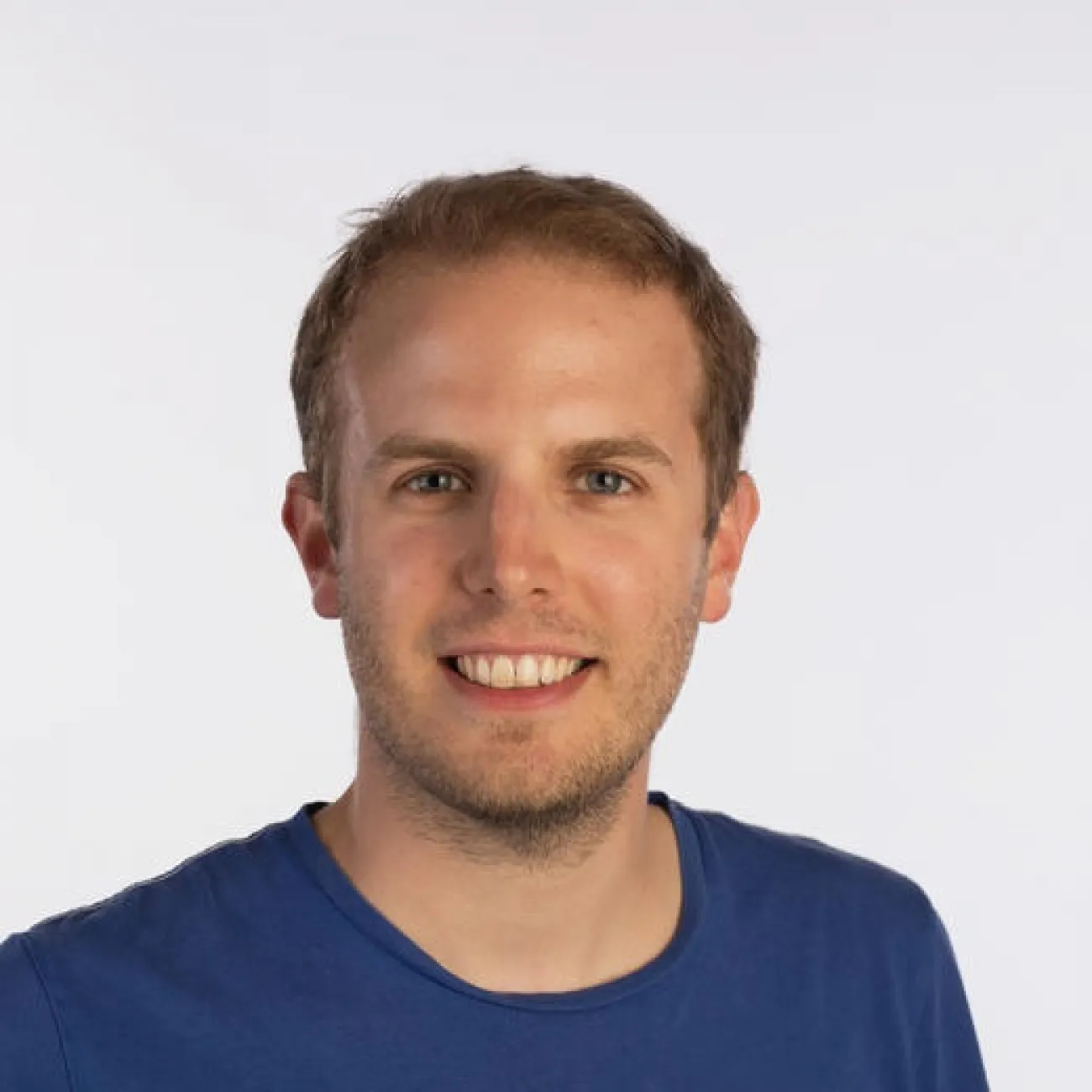
Danel Draguljic is an Associate Professor of Mathematics at Franklin & Marshall College in Lancaster, PA, where he has held this position since 2018, following a tenure as Assistant Professor from 2012–2018. Prior to academia, he worked as a Statistician III at Battelle Memorial Institute (2010–2012). He holds a Ph.D. in Statistics from The Ohio State University (2010), alongside dual undergraduate degrees in Philosophy and Mathematics from Millersville University (2003). Teaching focuses on advanced statistical courses like Design and Analysis of Experiments, Neural Networks, and Time Series. Co-authored the textbook Design and Analysis of Experiments (2017, Springer), emphasizing R and SAS applications. His research intersects statistical methodology, experimental design, and interdisciplinary applications in biology, neuroscience, and environmental science. Notable contributions include optimizing thin film coatings, modeling neural networks, and analyzing drought impacts on tropical epiphytes. Key awards include the 2015 Youden Award for the 2014 paper on screening strategies in Technometrics. Ongoing projects involve variable selection in mixed models and constrained noncollapsing design algorithms (CoNcaD).
Dr. Spencer Quiel is an Associate Professor of Structural Engineering at Lehigh University's P.C. Rossin College of Engineering and Applied Science. His research focuses on structural resilience to extreme loads such as fire, blast, and progressive collapse, with particular emphasis on bridges, tunnels, and building systems. He has secured over $1.5 million in grants from NSF, USDOT, and others, and his work is published in leading journals like Engineering Structures and Fire Safety Journal. Prior to academia, he worked at Hinman Consulting Engineers, contributing to structural designs for hazard resistance. He holds a PhD from Princeton University (2009) and a BS from Notre Dame (2004), supported by a DHS Fellowship during his doctoral studies. Dr. Quiel teaches undergraduate courses in engineering statics and civil engineering design, as well as graduate-level structural fire engineering. He currently serves as Vice Chair of the PCI Blast Resistance and Structural Integrity Committee and contributed to ASCE standards on fire loads and structural fire engineering. His research group focuses on experimental testing, numerical modeling, and large-scale infrastructure resilience. Education: PhD, Civil Engineering, Princeton University (2009) Professional Affiliations: ASCE, AISC, PCI Licenses: Professional Engineer (PA, VA) Key Projects: World Trade Center collapse studies, tunnel liner resilience, thermal energy storage systems His research interests span structural fire effects, blast-resistant design, progressive collapse frameworks, and innovative cladding systems. Recent work includes developing fire-resistant tunnel liners and thermal energy storage solutions using concrete matrices. He also investigates multi-hazard simulation methods for tall buildings using real-time hybrid techniques.
Sheldon Andrews is an Associate Professor of Software Engineering and IT at École de technologie supérieure (ETS) in Montreal, Canada, with an adjunct appointment in Computer Science at McGill University. He is a member of the Multimedia Research Laboratory and has established himself as a leading researcher in physics-based computer animation and simulation. Andrews earned his Ph.D. in Computer Science from McGill University (2015), MASc in Electrical and Computer Engineering from the University of Ottawa (2007), and B.Eng. in Computer Engineering from Memorial University (2004). His academic journey reflects a strong foundation in both theoretical and applied aspects of computer engineering and graphics. His research focuses on real-time physics simulation, articulated mechanism simulation, 3D character animation, motion capture, computational contact mechanics, and virtual environment modeling. Andrews' work bridges the gap between theoretical physics and practical applications in computer graphics, with particular emphasis on creating physically plausible animations that can run in real-time. His research has significant implications for video games, virtual reality, and robotics applications. Analysis of his recent publications (2022-2025) reveals a strong trend toward increasingly sophisticated physics-based character animation techniques, with growing integration of machine learning approaches. His work spans multiple subfields including collision detection, deformable object simulation, vehicle physics, and reinforcement learning for character control, demonstrating both breadth and depth in his research program. VRIPHYS 2012 best paper award for 'Policies for goal directed multi-finger manipulation' Andrews has advised numerous graduate students through their PhD and Master's degrees, with many going on to positions at major companies like DNEG, CM Labs Simulations, and AMD. His professional service is extensive, having served as Program Chair for SCA 2025 and MIG 2024, Conference Chair for I3D 2019, and on program committees for major conferences including SIGGRAPH, SCA, and MIG for multiple years. He has also been active in the Montreal SIGGRAPH Chapter as Secretary from 2018-2021. As a core member of the Multimedia Research Laboratory, Andrews collaborates with researchers across multiple disciplines to advance the state of the art in physics-based simulation. His lab maintains strong industry connections, including a visiting researcher position at Roblox Research, ensuring that theoretical advances translate to practical applications in gaming and virtual environments.
Vanessa Mattesi is a Researcher affiliated with the Inria Team MAGIQUE-3D and CERFACS . She holds a Ph.D. in Applied Mathematics from the University of Pau and the Adour Region (2011-2014), advised by Sébastien Tordeux. Her postdoctoral research focuses on multiscale modeling of wave propagation in complex media, with emphasis on numerical methods like Trefftz discontinuous Galerkin and boundary element approaches. Education: Ph.D. in Applied Mathematics (2011-2014), University of Pau M.Sc. in Mathematical Engineering (2011), University of Toulouse III Research Interests: Her work centers on wave propagation phenomena, particularly in heterogeneous media. Key areas include: High-order numerical methods for Helmholtz and acoustic equations Equivalent source modeling of small heterogeneities Domain decomposition and absorbing boundary conditions Her methods integrate discontinuous Galerkin formulations with boundary element techniques for enhanced accuracy in complex geometries. Grants & Activities: Member of Inria Bordeaux-Sud Ouest committee. Active contributor to conferences such as ACOMEN (2017), EAGE (2016), and Waves (2013). Labs/Teams: MAGIQUE-3D project team (Inria) and CERFACS collaborative research groups.
Dr. Yunhua Luo is a Professor & Associate Head (Graduate Program) in the Department of Mechanical Engineering at the University of Manitoba (Price Faculty of Engineering). His expertise lies in computational mechanics, finite element methods, and biomechanical modeling. He holds a PhD from Stockholm, Sweden (1999), a Licentiate (MSc) from Stockholm (1997), and a B.Eng. from Beijing, China (1985). His research focuses on three core areas: Development of advanced finite element methods for composite materials Multilevel biomechanical modeling of bone strength and hip fracture mechanisms Mechanistic analysis of brain injury and helmet design optimization Over 30 years of academic progression includes roles from Research Associate (2000–2006) to full Professor (2019–present). His recent publications (2022–2025) emphasize voxel-based modeling, osteoporotic fracture risk prediction, and helmet performance evaluation. Current research seeks MSc/PhD students in computational micromechanics.
Shaghayegh Bagheri is an Assistant Professor in the Department of Mechanical Engineering at George Mason University and an Affiliate Scientist at Toronto Rehabilitation Institute. She specializes in advanced manufacturing of multi-functional materials for healthcare applications, including rehabilitation, injury prevention, and orthopedic implants. Her research integrates biomechanics, material science, and 3D printing techniques. Education: PhD in Mechanical Engineering, Ryerson University (now Toronto Metropolitan University) MSc in Materials Engineering, Ferdowsi University of Mashhad BSc in Materials Engineering, Ferdowsi University of Mashhad Research focuses on composite materials for anti-slip footwear, biomedical implants, and additive manufacturing. Notable projects include surface-textured composites for anti-slip applications and polymer-based bone scaffolds. Her work has been funded by organizations like NEC and supported by awards from the Ontario Centres of Excellence and Mitacs Accelerate. Key Research Trends: Articles emphasize 3D printing parameters, composite material design, and biomechanical analysis of orthopedic implants. Recent studies explore surface-textured composites for slip resistance and lattice structures in PEEK materials. Awards: Ontario Centres of Excellence Federal Economic Development Agency for Southern Ontario Mitacs Accelerate Current projects address surgical fixation methods for acetabular fractures, anti-slip footwear for home care workers, and biomechanical plate designs. She collaborates with Toronto Rehabilitation Institute and iDAPT Centre for advanced rehab research.
Louay N. Mohammad is a Professor and Irma-Louise Rush Stewart Professor at the Department of Civil and Environmental Engineering , Louisiana State University (LSU) , and serves as Transportation Group Coordinator. He directs the Sustainable and Resilient Pavement Materials and Technologies Center and the Engineering Materials Characterization and Research Facility at LSU’s Louisiana Transportation Research Center. Education: B.S. Civil Engineering, LSU (1980) M.S. Civil Engineering, LSU (1982) Ph.D. Civil Engineering, LSU (1989) Research Interests: His work focuses on highway construction materials , pavement engineering , accelerated pavement testing , advanced materials characterization and modeling , and infrastructure sustainability . Key areas include asphalt mixture design, intelligent compaction, moisture susceptibility, and recycling of materials like crumb rubber and plastics for pavement applications. Article Trends: His 2025 publications emphasize asphalt mixture durability, moisture resistance, and sustainability, with studies on polymer/epoxy modified binders, SCB test protocols, and environmental impact integration. Recent works also explore self-healing materials and high-recycled-content mixes.
Clemens V. Verhoosel is an Associate Professor in Computational Methods for Model- and Data-Driven Engineering at Eindhoven University of Technology (TU/e). He holds positions in the Department of Mechanical Engineering under the Energy Technology and Fluid Dynamics section, and is affiliated with the EAISI Foundational initiative. His research focuses on scan-based immersed isogeometric analysis, uncertainty quantification, and Bayesian inference for complex engineering problems. He leads the Group Verhoosel and manages the Engineering Mechanics Graduate School since 2018. Education: MSc (Aerospace Engineering, TU Delft, 2005, cum laude PhD, TU Delft, 2009). Postdoctoral research at University of Texas at Austin (2009-2010). Awarded NWO VENI Grant (2011). Research interests include numerical methods for solid mechanics, fluid dynamics, coupled problems, and applications in biomedical engineering (e.g., cardiac mechanics). He develops open-source tools like the Nutils toolkit and collaborates with industry partners such as Evalf Computing. Key contributions include isogeometric analysis for fracture mechanics, phase-field models, and mesh-free simulation workflows. Honors: NWO Veni Award (2011). Teaching includes Advanced Discretization Techniques and Scientific Computing courses. Active in professional activities, including invited talks on cardiac mechanics and computational methods.
Umer Farooq is a Professor at Dhofar University's College of Engineering, specializing in Electrical and Computer Engineering. His research spans interdisciplinary areas including artificial intelligence, nanotechnology, educational technology, and cybersecurity. He has contributed to over 90 publications since 2002, focusing on topics such as neural networks, federated learning, IoT security, and biomedical applications. His work bridges theoretical advancements with practical implementations in fields like medical imaging, renewable energy systems, and smart education platforms. Research interests emphasize innovative solutions at the intersection of engineering and computing. Notable contributions include federated learning frameworks for education, neural network-based medical diagnostics, and secure IoT systems. Recent trends in his publications highlight advancements in machine learning for healthcare, nonlinear dynamics in electronic systems, and sustainable energy solutions. No scientific awards or grants are explicitly listed in the provided texts. Collaborations span global institutions, reflecting his active role in international academic networks.
Yuhang Chen is a Professor of Biomedical Engineering at Heriot-Watt University, affiliated with the School of Engineering & Physical Sciences and the Institute of Mechanical, Process & Energy Engineering. He holds a B.Eng. in Mechanics from Tongji University (2007) and a Ph.D. in Mechanical Engineering from the University of Sydney (2011). His research focuses on experimental and computational mechanics applied to biomedical engineering, including tissue scaffolds, cancer mechanics, and structural optimization. Key projects involve multiscale mechanics in soft tissue cancers and biomechanical analysis of porous materials. Yuhang’s work intersects engineering, materials science, and biomedicine. His lab develops innovative approaches such as biodegradable systems modeling and poroelastic finite element analysis. He has contributed to peer-reviewed journals and datasets, including EPSRC-funded research. His expertise aligns with Sustainable Development Goals related to health and functional materials. Notable publications include studies on compartment syndrome models and auxetic metamaterials. Yuhang’s research group maintains the lab website at tissuemech.hw.ac.uk .
Duane Cronin is a Professor and Tier 1 Canada Research Chair in Trauma Biomechanics and Injury Prevention at the University of Waterloo. His research focuses on computational biomechanics, human body modeling, and injury prevention strategies, with applications in automotive safety, sports safety, and military protection systems. He leads a lab investigating material characterization, finite element modeling, and biomechanical testing of musculoskeletal systems. Key areas of study include neck injury mechanisms in vehicle crashes, thorax response to ballistic impacts, and spinal cord biomechanics. He develops advanced computational models validated against experimental data to predict injury risks under various loading conditions. His work integrates multidisciplinary approaches combining engineering, medicine, and computer science. Recent research trends involve refining human body models with anatomically specific geometries and advanced material properties, particularly for vulnerable populations like elderly and pediatric patients. He also explores adhesive joint mechanics in automotive materials and synthetic turf performance in sports injury mitigation. His team collaborates on projects funded by industries and government agencies, aiming to translate biomechanical insights into real-world safety improvements. Active in academic leadership, he mentors graduate students in biomechanics and hosts international symposia to advance injury prevention research.
Santiago Badia is a Full Professor of Computational Science and Engineering at Universitat Politècnica de Catalunya (UPC), holding an adjoint researcher position at the International Center for Numerical Methods in Engineering (CIMNE). He leads the Large Scale Scientific Computing (LSSC) group at CIMNE, focusing on finite element methods, numerical analysis, and high-performance computing. His research emphasizes fluid dynamics, multiphysics problems, and scalable solvers for large-scale systems. Previously, he worked at Politecnico di Milano and Sandia National Labs. He developed the FEMPAR software framework, a parallel finite element tool for PDE simulations, achieving landmark scalability (e.g., 60 billion unknowns on 458,672 cores). FEMPAR is recognized in the High-Q Club of European codes. His expertise includes discontinuous Galerkin methods, XFEM, and domain decomposition preconditioners. Research interests span metal additive manufacturing, superconductor devices, and nuclear engineering applications. Awards include FEMPAR's High-Q Club inclusion. He advises PhD and MSc students (e.g., Jesus Bonilla, Eric Neiva, Marc Olm) and has open positions in postdoc/PhD levels. His team includes researchers like Javier Principe and Alberto Martín. Ongoing projects involve advancing parallel algorithms, multiphysics simulations, and software scalability for exascale computing.
Professor Nicol McGruer is a Professor in the Department of Electrical and Computer Engineering at Northeastern University, with an affiliation to the Mechanical and Industrial Engineering department. His primary research focuses on MEMS, NEMS, micro/nanofabrication, and related technologies such as RF MEMS, microrelays, and nanoswitches. He directs the Microfabrication Laboratory and Scanning Electron Microscopy Facility. McGruer earned his B.S. in Physics and M.S./Ph.D. in Electrical Engineering from Michigan State University. Notable awards include the Søren Buus Outstanding Research Award and the Joel and Spira Excellence in Teaching Award. His work spans projects like the PLASMID (Plasmonic Microelectromechanical Infrared Digitizer) and Zero-Power Sensor initiatives, funded by DARPA. He has authored numerous high-impact publications in journals like Nature Nanotechnology and IEEE Sensors Journal. Education: Ph.D. in Electrical Engineering, Michigan State University (1983). Research highlights include advancements in microfabrication processes, MEMS device design, and nanoscale material testing. Key collaborations include work with Prof. Matteo Rinaldi on zero-power sensor technologies.
Dr Benjamin Cerfontaine is an Associate Professor in Geotechnical Engineering at the University of Southampton. His research focuses on geotechnical solutions for offshore renewable energy infrastructure, particularly floating and bottom-fixed offshore wind turbines. He specializes in numerical and physical modeling techniques such as finite elements, DEM, and centrifuge testing, aiming to uncover fundamental mechanisms governing foundation behavior. Education: PhD in Geotechnical Engineering from the University of Liège (2014), followed by postdoctoral research at the University of Dundee (2017–2020). Research Interests: Offshore renewable energy systems, constitutive modeling of geomaterials, and innovative anchoring solutions. Projects: Leads the ROBOCONE and TAILWIND projects, focusing on robotic ground characterization and sustainable anchor designs. Key achievements include the Geotechnical Research Medal (2023) and the Bright Spark Lecture Award (2023). He supervises three PhD students and actively collaborates with industry partners on offshore energy infrastructure. Dr. Cerfontaine is part of the Infrastructure Group and the Southampton Marine and Maritime Institute, contributing to interdisciplinary research on ocean energy and coastal communities.
Dr. Francisco Tovar Lopez is a Lecturer at the School of Engineering, RMIT University. He holds a B.Eng in Mechanical Engineering from UNAM and a PhD in Biomedical Engineering from RMIT. His research focuses on advancing biomedical technologies through microfluidics, nanotechnology, and computational modeling. He has pioneered projects in artificial organs, blood clot detection systems, and lab-on-a-chip platforms. Dr. Tovar has secured notable awards including the ARC-DECRA fellowship and Mexico’s SNI-I recognition. His work bridges mechanical engineering with healthcare applications, emphasizing fluid dynamics and biomaterials. Education B.Eng in Mechanical Engineering (UNAM) PhD in Biomedical Engineering (RMIT University) Research Interests Lab-on-a-Chip technologies Micro/nanofabrication Blood flow dynamics and thrombosis Portable diagnostic systems Medical sensor development Recent Article Trends His 2023 work emphasizes ECMO oxygenator thrombosis detection and environmental sensor applications, reflecting growing focus on translational biomedical engineering. Key themes include microfluidic platforms for hematology and integration of nanoscale sensors. Awards DECRA-ARC Fellow (2012) VC Research Fellow (2012) National Research System Level 1 (Mexico, 2014) Advising Open to PhD supervision in areas like real-time medicine and lab-on-a-chip cancer detection. Active in industry collaborations through projects like Vitalmex Innovamedica.