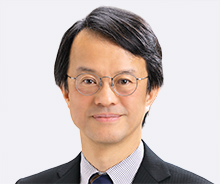
Kiyoshi Ono is a Professor at Waseda University's School of Creative Science and Engineering, Faculty of Science and Engineering, specializing in structural and earthquake engineering. He holds a Doctor of Engineering degree from Osaka University and has been actively contributing to academia since at least 2007, following his tenure as Associate Professor at Osaka University Graduate School of Engineering (2002-2007). His academic journey demonstrates a consistent focus on advancing structural engineering knowledge with practical applications for infrastructure resilience. Professor Ono's research interests center around structure engineering and earthquake engineering, with particular expertise in steel structures, bridge engineering, and high-performance steel materials. His work explores the seismic performance of steel structures, innovative bridge design methods, and the application of high-strength steel materials (particularly SBHS series) to improve structural safety and durability. He investigates how material properties affect structural behavior under seismic loads, developing evaluation methods that balance safety with economic considerations. His publication record shows a consistent research trajectory with 41 papers, 123 citations, and an h-index of 4 according to Scopus. The most recent publications (2015-2024) demonstrate his ongoing commitment to advancing knowledge in steel structure performance, particularly focusing on high-performance steel materials and their application in seismic-resistant design. His research spans fundamental material properties investigations to practical structural applications, showing a comprehensive approach from microscopic material behavior to macroscopic structural performance. Scientific Awards: New Road Technology 5-Year Plan Award (2003) Professor Ono actively contributes to academic knowledge dissemination through numerous publications, presentations, and his role in developing industry standards. His work on the 'Steel and Composite Structure Standard Specifications' and 'Buckling Design Guidelines' demonstrates his influence on engineering practice. He serves on committees including the Japan Society of Civil Engineers Kansai Branch (as General Affairs and Accounting Committee Member since 2010) and the Performance-Based Seismic Design Committee for Bridges. His professional memberships include the Japan Society of Civil Engineers Kansai Branch, Japanese Society of Steel Construction, and Japan Society of Civil Engineers, reflecting his active engagement with the engineering community. His research projects consistently address practical challenges in bridge engineering while advancing theoretical understanding of structural behavior under extreme loading conditions.