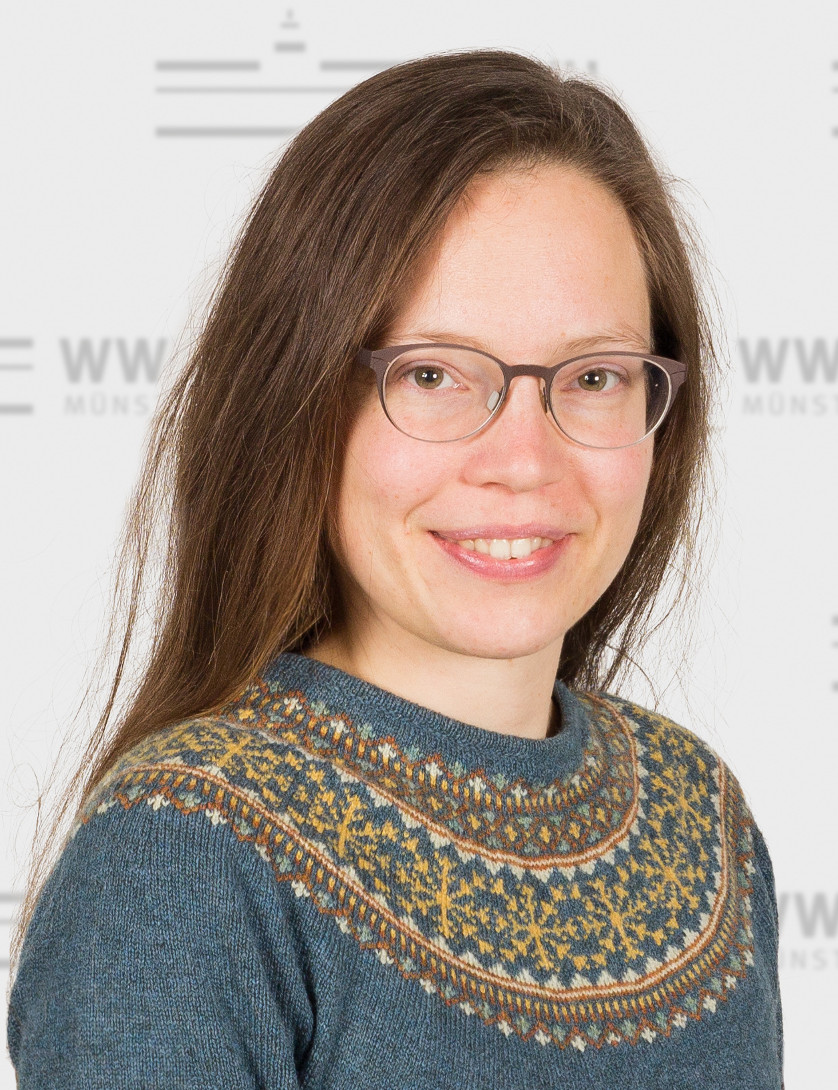
Prof. Dr. Martin Kronbichler is a faculty member at the Faculty of Mathematics , Ruhr University Bochum , leading the Numerics group. His research focuses on higher-order finite element methods, multigrid techniques, and high-performance computing for complex fluid and solid mechanics problems. Key Research Areas: Higher-order finite element methods, iterative solvers, multigrid algorithms, exascale mathematical software, and computational fluid dynamics. Notable Projects: EU-funded dealii-X (exascale digital twins), BMBF PDExa (optimized PDE solvers for exascale), and DFG grants for cut-discontinuous Galerkin methods and geometric multigrid. Publications Trends: Recent works emphasize matrix-free operators for hyperelasticity, diffuse-interface models for additive manufacturing, and multigrid smoothers for higher-order elements. Scientific Awards: Recipient of the Humboldt Research Award for his contributions to numerical methods and HPC. Team: Collaborates with researchers like Dr. Shubham Kumar Goswami, Dr. Richard Schussnig, and Natalia Nebulishvili.
Prof. Dr.-Ing. Gerhard Müller is a Full Professor at the Chair of Structural Mechanics within the TUM School of Engineering and Design at Technical University of Munich (TUM). Since 2004, he has held this distinguished position, and since 2014, he has served as Executive Vice President for Academic and Student Affairs at TUM. His research focuses on structural dynamics and vibroacoustics, with specific expertise in dynamic soil-structure interaction, sound radiation analysis, and seismic risk assessment. Professorship: Structural Mechanics University: Technical University of Munich School: TUM School of Engineering and Design Department: Chair of Structural Mechanics in Civil Engineering Prof. Müller's research spans multiple domains, including: Structural Dynamics : Examining building and vehicle vibrations, seismic soil-structure interaction, and advanced model order reduction techniques Vibroacoustics : Investigating sound radiation from vibrating structures and developing acoustic metamaterials for noise control Computational Methods : Pioneering hybrid deterministic-statistical approaches, Wave Based Methods (WBM) for saturated elastodynamic structures, and parametric model order reduction His recent publications demonstrate expertise in: Wave propagation analysis in poroelastic media Bayesian parameter updating for structural models Acoustic metamaterials for vibration control Advanced numerical methods for seismic risk assessment Hybrid ITM-FEM approaches for soil-structure interaction Energy flow analysis in timber structures Awarded the Spindler Prize in 1984 , Prof. Müller also holds significant academic leadership roles: President of European Association for Structural Dynamics (EASD) Chairman of Bavarian-French University Center (BayFrance) Active member of ASIIN accreditation agency and Bavarian Chamber of Engineers Previously served as Dean of Civil Engineering and Surveying at TUM (2010-2014) He leads the Structural Dynamic Lab (formerly Vibroacoustics Lab) and has developed interactive web apps for engineering education. His work bridges theoretical advancements with practical applications in construction acoustics, transportation noise control, and geothermal energy infrastructure analysis.
Prof. Dr.-Ing. Jana Bochert is a faculty member at the Faculty of Sustainable Infrastructure at Technische Hochschule Ingolstadt , specializing in Construction Informatics , Construction Mechanics , and Foundations of Civil Engineering . She focuses on seismic analysis, soil-structure interaction, and structural dynamics, particularly for critical infrastructure like nuclear power plants. Email: Jana.Bochert@thi.de Phone: +49 841 9348-2393 Office: Room CN115 Research Interests Her research centers on: Seismic soil-structure interaction Wave propagation in soil under dynamic loads Development of computational methods for structural analysis Dynamic response of nuclear power plant foundations Impact of transportation and demolition on soil vibrations Finite element modeling of civil structures Publications & Research Trends Her work spans 2008–2021 , with a focus on: Seismic safety protocols for nuclear infrastructure Time-domain modeling of soil dynamics Comparison of simulation methods (2D vs 3D) Acoustic and vibration analysis in urban environments Integration of soil nonlinearities into structural design Dynamic load effects from trains and demolition
Dr. Magdalena Schreter-Fleischhacker works at the Technical University of Munich within the Professorship of Simulation for Additive Manufacturing . Her research focuses on physics-based computational modeling of coupled liquid-powder-gas dynamics in metal additive manufacturing, including melt pool dynamics and powder-gas interactions . She specializes in multi-phase flow modeling using cut-element and diffuse interface methods with continuous/discontinuous Galerkin schemes . She also develops constitutive models for quasi-brittle materials like 3D printed concrete and rock, incorporating anisotropy , gradient-enhanced damage mechanics , and micropolar continua . Her computational work leverages matrix-free algorithms and parallel computing , with significant contributions to the deal.II finite element library . Research Interests Physics-based computational modeling of coupled liquid-powder-gas dynamics in additive manufacturing Multi-phase flow simulation using sharp/diffuse interface methods Advanced constitutive modeling for quasi-brittle materials (rock, soils, 3D printed concrete) High-performance computing and matrix-free algorithms Notable Contributions Development of consistent diffuse-interface models for melt-vapor dynamics Improvements to continuum surface flux models in additive manufacturing Formulation of gradient-enhanced damage-plasticity models for geological materials Principal contributor to the deal.II library (version 9.6) Supervised Student Projects Johannes Resch (2024): DG-based thermo-hydrodynamic melt pool simulations Julian Brotz (2024): DEM-FEM coupling for fluid-powder interaction Andreas Ritthaler (2024): Matrix-free cutDG formulation for complex flows Tinh Vo (2023): Laser modeling for melt pool simulations Scientific Awards ERC Starting Grant recipient
Jens von Wolfersdorf is a Professor at the University of Stuttgart's Faculty of Engineering, Department of Mechanical Engineering. His research focuses on advanced thermal management systems for high-speed aerospace applications, particularly in the areas of heat transfer, fluid dynamics, and combustion. He specializes in experimental and numerical methods for analyzing complex flows in rotating and stationary cooling channels, transpiration cooling for rocket engines, and turbulence modeling. His work integrates cutting-edge techniques such as thermochromic liquid crystal (TLC) measurements, particle image velocimetry (PIV), and computational fluid dynamics (CFD) to validate novel cooling configurations. Key projects include the COOREFLEX-Turbo initiative and contributions to the European ATLLAS-II program for high-speed vehicle materials. Recent studies emphasize rotational heat transfer effects in two-pass cooling channels, additive manufacturing of ribbed cooling structures, and validation of coupled FEM-CFD frameworks. His research addresses challenges in aerospace thermal protection, turbine blade cooling, and scramjet combustor efficiency. Publications span over 15 years, with a focus on transient heat transfer, flow visualization, and material characterization for transpiration-cooled systems. Collaborations involve experimental facilities for high-speed flows and advanced thermal measurement systems.
JProf. Dr. Mira Schedensack is a faculty member at the Institute for Analysis and Numerics within the Department of Mathematics and Computer Science , University of Münster. Her expertise lies in Numerical Analysis, Machine Learning, and Scientific Computing , with a focus on finite element methods and numerical solutions for partial differential equations. Research Interests: Numerical methods for PDEs, mixed finite element formulations, adaptive algorithms, and thermo-optical interactions in computational physics. Teaching: Offers courses in Numerical Partial Differential Equations and Adaptive Finite Element Methods. Students: Mentors doctoral student Jonas Ketteler . Publications: Key contributions to non-conforming FEM, Stokes equations, and gradient elasticity.
Professor Jan Mehner is a faculty member at Chemnitz University of Technology, where he holds the Chair of Microsystems and Medical Technology within the Faculty of Electrical Engineering and Information Technology. His work focuses on advanced modeling, simulation, and design automation of microelectromechanical systems (MEMS) with applications across industrial, automotive, and biomedical domains. His research expertise spans MEMS design , coupled field simulations , finite and boundary element methods (FEM/BEM) , and reduced order modeling (ROM) . These methodologies enable efficient development and optimization of complex microsystems. Applications of his work include structural health monitoring, sensor integration, and smart systems for automation and medical technology. Prof. Mehner is actively contributing to the academic and research community, recently recognized through membership in the Saxon Academy of Sciences. He is involved in cross-disciplinary initiatives such as the Robotic Institute Germany (RIG) at TU Chemnitz, demonstrating strong engagement in emerging technological frontiers. He advises students and leads a research group focused on microsystem innovation. While specific grant details are not listed, his participation in DFG-funded research groups like FOR 5242 suggests active involvement in nationally supported scientific projects. The laboratory under his leadership, the Professorship of Microsystems and Medical Technology, develops cutting-edge solutions in sensor-integrated materials and intelligent microsystems, contributing to advancements in smart manufacturing and medical devices.
Oliver G. Ernst is a Professor of Numerical Analysis at Technische Universität Chemnitz . His research focuses on Numerical Analysis , Uncertainty Quantification , and Inverse Problems , with applications in Thermo-Hydro-Mechanical (THM) processes , Electromagnetics , and Stochastic Partial Differential Equations . He is associated with the Numerical Analysis group at TU Chemnitz. Key Research Areas : Efficient numerical methods for PDEs Krylov subspace techniques Stochastic finite element methods Multi-physics modeling Geoscientific applications Recent Publications (2025-2010): THM simulations under uncertainty Neural network PDE solvers Bayesian inversion frameworks Rational Krylov algorithms Deflated restarting strategies Collaborations : TU Bergakademie Freiberg University of Manchester Technical University of Munich University of Maryland University of Geneva Software Development : Contributor to OpenGeoSys platform Developer of FEMALY MATLAB library Academic Recognition : h-index 32, i10-index 66, with over 4423 citations since 2020.
Franz Roters is a researcher at the Max Planck Institute for Sustainable Materials within the Max Planck Society . His work focuses on Crystal Plasticity , Microstructure Physics , and Alloy Design , specializing in multi-physics simulations and computational modeling of materials. Developing and scaling the DAMASK software suite for crystal plasticity and damage modeling Research on texture evolution in aluminum alloys and magnesium twinning Collaborative work on chemo-mechanical coupling in solid-state batteries His recent publications emphasize multi-physics crystal plasticity , damage mechanics , and grain-scale simulations . He has presented at international conferences on computational challenges in materials science.
Matthias Baitsch serves as Professor of Construction Informatics and Numerical Methods in the Department of Civil and Environmental Engineering at Bochum University of Applied Sciences, where he concurrently heads the BIM Institute. His academic trajectory includes research assistant and senior engineer roles at Ruhr-University Bochum (2000-2009), academic coordination at the Vietnamese-German University (2009-2012), and an acting professorship at the University of Kassel (2012-2014). His educational foundation comprises: Civil Engineering studies at the University of Dortmund (1991-1997) under the interdisciplinary "Dortmund Model" Doctorate from Ruhr-University Bochum (2003) on geometric imperfection-based optimization of compressive beam structures Professor Baitsch's research integrates computational mechanics with civil engineering practice, specializing in construction informatics, numerical optimization, and high-order finite element methods. His work pioneers distributed optimization frameworks, structural health monitoring for wind energy infrastructure, and BIM-based construction informatics. Key methodological contributions include hp-FEM implementations, parallel optimization algorithms, and mobile structural analysis tools. Analysis of his recent publications reveals three dominant research trajectories: (1) Advanced numerical methods for structural optimization under uncertainty, (2) Health monitoring-driven lifetime prediction for wind turbine systems, and (3) Computational modeling of tunnel environments using viscoacoustic inversion techniques. These threads demonstrate consistent focus on robust numerical implementations and real-world civil engineering applications. As Head of the BIM Institute, he leads institutional efforts in digital construction technologies, fostering industry-academia collaboration on building information modeling standards and applications. His teaching portfolio spans foundational mathematics, numerical methods, and computer science for civil engineering students, emphasizing practical computational skills.
Prof. Dr. Thomas Grätsch is a faculty member at Hamburg University of Applied Sciences within the Faculty of Technology and Computer Science, specifically in the Department of Mechanical Engineering and Production. His office is located in Room 226e at Berliner Tor 21, 20099 Hamburg, with contact number +49 40 428 75-8705. Prof. Grätsch specializes in computational mechanics with a focus on the Finite Element Method (FEM) and its applications in vibroacoustics. His research particularly addresses noise emission from wind turbines, structural vibration analysis, and mechanical system simulations. He has developed sophisticated models for predicting and reducing tonal noise in wind energy systems, with emphasis on gearbox vibrations and acoustic radiation from large structures. His publication record shows a consistent research trajectory focused on wind turbine noise simulation, with recent work (2018-2022) concentrating on hybrid multistep procedures, large-scale finite element modeling, and practical applications for noise reduction in wind energy systems. His work bridges theoretical computational methods with practical engineering applications in renewable energy technology. Prof. Grätsch holds several administrative roles including Program Coordinator for the Master's program 'Calculation and Simulation in Mechanical Engineering', Spokesperson for the Mechanics Group, Member of the Department Council for Mechanical Engineering and Production, and Deputy Member of the Confidence Committee of the Faculty of Technology and Computer Science. He is also a Member of the Editorial Board of Computers & Structures. His research projects focus on vibroacoustics, particularly addressing noise emission from wind turbines through computational simulation and structural analysis. His work has practical implications for the wind energy industry seeking to reduce environmental noise pollution while maintaining energy production efficiency.
Georg Wimmer is a Professor at the School of New Materials and New Energy , Shenzhen Technology University , PR China. He holds a Ph.D. in Numerical Mathematics from Munich Technical University and has held academic roles at the Technical University of Applied Sciences Würzburg-Schweinfurt and Helmut Schmidt University Hamburg, Germany. Education : Ph.D. (2004), Master's (1998), and Bachelor's (1996, Mathematics; 1994, Physics) from Munich Technology University. Research Interests : Computational Electromagnetics, Numerical and Computational Mathematics, and High Performance Computing, with a focus on adaptive finite element methods and electromagnetic field simulations. Scientific Awards : IEEE subcommittee member for electromagnetic safety standards (2008) Multiple student awards and scholarships in Germany (1989–1991) Projects : Led research on finite element methods for adaptive grids (2019–2021), RLCG-parameter calculations (2015–2018), and quality assurance for 2D-FEM solvers (2015–2016). Previously involved in German Research Foundation projects on magnetodynamic simulations (2004–2007) and stabilized flight trajectories (1998–2003). Publications : Authored ~40 papers and served as a reviewer for Transactions on Magnetics and conferences like CEFC, IGTE, and ISEM.
Prof. Emil Kolev is a Professor of Technical Mechanics at Schmalkalden University of Applied Sciences, specializing in Finite Element Methods (FEM), structural mechanics, and robotics. He holds a Prof. Dr.-Ing. habil. degree and has over 20 years of expertise in FEM analysis, structural optimization, and failure prevention in mechanical components. His career includes roles at TU Ilmenau and as a project leader in technology transfer. Education: 1984–1985: Mechanical Engineering, Gabrovo Technical University (Bulgaria) 1985–1990: Technical and Biomedical Cybernetics (specializing in Computer Science), Ilmenau University of Applied Sciences (Germany) Research Focus: His work centers on FEM-driven analysis and optimization of mechanical systems, including vibrations, material strength, and robotics. Key areas include worm-like locomotion systems, deformable magnetic actuators, and structural integrity verification through simulation-experiment correlation. Publications highlight advancements in FEM modeling for robotics, thermal analysis in food processing, and multi-body system dynamics. Patents & Innovation: Developed novel tripod mechanisms and cutting tools for the meat industry Contributed to magnetic locomotion prototypes and ferrofluid-based actuator designs Key Contributions: His research bridges theoretical FEM methodologies with practical applications in industry and robotics, emphasizing interdisciplinary approaches to mechanical system design and validation.
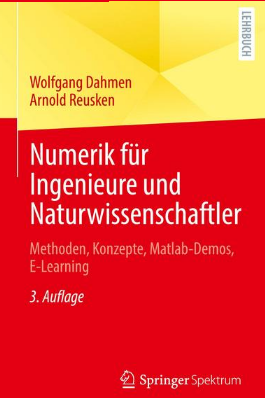
Prof. Dr. Arnold Reusken is a full Professor of Numerical Mathematics at RWTH Aachen University, affiliated with the Institute for Geometry and Practical Mathematics (IGPM). He has held the Chair for Numerical Mathematics since 1997 and maintains an active research and academic profile in computational mathematics. Education: Ph.D. in Mathematics, University of Utrecht (1988) M.Sc. in Mathematics, University of Utrecht (1984) His research focuses on the development and analysis of numerical methods for partial differential equations, with particular emphasis on finite element methods, multigrid solvers, and computational techniques for two-phase incompressible flows and PDEs on surfaces. His work bridges theoretical numerical analysis and practical scientific computing applications in fluid dynamics and interfacial phenomena. He has made significant contributions to trace finite element methods, surface Stokes equations, and unfitted discretizations. The recent publication trend shows sustained activity in numerical methods for evolving surfaces, surface fluid dynamics, and preconditioning techniques. His work often involves rigorous error and stability analysis, demonstrating a strong theoretical foundation. Editorial Roles: Associate Editor, Journal of Numerical Mathematics (2015–present) Associate Editor, IMA Journal of Numerical Analysis (2020–present) Former Associate Editor, SIAM Journal on Numerical Analysis (2016–2021) Former Associate Editor, SIAM Journal on Scientific Computing (2002–2008) Former Associate Editor, Computing & Visualization in Science (2010–2021) Member of Advisory Board, Computing (1997–2009) Prof. Reusken has advised numerous students and researchers, though specific names are not listed in the provided text. He has been involved in collaborative research projects and has secured funding for work in numerical simulation and computational fluid dynamics. He co-authored the influential textbook Numerik für Ingenieure und Naturwissenschaftler , now in its third edition, and has contributed to other key publications in the field. He leads a research group at IGPM focused on numerical methods for interface and surface problems, contributing to both fundamental algorithm development and practical implementation in scientific computing. His team works on cutting-edge methods for simulating complex fluid systems with moving boundaries and topological changes.
Manuel Landstorfer is a researcher at Ulm University's Department of Numerical Mathematics. His work focuses on mathematical modeling of lithium-ion batteries, particularly solid electrolyte systems, and numerical methods like finite element analysis (FEM) and MPI parallelization. He collaborates with the Theoretical Electrochemistry Group led by PD Dr. Timo Jacob and participates in the BMBF-funded LISA project. His research includes ion transport in solid electrolytes, impedance spectroscopy simulations, and free energy functional-based transport equations. Education: Diploma in Mathematics (FH Regensburg, 2007) Professional Experience: Research associate since 2007, PhD scholarship since 2010 Research interests span numerical solutions to Laplace equations via Schwarz-Christoffel mapping, space charge layer effects, and full-cell battery simulations. He has presented at conferences including the ECS Meetings and DPG Spring Meetings, focusing on battery modeling and electrochemical systems. Technical expertise includes parallel computing (C++, MPI), mesh generation, and PDE-based modeling. His work bridges applied mathematics with electrochemical engineering, emphasizing first-principles-derived parameters in battery models.